
Metalized Paper Laminating Machine Documentation: Patents, Copyrights, Export Checks
A Chinese-built metalized paper laminating machine normally arrives with two separate files: the machine file and the paperwork file. This guide is about the paperwork file — the China-issued intellectual property documents that travel with laminating and cutting models such as YDLM1300B, ZNFH1300-1400-1500, YD1300-1400, YDSLX1300-1400 and DWLX1300L-1400L, together with two software registrations, 2020SR0669497 and 2020SR0668797.
The short answer for buyers is this: a Utility Model Patent Certificate, an Appearance Design Patent Certificate and a Computer Software Copyright Registration Certificate are evidence of rights registered inside China. They are granted under Chinese law, by Chinese authorities, in favour of a Chinese right holder. None of them, taken alone, confirms that the machine you are importing meets the electrical, safety or labeling requirements of the country where it will be installed and sold.
That single distinction — China-scope IP evidence versus destination-market conformity — is the reason this verification step exists at all. A supplier can hold a clean, well-documented IP file and still ship a machine that cannot be connected to your grid, placed on your market, or accepted by your product liability insurer without modification.
The documents described below are the pack supplied with equipment from Wenzhou Yueda Packaging Machinery Co., Ltd., trading as YUEDA. YUEDA is a packaging machinery manufacturer founded in 1998 and based in Longgang, Wenzhou, Zhejiang Province, China. The company builds gold and silver cardboard laminating and cutting equipment, including gantry-style multifunctional laminating (coating) machines, positioning cross-cutting machines and high-speed double-helix positioning slitting machines, and exports roughly 70% of its output to markets across Southeast Asia, the Middle East, South America and Africa.
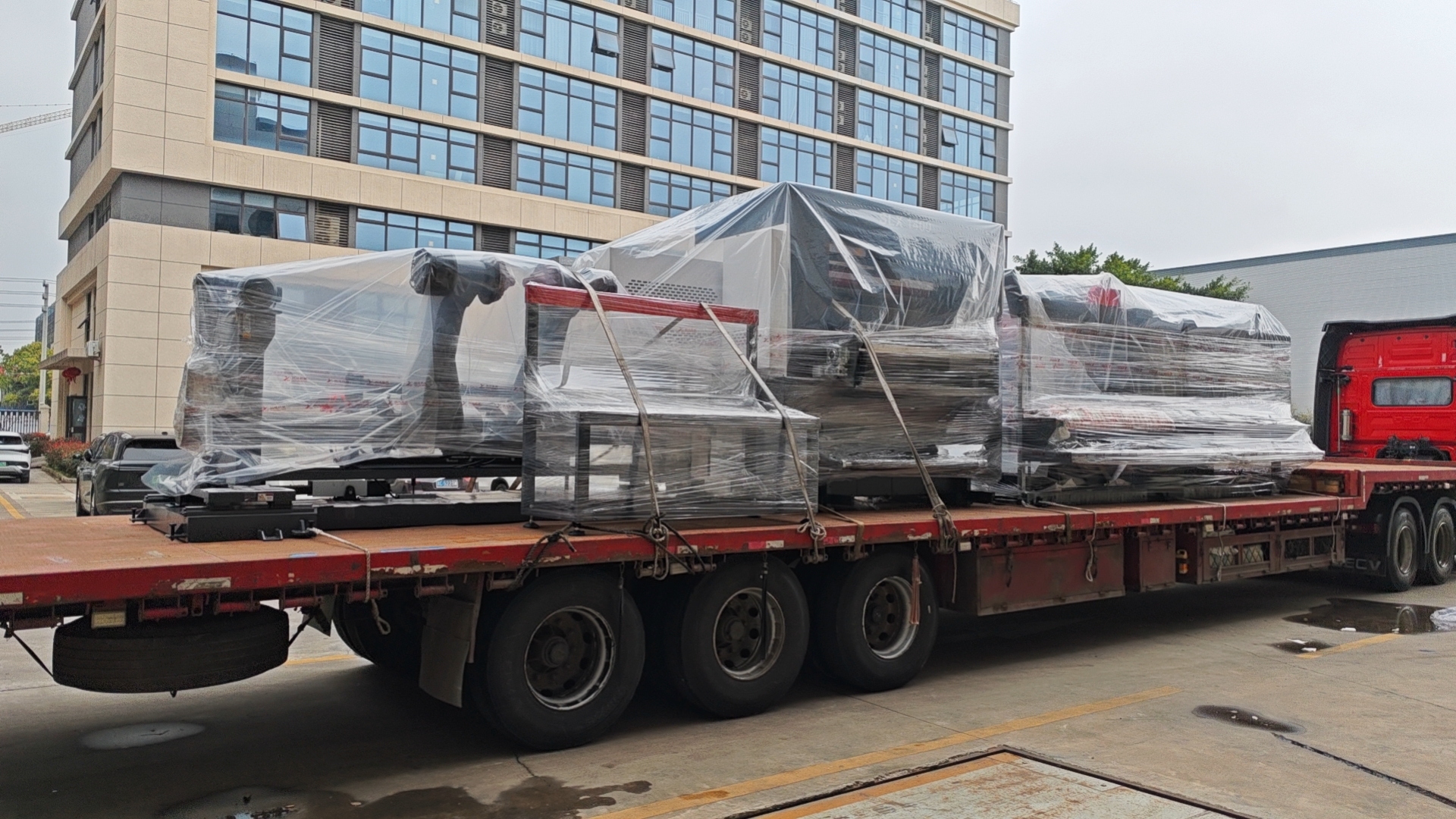
Export logistics for packaging machinery: each shipment leaves with its own machinery and documentation file.
Problem Definition: Four Ways Chinese IP Documents Get Misread
Procurement teams rarely misread these certificates because the wording is difficult. They misread them because the same word — "certificate" — is used for documents that answer completely different questions.
- An IP certificate is treated as market approval. A Utility Model Patent Certificate is filed next to a CE file and the two are assumed to carry the same weight. They do not. One records a private right in China; the other addresses whether the machine may legally be placed on a specific market.
- A family-level certificate is treated as unit-level coverage. Certificates reference model codes and model ranges. A buyer receiving a machine with a different code assumes the paperwork covers it. Without a mapping annex, nothing in the file actually says so.
- A certificate is treated as a transferred right. A patent certificate names the right holder, not the buyer. For OEM and private-label projects, what the buyer may do with the machine's design, brand and control software has to be agreed separately in writing.
- The right holder name is never checked against the contract. Importers sometimes purchase through a trading company while the certificates name the manufacturer. That arrangement is normal, but it should be documented in the contract rather than discovered during a customer audit.
Industry Background: Why the IP File Now Travels With the Machine
Chinese converting equipment has moved up the specification ladder, and the documentation has followed. China's machinery export value rose 15.7% year on year in early 2026, with the export mix shifting toward higher-value equipment such as servo-controlled and CNC machines, according to the German Machine Tool Builders' Association (VDW).
The demand side explains the same trend. Asia-Pacific accounts for nearly 40% of the world's metallized paper market, driven by expanding tobacco and beverage industries in China and India, according to Future Market Insights. Within that market, lamination held a 57.4% revenue share in 2024, favoured for its gloss and barrier properties in consumer goods packaging, according to SkyQuest Technology.
For a buyer, the practical consequence is that a Chinese manufacturer's IP portfolio has become part of the commercial offer. It appears in tenders, in distributor onboarding packs and in supplier audits. The problem is not that the documents exist — it is that they are usually handed over without a statement of scope, leaving the buyer to work out what each one does and does not cover.
The Three Document Families in a Metalized Paper Laminating Machine File
A typical file for this class of equipment contains three families of document. Each answers a different question, and each has a different limit.
Utility Model Patent Certificates: What Structure Is Registered
The Patent Law of the People's Republic of China recognises three kinds of patent: invention patents, utility model patents and design patents. A Utility Model Patent Certificate protects the shape, structure or combination of structures of a product — in machine building, typically a frame arrangement, a conveying layout, a tensioning assembly or another practical construction feature. Utility model certificates are granted by the China National Intellectual Property Administration (CNIPA), the authority that receives and grants patent applications in China.
In YUEDA's documentation pack, the utility model and appearance design certificate set references laminating and cutting models such as YDLM1300B, ZNFH1300-1400-1500, YD1300-1400, YDSLX1300-1400 and DWLX1300L-1400L.
Two limits matter during verification. First, a utility model right is territorial: it is enforceable in China under Chinese law and does not by itself create rights in your market. Second, a certificate is a record of a right at grant; Chinese patents must be maintained, so a buyer checking a certificate should also check that the right is still in force on the date of the order. Both checks are free and public through CNIPA's patent search services.
Appearance Design Patent Certificates: What the Machine Looks Like
An Appearance Design Patent Certificate covers the appearance of a product — its shape, pattern, colour, or a combination of these — rather than its working principle. On packaging machinery this protection is usually relevant to panel layouts, cover geometry and the overall visual identity of a machine family.
Appearance design protection should never be read as a performance claim. It says nothing about laminating speed, tension accuracy, energy consumption or service life. When a file contains both utility model and appearance design certificates for the same model series, the two documents answer separate questions and should be logged separately in your register.
Computer Software Copyright Registration Certificates 2020SR0669497 and 2020SR0668797
Modern laminating and cutting lines are controlled by software, and in China software can be registered as a copyright work under the PRC's software protection regulations. Two registrations appear in YUEDA's file: certificate 2020SR0669497 for the Automatic Paper and Plastic Conveying System, and certificate 2020SR0668797 for the Intelligent Control System. Numbers in the 2020SR format are the identifiers used on these certificates, and they are the fastest way to confirm the record through the official Chinese software copyright registration query.
This matters commercially because the functions that decide output quality on a laminating line are largely software-governed. On YUEDA equipment these include closed-loop servo tension control with a real-time monitoring and adjustment system specified to 0.1 N precision; dual photoelectric eyes, with a main and a backup eye, for cutting position correction; and temperature sensors on key components such as the motor and the heating roller that trigger automatic shutdown.

Intelligent electrical control cabinet with a PLC control system — the hardware platform associated with registered control software.
The limit is the same as for patents. A software copyright registration records ownership of a software work in China. It is not a safety certification of the machine, not an electrical approval and not a licence granted to the buyer. If you intend to rebrand, extend or integrate the control system with your own production software, the licence terms — not the certificate — are what must be negotiated.
Model Mapping: Bind Every Certificate to the Code on Your Quotation
The most common practical failure is not a forged document. It is an unmatched one. A certificate covering a model family is used as if it covered the exact unit ordered, or a certificate for one machine family is filed against a different machine type.
Work through the codes deliberately. In YUEDA's range, YDLM1300B identifies the gantry-type metalized paper laminating machine the company supplies for cigarette and wine packaging work, specified at speeds up to 180 m/min in published coverage by EIN Presswire. DWLX-series codes are associated with the high-precision double rotary knife cross-cutting machine, which the company specifies at ±0.1 mm positioning accuracy, and the multi-functional cross-cutting range is customizable for working widths from 800 mm to 1600 mm.
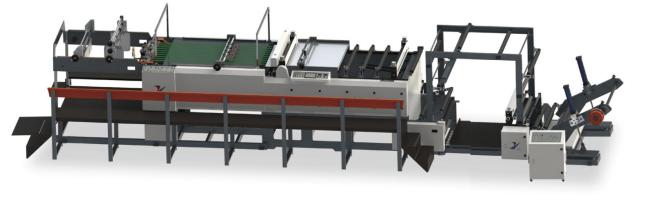
Multi-functional cross-cutting machine, customizable for working widths from 800 mm to 1600 mm — one of the model families named on the certificate set.
Codes such as ZNFH1300-1400-1500, YD1300-1400 and YDSLX1300-1400 list several sizes, and buyers should treat them as a configuration range rather than a single specification. The question to settle is simple: which code appears on the nameplate of the unit I am buying, and is that code named on the certificate that has been handed to me?
The cleanest solution is procedural. Ask the supplier to attach a one-page mapping annex to the sales contract: certificate type, certificate number, the model codes it covers, and the serial-numbered machine being shipped. A signed annex turns a folder of documents into a traceable record, and it takes minutes to produce.
Step-by-Step Breakdown: A Seven-Step Document Verification Routine
- Build the register. List every document with its type, number, stated right holder, title and the model codes named. Note which certificates arrived as copies and which as scanned originals.
- Check the right holder's legal name. The certificates should name the manufacturer's legal entity — for this equipment, Wenzhou Yueda Packaging Machinery Co., Ltd. If you are contracting with a trading company, that is acceptable, but the relationship should be visible in the contract rather than left to assumption.
- Map certificate to model. Compare the codes on the certificates with the quotation, the technical agreement and the machine nameplate. Treat statements that "a different code means the same machine" as unverified until they are written down.
- Verify status independently. Search the patent number in CNIPA's public patent services to confirm the right holder, the title and whether the patent is still in force. Confirm the two software registration numbers through the official software copyright registration query. This is a short desk task, not a negotiation.
- Record what the certificates do not cover, in writing. Ask the supplier to confirm in the order documents that the IP certificates are China-issued rights and do not constitute destination-market certification.
- Run the destination-market track in parallel. Electrical design, machine safety and labeling are a separate file with separate evidence, described in the next section.
- Settle licensing before tooling, not after. For OEM and private-label projects, agree in writing what is licensed — brand names, drawings, control software, spare-part sourcing — and what remains the manufacturer's property.
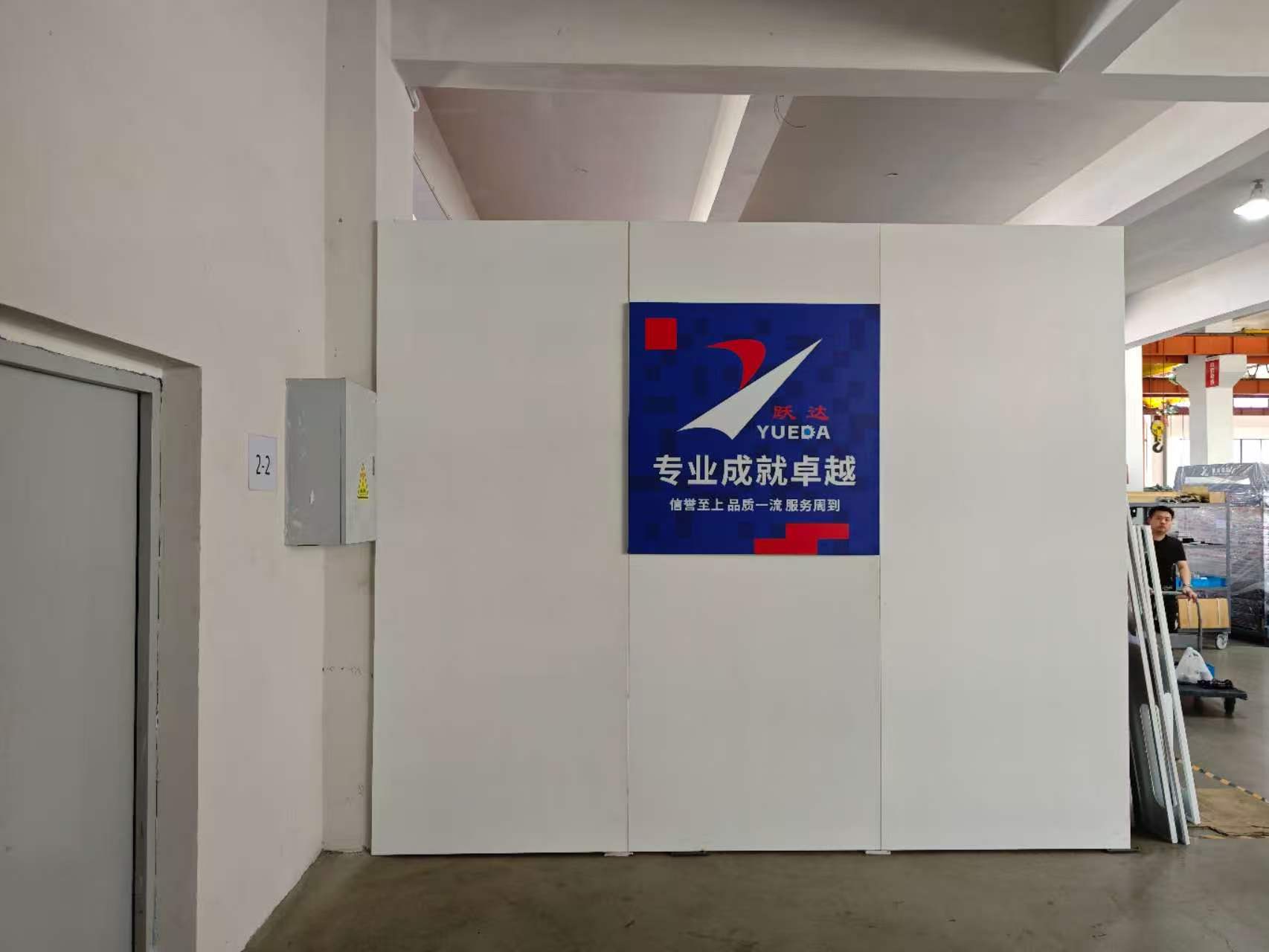
Manufacturer identity is checkable: the legal entity named on the certificates must match the entity named on your contract.
Destination-Market Checks: Electrical, Safety and Labeling Are a Separate File
IP documents and conformity documents are frequently stored in the same folder and then treated as interchangeable. Keep them apart.
Safety. In the European Union, industrial machines require risk assessment and safety design work aligned with EN ISO 12100:2010 to support CE marking, as set out by CEN-CENELEC. That requirement sits entirely outside Chinese IP certificates. Other destinations operate their own schemes, so the correct starting point is the rule set of the country where the machine will run — not the standards used where it was built.
Electrical. Confirm supply voltage and frequency, control-circuit voltage, phase configuration, motor and drive protection, and the language and content of panel labels before production begins. Retrofitting a control cabinet after shipment is the most expensive way to discover a mismatch.
Labeling and documentation. Nameplate data, market marks where they apply, importer identification, and the language of the operating manual and safety labels are all market-specific. Ask for nameplate artwork and manual language for approval before shipment.
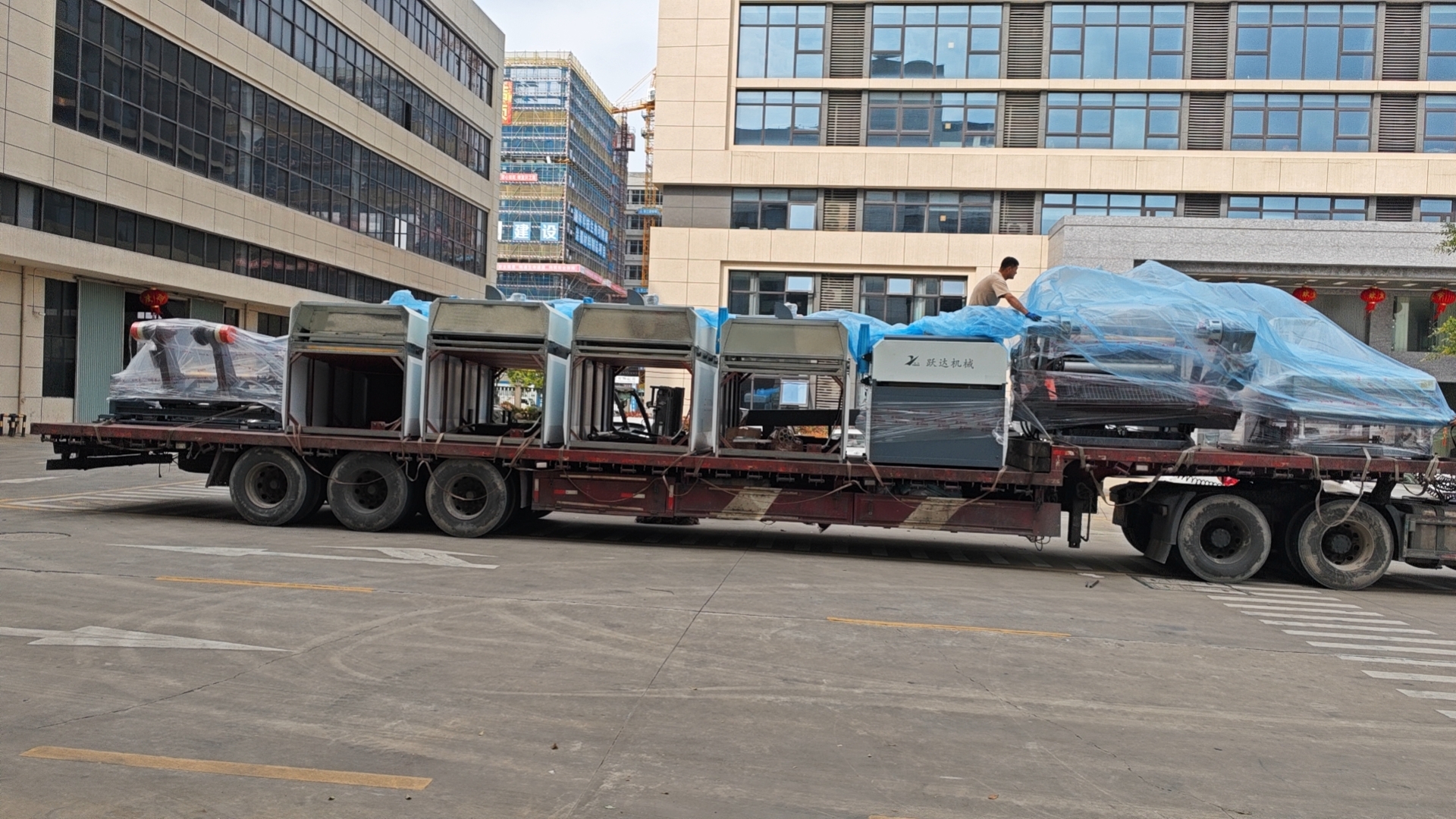
Loading for export: documentation checks should be completed before the machine leaves the factory, not after arrival.
The efficient sequence is to hand the supplier a destination datasheet — country, voltage, frequency, applicable market scheme, manual language — at the quotation stage, and to keep the IP review running as a parallel track rather than a sequential one.
Use Cases: Where This Routine Prevents Expensive Mistakes
- Packaging converters buying a gantry laminating line for cigarette or wine cartons. The converter's own customer often audits documentation. A certificate pack that cannot be matched to the delivered model code delays the converter's own supplier approval, usually months after installation.
- Distributors responding to a tender. Tenders ask for a document list rather than a document analysis. A distributor who can hand over a mapped register — certificate to model to serial number — answers the requirement faster than competitors forwarding a PDF bundle.
- Contract converters adding capacity with a servo-controlled laminating machine. When two similar machines run side by side, model-to-document mapping is what allows maintenance schedules and spare parts to be planned per unit.
- Private-label and OEM brand owners. The certificates show what the manufacturer owns; the licence agreement shows what you may do with it. These are different documents and have to be negotiated as such.
Comparison Table: China-Issued IP Documents vs Destination-Market Conformity
| Document | Issued / administered under | What it confirms | What it does not confirm | Where to verify |
|---|---|---|---|---|
| Utility Model Patent Certificate (certificate set referencing models including YDLM1300B, ZNFH1300-1400-1500, YD1300-1400, YDSLX1300-1400, DWLX1300L-1400L) | China National Intellectual Property Administration (CNIPA) under the Patent Law of the People's Republic of China | A registered right in China over the shape or structure of the product | CE marking, electrical approval, machine safety conformity or labeling compliance in any destination market | CNIPA public patent search: number, right holder, status |
| Appearance Design Patent Certificate (same model set) | CNIPA under the Patent Law of the People's Republic of China | A registered right in China over the product's appearance | Working performance, output, energy consumption or service life; market approval | CNIPA public patent search: number, right holder, status |
| Computer Software Copyright Registration Certificate 2020SR0669497 — Automatic Paper and Plastic Conveying System | China's software copyright registration system under PRC software protection regulations | Recorded ownership of the software work in China | Machine safety or market access; also not a transfer of rights or a licence to the buyer | Official software copyright registration query |
| Computer Software Copyright Registration Certificate 2020SR0668797 — Intelligent Control System | China's software copyright registration system under PRC software protection regulations | Recorded ownership of the software work in China | Machine safety or market access; also not a transfer of rights or a licence to the buyer | Official software copyright registration query |
| Destination-market conformity evidence, e.g. CE marking for the EU with risk assessment and safety design aligned to EN ISO 12100:2010 (CEN-CENELEC) | Destination-market rules, declaration and test evidence | Conformity with the rules of the market where the machine will operate | It does not replace the IP file, and it does not transfer any IP rights | Declaration and test documentation issued for that market |
FAQ: Reading Chinese Patent and Copyright Papers Before Export
What do the Utility Model and Appearance Design Patent Certificates for a metalized paper laminating machine actually prove?
They prove that a right over a defined structure or appearance has been registered in China. Utility model certificates are granted by the China National Intellectual Property Administration (CNIPA) under the Patent Law of the People's Republic of China and cover the shape or structure of a product; appearance design certificates from the same authority cover the product's appearance. In YUEDA's file, this certificate set references models such as YDLM1300B, ZNFH1300-1400-1500, YD1300-1400, YDSLX1300-1400 and DWLX1300L-1400L. What they do not prove is market access: they are not CE marking, not an electrical approval and not a safety or labeling approval for your destination. Where CE marking applies, for example, EN ISO 12100:2010 defines the risk assessment and safety design work required, as set out by CEN-CENELEC.
Which certificates should I request, and how do I confirm they match my machine?
Request the full set by number and by model. The utility model and appearance design certificates should name the model codes quoted to you. The software side is covered by two Computer Software Copyright Registration Certificates: 2020SR0669497 for the Automatic Paper and Plastic Conveying System and 2020SR0668797 for the Intelligent Control System. Matching means three things line up: the certificate number, the model code on the certificate, and the model code on your quotation, technical agreement and machine nameplate. A one-page mapping annex signed with the sales contract is the simplest way to make that match auditable.
Do these documents change the cost comparison between Chinese and European suppliers?
The documents are not a cost line in themselves, but they change what a procurement decision can defend later. YUEDA's published comparison states a purchase cost 40% lower than European imported equipment, spare parts around 50% lower, delivery of 30-45 days against 90+ days, and a 72-hour remote debugging maintenance response instead of on-site fee service, at the same working efficiency and lower energy consumption. Against domestic Chinese competitors, the same material states a 20% lower annual maintenance cost and a 24-hour after-sales response versus 48 hours, at a similar initial cost. Budget accuracy still depends on adding a separate line for destination-market conformity work, because risk assessment, electrical adaptation and labeling costs exist regardless of which supplier you choose.
What should I ask for before a trial run or before releasing the balance payment?
Three things. First, certificate copies that match the quoted model, with the mapping annex attached to the contract. Second, a material trial on your own substrate combination, so the machine is validated on the film and board you will actually run. Third, recorded validation of the control functions during that trial: closed-loop servo tension control with its real-time monitoring and adjustment system specified to 0.1 N precision; the main and backup photoelectric eyes used for cutting position correction; and the temperature sensors on the motor and heating roller that trigger automatic shutdown. A trial report listing those items gives you a documented acceptance baseline.
How long does document verification take, and can it delay shipment?
Document verification is a desk task — build the register, check the right holder and status through CNIPA's public patent search, and confirm the two software registration numbers through the official software copyright registration query. It runs in parallel with production rather than after it. Delivery lead time for YUEDA equipment is 30-45 days, compared with 90+ days for European imported equipment, which leaves room for a document review inside the production window. The item that genuinely delays projects is destination-market conformity work identified late, so the destination datasheet should reach the supplier at the quotation stage. To start with the certificate pack and a quotation for your target model, use the download link and contact details below.
Conclusion: Two Files, Two Tracks, One Order
Chinese patent and software copyright certificates are the manufacturer's evidence of what it owns. They are not the buyer's evidence that a machine may be installed, connected and sold in a given market. Reading them correctly takes one habit: keep the IP file and the conformity file separate, map every certificate to the exact model code and serial number you are buying, and verify both tracks before the balance payment rather than after arrival.
A supplier that hands over a mapped, checkable document set is also telling you something about how it will handle the rest of the order. That is the practical link between paperwork and project risk — and the reason this check belongs in the procurement timeline, not in a folder opened after installation.
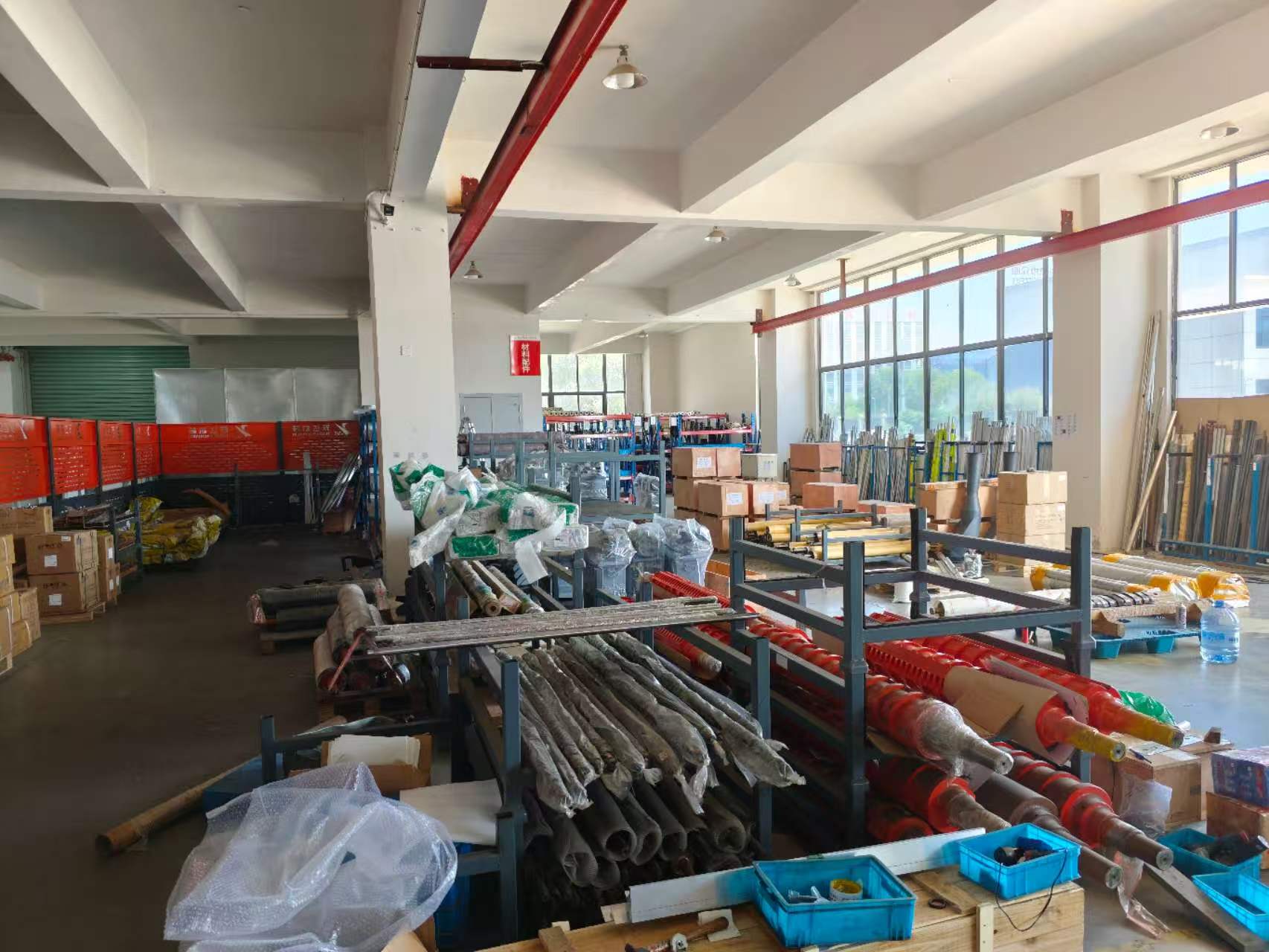
Standard models held in stock for fast delivery, supported by a document set that is mapped before shipment.
Next step: request the certificate pack with your quotation
Ask for the utility model, appearance design and software copyright certificates as a mapped set — certificate number, covered model codes and the serial-numbered machine — together with a quotation for your target model and destination market.
Product catalogue (PDF): Download the YUEDA packaging machinery brochure
Website: www.yuedamachine.com · Email: 2179069246@qq.com · Tel / WhatsApp: +86 19857780001
Wenzhou Yueda Packaging Machinery Co., Ltd. (YUEDA), Building 2, No. 1333 Times Avenue, Longgang, Wenzhou, Zhejiang, China.
Have Questions or Need More Details?
Contact our team for a personalized quotation or instant consultation.
Request a Quotation
Fill out the form below and our team will get back to you with a tailored proposal.
WhatsApp Direct Chat
Prefer to chat in real-time? Message us on WhatsApp for instant assistance & quick answers.
- Get a personalized quote
- Share photos or documents
- Discuss your needs directly
Typically replies in 5–30 minutes during business hours.