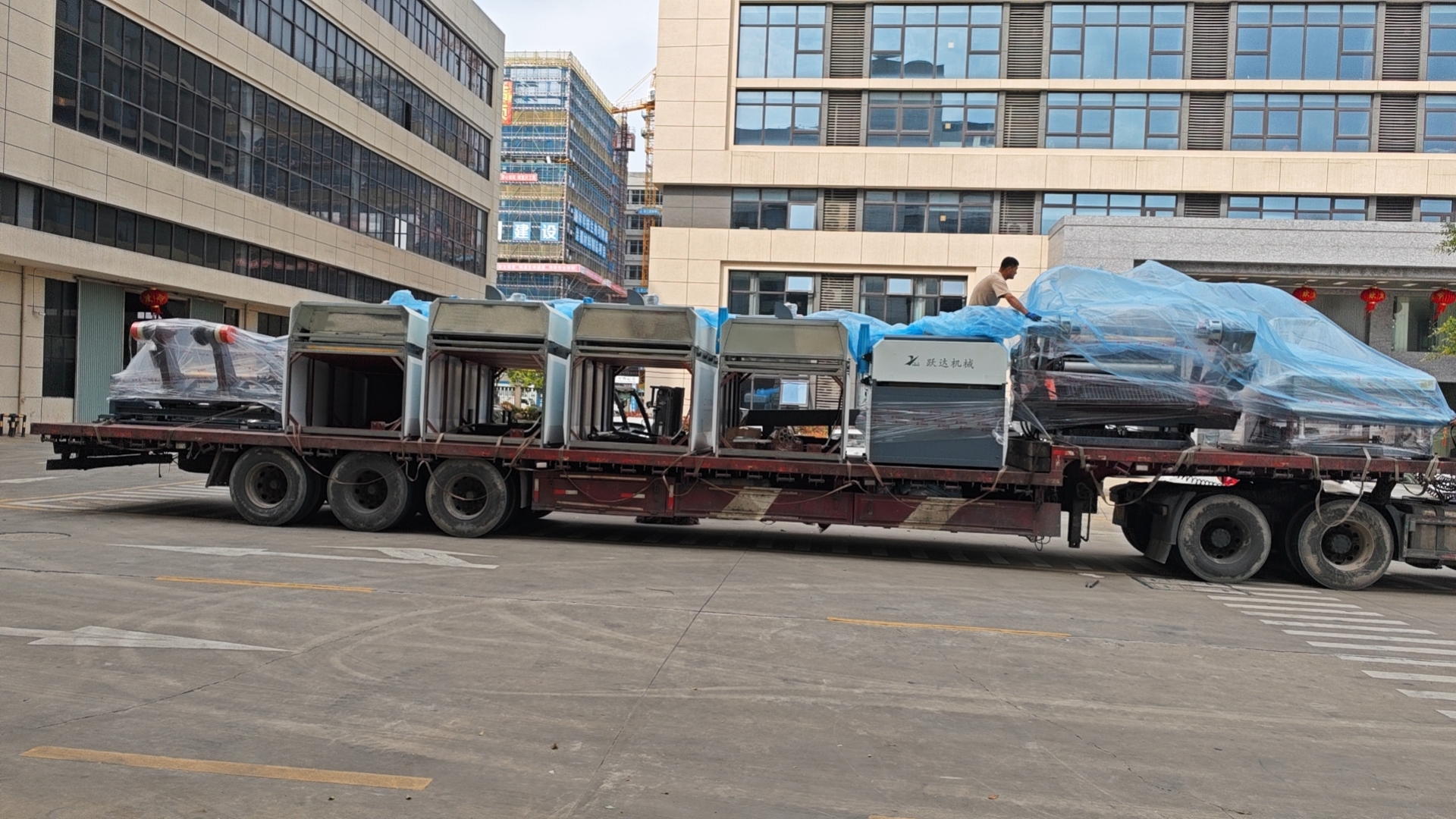
Positioning Sheeter vs. Double Rotary Cutter: How to Choose
Positioning Sheeter vs. Double Rotary Cutter: Which Precision Cutting System Fits Your Line?
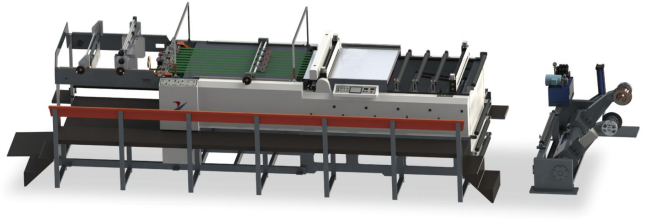
Short answer: both cutting platforms are specified at ±0.1 mm accuracy, so accuracy is not the deciding factor. The shaft-less Positioning Sheeter (YD1300-1400) is the lower-power, lower-footprint route: 17.5–20 kW, 8,000–8,500 kg, 90–95 m/min running speed, 140 sheets/min mechanical sheeting speed, and sheet lengths of 400–1200 mm. The High Precision Double Rotary Sheet Cutter Machine (YDSLX1300-1400) is the throughput route: a double cyclotron screw knife cutting up and down, ≤300 m/min operating speed, 10–400 sheets/min, 73 kW, and cut lengths of 450–1400 mm. Choose by the bottleneck in your metalized paper laminating line, not by machine category.
Both systems are built by YUEDA — Wenzhou Yueda Packaging Machinery Co., Ltd., a manufacturer of gold and silver cardboard coating, laminating and cutting equipment founded in 1998 in Longgang, Wenzhou, in China's printing-city industrial cluster. The company works from a 4,000 m² facility with an in-house R&D team of 25 engineers and exports roughly 70% of its output to Southeast Asia, the Middle East, South America and Africa.
Problem Definition: This Is a Line-Balance Decision, Not a Machine Ranking
The cutting stage never runs alone. It sits downstream of a metalized paper laminating machine, and its real constraint is the output of the machine feeding it. A gantry multifunctional aluminum metallized cardboard laminating (coating) machine such as the YDLM1300B is specified at a machine speed of 180 m/min and a working speed of 15–150 m/min on a 600–1200 mm working width, processing 100–350 g/m² paper plus PET, OPP or aluminum film. An automatic aluminum metallized cardboard laminating and coating machine with no-shaft rewinding (ZNFH1300-1400-1500) runs 5–150 m/min on 40–450 g paper.
That is the frame buyers usually get wrong. Feeding laminated board into a cutter that runs below the laminator's working speed does not damage anything — it simply queues material, and the laminating line idles at its own cost. The three failure modes are consistent:
- Cutting bottleneck: the cutter's running speed sits under the laminator's working speed, so the upstream machine waits.
- Over-specification: a high-throughput rotary cutter is installed on a line whose blank geometry and volume never justify its power and foundation load.
- Geometry mismatch: the required blank length, width or board gram weight falls outside the machine's stated range, and the gap is discovered at commissioning.
Four variables resolve the choice: blank geometry (cut length and material width), substrate gram weight, required throughput in sheets per minute, and the utility envelope — total power, machine weight and floor space.
Industry Background: Why Cutting Capacity Is Being Re-Specified in 2026
Demand for the metallized board these machines cut is documented and growing. The global metallized paper market reached a valuation of USD 4.85 billion in 2025, driven by premium labeling and cigarette packaging demand (DataM Intelligence). The lamination segment alone held a 57.4% revenue share of that market in 2024, favored for high gloss and barrier properties in consumer goods (SkyQuest Technology). Asia-Pacific accounts for close to 40% of the world's metallized paper market on the strength of expanding tobacco and beverage industries in China and India (Future Market Insights, 2025).
On the equipment side, wet laminating machines held approximately 70% of the industrial laminating market in 2025, largely through food and consumer packaging adoption (Market Research Future). And China's machinery export value rose 15.7% year-on-year in early 2026, with the mix shifting toward higher-value-added equipment such as servo-controlled and CNC machines (German Machine Tool Builders' Association, VDW). The practical implication for a packaging converter is straightforward: laminating capacity is being added quickly, and the cutting stage is where that capacity is either released or trapped.
Detailed Solution: How the Two Cutting Systems Actually Differ
1. Positioning Sheeter (Shaft-less) — YD1300-1400
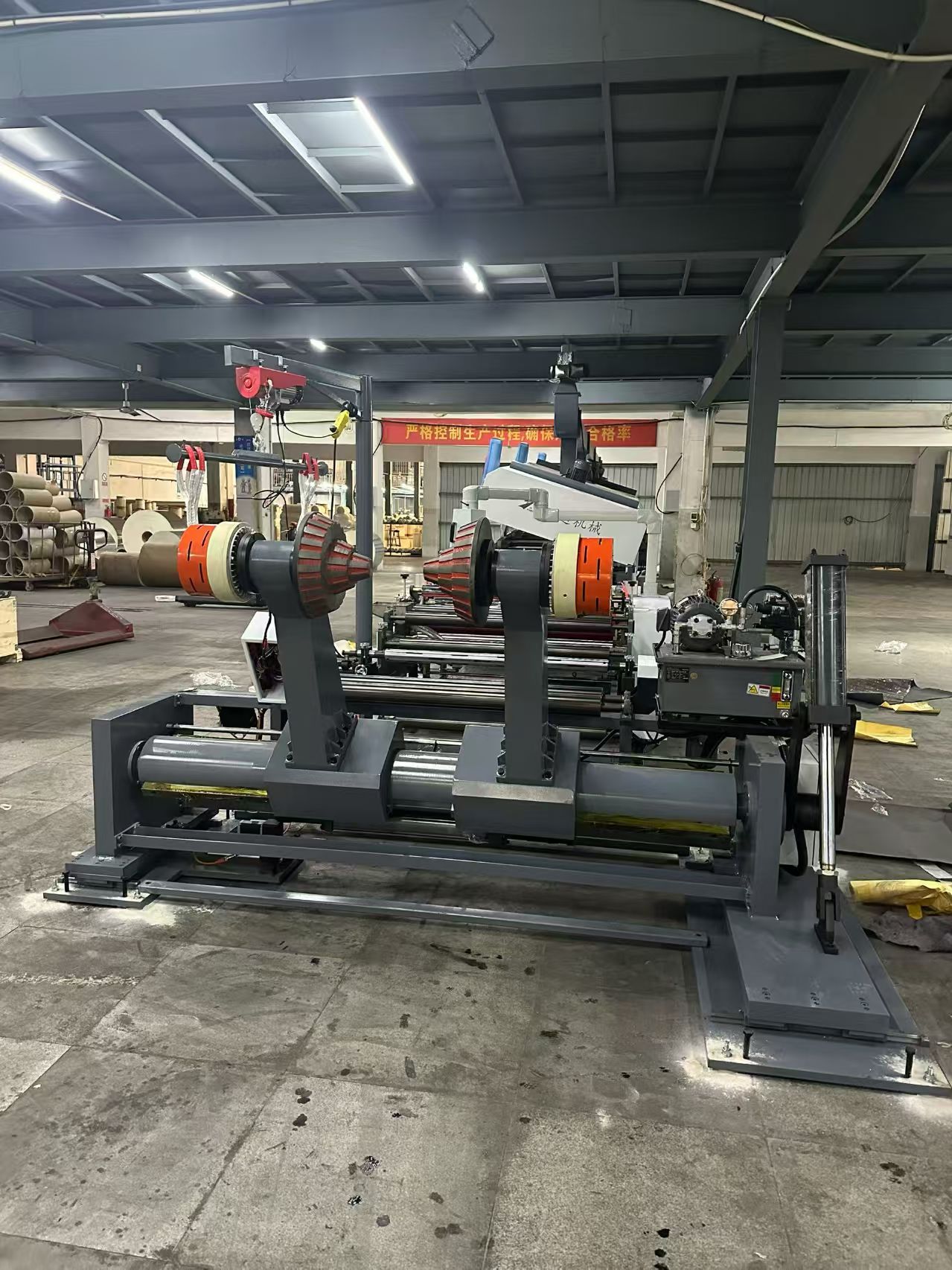
The YD1300-1400 is a shaft-less high-precision positioning sheeter built in carbon steel. "Shaft-less" describes the roll-handling architecture: the material roll is run without a through-shaft, which changes how rolls are loaded and how the feed path is configured for the sheeting stage. Its documented specification is:
- Max sheet roll diameter: 1600 mm; sheet roll width: 700–1200 mm or 700–1300 mm
- Gram weight for sheeting: 600 g
- Sheeting accuracy: ±0.1 mm; sheeting length: 400–1200 mm
- Running speed: 95 m/min (700–1200 mm version); 90 m/min (700–1300 mm version)
- Mechanical sheeting speed: 140 sheets/min; stacking height: 1300 mm
- Pneumatic pressure: 0.8 MPa; power supply: AC380V, 50Hz
- Total power consumption: 17.5 kW / 20 kW; machine weight: 8,000 kg / 8,500 kg
- Machine dimensions (L×W×H): 11.2 m × 3.14 m × 2.4 m / 11.2 m × 3.24 m × 2.4 m
Two design protections are attached to this cutting platform. The shaft-less winding design is covered by appearance design patent ZL 2017 3 0061557.0, granted by the China National Intellectual Property Administration and valid from 2017-07-28 to 2027-07-27. The transverse-cutter feeding function is covered by utility model patent ZL 2025 2 0755442.0 (feeding device for a transverse cutter), granted on 2026-04-07 and valid to 2036-04-06.
2. High Precision Double Rotary Sheet Cutter Machine — YDSLX1300-1400
The YDSLX1300-1400 is the double cyclotron screw knife machine, also carbon steel. Its cutting type is documented as a double cyclotron screw knife working up and down — two rotating knife elements acting from above and below the web rather than a single shear action. That architecture is what supports continuous high-speed running:
- Cutting type: double cyclotron screw knife, up and down
- Material width: 400–1400 mm or 400–1250 mm; unwinding diameter: ≤1650 mm; feeding paper tube diameter: 3/6/12 inch
- Cut length: 450–1400 mm; blank cutting accuracy: ±0.1 mm
- Operating speed: ≤300 m/min; cutting speed: 10–400 sheets/min
- Stacking height: 1500 mm; stacking weight: 2,000 kg
- Cutter load: ≤550 gsm (density and quality to be considered)
- Barometric demand: 0.8 MPa; design power: AC380V 50Hz; total power: 73 kW
- Total weight: 12,000 kg; dimensions (L×W×H): 9.6 m × 4.68 m × 2.58 m / 9.6 m × 4.53 m × 2.58 m
Cutting stability on this platform is supported by utility model patent ZL 2020 2 3212947.9 (a new type of press plate device for transverse cutter), valid from 2021-09-21 to 2031-09-20, and by software copyright 2020SR0668797 for the automatic paper and plastic conveying system for a transverse paper cutter.
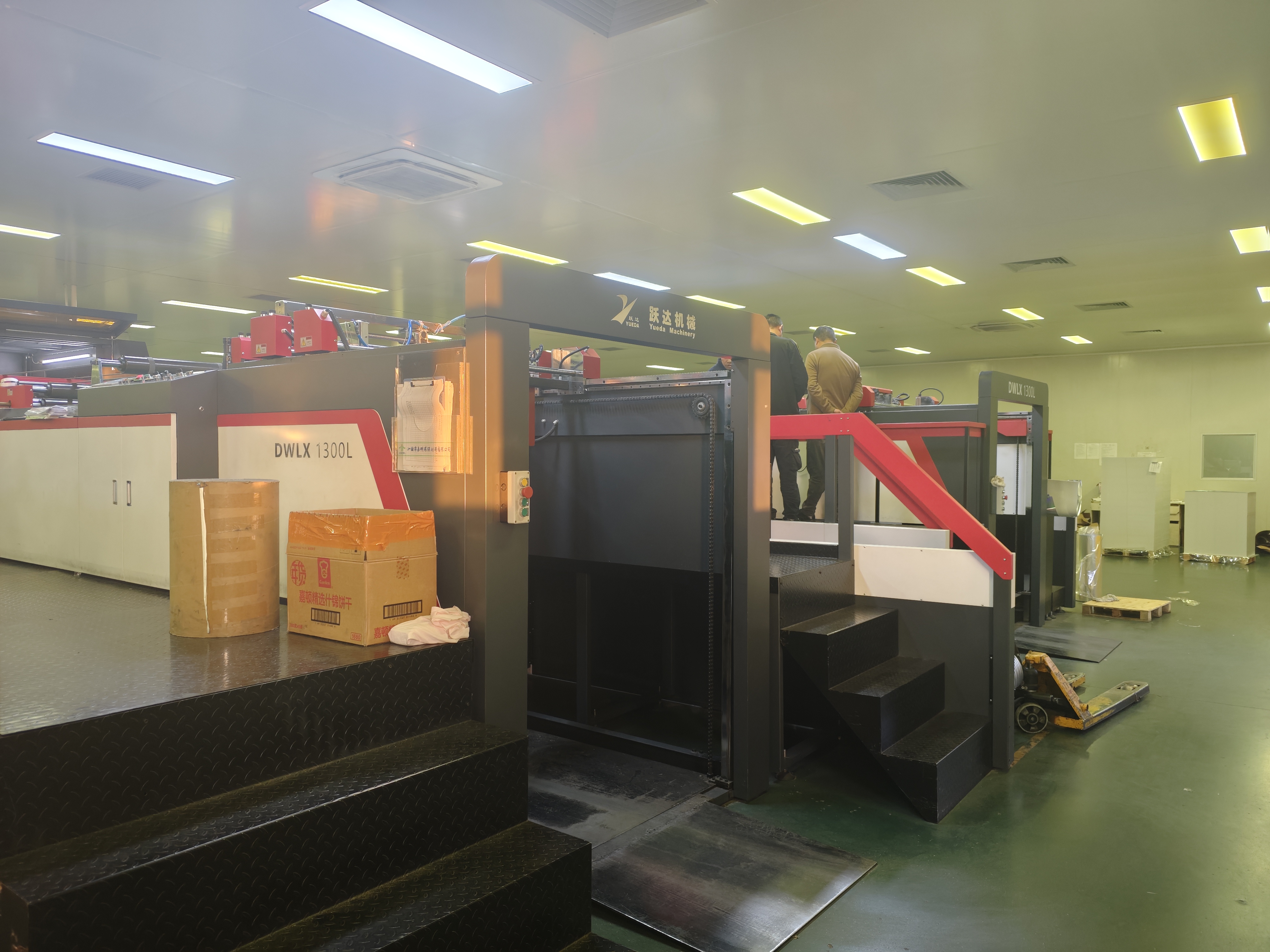
3. If you also need registration tracking: DWLX1300L-1400L
Where the printed graphics must be registered to the cut, the High Precision Positioning Double Rotary Sheet Cutter Machine DWLX1300L-1400L adds a documented longitudinal and transverse tracking accuracy of ±0.1 mm on top of the same double cyclotron screw knife cutting type, cut length range of 450–1400 mm and cutting speed of 10–400 sheets/min. Treat it as a third option rather than a variant of the YD1300-1400, because registration tracking answers a different requirement than the shaft-less positioning sheeter does.
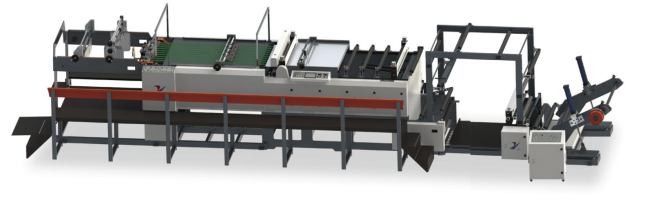
Step-by-Step Breakdown: A Six-Step Selection Framework
Step 1 — Fix the blank geometry first. Take the longest and shortest sheet your box or wrapper requires. If any blank exceeds 1200 mm, the YD1300-1400 sheeter (400–1200 mm) is out of range and the YDSLX1300-1400 (450–1400 mm) is the only fit of the two. If the material is narrower than 700 mm or wider than 1300 mm, the same logic applies — the rotary cutter covers 400–1400 mm.
Step 2 — Check the substrate gram weight. The positioning sheeter is rated for sheeting gram weights up to 600 g; the double rotary cutter's cutter load is ≤550 gsm, with density and quality to be considered. If your laminated board consistently sits in the 550–600 g band, this single figure can decide the platform.
Step 3 — Match the cutting stage to the laminator. Compare the cutter's running or operating speed against the working speed of the metalized paper laminating machine upstream. The sheeter runs at 95 m/min or 90 m/min; the rotary cutter operates at ≤300 m/min. On a line whose laminator works up to 150 m/min, the throughput difference is the whole decision.
Step 4 — Budget the utility and foundation envelope. Total power is 17.5 kW or 20 kW on the sheeter against 73 kW on the rotary cutter; machine weight is 8,000–8,500 kg against 12,000 kg. Both require 0.8 MPa pneumatic pressure and an AC380V 50Hz supply. The rotary cutter's footprint is longer in width and depth, and the sheeter's is longer in length — 11.2 m against 9.6 m.
Step 5 — Size the stacking and downstream handling. The sheeter stacks to 1300 mm; the rotary cutter stacks to 1500 mm with a 2,000 kg stacking weight. If your palletising or de-stacking crew is sized around a single stack height, that number matters more than the accuracy figure.
Step 6 — Confirm compliance documentation before the deposit. For the European market, industrial machinery is assessed under EN ISO 12100:2010 for risk assessment and safety design as the basis for CE marking. Request the patent and software certificates that sit behind the design claims — for the cutting range these include ZL 2025 2 0755442.0, ZL 2020 2 3212947.9, ZL 2017 3 0061557.0 and software copyright 2020SR0668797 — and confirm whether third-party inspection will be used on your unit.

Use Cases: Mapping Each System to Packaging Segments
Both cutting machines list the same applicable industries — printed wine boxes, cigarette paper packaging, cosmetics paper packaging, tea paper packaging, disposable waterproof paper tableware, cake paper packaging and chewing gum paper packaging. The differentiator is the run profile, not the segment label.
- Cigarette paper and high-volume wine box wraps: long blanks, continuous operation and high sheet counts per shift point to the YDSLX1300-1400, whose 450–1400 mm cut length and up to 400 sheets/min sit above the sheeter's 1200 mm ceiling and 140 sheets/min.
- Cosmetics cartons and tea boxes: where blanks sit inside 400–1200 mm and board runs at the heavier end of the gram-weight range, the shaft-less positioning sheeter delivers the same ±0.1 mm accuracy on a third of the power and a simpler utility installation.
- Disposable waterproof paper tableware and cake paper: often high-volume with mid-length blanks. If the length falls inside both ranges, the tie-breaker is throughput against your laminator, not accuracy.
- Converting lines with registration requirements: move to the DWLX1300L-1400L positioning variant, which documents longitudinal and transverse tracking accuracy of ±0.1 mm.
Two field references illustrate how the platforms perform in practice. A cigarette packaging factory in Thailand, running two units for high-speed laminating of cigarette boxes, has operated for more than five years and recorded a 30% efficiency increase and a 15% material waste reduction; the documented highlights of that project are a humidity-resistant design and 24/7 continuous operation support. A packaging factory in Vietnam, running precision cutting for cosmetic packaging for more than five years, recorded ±0.1 mm cutting precision, a zero rework rate and a 20% labour cost saving, with dust-proof design, fast size changeover and low maintenance cost as project highlights.
Comparison Table: Positioning Sheeter YD1300-1400 vs. Double Rotary Cutter YDSLX1300-1400
| Decision parameter | Positioning Sheeter (Shaft-less) YD1300-1400 | High Precision Double Rotary Sheet Cutter YDSLX1300-1400 |
|---|---|---|
| Cutting type | Shaft-less high-precision positioning sheeter | Double cyclotron screw knife, up and down |
| Blank cutting accuracy | ±0.1 mm | ±0.1 mm |
| Cut / sheeting length | 400–1200 mm | 450–1400 mm |
| Material / roll width | 700–1200 mm; 700–1300 mm | 400–1400 mm; 400–1250 mm |
| Max roll or unwinding diameter | Max sheet roll diameter 1600 mm | Unwinding diameter ≤1650 mm |
| Gram weight / cutter load | Gram weight for sheeting 600 g | Cutter load ≤550 gsm (density and quality to be considered) |
| Running / operating speed | 95 m/min; 90 m/min | ≤300 m/min |
| Sheeting / cutting speed | 140 sheets/min (mechanical) | 10–400 sheets/min |
| Stacking | Stacking height 1300 mm | Stacking height 1500 mm; stacking weight 2,000 kg |
| Total power | 17.5 kW / 20 kW | 73 kW |
| Machine weight | 8,000 kg / 8,500 kg | 12,000 kg |
| Footprint (L×W×H) | 11.2 m × 3.14 m × 2.4 m; 11.2 m × 3.24 m × 2.4 m | 9.6 m × 4.68 m × 2.58 m; 9.6 m × 4.53 m × 2.58 m |
| Utilities | 0.8 MPa; AC380V 50Hz | 0.8 MPa; AC380V 50Hz |
| Build material | Carbon steel | Carbon steel |
| Best fit | Lower power and footprint; blanks up to 1200 mm; board up to 600 g | Higher throughput; blanks to 1400 mm; wide or narrow material; registration variant available |
Reading the table correctly: the two systems are not ranked against each other. Every row is a matching criterion. The only rows that eliminate an option outright are cut length, material width and gram weight; the remaining rows decide the operating cost and the physical envelope of the installation.
FAQ: Positioning Sheeter vs. Double Rotary Cutter
What compliance evidence should I verify before buying either cutting system?
Both machines are exported to Southeast Asia, the Middle East, South America and Africa, and YUEDA permits third-party inspection. For the European market, industrial machinery is assessed under EN ISO 12100:2010 for risk assessment and safety design as the basis for CE marking. Within the cutting range, YUEDA holds utility model patent ZL 2025 2 0755442.0 for a feeding device for a transverse cutter, granted by the China National Intellectual Property Administration on 2026-04-07 and valid to 2036-04-06, plus ZL 2020 2 3212947.9 for a press plate device for a transverse cutter, valid from 2021-09-21 to 2031-09-20. The shaft-less design is covered by appearance design patent ZL 2017 3 0061557.0, and the conveying automation by software copyright 2020SR0668797.
Can the Positioning Sheeter and the Double Rotary Cutter process the same range of metalized paper?
No, their stated ranges differ. The YD1300-1400 Positioning Sheeter takes sheet roll widths of 700–1200 mm or 700–1300 mm, sheeting lengths of 400–1200 mm and gram weights up to 600 g, at 95 m/min on the 700–1200 mm version and 90 m/min on the 700–1300 mm version, producing 140 sheets/min. The YDSLX1300-1400 accepts material widths of 400–1400 mm or 400–1250 mm, cut lengths of 450–1400 mm and a cutter load of ≤550 gsm, at an operating speed of ≤300 m/min and 10–400 sheets/min. Both are specified at ±0.1 mm accuracy; stacking height is 1300 mm on the sheeter and 1500 mm with a 2,000 kg stacking weight on the rotary cutter.
What drives the cost difference between a positioning sheeter and a double rotary cutter?
The documented drivers are physical rather than commercial. Total power consumption is 17.5 kW or 20 kW for the sheeter against 73 kW for the double rotary cutter, and machine weight is 8,000–8,500 kg against 12,000 kg — so the rotary route carries a heavier electrical and foundation load. On the benefit side, higher cutting speed reduces labour per sheet: a packaging factory in Vietnam reported a 20% labour cost saving with a zero rework rate at ±0.1 mm cutting precision, and a cigarette packaging factory in Thailand reported a 30% efficiency increase and 15% material waste reduction over more than five years of operation.
How can I validate cutting accuracy before my machine ships?
YUEDA applies a 100% pre-shipment test that includes a 2-hour continuous run, and third-party inspection is available on request. Both cutting machines are specified at ±0.1 mm accuracy, so the test run is where that figure is confirmed against your own laminated board rather than against a sample the supplier chose. Field results provide the reference point: ±0.1 mm cutting precision with a zero rework rate at a packaging factory in Vietnam running precision cutting for cosmetic packaging, where dust-proof design, fast size changeover and low maintenance cost are recorded as project highlights.
What lead time and order quantity should I plan for?
Standard models are quoted at 30–45 days and customized builds at 45–60 days, with a minimum order quantity of 1 unit and a monthly capacity of 12–15 units. ODM programs — which can specify control system brand, working width and speed, coating and lamination process, voltage and frequency, CE/UL safety standard, brand logo, HMI language and production line integration — typically start at 2 units with a 30–45 day lead time. After delivery, support is a 24-hour online response, 48-hour domestic on-site service and 72-hour overseas remote debugging. To map either platform against your own board, download the YUEDA product brochure or send your sheet specification for a configuration check.
Conclusion: Decide by Bottleneck, Not by Category
The Positioning Sheeter and the Double Rotary Sheet Cutter are both ±0.1 mm machines, and that is exactly why the choice should not be made on accuracy claims. Work the decision in order: eliminate on geometry (400–1200 mm versus 450–1400 mm cut length, 700–1300 mm versus 400–1400 mm material width), then on gram weight (600 g versus ≤550 gsm), then on throughput against your metalized paper laminating machine, and only then compare the utility envelope — 17.5–20 kW and 8,000–8,500 kg against 73 kW and 12,000 kg. If registration tracking is part of the requirement, add the DWLX1300L-1400L positioning variant to the shortlist rather than forcing either of the other two into that role.
Converters who get this right treat the cutting stage as the release valve of the whole line. Converters who get it wrong either starve the laminator or pay for throughput they never use.
Next step
Send your cut length, material width and board gram weight, and YUEDA will confirm which of the two cutting platforms fits your line — including a comparison against the DWLX1300L-1400L if registration tracking is required.
Download the product brochure: YUEDA Packaging Machinery Catalogue (PDF)
Contact: Jack — email 2179069246@qq.com, TEL/WhatsApp +86 19857780001, or visit www.yuedamachine.com.