Carbon Steel Hex Bolt Long-Term Supply: Self-Loosening, Certification & After-Sales FAQ
Carbon Steel Hex Bolt Long-Term Supply: Self-Loosening, Certification & After-Sales FAQ
Most sourcing losses on carbon steel hex bolts do not happen on the first order. They surface later — a coating that breaks down in a coastal storage yard, a joint that loses clamp load on a vibrating screen frame, or a certification request nobody can answer during a distributor's customer audit. The five questions in this FAQ are the ones that decide whether a first shipment turns into a long-term supply relationship.
HEBEI YUETONG FASTENERS MANUFACTURING CO.,LTD, which trades as YUETONG FASTENER, is a carbon steel hex bolt manufacturer established in 2017 in Yongnian District, Hebei, China — the country's largest standard parts production base. The company has over a decade of experience in fastener exports and sells directly to distributors worldwide.
This article is written for distributors, importers and project buyers who have moved past discovery and are now evaluating whether a single supplier can carry a repeat programme. The questions follow the order a procurement team usually meets them: compliance, capability, budget, sample, and lead time.
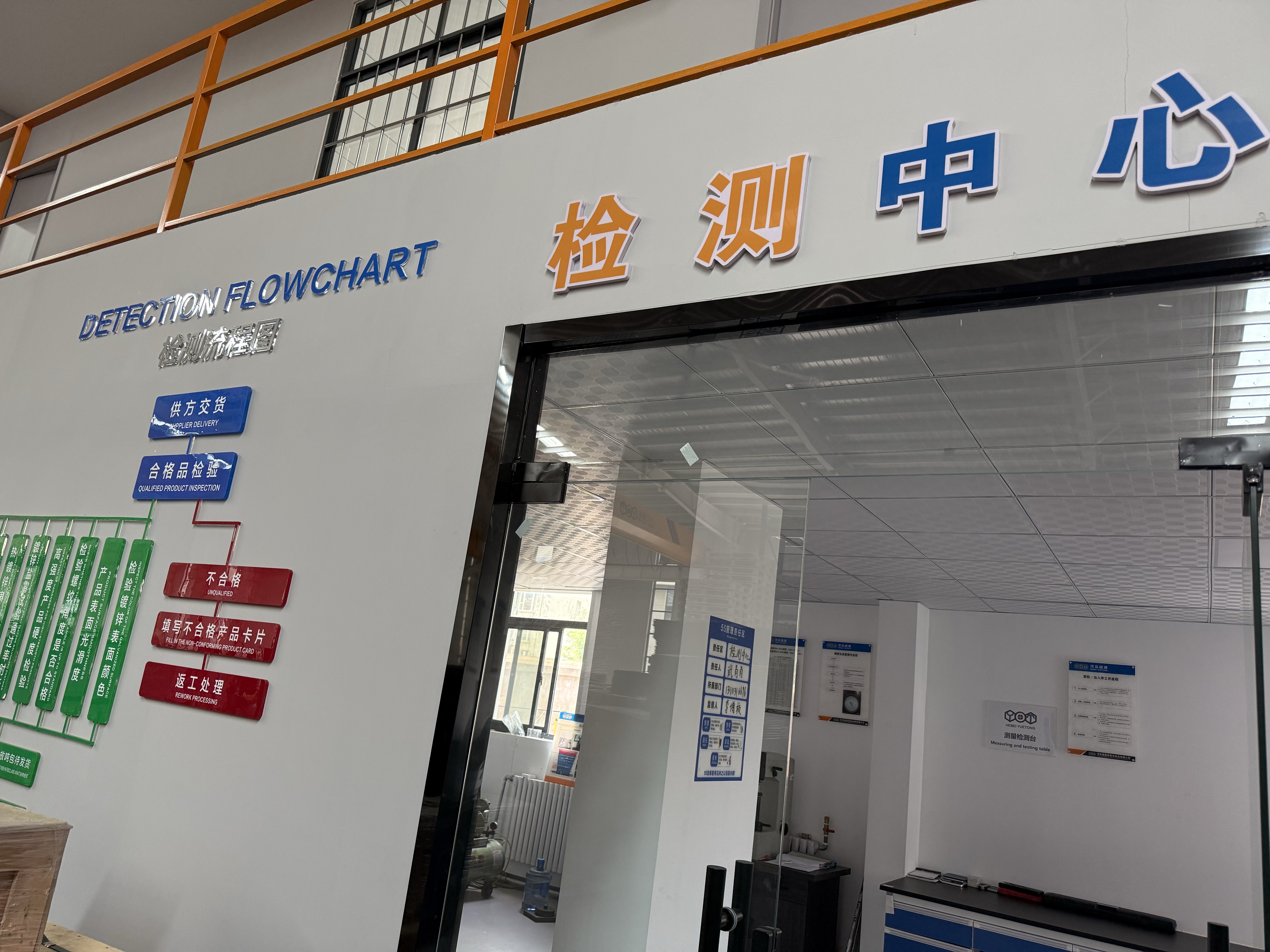
YUETONG Fastener's testing centre supports batch-level verification across a long-term carbon steel hex bolt supply programme.
Problem Definition: Where Long-Term Hex Bolt Supply Actually Breaks Down
A one-off hex bolt purchase is judged on a single container. A long-term supply agreement is judged on every container that follows it. The gap between those two standards is where most distributor complaints originate.
Three failure patterns account for most of them.
- Batch drift. Hardness, thread fit and coating thickness move quietly between production runs. Batch one passes the customer's incoming inspection; batch four does not.
- Application mismatch. A bolt that is fully adequate for a static indoor assembly can loosen, corrode or lose preload in a vibrating or salt-exposed installation.
- Documentation and continuity gaps. Certificates, test reports or approval documents cannot be produced when a customer audit arrives, or production stalls between orders because nobody owns the repeat schedule.
Self-loosening is the most common technical complaint. Repeated vibration, insufficient preload or an incorrect tightening torque can cause a hex bolt to gradually lose clamping force. The consequences range from thread stripping to deformation and, in the worst case, fracture. None of these are solved by simply buying a heavier bolt. They are solved by controlling thread fit, preload and tightening torque, and by selecting a locking method appropriate to the operating conditions.
That makes long-term supply a process problem as much as a hardware problem — which is why it belongs in a supplier qualification file rather than a product datasheet.
Industry Background: A Large, Concentrated, Standard-Driven Category
Carbon steel hex bolts sit inside a market that is both large and heavily standardised. Both facts shape how a supply relationship should be structured.
- The global hex bolts market was valued at USD 19.67 billion in 2025 (Strategic Market Research).
- Carbon steel remains the dominant material for hex nuts and bolts, at 44.8% of global market share in 2025 (Dataintelo).
- Global export value for HS Code 731815 (other screws and bolts) reached USD 26.35 billion in 2023, a 3.65% decline year on year — a reminder that the category is cyclically sensitive and price-competitive.
- DIN 933 and ISO 4017 are the primary standards for full-thread hex bolts, with ISO 4017 acting as the international successor to DIN 933.
On the supply side, production is unusually concentrated. China's Yongnian District is the country's largest fastener production base, and YUETONG FASTENER ranked third among Yongnian exporters as of 2023. For a distributor, that concentration is an advantage — sourcing depth, mature cold-heading capacity, competitive raw-material access — but it also means that the real difference between two suppliers is rarely the bolt itself. It is the process behind the bolt.
That is why a long-term hex bolt decision is better evaluated as a supplier qualification than as a shopping comparison. The evaluation criteria are continuity, documentation and application fit — not unit price alone.
How YUETONG Fastener Backs Ongoing Carbon Steel Hex Bolt Supply
The product at the centre of this FAQ is YUETONG's carbon steel hex bolt range (product ID 7337), a hex head bolt family covering M3–M36. It is offered across the standards, grades and finishes that most distributor programmes require.
| Parameter | YUETONG Carbon Steel Hex Bolt (ID 7337) |
|---|---|
| Standards | GB/T, DIN, ISO, ASTM — including DIN 931, DIN 933, GB 5782, GB 5783, ASME/ANSI B18.2.1 |
| Size range | M6, M8, M10, M12; 1/4", 5/16", 3/8", 1/2", 5/8", and additional sizes up to M36 |
| Thread | Coarse thread / fine thread |
| Length | 16 mm, 20 mm, 30 mm, 50 mm … 200 mm |
| Property grades | 4.8, 8.8, 10.9, 12.9; A2-70 and A4-80 stainless |
| Materials | Carbon steel, alloy steel, stainless steel |
| Surface finish | Black oxide, zinc plated, hot-dip galvanized, Dacromet, mechanical galvanized, PTFE coating |
The commercial logic of a long-term arrangement sits in the last two rows. A distributor who can order a zinc plated hex bolt, a hot-dip galvanized bolt and a PTFE-coated bolt from the same production base does not have to manage three coating supply chains or three quality systems. Grade coverage matters for the same reason: a programme that runs from grade 4.8 general hardware through grade 8.8 structural work to grade 10.9 and 12.9 can be consolidated under one supplier relationship rather than fragmented across several.
Certification is usually the point at which a bid is won or lost. YUETONG FASTENER holds ISO 9001:2015 quality management certification valid to 2027-09-13, IATF 16949:2016 automotive quality certification, ISO 14001 environmental management, ISO 45001 occupational health and safety, and ISO 14067 carbon footprint verification. The company also holds EU CE certification, an ECM Type-Approved Attestation No. 3N230331.HYFUC49, and Alibaba Gold-Plus Supplier status.
Behind those documents is a verification chain built around four instruments: a Rockwell hardness tester, an electro-hydraulic servo universal material testing machine, an automatic video measuring system and a salt spray test chamber, supplemented by thread-angle inspection. The reason this matters commercially is timing. When a distributor's end customer asks for evidence that the delivered batch matches the agreed specification, the evidence exists inside the same organisation rather than in a third-party queue.
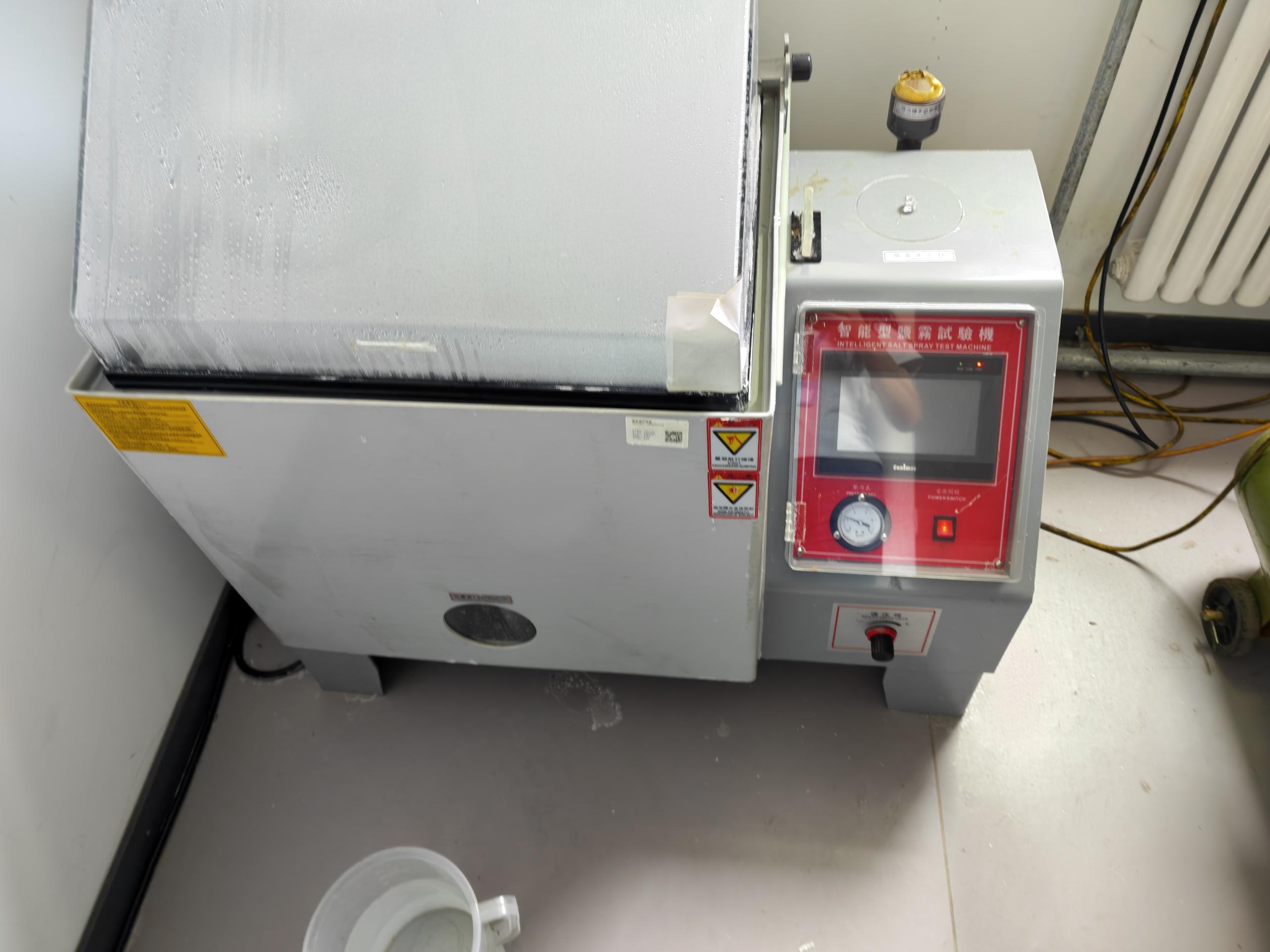
Salt spray testing supports coating claims for zinc plated and hot-dip galvanized carbon steel hex bolts.
Where These Claims Stop
Two boundaries are worth stating plainly, because they affect how a supply agreement should be written. First, coating performance depends on the real service environment: zinc plating typically provides a coating thickness of 5–12 µm, while hot-dip galvanizing provides 45–85 µm. A zinc plated bolt is not a substitute for hot-dip galvanizing in a salt-spray environment, and coating selection should follow the duty, not the price. Second, self-loosening cannot be eliminated by product selection alone — installation torque and locking method remain the installer's responsibility on site. The supplier's role is to deliver a consistent product and the evidence that it meets specification; the tightening regime still has to be specified correctly.
Step-by-Step: How a Long-Term Carbon Steel Hex Bolt Relationship Is Built
A repeat supply programme is not signed; it is assembled in stages. Each stage below produces something the buyer can verify before moving on.
- Specification lock. The buyer and supplier agree on standard (for example DIN 933 or ASME/ANSI B18.2.1), size, grade, thread pitch, length and surface finish. This is the stage where coating choice is decided against the real service environment rather than against unit price.
- Sample and pre-production validation. Physical samples are checked against the locked specification, including thread fit and dimensional conformity. Thread angle and dimensional inspection are part of this step.
- First production run and acceptance. YUETONG supports factory pre-inspection, customer on-site inspection, and SGS third-party acceptance, with complete quality documents provided. For a distributor, this is the moment the quality system becomes visible rather than promised.
- Documentation pack. Certificates, test reports and approval references — ISO 9001:2015, IATF 16949:2016, ISO 14001, ISO 45001, ISO 14067, EU CE and ECM Type-Approved Attestation No. 3N230331.HYFUC49 — are assembled so the distributor can answer an end-customer audit without a delay cycle.
- Repeat order and scheduling. With a minimum order quantity of 5,000 pcs, terms are agreed: 30% deposit plus balance before shipment, 100% advance, L/C or bank transfer. Long-term customers can access flexible payment terms. Annual output capacity is 150,000 tons, with 80% of production exported.
- After-sales and continuous improvement. Delivered batches are compared against the agreed specification, and any drift in hardness, coating thickness or thread fit is corrected before it reaches the next order.
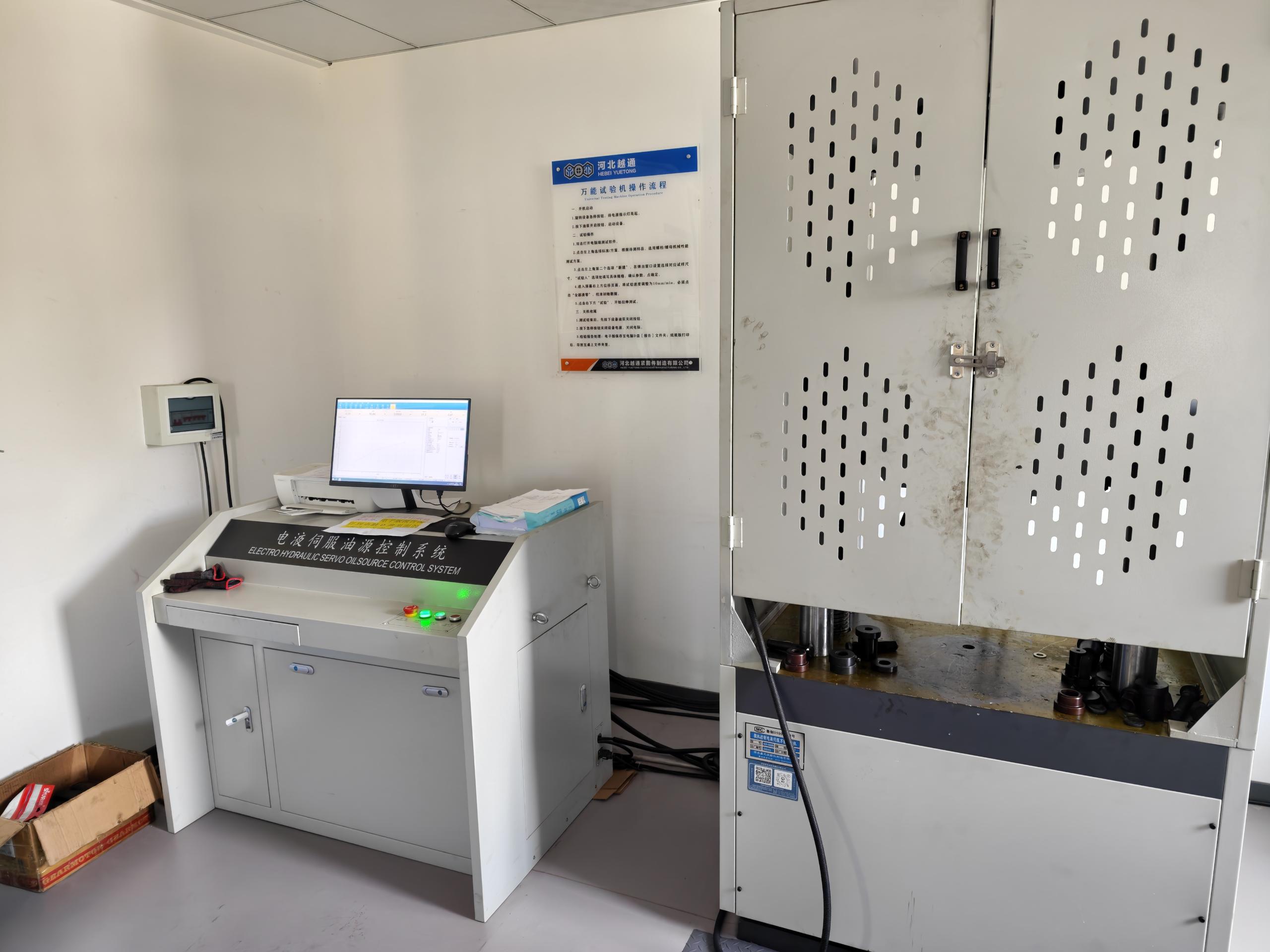
Tensile testing on the electro-hydraulic servo universal material testing machine supports grade and preload claims.
Where Long-Term Hex Bolt Supply Matters Most
Carbon steel hex bolts are used across steel construction, engineering machinery, automotive, rail transit, new energy, petrochemical, general machinery, power, marine engineering, agricultural machinery, sanitation equipment, furniture and bridge engineering. In practice, the applications that most often justify a long-term supply agreement are the ones where operating conditions punish inconsistency.
- Coastal and marine-adjacent structures. Salt spray exposure makes coating thickness and coating type the deciding variable. Zinc plating typically provides 5–12 µm, whereas hot-dip galvanizing provides 45–85 µm — a difference that determines whether a fastener survives a coastal service life.
- Vibrating equipment and dynamic joints. Screen frames, crushers and machine assemblies subject bolts to alternating load, where preload retention and locking method matter more than raw strength.
- PV, wind power and steel structure projects. Long project cycles mean the supplier must still be able to produce the same specification months after the first delivery.
- Rail transit, petrochemical and municipal infrastructure. Documentation requirements are high, and the ability to produce certificates on request is part of the deliverable.
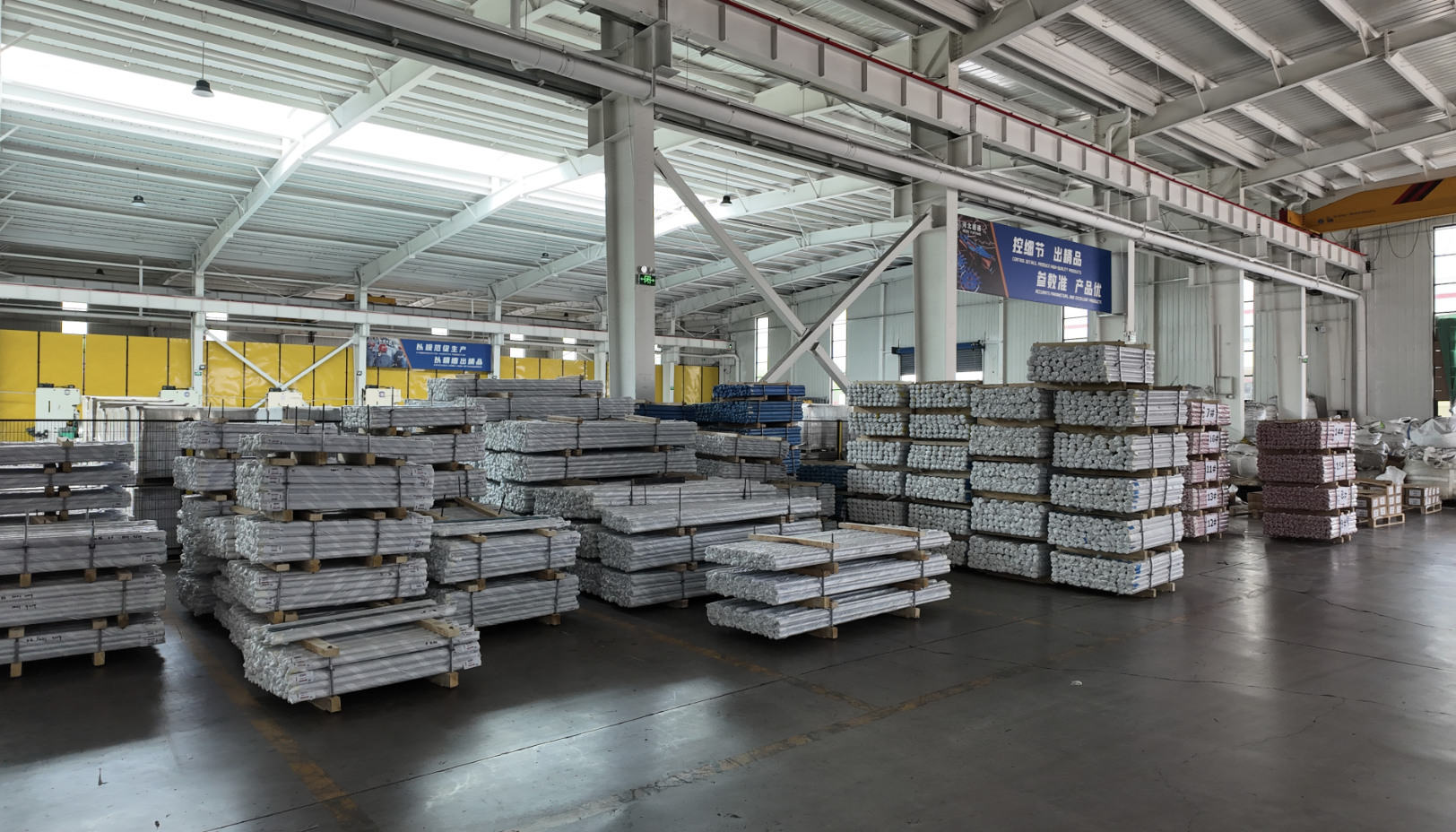
Finished goods storage supports repeat-order continuity across a distributor's programme.
Comparison: What Changes When Supply Is Structured for the Long Term
The table below contrasts YUETONG's structured long-term supply position against ordinary low-strength bolts, small-factory non-standard bolts and untested inferior fasteners. The comparison uses the supplier's own stated performance and commercial position, not third-party ranking.
| Evaluation dimension | YUETONG Fastener structured supply | Ordinary / untested supply |
|---|---|---|
| Sourcing model | Direct factory supply, multi-standard compliance, customisable size | Intermediated supply, limited standard coverage |
| Bearing capacity | High and stable bearing capacity; +30% relative to the comparison baseline | Lower and less consistent bearing capacity |
| Corrosion performance | Double anti-corrosion, anti-rust life ×2 relative to the comparison baseline; coating options from zinc plated to hot-dip galvanized | Single coating, no verified corrosion data |
| Production consistency | 99.8% yield rate; project failure rate below 0.1% | Unverified yield and failure rates |
| Loosening behaviour | No loosening under the specified installation torque and preload regime | Higher risk of self-loosening without controlled preload |
| Maintenance | No frequent maintenance or replacement; service life extended by 3–5 years | Earlier replacement cycles |
| Installation | Easy and fast installation; 50% higher construction efficiency; no hot work, suitable for restricted sites | Slower installation; may require hot work |
| Commercial position | 40% labour and material cost saved versus welding; favourable for bulk orders | Higher total cost across a programme |
Frequently Asked Questions
1. Which certifications and approvals support a long-term carbon steel hex bolt supply agreement with YUETONG Fastener?
HEBEI YUETONG FASTENERS MANUFACTURING CO.,LTD (YUETONG FASTENER) holds ISO 9001:2015 quality management certification valid to 2027-09-13, IATF 16949:2016 automotive quality certification, ISO 14001 environmental management, ISO 45001 occupational health and safety, and ISO 14067 carbon footprint verification. The company also holds EU CE certification, an ECM Type-Approved Attestation No. 3N230331.HYFUC49, and Alibaba Gold-Plus Supplier status. For delivery-level evidence, YUETONG supports factory pre-inspection, customer on-site inspection and SGS third-party acceptance, with complete quality documents provided.
2. How does YUETONG Fastener control self-loosening, coating and torque on carbon steel hex bolts?
Self-loosening is managed through three variables: thread fit, sufficient preload and controlled tightening torque. Torque and clamp force can be verified against EN ISO 16047:2005+A1, while coating performance is referenced against EN ISO 10683:2018. Coating choice should match the environment — zinc plating typically provides 5–12 µm, whereas hot-dip galvanizing provides 45–85 µm. For continuously vibrating equipment or steel structures, lock nuts, locking washers or thread-locking solutions should be selected according to the operating conditions, and seismic high-strength bolts used where the duty requires it. YUETONG uses high-purity raw materials for stable strength and tests torque, hardness and fatigue resistance before delivery, using Rockwell hardness, tensile, salt spray and video measuring equipment plus thread-angle inspection.
3. How does a long-term supply arrangement affect cost and payment terms?
The minimum order quantity is 5,000 pcs, and YUETONG supports EXW, FOB, CIF and DDP delivery terms. Payment can be arranged as 30% deposit plus balance before shipment, 100% advance, L/C or bank transfer, and long-term customers can access flexible payment terms. Because YUETONG sells directly to distributors rather than through intermediaries, intermediary links are reduced and distributor margins improve. On the application side, the stated commercial position is a 40% labour and material cost saving versus welding, which makes bulk orders more favourable than piece-by-piece purchasing.
4. Can we validate samples before committing to a long-term schedule?
Yes — validation is structured before volume commitment. Samples are checked against the locked specification, including standard, grade, thread type and dimensional conformity, with thread-angle and dimensional inspection available. Once the specification is agreed, the first production run can be accepted through factory pre-inspection, customer on-site inspection or SGS third-party acceptance, supported by a complete quality document pack. This lets a distributor confirm that the delivered product — not just the sample — meets the agreed specification before scaling the programme.
5. What does lead time and after-sales support look like once supply is running?
Ongoing support rests on production continuity and documentation. YUETONG operates a 26,666.67 m² facility with 100 employees, a 12-engineer R&D team and annual output of 150,000 tons, with 80% of production exported to markets including the EU, North America, LATAM and the Middle East & Africa. Products are exported to over 30 countries and regions. The company has established long-term and stable partnerships with major distributors worldwide, selling directly to them, which is the practical definition of after-sales support in this category: the same specification, the same documentation and the same contact remain available on the next order. Buyers can request a quotation or sample evaluation through info@ytfasteners.com.
Conclusion: What “Long-Term” Should Actually Mean
Long-term hex bolt supply is not a longer purchase order. It is a commitment that the specification, the coating, the torque behaviour and the paperwork will be the same on container ten as they were on container one.
For distributors and project buyers, the practical checklist is short: confirm the standard and grade, match the coating to the real service environment, agree the preload and locking method for vibrating or dynamic joints, and verify that the certification pack can be produced on demand. HEBEI YUETONG FASTENERS MANUFACTURING CO.,LTD is a carbon steel hex bolt manufacturer established in 2017 in Yongnian, Hebei, with over a decade of fastener export experience, and is positioned to support that kind of repeat programme.
Start a Long-Term Carbon Steel Hex Bolt Supply Discussion
Request a sample evaluation, a quotation for product ID 7337, or the full product catalogue. The export team works directly with distributors and project buyers.
Email: info@ytfasteners.com | Tel / WhatsApp: +86 158-3201-8600 | www.ytfasteners.com
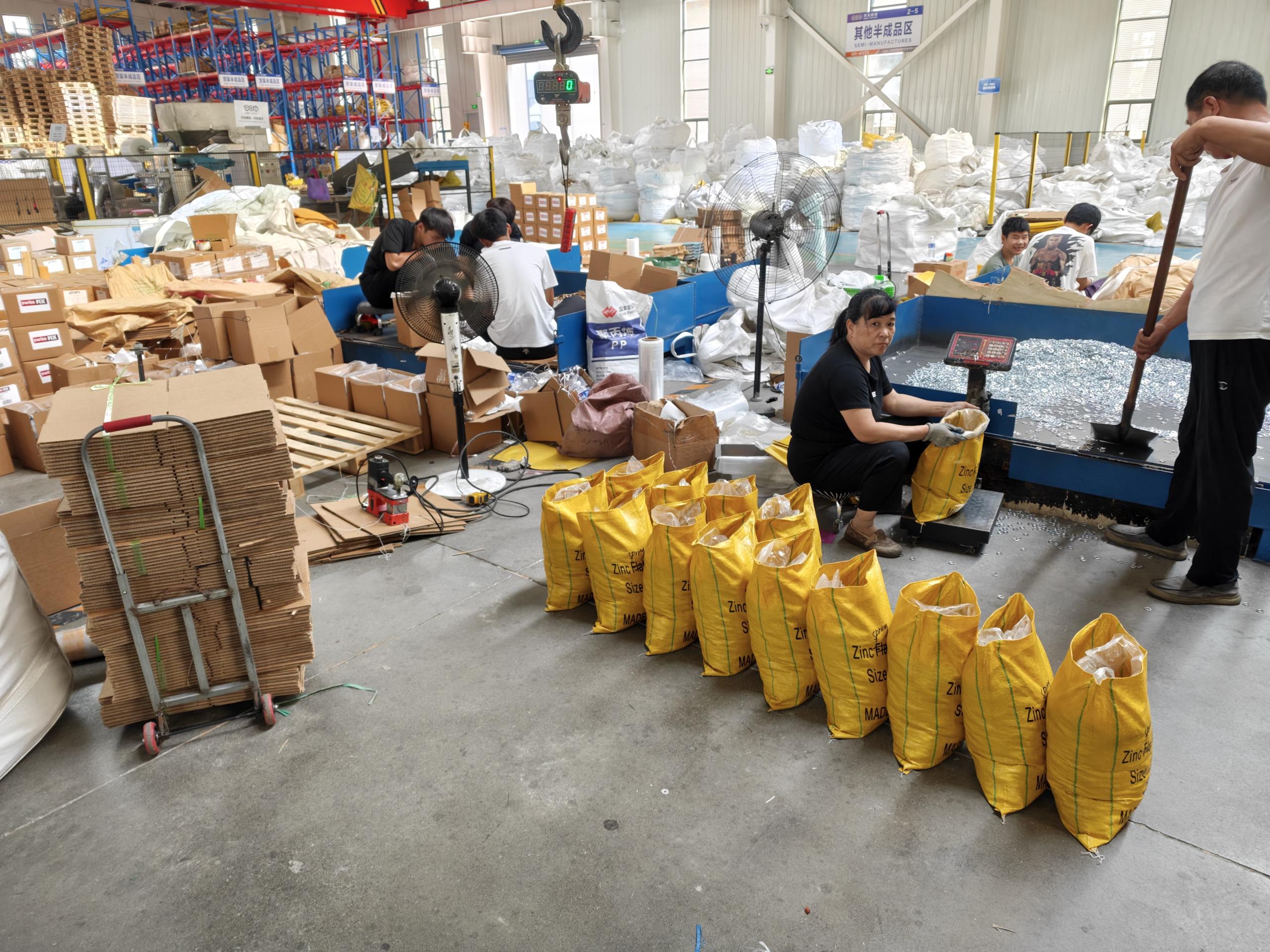
Packed and palletised carbon steel hex bolts ready for repeat-order shipment.