Carbon Steel Hex Bolt Sourcing: Grades, Coatings, Standards & Certifications
Carbon Steel Hex Bolt Sourcing: Grades, Coatings, Standards & Certification Checks
A carbon steel hex bolt is an externally threaded fastener with a hexagonal head, manufactured from carbon steel or alloy steel and supplied in metric or inch sizes. In procurement terms, the simple name “carbon steel hex bolt” is not a complete specification. Buyers also need to confirm strength grade, thread standard, coating system, dimensional tolerance, and the certification evidence that proves the bolts were made under controlled manufacturing conditions.
This guide explains the constraints that engineering buyers, contractors, distributors, and maintenance teams should place on carbon steel hex bolt suppliers during the Research and Evaluation stages. It is written for a realistic export manufacturing context, with examples drawn from HEBEI YUETONG FASTENERS MANUFACTURING CO.,LTD., the production entity behind the YUETONG FASTENER brand, based in Yongnian District, Handan, Hebei, China.
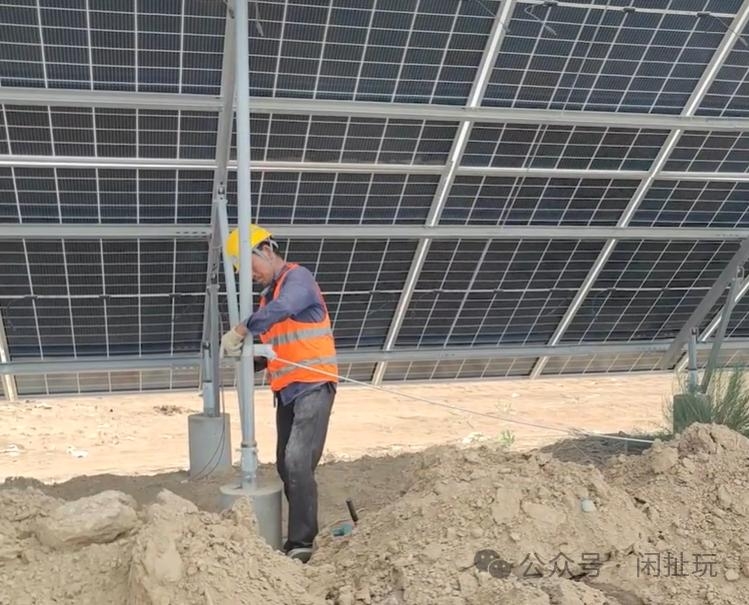
On-site finished carbon steel hex bolt joints on a steel structure connection plate.
Why “Carbon Steel Hex Bolt” Is Not a Single Product
From the outside, hex bolts look similar, but the engineering constraints behind each order are different. A low-strength carbon steel hex bolt for furniture or light framing is not equivalent to a Grade 10.9 or Grade 12.9 bolt used in a load-bearing machinery joint. A zinc plated hex bolt selected for a general indoor assembly is not equivalent to a hot-dip galvanized bolt used on an outdoor steel structure exposed to rain, humidity, or coastal salt spray.
The procurement risk increases when buyers evaluate suppliers based only on price and a product photo. A compliant carbon steel hex bolt supplier should be able to demonstrate four things: which manufacturing standards the bolt follows, which material grade and surface finish are available, which quality system certifications apply to the factory, and which inspection records will be provided with the shipment.
Hex Bolt Market Context and Why It Shapes Supplier Constraints
The global market reinforces the importance of structural-grade carbon steel bolts. According to Strategic Market Research, the global hex bolts market is valued at USD 19.67 billion in 2025. Dataintelo reports that carbon steel remains the dominant material for hex nuts and bolts, accounting for 44.8% of the global market share. In addition, global export data for HS Code 731815, covering screws and bolts, shows USD 26.35 billion of export value in 2023. Those trade flows span construction hardware, industrial fasteners, automotive parts, and engineering supplies.
This demand is centered on standard parts manufacturing hubs. Yongnian District in Handan, Hebei, is widely recognized as one of China’s largest standard parts production bases. HEBEI YUETONG FASTENERS MANUFACTURING CO.,LTD., established in 2017, operates from the central area of Yongnian District with an 80% export ratio and long-term customers in EU, NA, LATAM, and MEA markets. For buyers, the practical implication is that a carbon steel hex bolt quote should not be evaluated as a commodity trade; it needs to be evaluated as an engineered product that must satisfy a defined standard, grade, surface treatment, and certification record.
Carbon Steel Hex Bolt Specification Constraints to Evaluate
A reliable hex bolt specification can be narrowed down through a short set of parameters. The sections below mirror the information a buyer should ask a manufacturer to confirm before placing an order.
1. Manufacturing Standards
The first constraint usually comes from the project’s design code or the buyer’s national standard. Hex bolts from YUETONG FASTENER can be manufactured to GB/T, DIN, ISO, and ASTM standards, including DIN931, DIN933, GB5782, GB5783, and ASME/ANSI B18.2.1. For full-thread hex bolts, DIN 933 and ISO 4017 are commonly referenced standards, with ISO 4017 being the international successor to the German standard. These standards matter because they set thread dimensions, head dimensions, length tolerances, and general geometric requirements. A bolt marked only with a diameter is not necessarily compliant with a recognised standard.
2. Material and Strength Grade
Carbon steel hex bolts are available in different strength grades because the base material and heat treatment determine the load that the bolt can carry. The Hex Bolt production scope from YUETONG FASTENER covers grades 4.8, 8.8, 10.9, and 12.9, using carbon steel or alloy steel. Stainless steel versions are also available in A2-70 and A4-80 grades for applications demanding higher corrosion resistance. The important procurement rule is simple: do not substitute a strength grade without checking the joint design. Each grade represents a different tensile capability, and the selected grade must match the engineering load, clamping force, and safety requirements of the connected parts.
3. Diameter, Thread Pitch, and Length
Diameter and length are the most visible dimensional constraints. The Hex Bolt product range covers M3 to M36 metric diameters, and the supplier also manufactures imperial sizes such as 1/4", 5/16", 3/8", 1/2", and 5/8". Threads may be coarse or fine, and available lengths span from 16 mm to 200 mm in the standard range. Custom sizes and specifications are supported by the factory. When requesting a quote, the buyer should provide not only the diameter but also the exact thread pitch and clamped length, because those values affect both the thread engagement and the required tightening torque.
4. Surface Finish and Corrosion Strategy
Surface finish is often the most under-specified parameter in carbon steel hex bolt sourcing. A bare carbon steel surface will not provide long-term corrosion protection in outdoor or humid environments. The available surface finishes in YUETONG’s Hex Bolt program include black oxide, zinc plated, hot-dip galvanized, Dacromet, mechanical galvanized, and PTFE coating. For coating comparison, an important quantitative difference separates two common options.
| Comparison Point | Zinc Plated Hex Bolt | Hot-Dip Galvanized Hex Bolt |
|---|---|---|
| Typical coating thickness | 5–12 µm | 45–85 µm |
| Corrosion protection pattern | Provides a relatively thin protective zinc layer, commonly selected for indoor, general industrial, or mildly corrosive conditions. | Produces a much thicker metallurgical zinc coating, commonly selected for outdoor, humid, coastal, or water-exposed construction and structural connections. |
| Coating logic for the buyer | Suitable when thread tolerance and part fit are important and exposure is normal or indoor. | Suitable when long-term outdoor service life is a higher priority than a thin finish. |
Coating thickness values are based on published electro zinc plated vs. hot-dip galvanized comparison data: zinc plating typically provides 5–12 µm; hot-dip galvanizing typically provides 45–85 µm.
For buyers evaluating projects in salt-air or high-moisture conditions, hot-dip galvanized bolts deserve extra attention. The manufacturer can also provide other protective treatments such as Dacromet, mechanical galvanized, or PTFE coating when the project calls for a different corrosion or friction-management strategy.
5. Certification Evidence
For constrained sourcing, certificate verification is as important as physical dimensions. A supplier with an export-oriented production facility should be able to state exactly which certificates apply to the product and which certificate numbers can be reported in the quality file.
For example, HEBEI YUETONG FASTENERS MANUFACTURING CO.,LTD. holds several certifications that apply to the Hex Bolt program, including:
- ISO 9001 Quality Management System, certificate number 29024Q12949-09R1M, issued by ZhongTai Union Certification Co., LTD and valid until 2027-09-13 for global markets.
- ISO 14001 Environmental Management System, certificate number 29025E12097-12R0M, covering the production and export sales environment for fasteners.
- ISO 45001 Occupational Health and Safety Management System, certificate number 29025S12024-12R0M.
- IATF 16949:2016, certificate number 2600920/R0M, covering the manufacture of fasteners such as nuts and bolts, excluding product design under Clause 8.3.
- ECM Type-Approved Attestation No. 3N230331.HYFUC49 for Hex Bolt, applicable to the EU market, based on EN ISO 10683:2018, EN ISO 16047:2005+A1:2012, and EN ISO 4753:2011.
- ISO 14067 carbon footprint registration, certificate number 33925CFMS00020R0S, issued by ZQHX CERTIFICATION CENTER CO., LTD.
- Alibaba Gold-Plus Supplier Assessment Certificate number 491647039 P+T, with on-site assessment by SGS, covering fasteners including hex bolts and sleeve anchors.
The IATF 16949 certificate is especially relevant for automotive and engineering-machinery applications where the customer expects an automotive-grade quality management system. The ECM attestation is especially relevant for European construction and fastener distribution projects where EU conformity evidence is requested. ISO 14067 adds carbon footprint traceability for sustainability-oriented buyers.
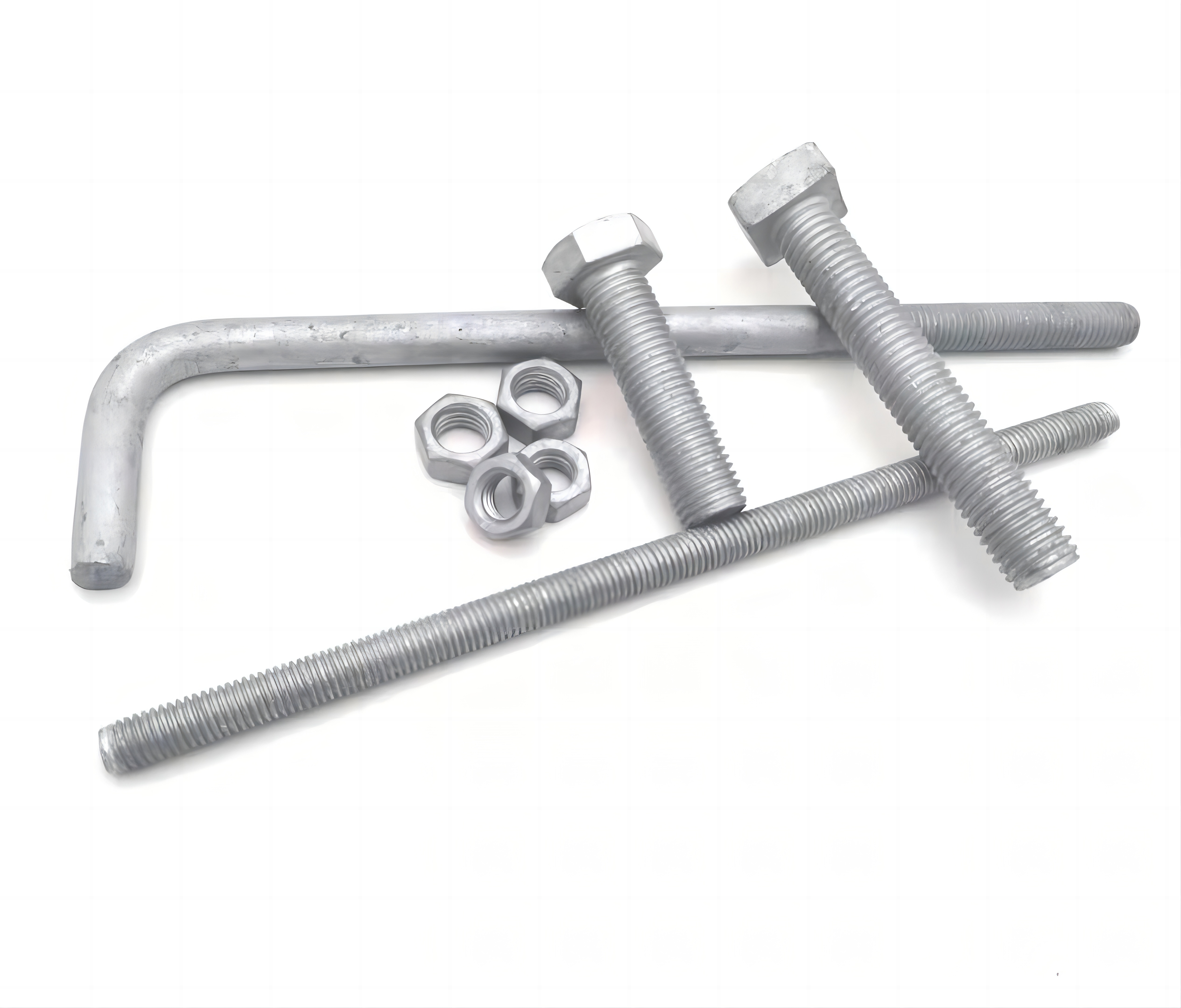
Hot-dip galvanized nut bolt 36x300, an example of HDG carbon steel bolt supply from the YUETONG Hex Bolt range.
Step-by-Step Supplier Qualification Process
The following six steps turn a general carbon steel hex bolt inquiry into a controlled sourcing decision.
Step 1: Define the Application Constraints
Write down the actual working condition before contacting a supplier. The Hex Bolt product line is applied in steel construction, engineering machinery, automotive, rail transit, new energy, petrochemical, general machinery, power, marine engineering, agricultural machinery, sanitation equipment, furniture, and bridge engineering. These applications are not interchangeable in performance demand, so the buyer must define whether the bolt is for a static structure, an assembly line, a distribution stock program, or a vibrating machine frame.
Step 2: Confirm the Manufacturing Site and Production Scope
Ask whether the supplier owns a physical factory or merely trades fasteners. The YUETONG example is a manufacturing enterprise with independent production and R&D capability, a 26,666.67 m² site, and a 12-person engineering team. The factory offers OEM, ODM, non-standard customization, and bulk stock supply. It also enables printed logos on packages and matched assembly kits. A factory-based supplier can usually respond more directly to specification changes than a pure trading intermediary.
Step 3: Check Certificates by Target Market
Certification requirements are not the same in every market. For EU-facing construction buyers, the ECM Type-Approved Attestation and the applicable EN ISO standards are the relevant documents. For automotive tier suppliers, IATF 16949 is often expected. For distributors serving multiple regions, ISO 9001, ISO 14001, and ISO 45001 provide a useful baseline. For projects requiring carbon reporting, ISO 14067 is the specific document to request.
Step 4: Review the Quality Control Workflow
Ask how the factory keeps defects out of the shipment. The YUETONG quality-control workflow includes raw material incoming inspection, in-process patrol inspection, finished product tensile load testing, and pre-shipment inspection. Third-party SGS testing is also available when requested by the customer. Buyers should also ask whether material certificates and test reports will be included with the delivery. This documentation creates a physically traceable quality trail and makes the difference between a promise and an auditable fact.
.jpg "Pre-shipment tensile load testing of hex bolts")
Finished bolt tensile load testing supports the factory quality-control evidence supplied to buyers.
Step 5: Confirm Customization and Sample Logic
For non-standard engineering projects, confirm that the factory can customize size, specification, material selection, anti-corrosion surface treatment, product style, printed logo on package, and matched assembly kits. The Hex Bolt program supports custom sizes and specifications, but custom parts need tighter commercial coordination than standard items. The documented MOQ is 500 sets for standard products and 3000 sets for non-standard customized products. The factory also supports bulk stock supply for distributors that need replenishment rather than project-specific parts.
Step 6: Validate Lead Time, Delivery, and After-Sales Support
Delivery speed determines whether the chosen bolt specification can fit the construction or production schedule. In-stock products from YUETONG generally require 3–7 days; customized orders generally require 12–20 days, with expedited delivery negotiable. After-sales services include 24-hour technical communication, product selection guidance, free replenishment for verified factory quality defects, and provision of material certificates and test reports. Engineering orders are handled separately because they normally require additional documentation and inspection coordination.
Use Cases for Carbon Steel Hex Bolts
Steel Structure and Bridge Connections
Steel structures require hex bolts to splice beams, connect bracing, and transfer load through connection plates. In this environment, strength grade, accurate thread geometry, and predictable tightening behavior are the main constraints. Hot-dip galvanized carbon steel hex bolts are commonly relevant when the structure is exposed to outdoor weather. One documented project supply case involved 15,000 hex bolts used in steel structure splicing, mechanical equipment fixing, building component fastening, and bracket assembly. The feedback reported stable fastening strength, vibration-resistant behavior, no quality faults, and successful project acceptance.
Automotive and Engineering Machinery
Hex-shaped fasteners also extend to wheel hub bolts, track link bolts, and similar mechanical fastening cases. These parts generally require stricter control of material, heat treatment, and thread quality because safety-related loads and vibration are involved. An IATF 16949 certified manufacturing process is a useful evaluation criterion when the bolt will enter an automotive or heavy-equipment supply chain.
Photovoltaic, Industrial, and Equipment Anchoring
In new energy, plant equipment, and municipal infrastructure projects, carbon steel bolts are often used with anchors or embedded parts to fix equipment foundations and support structures. Working conditions may include outdoor open-air exposure, vibration load, high or low temperature, or coastal salt-spray corrosion. For such conditions, buyers should explicitly choose the coating system instead of accepting whatever finish a supplier has in inventory.
Distributor and Wholesale Replenishment
Fastener distributors usually purchase across many sizes and finish types at the same time. For this reason, the supplier’s ability to provide bulk stock supply, DIY packing, printed packaging, and matched nuts with washers is relevant. The manufacturing base in Yongnian and the factory’s export experience give distributors a single production source for standard hex bolts rather than a network of fragile third-party sources.
Engineering Limitation: Vibration and Long-Term Loosening
It is important to explain what a hex bolt alone cannot do. Under long-term vibration, a bolt can self-loosen if the preload is insufficient or the tightening torque is incorrect. Thread stripping, deformation, and fracture are realistic risk modes when equipment vibrates, installation torque is excessive, or a heavy load is applied for a long period. Proper bolt selection can reduce this risk through correct thread fit, sufficient preload, and controlled tightening torque. For continuously vibrating equipment, buyers should consider lock nuts, locking washers, thread-locking solutions, or seismic-rated high-strength bolts according to the operating condition. This is not a product defect; it is a design constraint that must be handled in the assembly specification.
Frequently Asked Questions
Q1: Which certifications should I check before buying carbon steel hex bolts from an export manufacturer?
At minimum, ask for ISO 9001 quality management certification and confirm that it applies to the fastener product being supplied. For broader compliance, also verify ISO 14001 environmental management, ISO 45001 occupational health and safety, and IATF 16949 if the bolt will enter an automotive supply chain. If the destination is the European market, ask whether the hex bolt is covered by an ECM Type-Approved Attestation. For carbon-footprint reporting, request the ISO 14067 certificate. In the YUETONG example, the Hex Bolt product is covered by ISO 9001, ISO 14001, ISO 45001, IATF 16949, ISO 14067, ECM Type-Approved Attestation No. 3N230331.HYFUC49, and the SGS-audited Alibaba Gold-Plus certificate number 491647039 P+T.
Q2: What carbon steel hex bolt specifications can be ordered?
The Hex Bolt range covers metric diameters M3–M36 and imperial sizes such as 1/4", 5/16", 3/8", 1/2", and 5/8". Standard lengths range from 16 mm to 200 mm. Available material grades are 4.8, 8.8, 10.9, and 12.9 in carbon or alloy steel, with stainless steel A2-70 and A4-80 also available. The bolts can conform to GB/T, DIN, ISO, and ASTM standards including DIN931, DIN933, GB5782, GB5783, and ASME/ANSI B18.2.1. Surface finishes include black oxide, zinc plated, hot-dip galvanized, Dacromet, mechanical galvanized, and PTFE coating. Custom sizes, material selection, surface treatments, and packaging can also be supported.
Q3: How should I estimate a realistic budget for carbon steel hex bolts?
Budget estimation depends on the exact combination of size, strength grade, coating, quantity, packaging, and destination. There is no single market price for a carbon steel hex bolt because a Grade 4.8 zinc plated bolt and a Grade 12.9 coated bolt serve completely different cost and performance positions. Start from the drawing or specification, confirm whether the part is standard or non-standard, and request a quotation based on the MOQ. Standard products usually have an MOQ of 500 sets; non-standard custom products usually have an MOQ of 3000 sets. Direct factory supply, such as the YUETONG model, removes unnecessary intermediaries from the price chain, but buyers still need a concrete specification to receive an accurate landed-cost comparison.
Q4: How can I verify bolt quality before shipment?
Use a three-layer verification method. First, check that the factory operates defined inspection steps: incoming raw material inspection, in-process patrol inspection, finished product tensile load testing, and pre-shipment inspection. Second, request material certificates and test reports with the order. Third, if the order is critical, arrange third-party SGS testing before shipment. This is available for YUETONG hex bolts and gives the buyer independent evidence that the finished parts meet the agreed specification.
Q5: What MOQ and lead time can I expect from YUETONG for hex bolts?
For in-stock hex bolts, lead time is generally 3–7 days. For customized hex bolts, lead time is generally 12–20 days, and expedited delivery can be negotiated. The MOQ for standard hex bolt products is 500 sets; for non-standard customized products it is 3000 sets. To align the delivery plan with your project calendar, send your target size, grade, coating, and quantity to the factory. YUETONG FASTENER is a direct fastener manufacturer, so the sales team can confirm stock availability and the next available production slot directly from the factory schedule.
Get the YUETONG Fastener Brochure and Discuss Your Hex Bolt Specification
For engineering buyers that still need to translate a drawing into a documented bolt specification, the practical next step is to request factory support with size selection, coating choice, certificate documents, and lead-time planning. HEBEI YUETONG FASTENERS MANUFACTURING CO.,LTD. exports to EU, NA, LATAM, and MEA markets and can provide material certificates, test reports, and direct quotation support.
You can download the YUETONG company brochure here: YUETONG Fastener Product Brochure.
To discuss a carbon steel hex bolt inquiry, contact Aimee at info@ytfasteners.com, call or WhatsApp +86 158-320-18600, or use the brand website www.ytfasteners.com.
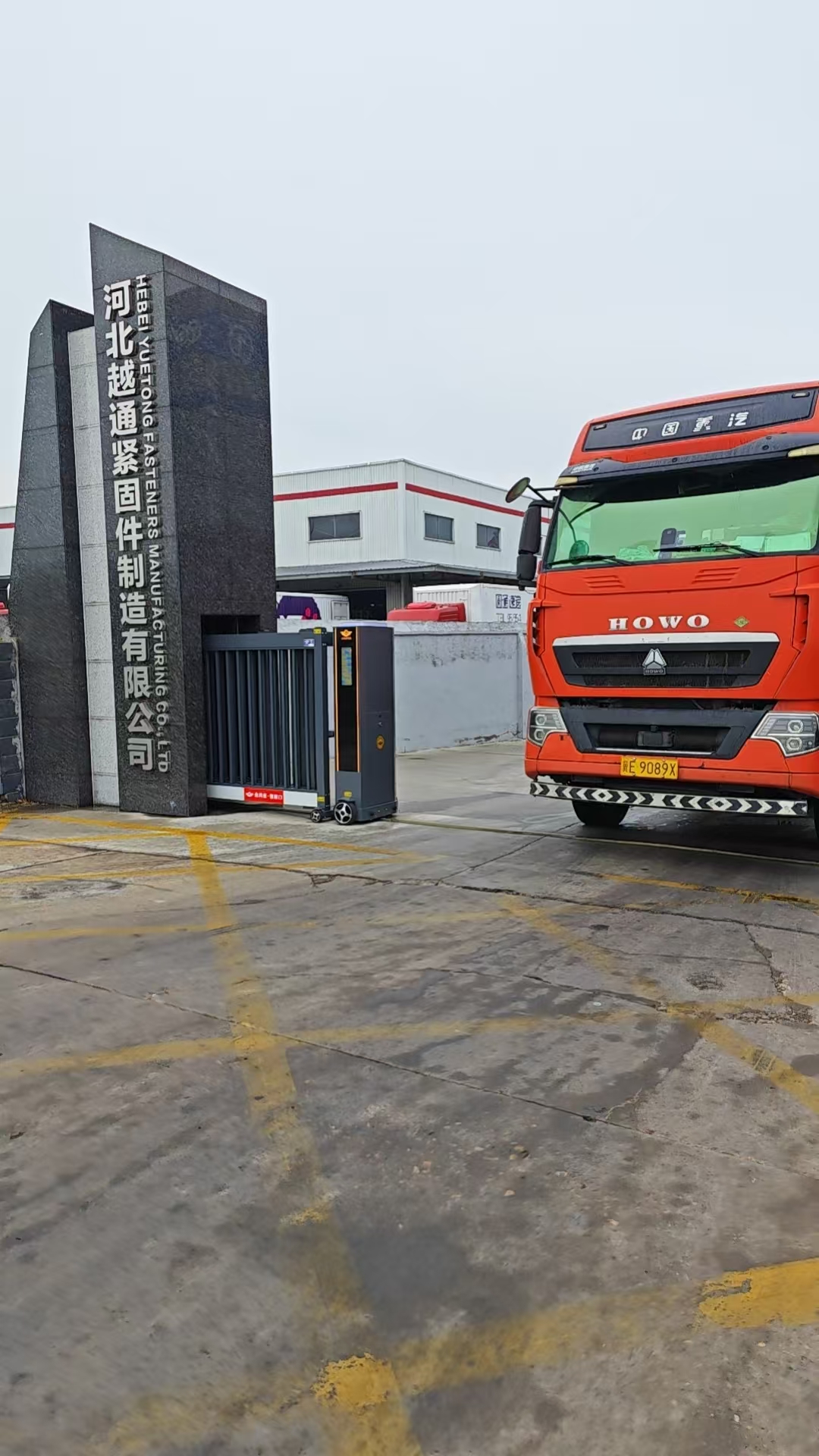
Export container loading from the YUETONG finished-products warehouse and packaging area.