Carbon Steel Hex Bolt Technical Guide: EN ISO 16047 Torque Data and Selection Parameters
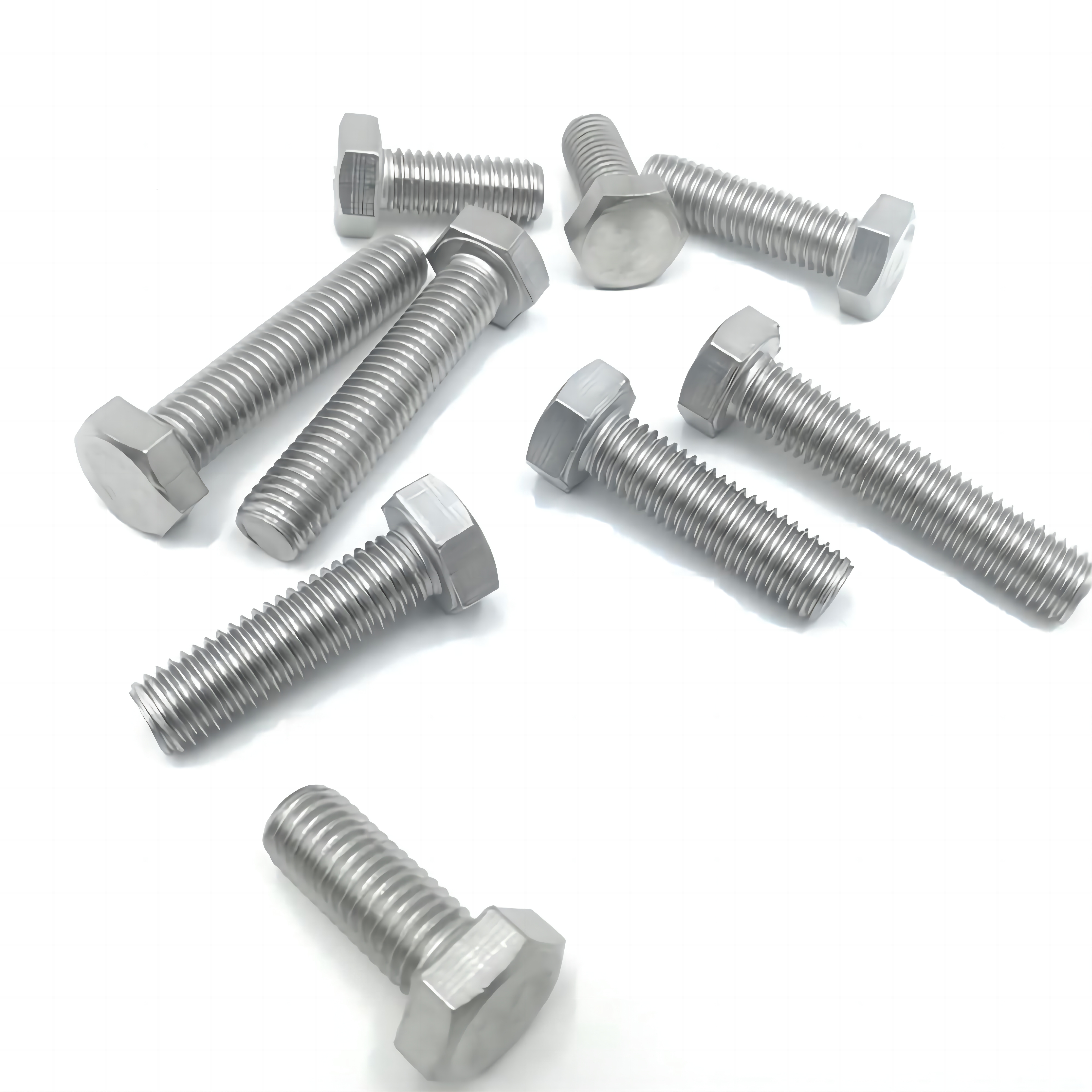
Reference fastener: carbon steel hex bolt from the YUETONG FASTENER 7337 range, M3–M36, grades 4.8 to 12.9.
Tightening torque and axial force are a matched pair, not two independent numbers. EN ISO 16047 defines how that pair is measured on a fastener, and for a carbon steel hex bolt it is the most practical selection parameter available before the joint is built — because it shows how much clamp force a given tightening torque actually produces in a real, coated, lubricated assembly.
This technical guide explains how to use EN ISO 16047 torque/axial force data together with EN ISO 10683:2018 coating requirements when selecting carbon steel hex bolts, and how that combination drives selection decisions in five working conditions: alternating vibration load, high and low temperature environments, coastal salt spray corrosion, static permanent fastening, and detachable repeated assembly.
Core answer: Select a carbon steel hex bolt by matching four parameters in sequence — load mode, environment, mechanical grade, and coating system — then derive the tightening torque from EN ISO 16047 torque/axial force data instead of a generic torque chart. EN ISO 10683:2018 governs the coating side of that decision for non-electrolytically applied zinc flake systems, and because coating changes the friction condition of the thread and bearing face, the same tightening torque will not deliver the same clamp force on a differently coated bolt.
Problem Definition: What a Grade Stamp Does Not Tell You
A designation such as grade 8.8 or 10.9 describes the strength class of the bolt material. It does not describe how much clamp force that bolt will hold after it has been tightened into a specific joint. Two carbon steel hex bolts of the same grade, same size and same nominal length can produce materially different preload at the same torque reading if their coatings differ.
That gap produces two opposing failures. Under-tightening leaves insufficient preload, and the joint is then exposed to gradual loosening under repeated vibration. Over-tightening pushes the fastener past its intended elastic behaviour. The known mechanical failure modes in this situation are thread stripping, fracture and deformation, and the typical triggers are high-frequency vibration of equipment, excessive installation torque, and long-term heavy-load tension.
The coating layer widens the gap further. Electroplated zinc is normally applied at a much thinner coating than hot-dip galvanizing — commonly cited ranges are 5–12 μm for zinc plating against 45–85 μm for hot-dip galvanizing. Those are not equivalent surfaces: the thread fit, the bearing-face friction and the corrosion reserve all differ, so a torque value validated on one coating route should not be carried across to another without re-checking the torque/axial force relationship.
Industry Background: A Large, Material-Concentrated Category
Hex bolts are a high-volume industrial component, and carbon steel remains the dominant material choice within the category. Strategic Market Research valued the global hex bolts market at USD 19.67 billion in 2025. Dataintelo separately reported the combined hex nuts and bolts market at USD 8.4 billion for the same year — a difference that reflects product-scope definitions rather than a contradiction, since broader industrial-grade classifications and narrower general-hardware classifications are not measuring the same basket. Carbon steel accounted for 44.8% of the global hex nuts and bolts market by material in 2025.
Trade data confirms the volume. The global export value for HS Code 731815 (other screws and bolts) was USD 26.35 billion in 2023, a 3.65% decline from the previous year. On the technical side, DIN 933 and ISO 4017 remain the primary standards for full-thread hex bolts, with ISO 4017 acting as the international successor to the older DIN designation.
Supply is concentrated geographically. China's Yongnian District in Hebei is the country's largest fastener production base, and HEBEI YUETONG FASTENERS MANUFACTURING CO.,LTD — which trades under the brand YUETONG FASTENER — was ranked third among Yongnian exporters as of 2023. The company was established in 2017, operates a 26,666.67 ㎡ facility with 100 employees, an annual output of 150,000 tons and a 12-engineer R&D team, and exports approximately 80% of production to the EU, North America, LATAM and MEA markets.
Detailed Solution: The Two Standards That Shape a Hex Bolt Specification
EN ISO 16047 — torque and axial force as a measured pair
EN ISO 16047 is the fastener test standard for the torque/clamp force relationship. Rather than testing tensile strength in isolation, it defines how tightening torque and the resulting axial force are measured on a bolt as it is tightened, so the result describes actual tightening behaviour: how much of the applied torque is converted into useful clamp force, and how much is absorbed by friction in the threads and under the bearing face.
For a specifier, the practical output is a conversion basis. If the joint design requires a target clamp force, EN ISO 16047 data for that bolt size, grade, coating and lubrication state allows the corresponding tightening torque to be derived — and, equally important, shows the scatter around that value. A wide spread means the joint needs a torque range and a verification method; a narrow spread means the specified torque can be held more tightly in production.
EN ISO 10683:2018 — the coating side of the equation
EN ISO 10683:2018 is the fastener coating standard for non-electrolytically applied zinc flake coating systems. It addresses the coating system itself — what is applied and how it must perform — rather than the tightening behaviour of the bolt. Because it is a non-electrolytic route, it is a natural fit where the coating must be applied uniformly across threads and recesses of higher-grade fasteners.
The 7337 hex bolt range is supplied with black oxide, zinc plated, hot-dip galvanized, Dacromet, mechanical galvanized and PTFE coating options. Dacromet is a zinc flake coating system and mechanical galvanizing is a non-electrolytic deposition route, so both sit in the family that EN ISO 10683:2018 addresses, whereas electroplated zinc and hot-dip galvanizing are separate coating routes with their own thickness ranges and their own surface friction characteristics.
Why the two standards must be read together
A coating specification cannot be made independently of a torque specification, because the coating defines the friction condition that the EN ISO 16047 data was measured under. Selecting a coating purely for corrosion performance and then applying a torque figure taken from a differently coated reference bolt is where most preload errors originate. The workable rule is: choose the environment-driven coating first, then obtain or verify the torque/axial force behaviour for that coating, then set the installation torque.
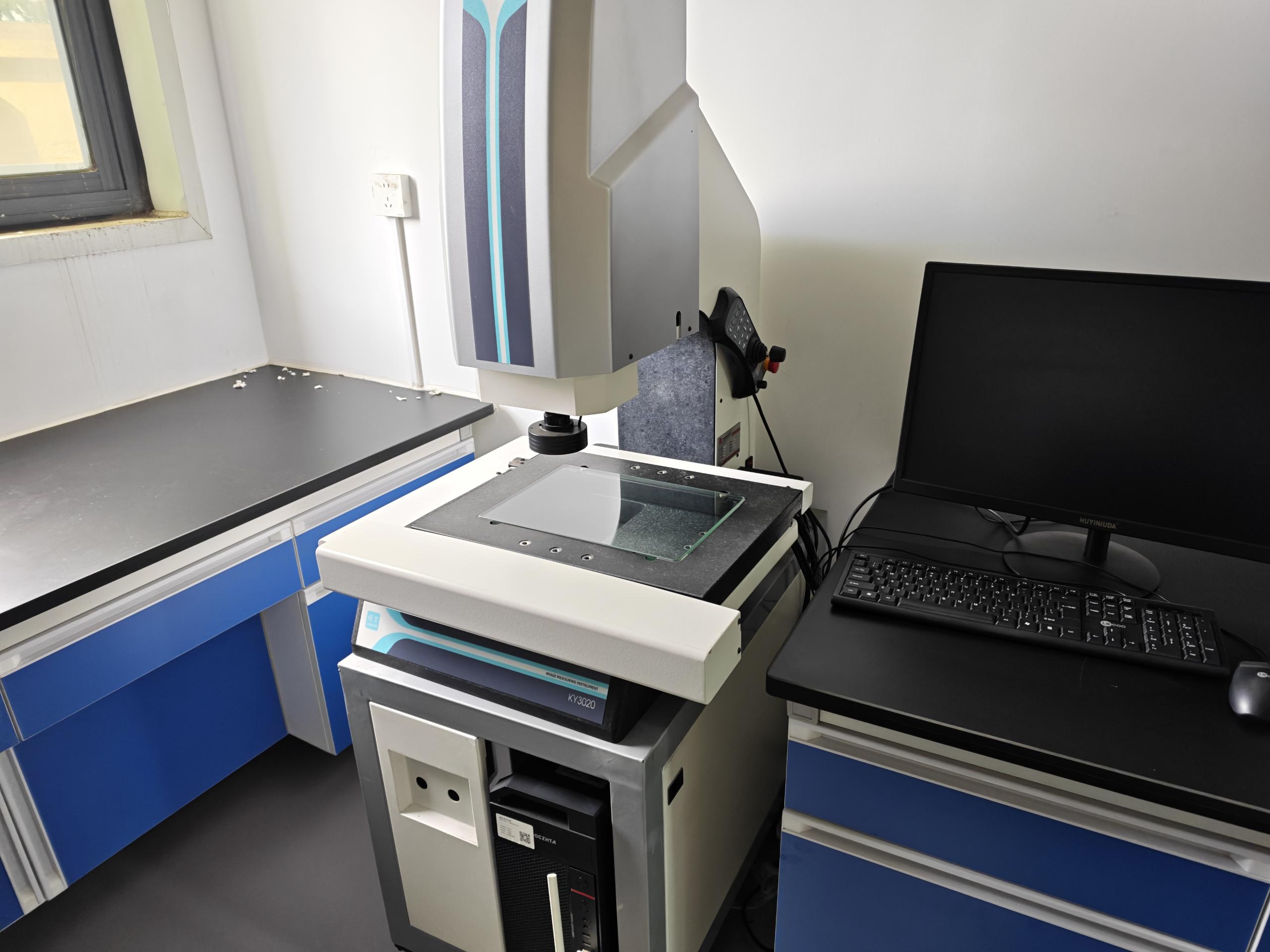
Thread geometry inspection: thread fit and surface condition determine how much tightening torque converts into clamp force.
Selection Parameters for Product 7337 Carbon Steel Hex Bolts
Mechanical grade and material
The 7337 range covers hex bolts in grades 4.8, 8.8, 10.9 and 12.9, with stainless steel options in A2-70 and A4-80. Base material is carbon steel, alloy steel or stainless steel. Grade selection sets the upper bound of achievable clamp force; the environment and coating then determine how much of that bound can be relied on over service life.
Thread, size and dimensional standard
Dimensional standards available within the range include GB/T, DIN, ISO and ASTM references — DIN 931, DIN 933, GB 5782, GB 5783 and ASME/ANSI B18.2.1 among them. Sizes span M6, M8, M10 and M12 through to M36, alongside inch sizes such as 1/4", 5/16", 3/8", 1/2" and 5/8". Thread pitch is offered in coarse or fine thread, and lengths run from 16 mm through 200 mm. Thread pitch matters for torque work because a finer pitch changes the mechanical advantage of the thread, so the torque value must match the pitch actually supplied.
Surface finish
Six finish routes are available, and each one produces a different friction condition at the thread and bearing face. This is the point where EN ISO 10683:2018 becomes relevant: where a non-electrolytic zinc flake system is required, the finish must be specified by that route rather than by a generic "zinc coated" description.
Supporting hardware and fastening equipment
Hex bolts of this range require matched supporting equipment to function as designed: nuts and washers for component fastening and connection, plus torque wrenches and impact drills for installation and maintenance. In vibration-load applications the supporting hardware choice is part of the anti-loosening strategy, together with lock nuts, locking washers or thread-locking solutions selected according to the operating conditions.
Documentation and traceability
Documentation is a selection parameter, not an afterthought. HEBEI YUETONG FASTENERS MANUFACTURING CO.,LTD operates an ISO 9001:2015 quality management system under a certificate valid until 2027-09-13, and product 7337 is covered by an ECM Type-Approved Attestation No. 3N230331.HYFUC49. The quality control sequence comprises raw material incoming inspection, in-process patrol inspection, finished product tensile load test and pre-shipment inspection, with third-party SGS testing available on request. Material certificates and test reports are issued with orders.
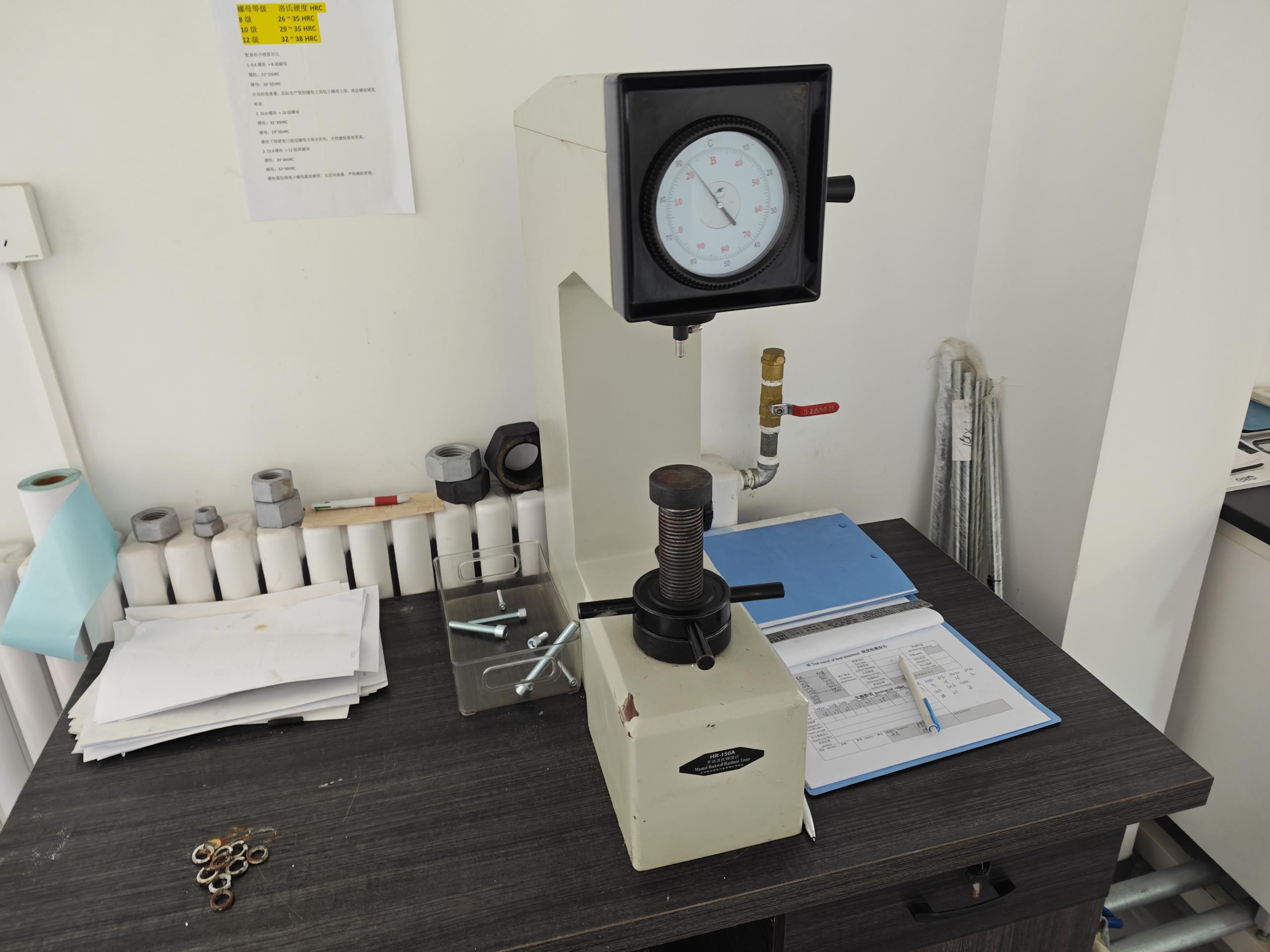
Hardness testing forms part of the pre-shipment verification sequence for the 7337 hex bolt range.
Step-by-Step: Turning Torque Data into a Working Specification
The following six steps convert EN ISO 16047 torque/axial force data and EN ISO 10683:2018 coating requirements into a specification that can be released to a supplier without ambiguity.
- Classify the load mode. Establish whether the joint is static permanent fastening, alternating vibration load, permanent installation, or detachable repeated assembly. This decision alone eliminates a large part of the product range before any size is considered.
- Classify the environment. Indoor normal environment, outdoor open-air, humid climate, coastal salt spray corrosion, high and low temperature, or explosion hazardous area. Environment drives the coating route; load mode drives the anti-loosening strategy.
- Fix the grade and material. Choose from grades 4.8, 8.8, 10.9 and 12.9, in carbon steel, alloy steel or stainless steel. Document the special requirements attached to the application — high tensile strength, anti-corrosion or high temperature resistance — so they are traceable later.
- Fix the coating route. Where a non-electrolytically applied zinc flake system is required, specify it against EN ISO 10683:2018. Where the corrosion target is lower and cost sensitivity is higher, electroplated zinc or hot-dip galvanizing may be appropriate — with the understanding that the two coatings differ substantially in thickness and therefore in corrosion reserve.
- Derive and verify the tightening torque. Convert the required clamp force into a tightening torque using EN ISO 16047 data for the exact bolt size, grade, coating and lubrication condition. Because friction scatter differs between coating routes, verify the applied torque with a calibrated torque wrench. Where impact drills are used for run-down, the final tightening value is normally confirmed separately with a torque wrench rather than assumed from the tool setting.
- Confirm the documentation package. Match the order to the certificate set — ISO 9001:2015 system scope, coating and product attestations, material certificates and test reports — so that the specification can be demonstrated at project acceptance.
Use Cases: Five Working Conditions and Their Selection Logic
1. Alternating vibration load
Engineering machinery and petrochemical installations are the clearest examples. In engineering machinery, the hex bolt provides equipment anchoring while operating under alternating vibration load. In petrochemical applications the same condition applies, with the additional requirement of high tensile strength and anti-corrosion performance. Wind power is another vibration-driven application, where the fastener carries load transmission duty.
Under these conditions the torque value is only one half of the answer. Correct thread fit, sufficient preload and a controlled tightening torque help maintain reliable clamping force during long-term service, and suitable locking methods — lock nuts, locking washers or thread-locking solutions — are selected according to the operating conditions. A torque figure that produces adequate preload but is applied inconsistently is not a vibration-resistant specification.
2. High and low temperature environments
PV power station projects and wind power applications routinely combine high and low temperature exposure with other stresses — PV installations add outdoor open-air service, while wind power adds vibration load. Both applications exist within the 7337 range. Temperature matters to the specification in two places: material and grade selection on one side, and coating system selection on the other, since the coating must survive the temperature cycle without losing its corrosion function.
3. Coastal salt spray corrosion
Coastal salt spray corrosion is a coating-first decision. The 7337 range covers humid climate and coastal salt spray conditions where anti-corrosion performance and ISO 9001 compliance are stated requirements. This is the environment where a specifier should refuse to accept the word "zinc" on its own: zinc plating at a typical 5–12 μm and hot-dip galvanizing at a typical 45–85 μm do not offer the same corrosion reserve, and where a non-electrolytic zinc flake system is required, EN ISO 10683:2018 should be named directly in the purchase specification.

Steel truss bridge joints: outdoor exposure combined with load-bearing fixing duty.
4. Static permanent fastening
Steel structure splicing, bridge and curtain wall work, civil construction and factory construction all fall into static permanent fastening, where the fastener provides load-bearing fixing or load transmission in a joint that is not intended to be opened. Because the joint is permanent, the tightening step is effectively irreversible in service — which raises the value of EN ISO 16047 data. Getting the torque right before installation is the only opportunity to do so.
5. Detachable repeated assembly
Some joints must be opened and reassembled — equipment workshops and maintenance-driven installations are typical. Detachable repeated assembly is a recognised operating mode in the 7337 application set, and it requires supporting equipment such as torque wrenches and impact drills to be part of the specification rather than an installation afterthought. Every reassembly should be treated as a new tightening event, with the same torque value re-applied and the coating condition re-checked, because coating damage at the bearing face changes the friction condition the original torque value was derived under.
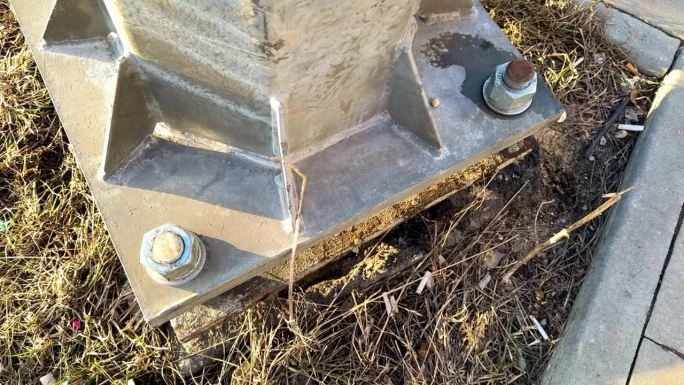
Outdoor steel structure base anchoring: permanent load-bearing fixing where torque is set once and relied upon for the service life of the joint.
Comparison Table: Working Condition vs. Selection Parameter
The table below maps the five working conditions covered in this guide against the selection parameters that change with each one. All entries are drawn from the 7337 application set and the supporting documentation listed above.
| Working condition | Typical operation mode | Primary selection parameter | Supporting hardware / equipment |
|---|---|---|---|
| Alternating vibration load (engineering machinery, petrochemical, wind power) | Alternating vibration load | Preload consistency plus locking method; torque value verified against EN ISO 16047 data | Nuts, washers, locking washers or lock nuts; torque wrenches, impact drills |
| High and low temperature (PV power stations, wind power) | Vibration load with outdoor exposure | Grade and material choice plus temperature-stable coating system | Nuts, washers; torque wrenches |
| Coastal salt spray corrosion | Permanent installation, humid climate | Coating route and thickness; EN ISO 10683:2018 where a non-electrolytic zinc flake system is specified | Matched nuts and washers in the same coating system |
| Static permanent fastening (steel structure, bridge and curtain wall, civil construction) | Static permanent fastening | Load-bearing fixing capacity and one-time torque setting from EN ISO 16047 data | Nuts and washers; calibrated torque wrench |
| Detachable repeated assembly (equipment workshop, maintenance joints) | Detachable repeated assembly | Re-tightening procedure and coating condition check at each reassembly | Torque wrenches and impact drills; replacement washers where required |
Coating route has a direct effect on the friction condition, and therefore on the torque required for a given clamp force. The thickness ranges below are the reference values most often used when comparing the two most common coating families.
| Coating route | Typical coating thickness | Effect on specification |
|---|---|---|
| Zinc plating (electroplated) | 5–12 μm | Thinner coating; thread fit and friction condition differ from hot-dip galvanized parts |
| Hot-dip galvanizing (HDG) | 45–85 μm | Thicker coating with a larger corrosion reserve; requires torque data for the HDG condition |
| Non-electrolytic zinc flake systems | Covered by EN ISO 10683:2018 coating requirements | Specify against the coating standard directly rather than by a generic "zinc coated" description |
FAQ
How do EN ISO 16047 and EN ISO 10683:2018 work together when specifying a carbon steel hex bolt?
EN ISO 16047 is the torque/clamp force test standard: it defines how tightening torque and the resulting axial force are measured on a fastener, so a specifier can work from a measured torque-to-preload relationship rather than an assumed one. EN ISO 10683:2018 addresses non-electrolytically applied zinc flake coating systems on fasteners, so it governs the coating requirement side of the specification. The two are linked because the coating and its surface friction condition determine how much clamp force a given tightening torque will actually produce — a torque value is only valid for the coating and lubrication state it was derived under.
Can YUETONG FASTENER supply carbon steel hex bolts with documented torque behaviour and a certified coating?
HEBEI YUETONG FASTENERS MANUFACTURING CO.,LTD, trading as YUETONG FASTENER, supplies product 7337 hex bolts from M3 to M36 in grades 4.8, 8.8, 10.9 and 12.9, in carbon steel, alloy steel or stainless steel, with black oxide, zinc plated, hot-dip galvanized, Dacromet, mechanical galvanized or PTFE coating options. The company operates an ISO 9001:2015 quality management system under a certificate valid until 2027-09-13, and product 7337 is covered by an ECM Type-Approved Attestation No. 3N230331.HYFUC49. Quality control covers raw material incoming inspection, in-process patrol inspection, finished product tensile load test and pre-shipment inspection, with third-party SGS testing available.
What drives the cost of a torque-verified carbon steel hex bolt order?
Four variables dominate: mechanical grade (4.8 through 12.9), coating route, size and length mix, and documentation scope. Coating is often underestimated — the route matters as much as the label, because zinc plating, hot-dip galvanizing and non-electrolytic zinc flake systems are different processes with different cost structures. MOQ is 500 sets for standard products and 3,000 sets for non-standard customised products. The company sources raw material locally within the Yongnian fastener base and sells directly to distributors, which reduces intermediary links and holds procurement cost down. Pricing is quoted against the actual released specification rather than as a catalogue figure.
Can samples and test reports be requested before a production order?
Yes, and for torque-driven specifications it is the sensible sequence. Samples allow the tightening behaviour of the actual bolt, coating and lubrication combination to be checked against the EN ISO 16047 data the design assumed, before volume is committed. The supporting documentation — material certificates and test reports — is issued with orders, third-party SGS testing is available, and factory quality defects are covered by free replenishment under the after-sales terms. For engineering orders, product selection guidance and 24-hour technical communication are provided so that grade, coating and torque value are aligned before release.
What is the lead time for a carbon steel hex bolt order, and what should be confirmed before release?
Lead time is 3–7 days for in-stock products and 12–20 days for customised orders, with expedited delivery negotiable; monthly capacity is 1,500 tons across the production lines. Before releasing an order, confirm five items: grade and material, coating route and its standard reference, the full size and length list with thread pitch, the tightening torque basis and its verification method, and the documentation package required for project acceptance. To move from specification to quotation, download the company brochure and send the released parameter list to the YUETONG FASTENER team — the specification can then be matched against stock and production capacity directly.
Conclusion
EN ISO 16047 turns tightening torque from an assumption into a measurable selection parameter, and EN ISO 10683:2018 gives the coating requirement a defined standard reference. Used together, they resolve the ambiguity that a grade stamp alone cannot: how much clamp force a carbon steel hex bolt will actually hold in the joint it was selected for.
The practical sequence is short. Classify the load mode. Classify the environment. Fix the grade. Fix the coating route. Derive the tightening torque from torque/axial force data measured for that exact combination, and verify it during installation. Then close the loop with documentation that can be demonstrated at project acceptance.
For specifications built on the 7337 hex bolt range — M3 to M36, grades 4.8 to 12.9, six coating routes, with ISO 9001:2015 certification valid until 2027-09-13 and ECM Type-Approved Attestation No. 3N230331.HYFUC49 — the selection parameters in this guide can be applied directly to a released drawing.
Next step: request a sample set or a specification-matched quotation for carbon steel hex bolts in grades 4.8, 8.8, 10.9 and 12.9. Download the full product brochure here: YUETONG FASTENER Company Brochure (PDF).
Contact: Aimee — info@ytfasteners.com | Tel / WhatsApp: +86 158-320-18600 | Website: www.ytfasteners.com | Blog: blog.ytfasteners.com | Address: West, 80m North, Tongfa Road & Yuantong Street Crossing, Southwest Industrial Zone, Yongnian, Handan, Hebei, China.
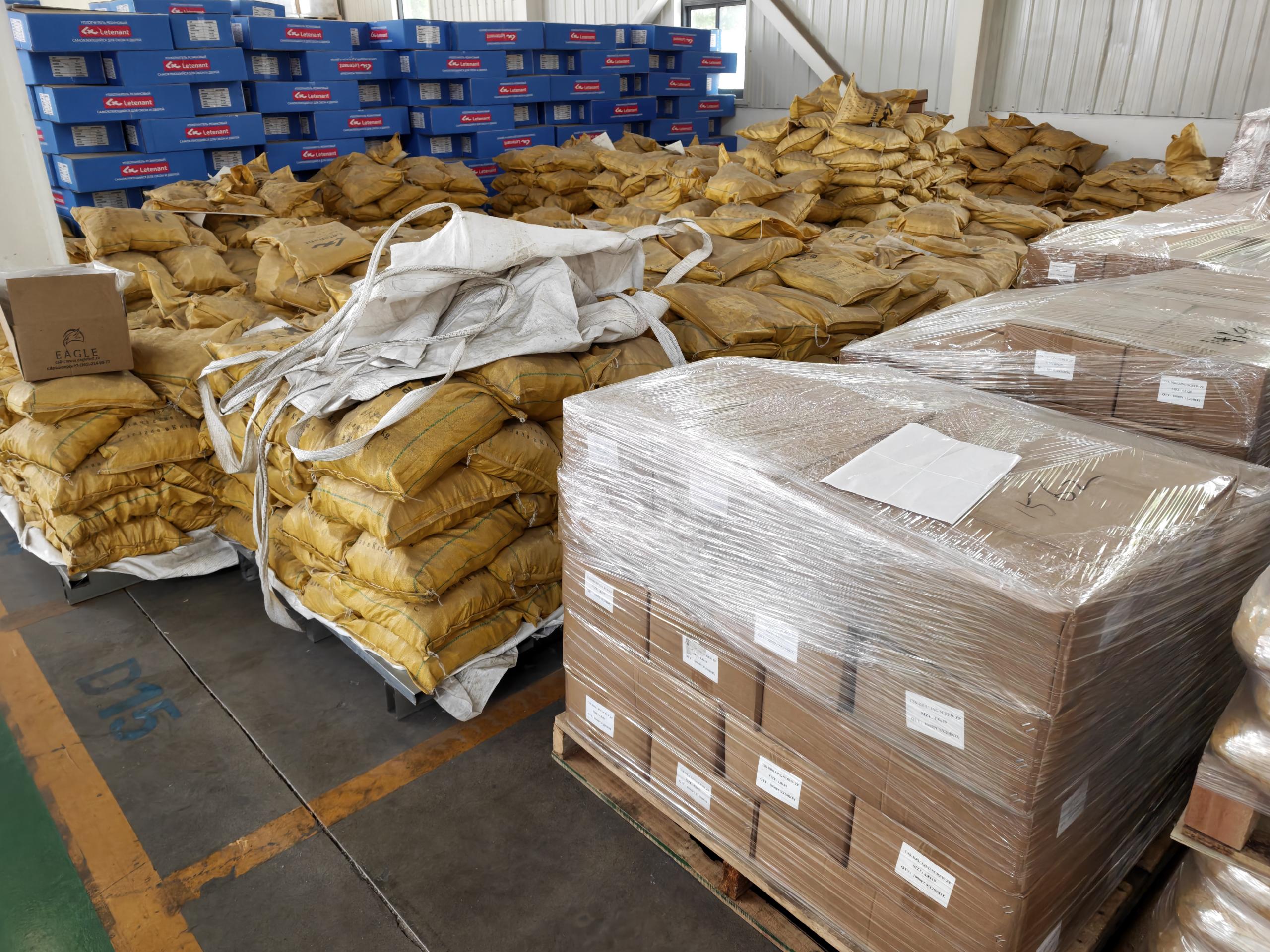
Export-packed carbon steel hex bolts prepared for dispatch — sample requests and specification-matched orders are handled from the same facility.
Have Questions or Need More Details?
Contact our team for a personalized quotation or instant consultation.
Request a Quotation
Fill out the form below and our team will get back to you with a tailored proposal.
WhatsApp Direct Chat
Prefer to chat in real-time? Message us on WhatsApp for instant assistance & quick answers.
- Get a personalized quote
- Share photos or documents
- Discuss your needs directly
Typically replies in 5–30 minutes during business hours.