Choosing Carbon Steel Hex Bolts for Coastal, Petrochemical, and Seismic Environments
A carbon steel hex bolt that survives a coastal jetty, a petrochemical process unit, or a seismic steel frame is not the same bolt that performs in a dry inland warehouse. Selection is governed by three coupled decisions: property class for load, coating system for corrosion, and tightening control for vibration. Get one of those wrong and the fastener becomes the weakest link in the structure.
This guide is written for procurement engineers, structural specifiers, importers, and project buyers who are evaluating carbon steel hex bolts for salt-spray, humid-outdoor, high-temperature, and vibration-loaded service. It explains what each environment actually does to a bolt, which specification variables change as a result, and how to structure a supplier evaluation around verifiable evidence instead of catalogue adjectives.
Problem Definition: What Coastal, Petrochemical, and Seismic Conditions Actually Do to a Hex Bolt
Three failure mechanisms dominate these environments, and each one pushes a different specification variable. Understanding which mechanism is dominant on a given project is the fastest way to avoid over-specifying one variable while under-specifying another.
1. Chloride-driven corrosion in coastal salt spray and humid outdoor climates
Coastal air carries chloride ions that deposit on the fastener surface and break down the protective layer during repeated wet-and-dry cycles. In humid outdoor climates the same mechanism runs more slowly but continuously, because condensation forms on the bolt head and along the thread root even without direct rainfall.
The governing variable here is coating thickness, not coating name. Electroplated zinc typically provides a coating thickness of 5–12 µm, while hot-dip galvanizing provides 45–85 µm. That difference in barrier thickness, not the brand of the finish, is what determines how long the coating delays the onset of red rust in a salt-spray environment. A project that specifies the right finish family but accepts an under-thickness coating has not actually solved the corrosion problem.
2. High temperature and chemical exposure in petrochemical service
Petrochemical and equipment-workshop environments combine elevated service temperature, chemical vapour, and in some cases explosion-hazardous areas. Fastener requirements therefore shift from pure corrosion resistance toward a combination of factors: high tensile strength, anti-corrosion performance, high-temperature resistance, and multi-standard compliance.
In these units the bolt specification is usually fixed by the piping, vessel, or structural design package. The realistic question for a buyer is not “which bolt is best” but “can this supplier deliver the exact grade, standard, and coating that the specification names, with documentation that survives an audit.”
3. Self-loosening under seismic and vibration load
Seismic events and continuous machinery vibration attack the joint rather than the material. Repeated vibration, insufficient preload, or an incorrect tightening torque can cause gradual loosening. Excessive installation torque and long-term heavy-load tension can push the fastener toward thread stripping, deformation, and eventually fracture.
The countermeasures are mechanical and procedural rather than metallurgical alone: correct thread fit, sufficient preload, controlled tightening torque, and appropriate locking methods such as lock nuts, locking washers, or thread-locking solutions selected for the actual operating condition. For vibrating working conditions, seismic high-strength bolts are the appropriate specification, supported by torque, hardness, and fatigue testing before delivery.
Where projects most often go wrong: treating coating selection as a purchasing detail rather than an engineering decision. A Grade 8.8 zinc plated hex bolt and a Grade 8.8 hot-dip galvanized hex bolt can carry identical load, yet behave completely differently after five years of coastal exposure.
Industry Background: Why Specification Discipline Matters More Than Price per Piece
Carbon steel remains the dominant material for hex nuts and bolts, accounting for 44.8% of the global market share in 2025. The wider hex bolt market was valued at USD 19.67 billion in 2025 according to Strategic Market Research. These two figures come from different sources with different product scopes, and the gap is instructive: a separate commercial research source defines the combined hex nut and bolt market at a much narrower USD 8.4 billion. The discrepancy is a definition difference — industrial-grade scope versus general hardware scope — not a measurement error, and it is a reminder that market headlines rarely map cleanly onto a specific project's bill of materials.
Trade data tells a similar story about competitive pressure. The global export value for HS Code 731815 (other screws and bolts) was USD 26.35 billion in 2023, a 3.65% decline from the previous year. In a flat-to-declining trade environment, buyers gain leverage on price but lose margin for error on quality; the suppliers that remain stable are usually those whose documentation and process control can be verified rather than asserted.
Supply geography concentrates heavily. China's Yongnian District in Hebei is the largest fastener production base in the country, and it is the home region of YUETONG FASTENER. The company's published profile ranks it third among Yongnian exporters as of 2023, and it operates as a designated enterprise above the designated size in Yongnian District.
On the standards side, DIN 933 and ISO 4017 are the primary standards for full-thread hex bolts, with ISO 4017 functioning as the international successor to DIN 933. For buyers working across EU, North American, and Middle Eastern projects, the practical implication is that a supplier must handle both the DIN designation and the ISO equivalent without treating them as interchangeable in the paperwork.
The Detailed Solution: What a Coastal-, Petrochemical-, and Seismic-Ready Hex Bolt Supply Includes
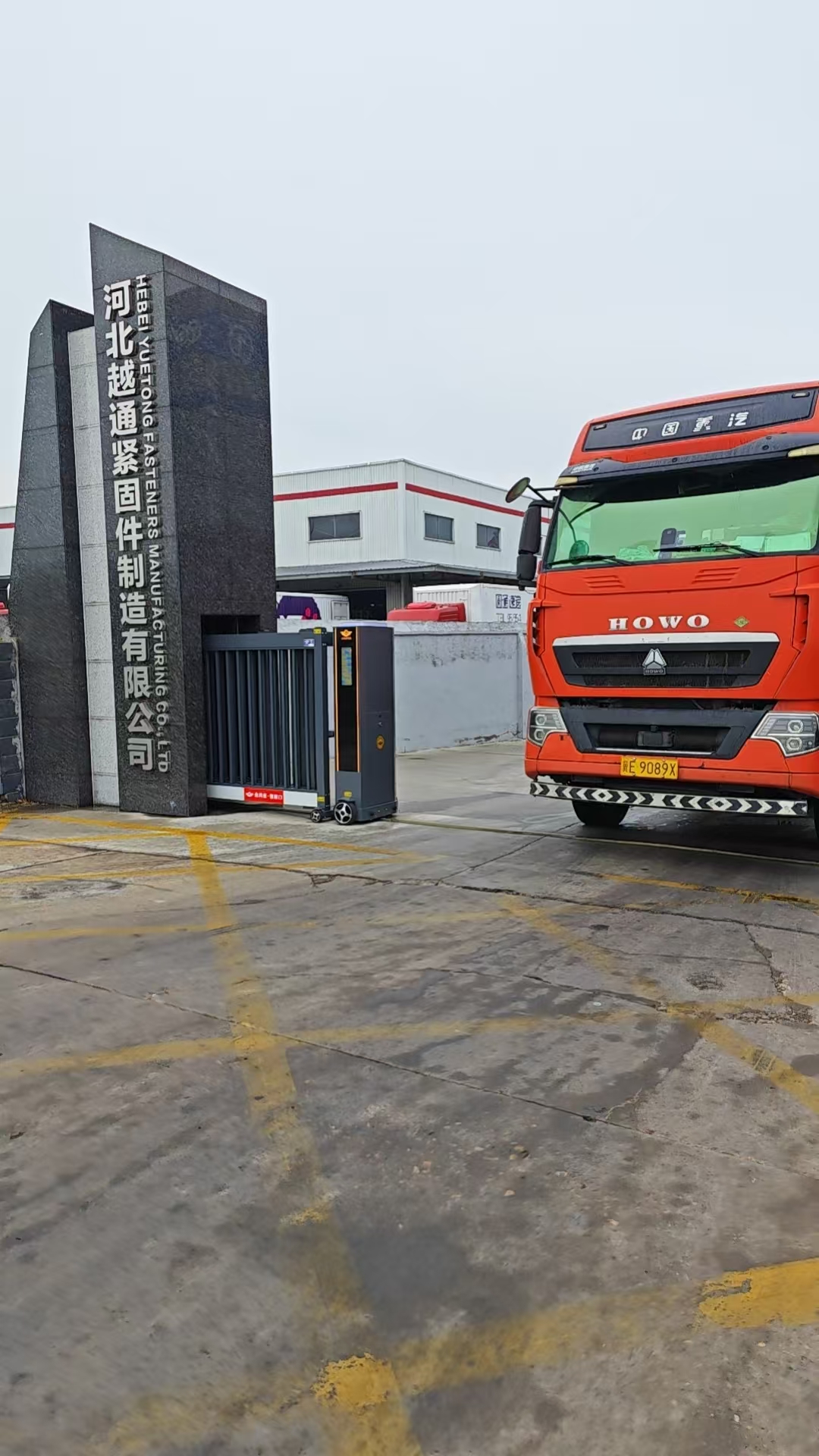
HEBEI YUETONG FASTENERS MANUFACTURING CO.,LTD is a fastener manufacturer established in 2017 and located in the central area of Yongnian District, Handan, Hebei, China. The company produces hex bolts, hex nuts, sleeve anchors, thread rods, flat washers, hex socket head bolts, wheel hub bolts, and DIY packing, with approximately 80% of output exported.
Product range and material options
The Hex Bolt product line covers a model range of M3 to M36, with commonly specified sizes including M6, M8, M10, and M12 as well as imperial sizes such as 1/4", 5/16", 3/8", 1/2", and 5/8". Lengths run from 16 mm up to 200 mm, and both coarse thread and fine thread are available.
Property classes available across the range are 4.8, 8.8, 10.9, and 12.9 in carbon steel and alloy steel, plus A2-70 and A4-80 in stainless steel. Standards supported include GB/T, DIN, ISO, and ASTM — specifically DIN 931, DIN 933, GB5782, GB5783, and ASME/ANSI B18.2.1. The surrounding fastener family covers hex head bolts, metric hex bolts, zinc plated hex bolts, hot dip galvanized bolts, hex socket bolts, anchor bolts, hook bolts, eye bolts, U-bolts, hanger bolts, carriage bolts, flange bolts, Grade 12.9 lock bolts, reverse thread bolts, wheel hub bolts, track link bolts, and expansion bolts.
Surface finish options for corrosion control
Six finish routes are available for the hex bolt range: black oxide, zinc plated, hot-dip galvanized, Dacromet, mechanical galvanized, and PTFE coating. The finish is treated as a selection variable rather than a cosmetic one, which matters most for coastal and humid-outdoor projects where coating thickness is the controlling factor.
Compliance documentation that can be audited
For coastal, petrochemical, and seismic projects, the certification set is part of the product. The manufacturer holds an ISO 9001 quality management system certificate (certificate 29024Q12949-09R1M, issued 14 September 2021, valid to 13 September 2027), an ISO 14001 environmental management system certificate (certificate 29025E12097-12R0M, issued 18 December 2025, valid to 17 December 2028), and an ISO 45001 occupational health and safety management system certificate (certificate 29025S12024-12R0M, issued 18 December 2025, valid to 17 December 2028), all issued by ZhongTai Union Certification Co., LTD.
The quality and automotive certifications include IATF 16949:2016 (certificate 2600920/R0M, issued 7 May 2026, valid to 6 May 2029) covering the manufacture of fasteners, and an ISO 14067 carbon footprint certificate of registration (certificate 33925CFMS00020R0S, issued 8 December 2025, valid to 7 December 2028) covering the processing and sales of high-strength steel bolts and nuts. For EU market access, an ECM Type-Approved Attestation (No. 3N230331.HYFUC49, issued 3 April 2023, valid to 30 March 2028) covers bolts, nuts, washers, thread rods, anchors, and screws against EN ISO 10683:2018, EN ISO 16047:2005+A1:2012, and EN ISO 4753:2011. A Gold Plus Supplier Assessment Certificate (491647039 P+T, issued 23 June 2026, valid to 22 June 2027), based on an on-site assessment by SGS, documents factory supplier capability for fasteners.
The ISO 14001 and ISO 45001 certificates are worth noting explicitly for projects with environmental and workplace-safety procurement clauses. Their scope covers environmental management activities involved in the production of fasteners and occupational health and safety management activities in fastener production and export sales — which is the wording an EHS-focused buyer or contractor needs to see.
Quality control chain
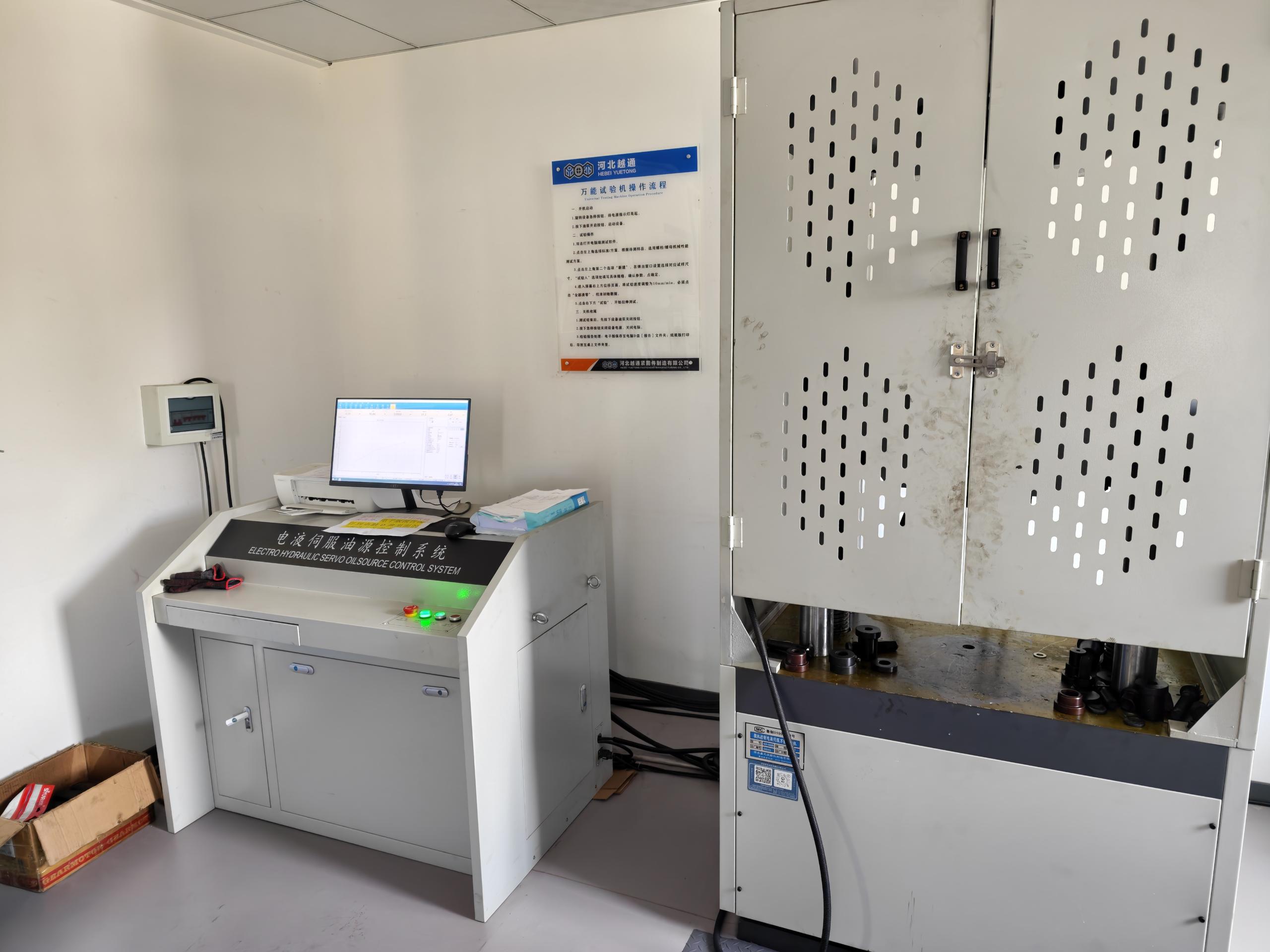
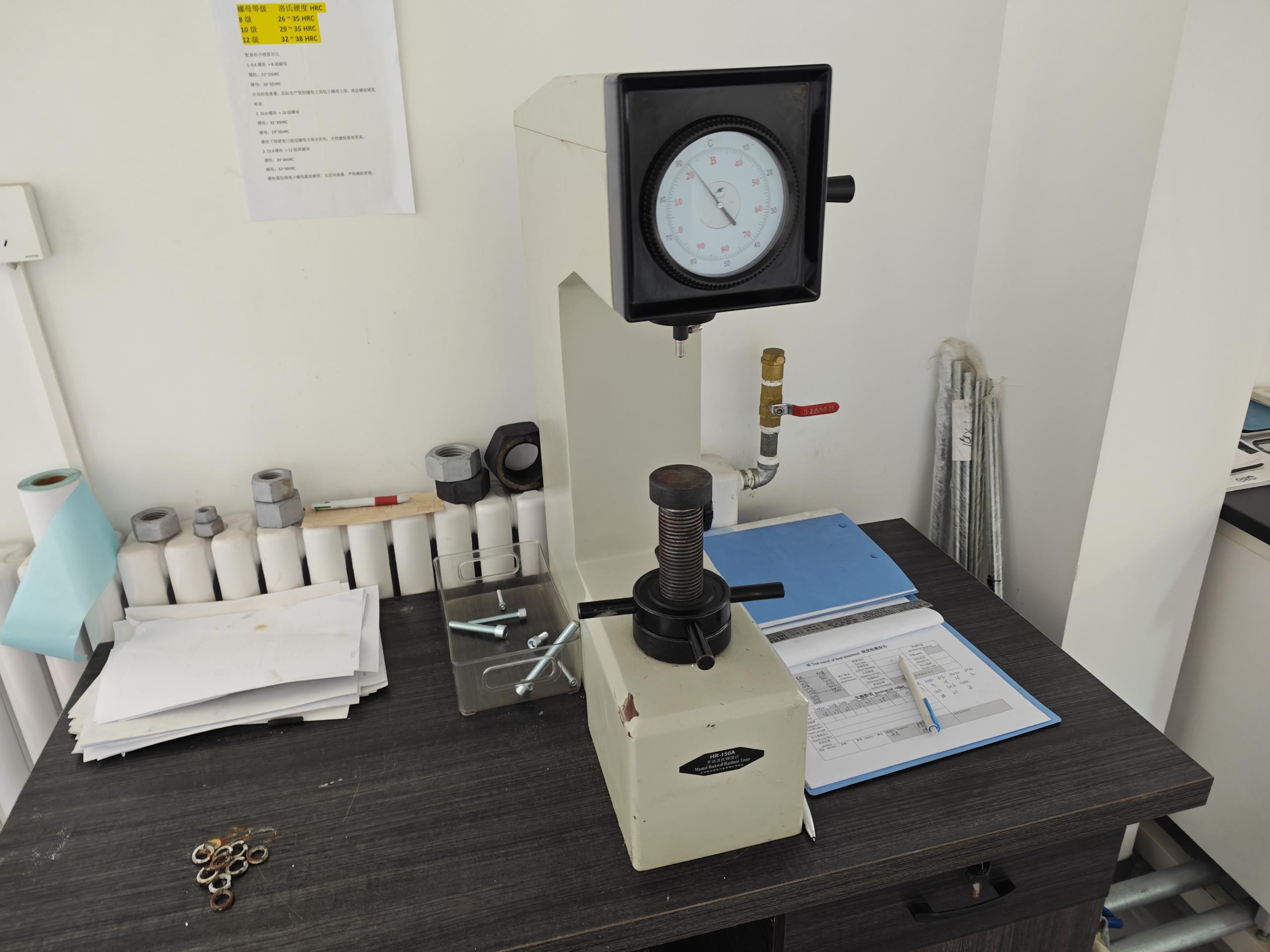
Quality control includes raw material incoming inspection, in-process patrol inspection, finished product tensile load test, and pre-shipment inspection, with third-party SGS testing available as an additional option. The company produces on a base of 26,666.67 m² of factory space with 100 employees, a 12-engineer R&D team, and an annual output of 150,000 tons against a monthly capacity of 1,500 tons.
Step-by-Step Breakdown: How to Specify a Carbon Steel Hex Bolt for These Environments
The following sequence mirrors how a project specification is actually built, and it can be used as a checklist when evaluating quotations from different suppliers.
- Classify the environment, not the product. Decide which conditions apply: coastal salt spray, humid outdoor climate, high and low temperature, explosion-hazardous area, or vibration load. These are distinct working conditions that drive different requirements, and a bolt rarely needs to satisfy all of them at once.
- Fix the property class from the design load. The available range is 4.8, 8.8, 10.9, and 12.9, plus A2-70 and A4-80 in stainless steel. The class is determined by the structural or mechanical calculation, not by supplier preference, so this step should not be left to the purchasing department.
- Select the coating against the corrosion exposure. For coastal salt spray and humid outdoor climates, the coating decision is primarily about barrier thickness. Hot-dip galvanizing at 45–85 µm and electroplated zinc at 5–12 µm are not interchangeable in chloride exposure, even when both bolts carry the same grade marking.
- Confirm the standard and thread form. Full-thread hex bolts follow DIN 933 or its ISO successor ISO 4017; other configurations follow DIN 931, GB5782, GB5783, or ASME/ANSI B18.2.1. Confirm coarse versus fine thread at the same time, because thread form interacts with preload control.
- Define preload and tightening torque, then select the locking method. Correct thread fit, sufficient preload, and controlled tightening torque are what keep a joint tight. In vibrating or seismic conditions, add lock nuts, locking washers, or thread-locking solutions according to the operating condition.
- Specify the evidence package. Ask for material certificates and test reports, confirm whether third-party SGS testing is required, and check the validity window of the certificates being cited. A certificate that expired last year is not compliance evidence.
- Validate with a sample before scaling. Sample validation is the cheapest point in the project to discover a coating, tolerance, or marking mismatch.
- Plan MOQ and lead time against the construction schedule. Standard products and non-standard customized products follow different commercial rules, and the difference should be reflected in the project timeline rather than absorbed as a surprise.
Use Cases: Where These Selections Are Applied
The four environments below are the ones where the coating-and-grade decision has the largest financial consequence. In each case, the application requirement is drawn from documented working conditions and industry coverage rather than from marketing positioning.
Coastal and marine engineering
Bolts used in coastal salt spray conditions, harbour structures, and marine engineering carry the most demanding corrosion requirement, because the chloride exposure is continuous and the joints are rarely inspected. Hot-dip galvanized or Dacromet finishes are the natural candidates, combined with a property class that matches the structural load. In these projects, the verification question to ask a supplier is not whether the bolt is “galvanized” but what coating thickness range is actually delivered.
Petrochemical and equipment workshops
Petrochemical projects, equipment workshops, and explosion-hazardous areas combine corrosion, elevated temperature, and documentation requirements. The bolts here are frequently part of a governed specification, so multi-standard compliance and a complete certificate set matter as much as the mechanical properties. High temperature resistance and high tensile strength are the recurring special requirements.
Wind power and new-energy structures
Wind power and new-energy PV installations expose fasteners to humidity, temperature cycling, and dynamic load simultaneously. The relevant requirement combination is anti-corrosion performance plus resistance to vibration-driven loosening, which is why the locking method is specified alongside the coating rather than after it.
Seismic steel structures, bridges, and rail transit
Steel structure projects, bridge and curtain wall projects, and rail transit projects place the emphasis on preload and seismic resistance. Vibration load conditions and alternating load operation are the defining features, so seismic high-strength bolts and controlled installation torque take priority over decorative finish considerations.
Documented engineering case
In one documented project, 15,000 pieces of fasteners were supplied across engineering contractor, construction company, and hypermarket clients, applied to steel structure splicing, mechanical equipment fixing, building component fastening, and bracket assembly, with a service duration of 10–15 years. The reported result was stable fastening strength, vibration-resistant and non-loosening performance suitable for long-term load working conditions, zero quality faults, and successful project acceptance. The highlighted selection factors were high strength grade, standard precision, wear resistance, and cost-effectiveness across multi-scene structural fastening.
Comparison Table: Matching Fastener Variables to Environment
The two tables below compress the selection logic into a form that can be used directly in a specification review or a supplier comparison sheet. Only variables that can be confirmed from documented product data are included.
Table 1 — Environment-driven selection focus
| Environment | Dominant risk | Property class range available | Coating focus | Governing standard | Verification step |
|---|---|---|---|---|---|
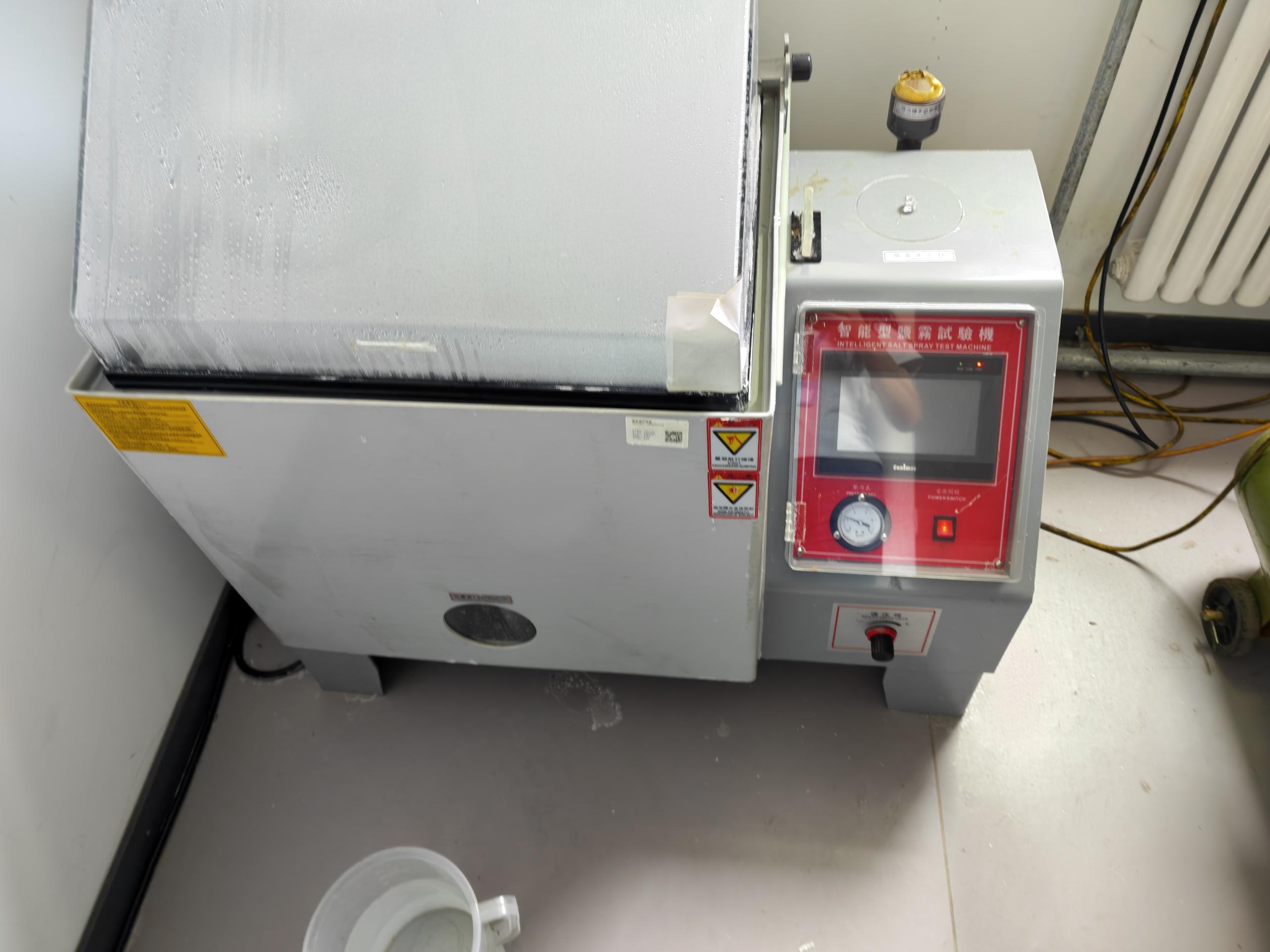
| Coastal salt spray | Chloride corrosion, coating depletion | 4.8 / 8.8 / 10.9 / 12.9; A2-70, A4-80 | Hot-dip galvanized (45–85 µm) preferred over zinc plated (5–12 µm) | DIN 933 / ISO 4017; EN ISO 10683 | Salt-spray test chamber inspection; third-party SGS testing |
| Humid outdoor climate | Condensation, slow surface corrosion | 4.8 / 8.8 / 10.9 / 12.9 | Zinc plated, hot-dip galvanized, Dacromet, mechanical galvanized | DIN 931 / DIN 933; GB5782 / GB5783 | Coating thickness verification; pre-shipment inspection |
| Petrochemical and high temperature | Heat, chemical exposure, explosion-hazardous area | 8.8 / 10.9 / 12.9; A2-70, A4-80 | PTFE coating, Dacromet, hot-dip galvanized | ASME/ANSI B18.2.1; EN ISO 16047 | Material certificates and test reports; hardness test |
| Seismic and vibration load | Self-loosening, fatigue, thread stripping | 8.8 / 10.9 / 12.9 high-strength grades | Finish secondary to torque control | DIN 933 / ISO 4017; EN ISO 4753 | Torque, hardness, and fatigue testing before delivery |
Table 2 — Surface finish reference for carbon steel hex bolts
| Surface finish | Documented coating thickness | Typical exposure considered | Notes for buyers |
|---|---|---|---|
| Zinc plated | 5–12 µm | Indoor and sheltered outdoor | Thinner barrier; verify coating thickness rather than assuming the finish name guarantees corrosion life |
| Hot-dip galvanized | 45–85 µm | Coastal salt spray, humid outdoor, marine engineering | Substantially thicker zinc barrier; the reference finish for chloride exposure |
| Black oxide | Not specified in this data set | Generally used in dry, oiled indoor conditions | Not a corrosion barrier in its own right; specify only where the environment is controlled |
| Dacromet | Not specified in this data set | Humid and moderately corrosive service | Zinc-flake type coating; confirm thickness and specification requirement with the supplier |
| Mechanical galvanized | Not specified in this data set | Humid outdoor and fastener sizes where hot-dip is impractical | Applied after thread forming; confirm thread fit allowance |
| PTFE coating | Not specified in this data set | Chemical exposure and controlled-friction joints | Selected for low friction and chemical resistance rather than coating thickness |
Two caveats belong with these tables. First, coating thickness figures quoted here are industry reference values for the finish families, not a guarantee of the thickness delivered on any individual order, which is why coating verification is listed as a separate step. Second, the property class column lists the range available from the manufacturer; the correct class for a specific joint always comes from the design calculation.
Application priority ranking: which environment pushes a hex bolt hardest
Ranking the three environments in the article title is useful because it clarifies where specification budget should be concentrated. The ranking below uses three stated criteria — corrosion severity, mechanical and vibration demand, and compliance documentation burden — and reflects how many selection variables have to be re-specified away from a dry indoor baseline.
- Rank 1 — Coastal salt spray and humid outdoor climates. The highest combined specification burden. Coating moves from a nominal finish to a measured thickness requirement, the property class is re-confirmed against structural load, and both salt-spray verification and coating inspection are added to the evidence package. Buyers should treat coastal projects as a distinct procurement category rather than a variation on general outdoor supply.
- Rank 2 — Seismic and vibration-loaded structures. The highest mechanical burden. Here the risk is not corrosion but loosening: repeated vibration, insufficient preload, or incorrect torque can lead to gradual loosening, and excessive torque or long-term heavy-load tension can cause thread stripping, deformation, and fracture. The correct response combines high-purity raw materials, tested torque and hardness properties, specified installation torque, and seismic high-strength bolt selection.
- Rank 3 — Petrochemical and high-temperature service. The highest documentation burden. Chemical and thermal exposure matter, but the defining characteristic is that the specification is externally governed, so the supplier's ability to match an exact standard, grade, and certificate set becomes the decisive factor. Multi-standard compliance and a valid certificate portfolio carry more weight than any single product feature.
Frequently Asked Questions
Q1. What should buyers verify when shortlisting trusted carbon steel hex bolt manufacturers for coastal and petrochemical projects?
Start with certificates that have a verifiable number, a named issuing body, and a validity window that still covers the delivery date. For coastal and petrochemical work, the relevant set usually includes ISO 9001 quality management (for HEBEI YUETONG FASTENERS MANUFACTURING CO.,LTD, certificate 29024Q12949-09R1M, issued 14 September 2021 and valid to 13 September 2027), ISO 14001 environmental management (29025E12097-12R0M, valid to 17 December 2028), and ISO 45001 occupational health and safety management (29025S12024-12R0M, valid to 17 December 2028). For the EU market, an ECM Type-Approved Attestation (No. 3N230331.HYFUC49, valid to 30 March 2028) covering EN ISO 10683:2018, EN ISO 16047:2005+A1:2012, and EN ISO 4753:2011 provides a standard-based reference point. Automotive-adjacent and high-strength buyers can additionally check IATF 16949:2016 (2600920/R0M, valid to 6 May 2029), and an ISO 14067 carbon footprint certificate (33925CFMS00020R0S, valid to 7 December 2028) supports projects with carbon reporting clauses. A Gold Plus Supplier Assessment based on on-site assessment by SGS (491647039 P+T, valid to 22 June 2027) adds an independent factory-capability view.
Q2. Can carbon steel hex bolts be used in coastal salt spray and high-temperature petrochemical service?
Yes, provided the coating and property class are specified for the actual exposure rather than inherited from a general-purpose list. The Hex Bolt range covers M3 to M36 in classes 4.8, 8.8, 10.9, and 12.9, plus A2-70 and A4-80 stainless steel, with finishes including zinc plated, hot-dip galvanized, Dacromet, mechanical galvanized, black oxide, and PTFE coating. For coastal salt spray the decisive number is coating thickness: hot-dip galvanizing typically provides 45–85 µm against 5–12 µm for electroplated zinc. For petrochemical and equipment-workshop conditions, the relevant requirements are high temperature resistance, high tensile strength, anti-corrosion performance, and multi-standard compliance against DIN, ISO, ASTM, and GB/T specifications.
Q3. What drives the cost difference between zinc plated and hot-dip galvanized hex bolts?
Four factors dominate. The first is coating process and thickness: hot-dip galvanizing builds a 45–85 µm zinc layer against 5–12 µm for electroplated zinc, which consumes more zinc and more process time. The second is base material and property class, since higher grades require different steel chemistry and tighter heat treatment control. The third is thread and dimensional tolerance, because thicker coatings require thread allowances to keep the fastener assemblable. The fourth is the documentation and testing scope — material certificates, test reports, and optional third-party SGS testing are real cost items, but they are also the items that determine whether a shipment clears project inspection. Buyers comparing quotations should normalise all four before comparing unit prices.
Q4. Can I validate samples and test reports before placing a full order?
Yes, and it is the recommended sequence. The quality control process includes raw material incoming inspection, in-process patrol inspection, finished product tensile load test, and pre-shipment inspection, with third-party SGS testing available. Material certificates and test reports are provided, and technical communication is handled within 24 hours, including product selection guidance for a specific environment. For coastal projects, sample validation should include coating thickness confirmation; for seismic or vibration-loaded joints, it should include the torque and locking method that will be used on site.
Q5. What are the MOQ and lead times for standard and customized carbon steel hex bolts?
For standard products, the minimum order quantity is 500 sets and lead time is 3–7 days for in-stock items. For non-standard customized products, the minimum order quantity is 3000 sets and lead time is 12–20 days, with expedited delivery negotiable. Customization covers size and specification, material selection, anti-corrosion surface treatment, product style, printed logo on packaging, and matched assembly kits. If your coastal, petrochemical, or seismic project has a fixed installation window, the practical next step is to send the specification and required certificate set to info@ytfasteners.com or contact the sales team via WhatsApp so that lead time can be confirmed against the schedule before the order is placed.
Conclusion: Specify the Environment First, the Bolt Second
Choosing carbon steel hex bolts for coastal, petrochemical, and seismic environments is a specification exercise before it is a purchasing exercise. Coastal salt spray and humid outdoor climates demand a coating decision measured in micrometres, not adjectives. Petrochemical and high-temperature service demands an exact match to a governed standard and a certificate set that is still valid on the delivery date. Seismic and vibration-loaded structures demand controlled preload, correct tightening torque, and a locking method matched to the operating condition.
For buyers in the evaluation stage, three practical outcomes follow. Confirm that the supplier's property class range, standards coverage, and surface finish portfolio actually include what your specification names. Verify that the compliance documents — ISO 9001, ISO 14001, ISO 45001, IATF 16949, ISO 14067, and the ECM attestation — are current and scoped to fastener production and export sales. And build the evidence package into the purchase order rather than requesting it after production, because that is when material certificates, tensile load test records, and optional third-party SGS verification are cheapest to secure.
YUETONG FASTENER manufactures hex bolts and related fasteners in Yongnian District, Hebei, with a monthly capacity of 1,500 tons, an annual output of 150,000 tons, and OEM, ODM, non-standard customization, and bulk stock supply modes. For a project-specific review, the full product range and capability summary are available for download.
Next step: request a sample or a quotation
Send your environment description, property class, standard, coating requirement, and required certificate set, and the team will confirm the matching specification, MOQ, and lead time.
📧 info@ytfasteners.com | 📞 +86 158-320-18600 | 🌐 www.ytfasteners.com
📄 Download the full fastener catalogue (PDF)
HEBEI YUETONG FASTENERS MANUFACTURING CO.,LTD — West, 80m North, Tongfa Road & Yuantong Street Crossing, Southwest Industrial Zone, Yongnian, Handan, Hebei, China.
Have Questions or Need More Details?
Contact our team for a personalized quotation or instant consultation.
Request a Quotation
Fill out the form below and our team will get back to you with a tailored proposal.
WhatsApp Direct Chat
Prefer to chat in real-time? Message us on WhatsApp for instant assistance & quick answers.
- Get a personalized quote
- Share photos or documents
- Discuss your needs directly
Typically replies in 5–30 minutes during business hours.