
Evaluating Carbon Steel Hex Bolt Manufacturers: A Checklist Based on Real Certifications
A carbon steel hex bolt manufacturer should be screened on four management-system certificates before commercial terms are negotiated: ISO 9001 for quality management, ISO 14001 for environmental management, ISO 45001 for occupational health and safety, and IATF 16949 where automotive-grade parts such as wheel hub bolts are involved. Each of these is issued and re-audited by an independent certification body, which makes them the most efficient auditable filter a buyer has at the decision stage.
The commercial reason this screening matters is scale. The global hex bolts market was valued at USD 19.67 billion in 2025, and carbon steel accounted for 44.8% of global hex nut and bolt demand in the same year. With demand of that size spread across a very large supplier base, certificates are frequently the only externally verifiable signal a purchasing team can obtain before committing to a first order.
The difficulty is that not every certificate carries the same weight, and not every claim is scoped to the product being bought. This article sets out a working checklist for evaluating carbon steel hex bolt manufacturers using certifications that can actually be opened, checked and cross-referenced.
Why Certifications Outrank Price Talk at the Decision Stage
Buyers who have reached the decision and execution stage are no longer asking whether carbon steel hex bolts exist. They are asking whether the factory behind the quotation will still be able to deliver the same bolt twelve months later, after a coating line change, a heat-treatment batch shift or a change of raw material sub-supplier. Certifications cannot answer those questions on their own, but they establish that documented control processes exist and that those processes are periodically audited by a party other than the manufacturer.
A second, practical point is that certificates define the boundary of a supplier's responsibility. A factory holding ISO 9001, ISO 14001 and ISO 45001 is stating, in auditable form, that quality control, environmental management and worker safety are managed as systems rather than as individual habits. That matters to distributors who resell under their own brand, because downstream customers increasingly ask for proof rather than for reassurance.
The complementary consideration is that certificates do not replace batch evidence. ISO 9001 confirms that a quality management system exists; it does not by itself certify the mechanical properties of one specific lot of hex bolts. A defensible evaluation therefore pairs system certificates with product-level test documentation and standard compliance.
The Four Core Certifications and What Each One Actually Verifies
ISO 9001 — Quality Management System
ISO 9001 verifies that the manufacturer operates a documented quality management system covering incoming raw material inspection, production process control and finished product testing. For a carbon steel hex bolt buyer, the operational meaning is that non-conformities are supposed to be recorded, traced and corrected within a defined procedure, rather than resolved informally.
One limitation is worth stating plainly: ISO 9001 is a system certificate, not a product certificate. It says nothing directly about the tensile strength of a specific M12 grade 8.8 bolt. It only improves the probability that the batch records behind that bolt exist and are retained.
ISO 14001 — Environmental Management System
ISO 14001 verifies that environmental impacts are identified and controlled. In fastener manufacturing, this certification is closely tied to surface treatment. Zinc plating, hot-dip galvanizing, Dacromet and mechanical galvanizing all involve regulated chemical handling and waste streams, so an audited environmental management system is directly relevant to whether a supplier can keep operating under tightening environmental enforcement.
Coating choice also carries a technical dimension that buyers should keep in view when reading certification scopes. Zinc plating typically provides a coating thickness of 5–12 μm, whereas hot-dip galvanizing provides 45–85 μm. Those two numbers describe very different corrosion budgets, and a supplier who understands the distinction can usually explain which standard applies to a given project.
ISO 45001 — Occupational Health and Safety Management System
ISO 45001 verifies that occupational health and safety risks are managed through a formal system. Cold heading, heat treatment, thread rolling and coating lines carry genuine industrial risk. Certifying this system is therefore a continuity statement as much as a compliance statement: a factory with controlled safety processes is less exposed to the kind of incident that stops a production line and delays a shipment.
IATF 16949 — Automotive Quality Management System
IATF 16949 is the automotive-specific quality management system standard. It becomes relevant for buyers sourcing wheel hub bolts, track link bolts, chassis fasteners or any carbon steel hex bolt destined for an automotive or rail supply chain. Where a distributor supplies automotive aftermarket customers, IATF 16949 is normally treated as a mandatory capability marker rather than an optional extra.
Supporting Credentials That Strengthen the Certification Picture
The four core certificates are the foundation of the checklist, but several additional credentials materially change how a supplier can be used, particularly for European and North American distributors:
- EU CE certification — relevant where fasteners or assemblies fall within a European conformity route and the buyer needs documented conformity support.
- Carbon footprint certification — increasingly requested by European customers and by brand owners reporting on Scope 3 emissions.
- Social responsibility management system certification — used by importers who must demonstrate supply chain due diligence to their own customers and auditors.
Beyond certifications, provincial or national recognitions signal whether a factory is recognised within its own manufacturing base. Examples include the Hebei Province Specialized, Precise, Unique and Innovative Small and Medium-sized Enterprises designation and the Hebei Province Innovative Small and Medium-sized Enterprises designation. Patent portfolios are a further indicator: a total of nine national patents, comprising one invention patent and eight utility model patents, indicates that process improvement is being formalised rather than improvised.
The Checklist: Evaluating a Carbon Steel Hex Bolt Manufacturer
The following five sections form a practical evaluation sequence. They are ordered so that each section filters out unsuitable suppliers before the next one is reached.
Section 1 — System Certificates
- Confirm ISO 9001 with a certificate number, issuing body and validity period.
- Confirm ISO 14001 covers the site where plating, galvanizing or coating actually takes place.
- Confirm ISO 45001 is registered to the production site, not only to a trading entity.
- Confirm IATF 16949 if the end application involves wheel hub bolts, automotive fasteners or rail components.
- Check that the certified legal entity name matches the name on the quotation, the invoice and the packing list.
Section 2 — Product-Level Standard Compliance
Certificates govern the system; standards govern the part. A supplier of carbon steel hex bolts should be able to state which standard each quoted product is manufactured to. Common references in this category include:
- DIN 933 / ISO 4017 for full-thread hexagon head bolts, with ISO 4017 as the international successor designation.
- DIN 931, GB/T 5782 and GB/T 5783 for partially threaded and full-thread hex bolts under German and Chinese standards.
- ASME/ANSI B18.2.1 for North American square and hex bolts and screws.
- BS and ASTM references where British or American project specifications apply.
Property classes should be declared explicitly: 4.8, 8.8, 10.9 and 12.9 for carbon and alloy steel, and A2-70 or A4-80 for stainless steel variants. Diameter and length coverage should match the intended programme rather than being described generically. A wide but unverified claim is less useful than a specific range.
Section 3 — In-House Testing Capability
At evaluation stage, do not accept a general statement that the factory has a laboratory. Ask which instruments are in the laboratory, because the equipment list determines which claims are actually tested and which are only assumed.
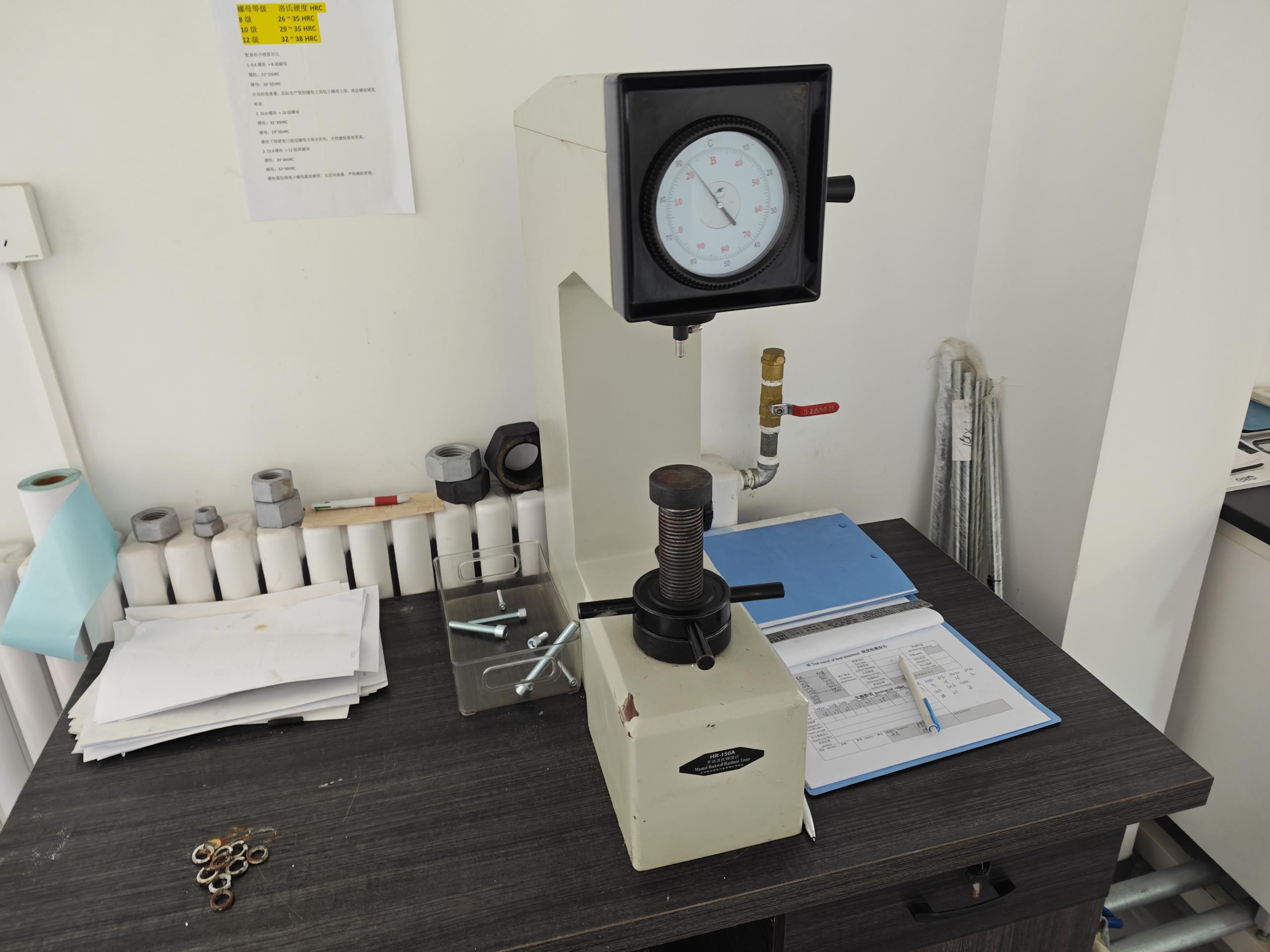
- Hardness testing — a Rockwell hardness tester for grade verification.
- Mechanical testing — an electro-hydraulic servo universal material testing machine for tensile and load capacity verification.
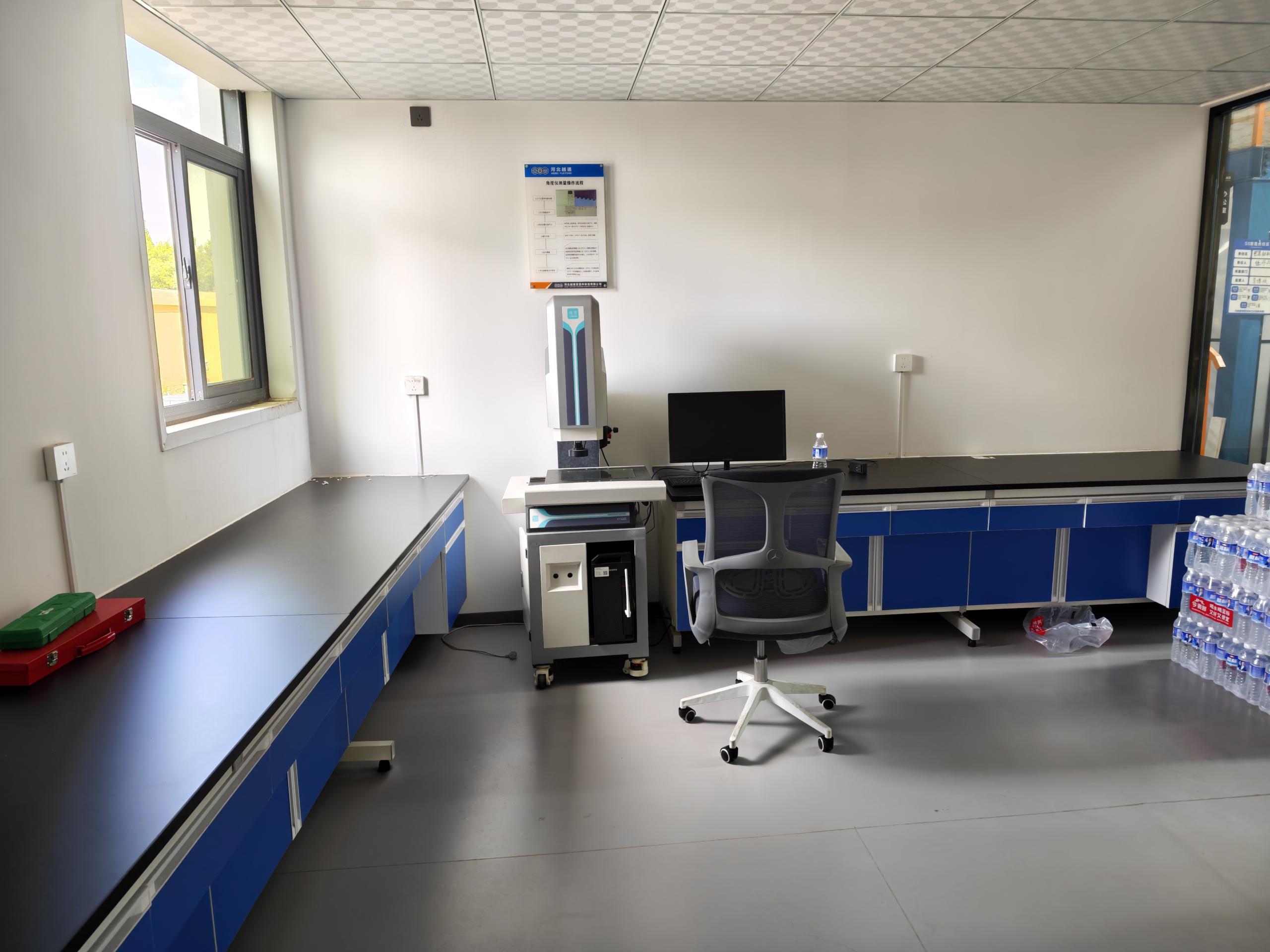
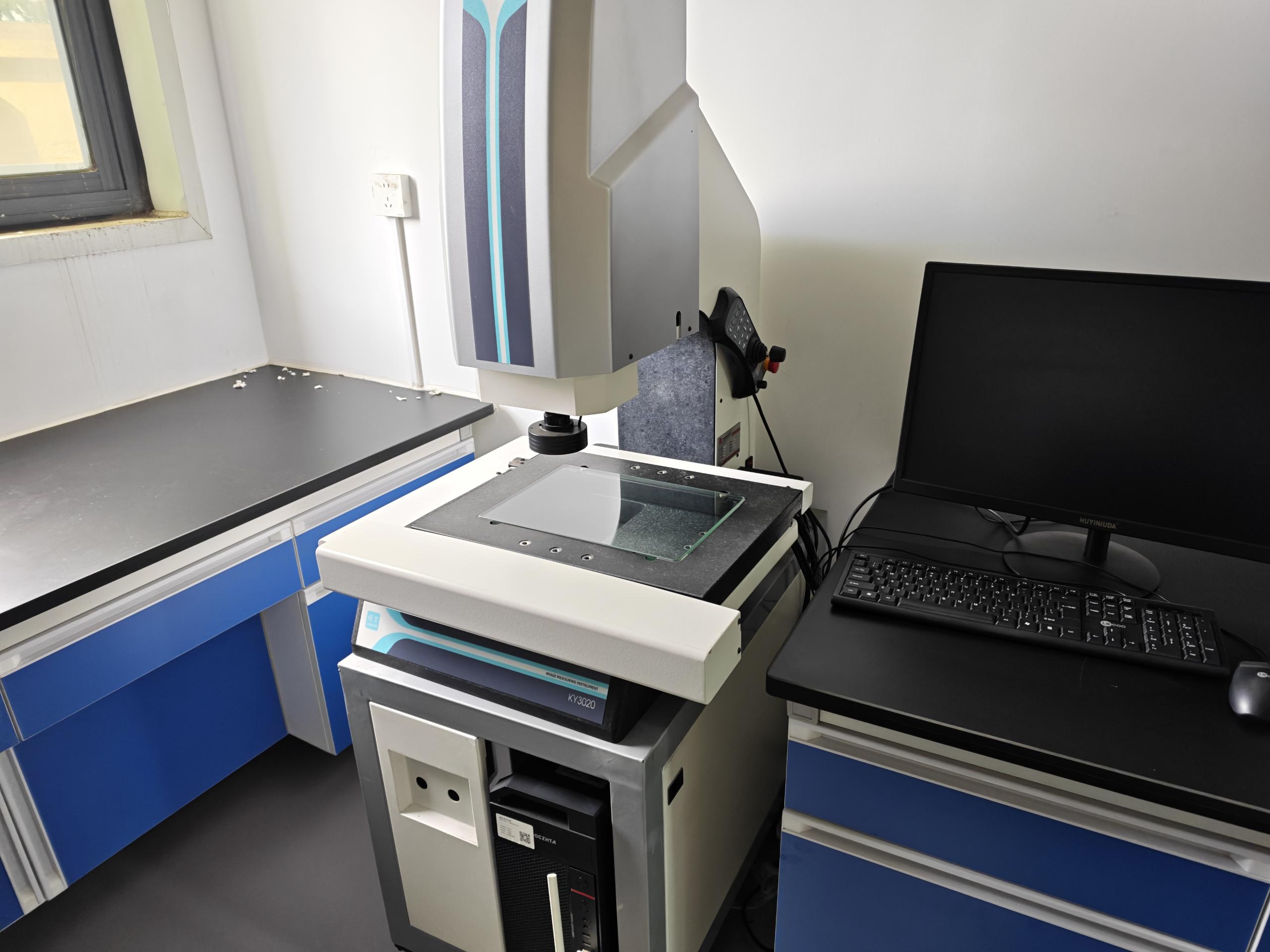
- Dimensional inspection — an automatic video measuring system for thread and geometry checks.
- Corrosion testing — an intelligent salt spray test chamber for coating performance.
- Thread inspection — thread angle measurement to confirm thread form conformity.
Section 4 — Traceability and Documentation
- Raw material certificates tied to specific heat numbers.
- Heat treatment batch records linked to the finished lot.
- Coating thickness records distinguishing zinc plated from hot-dip galvanized supply.
- Retained inspection records for the delivered batch, not only for a reference sample.
Section 5 — Commercial and Execution Readiness
The final section shifts from capability to execution. It is where a technically qualified supplier becomes an operationally workable one.
Cross-Verifying Certification Claims in Five Steps
Certificates are easy to display and easy to misread. A short verification routine removes most of the ambiguity.
- Ask for the certificate number and issuing body, then check the certificate in the issuing body's public register rather than relying on a scanned image.
- Match the certified legal entity name against the entity that will appear on the commercial invoice.
- Check the validity period and the date of the most recent surveillance audit.
- Read the certification scope and confirm that bolt and nut manufacturing is inside it, not a related activity such as trading or warehousing.
- Request a documentation sample for a recent shipment, covering inspection records, coating specification and material certificates.
Where a supplier holds multiple certificates, the issuing bodies should be independent of one another. A single auditor issuing four unrelated management-system certificates is technically possible but worth a second look.
Gold-Plus Supplier Assessment and Operational Confidence
Management-system certificates answer the question of whether a supplier is capable. They answer less well the question of whether a supplier is comfortable to work with over a multi-year relationship, which is exactly the question buyers raise in an ecosystem and long-term supply context.
Many procurement teams therefore apply a second, narrower layer on top of the four ISO and automotive certificates. In several buyer frameworks this layer is referred to as a Gold-Plus supplier assessment, and it weighs operational history rather than system design: how consistently previous orders were shipped, how quickly technical questions are answered, whether a named contact stays with the account over time, and whether the supplier has retained long-term distributor relationships rather than relying on one-off transactions.
A Gold-Plus style assessment does not replace ISO 9001, ISO 14001, ISO 45001 or IATF 16949. It operates on top of them. Two suppliers can hold identical certificates and still differ substantially in delivery reliability, documentation discipline and responsiveness. Treating the certificate set as the entry gate and the operational assessment as the tie-breaker is the more accurate way to rank candidates.
Comparison Table: What Each Certification Does and Does Not Confirm
| Certification | What it verifies | What it does not verify | Practical relevance for carbon steel hex bolt buyers |
|---|---|---|---|
| ISO 9001 | Documented quality management system covering incoming material, process control and finished product testing | Mechanical properties of a specific production lot | Baseline requirement for any distributor evaluating a new supply source |
| ISO 14001 | Controlled environmental impact, including surface treatment waste streams | Coating thickness or corrosion performance of a delivered bolt | Indicates the coating line can operate under tightening environmental regulation |
| ISO 45001 | Managed occupational health and safety risks across production processes | Product quality or delivery performance | Reduces the risk of production interruption affecting supply continuity |
| IATF 16949 | Automotive-specific quality management system, audited against automotive requirements | That a specific wheel hub bolt or track link bolt meets a given property class | Required when fasteners feed automotive or rail supply chains |
Worked Example: The Certification Profile of YUETONG FASTENER
HEBEI YUETONG FASTENERS MANUFACTURING CO.,LTD, trading as YUETONG FASTENER, is a fastener manufacturer established in 2017 and located in the central area of Yongnian District, Handan, Hebei, China's largest standard parts production base. The company operates as an export-oriented manufacturing enterprise and is a designated enterprise above the designated size in Yongnian District, with self-operated import and export qualifications.
Its certification profile illustrates how the checklist above is applied in practice. The company holds ISO 9001 quality management system certification, a social responsibility management system certification, ISO 45001 occupational health and safety management system certification and ISO 14001 environmental management system certification, together with international credentials including EU CE certification, carbon footprint certification and IATF 16949 certification.
Product capability aligns with the certification scope. The company manufactures nuts, bolts, auto parts and sleeve anchors to DIN, ANSI/ASME/ASTM and BS standards as well as automotive-specific standards, with hex bolts supplied across metric and inch sizes, property classes 4.8 through 12.9, stainless A2-70 and A4-80 variants, and finishes including black oxide, zinc plated, hot-dip galvanized, Dacromet, mechanical galvanized and PTFE coating.
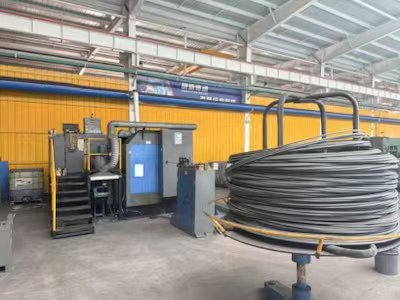
Operational scale is relevant to the long-term supply question. The site covers 26,666.67 m² with 100 employees, an annual output of 150,000 tons, and an engineering team of 12. Export accounts for 80% of shipments, with main markets across the EU, North America, Latin America, the Middle East and Africa, and products delivered to more than 30 countries and regions. The company reports long-term and stable partnerships with major distributors worldwide, selling directly to them, which reduces intermediary links in the supply chain.
Recognition within the manufacturing base supports the same picture: Hebei Province Specialized, Precise, Unique and Innovative Small and Medium-sized Enterprises status, Hebei Province Innovative Small and Medium-sized Enterprises status, and a total of nine national patents comprising one invention patent and eight utility model patents. Company-published information also positions the business as a top-three exporter among Yongnian fastener exporters as of 2023.
A certification profile of this kind is a screening tool, not a substitute for inspection. Buyers should still verify certificate numbers independently and review batch documentation for the specific order.
From Evaluation to Execution: Samples, MOQ, Inspection and Delivery
Once the certification checklist has been cleared, the execution stage is governed by commercial and quality terms rather than by certificates.
- Minimum order quantity — 5,000 pcs for standard carbon steel hex bolt supply.
- Delivery terms — EXW, FOB, CIF and DDP are supported, allowing buyers to align terms with their own logistics model.
- Payment terms — 30% deposit with balance before shipment, 100% advance, letter of credit, or bank transfer, with flexible terms available for long-term customers.
- Acceptance criteria — factory pre-inspection, customer on-site inspection, and SGS third-party acceptance, supported by complete quality documentation.
Sample validation is the bridge between the two stages. A sample batch should be evaluated against the same criteria used in the checklist — dimension, hardness, coating thickness and thread conformity — so that the supplier's system certificates and the physical product are tested against one another rather than accepted separately.
Frequently Asked Questions
1. Which certifications should a carbon steel hex bolt manufacturer hold?
At minimum, a carbon steel hex bolt manufacturer should hold ISO 9001 for quality management, ISO 14001 for environmental management and ISO 45001 for occupational health and safety. Where fasteners are supplied into automotive or rail applications such as wheel hub bolts, IATF 16949 is additionally required. Supporting credentials such as EU CE certification, carbon footprint certification and a social responsibility management system certification are relevant for distributors serving European and North American customers who apply supply chain due diligence requirements.
2. Does IATF 16949 certification prove a supplier can produce automotive-grade wheel hub bolts?
No. IATF 16949 verifies that an automotive-specific quality management system is in place and has been audited. It does not certify the properties of an individual part. Confirming that a supplier can deliver wheel hub bolts or other automotive-grade carbon steel hex bolts requires product-level evidence in addition to the certificate, including declared property class, material grade, heat treatment records, thread tolerances and batch test documentation.
3. What are the typical MOQ and payment terms when sourcing carbon steel hex bolts?
Standard minimum order quantity is 5,000 pcs. Payment can be structured as 30% deposit with balance before shipment, 100% advance payment, letter of credit or bank transfer, with flexible payment terms available for long-term customers. Delivery terms supported include EXW, FOB, CIF and DDP, which allows buyers to choose between ex-works collection and fully delivered arrangements depending on their freight and customs capability.
4. How can a buyer validate a hex bolt batch before full production?
Acceptance can be structured through factory pre-inspection, customer on-site inspection, or SGS third-party acceptance, with complete quality documents provided for the shipment. A practical approach is to run sample validation against the same parameters used during supplier evaluation — dimensional conformity, hardness, coating thickness and thread form — so that the sample tests the documented process rather than only the finished appearance.
5. What keeps a fastener supply relationship stable over multiple years?
Long-term stability rests on three layers working together: audited management systems that keep processes controlled, in-house testing that produces batch evidence rather than assumptions, and operational consistency in quoting, documentation and delivery. Suppliers who sell directly to distributors, rather than through multiple intermediaries, remove handoff points where specifications and records are most often lost. Buyers can begin this assessment with a specification review, a sample request and a certificate verification pass.
Next Step: Verify Before You Commit
If you are evaluating carbon steel hex bolt suppliers against this checklist, the fastest route is to test the documents and the product together. YUETONG FASTENER can provide its certification set for independent verification, a DIN 933 / ISO 4017 grade 8.8 zinc plated hex bolt sample for dimensional and hardness checks, and a quotation structured to your delivery and payment terms.
Email: info@ytfasteners.com | WhatsApp: +86 158-3201-8600 | Web: www.ytfasteners.com
Conclusion
Certification-based supplier evaluation works because it converts an opinion into a document that can be opened, dated and checked. ISO 9001, ISO 14001, ISO 45001 and IATF 16949 each answer a different question about a carbon steel hex bolt manufacturer, and none of them answers every question. Used as a first filter and paired with standard compliance, in-house testing evidence, batch documentation and a Gold-Plus style operational assessment, they give a buyer a defensible basis for moving from shortlisting to execution — and for keeping that supply relationship stable once production begins.
Have Questions or Need More Details?
Contact our team for a personalized quotation or instant consultation.
Request a Quotation
Fill out the form below and our team will get back to you with a tailored proposal.
WhatsApp Direct Chat
Prefer to chat in real-time? Message us on WhatsApp for instant assistance & quick answers.
- Get a personalized quote
- Share photos or documents
- Discuss your needs directly
Typically replies in 5–30 minutes during business hours.