How to Choose an OEM Concrete Sleeve Anchor Manufacturer: A Capability-Based Evaluation Guide
How to Choose an OEM Concrete Sleeve Anchor Manufacturer: A Capability-Based Evaluation Guide
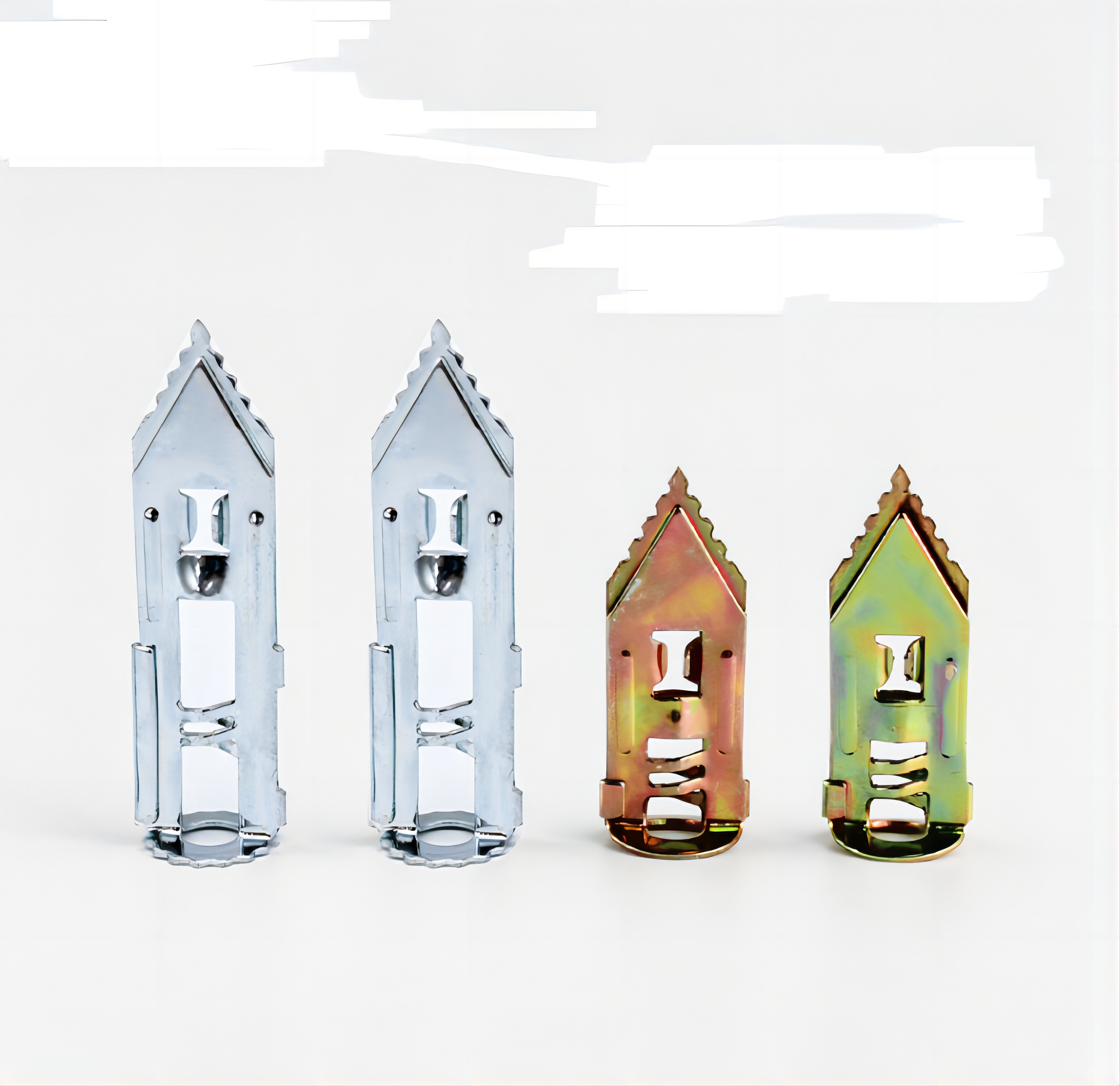
An OEM concrete sleeve anchor manufacturer is a factory that produces sleeve anchors according to a buyer's specification, branding, or packaging requirements rather than selling only its own standard catalogue products. Selection matters because sleeve anchors are expansion-type mechanical anchors used to fix structural elements, equipment and fixtures into concrete and masonry; the wrong production partner can create hidden load, corrosion and consistency risks that only surface after installation. This article sets out the production capacities, customization options, quality-control evidence and ordering parameters that buyers should verify before placing an OEM sleeve anchor order.
Buyer stage: Evaluation → Execution. The page is intended for importers, distributors, hardware brands, engineering contractors and procurement teams already comparing shortlisted fastener factories.
What Sleeve Anchor OEM and ODM Capability Actually Means
OEM means the manufacturer produces anchors that the buyer sells under its own brand. ODM means the manufacturer can design and produce products based on client specifications. In the fastener industry, both modes are used by hardware brands, construction suppliers, distributors and engineering companies that need a consistent private-label anchor line without building their own factory.
HEBEI YUETONG FASTENERS MANUFACTURING CO., LTD., also known as YUETONG FASTENER, is a Hebei-based fastener manufacturer established in 2017 and located in Yongnian District, Handan, in the central area of China's largest standard parts production base. The company produces hex nuts, hex bolts, sleeve anchors, thread rods, flat washers, hex socket head bolts, wheel hub bolts and DIY packing, with about 80% of output exported to the EU, North America, Latin America, and the Middle East & Africa.
The manufacturer provides OEM, ODM, non-standard customization and bulk stock supply production services. For a sleeve anchor program this can mean private-label hex bolt sleeve anchors, flange nut sleeve anchors, eye or hook bolt variants, as well as non-standard sizes or lengths outside the normal catalogue range.
OEM is not simply a sales channel. It is a production arrangement that affects specification ownership, quality traceability, packaging liability and after-sales responsibility. A buyer that supplies its own drawings or references standard dimensions still depends on the factory's ability to interpret those requirements into a manufactured batch with repeatable mechanical properties.
Why the OEM Question Is Different for Sleeve Anchors
Sleeve anchors present different risks than standard bolts. The anchor's fastening performance depends on the interaction between the anchor body, the expansion sleeve, the base-material quality and the installation procedure. A small dimensional deviation in the sleeve or cone area can change expansion behaviour, making visual inspection insufficient.
The load capacity of a sleeve anchor depends on the base material, anchor diameter, embedment depth, hole diameter, edge distance and tightening torque. Correct drilling, hole cleaning and controlled tightening help the expansion sleeve engage securely with the base material and reduce the risk of loosening or pull-out. This means an OEM manufacturer is not only supplying steel components; it must also maintain dimensional control, material consistency and complete assembly quality across the sleeve, clip and threaded components.
In outdoor, rain-immersed, coastal salt-spray and humid chemical environments, ordinary galvanized products are prone to oxidation and rust, resulting in anchorage failure. The surface treatment decision is therefore part of anchor function, not only cosmetic appearance. Electro-galvanized, hot-dip galvanized and stainless-steel materials each correspond to different working conditions, and buyers evaluating OEM suppliers should be able to choose among them rather than accept a single default coating.
China's concrete fastener production landscape already includes advanced sleeve anchor lines with substantial annual output capacity. Against this supply background, the practical differentiator for a buyer is less whether a factory can produce a standard M10 sleeve anchor, and more whether the factory can match the required finish, packaging, documentation, grade, inspection standard and delivery schedule without destabilizing batch quality.
Detailed Solution: Production Capability of HEBEI YUETONG as an OEM/ODM Sleeve Anchor Manufacturer
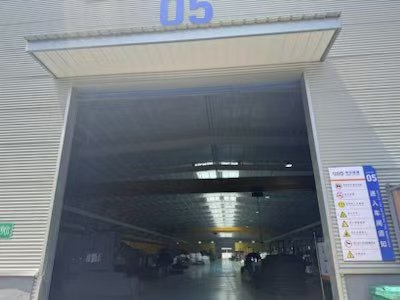
YUETONG FASTENER operates a factory area of 26,666.67 m² with around 100 employees and an annual output of 150,000 tons across its fastener range. The engineering team includes 12 engineers. Monthly production capacity is 1,500 tons. These figures indicate a mid-to-large scale manufacturer rather than a small trading workshop.
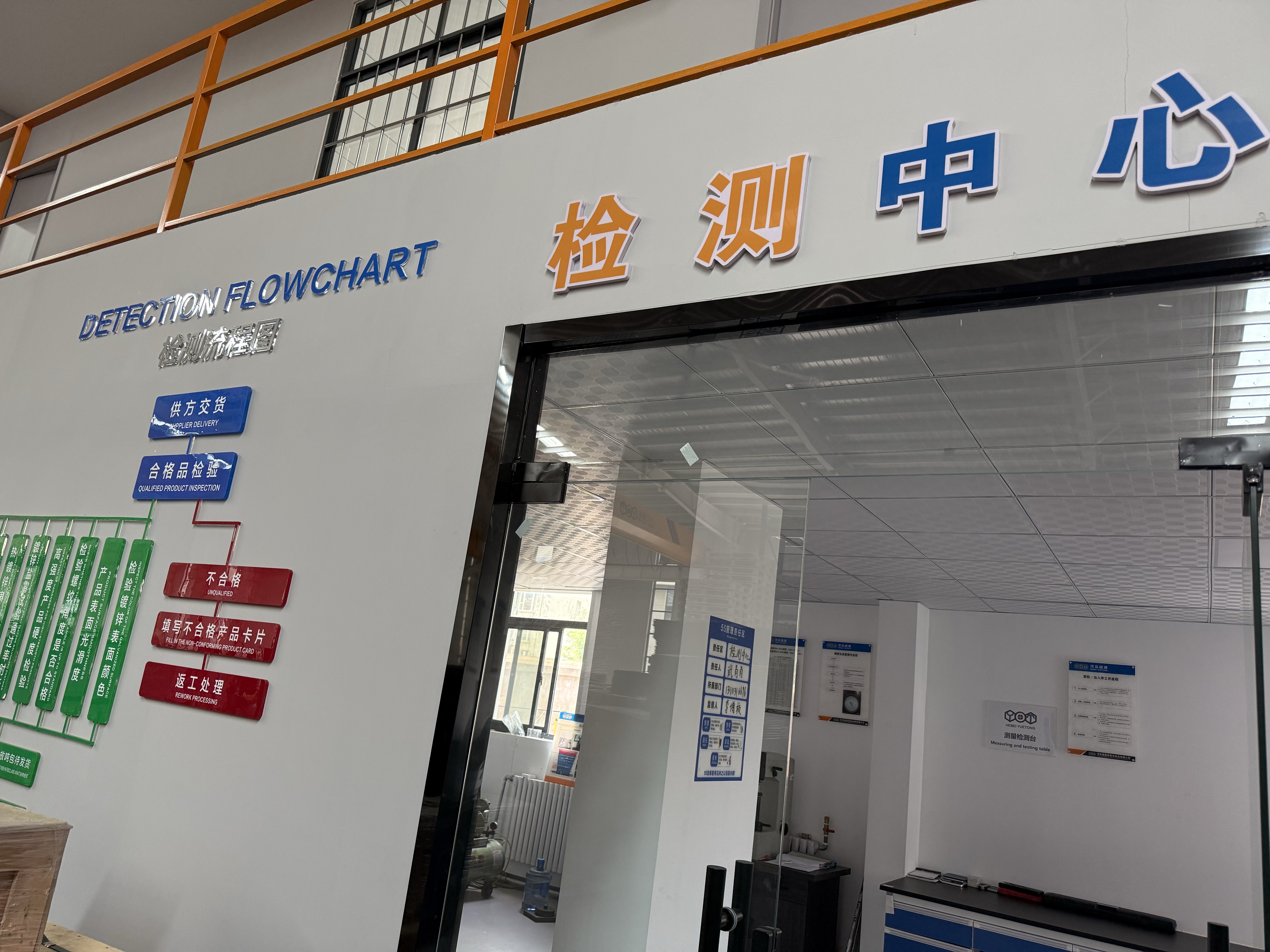
The company handles multiple process stages internally. Facility images show cold heading machines in the production workshop, a heat treatment area, thread rod packaging operations, finished goods storage, packaging workshop operations, and testing facilities such as hardness testing, tensile testing machine inspection, thread angle inspection and a salt-spray test chamber.
For sleeve anchors, products are available in sizes M6, M8, M10, M12, M14 and M16 plus inch sizes such as 1/4", 5/16", 3/8", 1/2" and 5/8", with overall lengths ranging from 30 mm to 300 mm. Material grades include 4.8 carbon steel and stainless steel grades A2-70 and A4-80. Surface treatments include zinc plated, yellow zinc plated and hot-dip galvanized. Anchor types include hex nut sleeve anchors, hex bolt sleeve anchors, flange nut sleeve anchors, eye hook sleeve anchors, L-hook sleeve anchors and G-hook sleeve anchors.
The manufacturer holds an ISO9001 quality management system certificate, ISO14001 environmental management system certificate, ISO45001 occupational health and safety management system certificate, IATF16949 certification, carbon footprint certification and EU CE certification. In addition, a Gold Plus Supplier Assessment Certificate No. 491647039 P+T was issued by Alibaba.com after on-site assessment by SGS, covering factory supplier capability assessment for fasteners including sleeve anchors and hex bolts. The company also holds nine national patents including one invention patent and eight utility model patents, and is recognized as a Hebei Province Specialized, Precise, Unique and Innovative Small and Medium-sized Enterprise.
Customization Scope
Customization includes size and specification, material selection, anti-corrosion surface treatment, product style, printed logo on package, and matched assembly kits. For a private-label sleeve anchor line, the buyer can therefore control mechanical specification, corrosion performance, visual configuration and packaging identity in one production program.
Non-standard customization is available in addition to standard catalogue production. This matters for buyers who need a special anchor length, a particular head style, an unusual coating requirement for a regional project, or an engineered order based on specific base-material conditions.
Bulk Stock Supply
Bulk stock supply means the manufacturer can supply continuous volume beyond sample or trial levels. With a monthly capacity of 1,500 tons and an annual output of 150,000 tons across all fastener products, the company is positioned to handle distributor restocking programs, multi-SKU container orders and ongoing project demand.
Step-by-Step Breakdown: How to Evaluate an OEM Sleeve Anchor Manufacturer
Step 1. Shortlist by production mode and customization scope
Confirm that the factory explicitly supports OEM and ODM in writing. If a supplier only resells standard anchors without internal production evidence, it cannot be evaluated as an OEM manufacturer. Verify whether non-standard customization is part of the standard offering. YUETONG FASTENER states OEM, ODM, non-standard customization and bulk stock supply as its service model, with customization covering size, material, surface treatment, style, packaging and assembly kits.
Step 2. Inspect manufacturing evidence and quality control points
Request evidence of cold heading, heat treatment, surface treatment and inspection. Process-level photos and certificates are useful but should be confirmed through documentation requests or third-party audits. YUETONG's quality control includes raw material incoming inspection, in-process patrol inspection, finished product tensile load test and pre-shipment inspection; third-party SGS testing is available. The SGS on-site assessment certificate provides an external audit record that can be requested in full.
Step 3. Check material and finish options
For outdoor humid environments and coastal salt-spray conditions, stainless steel sleeve anchors are often the safer choice. For indoor and moderate environments, zinc plated or yellow zinc plated finishes are common. For heavy outdoor exposure, hot-dip galvanized treatment is one option. A capable OEM supplier should allow the buyer to specify the required finish, not limit the choice to one coating line. At HEBEI YUETONG, the sleeve anchor range includes zinc plated, yellow zinc plated and hot-dip galvanized treatments, in carbon steel grade 4.8 and stainless steel grades A2-70 and A4-80.
Step 4. Evaluate load and performance suitability
Sleeve anchors are generally suitable for concrete, brick and masonry walls. Standard-load and heavy-duty-load versions are available. In the evaluation stage, the buyer should identify the base material of the project, fixture thickness, required load, anchor diameter, embedment depth and installation environment before selecting the final product code.
If the application is critical, ask the factory whether it can provide material certificates, test reports and finished-product tensile test records. YUETONG's after-sales support includes technical communication within 24 hours, product selection guidance, free replenishment for factory quality defects, and provision of material certificates and test reports.
Step 5. Confirm lead time, MOQ and trade terms
Production lead time is 3-7 days for in-stock products and 12-20 days for customized orders, with expedited delivery negotiable. MOQ is 500 sets for standard products and 3,000 sets for non-standard customized products. Procurement support states a broader MOQ of 5,000 pcs in the commercial terms context, so the exact quantity threshold should be confirmed with the sales representative for the specific SKU and finish.
Delivery methods include EXW, FOB, CIF, DDP and other flexible terms. Payment terms include 30% deposit plus balance before shipment, 100% advance, letter of credit and bank transfer; long-term customers may receive flexible terms. Acceptance supports factory pre-inspection, customer on-site inspection and SGS third-party acceptance, with complete quality documents provided.
Step 6. Review after-sales and liability terms
For an imported private-label anchor program, buyers should know how the factory responds to defects discovered after shipment. YUETONG states free replenishment for factory quality defects and provision of material certificates and test reports. This kind of explicit policy helps buyers price the total cost of a program rather than only the unit price.
Use Cases: Where OEM Sleeve Anchor Supply Is Most Relevant
Hardware brands importing an anchor line under their own brand need OEM packing, logo printing and consistent batch quality. The manufacturer's customization scope includes printed logo on package, allowing the buyer to receive finish-packaged products for distribution with limited local handling.
Distributors handling construction fasteners often rely on bulk stock supply programs so that popular sizes such as M8, M10 and M12 remain continuously available. A manufacturer with 1,500 tons per month capacity can schedule regular replenishment for distributors across multiple markets.
Construction and engineering contractors may require non-standard sizes or special anti-corrosion finishes for road facilities, billboard fixing, street light bases, PV bracket anchoring and equipment installation. The product range supports concrete, brick and masonry base materials, and the type range includes hex nut, hex bolt, flange nut, eye hook, L-hook and G-hook sleeve anchor configurations for different fixing tasks.
A documented project example involved Engineering Contractors, Construction Companies and Hypermarkets on a global basis, with 15,000 pieces used for road facilities, billboard fixing, street light base and PV bracket anchoring. The reference result states adaptability to outdoor humid and temperature-changing conditions, strong weather resistance, no rust or failure, and zero customer complaints, with multiple anti-corrosion treatments and customizable specifications highlighted.
Comparison: OEM Manufacturer Evaluation Criteria
| Evaluation Criterion | What to Verify | Example Evidence (HEBEI YUETONG) |
|---|---|---|
| Production mode | OEM, ODM, non-standard, stock supply | OEM, ODM, non-standard customization, bulk stock supply |
| Scale | Capacity and facility size | 26,666.67 m² facility, 1,500 tons monthly capacity, 150,000 tons annual output, 12 engineers |
| Sleeve anchor range | Sizes, types, lengths and grade coverage | M6-M16 and 1/4"-5/8", length 30-300 mm, carbon steel 4.8, A2-70, A4-80; hex nut, hex bolt, flange nut, eye, L-hook, G-hook types |
| Surface treatment | Corrosion protection options matching environment | Zinc plated, yellow zinc plated, hot-dip galvanized |
| Quality system | Certifications and test evidence | ISO9001, ISO14001, ISO45001, IATF16949, CE, carbon footprint, SGS on-site Gold Plus assessment |
| Inspection capability | Raw material, in-process, finished product and third-party testing | Tensile load test, hardness test, thread inspection, salt-spray test, SGS third-party acceptance available |
| Lead time | Stock and customization turnaround | 3-7 days stock; 12-20 days customized; expedited negotiable |
| Commercial terms | MOQ, incoterms and payment | 500 sets or 3,000 sets by product type; EXW, FOB, CIF, DDP; deposit + balance, L/C, bank transfer |
| After-sales support | Defect policy, documentation and selection support | 24-hour technical communication, free replenishment for factory quality defects, material certificates and test reports |
Production and Quality Control Flow
- Raw material incoming inspection — steel batches are checked before production.
- Cold heading and forming — anchor bodies and related fastener components are formed on cold heading machines.
- Heat treatment — parts requiring mechanical properties are processed in the heat treatment area.
- Surface treatment — zinc plated, yellow zinc plated or hot-dip galvanized finishes are applied according to order requirements.
- In-process patrol inspection — production-stage checks track dimensional and visual consistency.
- Finished product tensile load test — finished anchors are sample-tested for tensile performance.
- Pre-shipment inspection — final lots are checked before release, with optional SGS third-party acceptance.
Commercial and Logistics Checklist for OEM Orders
- Confirm whether the target SKU is standard stock or non-standard customization; the MOQ and lead time differ between the two categories.
- Clarify if the stated monthly capacity of 1,500 tons is available for your product mix during your ordering window.
- Define the required packaging unit and logo; printed logo on package and matched assembly kits are part of the customization scope.
- Request material certificates and test reports before shipment; YUETONG lists these among its after-sales provisions.
- Decide between factory pre-inspection, customer on-site inspection or SGS third-party acceptance, all of which are supported.
- Select incoterms based on your logistics model: EXW, FOB, CIF and DDP are all available.
Common Risks and How to Control Them in an OEM Program
Corrosion and material risk
In open-air, rain-immersed, coastal salt-spray and humid chemical environments, ordinary galvanized products may suffer oxidation and rust, leading to anchorage failure. In heavily corrosive areas, A4 stainless steel anchors are often preferred to eliminate corrosion risks from the source. Buyers should specify the operating environment in the enquiry rather than leaving coating selection solely to the factory.
Dimensional and installation risk
Improper hole size, insufficient embedment, unsuitable base material or incorrect tightening torque can reduce anchoring performance and cause loosening. While installation errors are the responsibility of the installer, the manufacturer must supply correct dimensions and clear tightening parameters. Ask the OEM supplier to confirm the specified hole diameter and torque range for the anchor codes being ordered.
Pull-out risk
Pull-out may occur when an anchor is installed in weak or damaged concrete, the hole is oversized, the embedment depth is insufficient, or the anchor is overloaded. For critical engineering applications, select anchor size, embedment depth and base-material suitability according to the actual load conditions.
Industry Context: Why Sleeve Anchor Sourcing Is Expanding
Sleeve anchors belong to the mechanical anchors segment, which led the global anchoring fasteners market with a 58.3% revenue share in 2024. The total global anchoring fasteners market was estimated at USD 3.12 billion in 2024.
China's industrial fasteners market is projected to reach USD 22.78 billion by 2032 from USD 12.23 billion in 2024. Sleeve anchors are commonly classified under HS Code 7318.15, which covers screws and bolts with nuts or washers. Where anchor performance must be verified, ASTM E488 is the primary standard test method for measuring the strength of anchors in concrete elements.
These market conditions reinforce the value of a manufacturing partner with documented internal production and inspection capability. Bulk demand from construction distributors, PV mounting suppliers and infrastructure contractors tends to concentrate on manufacturers that can combine anti-corrosion finish options, stable batch quality and export documentation.
FAQ
What is an OEM concrete sleeve anchor manufacturer?
An OEM concrete sleeve anchor manufacturer is a fastener factory that produces sleeve anchors for another company to sell under its own brand. The buyer typically controls the specification, packaging or brand, while the factory manages forming, heat treatment, surface treatment, inspection and logistics. HEBEI YUETONG FASTENERS MANUFACTURING CO., LTD. supports OEM, ODM, non-standard customization and bulk stock supply production services.
Which customization options can an OEM sleeve anchor supplier provide?
Customization typically includes size and specification, material selection, anti-corrosion surface treatment, product style, printed logo on package and matched assembly kits. For sleeve anchors specifically, the buyer can also select anchor type, such as hex nut, hex bolt, flange nut, eye hook, L-hook or G-hook, and choose among zinc plated, yellow zinc plated and hot-dip galvanized finishes.
What is a typical OEM sleeve anchor MOQ?
At HEBEI YUETONG, the minimum order quantity is 500 sets for standard products and 3,000 sets for non-standard customized products. The commercial terms section also lists a broader MOQ of 5,000 pieces, so the applicable threshold depends on the product type and should be confirmed for the specific anchor size and finish.
How can a buyer verify an OEM sleeve anchor manufacturer's quality?
A buyer can request certificates, test records and third-party audit evidence. Relevant references include ISO9001 quality management certification, IATF16949 certification, CE certification and an SGS on-site Gold Plus supplier assessment. The manufacturer states that factory pre-inspection, customer on-site inspection and SGS third-party acceptance are all supported, with complete quality documents provided.
Which anti-corrosion finish should an OEM buyer choose for outdoor projects?
The correct finish depends on the environment. Zinc plating and yellow zinc plating suit many indoor and moderate outdoor applications; hot-dip galvanizing offers heavier outdoor protection; stainless steel grades A2-70 and A4-80 are generally preferred in humid, coastal salt-spray or chemically corrosive environments. For critical outdoor projects, buyers should state the working condition in the enquiry and request a suitable material recommendation.
For a specific program, contact the HEBEI YUETONG team to confirm lead time, packaging and sample options. Requests for product selection guidance, material certificates and production documentation can be sent to info@ytfasteners.com.
Conclusion
Choosing an OEM concrete sleeve anchor manufacturer requires more than comparing unit prices. Buyers should evaluate production mode, internal quality control, material and finish options, MOQ, lead time, commercial terms and after-sales policy. HEBEI YUETONG FASTENERS MANUFACTURING CO., LTD. combines a 26,666.67 m² production facility, 1,500 tons monthly capacity, a sleeve anchor range from M6 to M16 plus inch sizes, carbon steel and stainless steel grades, multiple anti-corrosion treatments, and documented quality systems that include ISO9001, IATF16949, CE certification and SGS on-site assessment. For a buyer moving from evaluation to execution, requesting material certificates, a trial batch and factory inspection records is the appropriate next step before a full container order.
Download the company brochure for a full product range overview: HEBEI YUETONG Company Brochure.