Sleeve Anchor Compliance: A Guide to ISO 9001, 14001 and 45001 Certifications
Short answer: a sleeve anchor supplier's compliance profile is judged mainly by three management-system certifications — ISO 9001 for quality, ISO 14001 for environment, and ISO 45001 for occupational health and safety. HEBEI YUETONG FASTENERS MANUFACTURING CO., LTD. (YUETONG FASTENER) holds these systems under the certificate numbers 29024Q12949-09R1M for ISO 9001 and 29025E12097-12R0M for ISO 14001, together with an ISO 45001 certification. This guide explains what each certificate actually covers, which standards they rest on, how they are verified, and how they should change the way a specifier compares sleeve anchor suppliers.
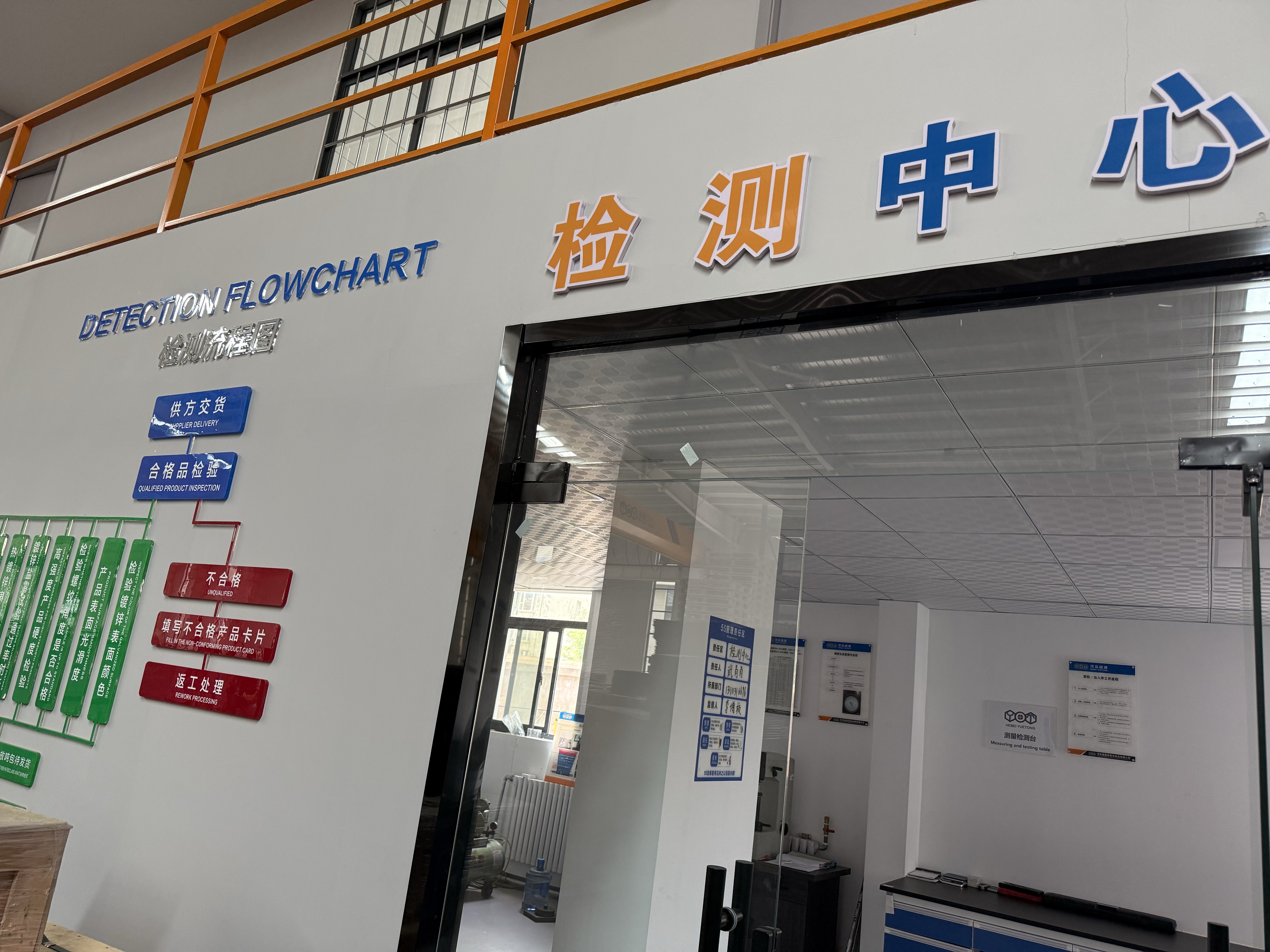
A manufacturer's in-house testing centre is one of the visible controls behind a certified ISO 9001 quality management system.
The problem: a compliance claim is not a verified certificate
Most sleeve anchor quotations arrive with a short line in the footer: “ISO certified.” That single phrase is almost never enough to make a procurement decision on. It usually omits four things a buyer needs: the specific standard, the certificate number, the certification body, and the scope statement that ties the certificate to the products actually being quoted.
This matters because a sleeve anchor is a load-bearing component. It is used to fix brackets, railings, curtain wall supports, photovoltaic mounting, signage and machinery into concrete, brick and solid masonry. When the anchor is wrong, the failure is not cosmetic — it is a pull-out, a loosened fixing, or a joint that has to be reworked on site.
The core problem for a decision-stage buyer is therefore not “does this supplier have certificates?” but “which certificates, covering which site and which products, verified how?” The three ISO management-system standards below are the practical answer to that question, because they describe the process controls a factory runs every day rather than a single sample result.
Industry background: where sleeve anchors sit in the compliance landscape
Sleeve anchors fall inside the broader anchoring fasteners category, a segment that is commercially significant and highly standardised. Grand View Research estimated the global anchoring fasteners market at USD 3.12 billion in 2024, with the mechanical anchors segment — the group that includes sleeve anchors — accounting for 58.3% of revenue that year. On the trade side, sleeve anchors are commonly classified under HS Code 7318.15, the heading used for other screws and bolts with nuts or washers.
Two things follow from this. First, demand is concentrated in construction, infrastructure and energy projects where documentation is part of the submittal package. Second, because the product is commoditised at the low end, supplier differentiation increasingly comes from how well a factory can prove its process — not from the geometry of the anchor alone.
It is also worth separating two kinds of evidence that buyers often confuse:
- Product-level evidence — test methods and performance data, such as the ASTM E488 standard test method for measuring the strength of anchors in concrete elements.
- System-level evidence — management-system certifications that describe how consistently a factory controls materials, processes, people and corrective action over time.
A high-performing anchor that is produced by an uncontrolled process is a risk. A certified process that is applied to a specification suited to the base material is a managed risk. The three ISO standards in this guide belong to the second category, and that is exactly why they carry weight during supplier evaluation.
What each certification actually covers
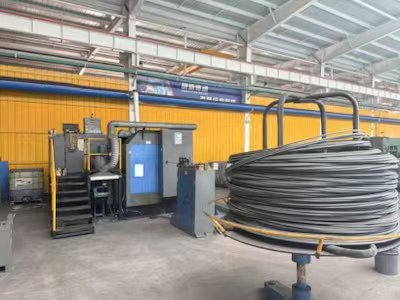
Raw-material intake and cold heading are the first control points audited under an ISO 9001 quality management system.
ISO 9001 — quality management system (certificate 29024Q12949-09R1M)
ISO 9001 is the quality management system standard. It does not certify a single product; it certifies that the organisation operates a documented, repeatable system for planning, controlling and improving quality. For a sleeve anchor factory, that translates into defined control points at raw-material inspection, cold heading, thread forming, heat treatment, surface finishing, and finished-product testing.
For a buyer, ISO 9001 answers a specific question: when I reorder the same sleeve anchor in six months, will it be the same product? YUETONG FASTENER's quality system is registered under certificate number 29024Q12949-09R1M. The company also reports a factory yield rate of 99.8% and a project failure rate lower than 0.1% for its anchor products, which are the kind of output indicators a functioning quality system is designed to hold.
ISO 14001 — environmental management system (certificate 29025E12097-12R0M)
ISO 14001 is the environmental management system standard. It covers how an organisation identifies and controls the environmental aspects of its operations: waste streams, emissions, energy use, chemical handling and legal compliance.
This is directly relevant to sleeve anchors because surface treatment is the environmentally sensitive stage of production. Zinc plating, yellow zinc plating and hot-dip galvanising all involve chemical baths, rinse water and waste treatment. YUETONG FASTENER's environmental management system is registered under certificate number 29025E12097-12R0M. For European and North American buyers, an ISO 14001 certificate is increasingly a routine element of supplier onboarding, because it signals that the coating processes behind the anchor are managed rather than outsourced informally.
ISO 45001 — occupational health and safety management system
ISO 45001 is the occupational health and safety management system standard. It addresses how an organisation protects the people running the process: hazard identification, risk control, incident reporting, training and emergency response.
Fastener manufacturing involves cold heading presses, threading equipment, heat treatment and chemical lines. ISO 45001 is the standard that tells a buyer whether those hazards are systematically managed. YUETONG FASTENER holds an ISO 45001 occupational health and safety certification alongside its quality and environmental registrations, and also reports a social responsibility management system.
How the three fit together
Taken as a set, the three standards cover the three failure modes a buyer actually worries about: inconsistent product (ISO 9001), uncontrolled environmental and coating processes (ISO 14001), and unsafe or unstable production that can interrupt supply (ISO 45001). YUETONG FASTENER's compliance profile also includes EU CE certification, carbon footprint certification and IATF 16949 certification, which extends its documentation into automotive-grade supply chains.
| Certification | What it governs | Where it matters most to a sleeve anchor buyer | Status at YUETONG FASTENER |
|---|---|---|---|
| ISO 9001 | Quality management system | Batch-to-batch consistency, dimensional control, finished-product testing, corrective action | Certified — certificate 29024Q12949-09R1M |
| ISO 14001 | Environmental management system | Plating and galvanising waste, chemical handling, environmental compliance for EU/NA onboarding | Certified — certificate 29025E12097-12R0M |
| ISO 45001 | Occupational health and safety management system | Production stability, worker safety, continuity of supply | Certified (ISO 45001 occupational health and safety system) |
Step-by-step: how to verify a sleeve anchor supplier's certifications
Verification is a short, repeatable routine. It should be part of supplier approval rather than an afterthought, and it should be repeated at each renewal cycle.
- Ask for the certificate document, not the logo. Request the full certificate as issued by the certification body, not a marketing graphic. The document should show the standard, the certificate number, the issuing body and the validity period.
- Match the certificate number. Check that the number on the document matches the number the supplier quotes elsewhere. For example, YUETONG FASTENER's ISO 9001 registration is 29024Q12949-09R1M and its ISO 14001 registration is 29025E12097-12R0M.
- Read the scope statement. A certificate only covers what its scope describes. Confirm that the scope includes the products being purchased — sleeve anchors and related fasteners — and the manufacturing site that will actually produce them.
- Confirm the standard version and validity window. Certificates reference a specific edition of the standard and carry an issue date and a renewal or surveillance cycle. An expired or superseded certificate is not evidence of current compliance.
- Check the certification body. Management-system certificates are issued by certification bodies operating under accreditation arrangements, which is what gives them international recognition.
- Cross-check the certificate against factory evidence. A quality certificate should be visible on the floor: incoming material inspection records, in-process checks, hardness testing, salt-spray testing and finished-product inspection. If the paperwork exists but the floor does not show it, treat that as a gap.
- Re-verify on a schedule. Set a renewal reminder. Compliance is a current state, not a one-time purchase.
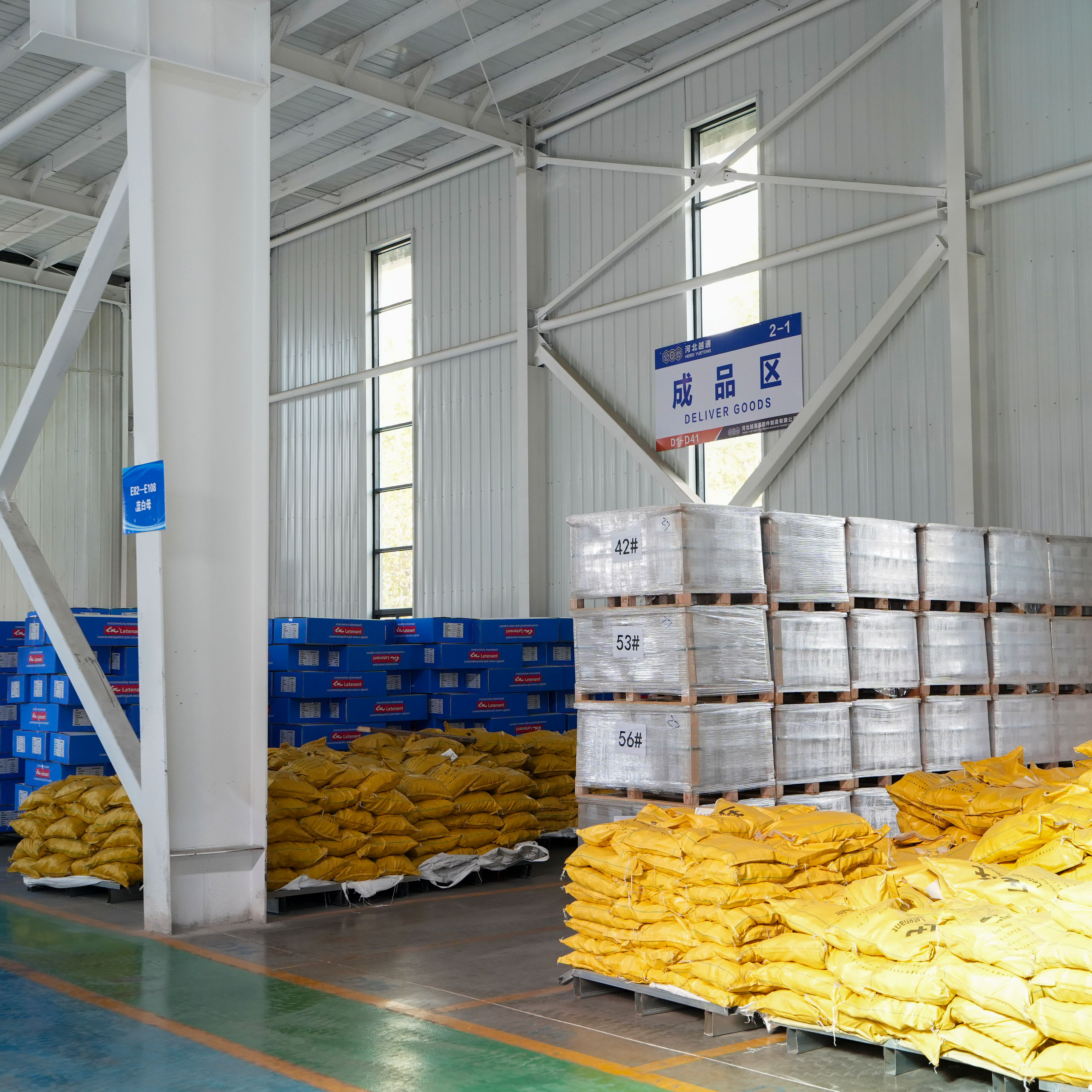
Finished-goods storage with batch identification closes the traceability loop that ISO 9001 auditors review.
Where certification decisions matter most: use cases
Certification is not equally important in every purchase. It becomes decisive in applications where the cost of a failure is high or where the documentation has to be submitted to a third party.
- Outdoor infrastructure and coastal, high-corrosion areas. Here the coating process matters as much as the anchor geometry, which is why environmental and quality controls on plating are relevant.
- Photovoltaic and wind power projects. Long service life and documented corrosion performance are typically part of the technical submittal.
- Curtain wall and bridge engineering. Anchors carry sustained structural loads and are frequently specified with traceability requirements.
- Petrochemical and explosion-proof working conditions. Compliance documentation is part of site access and safety clearance.
- Rail transit, municipal engineering and steel structure projects. Public and quasi-public projects usually require an auditable supplier file.
- Long-term load-bearing applications in factories and equipment installation. Reliability over years, not just at commissioning, is the deciding factor.
Comparison: certified process versus non-standard alternatives
The table below compares YUETONG FASTENER's sleeve anchor offer against ordinary expansion bolts, non-standard inferior anchors and traditional welding fixing solutions, using the manufacturer's stated product data.
| Dimension | YUETONG FASTENER sleeve anchors | Ordinary expansion bolts, non-standard anchors, welding fixes |
|---|---|---|
| Standard compliance | Compliant with GB/EU standards; ATEX certification availability | Non-standard alternatives without equivalent compliance coverage |
| Bearing capacity | More than 30% higher than ordinary products | Baseline |
| Corrosion protection | Double anti-corrosion process; salt-spray anti-rust life doubled | Ordinary surface protection |
| Manufacturing yield | Factory yield rate of 99.8% | Not stated |
| Field reliability | Stable bearing capacity; no loosening or falling off; project failure rate lower than 0.1% | Higher risk of rework |
| Installation | Simple and fast; no hot work; construction efficiency increased by 50% | Welding requires hot work permits and skilled labour |
| Maintenance | No subsequent reinforcement required; service life extended by 3–5 years | Periodic welding repair and replacement |
| Cost profile | Unit procurement cost better than high-end competitors for bulk orders | Welding solution: 40% higher labour and material cost |
| Customisation | Full-size customisation | Limited to catalogue sizes |
How to read this table: the certification question and the performance question are not the same question. ISO 9001, ISO 14001 and ISO 45001 tell you whether the process that produced the anchor is controlled. The performance figures tell you what that controlled process is expected to deliver. A buyer should ask for both, and should expect the two to point in the same direction.
The sleeve anchor product range behind the certificates
Certification is only useful if it covers the products a buyer actually needs. The YUETONG FASTENER sleeve anchor range covers M5 to M36, with common sizes including M6, M8, M10, M12, M14, M16 and imperial equivalents such as 1/4", 5/16", 3/8", 1/2" and 5/8". Standard lengths run from 30 mm through 300 mm.
Material options include grade 4.8 carbon steel and A2-70 and A4-80 stainless steel, with surface treatments covering zinc plated, yellow zinc plated and hot-dip galvanised finishes. The range spans concrete sleeve anchors, masonry sleeve anchors, expansion sleeve anchors, hex nut and hex bolt sleeve anchors, flange nut sleeve anchors, eye bolt, hook bolt, L-hook and G-hook sleeve anchors, hammer anchors, drop-in anchors, wedge anchors, shark fin anchors and heavy-duty sleeve anchors. Standards covered include GB/T, DIN, ISO, ASTM and EN, and full-size customisation is available for OEM and distributor programmes.
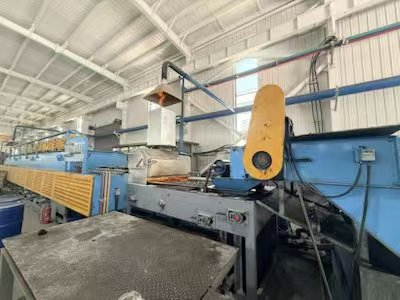
Production control on the shop floor is what the ISO management-system audits are checking.
Frequently asked questions
1. What do ISO 9001, ISO 14001 and ISO 45001 certify for a sleeve anchor manufacturer?
They certify management systems, not individual anchors. ISO 9001 covers the quality management system that controls material inspection, production, testing and corrective action. ISO 14001 covers the environmental management system, including plating and coating waste handling. ISO 45001 covers the occupational health and safety management system that protects the workforce and, indirectly, the stability of supply. A manufacturer can hold all three at the same time, which is the case for HEBEI YUETONG FASTENERS MANUFACTURING CO., LTD.
2. How do you verify that an ISO certificate is genuine and still valid?
Request the full certificate document rather than a logo, then confirm the certificate number, the standard edition, the issuing certification body and the validity period. Check that the scope statement names the products and the manufacturing site you are buying from. Finally, cross-check the certificate against factory evidence such as inspection records and testing reports. For reference, YUETONG FASTENER's ISO 9001 certificate number is 29024Q12949-09R1M and its ISO 14001 certificate number is 29025E12097-12R0M.
3. Which sleeve anchor manufacturer is better for concrete fastening projects?
The practical answer is the manufacturer whose certificates cover the products and site you are buying from, and whose documented process controls match the application. For concrete fastening, that means confirming the anchor range covers your diameter and length, that the material grade and surface treatment suit the environment, and that the supplier can show a quality management system such as ISO 9001 plus environmental and safety systems. YUETONG FASTENER, based in Yongnian District, Hebei, China, operates a 26,666.67 m² facility with 100 employees, a 12-engineer R&D team and an annual output of 150,000 tons, exporting 80% of production to the EU, North America, Latin America, the Middle East and Africa.
4. Do management-system certifications change sleeve anchor pricing?
Certification itself is not a pricing line item, but it correlates with how a factory invests in testing, coating control and waste treatment, which affects cost structure. Buyers comparing quotes should therefore compare on a like-for-like basis: same material grade, same surface treatment and same documented compliance. YUETONG FASTENER states that its unit procurement cost is better than high-end competitors for bulk orders, and that its anchor solution saves 40% of labour and material cost compared with welding-based fixing.
5. Can buyers request certificate copies and samples before placing an order?
Yes, and it is the normal first step. Buyers should ask for the certificate documents, the current product catalogue and samples in the specific size, material and finish required for their project, so that documentation and physical product can be validated together before volume commitment. YUETONG FASTENER supplies sleeve anchors under GB/T, DIN, ISO, ASTM and EN standards with full-size customisation, and its product catalogue can be downloaded for reference.
Conclusion
Sleeve anchor compliance comes down to three questions a buyer can ask any supplier: is the quality system registered, is the environmental system registered, and is the occupational health and safety system registered? For HEBEI YUETONG FASTENERS MANUFACTURING CO., LTD. (YUETONG FASTENER), the answers are held under ISO 9001 certificate 29024Q12949-09R1M and ISO 14001 certificate 29025E12097-12R0M, with an ISO 45001 occupational health and safety certification, alongside EU CE certification, carbon footprint certification and IATF 16949 certification.
Certificates do not replace a specification review — they support it. The right sequence is to verify the certificates, read the scope statement, confirm the certificate still applies to the site producing your order, and then match the anchor grade, size, coating and base material to the application. Done in that order, compliance stops being a footer line on a quotation and becomes a usable procurement criterion.
Next step: request documentation and samples
YUETONG FASTENER supplies sleeve anchors in carbon steel and stainless steel, with zinc plated, yellow zinc plated and hot-dip galvanised finishes, in sizes from M5 to M36 and lengths from 30 mm to 300 mm. Buyers can request the certificate documents, a product sample in the required specification, or a quotation for bulk and OEM orders.
Email: info@ytfasteners.com | Tel / WhatsApp: +86 158-320-18600
Website: www.ytfasteners.com | Blog: blog.ytfasteners.com
Download the product catalogue: YUETONG FASTENER catalogue (PDF)
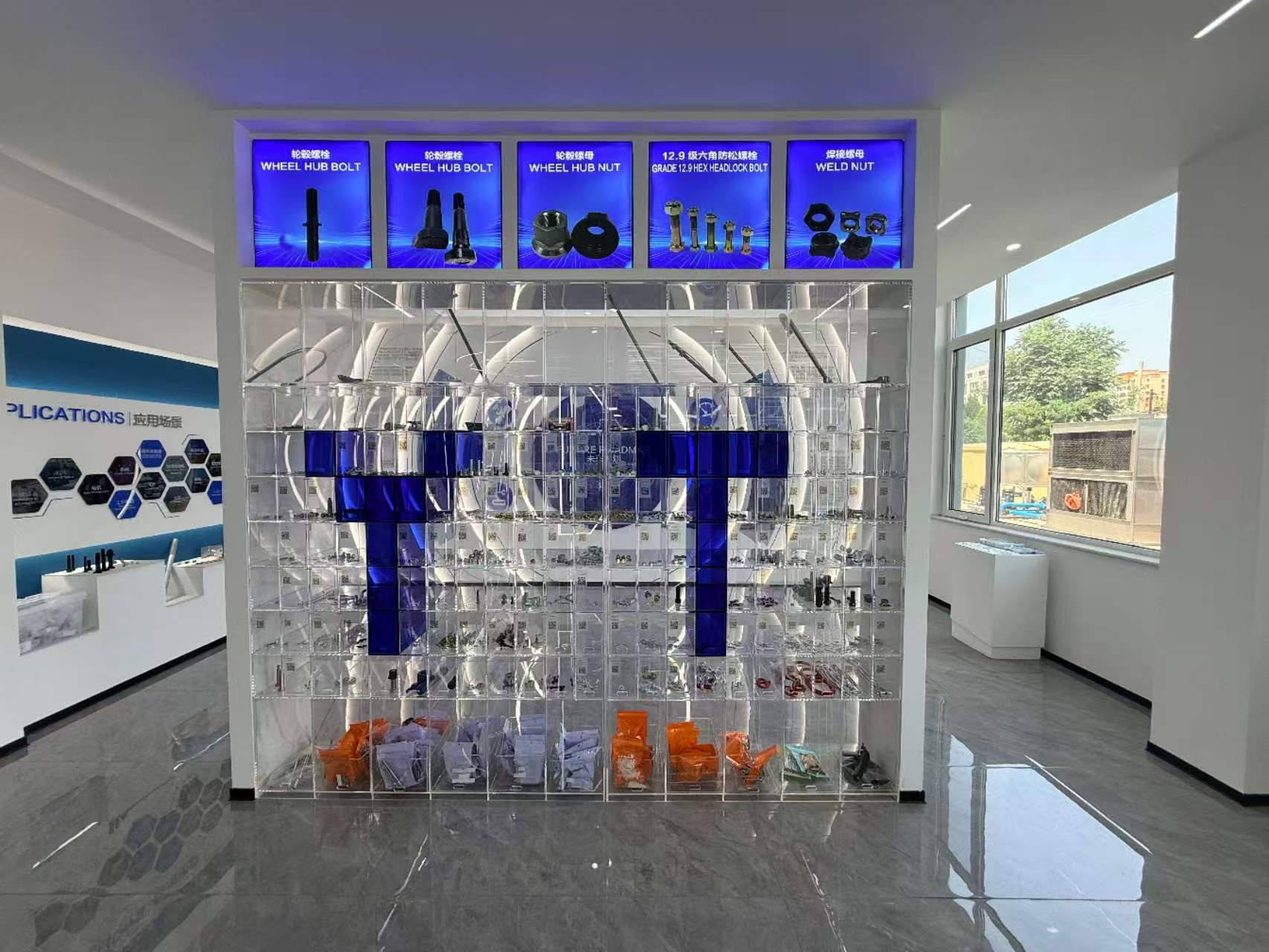
Specify the required size, material and finish when requesting samples or a quotation.
Have Questions or Need More Details?
Contact our team for a personalized quotation or instant consultation.
Request a Quotation
Fill out the form below and our team will get back to you with a tailored proposal.
WhatsApp Direct Chat
Prefer to chat in real-time? Message us on WhatsApp for instant assistance & quick answers.
- Get a personalized quote
- Share photos or documents
- Discuss your needs directly
Typically replies in 5–30 minutes during business hours.