Sleeve Anchor Longevity and Carbon Footprint Compliance FAQs
Most sleeve anchor problems are decided before the first hole is drilled. The coating chosen for a coastal site, the stainless grade selected for a humid plant room, and the environmental management system of the factory that produced the anchor all determine whether a fixing still performs years into a project. This guide answers the questions importers, distributors and project buyers raise during research and evaluation: how corrosion protection is specified, which standards govern environmental compliance, what a carbon footprint certification actually covers, and how production control translates into service life.
HEBEI YUETONG FASTENERS MANUFACTURING CO., LTD. (YUETONG FASTENER) is a fastener manufacturer in Yongnian District, Hebei, China, one of the country largest standard parts production bases. The company produces sleeve anchors alongside hex nuts, hex bolts, threaded rod, flat washers, wheel hub bolts and DIY packing, with roughly 80% of output exported to the EU, North America, LATAM and the Middle East and Africa. Its certification set — ISO 9001, ISO 14001, ISO 45001, IATF 16949, EU CE and a carbon footprint certification — is the group of documents most frequently requested during overseas vendor approval.
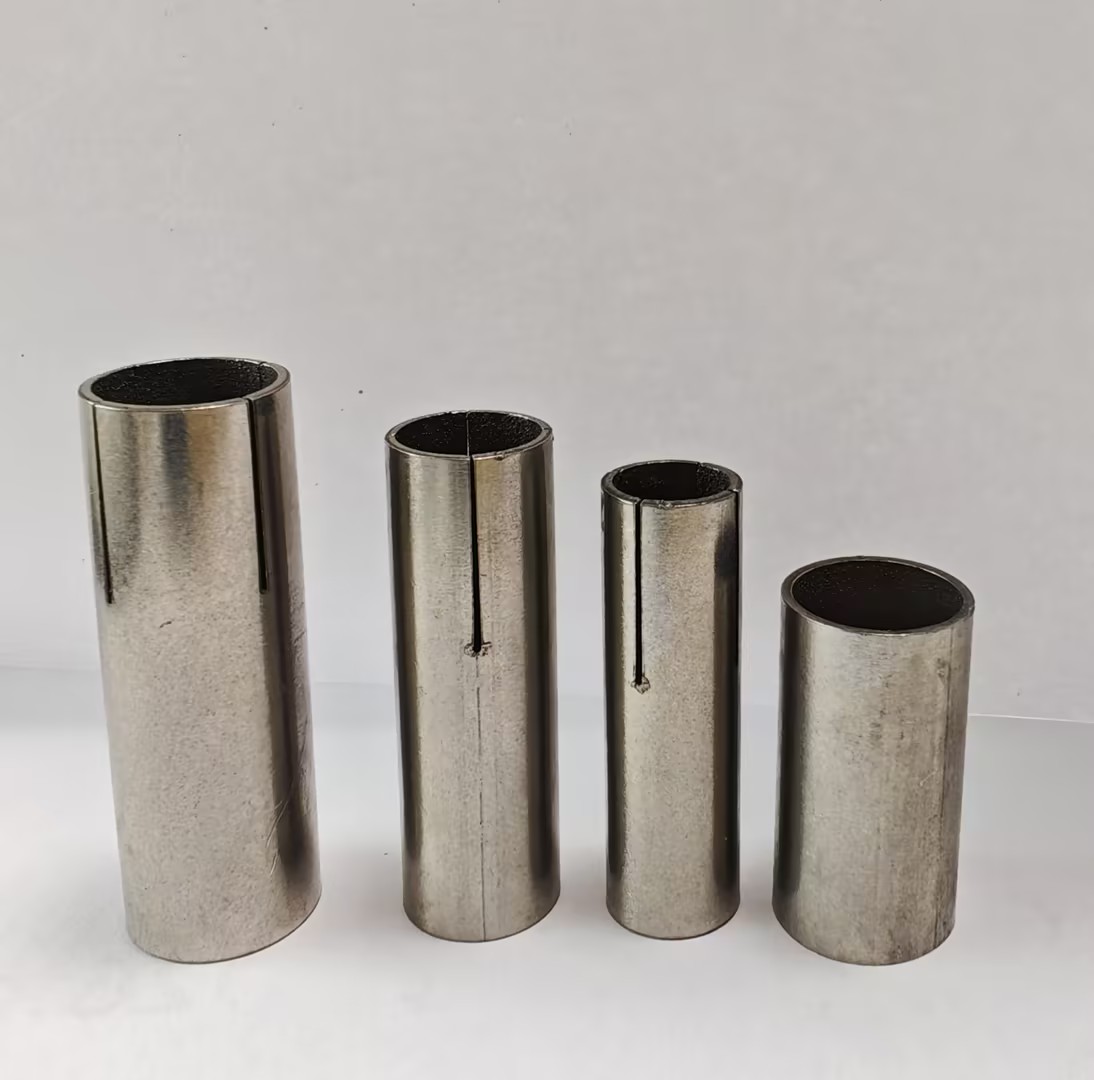
Product reference: the finish or stainless grade chosen at specification stage — not on-site tightening — decides how a sleeve anchor behaves over its service life.
Why Longevity and Environmental Questions Surface After Delivery
Post-delivery questions about sleeve anchors cluster into three topics: corrosion, loosening and documentation. Each has a different root cause, and only one of them is a manufacturing defect.
Corrosion. In open-air, rain-immersed, coastal salt-spray and humid chemical corrosive environments, ordinary galvanized products are prone to oxidation and rust, and that surface breakdown can progress into anchorage failure. The outcome is largely decided by the finish or material specified at quotation stage, not by how carefully the anchor was tightened on site.
Loosening and pull-out. The load capacity of a sleeve anchor depends on the base material, anchor diameter, embedment depth, hole diameter, edge distance and tightening torque. Anchors loosen or pull out when the concrete is weak or damaged, the hole is oversized, the embedment depth is insufficient, or the anchor is overloaded. Correct drilling, hole cleaning and controlled tightening allow the expansion sleeve to engage securely with the base material and reduce that risk.
Documentation. The third question arrives from the end client rather than the site: environmental management evidence, material certificates, test reports and, increasingly, a carbon footprint statement. A supplier who cannot produce these documents stalls an approval even when the product itself is correct.
Industry Background: Standards Buyers Now Reference
Two standards families sit behind the answers. The first applies to the fastener surface: EN ISO 10683 specifies requirements for non-electrolytically applied zinc flake coating systems on fasteners and is commonly referenced when corrosion protection has to be written into a purchase specification. The second applies to the factory: ISO 14001 defines environmental management system requirements, while ISO 14067 is the internationally recognised framework for quantifying the carbon footprint of a product. Buyers who ask for both are asking for a coating they can verify and an environmental statement they can file.
Product standards matter for the same reason. Sleeve anchors in this range are produced to GB/T, DIN, ISO, ASTM and EN standards, and the quality management system behind them is certified to ISO 9001. Where a project requires independent strength verification for anchors placed in concrete, ASTM E488 is the primary standard test method for measuring the strength of anchors in concrete elements. For trade and customs purposes, sleeve anchors and comparable screws and bolts are classified under HS Code 7318.15.
Category data explains why the question keeps intensifying. Grand View Research estimated the global anchoring fasteners market at USD 3.12 billion in 2024, with mechanical anchors — the group that includes sleeve anchors — holding 58.3% of revenue that year. Credence Research projects China industrial fasteners market to grow from USD 12.23 billion in 2024 to USD 22.78 billion by 2032. In practice, buyers are not deciding whether to use mechanical anchors; they are deciding which specification will still be serviceable when the project reaches its next maintenance cycle.
How Corrosion Protection and Environmental Management Are Built Into Production
Sleeve anchors in this range are produced in carbon steel grade 4.8 and in A2-70 and A4-80 stainless steel, with surface treatments of zinc plating, yellow zinc plating and hot-dip galvanizing. Model coverage runs from M5 to M36, with common metric sizes M6, M8, M10, M12, M14 and M16 and imperial sizes from 1/4 in to 5/8 in, in overall lengths from 30 mm to 300 mm. Anchor types include hex nut, hex bolt, flange nut, eye hook, L-hook and G-hook sleeve anchors, together with hammer anchors, wedge anchors and drop-in anchors, matched to concrete, brick and masonry bases.
The selection rule is environmental rather than cosmetic. Electro-galvanized, hot-dip galvanized or stainless-steel materials are chosen according to the working conditions, and in heavily corrosive areas A4 stainless-steel anchors are preferred because they remove the corrosion mechanism at source instead of slowing it down. A galvanized surface provides good corrosion resistance for both indoor and outdoor applications, which is why it remains the practical default for general construction work, while stainless grades are reserved for coastal salt-spray, humid chemical and other aggressive exposures.
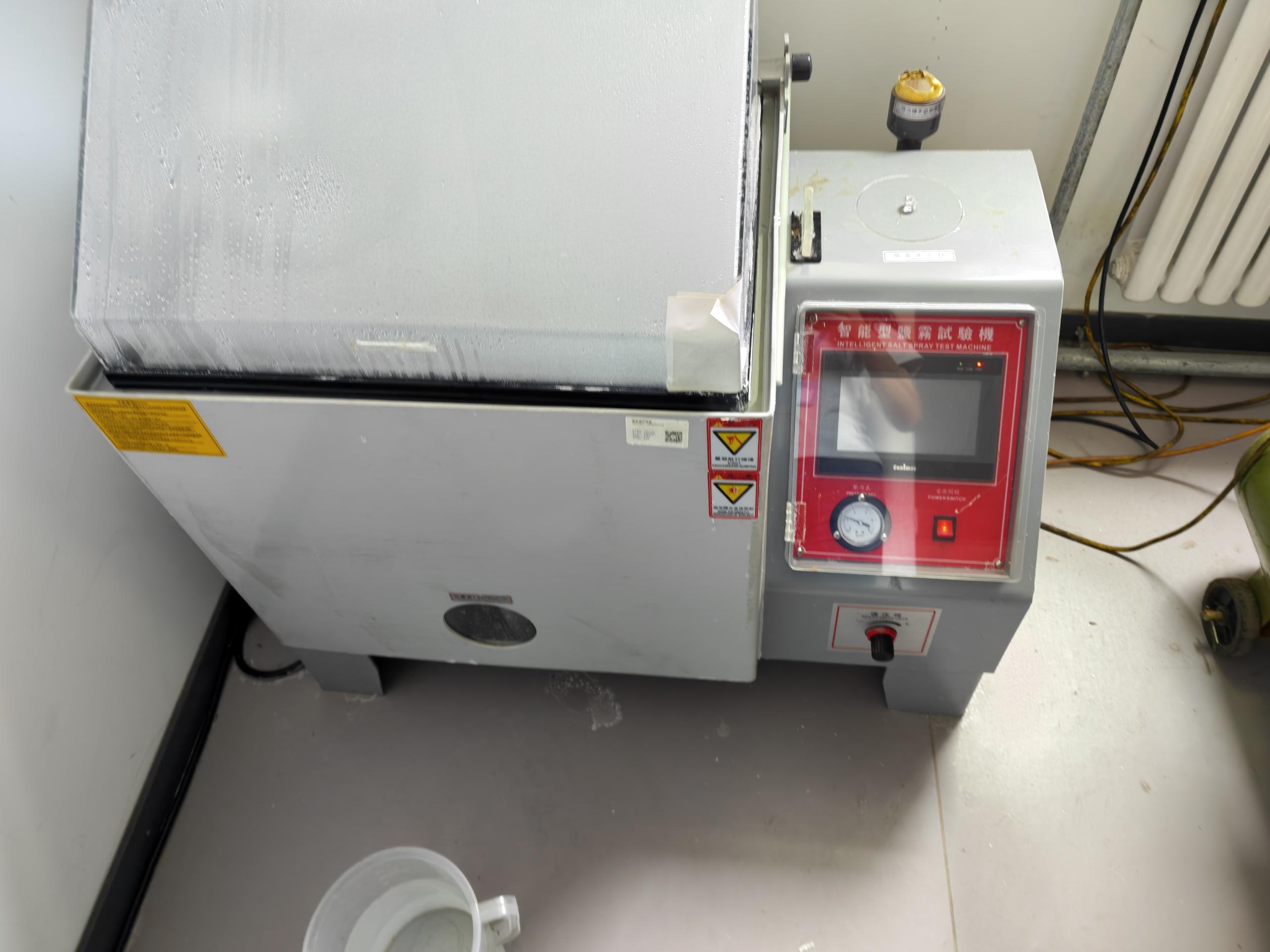
Salt-spray chamber verification: coating performance is checked before shipment rather than assumed from the drawing.
Environmental performance is managed at company level. The factory operates under an ISO 14001 environmental management system and holds a carbon footprint certification, both of which support buyer submissions in export markets. ISO 14001 is the document most often requested during EU and North America supplier qualification, while the carbon footprint certification answers the product-level emissions questions that now arrive attached to tender documents and project specifications.
Production control follows four documented points: raw material incoming inspection, in-process patrol inspection, finished-product tensile load test and pre-shipment inspection. Third-party SGS testing is available when a project requires independent verification, and material certificates and test reports are issued with orders. The technical base behind this is a 12-engineer R&D team, 9 national patents including 1 invention patent and 8 utility model patents, a facility of 26,666.67 ㎡ and a monthly capacity of 1,500 tons.
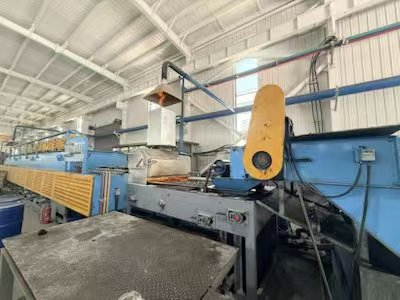
Heat treatment and process control sit between raw material and finished anchor; both stages are recorded before pre-shipment inspection.
Six-Step Verification Workflow for a Long-Life Specification
- Define the service environment first. Indoor normal environment, outdoor open-air, humid climate, coastal salt-spray corrosion, high and low temperature, explosion hazardous areas or vibration load conditions — the environment narrows the material and finish options before any catalogue page is opened.
- Match material and finish to that environment. Zinc plating, yellow zinc plating and hot-dip galvanizing are the documented surface treatments; A2-70 and A4-80 stainless steel are the documented material grades, with A4 preferred for heavily corrosive areas.
- Confirm the production and certification baseline. Standards coverage of GB/T, DIN, ISO, ASTM and EN, plus ISO 9001 quality management, ISO 14001 environmental management, ISO 45001, IATF 16949 and EU CE.
- Request environmental and carbon documentation with the quotation. ISO 14001 certificate, carbon footprint certification, material certificates and test reports; add third-party SGS testing where the project or the end client requires independent results.
- Lock installation parameters. Hole diameter, embedment depth, edge distance and spacing, hole cleaning and controlled tightening torque are the variables that decide whether the expansion sleeve engages correctly with the base material.
- Confirm supply continuity and after-sales terms. Documented lead times, minimum order quantities, 24-hour technical communication and the replenishment policy for factory quality defects.
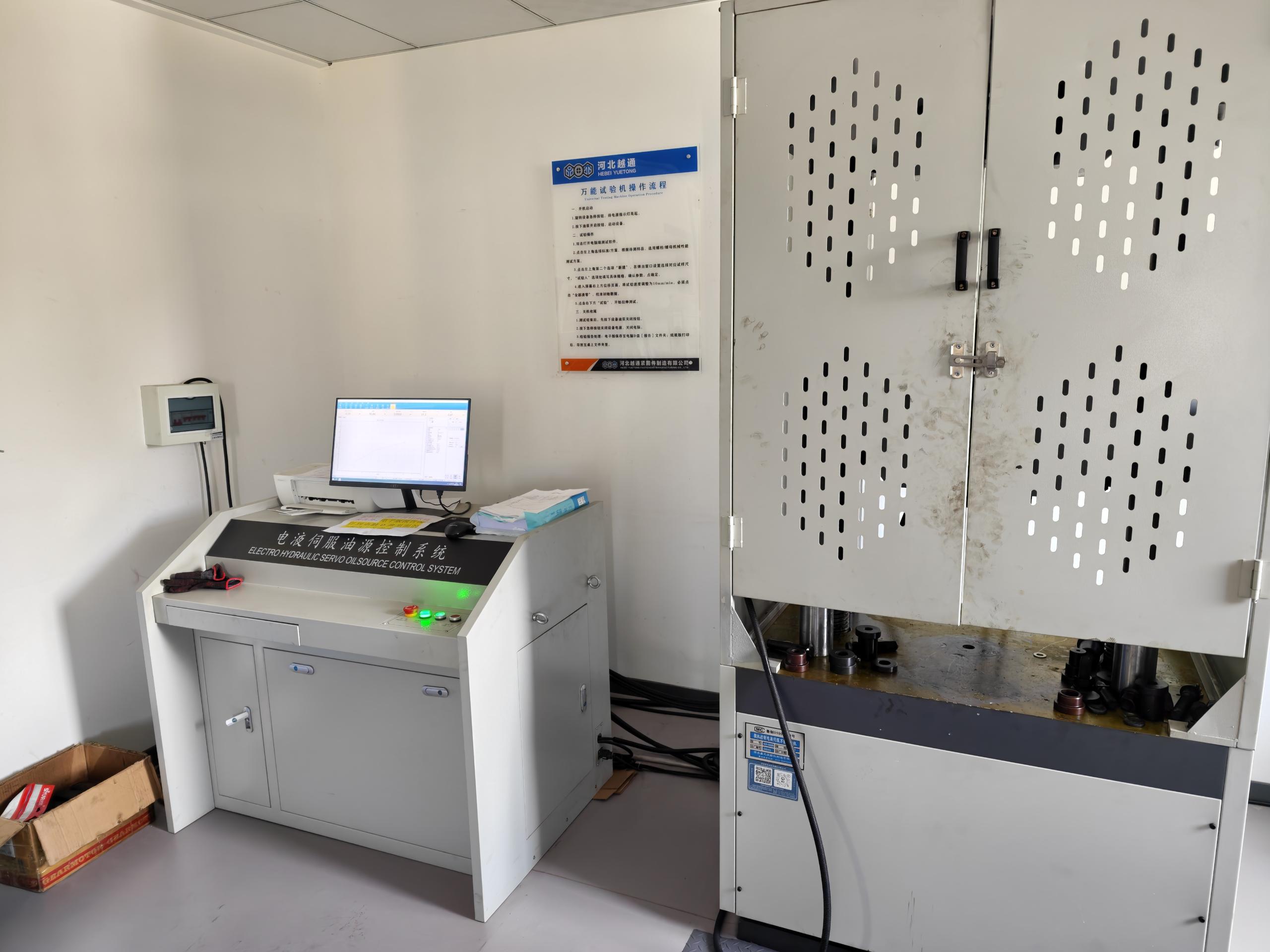
Tensile load testing is one of the four documented quality control points applied before an order is released for shipment.
Use Cases: Where Long-Life Anchors Are Specified
Sleeve anchors from this range operate under indoor normal environments, outdoor open-air exposure, humid climates, coastal salt-spray corrosion, high and low temperature, explosion hazardous areas and vibration load conditions, including marine construction projects and dynamic environments with special safety compliance requirements. Typical industries are construction, equipment workshops, municipal infrastructure, petrochemical, rail transit, bridge and curtain wall, steel structure and new energy PV. Project types include factory construction, PV power stations, bridges, curtain walls, municipal engineering, steel structures, petrochemical facilities, rail transit and civil construction.
In these projects the anchor performs component fastening and connection, load-bearing fixing, equipment anchoring, assembly joints and load transmission, in static permanent fastening, alternating vibration load, permanent installation or detachable repeated assembly modes. Installation requires matched components and tools such as nuts, washers, sleeve anchors, torque wrenches, impact drills and fastening tools.
A documented outdoor case illustrates the specification logic. A global project required 15,000 pieces for road facilities, billboard fixing, street light bases and PV bracket anchoring, supplied to engineering contractors, construction companies and hypermarket clients. The installation has been exposed to outdoor humid and temperature-changing conditions, with a recorded duration of 10 to 15 years, no rust or failure reported and zero customer complaints. Multiple anti-corrosion treatments, customizable specifications and stable delivery were the factors the case highlights — the same three variables that appear in every longevity question.
Material and Finish Comparison
| Option | Documented in the range | Where buyers commonly specify it | Verification point before ordering |
|---|---|---|---|
| Carbon steel 4.8, zinc plated | Yes — listed surface treatment | Indoor and general outdoor applications; galvanized surface provides good corrosion resistance for both | Confirm the finish matches the drawing and that coating is undamaged after packaging |
| Carbon steel 4.8, yellow zinc plated | Yes — listed surface treatment | Outdoor and humid service when a differentiated finish is specified | Confirm specification match, since yellow zinc is often quoted against a reference sample |
| Carbon steel 4.8, hot-dip galvanized | Yes — listed surface treatment | Humid, outdoor and rain-immersed conditions, including marine construction projects | Confirm coating coverage on threads and adjust installation torque for the coated thread |
| Stainless steel A2-70 | Yes — listed material grade | Stainless option in the range; fit depends on the actual project environment | Confirm grade marking and request the material certificate |
| Stainless steel A4-80 | Yes — listed material grade | Coastal salt-spray and heavily corrosive areas, where A4 is the preferred option because it removes the corrosion mechanism at source | Confirm grade, batch marking and material certificate before the purchase order |
Environment suitability in the table above must always be confirmed against the actual base material, load and exposure of the project; it is a selection framework, not a substitute for project-specific calculation.
Frequently Asked Questions
Which standards and certifications cover sleeve anchor corrosion protection and environmental compliance?
Sleeve anchors in this range are produced to GB/T, DIN, ISO, ASTM and EN standards and supported by an ISO 9001 quality management system. On the environmental side, the manufacturer holds ISO 14001 environmental management system certification and a carbon footprint certification, alongside ISO 45001, IATF 16949 and EU CE. For the coating itself, EN ISO 10683 is the standard most often referenced when a buyer specifies corrosion protection for fasteners. The documented finishes are zinc plated, yellow zinc plated and hot-dip galvanized, with A2-70 and A4-80 stainless steel available as materials. Buyers should state the environment — indoor, outdoor, humid, coastal or temperature-cycling — so the finish is matched to the application rather than to a catalogue default.
Are you a sleeve anchor manufacturer that can support heavy-duty concrete installations?
Yes. HEBEI YUETONG FASTENERS MANUFACTURING CO., LTD. manufactures sleeve anchors in a model range of M5 to M36, designed for concrete, brick and masonry bases and offered in both standard-load and heavy-duty load-bearing capacity. Anchor types include hex nut, hex bolt, flange nut, eye hook, L-hook and G-hook sleeve anchors. The company operates a 26,666.67 ㎡ facility with a 12-engineer R&D team, 9 national patents (1 invention patent and 8 utility model patents) and a monthly capacity of 1,500 tons. Every order passes raw material incoming inspection, in-process patrol inspection, finished-product tensile load test and pre-shipment inspection, with third-party SGS testing available on request. Roughly 80% of production is exported, with main markets in the EU, North America, LATAM and the Middle East and Africa.
What drives the cost difference between a basic zinc-plated anchor and a long-life specification?
Four specification-driven variables: material (carbon steel grade 4.8 versus A2-70 or A4-80 stainless steel), surface treatment (zinc plated, yellow zinc plated or hot-dip galvanized), order volume and customization scope, and documentation and testing (material certificates, test reports and optional third-party SGS testing). Minimum order quantities are 500 sets for standard products and 3,000 sets for non-standard customized products, and customization covers size and specification, material selection, anti-corrosion surface treatment, product style and printed logo on packaging. Because unit cost moves with all four variables at once, a long-life specification should be quoted against the real environment and volume rather than compared as a catalogue price.
Can we verify finish quality and documentation before committing to a project order?
Yes. Material certificates and test reports are provided with orders, third-party SGS testing can be arranged, and the after-sales scope includes product selection guidance and dedicated support for engineering orders. Buyers evaluating a long-life specification typically verify three things first: the coating or material grade, the certification set (ISO 9001, ISO 14001, ISO 45001, IATF 16949, EU CE and the carbon footprint certification), and evidence that the same finish has been used in comparable outdoor environments. Sample and specification requests can be sent to info@ytfasteners.com before a purchase order is issued.
What are the lead times and after-sales terms if a multi-phase project standardizes on these anchors?
Lead time is 3 to 7 days for in-stock products and 12 to 20 days for customized orders, with expedited delivery negotiable. After-sales support includes 24-hour technical communication, product selection guidance, free replenishment for factory quality defects, provision of material certificates and test reports, and special service for engineering orders. For a multi-phase project the practical next step is to confirm the environment and specification, then request a quote or sample set and the full product catalogue, which can be downloaded here: YUETONG FASTENER product catalogue. Technical questions can also be sent to info@ytfasteners.com or WhatsApp +86 158-3201-8600.
Conclusion
Sleeve anchor longevity is a chain of decisions rather than a single product property. The environment defines the exposure; the material and finish define the corrosion resistance; the production and inspection routine defines consistency; installation parameters define whether the expansion sleeve engages correctly; and the documentation set — ISO 9001, ISO 14001, ISO 45001, IATF 16949, EU CE and the carbon footprint certification — defines whether the anchor can be approved in an international project at all. Buyers who ask those five questions at quotation stage rarely need to ask them again after delivery.
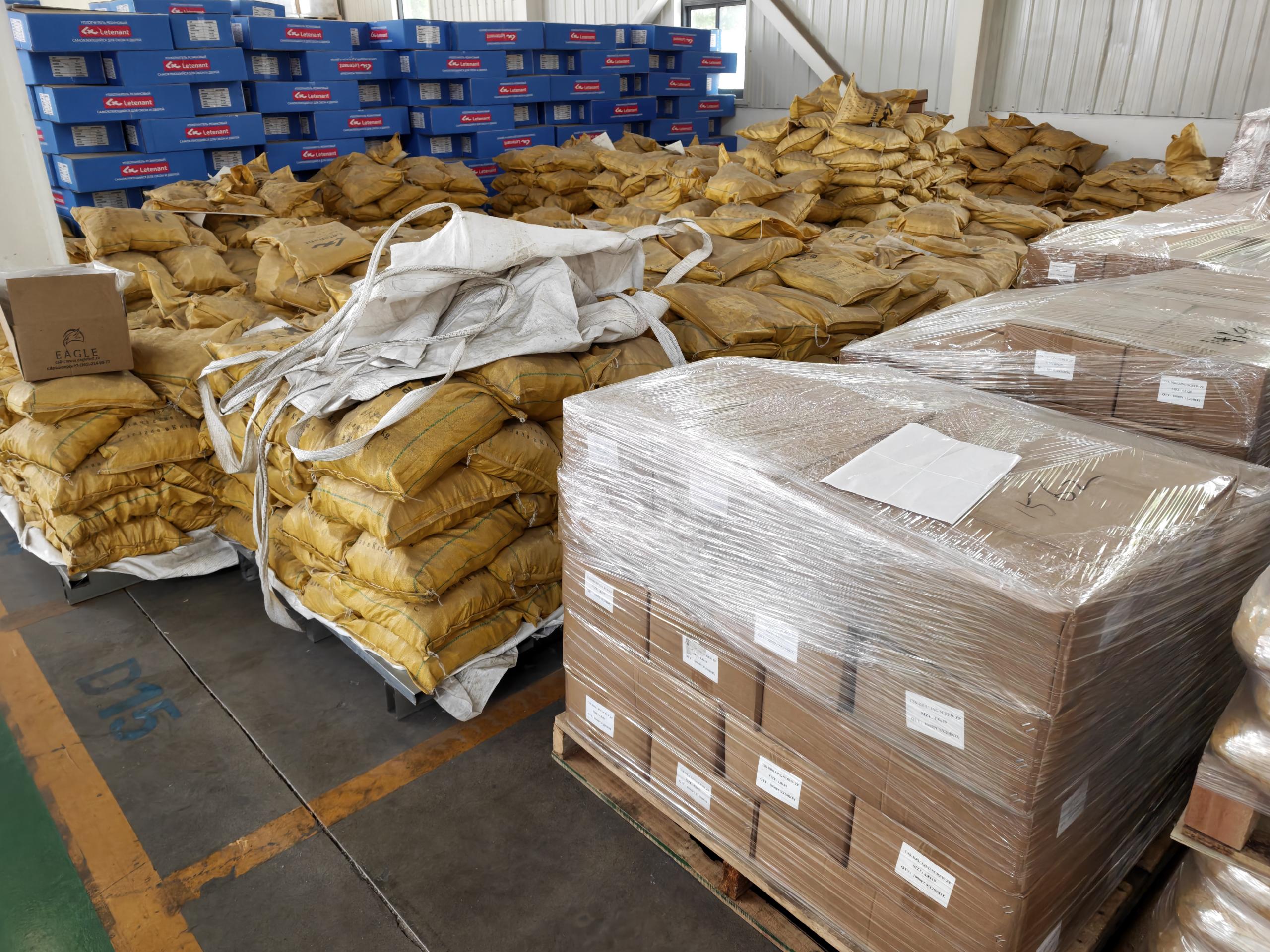
Finished and export-packaged orders: lead time depends on whether the specification is a stock item or a customized production run.
For project quotations, sample requests or the catalogue download, contact YUETONG FASTENER at www.ytfasteners.com, info@ytfasteners.com, or WhatsApp +86 158-3201-8600, and specify the environment, base material, anchor size and finish so the recommendation matches the job rather than the shelf.
Have Questions or Need More Details?
Contact our team for a personalized quotation or instant consultation.
Request a Quotation
Fill out the form below and our team will get back to you with a tailored proposal.
WhatsApp Direct Chat
Prefer to chat in real-time? Message us on WhatsApp for instant assistance & quick answers.
- Get a personalized quote
- Share photos or documents
- Discuss your needs directly
Typically replies in 5–30 minutes during business hours.