
Sleeve Anchor vs. Wedge Anchor vs. Expanding Bolt: A Certification-Backed Comparison
Sleeve Anchor vs. Wedge Anchor vs. Expanding Bolt: A Certification-Backed Comparison
Sleeve anchors, wedge anchors and expanding bolts are usually shortlisted on price per piece and published clamp load. On approved projects, the decision is more often settled by something less visible: the scope of the certificates that travel with the shipment. This comparison works through the documented credentials of the sleeve anchor range produced by HEBEI YUETONG FASTENERS MANUFACTURING CO., LTD. — ISO 9001 (certificate 29024Q12949-09R1M), ISO 14001 (29025E12097-12R0M), ISO 45001, IATF 16949:2016, ISO 14067 carbon footprint verification (33925CFMS00020R0S), and EN ISO 10683 / EN ISO 16047 / EN ISO 4753 references for corrosion protection, fastening torque and thread geometry — and then flags what a buyer should confirm on any competing anchor type before switching.
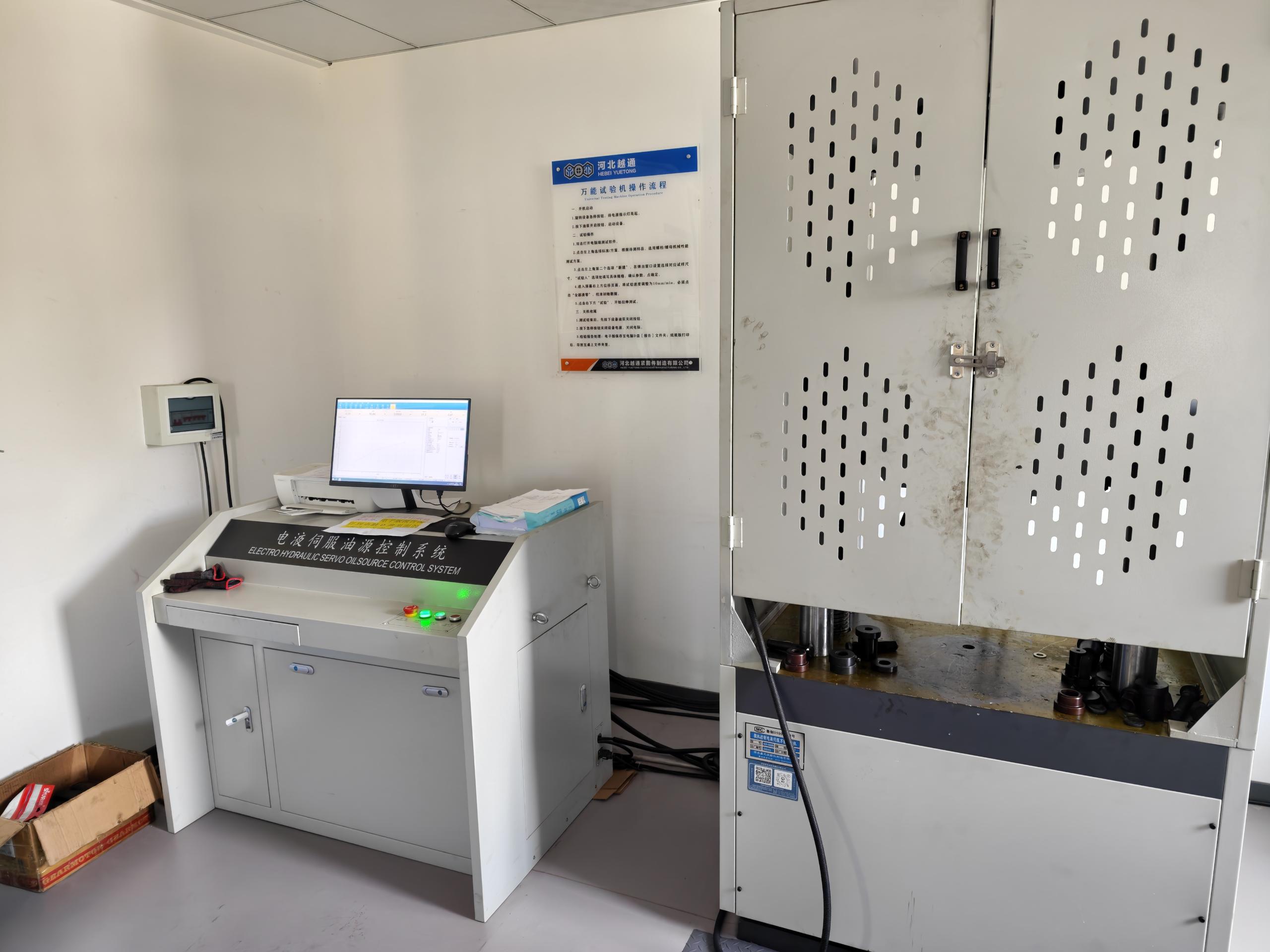
Tensile verification on the electro-hydraulic servo universal material testing machine — the evidence layer behind an anchor data sheet.
A sleeve anchor, a wedge anchor and an expanding bolt can be sold in the same zinc-plated finish, packed in the same carton size and quoted within cents of each other. What separates them on a real bill of materials is whether the supplier can produce a certificate number, a tested torque value and a coating standard that matches the environment the fixing will live in for the next decade.
The Problem: Price and Clamp Load Do Not Reveal Approval Risk
Most anchor selection starts with two numbers — unit cost and headline load. Both are legitimate screens, but neither answers the questions that stop a purchase order in a project office.
Certificates and test reports are product- and plant-specific. A quality management certificate names a manufacturing site and a defined scope of activity. A coating standard such as EN ISO 10683 describes a corrosion-protection system. A torque standard such as EN ISO 16047 describes how clamping force was measured. A thread standard such as EN ISO 4753 defines thread ends. None of that transfers automatically to a different anchor design or a different factory.
That is why a value-engineering change from a sleeve anchor to a wedge anchor or an expanding bolt is a re-approval exercise rather than a straight swap. Substitution risk appears in five predictable places:
- The certificate pack on file names the original product family, not the replacement.
- No tested torque value is supplied, so the installer works from habit rather than from a specification.
- The corrosion class is chosen by price instead of by environment.
- Carbon-footprint, environmental or occupational health documentation requested by an EU buyer exists only for the original supplier.
- Load assumptions are carried across without re-checking the base material.
Load capacity is never a property of the anchor alone. Documented installation guidance for sleeve anchors states that capacity depends on the base material, anchor diameter, embedment depth, hole diameter, edge distance, spacing and tightening torque. Change the anchor type and every one of those assumptions has to be re-confirmed, because correct drilling, hole cleaning and controlled tightening are what let the expansion sleeve engage securely and reduce the risk of loosening or pull-out.
Industry Background: A Large Market With Narrow Evidence
The global anchoring fasteners market was estimated at USD 3.12 billion in 2024 (Grand View Research), and mechanical anchors — the class that includes sleeve anchors — accounted for 58.3% of category revenue in the same year. China's industrial fasteners market is projected to grow from USD 12.23 billion in 2024 to USD 22.78 billion by 2032 (Credence Research). Sleeve anchors are commonly classified under HS Code 7318.15 (US International Trade Commission).
The standards side of the market is equally well mapped. ASTM E488 / E488M-22 is the primary test method for measuring the strength of anchors in concrete elements. In Europe, EN ISO 10683 addresses corrosion protection, EN ISO 16047 addresses the torque and clamp-force relationship, and EN ISO 4753 defines thread ends. A buyer comparing anchor types is therefore not short of reference points. The difficulty is that suppliers rarely publish how their product maps onto them, and that gap is exactly where buying decisions slow down.
HEBEI YUETONG FASTENERS MANUFACTURING CO., LTD. is a fastener manufacturer established in 2017 in the central area of Yongnian District, Hebei, China, one of China's largest standard-parts production bases. The company produces hex nuts, hex bolts, sleeve anchors, threaded rod, flat washers, hex socket head bolts and wheel hub bolts, operates from a 26,666.67 m² factory with around 100 employees and a 12-engineer R&D team, and reports an annual output of 150,000 tons. Export business accounts for 80% of total sales, and the company holds self-operated import and export qualifications plus nine national patents — one invention patent and eight utility model patents.
Detailed Solution: The Certification Stack Behind the Sleeve Anchor Range
Management systems and automotive-grade quality management
Three management-system certificates underpin the sleeve anchor range: ISO 9001 quality management (certificate 29024Q12949-09R1M), ISO 14001 environmental management (29025E12097-12R0M) and ISO 45001 occupational health and safety management. For buyers whose fixings sit inside an automotive or OEM supply chain, IATF 16949:2016 is also held.
In procurement terms, a numbered certificate is more useful than a logo on a catalogue cover. It can be quoted directly in a purchase order, it identifies the site that was audited, and it allows a second-source supplier to be compared on the same basis. The range is produced to GB/T, DIN, ISO, ASTM and EN standards, which matters when a drawing specifies a standard rather than a brand.
Carbon footprint and EU-facing standards
ISO 14067 carbon footprint verification (certificate 33925CFMS00020R0S) sits alongside EU CE certification in the company's certification set. For European corrosion requirements the relevant reference point is EN ISO 10683; torque behaviour is measured against EN ISO 16047; thread geometry follows EN ISO 4753. Buyers who have to declare embodied carbon, or who have to demonstrate a corrosion class to an inspector, should ask for precisely these three items — not a general statement that the product is "certified".
Product scope: sizes, materials and coatings
The sleeve anchor range covers M5–M36, with common sizes M6, M8, M10, M12, M14 and M16 as well as imperial equivalents such as 1/4", 5/16", 3/8", 1/2" and 5/8". Overall lengths run from 30 mm to 300 mm. Material grades are 4.8 carbon steel and A2-70 / A4-80 stainless steel, and surface treatment options are zinc plated, yellow zinc plated and hot-dip galvanized.
Configuration variants include hex nut sleeve anchors, hex bolt sleeve anchors, flange nut sleeve anchors, eye bolt sleeve anchors, hook bolt sleeve anchors, L-hook bolt sleeve anchors, G-hook bolt sleeve anchors and hammer anchors, available in standard-load and heavy-duty versions for concrete, brick and masonry walls.
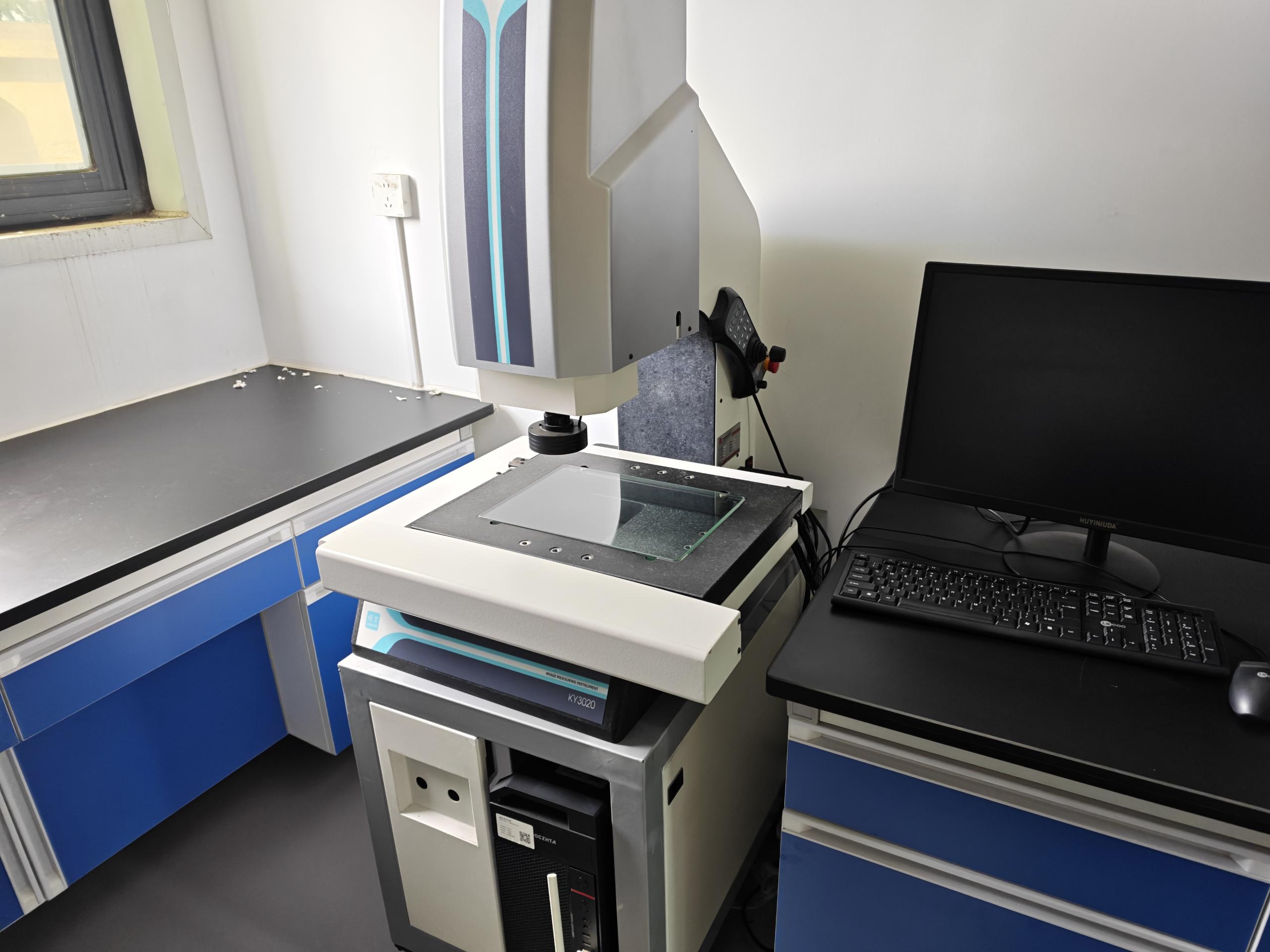
Thread geometry and dimensional checks on the automatic video measuring system — the practical link between EN ISO 4753 and what leaves the warehouse.
Test equipment that supports the claims
Four instruments do most of the evidence work on the shop floor: an HR-150A Rockwell hardness tester, an electro-hydraulic servo universal material testing machine, an automatic video measuring system and an intelligent salt spray test chamber. They map onto the four questions a buyer actually asks in sequence:
- Is the material what the certificate says it is? — hardness testing.
- Does the anchor carry the load it claims? — tensile testing.
- Is the thread and overall geometry correct? — video measuring.
- Will the coating survive the intended environment? — salt spray testing.
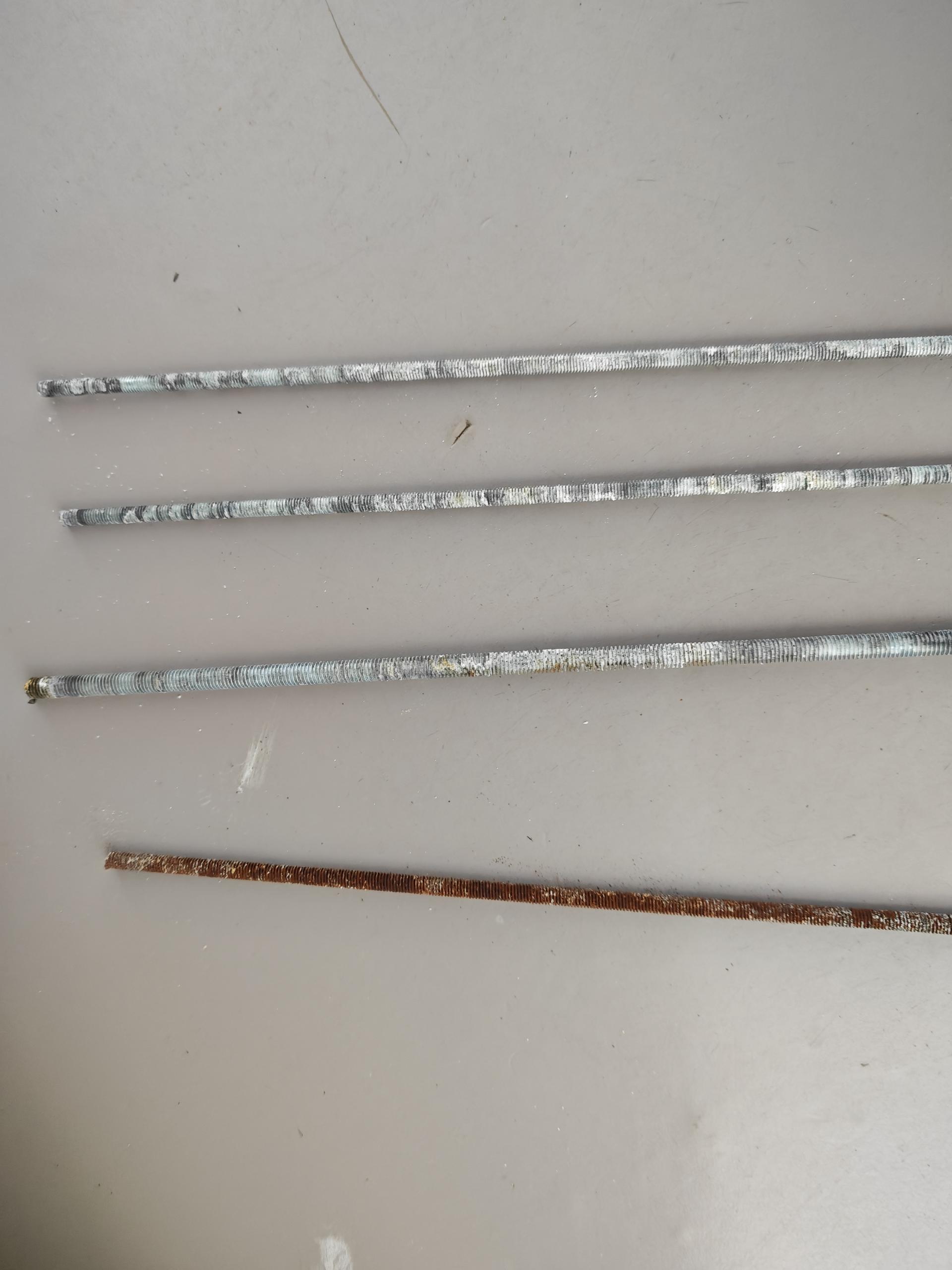
White rust versus red rust after salt spray exposure — the difference between a coating doing its job and a coating that has already failed.
Documented performance and where it comes from
Company product documentation records a bearing capacity more than 30% higher than ordinary products, a salt-spray anti-rust life doubled relative to standard plating, a factory yield rate of 99.8% and a project failure rate below 0.1%. The same documentation states that anchor fixing saves 40% in labour and material cost compared with welding-based solutions, extends service life by 3–5 years, and raises construction efficiency by 50% because no hot work is required — which matters most in restricted or fire-sensitive construction areas.
How to read these figures honestly. They are the manufacturer's own performance record, not a third-party benchmark. Use them to start a validation conversation, and request the corresponding test reports whenever a project engineer needs independently verified values. A supplier that cannot produce the underlying report should be treated differently from one that can.
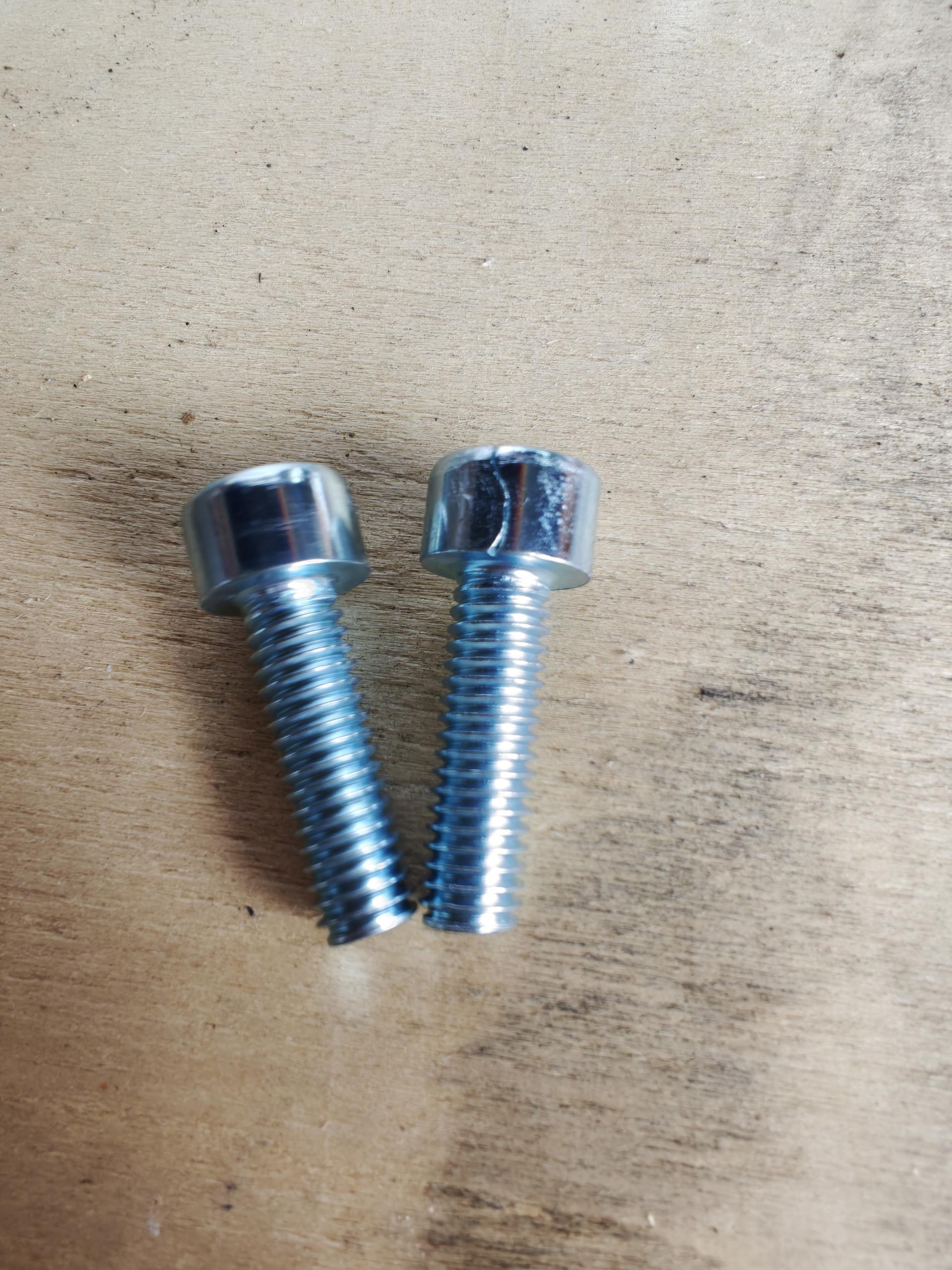
Destructive testing comparison: a cracked specimen against a sound one. This is the check behind any claim about material grade.
Comparison Table: Certification Checkpoints Across Three Anchor Types
| Checkpoint | Sleeve anchor (documented range) | Wedge anchor — confirm before switching | Expanding bolt — confirm before switching |
|---|---|---|---|
| Quality management certification | ISO 9001, certificate 29024Q12949-09R1M | Certificate number, issuing body, scope and the production site covered | Certificate number, issuing body, scope and the production site covered |
| Environmental management and carbon footprint | ISO 14001 (29025E12097-12R0M); ISO 14067 carbon footprint verification (33925CFMS00020R0S) | Equivalent environmental certificate; carbon footprint verification if the buyer reports embodied carbon | Equivalent environmental certificate; carbon footprint verification if the buyer reports embodied carbon |
| Occupational health and safety | ISO 45001 | Current ISO 45001 certificate for the manufacturing site | Current ISO 45001 certificate for the manufacturing site |
| Automotive / OEM supply chain | IATF 16949:2016 | IATF 16949:2016 required if the fixing enters an automotive or OEM programme | IATF 16949:2016 required if the fixing enters an automotive or OEM programme |
| Corrosion protection | EN ISO 10683 reference; zinc plated, yellow zinc plated and hot-dip galvanized finishes; A2-70 / A4-80 stainless available | Which coating standard applies, plus a salt-spray report at the intended duration | Which coating standard applies, plus a salt-spray report at the intended duration |
| Fastening torque | EN ISO 16047 reference for the torque / clamp-force relationship | Tested torque value and the test method used to obtain it | Tested torque value and the test method used to obtain it |
| Thread geometry | EN ISO 4753 reference, verified by automatic video measuring | Dimensional and thread inspection report for the quoted batch | Dimensional and thread inspection report for the quoted batch |
| Strength test method for anchors in concrete | Achievable against ASTM E488 / E488M-22, the primary standard test method for anchor strength in concrete elements | Request reports aligned to ASTM E488 / E488M-22 or the project's specified method | Request reports aligned to ASTM E488 / E488M-22 or the project's specified method |
| Standards and material grades | GB/T, DIN, ISO, ASTM and EN; 4.8 carbon steel and A2-70 / A4-80 stainless; M5–M36; lengths 30–300 mm | Declared standard, grade and size range for the actual product offered | Declared standard, grade and size range for the actual product offered |
The wedge-anchor and expanding-bolt columns list documentation to request; they are not claims about any specific supplier. Certification evidence applies to the exact production site and product family being quoted, which is why a type change should be treated as a re-approval.
Step-by-Step: Six Checks Before Switching Anchor Type
- Confirm certificate scope, number and site. Ask for the ISO 9001 certificate number (for this sleeve anchor range: 29024Q12949-09R1M) and verify that the manufacturing site named on it is the site that will produce your order. The same applies to ISO 14001 (29025E12097-12R0M), ISO 45001 and IATF 16949:2016.
- Match the coating standard to the environment, not to the price list. For EU-facing corrosion requirements, work from EN ISO 10683 and ask for the salt-spray result. In coastal salt-spray, rain-immersed or humid chemical environments, zinc-plated parts can oxidise and lose anchorage, so hot-dip galvanizing or A4 stainless steel should be considered for heavily corrosive areas.
- Request torque-tension data rather than a generic tightening figure. EN ISO 16047 describes the torque / clamp-force relationship. Insufficient tightening can leave the expansion sleeve poorly engaged; excessive tightening can damage the anchor or the base material.
- Verify thread and dimensional conformance. EN ISO 4753 defines thread ends, and an automatic video measuring system is the practical way to confirm the batch. Ask for the inspection record when the product changes supplier or type.
- Re-check the load path. Base material, anchor diameter, embedment depth, hole diameter, edge distance, spacing and tightening torque all influence capacity. If a wedge anchor or expanding bolt replaces a sleeve anchor, these parameters must be re-confirmed rather than inherited.
- Lock the evidence packet into the purchase order. Record the certificate numbers, the requested test reports and the acceptance route — factory pre-inspection, customer on-site inspection or SGS third-party acceptance — so that the documentation cannot drift between the first shipment and the tenth.
Use Cases: Where Each Option Earns Its Place
Sleeve anchors are commonly used in concrete and solid masonry, and suitability depends on the specific anchor design, the base-material condition and the load requirement. In practice, the documented sleeve anchor variants cover a wide span of project types:
- Outdoor and infrastructure work: bridge and curtain wall projects, municipal engineering and steel structure projects where weather exposure makes coating choice decisive.
- New energy: photovoltaic power stations and wind power applications that combine vibration load with long service expectations.
- Coastal and high-corrosion zones: where A4 stainless steel or hot-dip galvanized finishes are specified to eliminate corrosion risk at source.
- Chemical and explosion-hazard areas: petrochemical projects where hot work is restricted and installation must avoid welding.
- Industrial and rail: engineering machinery, equipment workshops, rail transit and factory construction, in static permanent fastening or alternating vibration load conditions.
- General construction: home decoration, road infrastructure and municipal landscape work using standard-load anchors.
Matched equipment in these applications typically includes torque wrenches, impact drills and fastening tools, with nuts and washers from the same supplier completing the assembly. The determining factor is rarely the anchor alone — it is whether the head configuration, material grade and coating were selected against the real working condition.
Selecting a Long-Term Sleeve Anchor Manufacturer for Reliable Supply
Certification gets a supplier onto a shortlist; supply continuity keeps them there. For distributors, importers and OEM buyers evaluating a long-term relationship, the relevant evidence is operational rather than decorative.
HEBEI YUETONG FASTENERS MANUFACTURING CO., LTD. holds self-operated import and export qualifications and has established long-term and stable partnerships with major distributors worldwide. Products are exported to over 30 countries and regions, including South America, Russia and the Middle East, with major markets in the EU, North America, LATAM and MEA (Middle East & Africa). Export business accounts for 80% of total sales, which means export documentation, packaging and shipping are routine operations rather than exceptions.
Buyers can review the full product range in the company brochure (PDF), and see how the sleeve anchor range sits alongside hex nuts, hex bolts, threaded rod and washers at www.ytfasteners.com.
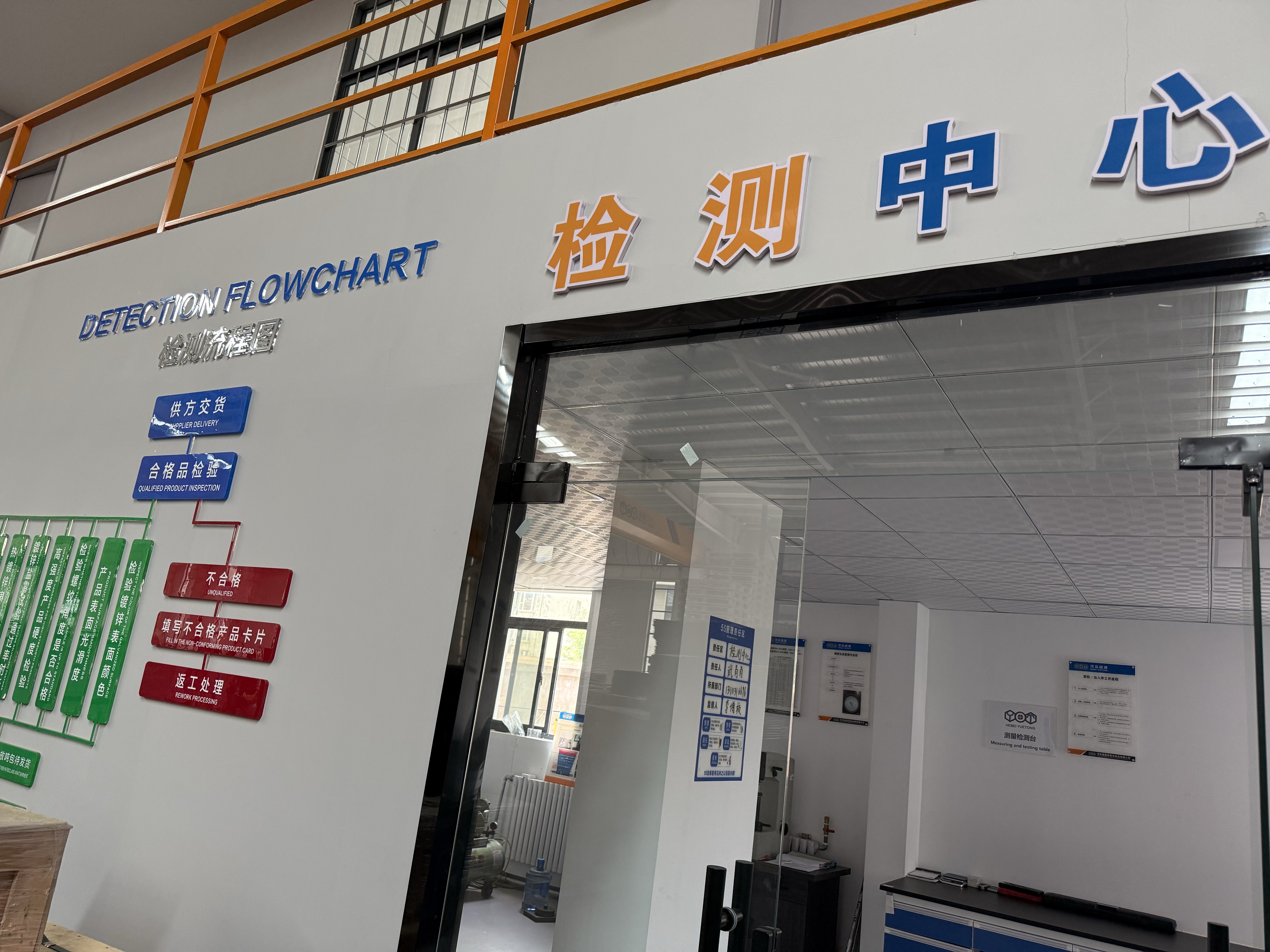
In-house testing centre: hardness, tensile, dimensional and salt-spray verification under one roof.
Frequently Asked Questions
Which certifications should be confirmed on an anchor before switching types or suppliers?
At minimum, confirm the ISO 9001 quality management certificate and its number — for this sleeve anchor range, certificate 29024Q12949-09R1M — the ISO 14001 environmental certificate (29025E12097-12R0M), the ISO 45001 occupational health and safety certificate, and IATF 16949:2016 where the fixing enters an automotive or OEM supply chain. For EU corrosion requirements, ask which coating standard is applied, for example EN ISO 10683, and request the salt-spray report. Confirm that every certificate names the site that will actually produce the anchors you receive.
Can a wedge anchor or an expanding bolt replace a sleeve anchor without new documentation?
The anchor type is not the obstacle; the missing evidence is. A wedge anchor or an expanding bolt from a different production site will normally need its own certificate numbers, torque data measured under EN ISO 16047, thread geometry conformance to EN ISO 4753 and corrosion test evidence before an engineer can approve the substitution. Treat a type change as a re-approval. Load capacity also depends on base material, anchor diameter, embedment depth, hole diameter, edge distance, spacing and tightening torque, and those parameters may differ between anchor types.
What is the minimum order quantity and how is a long-term anchor programme priced?
The minimum order quantity for the sleeve anchor range is 5,000 pcs. Pricing is driven by material grade (4.8 carbon steel versus A2-70 / A4-80 stainless steel), surface treatment (zinc plated, yellow zinc plated or hot-dip galvanized), size within the M5–M36 range, and order volume. Payment can be arranged as 30% deposit with the balance before shipment, 100% advance, L/C or bank transfer, and long-term customers are offered flexible payment terms.
Can samples be supplied for validation before a repeat order?
Yes. Sample validation is the standard route before a repeat order, allowing buyers to check dimensions, thread geometry, coating appearance and installation behaviour in the intended base material. Orders also support factory pre-inspection, customer on-site inspection and SGS third-party acceptance, with complete quality documents provided, so the same evidence can be reproduced at every subsequent shipment.
What delivery terms keep a long-term anchor supply programme reliable?
Delivery can be arranged on EXW, FOB, CIF or DDP terms. Supply reliability for repeat programmes rests on the manufacturer's export infrastructure: self-operated import and export qualifications, exports to over 30 countries and regions including South America, Russia and the Middle East, major markets in the EU, North America, LATAM and MEA, and 80% of total sales coming from export business. Buyers planning a rolling programme can request current lead times, the latest catalogue and a quotation covering their size mix through WhatsApp or by email at info@ytfasteners.com.
Conclusion
Choosing between a sleeve anchor, a wedge anchor and an expanding bolt is not primarily a load-versus-price calculation. It is a question of which option can carry documented, site-specific evidence — a numbered ISO 9001 certificate, an environmental and carbon-footprint record, an automotive-grade quality system where relevant, a defined coating standard and a tested torque value — into a project that will be inspected.
On that basis, the sleeve anchor range from HEBEI YUETONG FASTENERS MANUFACTURING CO., LTD. can be assessed on ISO 9001 (29024Q12949-09R1M), ISO 14001 (29025E12097-12R0M), ISO 45001, IATF 16949:2016 and ISO 14067 (33925CFMS00020R0S), with EN ISO 10683, EN ISO 16047 and EN ISO 4753 as the EU-facing references for corrosion protection, torque and thread geometry. Anyone switching to a different anchor type should demand the equivalent items before signing the order — and should expect the answer in certificate numbers, not adjectives.
Next Step: Validate the Evidence Before the Order
Request the current sleeve anchor catalogue, certification pack and sample set, or ask for a quotation against your size and coating mix. Technical documents and the full product brochure are available for download, and the team can confirm MOQ (5,000 pcs), delivery terms and acceptance route for your market.
Email: info@ytfasteners.com | Tel / WhatsApp: +86 158-320-18600 | Web: www.ytfasteners.com | Blog: blog.ytfasteners.com