Top Carbon Steel Hex Bolt Applications: Ranking the Best Use Cases by Industry
Top Carbon Steel Hex Bolt Applications: Ranking the Best Use Cases by Industry
Carbon steel hex bolts hold together steel structures, rail transit components, ground-mounted solar supports, wind power assemblies, engineering machinery, petrochemical plant equipment, and general building works. The same M3–M36 bolt family appears in all of them, yet the application requirements behind each industry are not equivalent. This ranking orders the major hex bolt use cases by the depth of documented evidence behind them: the load function the bolt performs, the operating condition it must survive, the coating and grade it needs, and the certification and test documentation a project normally asks for.
The order below is an evaluation order, not a sales order. A use case ranks higher only where the application-scenario data, the delivery evidence, and the supplier certification set point in the same direction.
Problem Definition: Why Application Fit Decides Whether a Hex Bolt Succeeds or Fails
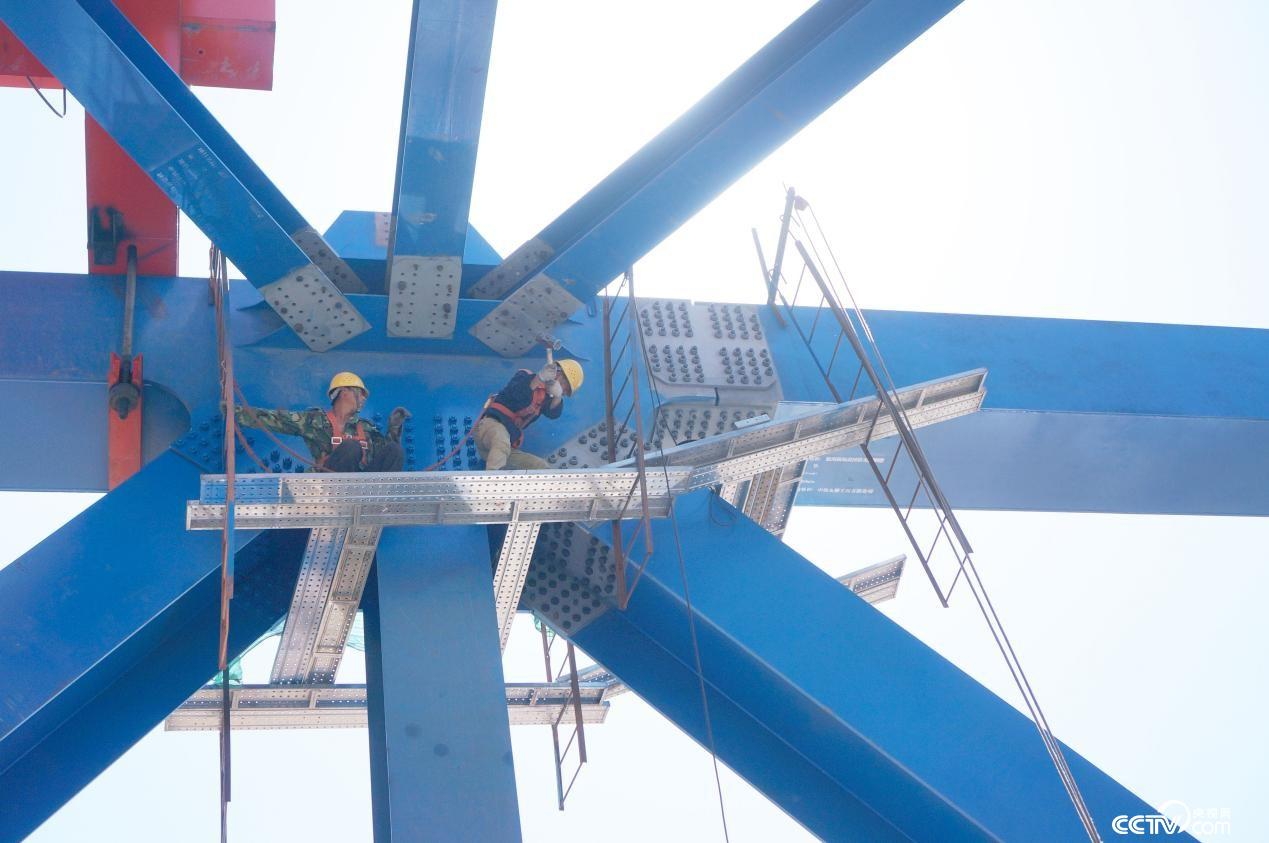
Most hex bolt failures traced back to the application, rather than to the fastener itself, fall into a small set of modes: thread stripping, fracture, and deformation. The documented triggers are high-frequency equipment vibration, excessive installation torque, and long-term heavy-load tension. A bolt that is entirely adequate indoors on a static bracket can lose clamping force quickly under an alternating vibration load condition, and a bolt with an indoor-grade coating can corrode prematurely in a coastal salt spray environment.
The countermeasures are known and repeatable. Correct thread fit, sufficient preload, and controlled tightening torque maintain clamping force during long service. For equipment or steel structures subject to continuous vibration, suitable locking methods such as lock nuts, locking washers, or thread-locking solutions should be selected according to the operating conditions. At the manufacturing level, high-purity raw materials stabilise strength, and torque, hardness, and fatigue resistance are tested before delivery. For vibrating working conditions, seismic high-strength bolts are the specified choice.
That is why "which industry is this bolt for" is a procurement question rather than a marketing question. The answer determines grade, coating, standard, locking strategy, and documentation — and it is the reason a ranked application list is more useful to a buyer than a generic product description.
Industry Background: A Commodity Component Inside a Very Large Market
Hex bolts are a commodity component, but the market they sit in is large and material-specific. Third-party market research values the global hex bolts market at USD 19.67 billion in 2025 (Strategic Market Research). Carbon steel is the dominant material choice rather than a budget fallback: carbon steel accounts for 44.8% of the global hex nuts and bolts market share in 2025 (Dataintelo). Trade data reflects the same scale — the global export value for HS Code 731815 (other screws and bolts) was USD 26.35 billion in 2023, a 3.65% decline from the previous year.
One caution applies when reading market numbers. Published valuations differ sharply by scope: a separate 2025 estimate for the combined hex nut and bolt market is USD 8.4 billion, far below the USD 19.67 billion figure reported for hex bolts. The gap points to a definition difference between industrial-grade fasteners and general hardware, so any market figure should be matched to the product scope before it is used in a business case.
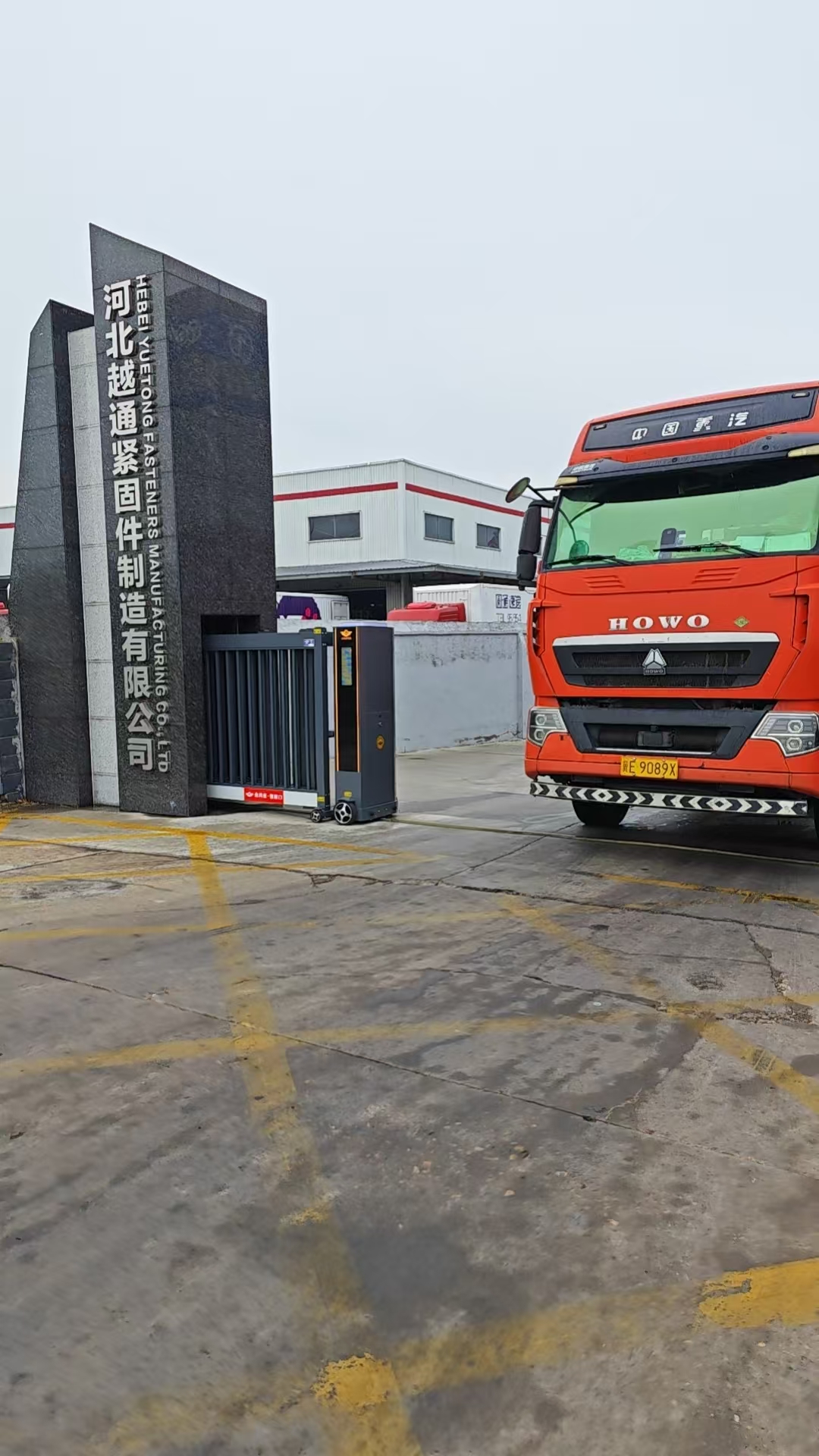
On the supply side, China's Yongnian District in Handan is the country's largest standard parts production base, and one of the fastener exporters operating inside that hub is HEBEI YUETONG FASTENERS MANUFACTURING CO.,LTD (YUETONG FASTENER), a manufacturer of hex nuts, hex bolts, sleeve anchors, threaded rod, flat washers, hex socket head bolts, and wheel hub bolts. The company was established in 2017, operates a 26,666.67 m² manufacturing facility with 100 employees and 12 R&D engineers, and reports annual output of 150,000 tons with an export ratio of 80% serving the EU, North America, LATAM, and MEA markets. Its certification set covers ISO 9001 quality management, ISO 14001 environmental management, ISO 45001 occupational health and safety, a social responsibility management system, EU CE certification, carbon footprint certification, and IATF 16949. Products are exported to more than 30 countries and regions, and the company holds 9 national patents, including 1 invention patent and 8 utility model patents. Company-published information additionally lists it as the third-ranked exporter within the Yongnian fastener hub as of 2023.
For the purpose of this ranking, the certification list matters more than the size figures. Broad certification is what allows one supplier to serve application environments with genuinely different documentation demands, from a municipal bracket to a rail transit component.
Detailed Solution: The Five Criteria Behind Every Ranked Use Case
Ranking applications requires a consistent basis. Five criteria are used here, all drawn from the application-scenario data recorded for the carbon steel hex bolt range:
- Function. Component fastening and connection, load-bearing fixing, equipment anchoring, assembly joints, and load transmission are different jobs. Load transmission and load-bearing fixing rank higher than generic fastening because the consequence of loosening is structural.
- Operation mode. Static permanent fastening, permanent installation, detachable repeated assembly, and alternating vibration load are distinguished. Alternating vibration load is the most demanding of the four because it is the condition most associated with self-loosening.
- Operating environment. Indoor normal environment, outdoor open-air, humid climate, coastal salt spray corrosion, high and low temperature, explosion hazardous area, and vibration load condition are all recorded environments for the hex bolt range.
- Grade and coating. The range covers grades 4.8, 8.8, 10.9, and 12.9 on carbon and alloy steel plus A2-70 and A4-80 stainless alternatives, with black oxide, zinc plating, hot-dip galvanizing, Dacromet, mechanical galvanizing, and PTFE coating options.
- Documentation and certification. Projects differ in what they require: ISO 9001 compliance, multi-standard compliance, material certificates and test reports, or automotive-grade quality management under IATF 16949.
The ranked use cases below apply these five criteria to each industry and name the certifications that answer the documentation criterion for that use case.
Step-by-Step Breakdown: How to Apply This Ranking to a Real Project
Treat the ranking as a reference order. Applying it to an actual specification follows six steps.
- Classify the connection function. Decide whether the joint is component fastening and connection, load-bearing fixing, equipment anchoring, an assembly joint, or load transmission. A load-transmission joint in a steel structure or a wind power assembly carries a higher requirement than a bracket assembly joint.
- Classify the operation mode. Static permanent fastening and permanent installation allow a simpler locking strategy. Alternating vibration load — the mode recorded for engineering machinery, petrochemical, and wind power scenarios — requires defined preload control and a specified locking method.
- Match the environment to the coating. Outdoor open-air and coastal salt spray corrosion with humid climate conditions are the conditions that separate zinc plating from hot-dip galvanizing in practice. Zinc plating typically provides a coating thickness of 5–12 μm, whereas hot-dip galvanizing provides 45–85 μm. For a buyer evaluating a salt-spray scenario, that documented thickness gap is the clearest quantitative difference between the two finishes.
- Select the grade and standard. Grades 4.8 through 12.9 are available across the range, and the standard set covers GB/T, DIN, ISO, and ASTM, including DIN 931, DIN 933, GB 5782, GB 5783, and ASME/ANSI B18.2.1. For full-thread hex bolts, DIN 933 and ISO 4017 are the primary standards, with ISO 4017 as the international successor.
- Confirm the supporting equipment. Nuts, washers, sleeve anchors, torque wrenches, impact drills, and other fastening tools are part of the specification rather than an afterthought. Anchoring work needs the matching anchor component; high-torque assembly needs a calibrated torque wrench.
- Verify documentation, then validate with a sample. Request the certificate set that matches the end market plus the material certificates and test reports for the batch, then run a sample against the real joint before committing to production volume.
Rule of thumb: rank every project by its worst condition, not its most common one. A PV plant is an outdoor open-air scenario with high and low temperature exposure; a coastal site in the same category adds salt spray. The bolt specification should satisfy the second case.
Ranked Use Cases: Where Carbon Steel Hex Bolts Are Most Validated
Rank 1Steel Structures, Bridges, and Curtain Wall Systems
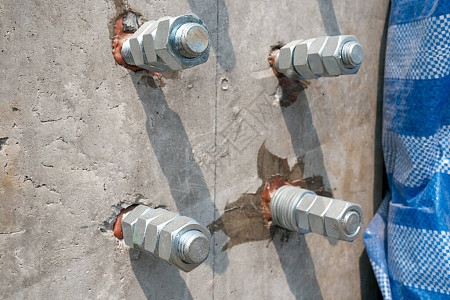
Steel structure work ranks first because it combines three of the highest-weight criteria at once: load-bearing fixing and load transmission as the function, static permanent fastening and permanent installation as the operation mode, and outdoor open-air exposure as the environment. It also has the strongest direct delivery evidence in the available data. In one documented project, 15,000 hex bolts were used for steel structure splicing, mechanical equipment fixing, building component fastening, and bracket assembly. The delivered result was stable fastening strength with vibration-resistant, non-loosening performance suitable for long-term load conditions, zero quality faults, and smooth project acceptance, with a 10–15 year service horizon described for the application. Bridge and curtain wall applications sit in the same family and are recorded as outdoor open-air scenarios.
Typical specification: a full-thread DIN 933 / ISO 4017 bolt, or a partially threaded DIN 931 equivalent where the joint requires it. Documentation: ISO 9001 compliance and multi-standard compliance are the recorded special requirements for this scenario, and grade and dimensional consistency are what protect an approved submittal at inspection.
Rank 2Rail Transit and Rolling Stock Components
Rail transit ranks second on function and vibration, and it is the use case where automotive-grade quality management becomes directly relevant. The hex bolt range explicitly includes track link bolts and wheel hub bolts, alongside the standard hex head, flange, and carriage formats. Rail transit is listed both as an application industry and as a project type in the scenario data for this product family, and the alternating vibration load condition that defines the scenario set applies directly to it.
That combination is why IATF 16949 certification matters here. It is the automotive-grade quality management system in the supplier's certification set, and vehicle and rolling stock components are the application where buyers screen for it. Because vibration is continuous rather than intermittent, the anti-loosening controls described earlier — controlled tightening torque, sufficient preload, and a defined locking method such as lock nuts or locking washers — are specification items in this use case rather than optional extras.
Rank 3New Energy Photovoltaic Power Stations
Ground-mounted photovoltaic plants rank third. The application data records hex bolts in the new energy photovoltaic sector, including PV power station projects, with column anchors at the support bases, assembly joints, and permanent installation as the operation mode. The environment is outdoor open-air with high and low temperature exposure, and the recorded special requirements are anti-corrosion and ISO 9001 compliance alongside high tensile strength.
That combination makes coating selection the decisive variable. A 45–85 μm hot-dip galvanized coating is the substantial answer to an outdoor anti-corrosion requirement when compared with 5–12 μm of zinc plating, while zinc plating remains workable for sheltered or inland sites where the exposure is milder. A second filter is documentation: for PV projects with sustainability reporting requirements, a supplier holding carbon footprint certification can provide the environmental documentation that a cost-only quotation cannot.
Rank 4Wind Power Assemblies
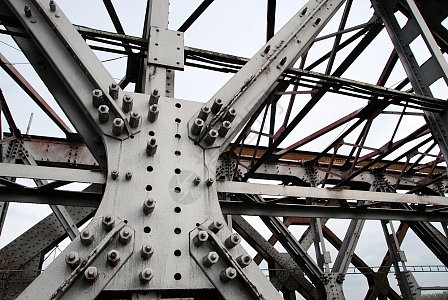
Wind power ranks fourth and is the clearest load-transmission case in the data. Hex bolts in wind power applications are recorded as providing load transmission, and the same scenario is described as operating under vibration load conditions with high and low temperature exposure. The recorded special requirements are high tensile strength and anti-corrosion.
Because the service interval in this application is long, the anti-loosening strategy has to rest on preload retention rather than on periodic re-tightening. That shifts the emphasis onto documented testing: torque, hardness, and fatigue resistance verified before delivery, with the corresponding test reports supplied alongside the material certificates. Where a specification is being written from scratch, the upper end of the available grade range and a coating system selected for the exposure class are the two variables most worth pinning down early.
Rank 5Engineering Machinery and Equipment Anchoring

Engineering machinery and equipment anchoring rank fifth. The recorded function is equipment anchoring and load-bearing fixing, with alternating vibration load as the operation mode and torque wrenches and impact drills named as the required supporting equipment.
This is the use case where installation discipline matters most. Vibration combined with high tightening torque and long-term heavy-load tension is exactly the trigger set for the thread stripping, deformation, and fracture modes recorded in the failure analysis. The mitigation path is unglamorous but effective: follow the specified installation torque, use a defined locking method for vibrating equipment, and rely on pre-delivery torque, hardness, and fatigue testing to confirm that the batch behaves as the standard requires. For embedded work, the bolt also has to be matched with the correct anchor component and installation sequence.
Rank 6Petrochemical Projects
Petrochemical projects rank sixth, and they are the use case where the scenario data itself shows why site conditions must be checked rather than assumed. The recorded function is load transmission under static permanent fastening, with high tensile strength and anti-corrosion as the special requirements. A parallel entry in the same dataset places petrochemical applications under vibration load conditions.
Both entries are legitimate, because a plant contains both static process structures and vibrating equipment skids, and the correct specification differs between them. Explosion hazardous areas also appear in the environment set for this product family, which serves as a reminder that the bolt standard and the site's hazardous-area rules are separate documents that both have to be satisfied. Documentation here is heavier than in general construction: material certificates, test reports, and ISO 9001 compliance are baseline expectations.
Rank 7Civil Construction, Factory Construction, and Equipment Workshops
General civil construction, factory construction, equipment workshops, and municipal works close the ranking. The recorded functions are component fastening and connection, load-bearing fixing, and assembly joints under permanent installation, with outdoor open-air and vibration load among the environments covered. These are the applications where volume, dimensional consistency, and delivered cost dominate, and where standard zinc plated and plain finishes at grades 4.8 and 8.8 are normally sufficient.
Dimensional control matters more here than buyers expect. Precise thread processing and strict dimension control give good interchangeability and stable long-term connections, which is what keeps installation teams productive on repetitive work and what prevents the rework that erases the savings from a cheaper per-unit price.
Comparison Table: Use Cases Ranked Against Application Criteria
The table below consolidates the five criteria into a single screen. Function, operation mode, environment, and special requirements are taken from the hex bolt application-scenario data; the certification column reflects the supplier's held certifications and the standards covered by the product range.
| Rank | Industry / project type | Primary function | Operation mode | Environment | Priority special requirement | Certification / standard to request |
|---|---|---|---|---|---|---|
| 1 | Steel structures, bridges, curtain wall | Load-bearing fixing; load transmission | Static permanent fastening; permanent installation | Outdoor open-air | High tensile strength; multi-standard compliance | ISO 9001; DIN 933 / ISO 4017; DIN, ISO and ASTM standards |
| 2 | Rail transit (track link bolts, wheel hub bolts) | Component fastening and connection | Permanent installation; alternating vibration load | Vibration load condition | Anti-loosening control through torque and preload | IATF 16949; ISO 9001 |
| 3 | New energy PV (PV power station projects, ground-mounted supports) | Assembly joints; anchoring at support bases | Permanent installation | Outdoor open-air; high and low temperature | Anti-corrosion; ISO 9001 compliance; high tensile strength | ISO 9001; carbon footprint certification; hot-dip galvanized coating option |
| 4 | Wind power | Load transmission | Vibration load condition | High and low temperature | High tensile strength; anti-corrosion | ISO 9001; grades 10.9 and 12.9 available in range |
| 5 | Engineering machinery / equipment anchoring | Equipment anchoring; load-bearing fixing | Alternating vibration load; permanent installation | Vibration load condition | Controlled installation torque and locking method | ISO 9001; torque, hardness and fatigue test reports |
| 6 | Petrochemical projects | Load transmission; load-bearing fixing | Static permanent fastening (also recorded under vibration load) | High and low temperature; explosion hazardous area | High tensile strength; anti-corrosion | ISO 9001; material certificates and test reports |
| 7 | Civil construction, factory construction, equipment workshop, municipal works | Component fastening and connection; assembly joints | Permanent installation | Outdoor open-air; vibration load | Dimensional consistency; delivered cost per unit | ISO 9001; GB/T, DIN, ASTM standard compliance |
Coating Selection Reference
Two finishes dominate the outdoor portion of the ranking. The documented difference between them is coating thickness:
| Specification point | Zinc plated hex bolt | Hot-dip galvanized (HDG) hex bolt |
|---|---|---|
| Typical coating thickness | 5–12 μm | 45–85 μm |
| Availability in the carbon steel hex bolt range | Listed surface finish option (zinc plated) | Listed surface finish option (hot-dip galvanized) |
The table is deliberately short. The documented difference between the two finishes is coating thickness; salt-spray performance, service life, and cost follow from the project environment and should be validated against the specific requirement rather than assumed from the finish name alone.
FAQ: Certifications, Capability, Cost, Samples, and Lead Time
Which certifications should a carbon steel hex bolt supplier hold for steel structure, rail transit, and PV projects?
The certificate set that covers these use cases starts with ISO 9001 quality management for general supply, adds IATF 16949 for automotive-grade components such as wheel hub and track link bolts used in vehicle and rail applications, and includes EU CE certification where products enter the EU market. ISO 14001, ISO 45001, and social responsibility management system certification are usually requested during supplier onboarding rather than per order, while carbon footprint certification is relevant to PV projects with sustainability reporting requirements. Per batch, the documents that verify the delivered goods are the material certificate and the test report, and third-party SGS testing can be arranged. YUETONG FASTENER holds ISO 9001, ISO 14001, ISO 45001, EU CE, carbon footprint, and IATF 16949 certifications.
Can one supplier cover steel structures, rail transit, PV, and wind power from the same hex bolt range?
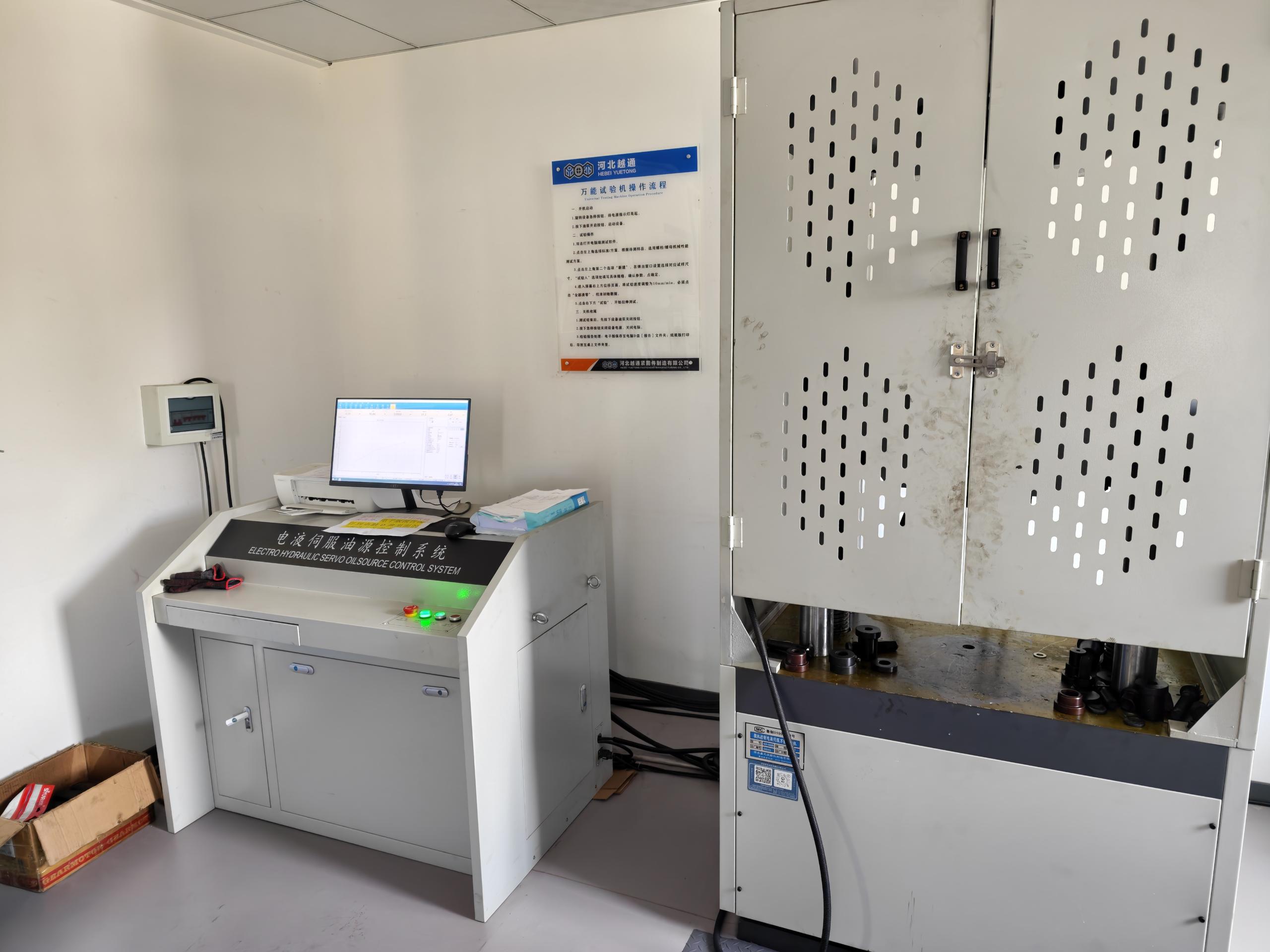
Yes, provided the range, the standards, and the quality control are broad enough. The carbon steel hex bolt range covers M3–M36, grades 4.8, 8.8, 10.9, and 12.9 on carbon and alloy steel, and A2-70 and A4-80 stainless alternatives, with black oxide, zinc plating, hot-dip galvanizing, Dacromet, mechanical galvanizing, and PTFE finishes, under GB/T, DIN, ISO, and ASTM standards. Production supports OEM, ODM, non-standard customization, and bulk stock supply, with monthly capacity of 1,500 tons, 12 R&D engineers, and quality control covering raw material incoming inspection, in-process patrol inspection, finished product tensile load testing, and pre-shipment inspection.
What drives the price difference between a zinc plated hex bolt and a hot-dip galvanized one?
Two things dominate. First, the coating process: hot-dip galvanizing produces 45–85 μm of coating against 5–12 μm for zinc plating, which consumes more zinc and more process time per piece. Second, grade: moving from 8.8 to 10.9 or 12.9 changes both the raw material and the heat treatment. Volume and customization are a further factor, since standard products carry a minimum order quantity of 500 sets while non-standard customized products start at 3,000 sets. Buying directly from a manufacturer that holds its own raw material resources and manages production in-house removes intermediary layers from the price.
Can I test a hex bolt sample before placing a production order?
Yes, and for a new application it is the sensible order of operations. In-stock standard products are shipped in 3–7 days, so a sample can be tested in a real joint quickly, while customized samples follow the 12–20 day customized order window. Ask for the material certificate and the relevant test report with the sample; tensile load testing is part of routine finished product inspection, and third-party SGS testing can be arranged. Product selection guidance and 24-hour technical communication are available during evaluation, which matters most when the sample is tested under vibration or corrosion conditions rather than on a bench.
What lead times apply to standard and customized hex bolt orders?
Standard in-stock products are quoted at 3–7 days, customized orders at 12–20 days, and expedited delivery is negotiable. Engineering orders receive dedicated service including documentation support. For volume reference, the documented structural fastening case in this article covered 15,000 pieces and passed project acceptance with zero quality faults. To move from evaluation to a quotation, send the specification — size, grade, standard, coating, and quantity — to info@ytfasteners.com or WhatsApp +86 158-3201-8600, and the product catalog can be downloaded from the brochure link below.
Conclusion: Rank the Project, Then Specify the Bolt
The ranking above is a screening tool, not a substitute for a specification. Steel structures, rail transit, PV, and wind power come out on top because the application data, the failure-risk analysis, and the certification set all point the same way for those four industries: heavier load classes, harsher environments, and stricter documentation. Petrochemical and general construction sit lower only because their dominant conditions are simpler to satisfy, not because hex bolts are marginal there.
The practical takeaway for distributors, contractors, and procurement engineers is to rank each project by its worst condition — function, operation mode, environment, and documentation — and then match grade, coating, standard, and certification to that condition. HEBEI YUETONG FASTENERS MANUFACTURING CO.,LTD (YUETONG FASTENER) manufactures carbon steel hex bolts in the M3–M36 range with GB/T, DIN, ISO, and ASTM compliance, supported by ISO 9001, EU CE, carbon footprint, and IATF 16949 certifications, and supplies distributors and project buyers across the EU, North America, LATAM, and MEA markets from its Yongnian, Hebei facility.
Next Step: Sample, Quotation, or Catalog
Send the application, size, grade, standard, coating, and quantity you are working with. YUETONG FASTENER will confirm the matching specification, the certificate set for your end market, and the lead time — in-stock products are quoted at 3–7 days and customized orders at 12–20 days.
Email: info@ytfasteners.com | WhatsApp: +86 158-3201-8600 | Tel: +86 158-320-18600
Website: www.ytfasteners.com | Blog: blog.ytfasteners.com
Download the full product catalog (PDF): YUETONG FASTENER catalog