
Irrigation Pivot System Compliance: Certifications, Standards and Regional Requirements
Direct answer: Three documented specifications carry most of the compliance weight when an irrigation pivot system crosses a border. They are the structural steel grade and its galvanizing standard — Q235B metal hot-dip galvanized with reference to GB 13912-2020 — the ingress protection rating of the electrical package, where the control panel and collector ring are rated IP65, and the rated voltage of the drive system, which is 380V–460V and must be matched to the actual site supply. Everything the destination market adds on top of those three — declaration of conformity, utility acceptance, buyer acceptance tests — belongs in the purchase order as a written requirement, not in an assumption.
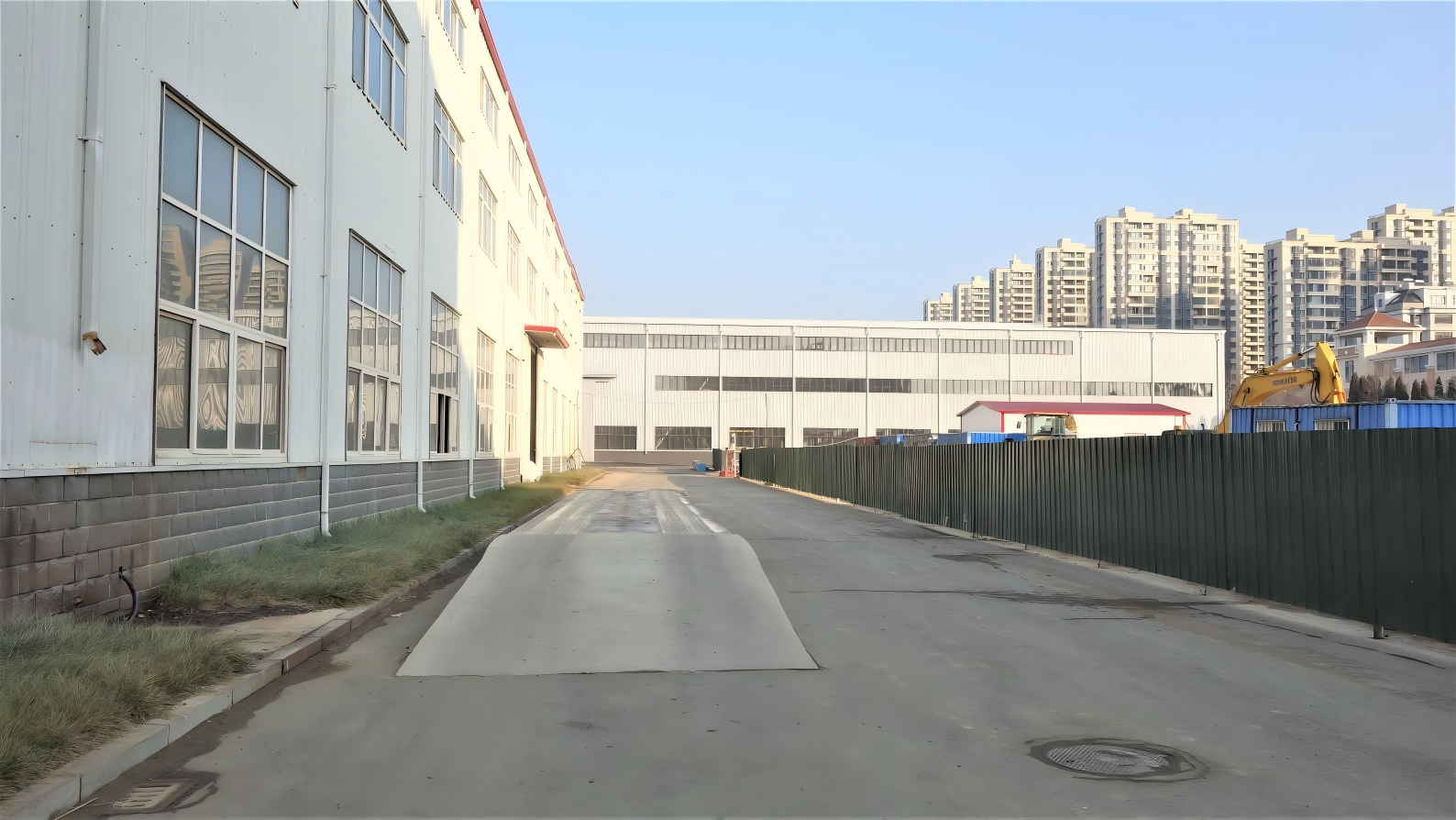
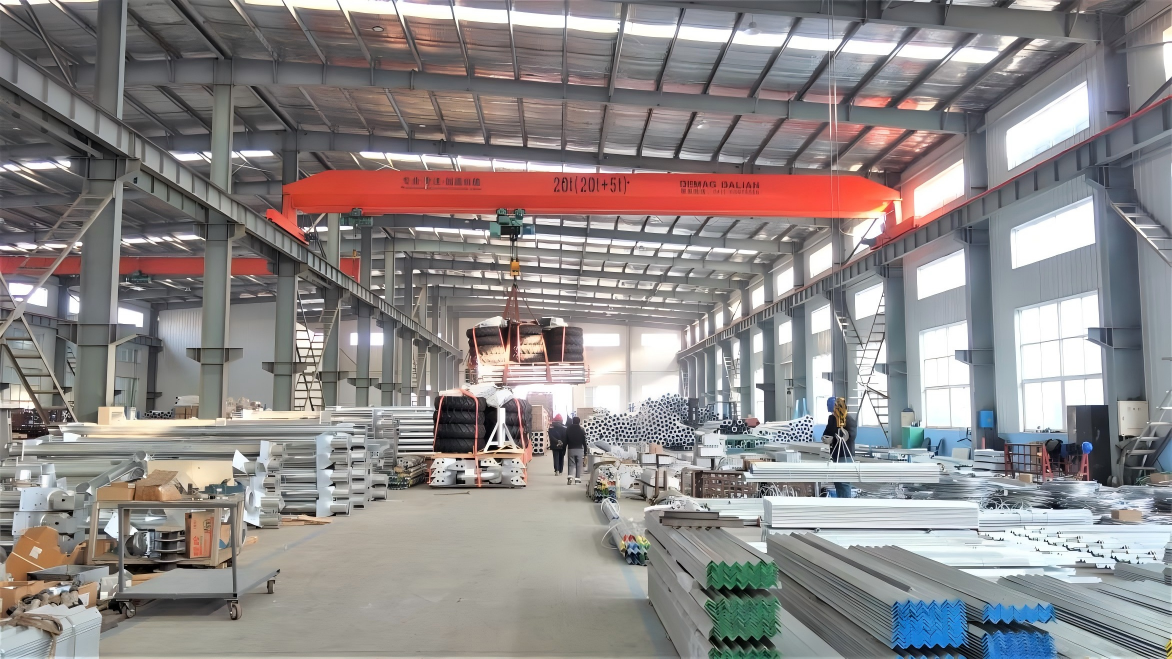
China Yulin Irrigation Equipment Co., Ltd., established in 2009, is an enterprise specializing in the research, development, sale and service of large irrigation machines, including center pivot, lateral move, towing and hose reel irrigation systems, together with irrigation parts, matching water pumps and generators. The company operates from Lvshunkou District, Dalian City, Liaoning Province, China, and exports to markets including the USA, Mexico, Europe, New Zealand, Canada, Australia, Africa and Egypt. This guide sets out what a buyer should verify, in what order, and how those checks should be written into purchase terms.
Why Compliance Documentation Decides an Irrigation Pivot System Import
A pivot is not one product. It is a galvanized steel structure, an electromechanical drive system with a control panel and collector ring, and a water distribution device that has its own measured performance values. Each of those three parts is governed by a different document, and an import can fail on any one of them even when the machine itself is sound. The common failure is not a defective machine. It is a paperwork gap: a galvanizing requirement that was never stated, an enclosure rating that was assumed for the whole machine, a voltage that matched the catalogue but not the farm.
The consequences are practical and expensive. A container can be held while a conformity document is produced. A utility or a buyer's engineer can refuse commissioning if the enclosure ratings or cable specifications do not match the agreed datasheet. A structure that is not coated to a defined standard can corrode prematurely in coastal, saline-alkali or high-humidity farmland, converting a capital purchase into a maintenance programme. Compliance, in other words, is a procurement discipline, not a formality attached to the invoice.
Industry Background: Why Buyers Now Ask for Evidence
The center pivot category is large and increasingly international, which raises the standard of documentation buyers expect. The global center pivot irrigation system market is estimated at USD 2.56 billion in 2025 and is projected to reach USD 5.67 billion by 2030, according to Mordor Intelligence. Growth of that scale means more machines moving between manufacturing regions and more markets applying their own acceptance procedures.
At the same time, the technical reference points have become more explicit. ISO 11545:2009 is the active international standard for determining the uniformity of water distribution from centre-pivot and moving lateral irrigation machines, which means performance claims can now be tested against a defined method rather than a brochure figure. Large cross-border supply agreements — such as Lindsay Corporation's multi-year Zimmatic supply agreement in the MENA region valued at more than USD 100 million in 2024 — show that project buyers are contracting irrigation at a scale where acceptance criteria have to be written down before shipment.
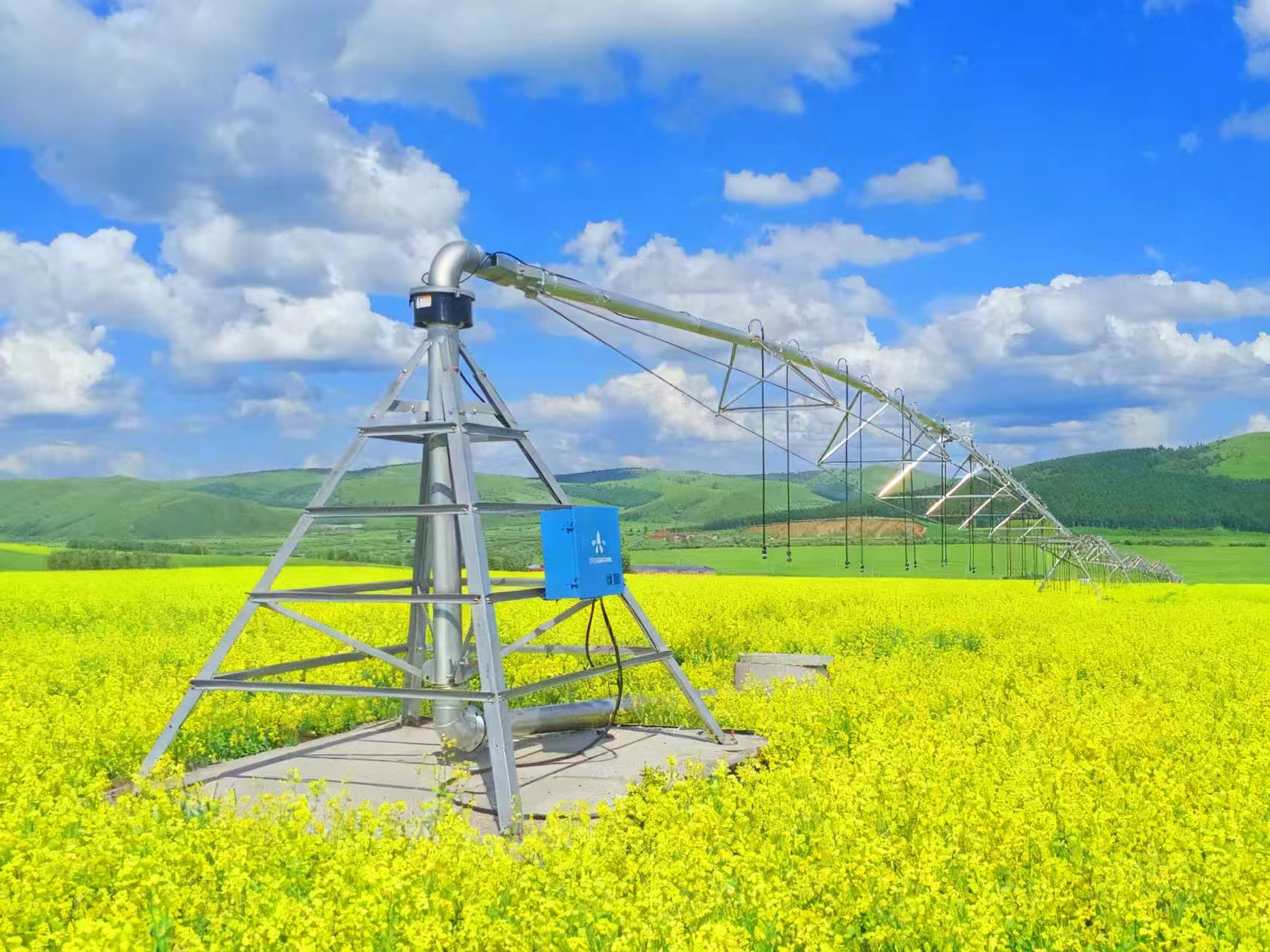
The Three Specifications That Carry Most of the Compliance Load
1. Q235B Steel and GB 13912-2020 Hot-Dip Galvanizing
The center pivot irrigation system is built from Q235B metal, with GB 13912-2020 as the referenced standard for the galvanized coating. Two separate things are being specified here, and buyers should keep them separate in the purchase order. Q235B is the structural steel grade — it defines the base material of the truss, towers and structural members. GB 13912-2020 defines the hot-dip galvanized coating applied over that steel. A supplier can satisfy the first and under-deliver on the second, which is why the coating standard, not only the steel grade, belongs in the technical annex.
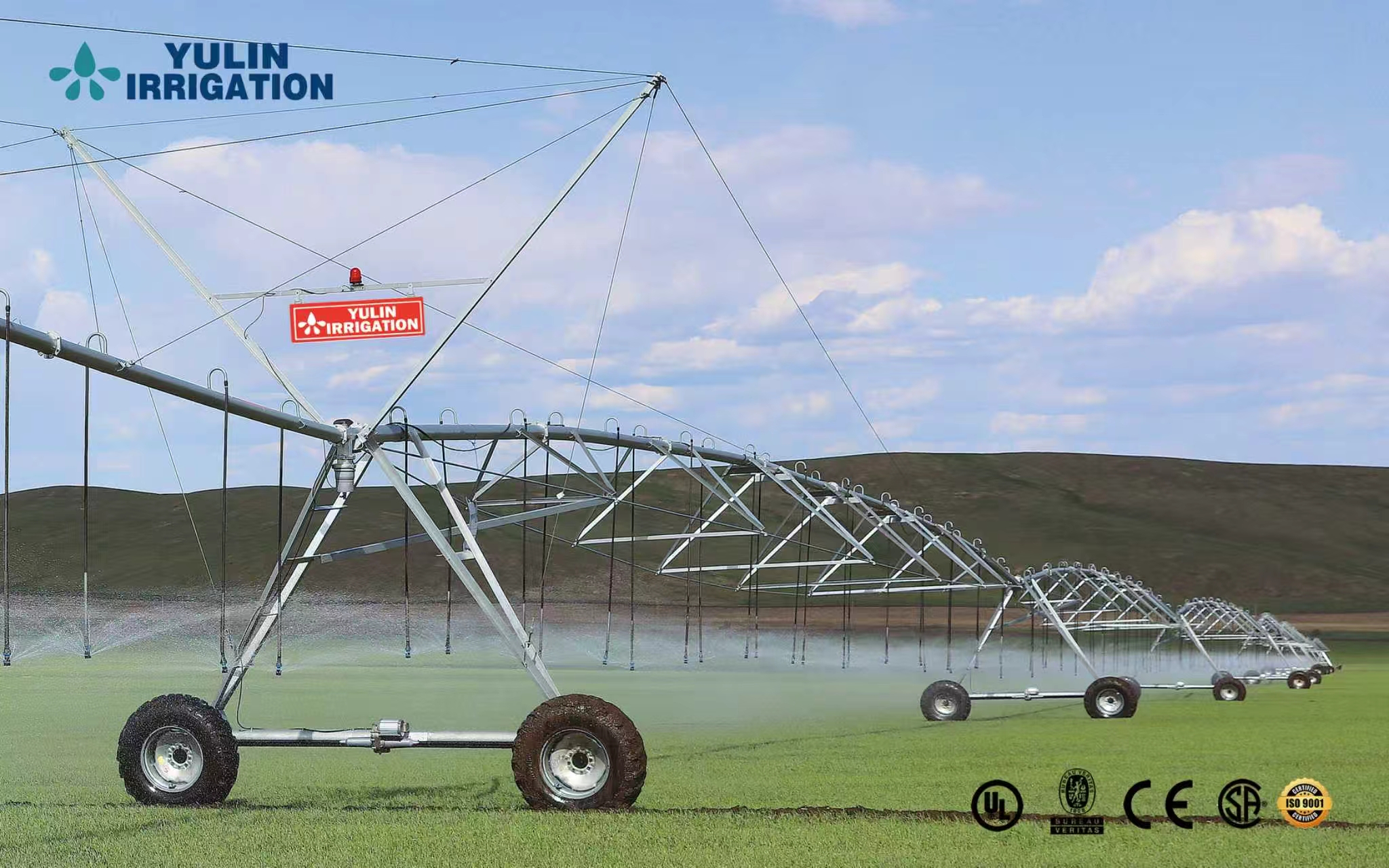
What to ask for in practice: the coating reference stated as GB 13912-2020 in the datasheet; confirmation that the structural members and the tower wheel discs are hot-dip galvanized, since the pivot uses 14.9-24 irrigating tyres with two wheels on each trolley and hot-dip galvanized discs; and a statement of how the coating requirement maps to the standard used in your own market if that market references an international galvanizing standard such as ISO 1461 rather than a Chinese one. The reason to press on this point is that corrosion is the slowest and most expensive failure mode in irrigation. Yulin states that all of its irrigation equipment undergoes anti-corrosion and wind resistance testing to adapt to tropical, saline-alkali and high-wind farmland environments, which is exactly the kind of claim a buyer should be able to trace back to a defined coating standard.
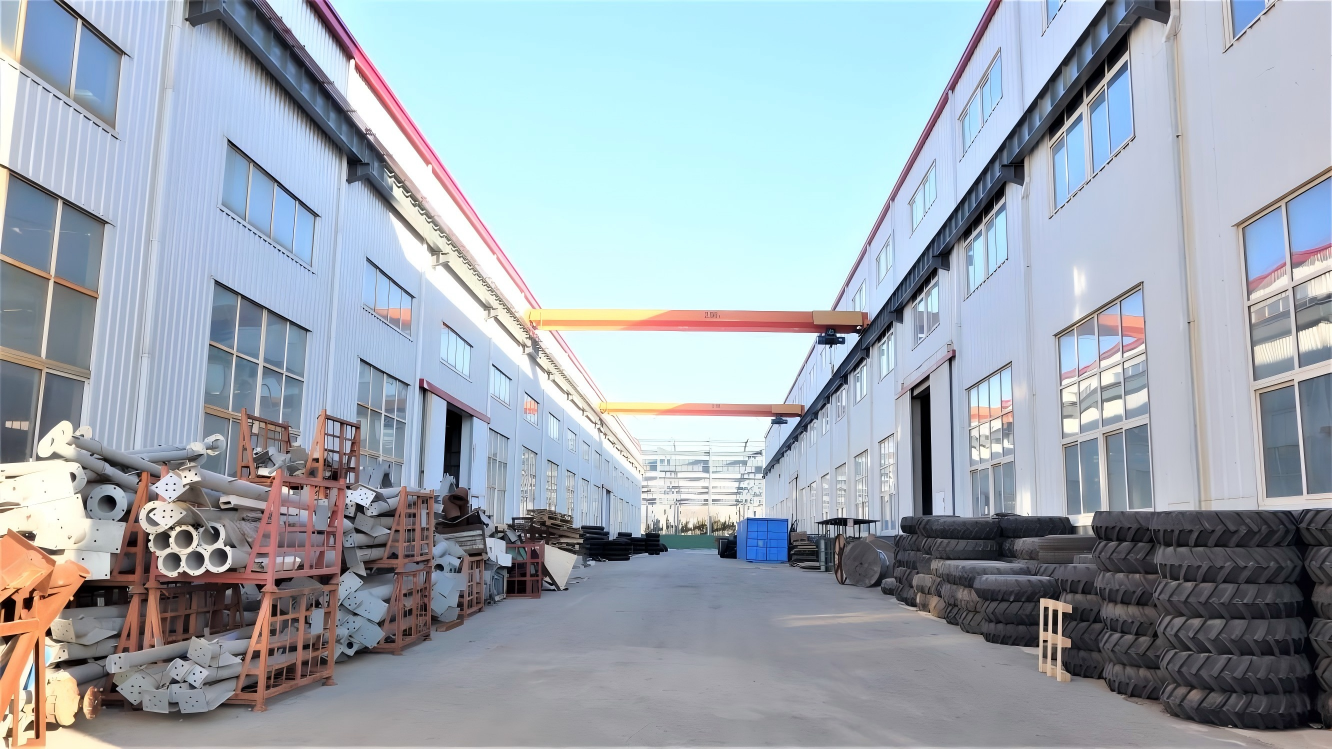
2. IP65 Protection on the Electrical Package — and Where It Stops
The protection level of the center pivot irrigation system is IP65, and this applies to specific enclosures rather than to the machine as a whole. In the published specification, the standard control panel carries IP65, and the collector ring carries IP65; the tower box is stated at IP33. That distinction matters because IP65 means dust-tight and protected against water jets, while IP33 means protected against water falling as a spray at an angle — it is not a jet-rated enclosure. A buyer who assumes "IP65 machine" and then places a tower box in a wash-down or high-pressure irrigation zone has created a warranty dispute that the datasheet would have prevented.
Two further electrical facts belong in the same verification pass. The collector ring is specified with 11 rings at not less than 4×90A and 7×25A, and the copper electrical cable core thickness is specified at not less than 4×4 mm² + 7×1.0 mm². Both are measurable at inspection, and both are the kind of detail that separates a datasheet-backed order from a generic one. The published specification also states that the machine is suitable for water with pH 6–7.5 without quality problems during the warranty period — a condition worth noting if your water source is outside that band.
3. 380V–460V Rated Voltage as a Regional Variable
The rated voltage of the center pivot irrigation system is 380V–460V. That is a range, not a setting, and the buyer's job is to close the range to a single figure that matches the site. Distribution voltages differ by market, so a machine quoted against one national supply may be electrically correct and still unusable on a farm connected to another. The same applies to off-grid sites: in a Papua New Guinea dry-season project, the pivot was operated from an external power connection or from a diesel generator set, which makes the generator output — not the national grid — the governing voltage reference.
Voltage is also listed as an OEM customization item, alongside the company's OEM production programme with a 21–40 day lead time, a one-unit minimum order quantity and 60 units of monthly capacity. For buyers in markets with non-standard supply, that is the mechanism to use: specify the site voltage, the supply arrangement and, where relevant, the generator characteristics, and have the configuration confirmed in writing rather than inferred from the catalogue.
What ISO 9001:2015 Proves — and What It Does Not
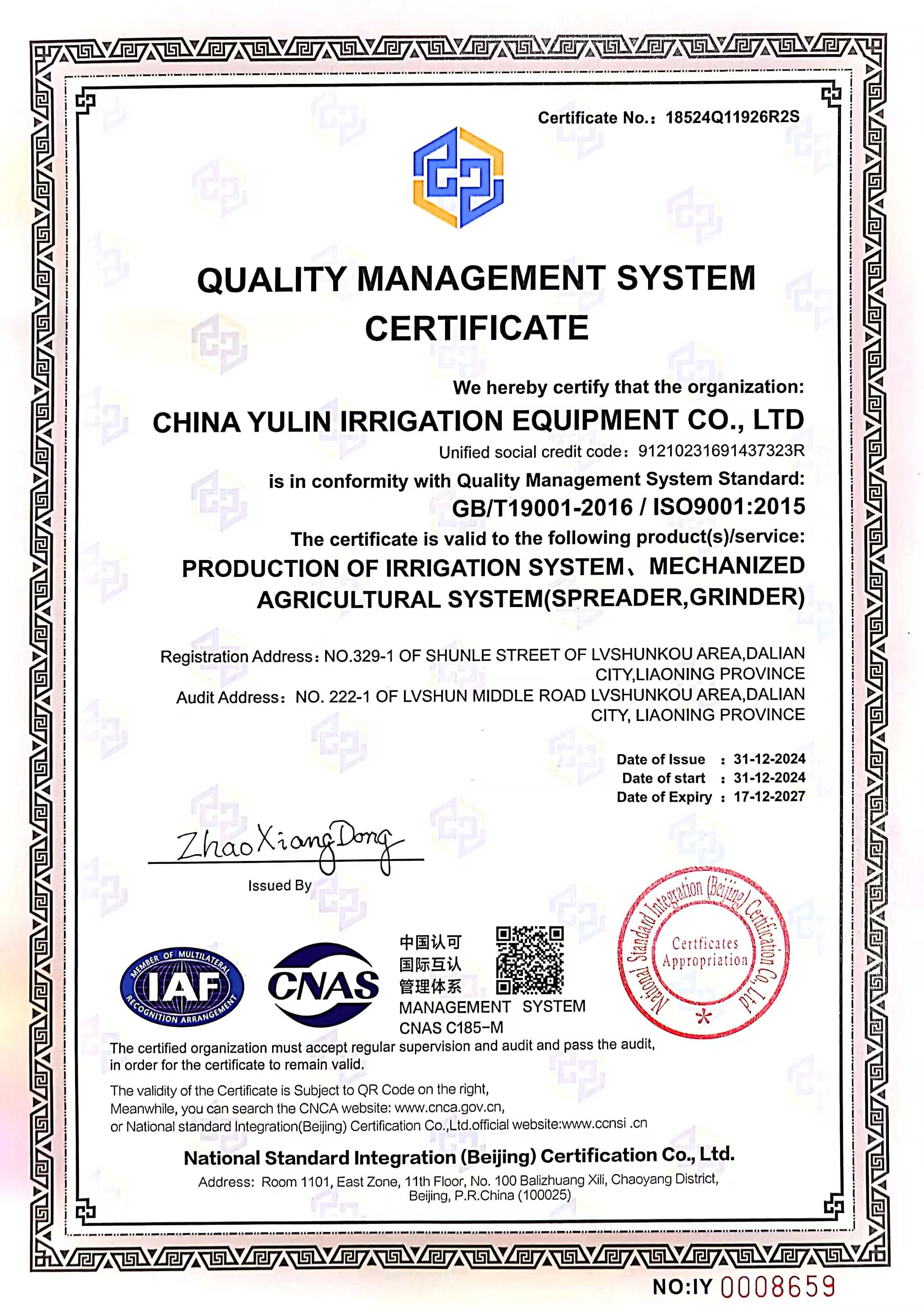
The center pivot irrigation system is certified to ISO9001:2015 under the standard GB/T19001-2016/ISO9001:2015. The certificate number is 18524Q11926R2S, it is issued by National Standard Integration (Beijing) Certification Co., Ltd., and it covers the production of irrigation systems and mechanized agricultural systems. The same certification covers the Hose Reel Irrigation Machine product line. It applies to the global market and is valid from 31 December 2024 to 17 December 2027.
What that certificate proves is that the manufacturer operates a quality management system that has been independently audited against a recognised standard, within a defined scope. What it does not prove is that a specific machine placed in a specific market meets that market's product requirements. A management-system certificate and a product conformity document are different documents with different purposes, and buyers who treat the first as a substitute for the second discover the difference at customs or at commissioning. Ask for both, and check that the certificate scope actually covers the product line you are ordering.
Regional Requirements: What Changes Between Markets
No single certificate travels everywhere. Many importing markets apply their own electrical safety, machinery safety and electromagnetic compatibility requirements, and some add water-use, utility interconnection or public-procurement acceptance rules on top. The correct assumption for a buyer is that the destination market has requirements, and that those requirements must be identified before the order is placed rather than after the container arrives.
Four regional variables are worth separating in the purchase specification:
| Variable | What changes by market | What to put in the purchase order |
|---|---|---|
| Electrical supply | Site voltage within the 380V–460V rated range, and whether the site is grid-connected or generator-fed | The exact site voltage, supply type and, for off-grid sites, the generator set specification |
| Product conformity | Whether the market requires a declared conformity route, a local acceptance inspection or both | The named conformity document, who issues it and who holds the technical file |
| Coating and structure | Whether the market references GB 13912-2020 or an international galvanizing standard | The coating standard by name and edition, plus the inspection method |
| Installation and handover | Whether commissioning must be witnessed, and by whom | Acceptance test values and the sign-off procedure |
Two clarifications prevent most problems. First, ISO 11545:2009 is a test method for water distribution uniformity on centre-pivot and moving lateral machines — it defines how performance is measured, not what a regulator will accept. Second, a supplier's export record is useful context but not a compliance document. Yulin's export markets include the USA, Mexico, Europe, New Zealand, Canada, Australia, Africa and Egypt, and the company serves Australia, New Zealand, Canada, Mexico, Africa, Central Asia, Russia and Kazakhstan; those references tell you which documentation sets the factory has handled before, and they are a reasonable basis for asking "show me what you provided for a comparable shipment."
Step-by-Step: Verifying Compliance Before You Sign
- Fix the site voltage first. Confirm the actual supply at the field connection point and check that it falls inside the 380V–460V rated range. For generator-fed sites, record the generator output instead of the nominal grid voltage.
- State the steel and coating standards by name. Q235B metal as the structural grade; GB 13912-2020 as the galvanizing reference. Ask explicitly whether wheel discs and truss members are hot-dip galvanized.
- List enclosure ratings enclosure by enclosure. Control panel IP65, collector ring IP65, tower box IP33. Do not accept a single blanket IP claim for the whole machine.
- Request the quality management certificate and read the scope. ISO9001:2015 under GB/T19001-2016/ISO9001:9001:2015 — check certificate number 18524Q11926R2S, the issuer, the product scope and the expiry date of 17 December 2027.
- Map the destination market's own requirements. Ask your importer or a local conformity assessment body which product documents are required, and add them to the order as named deliverables with named holders.
- Convert performance values into acceptance criteria. Rain intensity of not more than 0.16 mm/min, land-use coefficient within the irrigated circle of not less than 0.9, average drop diameter of not more than 1.1 mm, plant mechanical damage of not more than 2%, and truss-to-ground clearance of 3±0.2 m. These are measurable, which makes them usable as pass or fail conditions.
- Specify the inspection. Yulin applies 100% testing, and over 95% of the machine's spare parts are independently manufactured in the factory, which supports full-process monitoring. Agree who witnesses the test, which items are recorded, and whether photographs or test records travel with the shipment.
- Close out at commissioning. Confirm that installation, commissioning and operator training are in scope where required — the company provides localized on-site installation, commissioning and operator training overseas, with video technical support, online support and free spare parts as further after-sales provisions.
Use Cases: How the Checks Play Out in Different Markets
Grid-connected pasture farms in Australia and New Zealand. Yulin has supplied 600 units to a major Australian distributor over 15 years, primarily for forage and pasture irrigation and also for cotton and watermelon, and 70 units to a large-scale dairy farmer in New Zealand over nine years for grass irrigation. In these markets the compliance conversation tends to centre on coating durability and on the electrical package matching the farm's existing supply, since the machines stay in service for many seasons. The lesson for a new buyer is to specify the coating standard and the site voltage at the quotation stage, when both can still be changed at no cost.
Off-grid dry-season irrigation in Papua New Guinea. In this project the pivot operated from an external power connection or from a diesel generator set. A generator-fed site changes the compliance question: the relevant figure is the generator's output, not the national nominal voltage, and the control panel specification should be confirmed against it. The project was configured with a 395.6-metre, 50-hectare pivot with an end spray gun and a 1000L fertilizer tank, plus optional poly pipe to prevent acidic or alkaline water from corroding the pipes — a reminder that water chemistry belongs next to water pressure in the specification.
OEM supply into Algeria. A farm irrigation OEM client took 70 units over seven years, supporting a local brand with complete pivot supply and local service. OEM arrangements are where voltage customization earns its place: the importing brand defines the supply conditions and the document set its own customers expect, and the factory builds to that definition. For buyers considering the same route, the relevant parameters are a one-unit minimum order quantity, a 21–40 day lead time and 60 units of monthly capacity.
Compliance Comparison: Fixed DYP Center Pivot and JP800 Hose Reel Irrigator
The two product families answer different compliance questions, and comparing them on documented attributes shows which checks apply to which machine.
| Documented attribute | Center Pivot Irrigation System (Fixed DYP) | Hose Reel Irrigation Machine (JP800, JP90-300 series) |
|---|---|---|
| Structural material | Q235B metal with GB 13912-2020 reference | Metal and PE |
| Anti-corrosion coating | Hot-dip galvanized structure; hot-dip galvanized tower wheel discs | Not specified in the published datasheet |
| Electrical protection | Control panel IP65; collector ring IP65; tower box IP33 | Water-turbine driven — no electricity required |
| Rated voltage | 380V–460V | Not applicable |
| Control functions | Main power switch, power control switch, water switch, direction control switch, percentage indicator, auto-reverse switch | Not applicable — mechanically driven |
| Quality management certification | ISO9001:2015, certificate no. 18524Q11926R2S | ISO9001:2015, certificate no. 18524Q11926R2S |
| Certification standard | GB/T19001-2016/ISO9001:2015 | GB/T19001-2016/ISO9001:2015 |
| Water distribution uniformity standard | ISO 11545:2009 applies to centre-pivot and moving lateral machines | Outside the scope of ISO 11545:2009 |
The comparison makes one procurement rule obvious: for a pivot, the electrical documentation is a core deliverable, while for a water-turbine hose reel the critical deliverable is the mechanical and coating specification. Applying the pivot's electrical checklist to a hose reel machine, or the reverse, wastes time on both sides.
Frequently Asked Questions
Which certifications and standards should I verify before importing an irrigation pivot system?
Verify five items: the quality management certificate (ISO9001:2015 under GB/T19001-2016/ISO9001:2015, certificate number 18524Q11926R2S, issued by National Standard Integration (Beijing) Certification Co., Ltd.), the galvanizing standard applied to the Q235B steel structure (GB 13912-2020), the ingress protection ratings of the electrical enclosures (IP65 for the control panel and collector ring, IP33 for the tower box), the rated voltage (380V–460V), and any product conformity document the destination market requires. The management-system certificate and the product conformity document are different documents; request both.
How can EU buyers confirm an irrigation pivot system is CE-compliant?
CE conformity is declared by the manufacturer for the machine as placed on the market, so ask for a Declaration of Conformity that names the pivot model and lists the directives applied, together with the technical file. Yulin's company profile lists CE, ISO9001 and CSA among its certifications, and its documented quality management certificate is ISO9001:2015 (certificate number 18524Q11926R2S); for an EU order, request the CE documents for the exact configuration and confirm acceptance with your importer or a local conformity assessment body. The 380V–460V rated voltage spans the 400V three-phase supply common in EU markets, but frequency and control-circuit voltage should be confirmed in writing.
What rated voltage should I specify for an irrigation pivot system?
The center pivot irrigation system is rated at 380V–460V, so the correct figure is the one that matches the site supply, not a default. Confirm the actual site voltage and, where the field is off-grid, the output of the generator set that will run the pivot: in a Papua New Guinea dry-season project the machine ran from an external power connection or a diesel generator. Voltage is also available as an OEM customization item, which matters for markets with non-standard supply.
What should a pre-shipment inspection or sample check cover?
Yulin applies 100% testing and states that over 95% of the machine's spare parts are manufactured in-house. At inspection, check the galvanized finish of the Q235B structure against the GB 13912-2020 reference, the IP65 marking on the control panel and collector ring, the collector ring configuration (11 rings: 4×90A and 7×25A), the copper cable cross-section (4×4 mm² + 7×1.0 mm²), and the truss-to-ground clearance of 3±0.2 m. Ask for the documented performance values — rain intensity of not more than 0.16 mm/min, land-use coefficient of not less than 0.9, average drop diameter of not more than 1.1 mm, and plant mechanical damage of not more than 2% — to be listed as acceptance criteria.
What are the lead time and minimum order quantity, and how do I start?
The minimum order quantity is 1 unit, lead time is 21–40 days, and monthly capacity is 60 units; OEM production, including voltage customization, is available. The practical next step is to send the site voltage, field size and destination market so the configuration, documentation set and acceptance criteria can be confirmed in one quotation — the 2026 YULIN Pivot Catalogue is downloadable for the current model list.
Conclusion
Compliance for an irrigation pivot system comes down to a short list of verifiable facts and a discipline about where they are written. Q235B metal with GB 13912-2020 as the galvanizing reference fixes the structure. IP65 on the control panel and collector ring — with IP33 on the tower box — fixes the electrical enclosure expectations, provided the ratings are read per enclosure. The 380V–460V rated voltage fixes the electrical interface, provided it is closed to a single site-specific value. The ISO9001:2015 certificate, number 18524Q11926R2S, supports the manufacturing system behind those facts without replacing the market-specific product documents.
Buyers who place all of this in the purchase order — the standards, the enclosure ratings, the voltage, the measurable acceptance values and the conformity documents — get a machine that can be cleared, commissioned and warranted without argument. Buyers who leave it implicit inherit the argument later.
Next Step: Confirm Your Documentation Set Before Ordering
Send your site voltage, field size, destination market and the conformity documents your importer requires. Yulin will return a configuration with the matching specification sheet, the quality management certificate copy, the coating and enclosure references, and a quotation covering a single unit or an OEM programme.
Download the current model list: 2026 YULIN Pivot Catalogue (PDF)
Contact: Lara Yu · Email yulinirrigation@hotmail.com · Tel / WhatsApp +86 158-4249-7638 · www.cyulin.net
China Yulin Irrigation Equipment Co., Ltd., 329-1 Shunle Street, Lvshunkou District, Dalian City, Liaoning Province, China
Have Questions or Need More Details?
Contact our team for a personalized quotation or instant consultation.
Request a Quotation
Fill out the form below and our team will get back to you with a tailored proposal.
WhatsApp Direct Chat
Prefer to chat in real-time? Message us on WhatsApp for instant assistance & quick answers.
- Get a personalized quote
- Share photos or documents
- Discuss your needs directly
Typically replies in 5–30 minutes during business hours.