
Irrigation Pivot System: Fixed DYP Layouts for 10–50 ha
A 10–50 hectare pivot project is decided by three layout facts before any machine is specified: the shape of the surveyed block, the position of the water source and power supply relative to the pivot point, and the radius the machine must reach. The Fixed DYP center pivot is offered in 177.6 m, 307.4 m and 395.6 m lengths covering 10, 30 and 50 hectares, which gives a planner three fixed radii to test against a surveyed field instead of a bespoke geometry for every site.
China Yulin Irrigation Equipment Co., Ltd. (YULIN IRRIGATION) has manufactured agricultural irrigation machinery since 2009 from Lvshunkou District, Dalian City, Liaoning Province, and produces center pivot, linear move, towable and hose reel irrigation machines. More than 95% of the machine's spare parts are manufactured in its own factory, which matters at the layout stage for one practical reason: span steel, tower boxes, collector rings and control panels come from a single production chain, so the structural and electrical figures in this guide describe one matched assembly rather than a mix of separately sourced parts.
This application guide is written for the planner, dealer engineer or farm project manager who has a surveyed block and a water source but has not yet fixed the machine configuration. It works through the layout sequence for a Fixed DYP machine on 10, 30 and 50 hectare projects, then addresses the site condition that most often forces a different decision: a field where the grid cannot be relied on, and where the JP800 / JP90-300 hose reel irrigation machine is the practical adaptation.
The layout problem: placing a circle inside a surveyed block
A center pivot irrigates a circle, while a farm parcel is usually rectangular, irregular, or split by a road or drain. The engineering task is therefore not simply buying a machine long enough to cover the hectares; it is deciding how much of the parcel the circle can occupy, where its centre must sit to reach the water and power, and what happens to the area outside the circle.
Five published parameters govern that decision on the Fixed DYP platform:
- Circle efficiency. The land usage coefficient within the irrigated circle, including the area near the centre tower, is specified at not less than 0.9. In practice this sets the target for how much of the wetted circle should be productive cropland rather than headland, track or obstruction.
- Corner handling. Any area outside the circle is a separate decision. An end gun (end-of-pivot sprinkler) is listed as an option, not as standard equipment, so corner coverage must be planned explicitly rather than assumed.
- Application rate. Rain intensity is specified at not more than 0.16 mm/min. This is the ceiling the layout must respect when nozzle packages and travel speed are selected.
- Crop clearance. The distance from the ground to the bottom of the truss rod is 3 ± 0.2 m, which determines which crops can be grown under the machine without contact.
- Crop damage. Plant mechanical damage is specified at not more than 2%, a figure that reflects the two-wheel tower trolley design and the tyre choice rather than the crop itself.
These five numbers are the reason a layout is drawn before a quotation is finalised. Changing machine length later changes the circle, the tower positions, the pipe run and often the power provision at the pivot point.
Industry background: why matching, not availability, is the constraint
Center pivot hardware is widely available, and the market is expanding. Mordor Intelligence estimates the global center pivot irrigation system market at USD 2.56 billion in 2025, with a projection of USD 5.67 billion by 2030, according to the market research cited in the verified data set for this article. Readers comparing such figures should note that research houses define the market differently: some count equipment and technology only, while others include wider project construction cost, so headline values are not directly interchangeable.
For a 10–50 hectare project, the practical consequence is not a shortage of suppliers but a shortage of matching discipline. A machine that is one size too long wastes steel and water pressure on headland; one that is too short leaves productive corners dry and pushes the deficit onto a second system. The Fixed DYP range addresses this by fixing three radii instead of offering a continuous custom range, which makes the layout comparison a finite exercise.
What the Fixed DYP fixes, and what a project can still choose
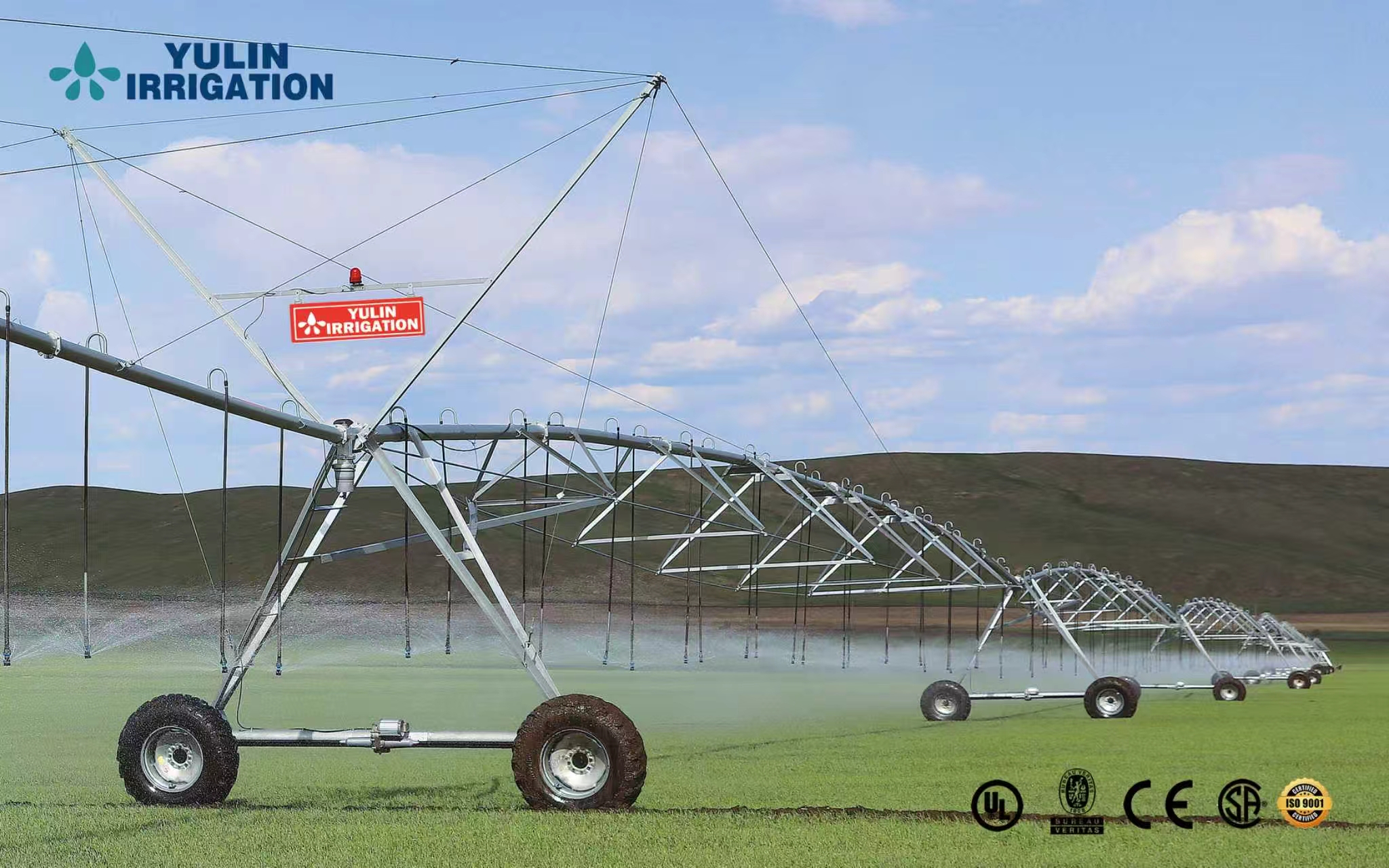
The Fixed DYP is a fixed-point center pivot: one centre tower, sectional truss pipeline, and an electromechanical drive that is reversible and individually controlled for each span. It irrigates by circular motion in both clockwise and anti-clockwise directions, and moves in continuous or start-stop mode referenced to the motor of the last tower.
The standard control panel carries a main power switch (disconnect switch), power control switch, water switch, direction control switch, a percentage indicator for speed regulation, and an auto-reverse switch, with IP65 protection for the panel. Electrical protection is specified separately by component: the collector ring is IP65 and the tower box is IP33, and the collector ring is an 11-ring unit rated not less than 4×90A and 7×25A with copper cable cores not less than 4×4 mm² + 7×1.0 mm².
Within that fixed electrical and structural platform, a project can still choose the machine length, the pressure regulator setting (10, 15 or 20 psi), an end gun option, and the irrigation rate per 24 hours, which is listed as an option rather than a fixed value. OEM orders can also specify voltage customization where the site supply differs from the standard range.
Layout reference for the three project sizes
| Layout attribute | 177.6 m machine | 307.4 m machine | 395.6 m machine |
|---|---|---|---|
| Published coverage | 10 hectares | 30 hectares | 50 hectares |
| Circle check (calculated) | ≈9.9 ha | ≈29.7 ha | ≈49.2 ha |
| Circle diameter (calculated) | 355.2 m | 614.8 m | 791.2 m |
| Pivot type | Fixed DYP center pivot | Fixed DYP center pivot | Fixed DYP center pivot |
| Span drive | Electromechanical, reversible, individual per span | Electromechanical, reversible, individual per span | Electromechanical, reversible, individual per span |
| Supply voltage | 380V–460V | 380V–460V | 380V–460V |
| Control panel / collector ring | IP65 / IP65 | IP65 / IP65 | IP65 / IP65 |
| Tower box protection | IP33 | IP33 | IP33 |
| Ground to bottom of truss rod | 3 ± 0.2 m | 3 ± 0.2 m | 3 ± 0.2 m |
| Rain intensity limit | ≤0.16 mm/min | ≤0.16 mm/min | ≤0.16 mm/min |
| Structural material and finish | Q235B metal (GB 13912-2020), hot-dip galvanized coating, galvanized wheel discs | Same platform | Same platform |
The circle check above is a calculated cross-check, not a new specification: treating the published length as the wetted radius, the area is πr², which returns approximately 9.9, 29.7 and 49.2 hectares before the published figures are rounded to 10, 30 and 50 hectares. The same arithmetic gives the diameter, which is the width a parcel must offer if the circle is to sit inside it without wasting a large share of the block. A planner can use both figures to confirm that a chosen length is a genuine fit rather than an approximate one.
Six-step layout sequence for a 10–50 hectare project
Step 1 — Survey the block and fix the pivot point
The pivot point is the first irreversible decision. It must sit where the centre tower can be founded, where the buried or surface supply main can reach it, and where the 380V–460V connection or generator can be placed without crossing the irrigated circle unnecessarily. Because the machine rotates in both directions, the point must also be clear of buildings, drains, power lines and tree lines through a full 360° sweep.
At this stage, mark the circle diameter on the survey rather than the radius: 355.2 m, 614.8 m or 791.2 m depending on the shortlisted length. Any part of that circle that falls outside the cropped boundary is a candidate for corner treatment or an accepted headland.
Step 2 — Match the radius to the block and decide the corner strategy
With the circle drawn, the choice between the three lengths becomes visible. A 10 hectare block that can contain a 355.2 m circle suits the 177.6 m machine; a 30 hectare block that can contain 614.8 m suits the 307.4 m machine; a 50 hectare block that can contain 791.2 m suits the 395.6 m machine. Where the parcel is wide enough but not deep enough, the circle is truncated and the land usage coefficient inside the circle becomes the measure of how much has been gained or lost.
Corners are then handled deliberately. An end gun can extend coverage beyond the circle, and it is listed as an option with its own average drop diameter characteristic. If the corner area is small or the crop value does not justify it, accepting a dry corner is a legitimate layout decision — but it must be recorded before the machine is ordered, because retrofitting corner coverage later is a separate project.
Step 3 — Confirm the electrical envelope at the point
The Fixed DYP operates on 380V–460V. The site check is whether that supply exists at the pivot point, at the capacity the machine requires, or whether a diesel generator will be used instead. Where the grid voltage does not match the standard range, voltage customization is available for OEM orders, so the supply question should be answered in writing before production begins rather than after delivery.
Protection ratings also matter at the specification stage: the control panel and collector ring are IP65, while the tower box is IP33. A planner specifying equipment for a dusty or high-humidity site should keep those component-level ratings visible in the bill of materials, because a single headline IP number does not describe every enclosure on the machine.
Step 4 — Set the hydraulic and crop envelope
Hydraulics are fixed at the layout stage through three decisions. First, the pressure regulator setting: 10, 15 or 20 psi, chosen against the nozzle package. Second, the application rate: rain intensity must stay at or below 0.16 mm/min, with the irrigation rate per 24 hours specified as an option. Third, water quality: the machine is rated for water with a pH of 6–7.5 without quality problems during the warranty period, and the flexible irrigation hoses are PVC, reinforced and UV resistant, with a UV-resistant pipeline construction intended to preserve system integrity for life.
Crop clearance completes the envelope. The 3 ± 0.2 m ground-to-truss clearance accommodates the listed crop groups — fodder crops, cereals, vegetables and industrial crops including corn — while taller or trellised crops need the clearance question answered before the tower heights are agreed.
Step 5 — Plan transport, erection and the working envelope
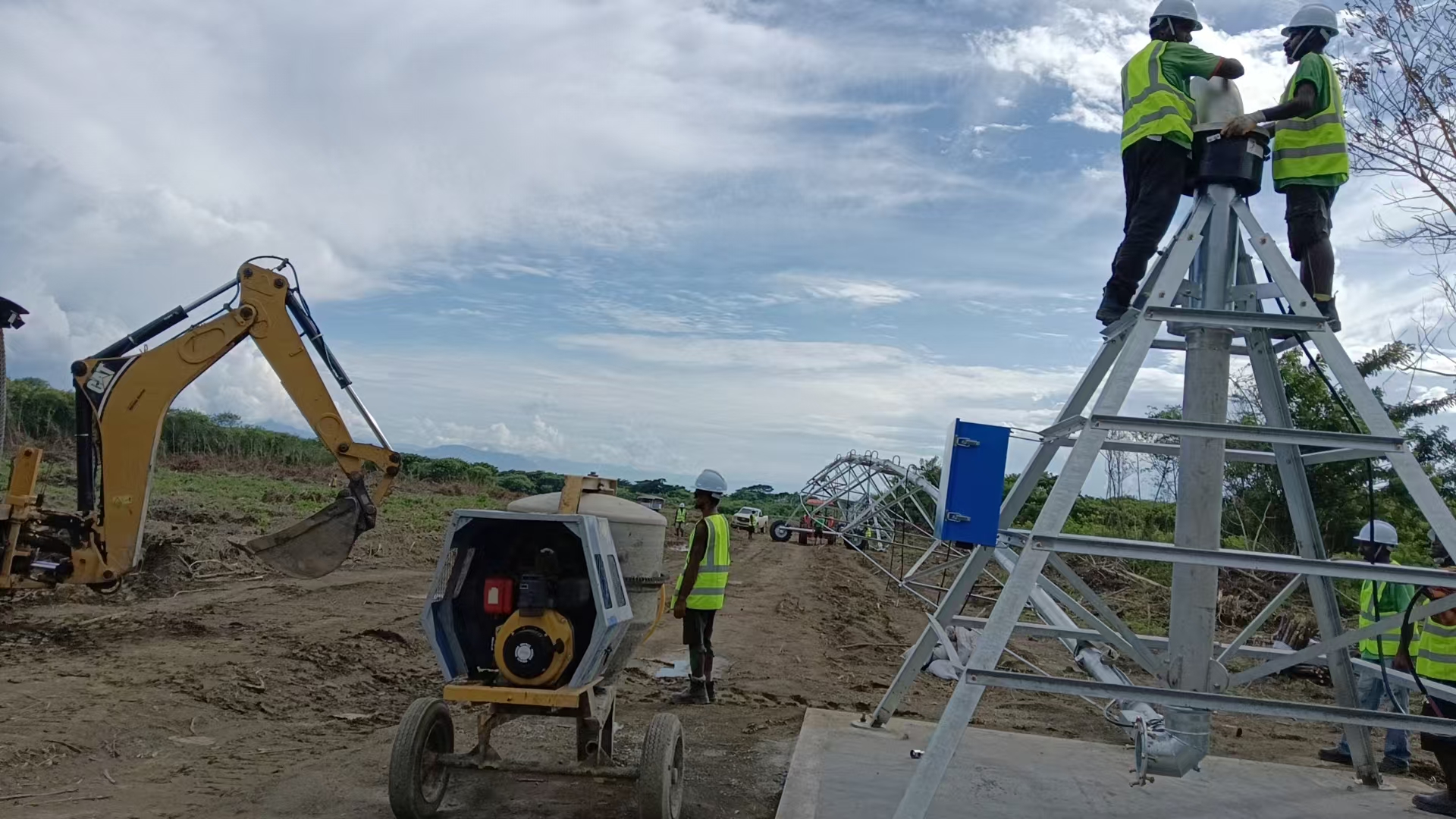
A pivot is delivered as truss sections, pipe, tower assemblies and electrical components, so access matters as much as field geometry. The erection route must allow trucks and lifting equipment to reach the pivot point, which is why site planning should confirm gate widths and headland turning space early. Tower trolleys use 14.9-24 irrigating tyres with two wheels per trolley and hot-dip galvanized discs, and those tracks should be considered in the headland layout.
The structural finish belongs to this step as a corrosion decision rather than a cosmetic one. The machine is built from Q235B metal with the GB 13912-2020 designation in the product data, protected by a hot-dip galvanized coating — a specification that matters where irrigation water, fertilizer and humid air are in constant contact with the frame.
Step 6 — Commission and verify distribution uniformity
Commissioning is where the layout is proven. The machine should be run in both directions, the auto-reverse and start-stop behaviour checked, the percentage indicator used to set travel speed against the intended application depth, and the end-of-span and regulator performance confirmed. For an objective check, ISO 11545:2009 is the active international standard specifying the in-field method for determining the uniformity of water distribution from centre-pivot and moving lateral irrigation machines, and it gives the project a documented test method rather than a visual impression.
YULIN IRRIGATION provides global localized on-site installation, commissioning and operator training, which is relevant to this step because uniformity results depend on assembly quality as much as on component specification. The machine operates across a temperature range of −45 to +45 °C, so commissioning in the season of actual use is preferable to a bench check.
Three infrastructure checks that change the configuration
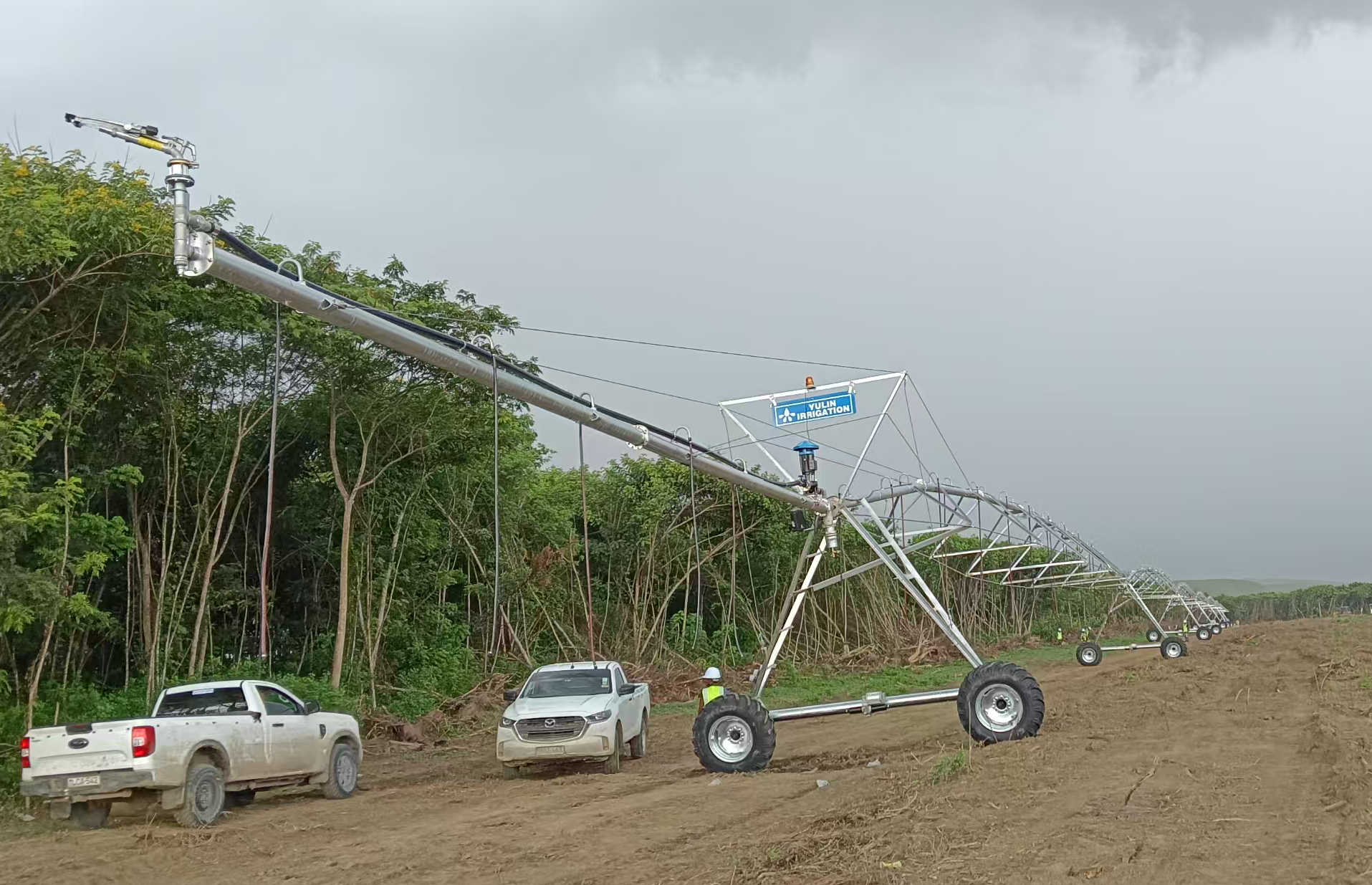
Power provision. A reliable 380V–460V supply at the pivot point is the simplest case. Where the grid is absent or unstable, the documented approach is an external power connection or power supply from a diesel generator; a 50 hectare project in Papua New Guinea used a 395.6 m machine driven by an independent diesel generator set, in high-temperature conditions during the dry season.
Water quality and source position. The pH 6–7.5 operating range is the reference point. Where water is more aggressive, the same Papua New Guinea project used an optional poly pipe to prevent acidity or alkalinity from corroding the pipes — a decision taken at specification level, not at installation. The distance from the source to the pivot point also determines pumping pressure available at the machine inlet, which in turn constrains the regulator and nozzle combination.
Fertigation and chemical application. That same project matched the pivot with a 1000 L fertilizer tank and used the irrigation cycle for integrated pest control, so the layout had to provide a safe, accessible position for the tank and injection point outside the machine's travel path. Sites intending to fertigate should reserve that space on the drawing.
Documented project layouts
Published project records show how the three-length range has been applied. In New Zealand, a large-scale dairy farmer used 70 center pivot units for grass irrigation over a 9-year operating period, with long service life and labour savings recorded as the key outcomes. In Australia, a major distributor installed 600 center pivot units for forage, pasture, cotton and watermelon irrigation over 15 years, recording energy savings of more than 40%, labour savings, long lifespan and low maintenance cost alongside increased crop output. In Algeria, a farm irrigation OEM client used 70 center pivot systems over 7 years, achieving a 40% increase in efficiency while helping the local brand deliver complete pivot sales and service. In Zimbabwe, an end customer installed 45 units for crop irrigation over 6 years, recording increased crop output and labour savings.
These are project records for specific sites, configurations and periods, not performance promises for a new project; a 10 hectare layout and a 50 hectare layout differ in span count, power provision and headland, so results transfer as evidence of application, not as guarantees.
Scenario note: when the site has no dependable electricity
Where the grid cannot be extended economically and a generator is not the preferred operating model, the layout question changes shape. The JP800 / JP90-300 hose reel irrigation machine is a travelling hose reel irrigator driven by a water turbine, so no electricity is required at the machine. It uses a 90 mm PE pipe of 300 m length, delivers 25–52 T/H at an inlet pressure of 0.6–0.9 MPa, and covers with a 19–41 m spray radius through a DL50 / SIMA10497 spray gun and a 16–22 mm nozzle. The unit weighs 2180 ± 30 kg, measures 6120 mm long, 2330 mm wide and 2770 mm high in working configuration, and ships at 2450 mm × 2000 mm × 2250 mm. Construction is metal and PE.
The layout implication is fundamental. A 300 m PE pipe and a 19–41 m spray radius describe an irrigated strip that is repositioned between runs, not a fixed circle. A planner adapting a no-power site should therefore draw the travel lanes and the pipe path first, confirm that the strip pattern suits the crop rows and the parcel shape, and reserve the towing route and hard standing for the reel. The documented operating model is quick and convenient movement between positions, simple operation and installation, and low cost — which is why the machine is often used on rented land, supplementary blocks and irregular parcels rather than as a substitute for a full 50 hectare pivot circle.
The corrosion question follows the same logic on both platforms. The pivot frame is specified as Q235B metal with the GB 13912-2020 designation and a hot-dip galvanized coating, while the hose reel's wetted path is a 90 mm PE pipe; the two machines therefore age differently under aggressive water, and that difference should be part of the site decision rather than an afterthought.
Site-condition fit: Fixed DYP layout versus hose reel adaptation
| Site condition | Fixed DYP center pivot | JP800 / JP90-300 hose reel |
|---|---|---|
| Power at the machine | 380V–460V external connection, or diesel generator supply | Water-turbine driven; no electricity required |
| Wetted geometry | Circle with clockwise and anti-clockwise motion | Strip along a 300 m, 90 mm PE pipe with 19–41 m spray radius |
| Water demand reference | Irrigation rate per 24 h set as an option; rain intensity ≤0.16 mm/min | 25–52 T/H at 0.6–0.9 MPa inlet pressure |
| Typical block shape | Parcel able to contain a 355.2 m, 614.8 m or 791.2 m circle | Narrow, irregular or rented parcels; supplementary coverage |
| Relocation | Fixed installation at one pivot point | Moved between positions as part of normal operation |
| Construction | Q235B metal, GB 13912-2020, hot-dip galvanized coating | Metal and PE construction |
Frequently asked questions
Which standards and protection ratings should a 10–50 hectare Fixed DYP layout specify?
Specify the material and coating, the component-level electrical protections, and the uniformity test method. The machine is built from Q235B metal with the GB 13912-2020 designation in the product data, protected by a hot-dip galvanized anti-corrosion coating, with hot-dip galvanized wheel discs. The control panel and collector ring are IP65, while the tower box is IP33. For distribution, ISO 11545:2009 specifies the in-field method for determining water distribution uniformity from centre-pivot and moving lateral irrigation machines. Company-level certifications listed for the manufacturer are CE, ISO9001 and CSA.
Can the Fixed DYP be adapted to an unusual supply voltage or a high-temperature site?
Yes, within the documented options. The standard supply range is 380V–460V, and voltage customization is available for OEM orders, so a site with a non-standard supply should state it before production. The machine is rated for ambient temperatures from −45 to +45 °C and uses an electromechanical, reversible drive with individual control for each span. Where grid power is not dependable, the documented alternative is an external power connection or a diesel generator supply; a 50 hectare project in Papua New Guinea operated on an independent diesel generator set in high-temperature dry-season conditions.
What changes the scope between a 10 hectare and a 50 hectare layout?
Four things change the specification, and therefore the commercial scope. First, machine length: 177.6 m, 307.4 m or 395.6 m, which sets span count, steel quantity and shipping volume. Second, options: an end gun for corners, and the irrigation rate per 24 hours, both listed as options rather than standard inclusions. Third, hydraulics: the pressure regulator setting of 10, 15 or 20 psi, plus any pump or filtration needed to deliver the inlet pressure. Fourth, site works: the pivot point foundation, the supply main to the centre tower, and either a 380V–460V connection or a generator with its own fuel and enclosure planning. No price list is published for these configurations, so scope should be compared item by item rather than by headline machine size.
How can a planner validate a layout before committing to a purchase?
Validation can be done in stages. Draw the circle diameter on the survey and confirm the land usage coefficient target of not less than 0.9 inside the circle. Compare the shortlisted length against the pressure regulator and nozzle package so that rain intensity stays at or below 0.16 mm/min. Confirm crop clearance against the 3 ± 0.2 m ground-to-truss distance. Review the electrical schedule against the 380V–460V supply and the component protection ratings. Because the minimum order quantity is 1 unit and 100% testing is applied, a single-machine project follows the same review route as a larger one, and the published catalogue can be used to check the configuration list.
What is the production and delivery sequence for a pivot ordered for a single project?
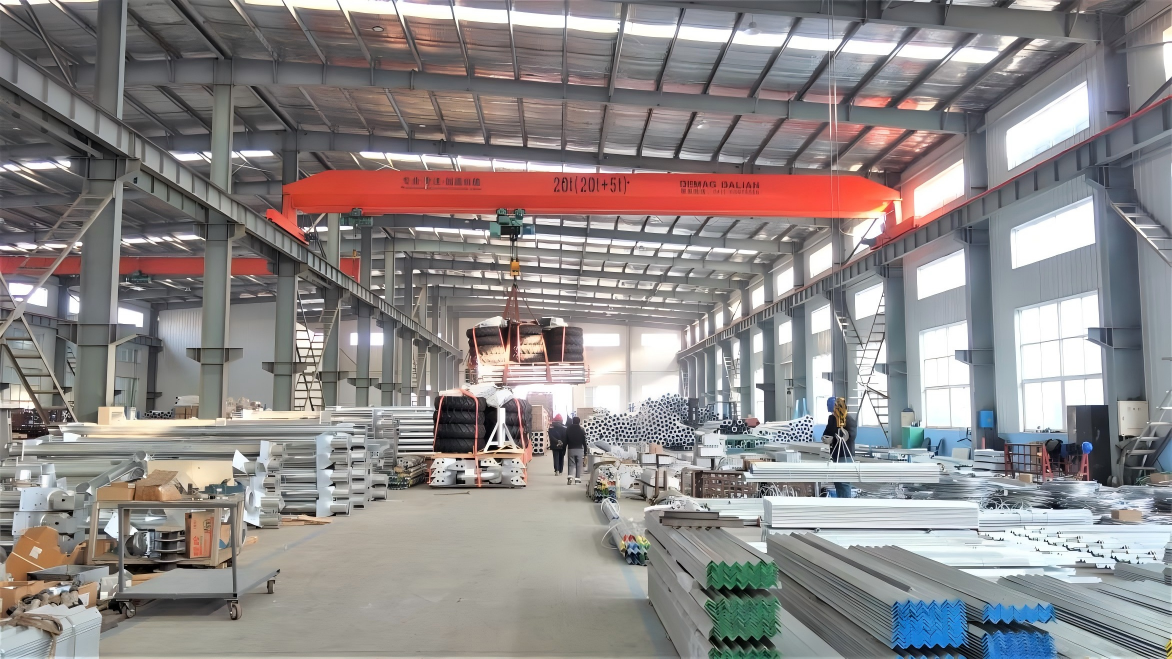
Documented lead time is 21–40 days, with a monthly capacity of 60 units and a minimum order quantity of 1 unit. The factory is roughly 2 hours by truck from Dalian Port, which simplifies shipment for export projects. After delivery, global localized on-site installation, commissioning and operator training are provided, supported by video technical support, online support and free spare parts. A project planner preparing a schedule should place the site survey and power provision ahead of the production slot, because those two items decide the final machine configuration.
Planning a 10–50 hectare layout? The 2026 YULIN Pivot Catalogue lists the Fixed DYP configurations, the JP800 hose reel machine and the matching irrigation parts: download the pivot catalogue (PDF). Technical questions on block sizing, voltage and regulator settings can be sent to the engineering team at yulinirrigation@hotmail.com or +86 158-4249-7638.
Conclusion
A 10–50 hectare pivot project succeeds or fails on the layout drawing, not on the specification sheet alone. The Fixed DYP range reduces that drawing to a finite comparison: 177.6 m for 10 hectares, 307.4 m for 30 hectares and 395.6 m for 50 hectares, each delivering an electromechanical, reversible drive with individual span control on a 380V–460V supply, IP65 protection at the control panel and collector ring, a 3 ± 0.2 m crop clearance, and a galvanized Q235B structure built to the GB 13912-2020 designation. Corner coverage, regulator setting and irrigation rate remain project decisions, which is why they belong in the plan rather than in the order confirmation.
Where the site cannot support dependable power, the decision shifts to the JP800 / JP90-300 hose reel machine: water-turbine driven, a 300 m PE pipe, a 19–41 m spray radius and a strip-based layout that suits irregular or rented ground. Matching the wetted geometry to the parcel — circle or strip — is the single decision that most affects how much of the block is actually irrigated, and it can be settled before any equipment is specified.
Have Questions or Need More Details?
Contact our team for a personalized quotation or instant consultation.
Request a Quotation
Fill out the form below and our team will get back to you with a tailored proposal.
WhatsApp Direct Chat
Prefer to chat in real-time? Message us on WhatsApp for instant assistance & quick answers.
- Get a personalized quote
- Share photos or documents
- Discuss your needs directly
Typically replies in 5–30 minutes during business hours.