
Water Turbine vs Electric Drive: JP800 Hose Reel vs DYP Center Pivot
Choose the water-turbine JP800 or JP90-300 hose reel when there is no reliable 380–460 V supply at the water point, when the block is a long strip or an irregular rented parcel, and when the pump can deliver 25–52 t/h at 0.6–0.9 MPa at the machine inlet. Choose the electromechanical Fixed DYP center pivot when 380–460 V is available, the field is a square block that can contain a circle of 10, 30 or 50 ha, and you want one machine to run the same fixed route every pass. The turbine converts water pressure into travel; the pivot converts electricity into tower rotation. Coverage geometry, labour pattern, the Q235B and GB/T 13912-2020 galvanizing specification and the ten-year cost picture all follow from that single difference.
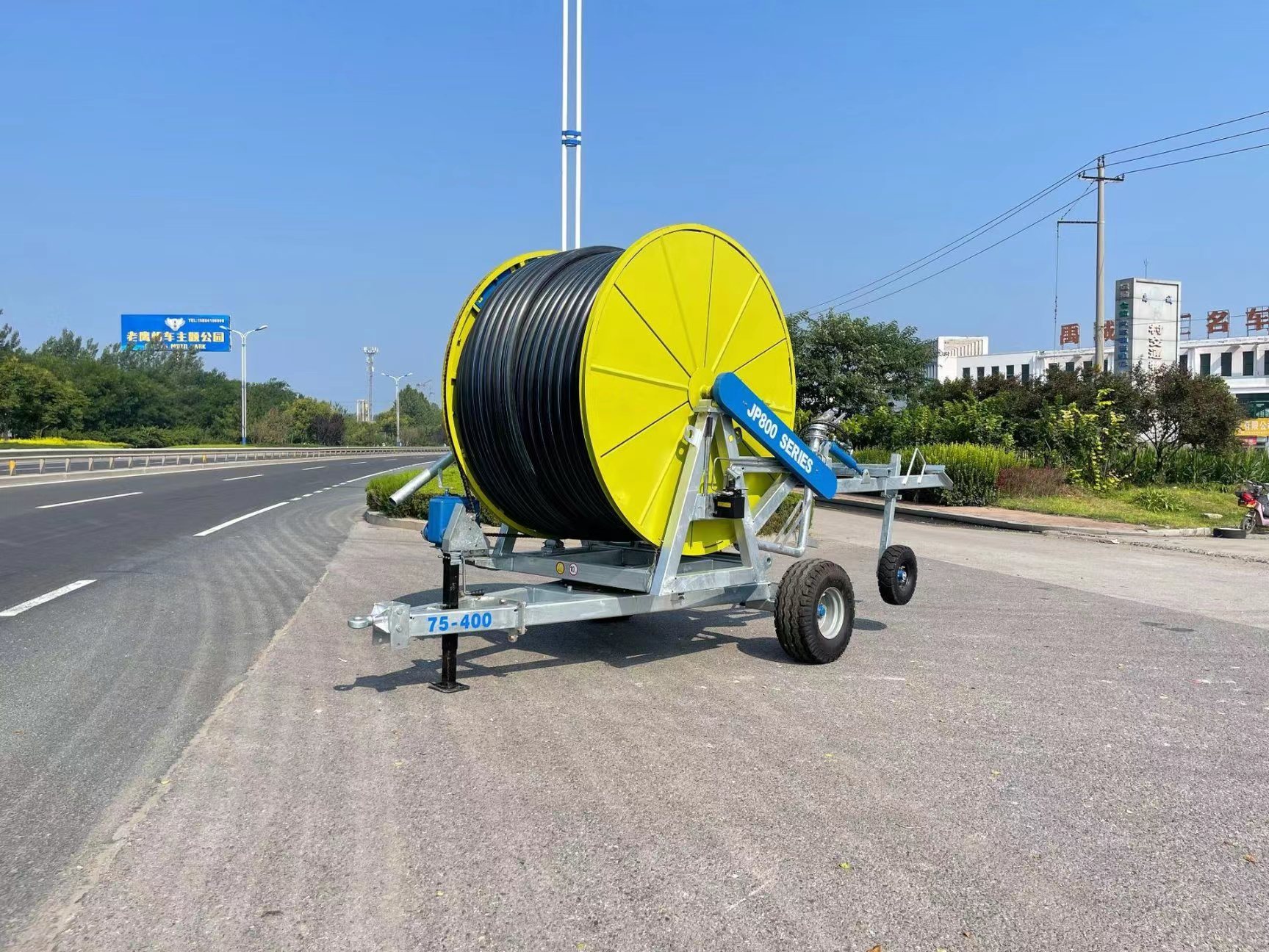
Both machines come from the same manufacturer, which makes this comparison unusually clean. The difference is not brand quality but drive architecture: a water turbine hose reel and an electromechanical center pivot solve the same agronomic problem — replacing or supplementing rainfall in a dry window — through two different mechanical routes. Each route carries its own infrastructure requirement, field-shape requirement and maintenance pattern, and each one is a poor buy when it is matched to the wrong farm.
What Each Machine Is, and Why They Are Not Interchangeable
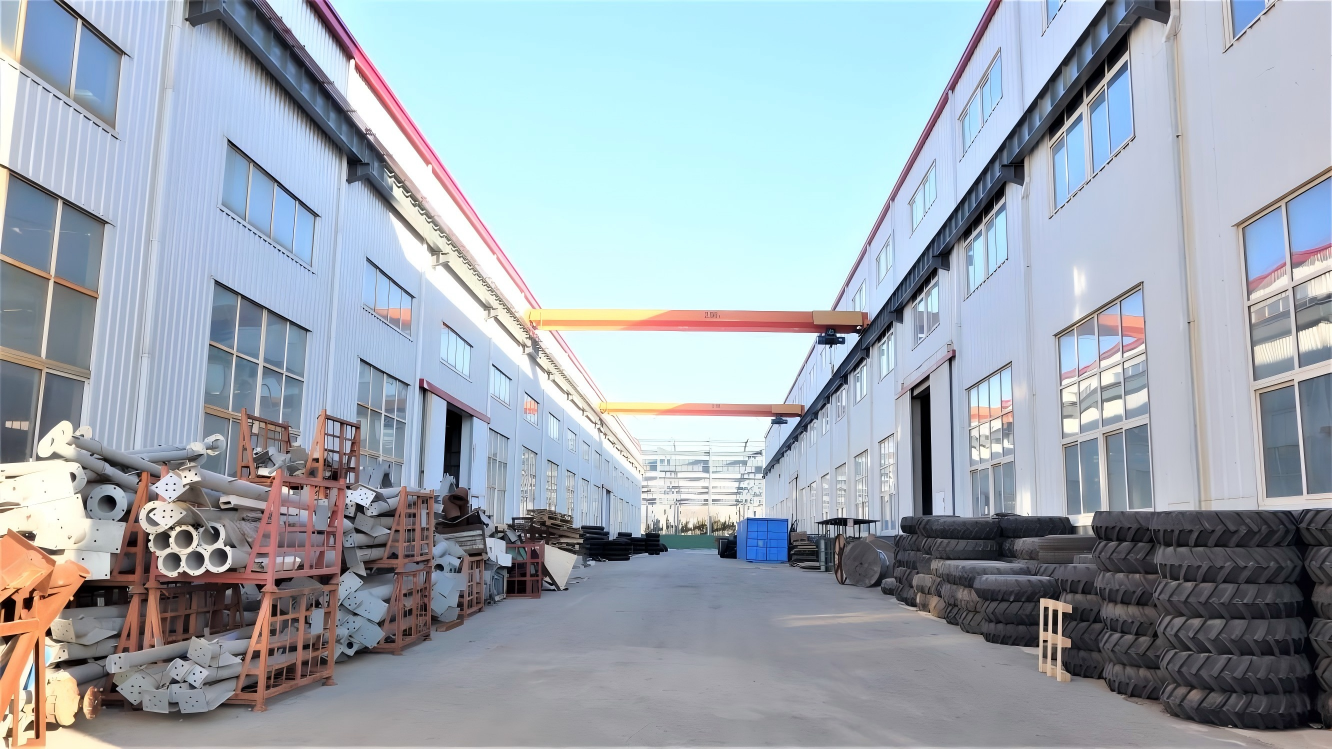
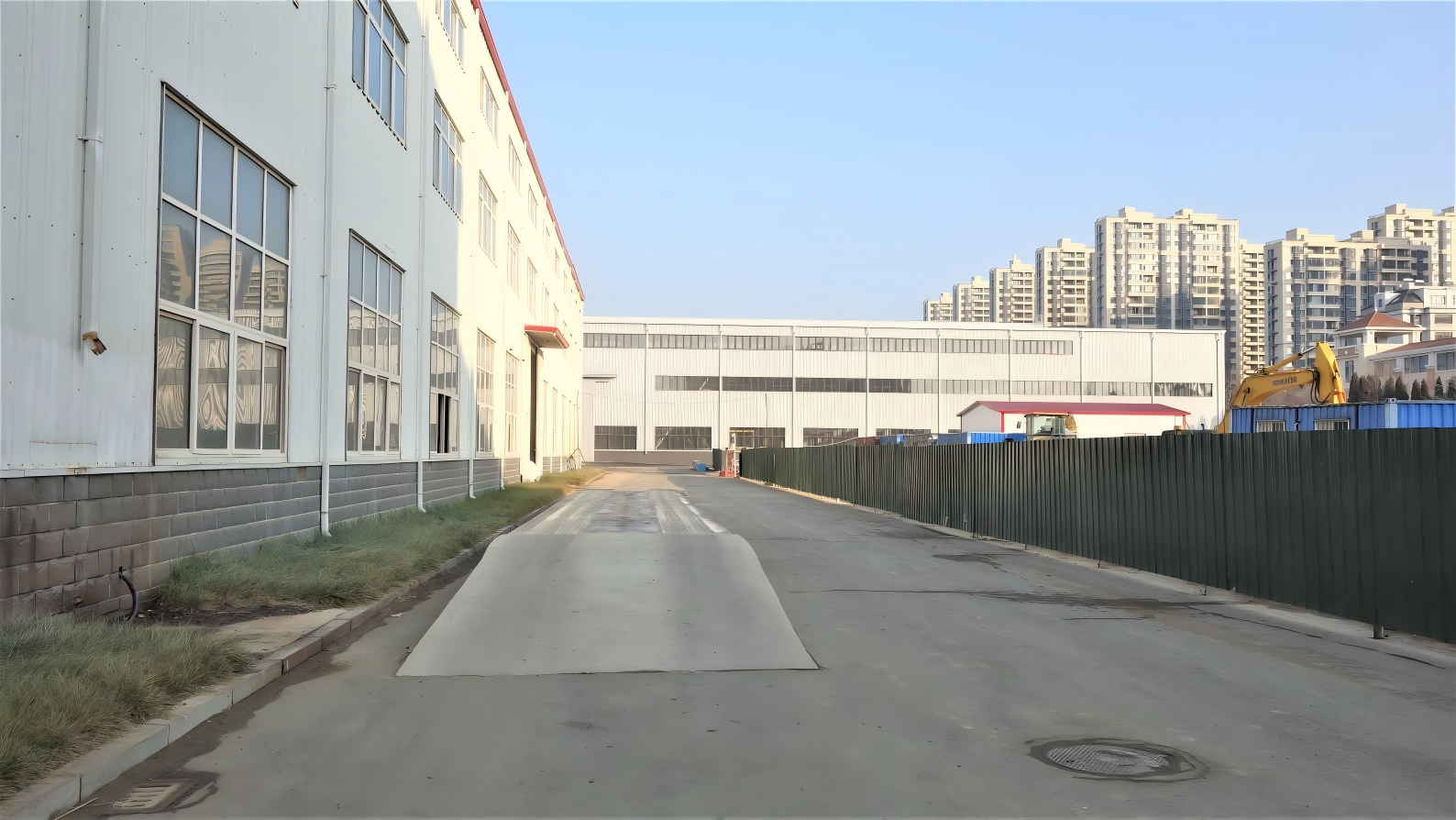
China Yulin Irrigation Equipment Co., Ltd. (YULIN IRRIGATION, www.cyulin.net) is a manufacturer established in 2009 in Lvshunkou District, Dalian, Liaoning, China, producing center pivot, lateral move, towing and hose reel irrigation systems together with irrigation parts, matching pumps and generators. The company operates a 64,653 m² factory with 152 employees and a stated annual output of 3,000 units, exports about 60% of its production, and reports that more than 95% of each machine's spare parts are manufactured in-house. Both machines compared in this guide come from that portfolio, so the choice between them is a specification decision rather than a supplier decision.
The JP800 and JP90-300 are hose reel irrigation machines. Water enters at 0.6–0.9 MPa and passes through a turbine that drives the reel, so no electric motor turns the drum and no power cable is needed at the field. The machine is built mainly from metal and PE, and the PE pipe that carries water to the sprinkler cart is 90 mm in diameter and 300 m long. Water is applied through a nozzle of 16–22 mm, producing a spray radius of 19–41 m and a flow of 25–52 t/h across the documented range.
The Fixed DYP is a center pivot irrigation system driven by electromechanical means: geared motors at the towers rotate the spans around a central pivot point, and the machine requires a 380–460 V supply. The structure is Q235B steel, hot-dip galvanized to GB/T 13912-2020, and the control panel is rated IP65. Four machine lengths are documented for the series: 177.6 m covering 10 ha, 307.4 m covering 30 ha, 395.6 m covering 50 ha, and 565 m — the longest listed length, for which the supplied data does not state a hectare figure.
Why the Power Source, Not the Price Tag, Decides First
An electric pivot is only as available as the grid at its pivot point. A 380–460 V supply has to reach the machine, be protected, and stay stable through the irrigation season; where that connection does not exist, the real cost of the pivot includes transformer capacity, cable route, protection gear and the time needed to install them — none of which appears in a machine quotation. Buyers who compare two prices without that number are comparing a machine against a machine plus a power project, and the comparison is not yet a comparison.
The category is large enough for both drive types to have established supply chains. Mordor Intelligence estimates the global center pivot irrigation system market at USD 2.56 billion in 2025, rising to USD 5.67 billion by 2030 (published 20 February 2025). Estimates differ by scope — a higher 2024 valuation of USD 6.20 billion is attributed to including full project construction rather than equipment alone — so market totals are planning context, not a budgeting input. Public filings show the same scale from the supply side: Valmont Industries reported Agriculture segment sales of USD 278.0 million in Q4 2024, equal to 26.7% of total net sales (company release, 18 February 2025).
Water Turbine Drive: What Runs the JP800 Without Electricity
In a turbine-driven hose reel, the water does two jobs at once. It irrigates, and it supplies the energy that retracts the cart. Flow entering at 0.6–0.9 MPa turns the turbine, the turbine drives the reel through the transmission, and the cart is pulled back along the lane as the PE pipe rewinds. Because the drive energy comes from the water itself, there is no motor to burn out, no buried cable to protect, and no phase or voltage problem to solve at a remote field.
- Drive: water turbine, energised by inlet flow
- Inlet pressure: 0.6–0.9 MPa
- Flow: 25–52 t/h
- Nozzle diameter: 16–22 mm
- Spray radius: 19–41 m
- PE pipe: 90 mm diameter, 300 m length
- Main materials: metal and PE
- Electrical supply required at the machine: none
These figures are linked, not independent. Within the stated nozzle range, the combination of nozzle diameter and inlet pressure sets how much water leaves the machine each hour (25–52 t/h) and how far it is thrown (19–41 m). The same flow passes through the turbine, so retraction speed — and therefore the depth applied per pass — follows the hydraulic set-up rather than a controller setting. In practice, commissioning is a hydraulic exercise: pump curve, friction loss in the supply line and nozzle size must be matched so the machine receives its stated inlet pressure and flow for the whole run, including the far end of the 300 m lane.
The material split matters for service life. PE is used for the pipe because it does not corrode the way steel does and it tolerates being coiled and uncoiled over many seasons; metal carries the structural loads of the reel, frame and cart. The 300 m pipe is what allows the machine to work a long strip from a single hydrant position, which is why this type is often specified where the water source sits at one end of the field rather than at its centre.
The limitation is inherent to the type. A hose reel machine works a lane: the cart travels out with the pipe and irrigates as it is pulled back, so covering a wide block means moving the machine between lanes and repeating the run. That labour pattern — repositioning plus supervision — belongs in the operating cost, and it is the reason a hose reel should be compared with a pivot on labour as carefully as on water.
Where the machine earns its place is dry-season substitution. In Papua New Guinea, the company describes this irrigation system's role as substituting for rainfall during the dry season, allowing plants to thrive and grow vigorously. That is the classic case for a turbine traveler: a field that needs guaranteed water in a dry window and has no dependable electricity to run a motor-driven machine.
A turbine drive is not a low-pressure option. Because the water is the energy source, the supply must hold both the stated pressure and the stated flow at the machine inlet. A source that delivers the volume but not the pressure will under-drive the reel, and no amount of nozzle tuning fixes a pump duty that is outside the machine's working range.
Electromechanical Drive: What the Fixed DYP Needs and Delivers
The Fixed DYP inverts the logic. Its energy comes from the grid, and in exchange it delivers a fixed, repeatable route across a block. Geared motors at each tower rotate the spans around the pivot point, the 380–460 V supply feeds those motors, and the control panel — rated IP65, meaning dust-tight and protected against water jets — manages the run. Because the machine follows the same circle on every pass, application uniformity becomes a matter of machine set-up and travel speed rather than operator positioning.
- 177.6 m machine length — 10 ha
- 307.4 m machine length — 30 ha
- 395.6 m machine length — 50 ha
- 565 m machine length — longest listed length, no hectare figure supplied
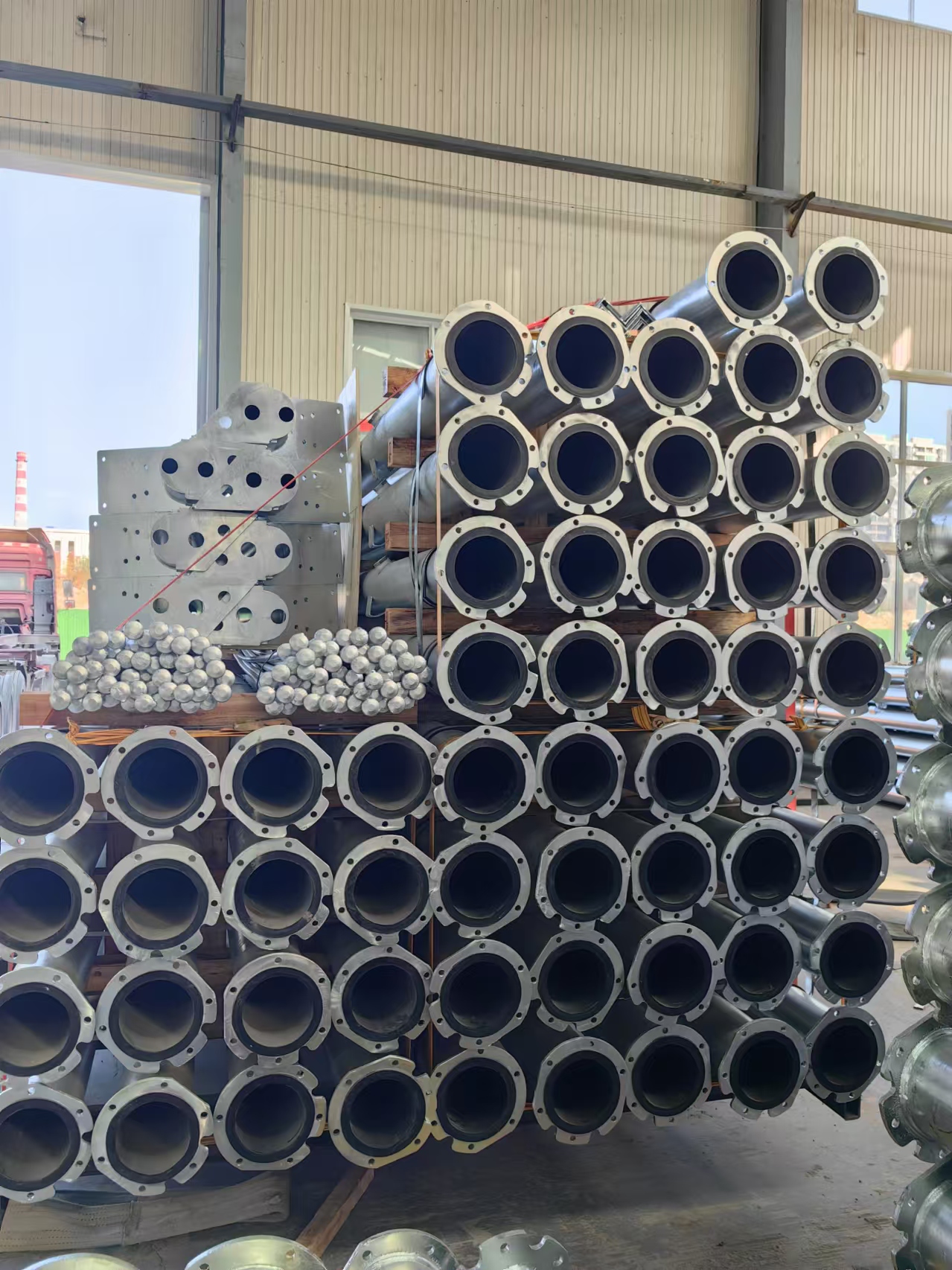
The structure is Q235B carbon steel, hot-dip galvanized to GB/T 13912-2020. That line matters more than it looks on a quotation sheet: galvanizing is the barrier between a wet steel structure and the atmosphere, and a pivot lives outdoors in spray, fertilizer and — in many export markets — saline-alkali soil or coastal air. YULIN IRRIGATION states that its products are certified with CE, ISO9001 and CSA, and that all irrigation equipment undergoes strict anti-corrosion and wind resistance testing. For a buyer, those statements are inspection points: ask for the galvanizing verification and the test records that sit behind the claim, and check them against the site's actual exposure.
The pivot's geometry is also its constraint. A rotating machine covers a circle, so a rectangular field leaves the corners outside the wetted area unless they are irrigated by another method. And the machine cannot run at all without its 380–460 V supply, which makes power reliability a direct input to irrigation reliability — a connection that fails in the dry season fails at the worst possible moment.
Coverage Compared: Circle, Strip and the Numbers Buyers Misread
The most common comparison error is to set the hose reel's 300 m pipe against the pivot's 50 ha and conclude that one machine is larger. They measure different things. On the pivot, 177.6 m, 307.4 m and 395.6 m are machine lengths that correspond to 10 ha, 30 ha and 50 ha of irrigated circle. On the hose reel, 300 m is the length of lane the machine can reach from one position, and 19–41 m is how far water is thrown to either side of that lane. The supplied hose reel data does not state a hectare rating, and assigning one without a hydraulic and field-layout calculation would overstate the machine.
The practical translation is shape. A square or near-square block that can contain a circle of the required diameter is pivot territory, and the hectare figures tell you which machine length fits. A long strip along a water source, a plot whose boundaries do not suit a circle, or land held on a short lease is hose reel territory, where the 300 m run and the 19–41 m throw define lane width and the number of machine positions.
| Decision dimension | JP800 / JP90-300 hose reel | Fixed DYP center pivot |
|---|---|---|
| Drive energy | Water turbine driven by inlet flow | Electromechanical, geared tower motors |
| Electrical supply at machine | None required | 380–460 V required |
| Documented coverage | 300 m lane; spray radius 19–41 m | 177.6 m / 10 ha; 307.4 m / 30 ha; 395.6 m / 50 ha; 565 m |
| Flow | 25–52 t/h | Engineered per machine; confirm in the quotation |
| Inlet pressure | 0.6–0.9 MPa | Engineered per machine; confirm in the quotation |
| Water application | 16–22 mm nozzle, single high-flow sprinkler | Sprinklers distributed along the span |
| Main materials | Metal and PE; 90 mm × 300 m PE pipe | Q235B steel, hot-dip galvanized to GB/T 13912-2020 |
| Control and protection | Turbine and hydraulic drive; no electrical panel needed to drive | Control panel rated IP65; 380–460 V electrical system |
| Field shape fit | Long strips, irregular plots, rented land | Square or rectangular blocks that contain the circle |
| Operating pattern | Lane by lane; machine repositioned between lanes | Fixed circular route; supervision per shift |
| Typical fit | Off-grid sites; dry-season rainfall substitution | Grid-connected blocks of about 10, 30 or 50 ha |
Documented differences between the two drive types. Flow, inlet pressure and price on the pivot side are engineered per machine rather than fixed by model, so they belong in the quotation, not in a generic specification table.
Cost, Maintenance and the Ten-Year View
YULIN IRRIGATION's comparison data for the turbine-driven hose reel against an electricity-driven high-efficiency pivot states about 30% higher initial cost, about 40% lower total cost of ownership over ten years, and 90% less maintenance. The same comparison cites an irrigation rating of 88%–98%, a 25-year service life and a 20%–40% rise in crop output. These are supplier-stated comparison figures rather than an independent field trial: they are useful for framing the argument, but the numbers that decide a specific purchase are the quotation for that field, the cost of the electrical connection and the local labour rate.
The mechanism behind the maintenance claim is structural. A turbine reel has no tower motors, gearboxes or electrical protection to service, and its wear items are concentrated in the turbine, seals, PE pipe and cart. The pivot concentrates its maintenance in motors, gearboxes, electrical components and the panel, but it buys a fixed route and far less lane-to-lane labour. If labour is scarce or expensive during the irrigation season, the hose reel's repositioning requirement weighs more heavily than its simpler machinery; if labour is available and the block is regular, the pivot's fixed route usually wins on supervision.
Both statements collapse into one spreadsheet exercise. Price the machine, then price what the machine needs in order to run: for the pivot, the 380–460 V connection and its protection; for the hose reel, a pump duty that can hold 25–52 t/h at 0.6–0.9 MPa, plus lane-move labour. Add the spares pattern for each — electrical and drive components against pipe, turbine and seals — and compare totals over the same horizon. The quotation is where a 30% initial gap and a 40% ten-year gap either survive or disappear.
Step-by-Step: Running the Decision on Your Own Farm
Step 1 — Survey the power at the water point
Confirm whether 380–460 V is available at or near the pivot point, and get a real cost and lead time for bringing it there if it is not. If the answer is "not this season", the electromechanical pivot is out of scope regardless of its quoted price, and the turbine hose reel becomes the default candidate. This one question eliminates more options than any specification table.
Step 2 — Map the field against the two geometries
Draw the irrigated block to scale. If it contains a circle of 177.6 m, 307.4 m or 395.6 m machine length — 10 ha, 30 ha or 50 ha — the Fixed DYP fits, and only the corners fall outside. If the block is a strip, an irregular polygon or a rented parcel, the hose reel's 300 m lane and 19–41 m throw are the working geometry, and the lane count sets the irrigation cycle.
Step 3 — Check the hydraulics before the machine
For the turbine machine, the water source and pump must deliver 25–52 t/h at 0.6–0.9 MPa at the machine inlet. Because these are the turbine's working parameters, a source that cannot hold them is a reason to stop rather than a detail to correct later. Verify with a pressure gauge at the hydrant and the pump curve, not with the pump nameplate alone, and include the friction loss of the supply line to the machine position.
Step 4 — Match the materials to the environment
On the pivot side, that means Q235B steel hot-dip galvanized to GB/T 13912-2020, backed by the anti-corrosion and wind resistance testing the company reports. On the hose reel side, it means a metal structure with a PE pipe, which removes pipe corrosion from the maintenance list. Saline-alkali soil, coastal air and high-wind sites are exactly the cases where these specifications earn their price, and exactly the cases where a cheaper coating becomes an annual repair.
Step 5 — Confirm control and protection
On the pivot, IP65 on the control panel means dust-tight and protected against water jets; the relevant questions are whether that rating survives the site's actual conditions and whether the 380–460 V supply matches the local grid. On the hose reel, the control question is hydraulic: the nozzle and pressure combination that produces the required radius and flow. Neither question can be answered from a brochure alone — both need the site data.
Step 6 — Verify the supplier, not only the machine
YULIN IRRIGATION reports a 64,653 m² factory, 152 employees, 3,000 units annual output, 10 engineers and more than 95% in-house parts manufacture, plus OEM production experience for global irrigation companies between 2000 and 2008 and robotic welding in its automated workshops. Confirm the certification documents (CE, ISO9001, CSA), the warranty and spare-part terms, and whether on-site installation, commissioning and operator training are included. Minimum order quantity is 1 unit, so a single-machine trial before a fleet order is possible.
Where Each Machine Fits: Four Scenarios
Off-grid dry-season block. No dependable electricity at the water point, a strip-shaped field, and a pump that can hold 25–52 t/h at 0.6–0.9 MPa: this is the JP800 or JP90-300 case. The machine replaces rainfall in the dry window without a power project, and the 300 m pipe defines how long the lane can be from one hydrant position.
Grid-connected 50 ha square. Power is present and the block can contain the circle: the 395.6 m Fixed DYP configuration covers 50 ha on a fixed route, with IP65 panel protection and galvanized Q235B structure. The buy decision then turns on span fabrication quality, galvanizing verification and service response rather than on drive type.
Grid-connected 10 ha block. A smaller operation with 380–460 V available fits the 177.6 m machine covering 10 ha. Below that scale, the connection cost of the electrical supply becomes a larger share of the total, so the power survey in Step 1 matters even more than at 50 ha.
Rotational or rented land with water along one edge. Where the parcel changes or the water runs along a boundary, lane-based irrigation with a hose reel avoids committing to a fixed circle. If the block later becomes permanent and power arrives, the 307.4 m / 30 ha pivot becomes the natural upgrade path. Towable and linear machines answer different constraints — relocation between fields and full rectangular coverage respectively — and should be evaluated as separate decisions rather than folded into this one.
What to Verify Before Signing
Transport and in-service damage are the risks that most often erode the value of an irrigation purchase, and they are manageable with documented process. The company's stated controls are strict pre-delivery checking, reinforced classified packaging with photo archiving before shipment, free spare parts reissue for company-caused faults and in-warranty damage, 24-hour online technical support by professional engineers, and engineers dispatched to client locations for installation and operation training under a warranty policy for free replacement of defective components.
Frequently Asked Questions
Which irrigation pivot system manufacturer is better for large farms?
No single manufacturer is better for every large farm, because the drive type has to fit the field first. For a large block with 380–460 V power at the pivot point, an electric center pivot such as the Fixed DYP in 307.4 m / 30 ha or 395.6 m / 50 ha configuration is the direct fit, and the manufacturer question then turns on span fabrication, galvanizing to GB/T 13912-2020, IP65 panel protection and service response. For a large but strip-shaped or off-grid block, a water-turbine hose reel removes the power requirement entirely. YULIN IRRIGATION manufactures both types, so its recommendation is not tied to one drive; verify capacity (3,000 units annual output, more than 95% of parts made in-house), certifications (CE, ISO9001, CSA) and whether on-site installation and operator training are included.
Does a hose reel irrigation machine need electricity?
The JP800 and JP90-300 hose reel irrigation machines are driven by a water turbine, so no electrical supply is required at the machine. The energy comes from water entering at 0.6–0.9 MPa. What the machine does need is a source that can deliver its stated flow of 25–52 t/h at that pressure for the whole run, because pressure and flow are the drive input, not just a pipe rating.
How many hectares does a center pivot irrigation system cover?
On the Fixed DYP series, coverage is tied to machine length: 177.6 m corresponds to 10 ha, 307.4 m to 30 ha, and 395.6 m to 50 ha. The series also lists a 565 m machine length, for which the supplied data does not state a hectare figure. Because coverage depends on the machine length and the field layout, the hectare figure should be confirmed against a scaled field plan before ordering.
What flow and inlet pressure does the turbine hose reel require?
The documented operating range is 25–52 t/h flow at 0.6–0.9 MPa inlet pressure, applied through a 16–22 mm nozzle to produce a 19–41 m spray radius. These values are interdependent: nozzle size and pressure together determine flow and throw, and the same flow drives the turbine that retracts the cart. Commissioning therefore requires the pump curve, supply-line friction loss and nozzle selection to be matched to the machine.
Why is the initial cost of a turbine hose reel higher than an electric pivot?
YULIN IRRIGATION's comparison data states about 30% higher initial cost for the turbine-driven hose reel against an electricity-driven high-efficiency pivot, offset by about 40% lower total cost of ownership over ten years and 90% less maintenance. The mechanism is that the reel carries a 90 mm × 300 m PE pipe and a turbine drive but no tower motors, gearboxes or electrical system. Treat these as supplier-stated figures and test them against your own quotation, power connection cost and labour rate before committing.
What does IP65 mean on a pivot control panel?
IP65 on the Fixed DYP control panel means the enclosure is dust-tight and protected against water jets, which is relevant on a machine that operates under sprinkler spray and in rain. It is a protection rating for the enclosure, not a statement about the electrical supply quality; the 380–460 V supply must still match the local grid and be protected on site.
The 2026 YULIN pivot catalogue sets out the full specification range for both drive types and can be downloaded from the link at the end of this guide.
Conclusion: Decide on Power and Shape, Then on Machine
The comparison resolves in a fixed order. First, is there 380–460 V at the water point? If not, the water-turbine JP800 or JP90-300 hose reel is the only one of the two that can run, and the engineering task becomes hydraulic: 25–52 t/h at 0.6–0.9 MPa, a 16–22 mm nozzle, 19–41 m throw, and a 300 m PE pipe lane. Second, what shape is the block? If it contains a circle, the Fixed DYP at 177.6 m / 10 ha, 307.4 m / 30 ha or 395.6 m / 50 ha delivers a fixed route with IP65 control protection and a Q235B structure galvanized to GB/T 13912-2020. Third, does the ten-year arithmetic hold on your own quotation — initial cost, power connection, labour and spares — rather than on a generic percentage?
The two machines are not rivals at the same decision point; they are answers to two different farm conditions. Matching the drive to the power supply and the coverage to the field shape removes most of the risk before price is even discussed, and leaves a shortlist that can be verified on documents: certifications, galvanizing records, test reports, warranty terms and installation support.
Next step. If you are still deciding between the two drive types, send the field shape, the flow and pressure your source can hold at the hydrant, and whether 380–460 V reaches the pivot point. That is enough to narrow the choice to a DYP machine length or a hose reel configuration.
Download the 2026 YULIN Pivot Catalogue for the full specification set, or request a quotation for your block. Contact: Lara Yu, yulinirrigation@hotmail.com, WhatsApp +86 158-4249-7638.
Have Questions or Need More Details?
Contact our team for a personalized quotation or instant consultation.
Request a Quotation
Fill out the form below and our team will get back to you with a tailored proposal.
WhatsApp Direct Chat
Prefer to chat in real-time? Message us on WhatsApp for instant assistance & quick answers.
- Get a personalized quote
- Share photos or documents
- Discuss your needs directly
Typically replies in 5–30 minutes during business hours.