
Wood Door Automation Equipment: CNC Center vs Four-Side Saw
Short answer: in a non-standard wood door line, a CNC machining center and a four-side saw are not interchangeable. The four-side saw trims the four edges of a door leaf or frame component so the part leaves the station square and at its outside dimensions. The CNC machining center produces features — rabbets, lock and hinge preparations, holes, grooves and shaped profile cuts — from a stored program. Yuetong's range also covers the operations that come before both: cutting to length, splitting stock into component widths, and splicing shorter pieces into usable lengths on finger joint and moulding splicing equipment.
That division matters at decision stage, because the two machine types are often quoted against the same budget line without a clear operation split. A buyer who assigns sizing to a CNC center pays for capability that is not being used as its primary function; a buyer who expects a four-side saw to cut hinge pockets has bought the wrong machine. This guide sets out what each machine is for, where splitting and splicing belong in the sequence, and how to check a quotation so every profile operation has exactly one owner.
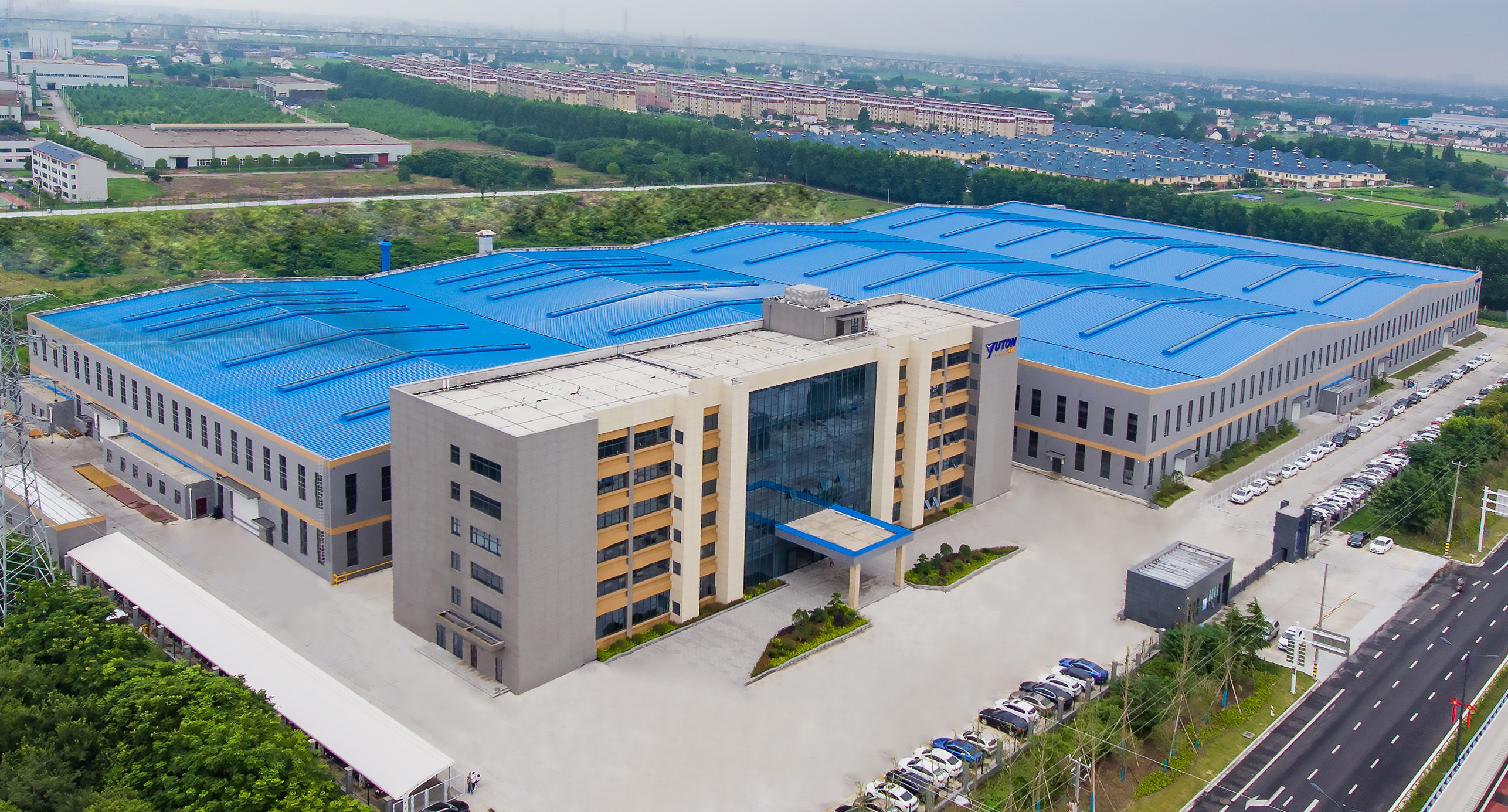
YUTON Wooden Door Equipment (Nantong Yuetong CNC Equipment Co., Ltd.) is a manufacturer of automated wooden door production equipment founded in 2003 in Haian, Jiangsu Province, China. Its catalogue covers door leaf, door frame and decorative architrave processing, including wooden door CNC machining centers, four-side saws, finger joint machines, moulding splicing machines and door frame sawing and milling machines.
The decision problem: operation coverage, not machine category
Non-standard door production changes the economics of every station. Leaf widths, frame depths and casing profiles vary between orders, so the line has to change over rather than repeat one setting for months. Under that condition, the value of a machine depends less on its category than on how many of your operations it can own outright — and how well the station next to it can run without waiting.
Four failure modes appear repeatedly when a non-standard line is specified from a machine list instead of an operation list:
- Duplicated sizing. A four-side saw and a door leaf squaring saw are both purchased without confirming which outside-dimension operation each performs, so one station idles.
- Assumed capability. The quotation is read as covering hinge slots, lock pockets or rabbets because the machine is called a machining center, when those operations sit on a different unit or require tooling that was quoted separately.
- Missing front-end stages. Splitting and splicing are left out, so short or offcut stock cannot be converted into usable components and material yield stays where it was before automation.
- Single-station dependency. One machine is asked to size, machine features and recover changeover losses, and becomes the constraint for the whole plant.
The question to settle first is therefore not which machine is more advanced, but which operation on which part each machine owns, and in what order the part travels between them.
Industry background: why this comparison is being made now
Fortune Business Insights values the global woodworking machinery market at USD 5.27 billion in 2025 and projects USD 8.53 billion by 2035, a 5.1% compound annual growth rate, in a report dated 27 August 2026. The same research covers CNC, automatic and manual equipment, which means the growth figure says nothing on its own about door-specific machine demand.
On the labour side, the US Bureau of Labor Statistics projects a 2% decline in woodworker employment to 211,100 by 2034, attributing the change to automation and the use of computer numerically controlled machines, as summarised in Wurth Baer Machinery's May 2026 millwork equipment trends analysis.
Regulation adds a third pressure point. Machinery placed on the EU market or put into service must satisfy the relevant essential health and safety requirements of Directive 2006/42/EC before it is placed on the market or commissioned, and that obligation applies to woodworking machinery regardless of where it was built.
Read together, these signals describe a substitution pattern rather than a simple growth story: output has to come increasingly from equipment configuration while the skilled labour that used to absorb variation becomes harder to hire. For a buyer, that raises the cost of a mis-specified station, because the machine is expected to carry the work for years. It does not, by itself, prove that any particular machine type is the right answer for your plant.
The CNC machining center: what it is bought for
A wooden door CNC machining center positions a leaf, frame part or panel on a work table and performs multiple machining operations under program control — milling, drilling, grooving and mortising among them. Its commercial value is flexibility per part: once the program and tooling exist, a new size or feature pattern is a change in data rather than a mechanical rebuild.
In door work, that usually means lock and hinge preparations, rabbets along the leaf edge, holes and cut-outs, and shaped profile features that would be slow or unsafe to reproduce with fixed tooling. Yuetong's catalogue places this capability in several forms: a Wooden Door CNC Machining Center, a Door Casing CNC Machining Center, an All-in-One Machine for Door, cabinet and Wall Panel, an Integrated machine for Door Leaf and Door Frame, and a dedicated Door Lock and Hinge Mortising Machine for buyers who want that operation on its own station.
Where a CNC center is a poor fit is equally important. Using it as the line's only edge-sizing station consumes programmed machine time on a task a saw performs in a single pass. A machining center cannot give you the throughput logic of a saw, and a saw cannot give you programmed feature work. Buyers should also check workpiece envelope and fixturing for the smallest and largest profiles in the range, because a machine that handles a standard leaf comfortably may need special fixtures for a deep frame or an oversized panel.
The four-side saw: what it is bought for
A four-side saw trims the four edges of a panel-type workpiece in one handling cycle, bringing a door leaf or frame component to its finished outside dimensions and creating a square reference. In a door line this is the sizing and squaring role, and its output is what every downstream dimension is measured against.
That dependency is the reason the sizing decision deserves separate attention. If the reference edge is out of square or the part is oversized, feature positions cut later will be offset relative to the finished edge, and the error shows up at assembly rather than at the saw. It also explains why some buyers run sizing as a dedicated station with buffering, rather than as an occasional job on a multi-purpose machine.
Yuetong's product list contains more than one sizing-related entry — a four side saw, a Door Leaf Squaring Saw, a Door Frame Sawing and Milling Machine, a Door Casing Sawing and Milling Machine and a Fixed-length Saw. Those names describe different scopes, and the company's catalogue should be read as a set of adjacent functions rather than synonyms. When comparing quotations, confirm which outside-dimension operation each unit performs, on which parts, and at which point in the sequence.
Where splitting and splicing fit in a non-standard line
Splitting is the front-end stage that divides boards or strips into component widths. It sits ahead of machining because width allocation determines what the downstream stations receive, and it is where offcut strategy is decided: which pieces become stiles, which become casing, and which return to stock.
Splicing converts shorter pieces into usable lengths. A finger joint machine forms an end-to-end joint so short stock can serve as a long component, while a moulding splicing machine performs the equivalent role for mouldings and casing profiles. Yuetong lists a Finger Joint Machine for Wood Doors and a Molding Splicing Machine, alongside cutting equipment, which is why the two stages are usually discussed together: cutting creates the pieces, splicing decides whether they can be used.
For a non-standard line, splicing changes material economics more than it changes cycle logic. If your door designs allow a joint in a given component, spliced stock can absorb short lengths that would otherwise be waste; if the design does not allow it, the machine has no role in that part. Where a joint is acceptable is a product-specification decision for your own door design — the equipment decision is only whether short stock can be used at all.
In sequence, a typical configuration reads: split and cut to rough length, splice where permitted, cut to final length, square the four edges, machine features, then assemble, insert the seal strip and pack. Yuetong's catalogue maps onto that sequence with fixed-length saws, finger joint and moulding splicing machines, four-side and squaring saws, CNC centers, assembled door machines, automatic seal strip inserting machines and packing equipment.
Step-by-step: assigning profile tasks to equipment
Work through these six steps before comparing prices. The output is an operation list, which is the only document that makes two quotations comparable.
- List the finished profiles, not the machines. Enumerate door leaf, door frame or jamb, decorative architrave or casing, T-shape door components and any mouldings. Record the size range for each, including the non-standard extremes, because fixtures and envelope checks are driven by the extremes rather than the average.
- Mark every operation on each part. Cut to length, split to width, splice, square four edges, cut rabbets, cut lock and hinge preparations, drill, groove, insert seal strip. Keep the operations separate even where you expect one machine to cover several of them.
- Assign each operation to the machine whose primary function it is. Sizing belongs on a saw; programmed feature work belongs on a CNC center; jointing belongs on splicing equipment. If a single machine is the only station for more than one high-frequency operation, model what happens during changeover and maintenance.
- Decide the automation level for each stage. Standalone machine, automated unit or full line is a per-stage decision, not a plant-wide one. Yuetong states that its automated standalone machines, units and lines all carry flexible manufacturing capability for batch production, and the buyer-relevant question is which stage actually needs that flexibility first.
- Check handling and envelope at both ends of the range. Loading a long frame profile onto a saw and holding a large leaf on a machining table are different handling problems. Confirm infeed and outfeed space, lifting method and fixture change time for the smallest and largest parts.
- Write the acceptance test into the order. Specify the parts to be run, the dimensions and feature positions to be measured, the size change to be demonstrated, and the documentation to be handed over. An acceptance clause converts machine claims into measurable commitments.
Use cases: four configurations that decide differently
Civil household door leaf line at moderate volume. Here the sizing station usually earns a dedicated four-side or squaring saw, and the CNC center concentrates on lock, hinge and rabbet work. The decision risk is buying the machining center first and discovering that sizing capacity, not feature capacity, limits output.
Door frame and casing line. Frame components are long and narrow, and their critical operations are end cuts, rabbets and profile machining. A Door Frame Sawing and Milling Machine or a Door Casing CNC Machining Center may consolidate operations that a leaf-oriented layout splits across stations, so the comparison should be made on the frame profile, not on door leaf practice.
Mixed non-standard shop working from short stock. When material arrives in mixed lengths, splitting and splicing move to the front of the decision. A finger joint or moulding splicing machine can change how much of the stock reaches the sizing saw at all, and the CNC center then machines features on components that exist only because splicing made them possible.
Special and T-shape doors. These parts often need holding and referencing that a standard leaf fixture does not provide. The relevant question is whether the machine can be fixtured for the geometry, not whether it can machine a flat panel, and that is best settled with a sample part rather than a catalogue description.
Comparison table: CNC machining center vs four-side saw
The table compares documented machine-category functions. It does not rank the two types, because the correct mix depends on your part family and batch pattern.
| Decision dimension | CNC machining center | Four-side saw (sizing) |
|---|---|---|
| Primary job | Programmed feature work: rabbets, lock and hinge preparations, holes, grooves, shaped profile cuts | Trims all four edges to bring a leaf or frame component to outside dimensions with a square reference |
| Operations it does not own | Plain edge sizing at line rate; simple repeated cross-cuts | Mortises, pockets, holes and rabbets; profile shaping |
| Position in a door line | After sizing, before assembly and hardware fitting | After cutting and splicing, before feature machining |
| Effect of a new size | Program selection or edit, plus tooling and fixture check | Mechanical resetting of fences and stops to the new dimensions |
| Dependency | Needs a square, correctly sized part for feature accuracy | Independent of feature programs; depends on infeed and outfeed handling for long parts |
| Verify in the quotation | Operation list, tooling list, workpiece envelope, program management, acceptance parts | Edge configuration, minimum and maximum part size, setting method, chip and dust extraction, acceptance parts |
| Common mis-buy | Bought to carry sizing, leaving no capacity for feature work | Bought expecting hinge and lock preparation to be included |
Compliance, acceptance and where YUTON sits
For EU placement, the conformity route is not a formality attached to shipping. Woodworking machinery has specific essential requirements: workpieces must be capable of being placed and guided safely, risks from ejection must be controlled, and an automatic brake must be provided where contact with a running-down tool presents a risk. EN ISO 19085-1:2021 sets common safety requirements for woodworking machines capable of continuous production use, including hazards arising during operation, adjustment, maintenance and dismantling, while the HSE woodworking standards overview lists tooling, sawing, routing, dust-extraction, emergency-stop and safety-distance standards relevant to specific configurations. EN 1870-16:2012, for example, addresses combined woodworking machines with manual loading and unloading, and should not be assumed to be the applicable standard for every integrated door line. Applicability has to be confirmed against the configuration and the current harmonised standards list.
Yuetong states that its wooden door automation machines have obtained CE certification complying with the 2006/42/EC Machinery Directive. For a buyer, the practical step is to confirm that the certificate and technical documentation cover the exact model and configuration being quoted, including any special fixturing.
The company's manufacturing base is relevant to how a mixed line is sourced. It was founded in 2003, and its company profile lists 155 employees, a 55-person R&D team, a factory area of 110,666.67 m², annual output of 2,400 units and an export ratio of 70%, with markets including Russia, Spain, Romania, Vietnam, Japan, India, Saudi Arabia, the United Arab Emirates, the United States, Canada, Brazil and Chile. Yuetong reports it has sold 458 sets of flexible wooden door production lines since developing its first automatic flexible wooden door production line in 2013, and lists 62 national invention patents, 36 embedded control software items and three provincial-level engineering technology research centres. The company lists door manufacturers including TATA, OPPEIN, OUPAI, MENGTIAN, ZBOM, SOGAL and TOSTEM among its equipment users.
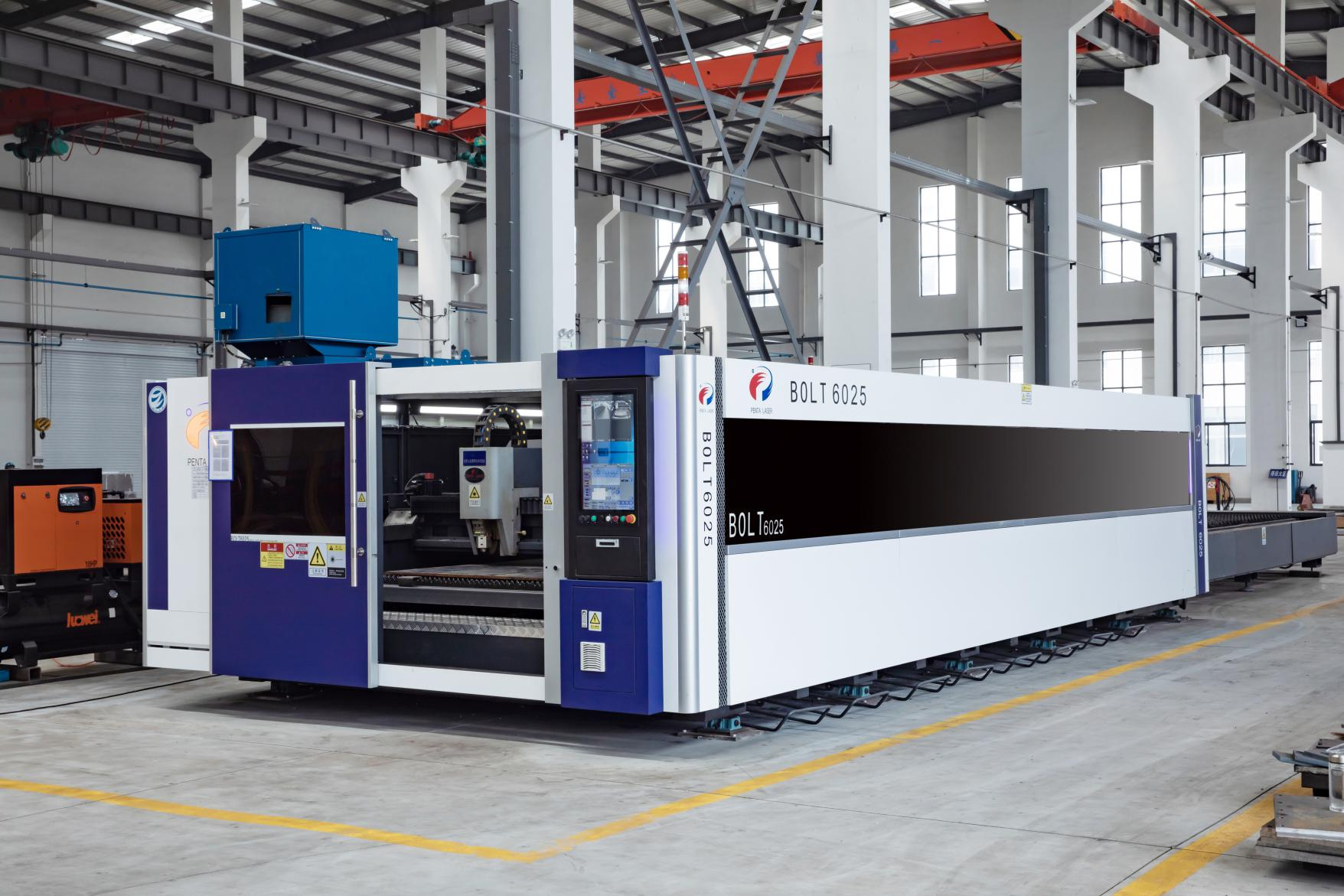
Yuetong frames its offer against stacking production, general machinery production and stand-alone operation, and describes five characteristics: professionalism, comprehensiveness, flexibility, reliability and leadership. Two of these are directly checkable by a buyer. Comprehensiveness refers to the company supplying the main machines and auxiliary units for door leaf, door frame and decorative architrave, together with the hardware and software, from its own development and manufacturing; that is what makes a single-source line interface possible, though it does not by itself guarantee line performance. Reliability is attributed to heavy-duty mechanical structure design, manufacturing equipment, rigorous manufacturing processes and standardized installation, testing and experimental procedures.
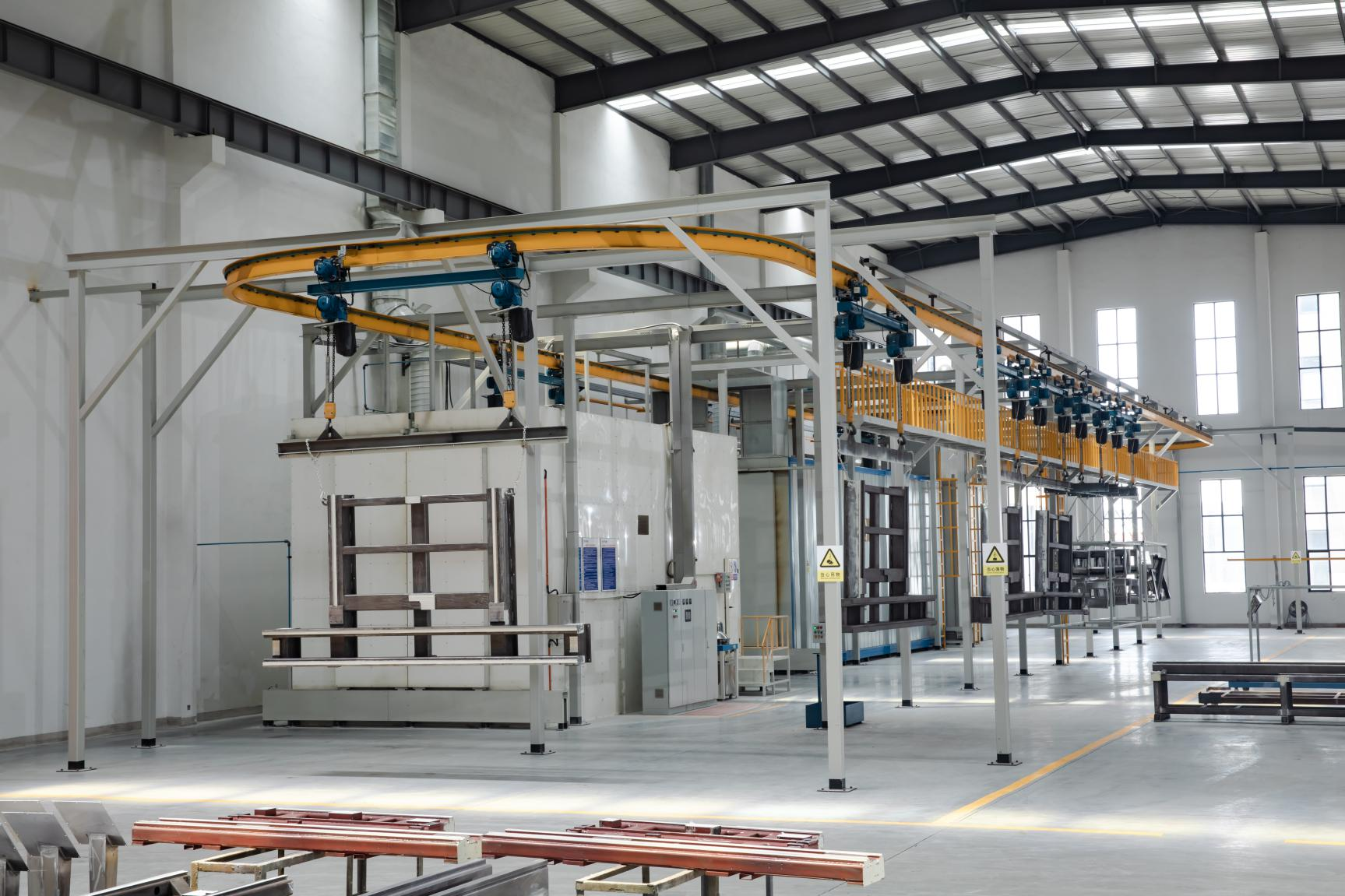
The boundary is worth stating plainly: none of the material used here contains third-party comparative performance data for CNC centers versus four-side saws, or for Chinese versus European door machines. Cycle time, accuracy and uptime claims should therefore be verified on your own profiles during acceptance, not accepted from a brochure.
Frequently asked questions
What documentation should come with a wood door line intended for the EU market?
Machinery placed on the EU market or put into service must satisfy the essential health and safety requirements of Directive 2006/42/EC before placement or commissioning. For woodworking machinery, that includes safe placement and guidance of workpieces, control of ejection risk, and an automatic brake where a running-down tool creates a contact risk. Ask for the declaration of conformity, a technical file summary, the risk assessment, the machine-specific standard mapping (for example EN ISO 19085-1:2021 common requirements), guarding and emergency-stop details, and dust-extraction requirements. Confirm that the documentation covers the exact model and configuration quoted.
Can a four-side saw replace a CNC machining center for door profiles?
No. A four-side saw trims the four edges of a leaf or frame component, producing outside dimensions and a square reference; it does not cut lock pockets, hinge slots, holes or rabbets. The reverse substitution fails as well: a CNC center used as the only sizing station consumes programmed time on an operation a saw completes in one pass. In practice the two are sequential — sizing first, feature machining on the sized reference — which is why downstream feature accuracy depends on the saw's output.
Chinese wooden door CNC machining center manufacturers versus European suppliers: how should a buyer compare them?
Compare the same five items on both sides. First, conformity documentation matched to the exact configuration. Second, a written operation list showing which profile features the machine performs and with which tooling. Third, an acceptance run on your own profiles, including a size change. Fourth, the service model: who installs, who commissions, who supplies spares and how a fault is escalated. Fifth, total delivered cost including tooling, installation, training, freight and duty. The sources used for this article do not include third-party comparative performance data for Chinese and European door CNC machines, so performance claims from either side remain untested until reproduced on your parts. Dedicated wood door CNC machines are also built outside China — Multiax Technologies states that it designs, builds and services its NE wood door CNC machine in Grandville, Michigan — so geography alone is not a capability verdict.
How do I budget a non-standard line when prices are not published?
These machines are quoted per project, and no verified prices were available for this article, so any published figure should be treated as unverified. Build the budget from cost drivers instead: how many operations are consolidated into each machine, the workpiece envelope, tooling count and replacement routine, automation and handling level, program and software management, compliance documentation scope, installation and training, and freight plus duty to your site. Ask for an itemised quotation that separates machine, tooling, installation, training and options, so competing offers can be compared line by line rather than on a single total.
What should the sample or acceptance run cover?
Run the smallest and largest profiles in your range plus one representative non-standard size. Measure finished outside dimensions after four-side sizing; feature positions such as lock, hinge and rabbet relative to the sized edge; repeatability across a short batch; changeover time for a size change; guarding and emergency-stop function; and documentation handover. Keep the measured results — they become the acceptance baseline and the reference point for later service conversations.
What drives delivery and installation timing?
Delivery schedules are project-specific and were not stated in the material used here, so ask for a written schedule with milestones: drawing approval, manufacture, factory acceptance test, shipping, site preparation, installation, commissioning and training. Two items usually move the date more than machine build time: approval of drawings and tooling for your profiles, and site readiness — power, dust extraction, floor condition and handling equipment.
Conclusion: assign the operation, then buy the machine
The CNC machining center and the four-side saw are complements in a non-standard door line. Sizing owns the outside dimensions and the square reference; the machining center owns the features cut from a program; splitting and splicing decide how much of your stock reaches either of them. A line specified in that order gives every profile operation a single owner and makes quotations comparable.
YUTON Wooden Door Equipment supplies door leaf, door frame and architrave processing machines as standalone units, automated units and full lines, and states CE certification complying with the 2006/42/EC Machinery Directive for its wooden door automation machines. Buyers can review the machine range and company details at YUTON Wooden Door Equipment, or download the product catalogue here: Yuetong product catalogue (PDF).
For a configuration review, send the profile list and size range to the team at shanghai@yuetong.com.cn, or contact Neo on WhatsApp at +86 188 6270 3058. A sample proposal built from your own operation list is the fastest way to see whether sizing, splicing or feature machining is the station your line is actually missing.
Have Questions or Need More Details?
Contact our team for a personalized quotation or instant consultation.
Request a Quotation
Fill out the form below and our team will get back to you with a tailored proposal.
WhatsApp Direct Chat
Prefer to chat in real-time? Message us on WhatsApp for instant assistance & quick answers.
- Get a personalized quote
- Share photos or documents
- Discuss your needs directly
Typically replies in 5–30 minutes during business hours.