
Wood Door Automation Equipment: Inside YUTON's Door Production Systems
Wood door automation equipment covers the machines that carry out a wooden door's forming operations — fixed-length cutting, four-edge squaring, rabbeting, lock and hinge mortising, seal strip insertion, and door frame cutting and milling — under program control instead of by hand. NANTONG YUETONG CNC EQUIPMENT CO.,LTD, which markets itself as YUTON Wooden Door Equipment, builds only this equipment category. The company was founded in 2003 and is headquartered in Haian City, Jiangsu Province, China. This analysis reviews what it produces, how it manufactures and supports that equipment, what it reports about its customers and market position, and where the limits of the currently available evidence sit.
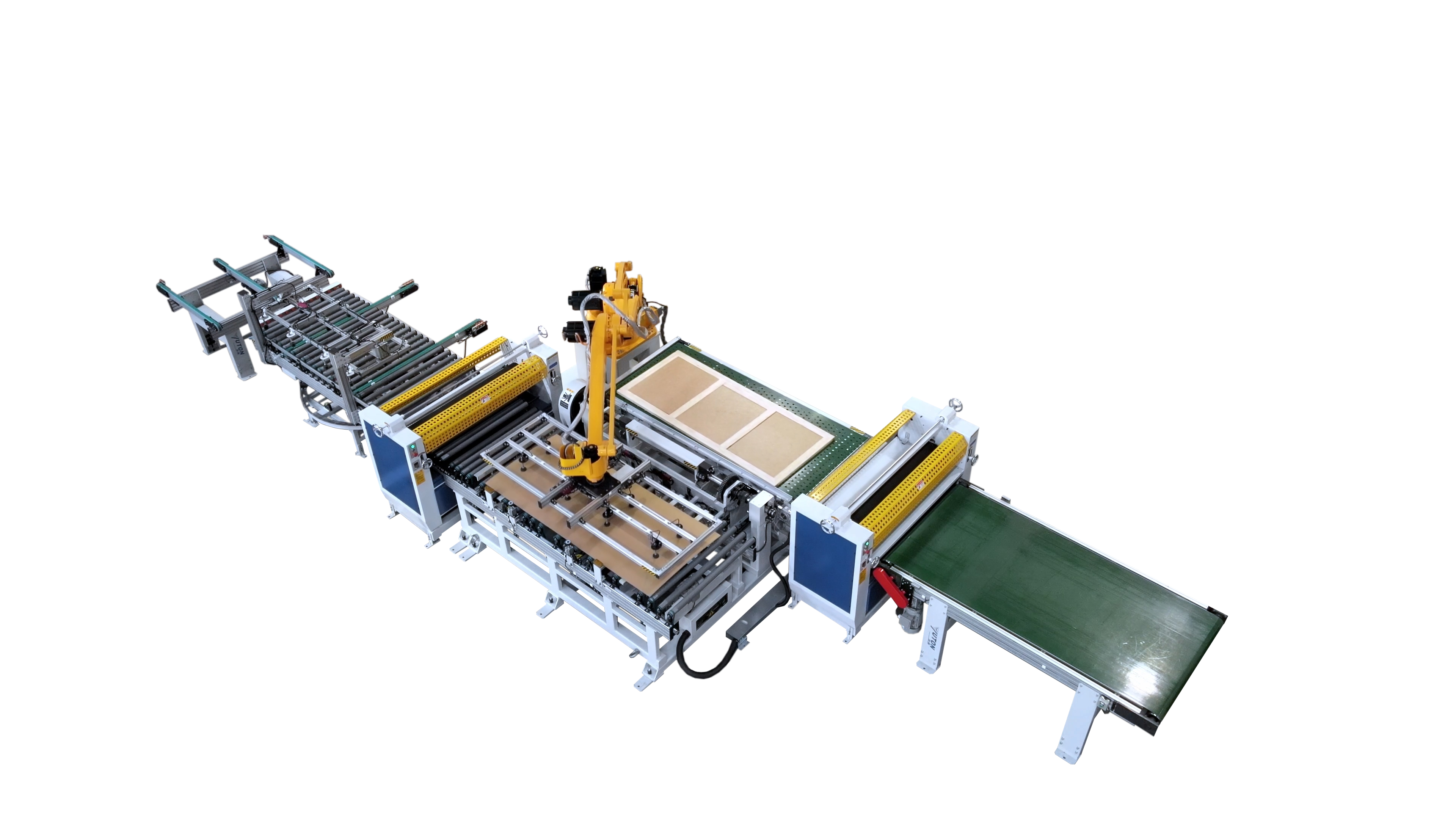
The Problem: Door Production Still Depends on Manual Transfer Between Machines
A wooden door plant does not make one component. It makes three families of components that behave differently on the shop floor: door leaves, door frames (jambs), and architrave or profile parts such as casings and moldings. Each family requires its own sequence of operations. In manual and semi-manual plants the workpiece is moved between standalone machines, flipped, and re-registered at every step — a fixed-length saw, then a squaring saw, then a mortising station, then a frame saw. Every transfer creates a new datum and a new opportunity for dimensional variance, and every station needs a skilled operator to hold the result.
The cost of that model is now measurable. The US Bureau of Labor Statistics projects that woodworker employment will decline 2% to 211,100 by 2034, attributing the change to automation and the use of computer numerically controlled machines, as reported in Wurth Baer Machinery's 2026 millwork equipment analysis. On the capital side, Fortune Business Insights values the global woodworking machinery market at USD 5.27 billion in 2025 and projects USD 8.53 billion by 2035, a 5.1% CAGR across its 2026–2035 forecast period (Woodworking Machinery Market Size, Share & Trends Analysis 2026 to 2035).
Read together, those two figures describe a substitution phase: fewer skilled hands available in the labor market, more spending flowing into the machines that replace them. For a door manufacturer at the research stage, the practical question is therefore not whether to automate, but which component family to automate first and which machine configuration matches the door types actually being produced.
Industry Background: How Wood Door Automation Equipment Is Segmented
Wood door automation equipment is segmented along the same three lines as door production itself, and any supplier catalogue should be mapped against those lines before commercial comparison begins.
- Door leaf processing: fixed-length cutting, four-edge squaring, rabbet and edge processing, CNC lock hole and hinge slot mortising, seal strip insertion, and multi-function CNC machining of leaf faces and ends.
- Door frame processing: frame cutting, milling and sawing, L-shape architrave splicing, and frame assembly.
- Profile, casing and auxiliary processing: profile cutting, architrave cutting, milling and folding molding, wood strip splicing and splitting.
The equipment serves the wooden door and window manufacturing industry. It is widely applied by manufacturers of wooden composite door leaves and door frames, whole-house customized furniture factories, and wood processing enterprises, and it is used in automated flexible production line scenarios for civil household wooden doors and engineering refined decoration wooden doors.
Door type changes the process, not just the tooling. WPC doors, fire doors, and stile-and-rail doors each place different demands on leaf forming, frame processing, and hardware machining, which is why the equipment category is broad rather than a single machine type.
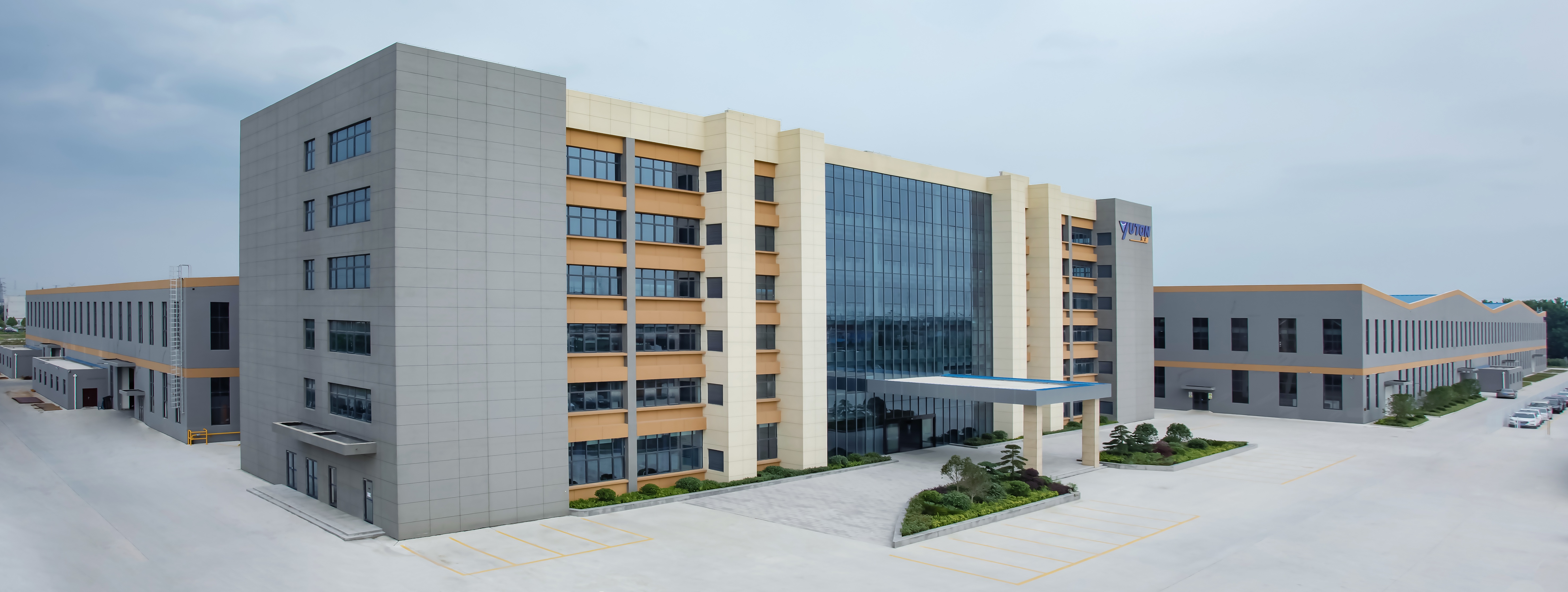
Company Overview: NANTONG YUETONG CNC EQUIPMENT CO.,LTD
NANTONG YUETONG CNC EQUIPMENT CO.,LTD is a Chinese manufacturer of automated wooden door production equipment, founded in 2003 and based in Haian City, Jiangsu Province. The company's website is www.yuetong.com.cn, and its blog domain is blog.yuetong.com.cn. It has more than 20 years of experience in the wooden door automation equipment industry and describes itself as a national high & new technology enterprise specializing in the research and development and manufacturing of automated wooden door production equipment.
| Item | Detail |
|---|---|
| Legal name | NANTONG YUETONG CNC EQUIPMENT CO.,LTD |
| Brand | YUTON Wooden Door Equipment |
| Founded | 2003 — more than 20 years in wooden door automation equipment |
| Headquarters and plant | No.77, Tongyu South Road, Chengdong Town, Haian City, Jiangsu Province, China |
| Manufacturing area | 110,666.67 m² |
| Employees | Approximately 155 |
| R&D team | 55 engineers and technicians |
| Annual production capacity | 2,400 units |
| Export ratio | 70% |
| Export markets | Russia, Ukraine, Czech Republic, Spain, Romania, Egypt, Vietnam, Japan, India, Israel, Saudi Arabia, United Arab Emirates, Iran, Iraq, Singapore, Malaysia, United States, Canada, Brazil, Chile, Thailand and more than 50 countries |
Corporate status, research programs and development history
The company describes itself as a national high & new technology enterprise, a national intellectual property advantageous enterprise, a national specialized and innovative little giants enterprise, a service-oriented manufacturing demonstration enterprise in Jiangsu Province, and a key cultivation enterprise for the integration of informatization and industrialization.
- Drafted or participated in the drafting of all wooden door automation equipment industry standards.
- Participated in the 12th, 13th and 14th Five-Year national forestry key research & development plan projects.
- Hosted the national key research & development plan project “Robot automation production line for customized wooden furniture manufacturing” of the Ministry of Science and Technology.
- Recognized as an “Intelligent Manufacturing System Solution Provider in 2020” by the Ministry of Industry and Information Technology.
- Reports developing China's first automatic flexible wooden door production line in 2013, and reports having sold 458 sets of flexible wooden door production lines since.
The development trajectory is therefore narrow and deep rather than diversified: the company states it has focused on the R&D and manufacturing of wooden door automated equipment for nearly 20 years and does not produce other product categories.
Core Products and Solutions
The portfolio is organized by the component it processes. The company classifies its non-standard automated production lines under three equipment categories: door leaf processing equipment, door frame processing equipment, and profile processing equipment.
Door leaf processing equipment
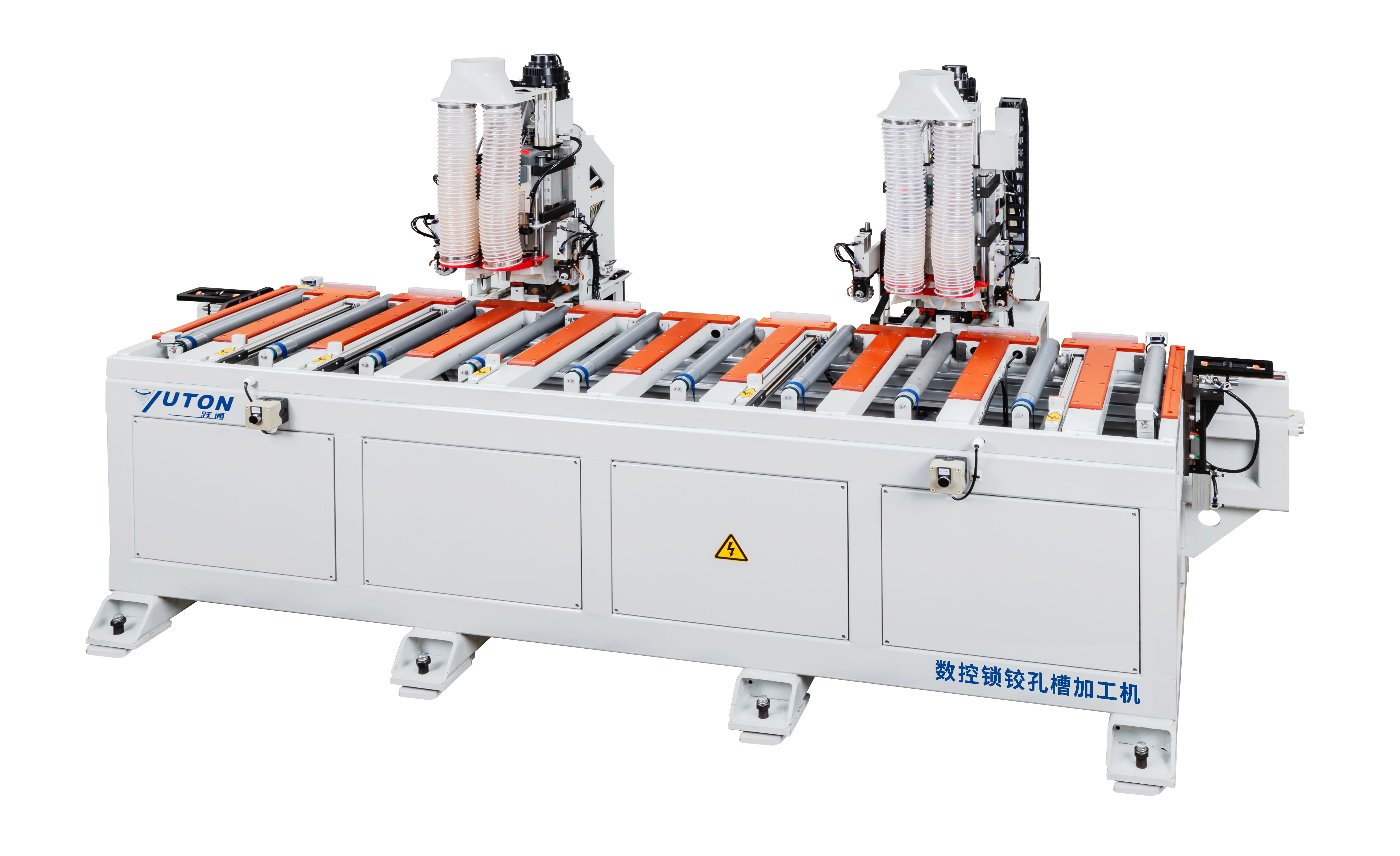
Leaf processing covers the widest set of operations, from squaring and sizing to hardware machining and sealing. The model range includes the YD-S2030 CNC multiple function machining center, the YX-S8026 multiple function machining center, the MXK1224YAH machining center, the YJ-S0320D CNC door four edges saw, the MDK4826Q2 CNC lock hole and hinge slot machine, the MDK4130A1 CNC lock hole and hinge slot machine, the MDK4120D CNC lock hole and hinge slot machine, the MFZ9645H2 automatic seal strip inserting machine, the MDK4130HK1 CNC door end machine, the MDK2130 CNC door stile solution, and a laminated door leaf flexible composite production line.
Door frame processing equipment
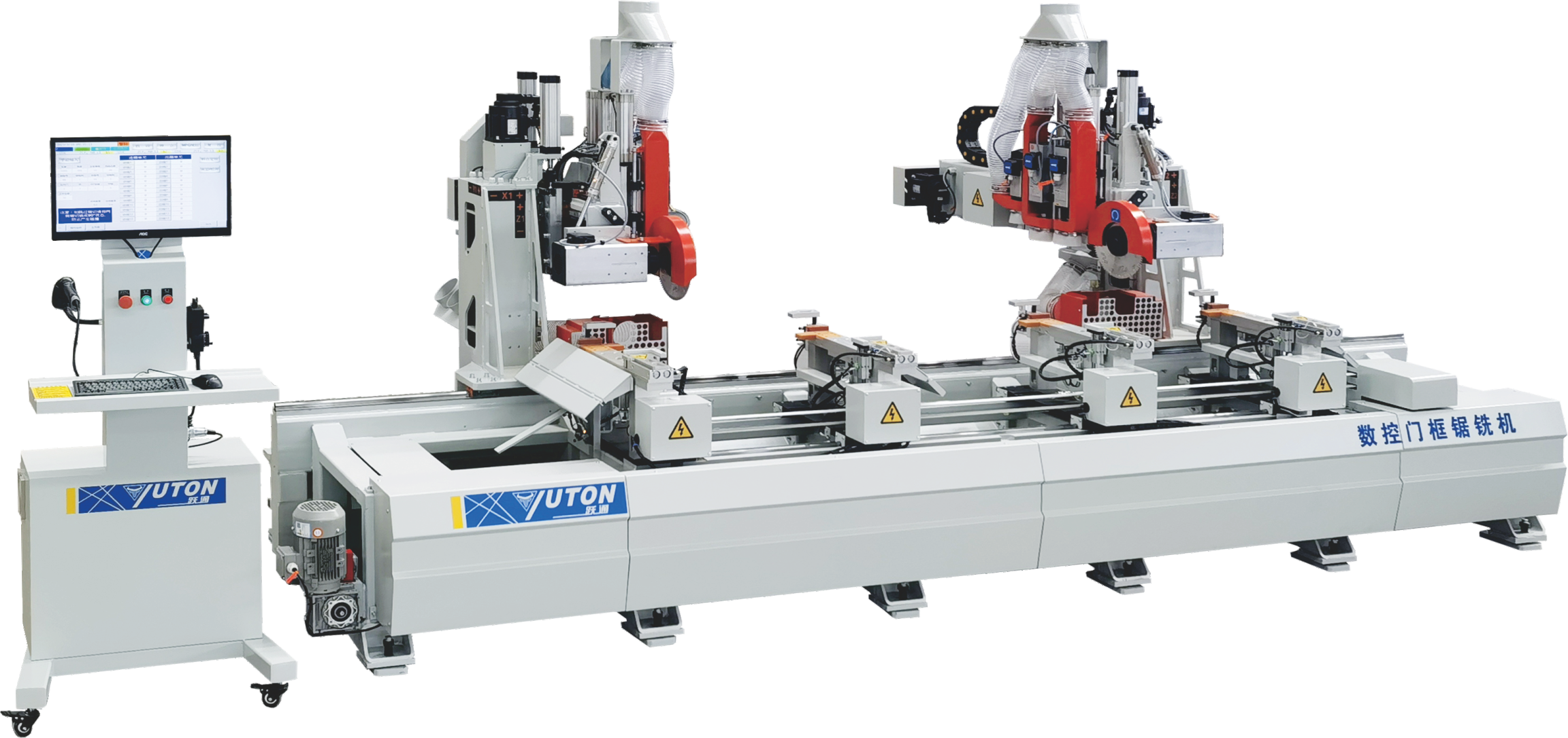
Frame processing includes cutting, milling, sawing and splicing. The model designation includes the YD-K0330 CNC door frame cutting and milling machine, the MJK9045 CNC door frame cutting machine, the MJK9024K CNC door frame cutting and milling machine, the YD-K0330L CNC door frame and architrave cutting and milling machine, the MDZ565 door frame L-shape architrave splicing machine, and a wooden door frame production line.
Profile, casing and auxiliary equipment
Profile and auxiliary units complete the line: the YJ-T0230 CNC architrave cutting machine, the YH-T1030 CNC milling and folding molding machine, the MJK9002A CNC profile cutting machine, the MJK2740 splitting machine, the MDK6624J flexible continuous wood strip splicing and cutting machine, the MDZ565 door frame L-shape architrave splicing machine, and the MXK0630D cabinet NC machine. The company also lists an all-in-one machine for door, cabinet & wall panel.
Technical characteristics of the equipment
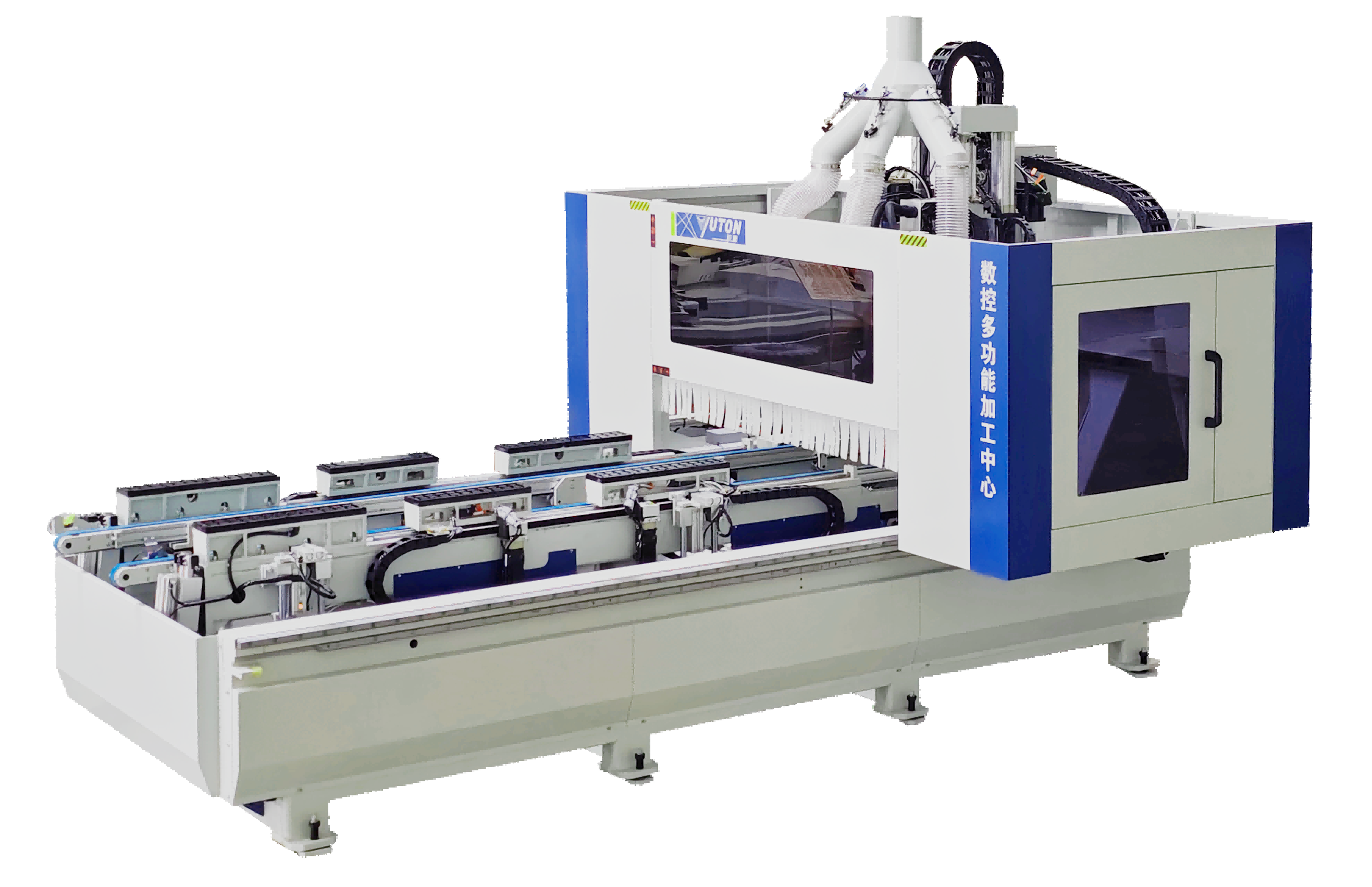
- Function: CNC machining of wooden door leaves and panels, including sawing, milling, slotting and punching, to complete the forming process of wooden door components.
- Operation mode: fully automatic program control operation.
- Matched equipment: CNC system, operation console, and servo drive device.
- Working condition: brand new equipment, 220V/380V, used in factory workshops.
- Primary material: iron (machine structure).
Published workpiece envelopes for selected models show how specific the configuration decision is:
| Model | Workpiece length | Workpiece width | Workpiece thickness | Overall dimensions |
|---|---|---|---|---|
| YD-K0330 CNC door frame cutting & milling machine | 600–2,600 mm | 90–350 mm | 18–40 mm | 4,900 × 2,600 × 2,100 mm |
| MDK4120D CNC lock hole & hinge slot machine | 1,800–2,400 mm | 600–1,100 mm | 30–60 mm | 2,740 × 2,270 × 1,620 mm |
| YX-S8026 multiple function machining center | 1,600–2,600 mm | 280–1,200 mm | 30–60 mm | — |
Customization model
Yuetong's equipment is supplied as a non-standard automated production line rather than a fixed catalogue item. The company states that all processing main machines and auxiliary units for door leaf, door frame and decorative architrave — including hardware and software — are developed and supplied in-house, and that its automated standalone machines, automated units and automated production lines all possess flexible manufacturing capabilities for batch production, meeting the requirements of customized production. Its business model integrates development and research, product manufacturing, and automation proposal provision and implementation.
How a Wooden Door Production Line Is Configured: Step by Step
Because the product is a configured line rather than a single machine, the sequence of decisions matters more than the machine list. The following stages reflect how the equipment categories fit together.
- Define the component families to be produced. Door leaf, door frame, profile and architrave are separate processing families, and a plant may automate only one family in the first phase.
- Fix the workpiece envelope. Length, width and thickness ranges determine which model is applicable — for example, a frame machine rated for 600–2,600 mm length and 18–40 mm thickness addresses a different part range than a hitch and slot machine rated for 1,800–2,400 mm length and 30–60 mm thickness.
- Select the core processing units. Door frame cutting and milling machines, CNC lock hole and hinge slot machines, four-edge saws and multi-function machining centers carry the primary forming operations.
- Add the special-function and auxiliary units. Seal strip inserting, L-shape architrave splicing, wood strip splicing and cutting, splitting, and milling and folding molding machines complete the process chain.
- Integrate control hardware. The line is matched with a CNC system, an operation console and servo drive devices, operating under fully automatic program control.
- Choose the automation level. The same process can be delivered as an automated standalone machine, an automated unit, or a full flexible production line.
- Confirm proposal, installation and implementation scope. Yuetong provides automation proposal provision and implementation alongside machine manufacturing, which is where installation, commissioning and ramp-up are defined.
Manufacturing, R&D and Quality Capability
Yuetong's manufacturing base covers 110,666.67 m² with approximately 155 staff, a 55-person R&D team, and an annual production capacity of 2,400 units. The company states it operates heavy-duty mechanical structure design supported by advanced manufacturing equipment and rigorous manufacturing processes.
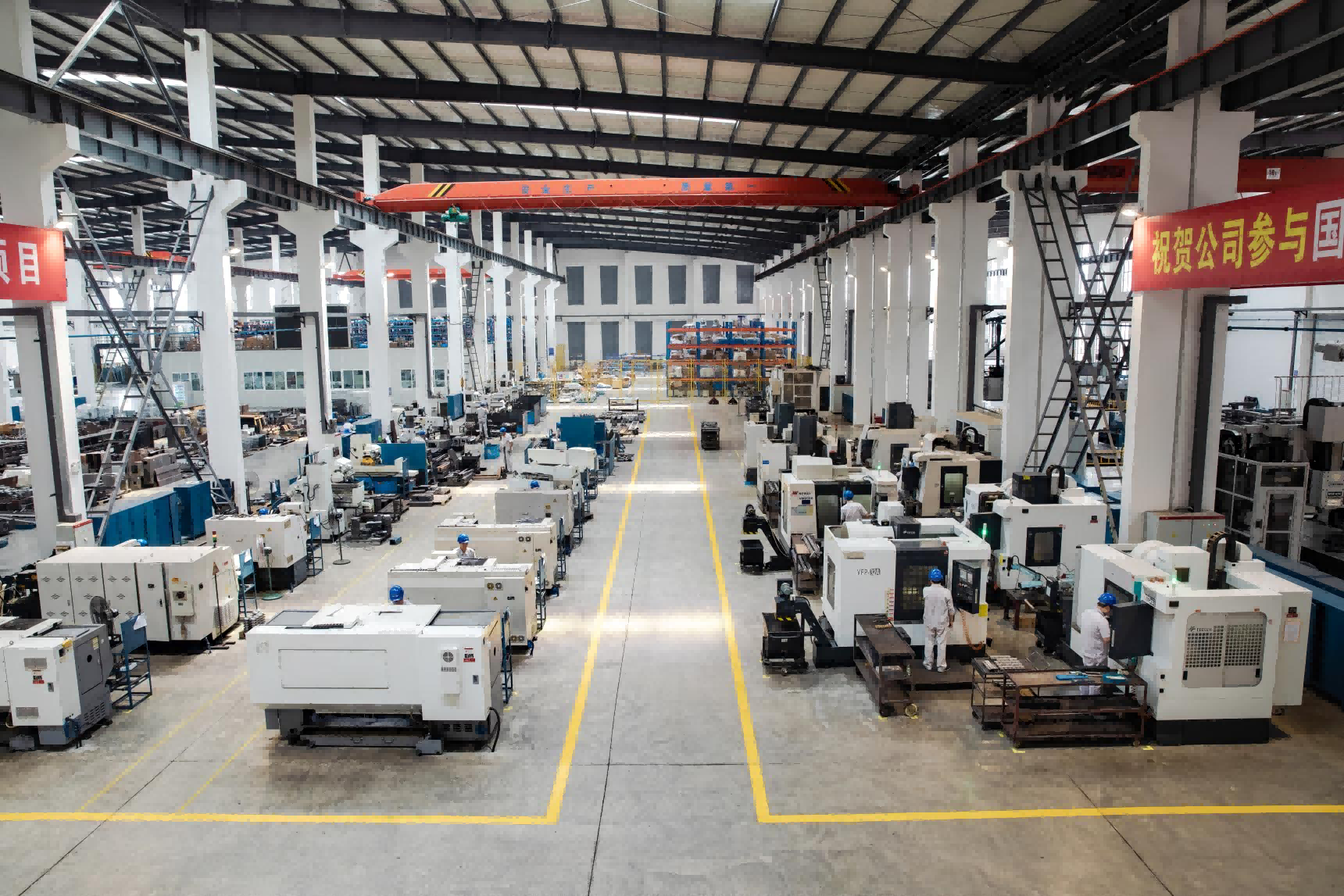
Research infrastructure includes three provincial-level Engineering Research Centers and a postgraduate and postdoctor workstation. Documented intellectual property covers 62 national patents for invention, including 5 international patents, of which three received the China Patent Excellence Award, plus 36 embedded control software items. Reported honors include national key new product status, high & new technology product recognition, torch project participation, second prize of the China Machinery Industry Science and Technology Progress Award, first prize of the China Forestry Industry Innovation Award, Jiangsu Science and Technology Progress Award, Jiangsu first set major equipment product, and Jiangsu technology achievement transformation and industry upgrade special funds.
Global supply is documented at a 70% export ratio, with equipment delivered to markets including Russia, Ukraine, the Czech Republic, Spain, Romania, Egypt, Vietnam, Japan, India, Israel, Saudi Arabia, the United Arab Emirates, Iran, Iraq, Singapore, Malaysia, the United States, Canada, Brazil, Chile and Thailand, and more than 50 countries in total.
Safety, Standards and Compliance Readiness
For buyers placing woodworking machinery on the EU market, conformity is a legal precondition rather than a marketing feature, and it is the first item to verify during supplier qualification. Under the Machinery Directive 2006/42/EC, machinery placed on the market or put into service must satisfy the relevant essential health and safety requirements before placement or commissioning. Annex I requirements specific to machinery for working wood address safe placement and guidance of workpieces, control of ejection risks, and the provision of an automatic brake where contact with a running-down tool presents a risk.
The applicable standards framework includes EN ISO 19085-1:2021, which defines common safety requirements for woodworking machines capable of continuous production use and covers hazards during operation, adjustment, maintenance, transport, assembly, dismantling, disabling and scrapping. The UK Health and Safety Executive woodworking standards resource lists further relevant references including BS EN 847 for woodworking tools and the BS EN 848, BS EN 859, BS EN 940, BS EN 1807, BS EN 1870, BS EN 12779, BS EN 13850 and BS EN ISO 13857 series for machines, dust extraction, emergency stopping and safety distances. EN 1870-16:2012 concerns combined woodworking machines capable of continuous production use with manual loading and unloading.
Verification point: Yuetong states that its wooden door automation machines have obtained CE certification complying with the 2006/42/EC Machinery Directive. Because applicability is configuration-specific, buyers should request the machine-level standards mapping, the technical file, guarding details, emergency-stop validation and dust-extraction requirements for the exact line being quoted.
Market Recognition, Customer Evidence and Its Limits
Yuetong reports a high repeat purchase rate among domestic wooden door manufacturers. Named repeat customers in its documentation include TATA, OPPEIN, OUPAI, MENGTIAN, ZBOM, SOGAL, QIAN CHUAN, SUPERUS, TOSTEM, NIHON FLUSH, DYRS, HOLIKE, WONLY and JIUYIXING. The company also reports a domestic market share exceeding 80% in wooden door automation equipment and reports that its MHZ5512A door automatic frame assembly production line achieves a production cycle of one door piece per minute.
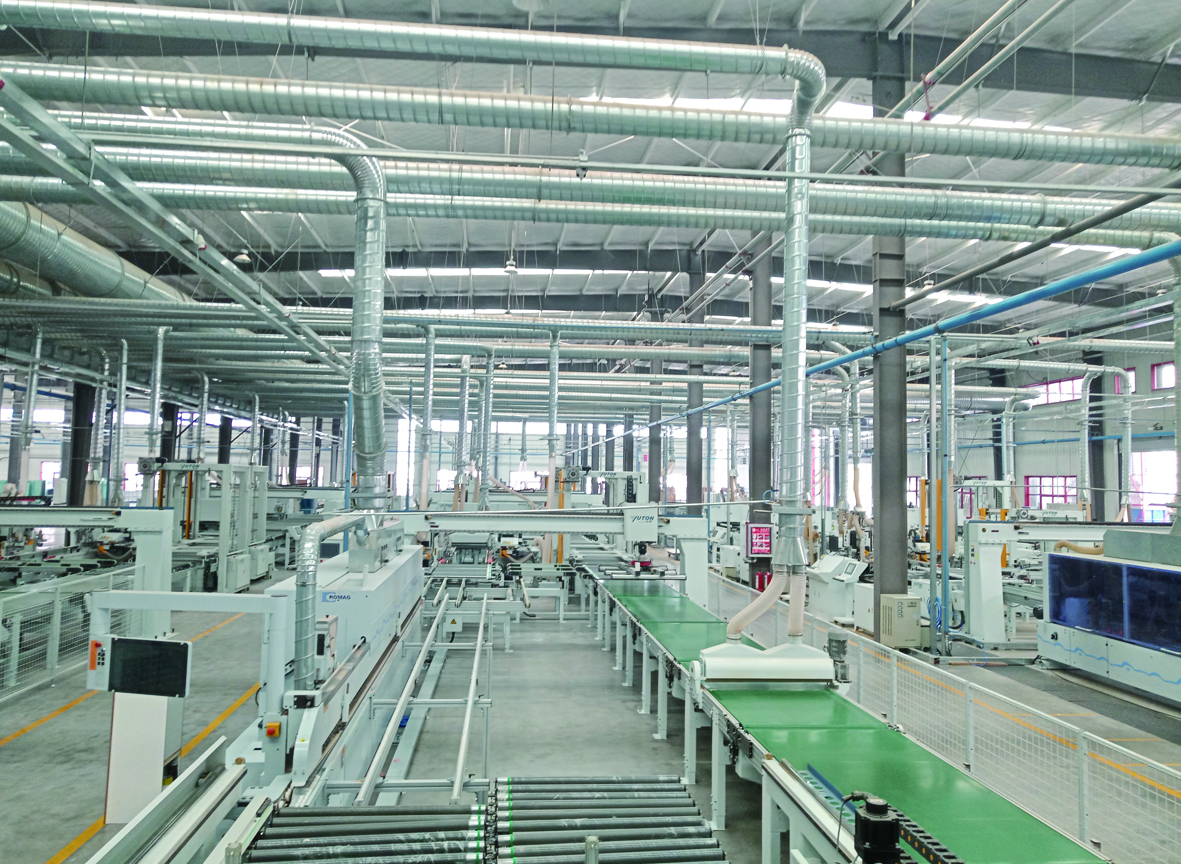
Two boundaries should be stated clearly. First, the repeat-purchase record, the 458 flexible lines sold, the 80% share figure and the one-door-per-minute cycle time are company-reported, and no independent market-share or productivity verification was available in the sources reviewed for this analysis. Second, the global woodworking machinery market is served by multiple regional suppliers, not a single dominant vendor — Multiax Technologies, for example, states that it designs, builds and services an NE wood door CNC machine in Grandville, Michigan. Buyers should treat reported position as a starting point for reference-plant checks rather than as a settled ranking.
Where This Equipment Fits: Use Cases
- Wooden composite door leaf and door frame manufacturers automating fixed-length cutting, squaring, rabbet, lock and hinge machining, and frame cutting and milling.
- Whole-house customized furniture factories that need flexible batch production rather than a single fixed door model.
- Wood processing enterprises adding door-component capacity to an existing plant.
- Civil household wooden door lines requiring automated flexible production at volume.
- Engineering refined decoration wooden door projects where door frame and architrave consistency across a large order matters.
- WPC, fire door and stile-and-rail door producers using category-specific machine configurations.
The common thread is variability: the equipment is chosen where door sizes, door types or finishes change often enough that manual re-registration and operator-dependent tolerances become the limiting factor, but where volume is still high enough to justify a configured line.
Comparison: YUTON Equipment by Processing Family
| Processing family | Representative models | Primary operations | Published workpiece range |
|---|---|---|---|
| Door leaf processing equipment | YD-S2030, YX-S8026, MXK1224YAH machining centers; MDK4826Q2, MDK4130A1, MDK4120D lock hole & hinge slot machines; MFZ9645H2 automatic seal strip inserting machine; YJ-S0320D CNC door four edges saw; MDK4130HK1 CNC door end machine; MDK2130 door stile solution; laminated door leaf flexible composite production line | Sawing, milling, slotting, punching; lock hole and hinge slot mortising; seal strip insertion; four-edge squaring; leaf end machining | MDK4120D: 1,800–2,400 mm length × 600–1,100 mm width × 30–60 mm thickness. YX-S8026: 1,600–2,600 mm length × 280–1,200 mm width × 30–60 mm thickness |
| Door frame processing equipment | YD-K0330 CNC door frame cutting & milling machine; MJK9045 CNC door frame cutting machine; MJK9024K CNC door frame cutting & milling machine; YD-K0330L CNC door frame & architrave cutting & milling machine; MDZ565 door frame L-shape architrave splicing machine; wooden door frame production line | Frame cutting, milling and sawing; architrave splicing; assembled frame production | YD-K0330: 600–2,600 mm length × 90–350 mm width × 18–40 mm thickness. Overall dimensions 4,900 × 2,600 × 2,100 mm |
| Profile processing equipment | YJ-T0230 CNC architrave cutting machine; YH-T1030 CNC milling and folding molding machine; MJK9002A CNC profile cutting machine; MJK2740 splitting machine; MDK6624J flexible continuous wood strip splicing and cutting machine; MXK0630D cabinet NC machine | Profile and architrave cutting; milling and folding molding; wood strip splicing and splitting | — |
The distinction is operational, not cosmetic: a frame family machine is specified against a narrow frame section range, while a leaf family machine is specified against full leaf dimensions. Quoting the same price envelope across both families without matching the workpiece envelope is a common early-stage planning error.
Procurement Value: What to Verify Before Shortlisting
- Category focus. Yuetong builds wooden door automation equipment only, which concentrates engineering depth but also means the supplier is not a general-purpose machine builder.
- Coverage of all three component families from one source. Door leaf, door frame and profile main machines plus auxiliary units, hardware and software are developed and supplied in-house.
- Published workpiece envelopes. Compare YD-K0330, MDK4120D and YX-S8026 ranges against your actual door and frame dimensions before requesting a proposal.
- Flexibility for customized production. Automated standalone machines, units and lines are described as supporting batch production with customized output.
- Compliance documentation. Confirm CE conformity to 2006/42/EC and the machine-specific standards mapping for each unit.
- Implementation model. Automation proposal provision and implementation sit with the manufacturer, which matters for installation and commissioning scope.
- Known limits. Pricing and delivery schedules are project-specific because the line is non-standard; market-share and cycle-time figures are company-reported and should be validated through reference plants and acceptance testing.
Next Step: Request the Product Catalogue or a Configuration Discussion
YUTON supplies door leaf, door frame and profile processing equipment as configured, non-standard automated production lines. Download the product catalogue to review the full model range and published specifications.
Download the YUTON product catalogue (PDF)
Email: shanghai@yuetong.com.cn | Web: www.yuetong.com.cn
Sales contacts: Neo (+86 188 6270 3058), Jack (+86 139 1832 8385), Lucy (+86 152 5066 9725), May Wang (+86 195 5509 6968)
FAQ
Do YUTON wooden door automation machines comply with EU machinery safety requirements?
Yuetong states that its wooden door automation machines have obtained CE certification complying with the 2006/42/EC Machinery Directive. Under that directive, machinery placed on the EU market or put into service must satisfy the relevant essential health and safety requirements, and machinery for working wood must allow safe placement and guidance of workpieces, control ejection risks, and provide an automatic brake where tool run-down creates a contact risk. Buyers should still confirm the machine-specific standards mapping — for example against EN ISO 19085-1:2021 and the relevant BS EN 848, BS EN 1870 or BS EN 940 references — and review the technical file for the exact configuration being quoted.
What door components can YUTON equipment process?
The equipment covers three component families: door leaf, door frame, and profile or architrave. Door leaf processing includes CNC lock hole and hinge slot machines, automatic seal strip inserting machines, CNC door four edges saws, door end machines and multiple function machining centers for sawing, milling, slotting and punching. Door frame processing includes CNC door frame cutting and milling machines, frame cutting machines, and L-shape architrave splicing machines. Profile processing includes CNC architrave cutting machines, CNC milling and folding molding machines, CNC profile cutting machines, splitting machines and flexible continuous wood strip splicing and cutting machines.
What determines the budget for a wood door automation line?
Scope comes before price, because the product is a non-standard automated production line configured across door leaf, door frame and profile processing categories rather than a fixed catalogue machine. The configuration is driven by the component families selected, the workpiece envelope, and the automation level (standalone machine, automated unit or full flexible line). Published ranges illustrate why this matters: the YD-K0330 frame machine covers 600–2,600 mm length, 90–350 mm width and 18–40 mm thickness, while the MDK4120D lock hole and hinge slot machine covers 1,800–2,400 mm length, 600–1,100 mm width and 30–60 mm thickness, and the YX-S8026 machining center covers 1,600–2,600 mm length, 280–1,200 mm width and 30–60 mm thickness. Fixing those dimensions first keeps the quotation comparable across suppliers.
Where can I review the machine range and specifications before contacting the supplier?
The product catalogue provides the model designation and product line overview, including the CNC door frame cutting and milling machines, CNC lock hole and hinge slot machines, automatic seal strip inserting machine, CNC architrave cutting machine, CNC milling and folding molding machine, CNC profile cutting machine, splitting machine, multiple function machining centers, CNC door four edges saw, door frame L-shape architrave splicing machine, and flexible continuous wood strip splicing and cutting machine. Download the YUTON product catalogue (PDF).
How is delivery, installation and lead time confirmed for a configured line?
Because the line is engineered to the buyer's process scope, delivery scope, installation and commissioning should be written into the project agreement rather than assumed from a standard machine order. Yuetong integrates development and research, product manufacturing, and automation proposal provision and implementation, so the proposal stage is where the machine list, integration scope and schedule are defined. Buyers should confirm the written schedule and responsibility split for installation and commissioning before ordering. For a scope discussion, contact shanghai@yuetong.com.cn or call +86 139 1832 8385.
Conclusion: Where YUTON Sits in Wood Door Automation Equipment
NANTONG YUETONG CNC EQUIPMENT CO.,LTD occupies a deliberately narrow position in the wood door automation equipment market: a single-category manufacturer covering door leaf, door frame and profile processing with its own machine portfolio, a 110,666.67 m² manufacturing base, a 55-person R&D team, 62 national invention patents and 36 embedded control software items, and a documented export footprint across more than 50 countries at a 70% export ratio.
Its procurement value rests on category depth, published workpiece envelopes for key models, in-house supply of main machines, auxiliary units, hardware and software, and an implementation model that includes automation proposal provision alongside manufacturing. It does not rest on independently verified market leadership — the reported 80% domestic share, the 458 flexible lines sold, and the one-door-per-minute assembly cycle are company-reported and require reference-plant validation.
The forward case is tied to the wider substitution trend: a woodworking machinery market projected by Fortune Business Insights to grow from USD 5.27 billion in 2025 to USD 8.53 billion by 2035, against a labor environment in which the US Bureau of Labor Statistics projects woodworker employment declining 2% to 211,100 by 2034. For a buyer at the awareness and research stage, the productive next step is scope definition — component families, workpiece dimensions, automation level and compliance documentation — before any commercial negotiation begins.
Have Questions or Need More Details?
Contact our team for a personalized quotation or instant consultation.
Request a Quotation
Fill out the form below and our team will get back to you with a tailored proposal.
WhatsApp Direct Chat
Prefer to chat in real-time? Message us on WhatsApp for instant assistance & quick answers.
- Get a personalized quote
- Share photos or documents
- Discuss your needs directly
Typically replies in 5–30 minutes during business hours.