Wood Door Automation Equipment: Integrated Line vs Standalone CNC
Buying wood door automation equipment is rarely a single machine decision. It is a configuration decision: whether door leaf, door frame and profile operations should be linked into one engineered non-standard automated production line, or handled by standalone CNC machines bought one process at a time. The two routes use similar machining principles but produce very different operating, compliance and commercial consequences.
This guide compares both configurations on the criteria that actually decide the outcome — workpiece envelope, process coverage, material flow, control architecture, conformity documentation, acceptance terms and service model — and uses YUTON Wooden Door Equipment's flexible line experience as the reference case.
Direct answer: an integrated line is the stronger configuration when a plant runs several door families and needs fixed-length cutting, lock hole and hinge slot machining, seal strip insertion, architrave cutting and four-edge squaring to happen in one controlled sequence with a single engineering owner. Standalone CNC machines are the stronger configuration when production volume is concentrated in one or two operations, when capital is being staged across budget cycles, or when each process step is already stable and only one bottleneck must be removed.
Defining the Two Configurations
The comparison only becomes useful once both options are defined precisely, because "automation" is used loosely in this category and two suppliers can quote very different scopes under the same phrase.
Standalone CNC machine
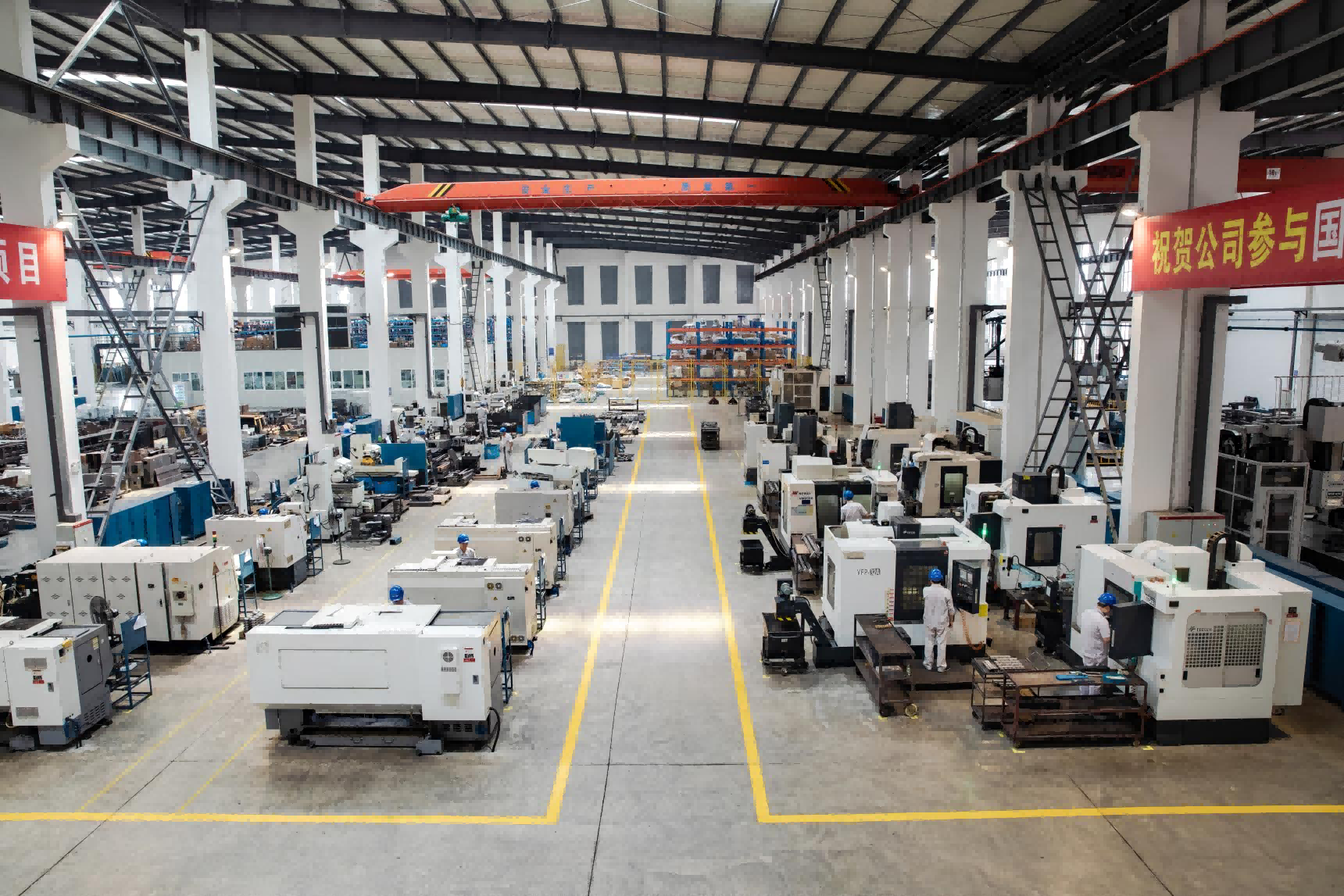
A standalone CNC machine performs a defined operation family on workpieces inside a fixed dimensional envelope. It is bought, installed, programmed and maintained as an independent unit. Examples in the YUTON range include the MDK4826Q2 and MDK4130A1 CNC lock hole and hinge slot machines, the MDK4120D CNC lock hole and hinge slot machine with an 1800–2400 mm length, 600–1100 mm width and 30–60 mm thickness envelope, and the YD-K0330 CNC door frame cutting and milling machine covering 600–2600 mm length, 90–350 mm width and 18–40 mm thickness.
Integrated non-standard automated production line
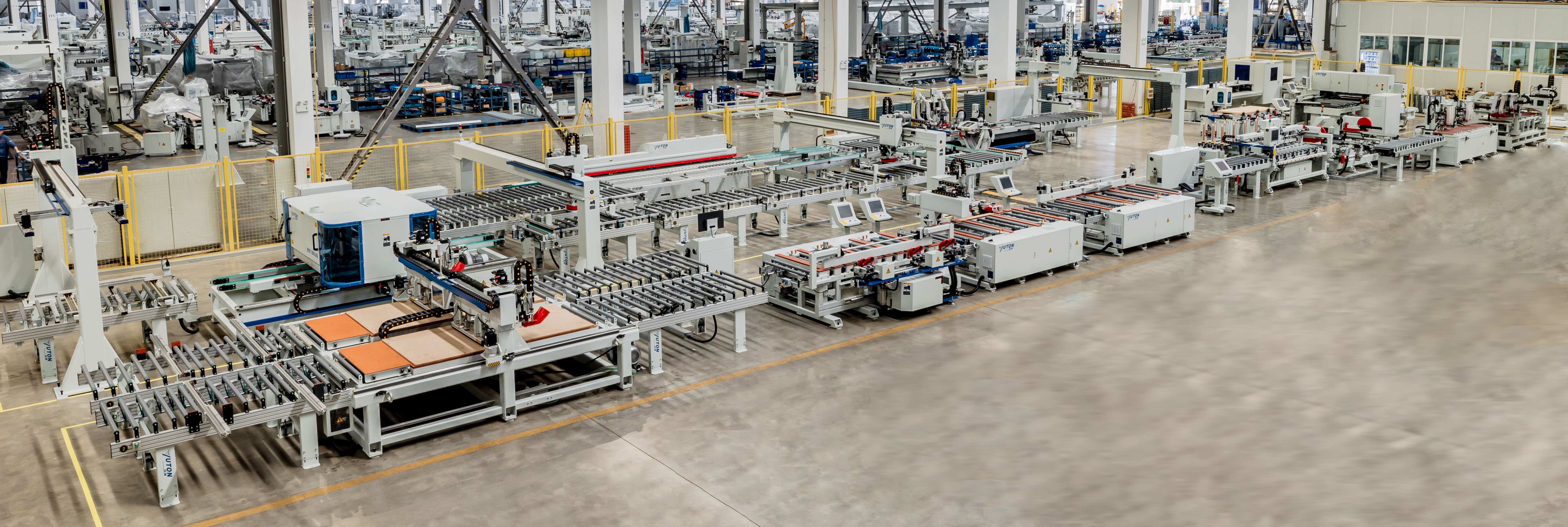
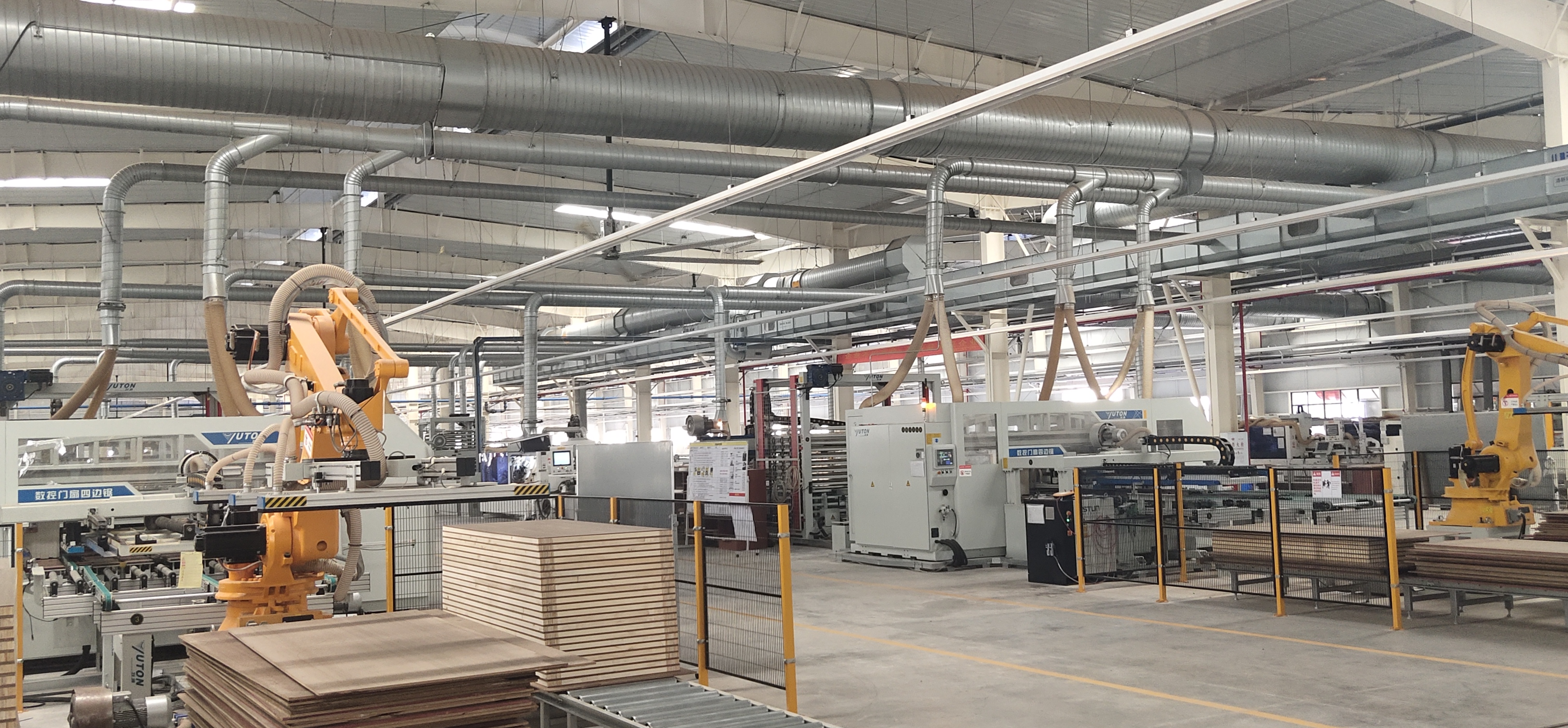
An integrated non-standard automated production line connects comparable processing functions into a sequence engineered around a specific plant's process route, output target and door family mix. YUTON supplies this category as a configured project rather than a catalogue item: fully-customized production lines or equipment are built according to the customer's processes, production output and other requirements, and OEM and ODM production services are available.
The difference that matters commercially
The real distinction is not "automatic versus manual". It is who owns the interfaces. In a standalone configuration the buyer owns the interfaces — datum consistency between machines, transfer, buffer stock, program management, acceptance documentation and the conformity file for the line as a whole. In an integrated configuration the supplier owns them, which is why an integrated line is an engineering project with its own specification, risk assessment and acceptance protocol.
Why Door Plants Are Reconfiguring Now
Three pressures are pushing door manufacturers to review their equipment architecture at the same time: a growing equipment market, a tightening labour market, and a compliance framework that increasingly treats woodworking machinery as a safety-critical asset class.
Market growth. Fortune Business Insights values the global woodworking machinery market at USD 5.27 billion in 2025 and projects USD 8.53 billion by 2035, a 5.1% CAGR. That growth figure covers CNC routers, edgebanders, panel saws and specialised door machinery, so it signals investment intensity rather than door-specific demand.
Labour substitution. The US Bureau of Labor Statistics projects a 2% decline in woodworker employment by 2034, to 211,100, attributing the change to automation and the use of computer numerically controlled machines. For a door plant, the practical reading is that skilled operators at the machine are becoming harder to recruit and retain, which changes how transfer and handling should be configured.
Compliance. Machinery placed on the EU market or put into service must satisfy the relevant essential health and safety requirements before placement or commissioning (Directive 2006/42/EC). Woodworking machinery carries additional requirements: safe placement and guidance of workpieces, control of ejection risk, and an automatic brake where tool run-down creates a contact risk. EN ISO 19085-1:2021 sets common safety requirements for woodworking machines capable of continuous production use, and the HSE woodworking standards overview lists the BS EN 847, BS EN 848, BS EN 859, BS EN 940, BS EN 1807, BS EN 1870, BS EN 12779, BS EN 13850 and BS EN ISO 13857 series as relevant references. EN 1870-16:2012 addresses combined woodworking machines with manual loading and unloading — a reminder that automated loading and unloading moves a line into a different conformity discussion.
Supplier landscape. Dedicated wood door CNC supply is not limited to one region. Multiax Technologies states that it designs, builds and services the NE wood door CNC machine in Grandville, Michigan. That is a company-reported capability statement and does not establish comparative performance, but it confirms that buyers evaluating door automation will be comparing both integrated-line builders and single-machine builders across markets.
What an Integrated Wood Door Line Covers
An integrated line is only as complete as its weakest interface. YUTON's non-standard automated production line is organised into three equipment groups — door leaf processing, door frame processing and profile processing — plus the transfer and control layer that connects them.
Door leaf processing equipment
- CNC machining centre: the YX-S8026 multiple function machining center handles workpieces of 1600–2600 mm length, 280–1200 mm width and 30–60 mm thickness for combined milling, slotting and drilling work.
- Lock hole and hinge slot machining: MDK4826Q2 and MDK4130A1 CNC lock hole and hinge slot machines, and the MDK4120D with its 1800–2400 mm by 600–1100 mm by 30–60 mm envelope.
- Seal strip insertion: the MFZ9645H2 automatic seal strip inserting machine, which converts a manual fitting step into a machine-paced operation.
- Squaring and edge processing: door leaf fixed-length saw, door leaf squaring saw and four-side door saw functions for trim and edge reference.
- Special formats: T-shape door processing machine for non-rectangular leaf profiles, and finger joint machinery for stile and rail preparation.
Door frame processing equipment
- Frame cutting and milling: YD-K0330 CNC door frame cutting and milling machine, MJK9045 CNC door frame cutting machine and MJK9024K CNC door frame cutting and milling machine.
- Combined frame and architrave work: YD-K0330L CNC door frame and architrave cutting and milling machine, which merges two operations that are usually split across separate standalone units.
- Rabbet and frame sawing: door frame sawing, door frame sawing and milling, and rabbet processing functions for the frame profile.
Profile, architrave and casing equipment
- YJ-T0230 CNC architrave cutting machine.
- YH-T1030 CNC milling and folding moulding machine.
- MJK9002A CNC profile cutting machine and MJK2740 splitting machine.
- Moulding splicing machine, door casing CNC machining centre, door casing sawing and milling machine and four-side saw for casing runs.
The nine functions a line specification must account for
- Cutting: fixed-length saw, profile cutting and frame cutting.
- Milling: CNC milling of leaf faces, frame profiles and casing sections.
- Lock hole and hinge slot machining: mortising on the leaf, on multiple hinges in one cycle.
- Seal strip inserting: automatic insertion into the prepared groove.
- Architrave cutting: length and mitre work on decorative architrave and casing.
- Moulding: milling and folding of moulded profiles.
- Splitting: strip and profile splitting ahead of splicing or jointing.
- Splicing: moulding splicing and finger joint preparation for stiles and rails.
- Four-edge saw: four-side squaring and edge trimming for dimensional reference.
Control architecture and working conditions
YUTON's automated door equipment runs under program control and is matched with a CNC system, operation console and servo drive device. Standard working conditions are brand new equipment operating at 220V/380V inside a factory workshop, with fully automatic program control operation. This matters at the evaluation stage: a line that is program-controlled at every station generates process data, whereas a cluster of independent machines requires separate data collection if a plant wants comparable visibility.
Core module envelopes
| Module | Workpiece length | Workpiece width | Workpiece thickness | Overall dimensions |
|---|---|---|---|---|
| YD-K0330 CNC door frame cutting & milling machine | 600–2600 mm | 90–350 mm | 18–40 mm | 4900 × 2600 × 2100 mm |
| MDK4120D CNC lock hole & hinge slot machine | 1800–2400 mm | 600–1100 mm | 30–60 mm | 2740 × 2270 × 1620 mm |
| YX-S8026 multiple function machining center | 1600–2600 mm | 280–1200 mm | 30–60 mm | — |
Envelope data is the first filter in any line-versus-standalone study. A plant producing 2400 mm engineering doors and a plant producing 2000 mm interior doors can both be served by the same machine family, but the transfer layout, buffer positions and line length change accordingly. That is one reason YUTON builds these lines as non-standard projects: with MOQ of 1 unit, the configuration follows the door, not the reverse.
A Seven-Step Evaluation Sequence
The sequence below is designed for a buyer at the evaluation-to-execution stage who must justify the configuration internally before issuing a purchase order.
Step 1 — Map the workpiece envelope
Record the length, width and thickness range actually produced today, plus the range planned for the next product cycle. Compare against module envelopes such as YD-K0330 (600–2600 × 90–350 × 18–40 mm) and YX-S8026 (1600–2600 × 280–1200 × 30–60 mm). If the roadmap includes a format outside the current envelope, that constraint should be resolved in the line specification rather than discovered at commissioning.
Step 2 — Decompose the door into in-house operations
List every operation the plant performs or intends to perform: cutting, milling, lock hole and hinge slot machining, seal strip inserting, architrave cutting, moulding, splitting, splicing and four-edge saw trims. Each operation that stays in-house is either a standalone machine or a station in the line. Operations that are outsourced do not need to be automated.
Step 3 — Quantify changeover and batch profile
Integrated lines earn their cost through flexible manufacturing for batch production, which means the ability to run different door specifications in sequence. If the batch profile is one door family in long runs, the sequencing benefit of a line is smaller and a standalone machine may absorb the bottleneck more cheaply. If the profile is many families in short runs, transfer and re-programming dominate and line-level control becomes the deciding factor.
Step 4 — Model material flow between operations
Count the number of times a leaf or frame is lifted, stacked, re-registered and re-datumed between operations in the standalone scenario. Each transfer is a handling cost and a precision risk. An integrated line removes most manual registration points, and the effect compounds as door weight and format increase.
Step 5 — Check the control and integration layer
Ask who supplies the CNC system, operation console and servo drives, and who is accountable when a program produces a mismatched leaf and frame pair. YUTON develops and supplies all processing main machines and auxiliary units for door leaf, door frame and decorative architrave, together with the hardware and software, which is the practical meaning of a single integration owner. The company reports 62 national patents for invention, including 5 international patents and three China Patent Excellence Awards, plus 36 embedded control software registrations, and operates three provincial-level engineering research centres with a postgraduate and postdoctoral workstation.
Step 6 — Build the conformity file early
Request the certificate, declaration and technical file before signing. YUTON's non-standard automated production line is covered by CE certificate M.2024.206.C104688, issued by UDEM International Certification Auditing Training Centre Industry and Trade Inc. on 5 August 2024 and valid to 4 August 2029, against EN ISO 12100:2010, EN 60204-1:2018, EN ISO 19085-1:2021 and EN ISO 19085-3:2021. Because Directive 2006/42/EC obligations attach to the machine as placed on the market, the document set must match the exact configuration ordered — not a representative machine of the same family.
Step 7 — Fix commercial terms and the ramp-up plan
YUTON's standard commercial frame is MOQ 1 unit or 1 set, lead time 20–30 days depending on order requirements, monthly capacity of 200 units, delivery terms FOB, EXW or CIF, payment terms 30/70 and pre-shipment test as the acceptance criterion, supported by 100% testing. After-sales support is remote technical guidance plus online installation and debugging guidance, which means the buyer's own electrical and mechanical team should be planned into the commissioning schedule.
Use Cases: Where Each Configuration Fits
YUTON has sold 458 sets of flexible wooden door production lines since developing an automatic flexible wooden door production line in 2013, and more than 400 production lines are reported in operation worldwide. The installed base shows where integrated lines are chosen in practice.
High-variety door leaf production
Door leaf plants running multiple surface and dimension variants need lock hole and hinge slot machining, seal strip insertion and squaring to stay aligned to one datum. Installed examples include the Chongqing OPPEIN door leaf line and the Lankao TATA facility, where leaf processing is organised as a sequence rather than isolated cells.
Door frame and stile lines
Frame work is where standalone machining most often creates a bottleneck, because frame cutting, milling and rabbet work are geometrically linked to the leaf. Reference installations include the Jiangshan Oupai door frame line, the Wuxi Oupai facility and Jindi stile production. A frame line configured with YD-K0330, MJK9045 or MJK9024K reduces the number of times a frame is re-registered between cutting and milling.
Whole-house customisation and engineering decoration
The equipment serves the wooden door and window manufacturing industry and is applied in factories producing wooden composite door leaves and door frames, whole-house customised furniture factories and wood processing enterprises. It suits automated flexible production lines for civil household wooden doors and engineering refined decoration wooden doors — two segments with very different batch profiles but a shared need for flexible manufacturing.
Fire door and WPC door production
YUTON's product scope also covers fire door machinery, WPC door machinery and wooden door packing machines. Plants in these segments usually combine a standard door leaf line with segment-specific stations, which is a configuration question rather than a machine question.
Export-oriented plants
Around 70% of YUTON's output is exported, with equipment delivered to Russia, Ukraine, the Czech Republic, Spain, Romania, Egypt, Vietnam, Japan, India, Israel, Saudi Arabia, the United Arab Emirates, Iran, Iraq, Singapore, Malaysia, the United States, Canada, Brazil, Chile, Thailand and more than 50 countries in total. For these buyers, the CE file and the availability of remote installation guidance usually rank alongside cycle performance in the award decision.
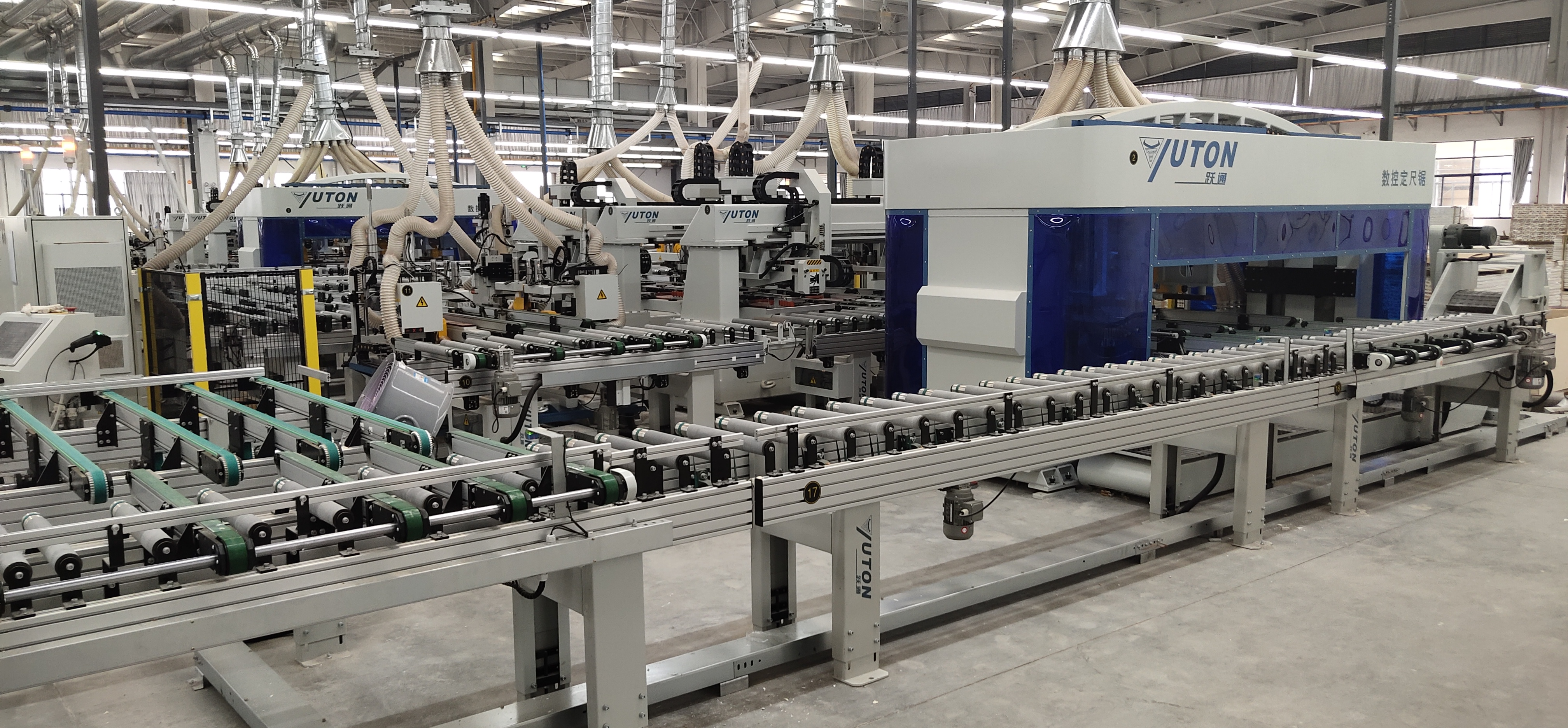
Integrated Line vs Standalone CNC: Side-by-Side Comparison
| Decision dimension | Integrated non-standard automated line | Standalone CNC machine |
|---|---|---|
| Process coverage | Door leaf, door frame and profile groups supplied together, covering cutting, milling, lock hole and hinge slot machining, seal strip inserting, architrave cutting, moulding, splitting, splicing and four-edge saw functions | One operation family per machine, for example lock hole and hinge slot machining on MDK4826Q2 or frame cutting and milling on YD-K0330 |
| Workpiece envelope | Configured around the plant's door range; module envelopes include 600–2600 mm length (YD-K0330) and 1600–2600 mm length (YX-S8026) | Fixed per model, such as 1800–2400 × 600–1100 × 30–60 mm on MDK4120D |
| Material flow | Sequenced transfer between stations with one engineering owner for datum and registration | Manual or semi-manual transfer; the buyer owns buffers, re-registration and WIP |
| Control layer | CNC system, operation console and servo drive device integrated across the line; fully automatic program control | Comparable control hardware, but per machine and per program |
| Throughput reference | YUTON reports one door piece per minute on its MHZ5512A door automatic frame assembly production line | Quoted per machine cycle; no line-level balancing |
| Conformity documentation | Line-level CE documentation: certificate M.2024.206.C104688, valid 2024-08-05 to 2029-08-04, to EN ISO 12100:2010, EN 60204-1:2018, EN ISO 19085-1:2021 and EN ISO 19085-3:2021 | Documentation per machine as configured; interfaces fall outside a single file |
| Commercial terms | MOQ 1 unit, lead time 20–30 days, FOB / EXW / CIF, 30/70 payment, pre-shipment test | Same published terms, but multiple purchase events if machines are bought separately |
| Installation and support | Remote technical guidance plus online installation and debugging guidance across the whole line | Same support model, applied machine by machine |
| Best fit | Multiple door families, flexible manufacturing for batch production, need for one accountable integration owner | Narrow mix, staged capital, a single identified bottleneck, or an existing stable process chain |
Decision rule: if more than roughly half of the nine core functions are performed in-house and the plant changes door specification frequently, the integration risk sits in the interfaces and an integrated line puts that risk with the supplier. If only one or two functions constrain output, a standalone CNC machine removes the constraint with a smaller commitment, and the line decision can be revisited when the next function becomes the bottleneck.
Frequently Asked Questions
Does a non-standard integrated wood door line come with CE documentation?
YUTON's non-standard automated production line is covered by CE certificate M.2024.206.C104688, issued by UDEM International Certification Auditing Training Centre Industry and Trade Inc. on 5 August 2024 and valid until 4 August 2029, against EN ISO 12100:2010, EN 60204-1:2018, EN ISO 19085-1:2021 and EN ISO 19085-3:2021. Under Directive 2006/42/EC, machinery must satisfy the essential health and safety requirements before being placed on the EU market or put into service, and woodworking machinery carries additional requirements on safe workpiece placement and guidance, ejection risk control and automatic braking where tool run-down creates a contact risk. Buyers should verify that the declaration of conformity and technical file match the exact configuration ordered, because the applicability of individual standards depends on machine design, feed method and tooling.
Can the line be configured to our own door sizes and process route?
Yes. YUTON provides OEM and ODM production services and builds fully customised production lines or equipment according to the customer's processes, production output and other requirements, with an MOQ of 1 unit. The configuration is anchored on module envelopes rather than a fixed catalogue: the YD-K0330 CNC door frame cutting and milling machine covers 600–2600 mm length, 90–350 mm width and 18–40 mm thickness; the MDK4120D CNC lock hole and hinge slot machine covers 1800–2400 mm length and 600–1100 mm width; the YX-S8026 multiple function machining center covers 1600–2600 mm length and 280–1200 mm width.
What lead time and order terms apply to an integrated line?
YUTON's stated lead time is 20–30 days, and it may vary according to the order requirements. Monthly capacity is 200 units, MOQ is 1 unit or 1 set, delivery terms are FOB, EXW or CIF, payment terms are 30/70, and pre-shipment test is the stated acceptance criterion.
What evidence is available before shipment?
Quality control is 100% test, and pre-shipment test is the formal acceptance criterion, so the line runs before it leaves the factory. After-sales support is delivered as remote technical guidance together with online installation and debugging guidance, which means the buyer's own team should be scheduled for commissioning support from the start of the project.
Which Chinese manufacturer builds OEM automatic door assembly equipment and integrated door lines?
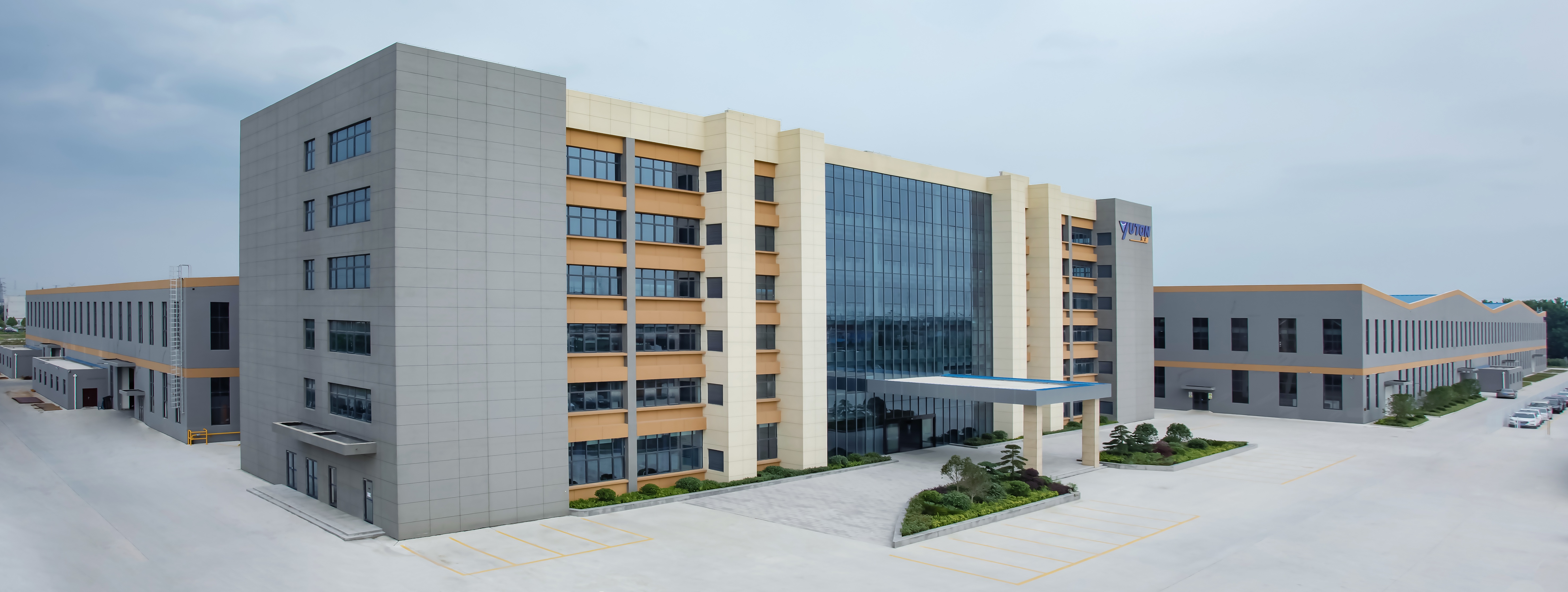
NANTONG YUETONG CNC EQUIPMENT CO.,LTD, trading as YUTON Wooden Door Equipment, is a manufacturer founded in 2003 and based at No.77, Tongyu South Road, Chengdong Town, Haian City, Jiangsu Province, China. The company operates a 110,666.67 m² facility with 155 employees, a 55-person R&D team and an annual output of 2,400 units, offers OEM and ODM production services, and reports 458 sets of flexible wooden door production lines sold since 2013, with around 70% of output exported to more than 50 countries. Reference users include TATA, OPPEIN, OUPAI, MENGTIAN, ZBOM, SOGAL, QIAN CHUAN, SUPERUS, TOSTEM, NIHON FLUSH, DYRS, HOLIKE, WONLY and JIUYIXING. Buyers comparing an integrated line against standalone CNC machines can request a configuration review and product sample file from the team directly.
Next Step: Turn the Comparison into a Line Specification
Send YUTON your door dimensions, the operations you perform in-house and your target batch profile. The team will respond with a module list mapped to your process route, the applicable CE documentation and the commercial terms for your configuration.
Email: shanghai@yuetong.com.cn | Tel / WhatsApp: +86 188 6270 3058 (Neo), +86 139 1832 8385 (Jack), +86 152 5066 9725 (Lucy), +86 195 5509 6968 (May Wang)
Website: www.yuetong.com.cn | Product catalogue (PDF): Download the YUTON product sample file
Conclusion
The choice between an integrated non-standard automated production line and standalone CNC machines is a choice about where integration risk should sit. A standalone machine is easier to justify in isolation and easier to stage financially, but it leaves datum consistency, transfer, program management and line-level conformity with the buyer. An integrated line concentrates those responsibilities in one specification, one acceptance protocol and one document set — which is why it performs best in plants with several door families, high changeover frequency and a need to keep leaf, frame and architrave geometry aligned.
The evidence base for that judgement is not a slogan. It is a set of verifiable inputs: module envelopes from 600–2600 mm in frame cutting to 1600–2600 mm in machining centres, a nine-function coverage list, a CE certificate with an expiry date and named standards, commercial terms of MOQ 1 and 20–30 days lead time, and an installed base of 458 flexible lines since 2013. Buyers who evaluate against these inputs, rather than against machine count or brochure language, will reach a configuration decision they can defend to their engineering, finance and compliance stakeholders.
Have Questions or Need More Details?
Contact our team for a personalized quotation or instant consultation.
Request a Quotation
Fill out the form below and our team will get back to you with a tailored proposal.
WhatsApp Direct Chat
Prefer to chat in real-time? Message us on WhatsApp for instant assistance & quick answers.
- Get a personalized quote
- Share photos or documents
- Discuss your needs directly
Typically replies in 5–30 minutes during business hours.