Storage Cabinet Sourcing: Standard Specs vs OEM/ODM Customization
Storage cabinet sourcing comes down to one fork in the road: buy a published specification from a catalogue, or have the cabinet developed from your drawing. For metal storage cabinets, glass display cabinets and multi-material storage units, the deciding factor is not the product name — it is how much of the specification you genuinely need to control, and what that control costs in engineering, evidence and logistics.
A standard-spec storage cabinet is a fixed SKU with published dimensions, a defined material set, a fixed door type and a known packing method. An OEM/ODM storage cabinet is developed from a buyer's drawing, sample or requirement sheet, where dimensions, materials, colours, door types, glass types and internal layout are treated as variables. This guide compares the two routes using verified product specifications, third-party test standards and a step-by-step decision process that a procurement team can apply directly.
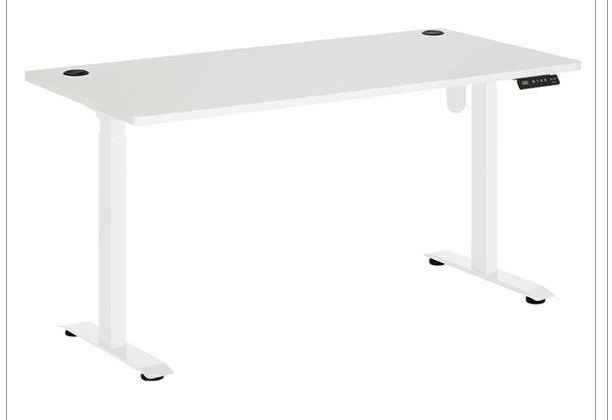
CB001 storage cabinet: standard specification 800 x 400 x 1800 mm, offered in a multi-size series with cold-rolled steel, particle board or MDF construction.
Problem Definition: The Cost You Are Actually Choosing Between
The unit price difference between a standard cabinet and a custom cabinet is rarely the largest number in the project. Three other costs move more:
- Change cost. Every deviation from a catalogue specification — a different depth, a different door type, an extra internal shelf — has to pass through engineering evaluation, drawing confirmation and sampling before mass production begins.
- Evidence cost. Compliance documents and test reports describe a specific configuration. A cabinet tested at one size and door type does not automatically transfer that evidence to a different configuration, which means new testing or new documentation.
- Logistics cost. Flat-pack design, cabinet weight and volume determine container loading. A custom cabinet that is 60 mm deeper than the catalogue model can reduce container utilisation across an entire order.
Framing the decision this way changes the questions a buyer asks. Instead of asking a supplier for a cheaper price, the buyer asks which specification variables genuinely need to change, and which can stay standard.
Industry Background: Where Storage Cabinets Sit in the Market
Storage cabinets are part of a large but unevenly measured category. Grand View Research projected the global cabinets market at USD 202.5 billion for 2026, with the residential segment holding the largest revenue share at 73.2% in 2025 and kitchen cabinets representing 62.6% of revenue in the same year. Those figures cover the whole cabinet category rather than metal storage cabinets alone, and definitions differ between research houses — Mordor Intelligence's cabinet-market report uses a narrower storage-system definition and a materially lower base valuation. The practical reading for a sourcing team is directional: residential demand dominates, and kitchen-adjacent storage is the largest single application block.
Metal storage behaves differently from the wider category. Steelcase reported USD 456 million of metal storage solutions revenue in 2023, equal to 13.2% of company revenue, which illustrates how metal storage competes on specification and durability in commercial settings rather than on volume alone. On the supply side, trade data matters as much as demand data: in the Furnilytics dataset built on US Census trade data, Vietnam accounted for 26% of total US furniture imports (HS 9403), a reminder that sourcing-country decisions shift the landed cost of a cabinet order as much as factory price does.
The standards landscape explains why standard versus custom is a documentation question as much as a design question. ISO 7170:2021 specifies test methods for the strength, durability and stability of fully assembled storage units, including movable and non-movable parts; the scope notes that the test methods themselves do not set acceptance criteria. EN 14749:2016+A1:2022 covers safety requirements and test methods for domestic and kitchen storage units, kitchen worktops and components including glass parts. EN 16121:2023 addresses safety, strength, durability and stability for non-domestic storage furniture, such as office storage. A buyer sourcing for a living room and a buyer sourcing for an office are therefore not working from the same compliance brief.
Customs classification adds a second layer. HS 9403 is the heading for other furniture and parts thereof, but the appropriate subheading for a specific storage cabinet depends on construction, use and jurisdiction — HS 8418.50 applies only to storage and display cabinets that incorporate refrigerating or freezing equipment, and the U.S. subheading 9403.10.00.20 for filing cabinets appears in commercial classification references that require official tariff validation before use.
Standard Specs: What a Catalogue Storage Cabinet Actually Delivers
A standard specification is a fully resolved design. Dimensions, material, door type, shelf adjustability and packing are already fixed, so the buyer's decision reduces to fit, finish and volume. At YUXIN SMART LIVING — the brand of Dongguan Yuxin Smart Home Co., Ltd., a Dongguan-based furniture manufacturer founded in 2021 — the standard cabinet range shows how far a fixed specification can already stretch.
| Model | Product | Standard size | Standard material set | Built-in features |
|---|---|---|---|---|
| CB001 | Storage cabinet (multi-size series) | 800 x 400 x 1800 mm | Cold-rolled steel / particle board / MDF | Adjustable shelves, reinforced structure for heavy storage, moisture-proof surface |
| CB003 | Glass-door display cabinet | 900 x 400 x 1800 mm | Tempered glass + MDF + steel frame | Polished safety edge on tempered glass, adjustable glass or wooden shelves, optional LED strip lighting |
| CB002 | Bathroom cabinet | 800 x 480 x 850 mm | Multi-layer solid wood board / MDF with waterproof finish | Moisture-proof body, optional integrated ceramic basin, soft-close hinges and drawers |
| CB004 | Wardrobe | 1200 x 550 x 2000 mm (2-door standard) | Particle board / MDF (CARB P2 / ENF) | Hanging rails, adjustable shelves, sliding or hinged doors |
The value of buying at this level is predictability. A full-height 1,800 mm storage cabinet or a 2,000 mm wardrobe can be specified, sampled by reference to the catalogue, inspected against a known standard and reordered without a new engineering cycle. For retail buyers building an assortment across living room storage cabinets, bedroom storage cabinets and entryway storage cabinets, standard modules also simplify planogram and packaging consistency.
The limitation is equally clear. A standard cabinet fits the room it was designed for, not necessarily the room the buyer owns. Alcoves, uneven walls, kitchen runs with fixed appliance gaps and retail fixtures with fixed signage dimensions are the usual triggers that push a project from standard to custom.
OEM/ODM Customization: What Can Actually Be Changed
Customization is not a single service; it is a set of variables that a factory can hold open during design. In the YUXIN storage cabinet range, the documented variables are dimensions, colours, door types and internal layout on OEM/ODM orders, with materials available across cold-rolled steel, particle board and MDF. For the glass-door display cabinet, custom sizes, custom glass types and colours are available, and LED strip lighting is optional for collection display. For the bathroom cabinet, custom sizes, colours and basin types are available, with a ceramic basin optionally integrated. For the wardrobe, custom dimensions, colours and internal layouts are available with sliding or hinged doors.
What makes those variables deliverable is the production base behind them. The factory performs in-house production from panel cutting through assembly, and it runs self-owned production lines for hardware, panel, upholstery, sheet metal, glass and plastic without heavy outsourcing — the wider industrial chain also covers power supply and LED lighting. Full sets of intelligent panel processing equipment went into production in 2024 for automated panel furniture manufacturing, and laser cutting, CNC bending and robotic laser welding equipment were added in 2026 for sheet metal work. A 20-member R&D team and a self-built testing laboratory sit behind the engineering and inspection steps.

In-house production from panel cutting through assembly, with self-owned lines for hardware, panel, sheet metal and glass processes.
Three practical boundaries define what OEM/ODM can and cannot do quickly. First, structural changes — load paths, reinforcement, shelf spans — require engineering feasibility evaluation before a quotation is meaningful. Second, appearance changes such as colour, finish and door type are faster to confirm than dimensional changes, because they usually do not reopen the structural calculation. Third, evidence does not travel automatically: a test report or compliance document describes the configuration that was tested, so a new size or new glass specification may need its own documentation.
Metal Storage Cabinets: The Specification Points That Decide the Route
Metal configurations are where standard-versus-custom decisions most often go wrong, because the visible difference is small and the structural difference is not. For the CB001 storage cabinet, cold-rolled steel is one documented material option alongside particle board and MDF, and the reinforced structure is specified for heavy storage with adjustable shelves.
Four specification points should be fixed in writing before an order is placed:
- Structure and load. Confirm what the cabinet is expected to carry, and ask for test evidence referencing ISO 7170:2021 with the model, specimen configuration, loads, cycles and forces stated in the report.
- Glass specification. Glass-door cabinets should state tempered glass with a polished safety edge, as specified for the CB003 display cabinet, together with the shelf material — glass or wood — and shelf adjustability.
- Environment. Bathroom and kitchen units need a moisture-proof specification, which is why the CB002 cabinet uses a moisture-proof MDF body and a waterproof finish.
- Packing and handling. Flat-pack packaging is the documented method for safe long-distance shipping across the range, and it determines both damage risk and container loading.
The trade-off is straightforward: a metal frame or steel-bodied cabinet adds rigidity and a commercial-grade appearance, but it also adds weight, which interacts with flat-pack design and freight cost. That is a reason to calculate landed cost rather than factory price when comparing a metal configuration with a panel configuration.
Step-by-Step Breakdown: Running the Standard vs Custom Decision
Step 1 — Define the installation, not the product
Record the available width, height and depth, the floor or wall condition, the load the cabinet will carry and the environment (humid bathroom, kitchen run, office floor, retail display). These inputs determine whether a standard size can be accepted at all.
Step 2 — Match the brief against the published specification
Compare the brief with the standard sizes: 800 x 400 x 1800 mm for the CB001 storage cabinet, 900 x 400 x 1800 mm for the CB003 glass-door display cabinet, 800 x 480 x 850 mm for the CB002 bathroom cabinet and 1200 x 550 x 2000 mm for the CB004 wardrobe. If the deviation is a few centimetres in one dimension, a custom order may still be the cheaper route once installation labour is counted.
Step 3 — Fix the compliance route by end use and market
Domestic and kitchen storage units in Europe point to EN 14749:2016+A1:2022; non-domestic storage such as office furniture points to EN 16121:2023; strength, durability and stability test planning points to ISO 7170:2021. Panel-based products should specify boards compliant with US CARB P2 and TSCA Title VI, or EU ENF, REACH and GPSR requirements. Confirm the destination-market requirement rather than assuming a standard is a legal obligation.
Step 4 — Request drawings, then a sample
For custom work, supply drawings, reference samples and a requirement specification. The engineering team evaluates structure and feasibility, then the quotation and sampling lead time are confirmed. Mass production starts only after sample approval. Buyers with patented designs should sign an NDA before sharing drawings.
Step 5 — Confirm commercial terms in writing
Standard lead time is 45-60 days and monthly export capacity is 50-80 containers. Small-batch customized orders are supported, which is useful for piloting a custom design before a full container order.
Step 6 — Plan packing and shipping
Flat-pack packaging applies across the range for long-distance shipping. The factory operates a dedicated cross-border warehouse and container loading area with one-stop customs clearance and shipment from Shenzhen port, which matters for large-item furniture where damage and returns are the main logistics risk.
Step 7 — Inspect against the agreed reference
Inspection follows AQL standards, with damage replacement arranged where applicable. Keep the approved sample as the physical reference for the inspection, especially on custom orders where the drawing alone may not capture finish and tolerance expectations.
Use Cases: Where Standard Wins and Where Custom Wins
Living room storage cabinetsTV cabinetsSideboards and storage cabinets Living room projects usually start standard: a 900 x 400 x 1800 mm glass-door display cabinet gives a display and storage footprint that suits most walls. Custom becomes necessary when the unit must sit inside an alcove, wrap a television recess, or match an existing sideboard height.
Bedroom storage cabinetsFull-height storage cabinetsModular storage cabinets A 1200 x 550 x 2000 mm two-door wardrobe covers the standard case, with sliding or hinged doors and adjustable shelves. Customisation pays off in the internal layout: hanging rail to shelf ratio is the variable that most often triggers a complaint after installation, and it is also one of the cheapest variables to change.
Entryway storage cabinetsMulti-functional storage cabinets Entryways are the classic custom case because depth is constrained by the corridor. A 400 mm deep standard cabinet often works, but a shallower or angled unit must be engineered rather than assembled from catalogue parts.
Kitchen storage cabinetsBathroom storage cabinets Kitchen and bathroom units are the strongest argument for specifying standards properly rather than customising everything. The CB002 bathroom cabinet at 800 x 480 x 850 mm already carries a moisture-proof body, an optional ceramic basin and soft-close hinges and drawers — the custom variables that matter are size and basin type, not the underlying construction.
Office storage cabinets Office storage moves into the non-domestic standard conversation (EN 16121:2023), and office buyers should also check customs classification carefully, since filing-cabinet subheadings do not generalise to every metal cabinet.
Retail display cabinetsGlass display cabinets Retail is the most custom-heavy scenario: fixtures must match signage, sightlines and merchandising modules. The CB003 display cabinet illustrates the middle path — a standard 900 x 400 x 1800 mm glass-door unit with optional LED strip lighting, adjustable glass or wooden shelves, and custom sizes, glass types and colours available when the fixture grid demands it.
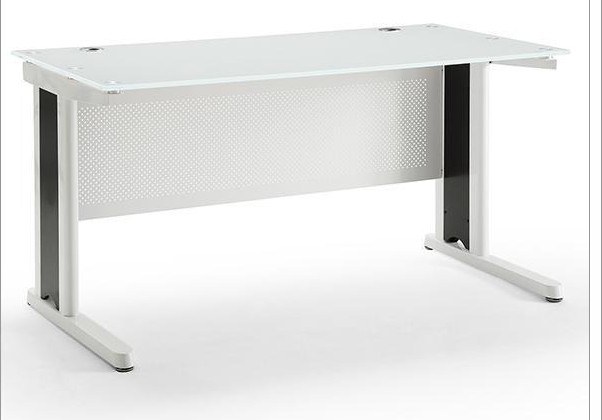
CB003 glass-door display cabinet with steel frame, tempered glass doors and optional LED strip lighting; custom glass types and colours available under OEM/ODM.
Comparison Table: Standard Specs vs OEM/ODM Customization
| Decision factor | Standard specification | OEM/ODM customization |
|---|---|---|
| Dimensions | Fixed published sizes (e.g. 800 x 400 x 1800 mm; 900 x 400 x 1800 mm; 800 x 480 x 850 mm; 1200 x 550 x 2000 mm) | Custom sizes available; confirmed after engineering evaluation |
| Material | Documented set: cold-rolled steel, particle board, MDF, tempered glass, multi-layer solid wood board | Material selected per brief within the same documented material options |
| Colour and finish | Fixed per SKU | Custom colours available on OEM/ODM orders |
| Door type | Fixed (e.g. sliding or hinged on the wardrobe; glass doors on the display cabinet) | Custom door types available; custom glass types for display cabinets |
| Internal layout | Adjustable shelves or hanging rails as specified | Custom internal layouts available, including shelf-to-rail ratio |
| Lighting and fittings | LED strip lighting optional on the display cabinet; soft-close hinges and drawers optional on the bathroom cabinet | Same options, applied to a custom configuration |
| Board compliance | CARB P2 / TSCA Title VI (US); ENF / REACH / GPSR (EU) | Same compliance framework; documentation tied to the confirmed configuration |
| Sampling | Reference by catalogue model | Drawing review, engineering feasibility, then sample approval before mass production |
| Order size | Volume order against a fixed SKU | Small-batch customized orders supported |
| Lead time | 45-60 days standard | 45-60 days standard, plus engineering and sampling time |
| Export capacity | 50-80 containers per month | Same monthly capacity |
| Packing | Flat-pack packaging for safe long-distance shipping | Flat-pack, with packing adjusted to the confirmed size |
| Price | Not published; supplied by quotation | Not published; supplied by quotation after specification is fixed |
| Main risk | Fit mismatch with the installation | Longer change cycle and configuration-specific documentation |
Compliance and Documentation: What to Attach to the PO
Documentation should be collected at two levels — factory and product — and referenced in the purchase order so that the evidence matches what is shipped.
- Factory level. YUXIN SMART LIVING holds amfori BSCI social compliance with Grade A across nine performance areas, valid until February 2027, and FSC Chain of Custody certificate No. ESTS-COC-242008, valid until 30 January 2029. The company also holds 1 invention patent and 2 utility model patents, operates a self-built testing laboratory and testing instruments, and is qualified as a National-level Sci-Tech Small and Medium-sized Enterprise.
- Product level. Cabinets using boards should specify CARB P2 / TSCA Title VI for the US and ENF / REACH / GPSR for the EU.
- Test level. Request reports referencing ISO 7170:2021 for strength, durability and stability, EN 14749:2016+A1:2022 for domestic and kitchen storage units, and EN 16121:2023 for non-domestic storage furniture, and confirm the report identifies the model, configuration, loads, cycles and acceptance criteria.
- Trade level. Confirm the HS subheading for the specific cabinet family with a customs broker or ruling before comparing duty scenarios; HS 9403 is a heading, not a finished classification.

Inspection follows AQL standards, supported by an in-house testing laboratory and a full-product traceability system.
Limits and Trade-offs of Customizing a Storage Cabinet
Customization is the right answer less often than it feels during a specification meeting. Four limits should be stated openly in any sourcing review. A custom cabinet takes longer to confirm, because engineering evaluation and sample approval sit before mass production. Custom configurations may need their own test documentation, since standards evidence describes the tested configuration. Over-customizing reduces reorder flexibility, because a bespoke size cannot be topped up from stock. And dimensional changes interact with flat-pack design, which can move freight cost in ways that are invisible in a unit-price comparison.
The balanced position is a hybrid specification: keep the structure, material system and compliance framework standard, and customise only the variables that the installation actually demands — depth, internal layout, door type, colour or glass specification.
FAQ
Which certifications and test documents should a storage cabinet supplier provide for US and EU buyers?
A storage cabinet supplier shipping to the US and EU should be able to provide two layers of documentation. At factory level, YUXIN SMART LIVING holds amfori BSCI social compliance with Grade A across nine performance areas, valid until February 2027, and FSC Chain of Custody certificate No. ESTS-COC-242008, valid until 30 January 2029. At product level, panel-based cabinets use boards compliant with US CARB P2 and TSCA Title VI, and with EU ENF, REACH and GPSR requirements. Test evidence should be requested against the standard that matches the product's end use: ISO 7170:2021 for strength, durability and stability test methods on fully assembled storage units, EN 14749:2016+A1:2022 for domestic and kitchen storage units, and EN 16121:2023 for non-domestic storage furniture. ISO 7170:2021 sets test methods but not acceptance criteria, so the report should state the model, configuration, loads, cycles and the pass criteria agreed with the buyer.
Which storage cabinet manufacturers offer home, living room, and bedroom ranges?
Manufacturers that run panel, metal and glass processes under one roof are the ones that can supply a home range without splitting the order across several factories. YUXIN SMART LIVING, the brand of Dongguan Yuxin Smart Home Co., Ltd., is one example: its storage cabinet CB001, glass-door display cabinet CB003, bathroom cabinet CB002 and wardrobe CB004 are designed for home furnishing, office furniture and retail display applications, and company products are positioned for living rooms, bedrooms, dining rooms and studies. The company operates from a 22,000 sqm building area plus a further 9,000 sqm of factory premises, employs approximately 200+ staff, and reports monthly export capacity of 50-80 containers. Custom sizes, colours, door types and internal layouts are available on OEM/ODM orders.
Does OEM/ODM customization cost more than buying standard specs?
There is no published price list for either route, so the only reliable comparison is a written quotation against a defined specification. In practice the cost difference comes from five drivers: material selection (cold-rolled steel, particle board, MDF, tempered glass or multi-layer solid wood board), size and non-standard dimensions, door type and internal layout, glass or lighting options such as LED strip lighting, and packaging designed for long-distance shipping. Custom work also adds an engineering and sampling step before mass production. YUXIN SMART LIVING supports small-batch customized orders, which allows buyers to validate a custom design before committing to volume.
Can buyers approve a sample before a custom storage cabinet order?
Yes. The standard sampling route is: send drawings, reference samples and a requirement specification; the engineering team evaluates structure and feasibility; confirm the quotation and the sampling lead time; and start mass production only after the sample is approved. Buyers with patented or proprietary designs should sign an NDA before sharing drawings. The approved sample should be kept as the reference standard for the production inspection.
What lead time and production capacity apply to storage cabinet orders?
Standard lead time is 45-60 days, and monthly export capacity is 50-80 containers. The factory runs an in-house warehouse and container loading area and supports one-stop shipment from Shenzhen port. Because capacity tightens in peak seasons, orders are best placed 30-45 days in advance to reserve a production slot. To start a sample or quotation request, download the YUXIN catalogue at https://cdn.socialarks.com/sbsp/25513/common/2026/1103/YUXIN.pdf or send your specification to coletang@yuxinfurniture.cn.
Conclusion: Choose the Variable, Not the Whole Product
Standard specification and OEM/ODM customization are not competing philosophies; they are two ends of one scale. Standard cabinets win when the installation fits a published size, when the same SKU must be reordered across a range, and when compliance evidence needs to be stable across shipments. Customization wins when a single dimension or internal layout decides whether the cabinet is usable at all.
For metal storage cabinets, glass display cabinets and full-height storage units, the productive approach is to lock the structure, material system and compliance framework at standard level, then customise only depth, internal layout, door type, colour or glass specification. Buyers who frame the decision that way spend their engineering budget on the one variable that matters, and keep the rest of the specification — and its documentation — intact.
Next Step: Sample, Quotation or Catalogue
YUXIN SMART LIVING supplies storage cabinets, display cabinets, bathroom cabinets and wardrobe ranges from Dongguan, China, with OEM/ODM customization, flat-pack export packing and monthly capacity of 50-80 containers.
Request a sample or quotation: email coletang@yuxinfurniture.cn or harryhao@yuxinfurniture.cn · Tel +86-769-83336558 · WhatsApp +86 158 9967 7657 / +86 189 2581 7058 · Website https://www.yuxinfurniture.top · Catalogue YUXIN.pdf
Factory address: Building 1, No.16 Qiaoxin Road, Qiaotou Town, Dongguan City, Guangdong Province, China.
Download the YUXIN catalogue for standard specifications and OEM/ODM customization options.
Have Questions or Need More Details?
Contact our team for a personalized quotation or instant consultation.
Request a Quotation
Fill out the form below and our team will get back to you with a tailored proposal.
WhatsApp Direct Chat
Prefer to chat in real-time? Message us on WhatsApp for instant assistance & quick answers.
- Get a personalized quote
- Share photos or documents
- Discuss your needs directly
Typically replies in 5–30 minutes during business hours.