
Hotel Lobby Lighting Guide: Atriums, Banquet Halls, and Spa Zones
Decorative lighting in a hotel is specified zone by zone, not fixture by fixture. A double-height atrium needs an oversized suspended art light whose weight has been calculated against the ceiling structure and whose light is directed downward instead of into the eyes of guests on the mezzanine. A banquet hall needs a large chandelier that can move from bright setup light to a dimmed dinner scene without flicker. A spa zone needs warm, low-glare light at close range, where guests are reclined and looking upward. The same fixture family can serve all three spaces only if the specification changes with the zone.
Zhongshan YZ ART LIGHT Co., Ltd. (YZ ART LIGHT) is a Chinese manufacturer of custom decorative lighting for hotel and commercial projects, based in Henglan Town, Zhongshan City, with more than 1,000 completed commercial engineering projects and a supplier record that includes Hilton, Pullman and InterContinental hotel work. Its non-standard pendant platform — represented in this guide by the yz10001 non-standard decorative pendant light — shares a set of parameters that make zone matching practical: anti-glare design, an adjustable 15°–120° beam angle, IP40 rating, AC110–240V input and dimming compatibility. This guide maps those parameters, together with aluminum-alloy frames, stainless-steel suspension, imported LED chips and structural load calculation for super-large suspended fixtures, onto the three zones that most often decide whether a lobby reads as five-star or as ordinary.
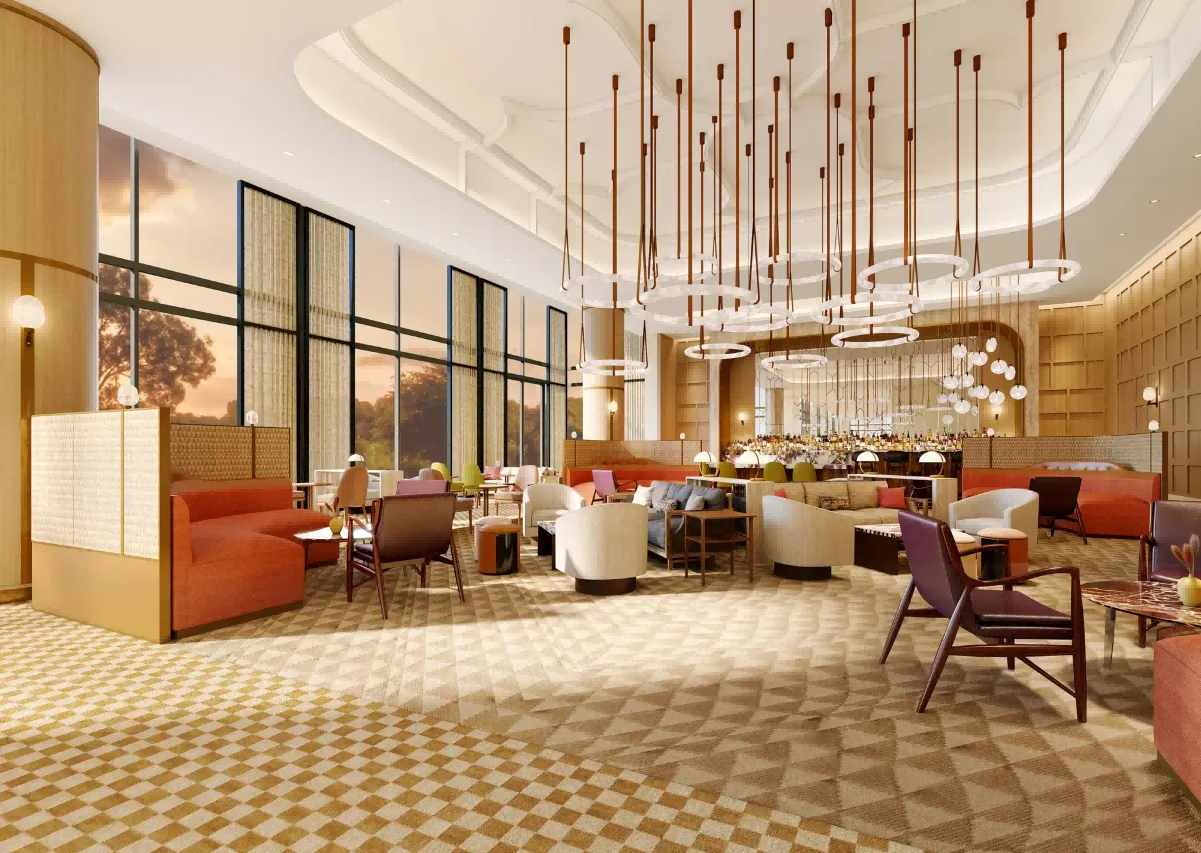
Why one fixture type cannot serve three zones
Most decorative lighting problems in hotels are not aesthetic. They are geometric. The three receiving zones place the guest in three completely different relationships to the light source, and a fixture that works in one will fail in the other two.
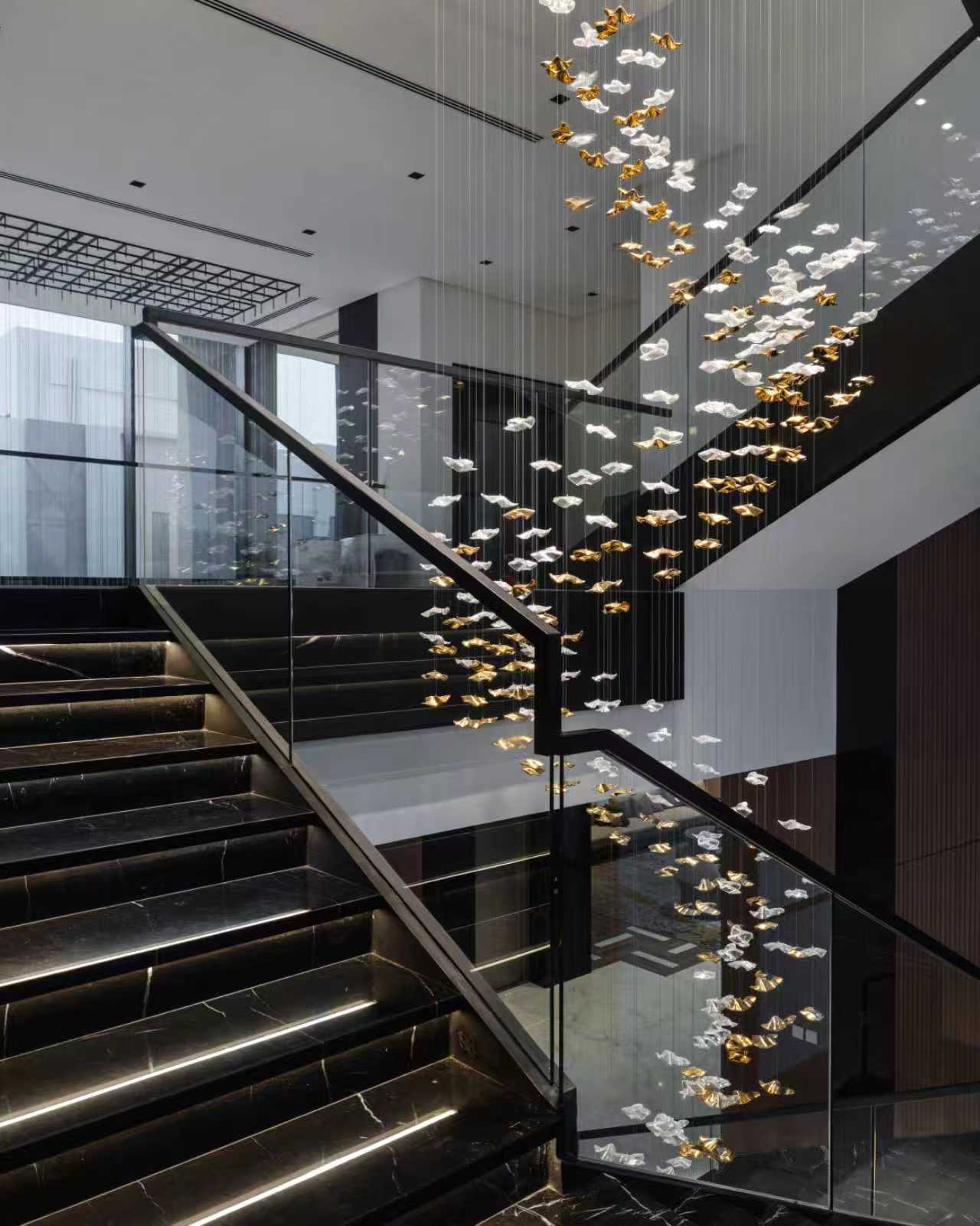
In an atrium, the guest looks at the fixture from far below and from the side. A fixture scaled for a normal ceiling dissolves into the void, and a fixture with an exposed light source puts a bright point in the sightline of every guest standing on an upper landing. The design problem is visual mass plus glare suppression at a steep viewing angle, and the engineering problem is that a super-large suspended light concentrates a great deal of weight at a small number of ceiling points.
In a banquet hall, the guest looks across the room at other people. The chandelier is a backdrop for photographs, a light source for service staff and a scene-setting element that must change between setup, dinner, speeches and dancing. A banquet fixture without usable dimming forces the operator to choose between a room that is too bright for an evening event and a room that cannot be lit brightly enough to set tables.
In a spa or wellness zone, the guest is reclined and close to the fixture. Ceiling height is modest, sightlines are upward, and the tolerated brightness at the eye is far lower than in a lobby. This is where anti-glare design stops being a marketing phrase and becomes the difference between a treatment room that feels calm and one that feels clinical.
Add a fourth variable that cuts across all three: interior classification. IP40 is a protection rating suited to dry interior conditions. It is the normal basis for lobby, banquet and dry treatment-room fixtures, but it is not a water-jet or immersion rating, so any spa area with splash, steam or washdown exposure needs its own review against the project's electrical specification rather than an assumption that a decorative pendant is suitable.
What hotel projects expect from decorative lighting now
The commercial context explains why so much specification effort now goes into custom rather than catalogue fixtures. Grand View Research valued the global high-end lighting market at USD 19.6 billion in 2024, while Mordor Intelligence put the broader decorative lighting market at USD 75.88 billion in 2025 and projected USD 78.98 billion for 2026. The two figures are not comparable — one measures premium specification-grade product, the other a much wider decorative category — but both point the same direction: decorative lighting is bought as a designed element of a property, not as a commodity fitting.
That shift shows up in the specification briefs themselves. Hotel groups, hotel engineering projects, villa owners and commercial real estate developers are the client types behind YZ ART LIGHT's completed project base, and the recurring complaint from those buyers is not price but shape: mass-produced lamps with fixed proportions fail to match light-luxury, neo-Chinese and minimalist hotel interiors, and fixed-size fixtures fail to fit special-shaped ceilings or the reserved installation dimensions of a specific floor height. Custom soft anti-glare light sources are adopted precisely to remove harsh glare and uneven light distribution in guest rooms and public areas, and the durability requirement is commercial rather than domestic — LED light sources rated for up to 50,000 hours and metal and glass lamp bodies described as durable for over 15 years under normal use.
Zone 1: double-height atrium and high-ceiling lobby
In a double-height atrium, the decorative fixture is the room's principal landmark and its principal risk. Three decisions determine the outcome: how the fixture is suspended, how its light is directed, and how it is controlled across the day.
Scale, suspension and structural load
An atrium fixture is not a scaled-up pendant. The frame carries the visual mass and must stay rigid across a long span, which is why aluminum-alloy frames are used for weight control and dimensional stability, while stainless-steel suspension carries the tensile load from the ceiling interface down to the body. Every super-large suspended fixture should be accompanied by a structural load calculation that the project's structural engineer can check against the actual ceiling construction, with suspension points marked on site before any lifting begins.
Beam angle and glare at mezzanine level
The 15°–120° adjustable beam angle on the yz10001 platform is the parameter that lets one fixture type behave differently in different voids. A tighter setting concentrates light into a defined vertical element and keeps it away from upper-floor circulation; a wider setting washes the surrounding ceiling plane and lifts the perceived height of the space. The anti-glare design handles the other half of the problem by shielding the source so that a guest leaning over a fourth-floor balustrade sees the fixture's body rather than the LED array. Imported LED chips matter here for a practical reason: consistent chip quality supports stable colour and light output across a large fixture run, which is visible when a 20-metre suspension hangs in one continuous line.
Electrical basis and dimming
Atrium lighting runs for long hours and competes with daylight. AC110–240V input allows the same fixture design to be specified for 110V and 240V markets without re-engineering the body, and dimming compatibility allows the scene to be pulled back during daylight and raised after dark — the difference between a lobby that looks alive at 20:00 and one that looks over-lit at noon.
Zone 2: banquet hall
Banquet lighting is a scheduling problem as much as a design problem. The same room hosts a bright setup window, a low-lit dinner, a brightly lit speech and a dimmed dance floor, and the decorative chandelier is expected to support all four without being switched off and on.
Scene control from one large fixture
Large banquet chandeliers work as the room's ambient layer when they are dimmable and as the room's photographic backdrop when their crystal or glass elements are lit from within. Dimming compatibility is therefore not an accessory: it is what converts a decorative object into a usable lighting layer. Where the project requires it, intelligent dimming systems are part of the customization scope, along with light-source colour temperature, so the chandelier can be matched to the rest of the room's warm or neutral palette rather than fighting it.
Glare at the head table
The failure mode in a banquet hall is glare into faces. Guests and speakers look horizontally across the room, and a fixture with visible high-intensity points at the wrong height puts flare into every photograph and every speech. Anti-glare shielding at the source, plus a beam setting that pushes light onto the ceiling plane and the table surface rather than into the middle of the room, is the practical fix. Where the hall requires both ambience and table definition, the adjustable 15°–120° range allows the same fixture family to be specified with a narrow component for accent and a wide component for ambience.
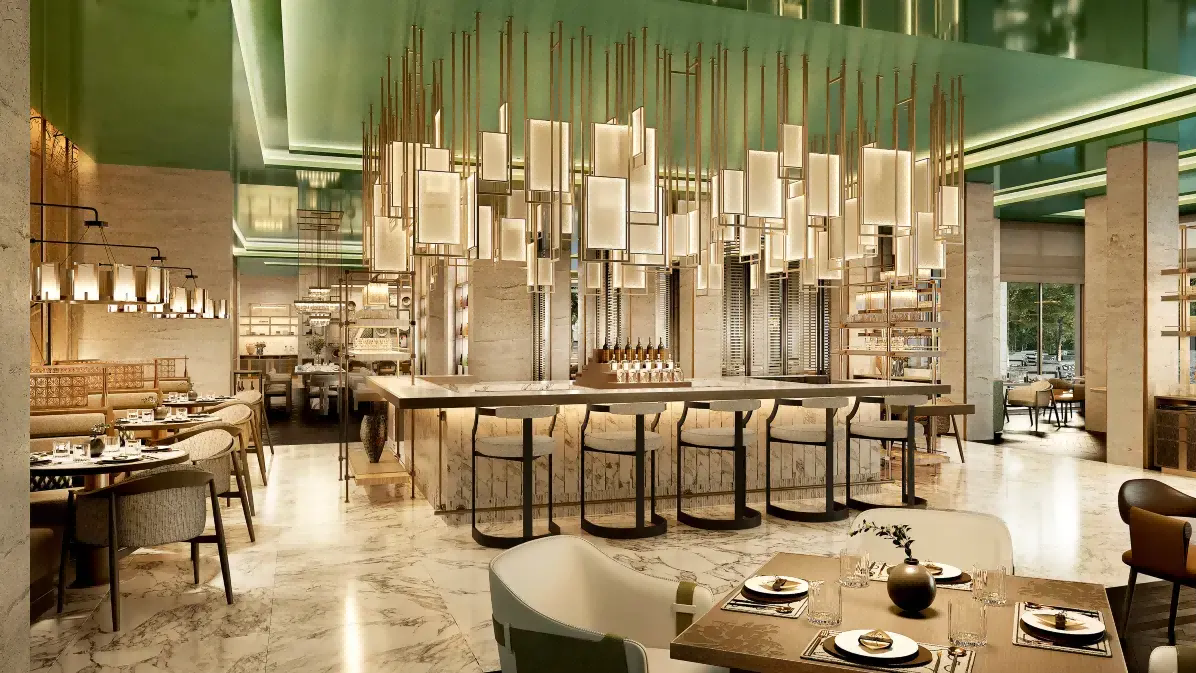
Zone 3: spa and wellness areas
Spa lighting is judged at close range. Guests lie down, look up, and stay in the room for an hour or more, so the tolerances that are acceptable in a lobby are not acceptable here.
Glare first. A recessed or shallow decorative fixture with an exposed source produces a bright point directly in a reclined guest's field of view. Anti-glare design and diffused output matter more than output level. Warmth and control second. Dimming compatibility should extend to the low end of the range, because a spa scene spends most of its life at low output rather than at full brightness. Materials third. Metal and glass bodies, aluminum frames and stainless-steel components are chosen for finish stability over a long service life, and the customization scope covers painted finish colours and surface-finishing techniques so that spa fixtures can match the joinery and stone palette of the room.
Where IP40 ends
IP40 is the rating carried by the yz10001 platform and is appropriate for dry interior zones: lobby, banquet hall, corridor, dry treatment room and lounge. It should not be read as a wet-area rating. Spa buildings typically mix dry rooms with shower, steam, plunge-pool and washdown areas, and any fixture in those spaces should be reviewed against the project's own electrical and waterproofing specification rather than inheriting the rating of the dry-zone family. Stating this boundary at specification stage is cheaper than discovering it at commissioning.
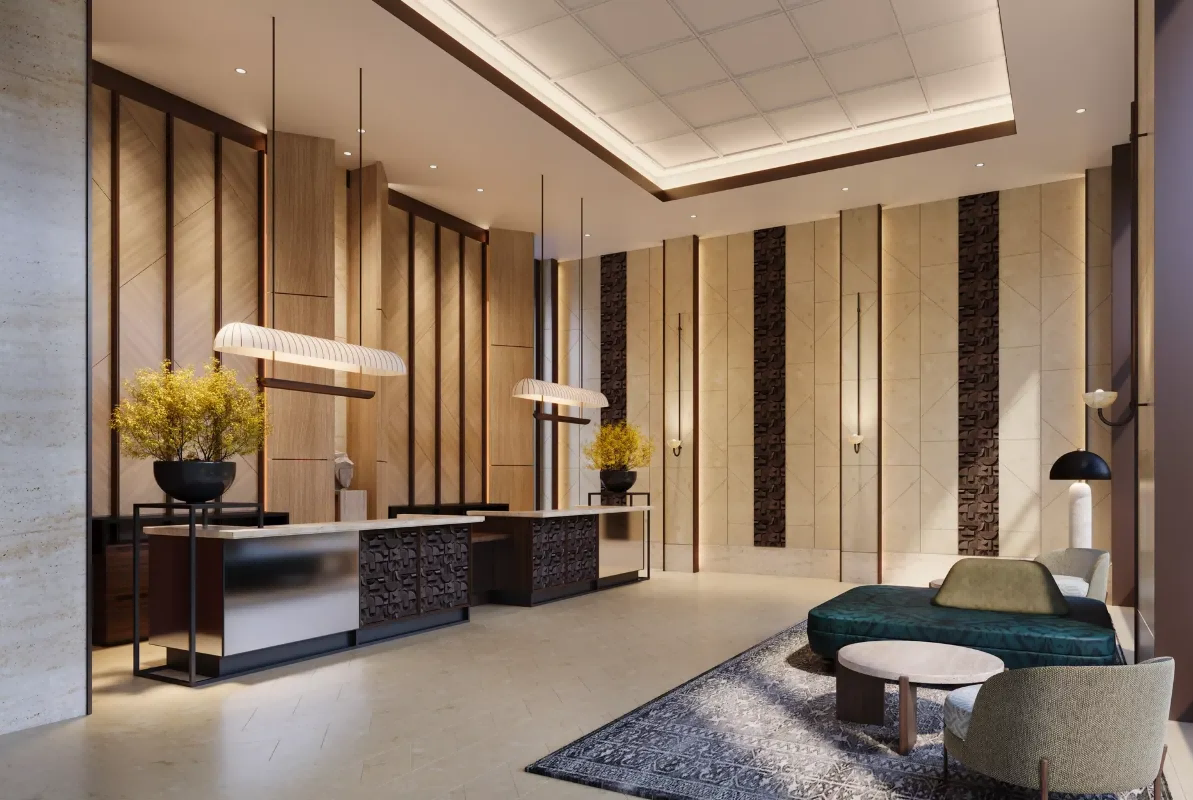
Supporting fixtures that hold the three zones together
The atrium, the banquet hall and the spa are the headline spaces, but they are read alongside the fixtures that connect them. Hotel wall lamps in corridors and bathrooms, hotel table lamps and hotel floor lamps in lounges and guest rooms, and pendant fixtures in reception all inherit the same visual language. Because the customization scope covers dimensions, materials, colour temperature, painted finish colours, engraved logos, light-source configurations, mounting structures, lampshade materials, hardware craftsmanship, surface finishing and exclusive packaging, a project can hold one finish and one colour-temperature discipline across every zone instead of assembling unrelated catalogue pieces.
Step-by-step: specifying zone-matched fixtures for a hotel project
- Build a zone schedule before choosing fixtures. For each space, record ceiling type, reserved installation dimensions, structural interface, principal sightlines and the scenes the operator needs. This is the document that separates an atrium brief from a banquet brief.
- Set light behaviour per zone. Define the glare requirement and the beam setting for each space: a tighter angle for tall voids and accent elements, a wider angle for ambient wash in halls. Because the yz10001 platform adjusts across 15°–120°, the same fixture family can be scheduled with different settings rather than different products.
- Confirm the electrical basis. Record supply voltage (AC110–240V input covers both common market bases), dimming requirement and control intent, and confirm the dimming system and light-source colour temperature within the customization scope.
- Resolve structure and suspension. For super-large suspended fixtures, obtain the structural load calculation, confirm stainless-steel suspension specification and agree suspension points with the site team before fabrication is released.
- Approve a physical sample. A 1:1 restoration of the design proposal is available, and the minimum order is one piece, so a single mock-up can be produced, reviewed on site and adjusted before the batch order.
- Inspect, pack and deliver. Every lamp undergoes 100% full inspection before shipment, covering power-on testing, appearance workmanship, dimension and structure inspection and accessory completeness, with a quality-approval checklist attached to each shipment. Standard lead time is 30–40 working days, with shortened lead times available for urgent hotel projects, and all engineering lighting products carry a three-year warranty with global remote technical guidance for overseas clients.
Zone matching matrix
| Zone | Fixture family | Beam setting | Glare and control | Structure and rating |
|---|---|---|---|---|
| Double-height atrium | Oversized suspended art light, high-ceiling chandelier | 15°–36° for a defined vertical element; wider for ceiling wash | Anti-glare shielding so the source is hidden from upper landings; dimming to balance daylight | Aluminum-alloy frame, stainless-steel suspension, structural load calculation, AC110–240V, IP40 dry interior |
| High-ceiling lobby and reception | Lobby chandelier, sculptural feature pendant | Mixed narrow and wide components | Even distribution across the seating and reception zones; scene dimming for day and evening | Engineered suspension points, hidden wiring, IP40 dry interior |
| Banquet hall | Large banquet chandelier, multi-ring and crystal fixtures | Wide ambient plus narrow accent where tables need definition | Anti-glare to protect faces and photography; dimming across setup, dining and speech scenes | Reinforced frame for long spans, accessible cleaning and maintenance, IP40 dry interior |
| Spa and wellness | Small pendants, hotel wall lamps, hotel floor lamps | Wide, diffused output at low level | Low-brightness anti-glare design; stable dimming at the low end of the range | Finish-stable metal and glass bodies; dry rooms on IP40, wet zones reviewed separately |
| Guest rooms and corridors | Hotel table lamps, hotel wall lamps, guest room pendants | Wide and soft | Soft anti-glare sources to avoid harsh glare and uneven distribution | Consistent finish and colour temperature with public areas |
Project evidence: what the references demonstrate
The most useful way to read a project list is to ask which zone each reference exercises. YZ ART LIGHT's completed references include Four Seasons Resort Sharm El Sheikh, InterContinental Jerusalem by IHG, JW Marriott Costa Elena Resort & Spa and Waldorf Astoria Kuala Lumpur. Across the wider portfolio, hotel work has covered InterContinental in Israel and Taiwan, Four Seasons in the UAE, Marriott in Costa Rica and Waldorf Astoria in Malaysia, alongside Hilton, Pullman and InterContinental supplier relationships.
Those references support a bounded claim, not a universal one. They show that oversized lobby and atrium fixtures, banquet and buffet chandeliers, and guest-room and bathroom fittings have been delivered into operating five-star hospitality environments, and that the customization workflow — design consultation, scheme development, structural optimization, sampling, production and inspection — has been run for that client type repeatedly. They do not by themselves prove that any specific fixture suits a specific atrium or that a given project's ceiling can carry a given load. Those questions are answered by the zone schedule, the load calculation and the site mock-up.
Questions buyers ask at evaluation stage
Which certifications should decorative hotel lighting carry for European and export projects?
For European market access, the relevant documents are an LVD-CE verification of conformity and a CE-RoHS verification of conformity covering fixed luminaires (hanging lamps), supported by management-system certificates. YZ ART LIGHT holds LVD-CE certificate QTS800119288 (test report 61.11.19.0573.01) and CE-RoHS certificate QTS800519289 (test report 61.15.19.0574.01), both issued by Guangzhou Quality Technology Service Co., Ltd., with validity to 2028. The management system is covered by ISO 9001:2015 (ZTZL28025Q1464R0S), ISO 14001:2015 (ZTZL28025E0851R0S) and ISO 45001:2018 (ZTZL28025S0801R0S), all issued by Zhongtai Zhilian Certification and valid from September 2025 to September 2028, with scope covering the production of fixed and portable luminaires within the stated CCC scope.
How is structural load handled for a super-large suspended fixture in a double-height atrium?
Super-large suspended fixtures are supplied with a structural load calculation rather than a simple hanging weight, because the load has to be resolved at the ceiling interface, not just at the fixture. In practice the calculation is checked against the building's ceiling construction by the project's structural engineer, the suspension points are marked and confirmed on site, and stainless-steel suspension is used to carry the tensile load from the frame. Aluminum-alloy framing keeps the body's own weight controlled while maintaining rigidity across a long span. Installation should follow the agreed sequence: isolate the supply, assemble on site, complete insulated concealed wiring, fix embedded fasteners, hoist and level, then power on and adjust angles.
What drives cost and lead-time differences between atrium, banquet and spa fixtures?
Three variables dominate. Size and structure come first: a super-large suspended fixture needs more frame material, more suspension hardware and a load calculation, while a spa wall or floor lamp does not. Material and craft come second: the customization scope covers brass, stainless steel, aluminum, iron, glass, crystal, marble, acrylic and ceramic, plus hardware craftsmanship and surface finishing, and the chosen combination drives both cost and production time. Quantity and inspection come third: every lamp is 100% inspected before shipment, which is a fixed labour step per unit. Standard lead time is 30–40 working days, with shortened lead times available for urgent hotel projects, and the minimum order is one piece, so a single mock-up and a full-floor package are quoted on the same basis.
Can a hotel approve a sample before committing to the full order?
Yes. A design proposal can be restored on a 1:1 basis, and with a one-piece minimum order a single fixture can be produced for site review before the batch order is released. The sample stage is also where the load calculation, suspension detail, beam setting, colour temperature and finish colour are confirmed together, because changing any of them after fabrication is far more expensive than changing them at mock-up. Professional optimization suggestions on the original design are part of the same workflow.
What warranty and after-sales support come with engineering lighting products?
All engineering lighting products carry a three-year warranty, and overseas clients receive global remote technical guidance, which matters most during installation and first commissioning of a large suspended fixture. LED light sources are rated for up to 50,000 hours and metal and glass lamp bodies are described as durable for over 15 years under normal use. Each shipment includes a quality-approval checklist, and every lamp is fully inspected — power-on testing, appearance workmanship, dimension and structure, and accessory completeness — before it leaves the factory.
Next step for an evaluation-stage project: share the zone schedule — space types, reserved installation dimensions, ceiling structure and required scenes — and request a sample or quotation built around it. The full company and product capability document can be downloaded here: YZ ART LIGHT company brochure (PDF).
Conclusion
Zone matching is the discipline that separates a designed hotel interior from a lit one. A double-height atrium is decided by suspension engineering and glare control at upper-floor sightlines; a banquet hall is decided by dimming range and the way a large chandelier behaves in photographs; a spa is decided by low-glare, low-level light at close range and by an honest boundary around where an IP40 decorative fixture should and should not be used. The shared platform behind the yz10001 non-standard decorative pendant light — anti-glare design, 15°–120° adjustable beam angle, IP40 rating, AC110–240V input and dimming compatibility, built on aluminum-alloy frames, stainless-steel suspension and imported LED chips — makes those three answers available from one fixture family. What changes between zones is not the brand or the finish. It is the beam setting, the structure, the control scene and the installation sequence, and those are decided in the schedule long before the fixture is hoisted. For projects that need the underlying capability and certification detail, YZ ART LIGHT publishes its company and product documentation alongside its project references.
Have Questions or Need More Details?
Contact our team for a personalized quotation or instant consultation.
Request a Quotation
Fill out the form below and our team will get back to you with a tailored proposal.
WhatsApp Direct Chat
Prefer to chat in real-time? Message us on WhatsApp for instant assistance & quick answers.
- Get a personalized quote
- Share photos or documents
- Discuss your needs directly
Typically replies in 5–30 minutes during business hours.