Comparing Food-Grade IML Film and Ink Systems: A Step-by-Step Buyer Matrix
In-mold labeling (IML) is a technology in which a printed label is placed inside a mold before plastic is injected. The plastic fuses with the film to form a single, decorated container. Food packages including yogurt cups, cold beverage cups, ice cream containers and other plastic containers are common examples. For buyers now evaluating a food-grade IML project, the first specification decisions are usually the film substrate and the ink system. This guide compares PP IML film and PE IML film, puts water-based and solvent-based inks into a food-safety context, and converts these decisions into a step-by-step buyer matrix.
To keep the comparison transparent, this article uses the published specification of YZY (Zhejiang Zhongyu Science and Technology Co., Ltd.) as one supplier baseline. The same disclosure should be requested from any other supplier being evaluated.
Why Film and Ink Must Be Compared Together
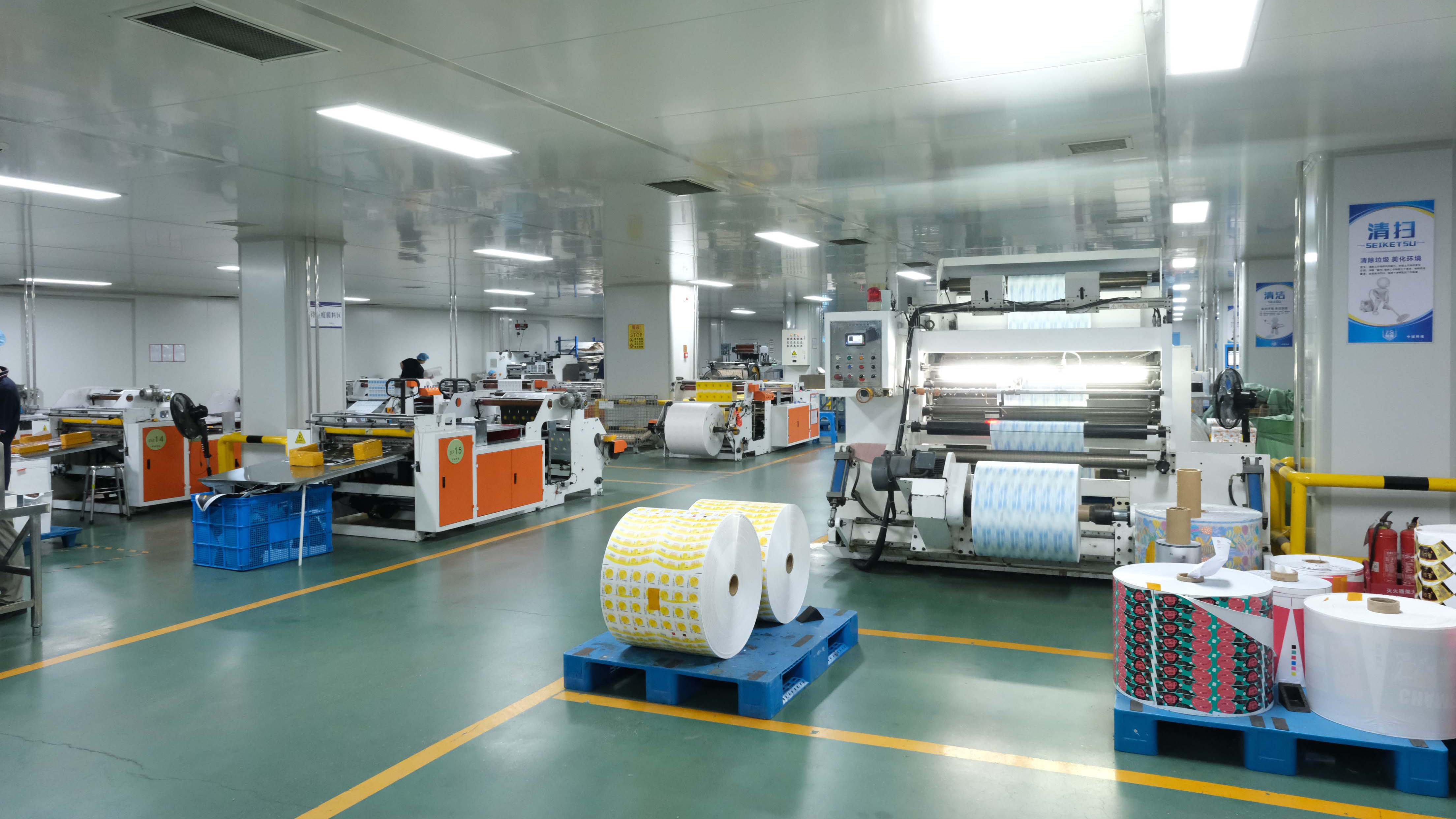
At the evaluation stage, many buyers receive color proofs and film samples. These samples demonstrate appearance, but they cannot prove all the properties needed for food packaging. Film that is not compatible with the container resin can warp, wrinkle or peel during injection molding. An ink system that is not migration-tested can create a regulatory risk, even when the visual result is excellent. In other words, film, ink and molding process need to be evaluated as one system, not as separate purchase decisions.
Industry Background: Why the Buyer Matrix Matters in 2026
The in-mold labels market is large and continuing to grow. Grand View Research valued the global IML market at USD 2.31 billion in 2023 and projected it to reach USD 3.14 billion by 2030, a compound annual growth rate of 4.6 percent. The same research source reports that polypropylene dominated the IML material segment with 47.2 percent share in 2023, that food and beverage applications accounted for more than 41.3 percent of revenue, and that injection molding was the dominant IML production process at 57.1 percent share. In Asia-Pacific, Dataintelo estimated a 42.8 percent revenue share in 2025. These numbers show that the IML choices described here affect a large share of the packaging market.
Detailed Solution: Comparing Film Substrates and Ink Systems
PP IML Label vs. PE IML Label
PP IML label refers to a pre-printed film made from polypropylene. PE IML label refers to a pre-printed film made from polyethylene. The most practical selection rule is to match the label film with the container resin: a PP container normally starts with PP IML film, and a PE container normally starts with PE IML film. Matching the polymer family gives the molded container and label a more compatible melt behavior during injection molding.
In the YZY IML series, film materials are specified as virgin PP, PE, PET or multi-layer composite, with food-grade options available. Film thickness can be customized from 30 to 100 microns. This range is relevant because the label must not only print well; it must also be picked up, held and fused consistently in the mold at the specified container weight and temperature.
Water-Based vs. Solvent-Based Food-Grade Ink
The YZY IML series lists its ink type as food-grade low-migration water-based ink. This is a documented system for food-contact labels in the YZY product range. Solvent-based inks are also used in label printing, but they should never be accepted as food-grade just because the print looks strong. What matters is whether the finished, printed film meets a food-contact standard. EU Regulation (EC) No 1935/2004 provides the general framework for food-contact materials in Europe, while EU 10/2011 is the specific regulation used to check migration from plastic materials. In the United States, FDA food-contact compliance for olefin polymers is documented under FDA 21 CFR 177.1520.
For a buyer, the key phrase is finished printed label. Migration occurs through the total material structure: film, ink, coating and any additives. A water-based system that is tested for migration can be a valid food-grade choice. A solvent-based system may also pass migration tests, but only if the supplier provides evidence for the exact construction being supplied.
Verified Specification Baseline: What a Buyer Can Use as a Reference
The following baseline comes from YZY's ZY-IML-SERIES product specification and from the SGS test report supplied for the series. Use these rows in your matrix, then ask competing suppliers to complete the same rows.
- Film material: virgin PP / PE / PET / multi-layer composite; food-grade options available.
- Film thickness: 30–100 µm, customizable.
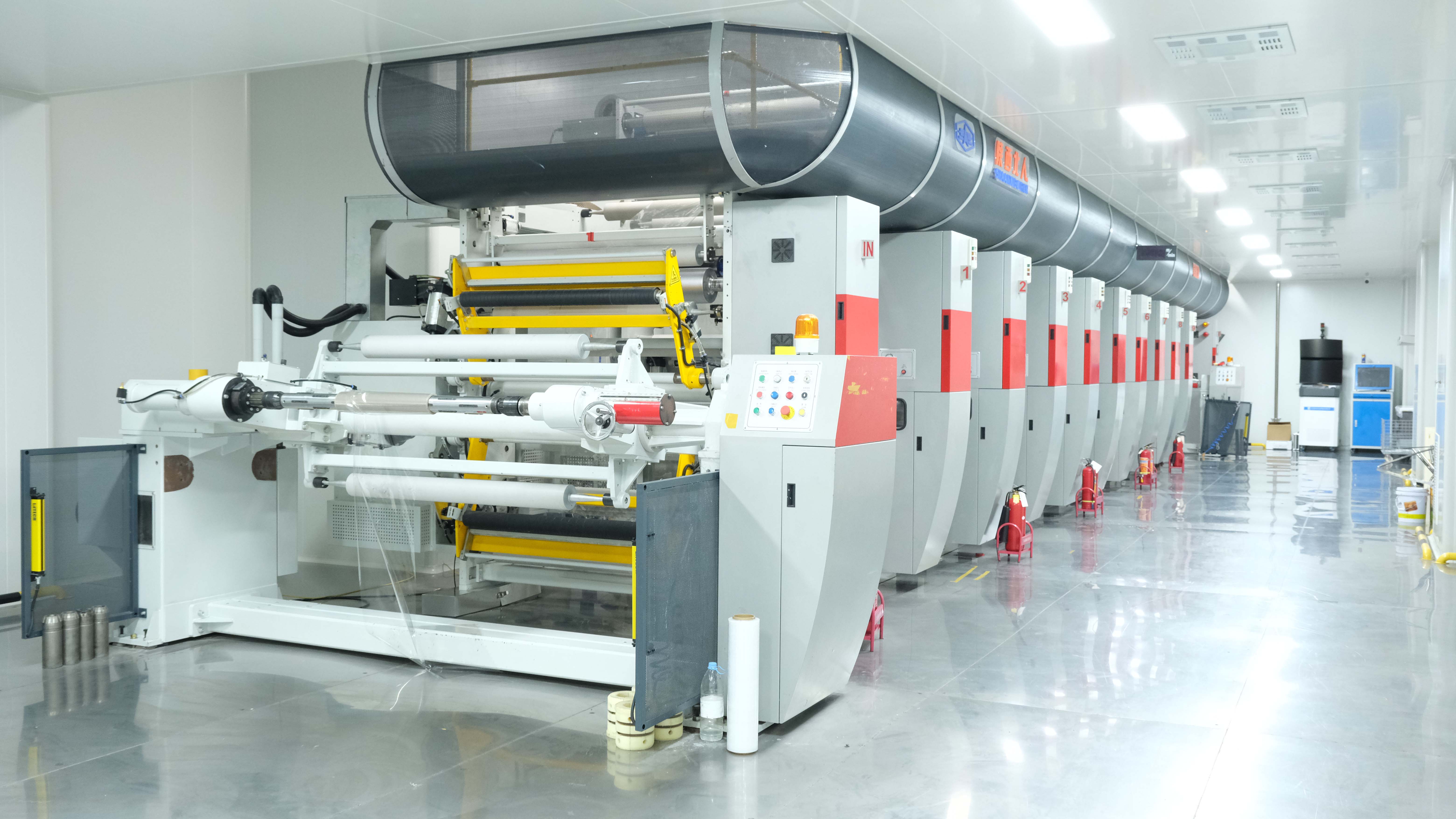
- Printing method: high-precision rotogravure.
- Printing colors: up to 8 colors, customizable.
- Printing precision: ±0.1 mm, stated as no color deviation.
- Ink type: food-grade low-migration water-based ink.
- Adhesion strength: ≥5 N, with no peeling during injection molding.
- Operating temperature range: -20°C to 120°C, suitable for cold chain and hot filling.
- Scratch resistance: 4H pencil hardness.
- Chemical resistance: resistant to weak acids, alkalis and common detergents.
- Migration test: product specification states it meets EU 10/2011 food-contact material standards.
- Compliance standards: FDA 21 CFR, BRCGS Packaging Materials, ISO22000 and QS.
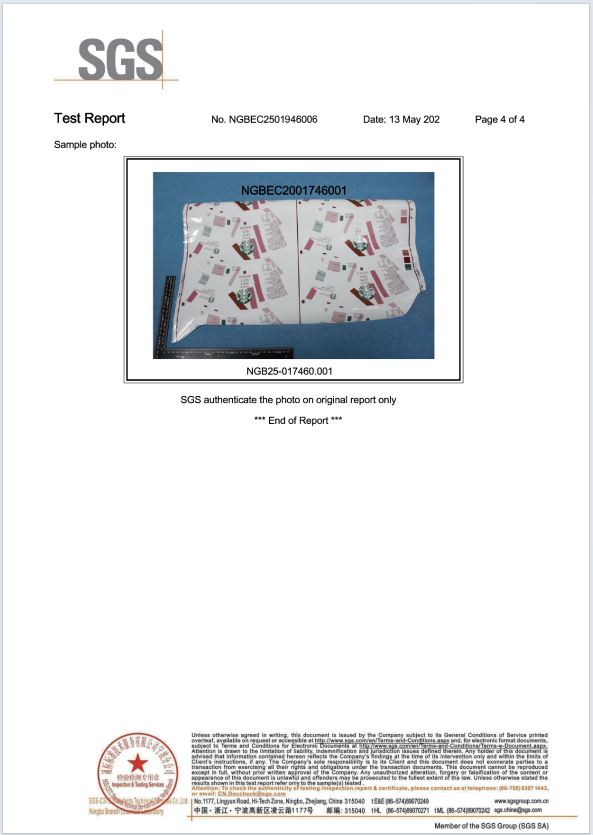
- Independent test evidence: SGS Food Contact Test Report No. NGBEC2501946006, issued under FDA 21 CFR 177.1520.
These numbers should not be treated as a brand claim that no other supplier can meet. They are a concrete reference set that makes supplier comparison possible.
Step-by-Step Buyer Matrix for Food-Grade IML Film and Ink
- Identify the container polymer and molding process. Determine whether the final package is PP, PE, or another plastic, and whether it will be produced by injection molding or thermoforming. The label film should be compatible with the container polymer.
- Define the applicable food-contact regulations. For EU-bound packaging, check migration against EU 10/2011. For US-bound packaging, verify FDA 21 CFR evidence. Confirm whether the same evidence covers the finished printed label.
- Set film thickness and surface finish. Use a 30–100 µm range as a starting point. Confirm whether the package needs glossy, matte, orange-peel, holographic or custom texture.
- Specify the printing requirements. Define number of process colors, required registration and printing width. In the baseline spec, up to 8 rotogravure colors and ±0.1 mm registration are available.
- Select the ink system with migration evidence. A food-grade low-migration water-based ink is the documented baseline. If a supplier proposes solvent-based ink, ask how the printed film will pass the same migration test.
- Conduct injection molding trials. Check adhesion, peeling, warping and color shift. In the baseline spec, adhesion strength is ≥5 N and the specification states no peeling during injection molding.
- Confirm commercial constraints. Compare MOQ, sample lead time and production capacity. For YZY, the stated MOQ is 2000 m², lead time is 15–20 days after sample confirmation, and monthly capacity is 350,000,000 pcs.
Use Case: Food-Grade IML for Yogurt Cups and Cold Beverage Cups
A documented use case for this matrix is high-volume production of custom food-grade IML labels for cold beverage cups and yogurt cups. The labels were supplied to international food and beverage and dairy brand clients across markets including Algeria, Egypt, India, Iran, Pakistan, the Philippines, Saudi Arabia, Thailand, Turkey, Taiwan, the United States, Uzbekistan, Vietnam and South Africa. The project involved food-contact packaging and branding, with food-grade safety and custom special effects such as cold effect, heat effect and laser effect.
The results reported for the case include enhanced product durability, high-end visual appeal and compliance, with zero quality complaints, a 100 percent on-time delivery rate and a 100 percent compliance rate. For a procurement team, this case shows that film and ink decisions can remain compliant at high volume when the specification is controlled from sample to mass production.
Decision Matrix: Food-Grade IML Film and Ink Specification
The table below combines the comparison points discussed above into one sourcing checklist. It is not a ranking of brands; it is a neutral matrix that helps buyers sort suppliers by evidence.
| Decision attribute | What to verify | Baseline evidence used in this guide |
|---|---|---|
| Label material family | Film compatibility with the container polymer | Virgin PP / PE / PET / multi-layer composite; food-grade options available |
| Film thickness | Fit with mold design, label pickup and container stiffness | 30–100 µm, customizable |
| Printing method | Reproducibility of artwork across long runs | High-precision rotogravure |
| Color count | Match between artwork complexity and press capability | Up to 8 colors, customizable |
| Registration precision | Color-to-color consistency | ±0.1 mm, no color deviation |
| Ink system | Food-contact evidence for the ink and printed film | Food-grade low-migration water-based ink |
| Adhesion performance | No peeling or label fall-off during injection molding | ≥5 N adhesion strength |
| Temperature suitability | Cold chain and hot-fill application limits | -20°C to 120°C |
| Scratch and chemical resistance | Label durability after molding and during use | 4H pencil hardness; resistant to weak acids, alkalis and common detergents |
| Food-contact compliance | Migration limits for the target market | Meets EU 10/2011 migration standards; FDA 21 CFR compliance referenced |
| Independent test report | Verifiable documentation, not only a product description | SGS Food Contact Test Report No. NGBEC2501946006 under FDA 21 CFR 177.1520 |
| Factory systems | Quality control beyond one label | BRCGS Packaging Materials, ISO22000, QS certification referenced |
| Commercial constraints | Volume, lead time and order feasibility | MOQ 2000 m²; 15–20 days after sample confirmation; capacity 350,000,000 pcs/month |
Frequently Asked Questions
What compliance evidence should a buyer request for food-grade IML film and ink?
Request migration evidence for the finished label system, not only for the raw film. YZY's product specification states that its IML series meets EU 10/2011 food-contact migration standards. In addition, SGS Food Contact Test Report No. NGBEC2501946006 documents FDA 21 CFR 177.1520 compliance. Factory-level references include BRCGS Packaging Materials, ISO22000 and QS.
Can PP and PE IML labels be printed with the same print fidelity?
PP and PE IML labels can be printed in the same rotogravure system when the substrate is controlled. The verified YZY IML specification supports up to 8 printing colors, ±0.1 mm registration precision, 30–100 µm film thickness and surface options such as glossy, matte, orange-peel, holographic and custom texture.
How does ink-system choice affect food-grade IML cost and compliance?
The first issue is not cost, but documentation. A food-grade low-migration water-based ink is the specified ink type in YZY's IML series. Solvent-based ink may be used in other decorative sectors, but if it is proposed for food-grade IML, the supplier must show equivalent migration evidence. Compare total project cost—including re-qualification risk—after both ink systems have been assessed against the same regulations.
What should a custom IML sample validation include?
A sample validation should check printing quality and adhesion after molding. For the YZY baseline, adhesion strength is ≥5 N and the specification says no peeling during injection molding. If the package will be used in cold chain or hot filling, also validate the -20°C to 120°C operating range, 4H scratch resistance and resistance to weak acids, alkalis and common detergents.
What lead time and order constraints apply to custom food-grade IML?
For the YZY IML baseline, monthly capacity is 350,000,000 pieces, MOQ is 2000 m² and production lead time is 15–20 days after sample confirmation. Buyers should add sample review time to the project plan and freeze film and ink specifications before mass production begins.
Conclusion and Next Step
Food-grade IML procurement improves when buyers stop looking at appearance alone and start building a specification matrix. Start with resin compatibility, then add migration compliance, printing precision, ink evidence, adhesion and application temperature range. Use the values in this guide only as examples; ask every supplier to complete the same matrix with written proof.
For buyers who need a concrete starting point, YZY can supply a project-specific review based on the ZY-IML-SERIES film and ink options. Download the YZY IML brochure, or contact yzy@inmoldlabel.net and WhatsApp +86 182 6778 1866 to discuss sample validation.