Custom IML for Plastic Containers: OEM Printing & Film Capabilities
Custom IML for Plastic Containers: OEM Printing & Film Capabilities
Custom in-mold labeling (IML) is a decoration and identification method in which a pre-printed film is placed inside an injection mold and fused with the plastic container during molding. For buyers evaluating IML suppliers, the key question is not only whether a supplier can print a label, but whether they can consistently engineer film selection, printing precision, food-contact compliance, and production capacity around the specific container. This guide explains the custom IML capabilities that matter for plastic containers used in food, dairy, beverage, and industrial packaging, and provides a decision framework for buyers.
What Does Custom IML Mean in Practice?
Custom IML means the label is produced according to the buyer’s container geometry, material, brand design, performance requirement, and compliance target. In practice, a custom IML order involves decisions on film type, film thickness, printing method, ink system, surface finish, adhesion strength, operating temperature range, and mold compatibility.
A supplier that provides OEM/ODM services can manage these decisions as part of a single production workflow. For a plastic container manufacturer or brand owner, this removes the need to coordinate separately between film suppliers, printers, and compliance testers. The supplier becomes the accountable party from artwork to delivery.
Why Plastic Containers Need Custom IML Rather Than a Standard Label
Plastic containers are produced by injection molding or thermoforming, and each process places specific demands on the label. A standard pressure-sensitive label sits on the surface; a custom IML film becomes part of the container wall. This change improves durability, scratch resistance, chemical resistance, and visual quality, but it also means the film must match the container’s resin and molding cycle.
For application areas such as yogurt cups, bubble tea cups, ice cream containers, paint buckets, and plastic bottles, the label must withstand different mechanical and thermal conditions. A custom IML solution offers control over these variables, which is why it is preferred for high-volume products that need long-lasting branding.
Industry Background: IML in Food & Industrial Packaging
In-mold labeling is the dominant process in the label market, with injection molding accounting for over 57.1% of the IML market in 2023. Food and beverage applications account for the largest IML revenue share, with specific growth in yogurt cups and ice cream containers. Polypropylene is the most common IML material because of its recyclability and compatibility with plastic containers.
These industry patterns are directly relevant to custom IML buyers. Because the majority of IML production is tied to food packaging, food-contact compliance is not an optional extra; it is a fundamental requirement. Because PP dominates the material segment, most custom IML programs start with PP film and then adjust thickness and surface finish. However, projects involving polyethylene containers, PET containers, or industrial packaging may require PE film or a multi-layer composite structure.
Custom IML for Common Plastic Container Categories
IML for Yogurt Cups and Dairy Packaging
Yogurt cups require a label that resists moisture, cold chain logistics, and frequent handling. Custom food-grade IML labels for yogurt cups are often printed with a glossy finish, high adhesion, and migration-safe inks. For dairy brands, the label must also preserve color accuracy and a premium look throughout the product’s shelf life.
IML for Paint Buckets and Industrial Containers
Paint buckets require a label that can survive solvent exposure, moisture, and rough handling. IML for paint buckets is used in containers such as 20-liter pails, where the label bond must remain permanent and resistant to solvent spills. Unlike food packaging, paint bucket IML does not need food-contact approval; it needs chemical resistance and mechanical toughness.
IML for Bubble Tea Cups and Beverage Cups
Bubble tea cups and cold beverage cups are filled, sealed, and transported with cold liquid inside. Condensation and ice water can cause ordinary labels to peel or blur. A custom IML label for beverage cups uses a waterproof film and a non-migrating ink system that remains legible and intact under continuous moisture exposure.
IML for Plastic Bottles and Other Containers
Plastic bottles and custom-shaped containers often require precise label placement and a seamless look. Custom IML supports complex geometries because the film is cut to match the cavity shape. The result is a label that follows the container contour without lifting at edges.
Step-by-Step: How to Build a Custom IML Program
- Define the application profile. Identify the container type, filling temperature, storage environment, and expected shelf life. This determines whether the film must meet food-contact standards, cold-chain resistance, or chemical resistance requirements.
- Select the film material. Choose between PP, PE, PET, or a multi-layer composite. Food-contact packaging normally starts with virgin PP or PE; industrial packaging may use a tougher composite structure.
- Define the printing specification. Specify the number of colors, print registration tolerance, and surface finish. High-precision rotogravure printing provides the color saturation and sharp detail required for brand reproduction.
- Validate compliance. For food packaging, confirm that the film and ink meet the relevant food-contact regulations, such as FDA 21 CFR or EU 10/2011 migration limits.
- Review adhesion and performance data. Confirm adhesion strength, scratch resistance, tensile strength, and operating temperature range before mold trials.
- Conduct sample testing. Run injection molding trials with the actual mold and verify label placement, sink marks, label edge sealing, and print quality on the finished container.
- Scale to mass production. Confirm the supplier’s monthly capacity, lead time, and quality control procedures before placing a high-volume order.
What a Custom IML Supplier Should Be Able to Deliver
A reliable custom IML supplier should offer several integrated capabilities. The list below serves as a checklist for buyers during supplier evaluation.
- OEM and ODM production services for brands and injection factories.
- Customization of size, shape, color, printing design, and material.
- Food-grade film options using virgin PP, PE, PET, or multi-layer composites.
- High-precision rotogravure printing with up to eight colors.
- Printing precision within ±0.1 mm to avoid color deviation.
- Food-grade low-migration ink for contact-sensitive packaging.
- Film thickness control from 30 μm to 100 μm.
- Custom surface finishes including glossy, matte, orange peel, and holographic.
- Documented compliance with FDA 21 CFR, BRCGS Packaging Materials, ISO22000, and QS certification.
- Quality control that includes raw material inspection, full visual inspection, and random laboratory testing.
- After-sales support covering technical consultation and quality complaint handling.
Film Options for Custom IML
Film selection is the most consequential decision in a custom IML program. The film determines how the label behaves during injection molding, how it bonds to the container, and how it performs during use.
| Film Option | Typical Use | Key Characteristics |
|---|---|---|
| Virgin PP film | Yogurt cups, ice cream containers, general food packaging | Bonds well with PP containers; recyclable; dominant material in the IML market |
| Virgin PE film | PE containers, squeeze bottles, some dairy packaging | Flexible; suitable for PE substrate compatibility |
| PET film | Industrial containers, high-strength applications | Higher mechanical strength and heat resistance |
| Multi-layer composite | High-barrier or special performance packaging | Could combine barrier, printability, and compatibility functions |
| Complex white gloss film | Premium food branding | High opacity and bright white base for vivid colors |
| Holographic film | Premium or promotional packaging | Decorative light effects and brand differentiation |
When a supplier offers custom film formulation, buyers can adjust the structure to achieve specific barrier properties or mechanical behavior rather than being limited to off-the-shelf films.
Printing and Finishing Capabilities
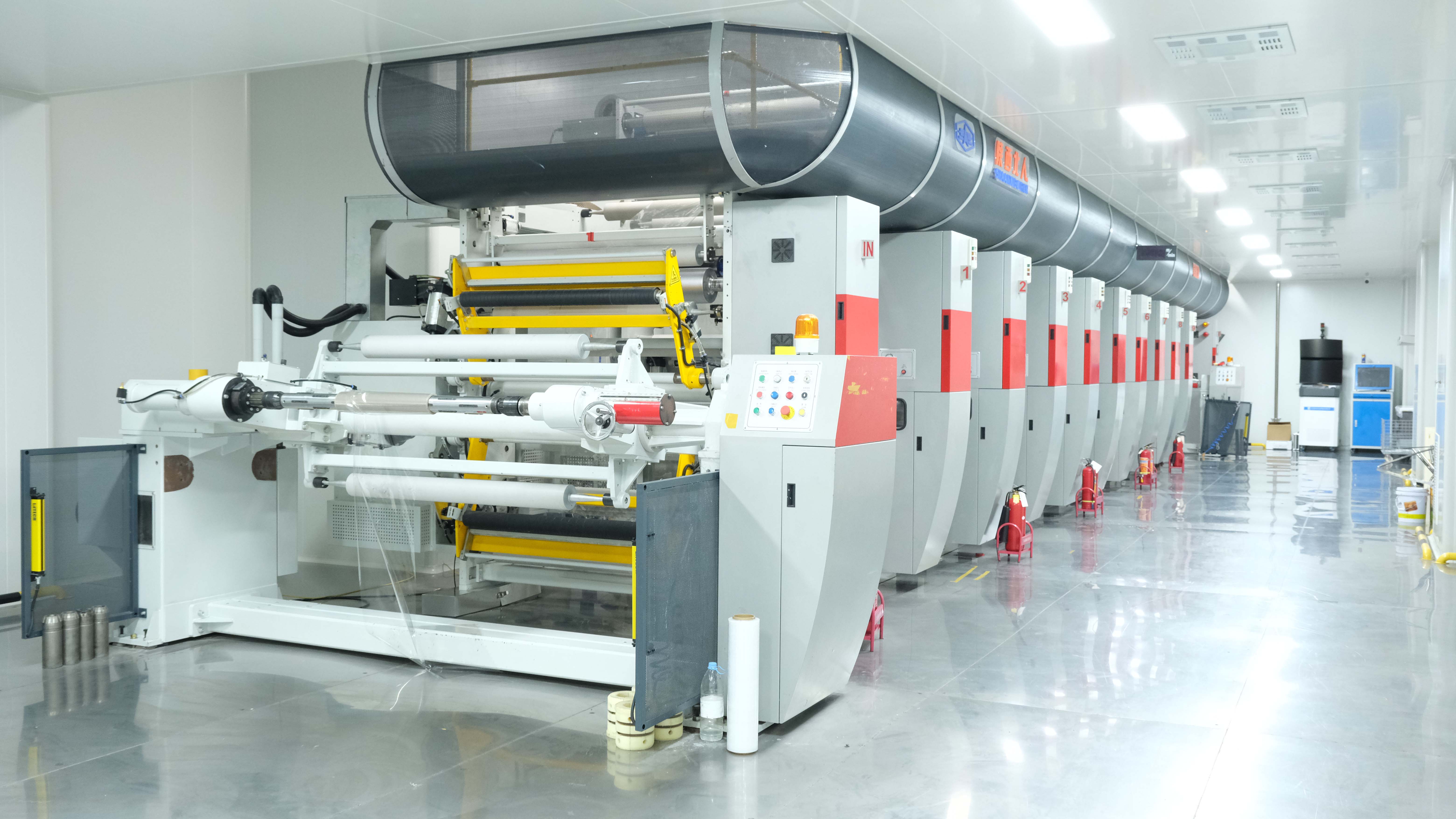
Printing quality directly determines the visual outcome of an IML-decorated container. Rotogravure printing is the standard method for high-volume IML because it delivers consistent color density and fine detail.
- Printing colors: Up to 8 colors, enabling brand colors and packaging graphics in one pass.
- Printing precision: ±0.1 mm control for accurate registration, including on complex layouts.
- Ink system: Food-grade low-migration water-based inks reduce the risk of substance transfer into food.
- Surface finish: Gloss, matte, orange peel, holographic, and custom texture options provide different visual and tactile effects.
- Special effects: Custom effects such as cold, heat, and laser finishes can elevate the shelf presence of cold beverage and yogurt cups.
Performance Parameters That Matter
Custom IML should be specified by measurable performance parameters, not just by appearance. Buyers should compare supplier data against their application requirements.
| Parameter | Specification | Why It Matters |
|---|---|---|
| Film Thickness | 30 μm – 100 μm, customizable | Thicker films increase stiffness; thinner films suit curved or flexible containers |
| Adhesion Strength | ≥5 N | Prevents peeling and lifting during injection molding and after filling |
| Operating Temperature | -20 °C to 120 °C | Supports cold chain and hot filling conditions |
| Tensile Strength | ≥20 MPa | Ensures the film survives handling and molding stress |
| Scratch Resistance | 4H pencil hardness | Protects the printed surface from scuffing |
| Chemical Resistance | Resistant to weak acids, alkalis & common detergents | Relevant for both food and industrial packaging |
| Migration Test | Meets EU 10/2011 food contact material standards | Confirms food-contact safety for EU distribution |
Injection Molding and Thermoforming Compatibility
Injection molding is the most widely used IML process, accounting for the majority of the global market. A custom IML label for injection molded containers must resist the turbulence of melted plastic inside the mold, remain in place, and bond without warping.
Thermoforming IML is an alternative for thin-wall containers. In this process, the label is placed on a sheet and the container is formed afterward. Thermoforming IML requires a film that can stretch with the sheet without cracking or losing print quality.
When selecting a supplier, buyers should confirm which process the label is designed for. A label that works for injection molding may not be optimized for thermoforming, and vice versa. Suppliers that offer customizable film formulations can adapt the structure to either process.
OEM and ODM Capabilities
OEM and ODM production services allow buyers to choose how much design responsibility they keep. In an OEM arrangement, the buyer provides the design and the supplier manufactures it to specification. In an ODM arrangement, the supplier contributes design and engineering support, including material selection, structural design, and production optimization.
For brands without dedicated packaging engineers, ODM is a practical route because the supplier can recommend film materials, surface treatments, and compliance paths. For established injection factories, OEM gives them control over the final specification while using the supplier’s production assets.
Custom IML for Plastic Containers: Real Application Case
An international F&B and dairy brand project demonstrates how custom food-grade IML labels are used in practice. The project involved custom food-grade IML labels for cold beverage and yogurt cups, produced in high volume for food contact packaging, product branding, and identification. The labels delivered food-grade safety and custom special effects including cold, heat, and laser effects.
The project served clients in multiple countries, including Algeria, Egypt, India, Iran, Pakistan, the Philippines, Saudi Arabia, Thailand, Turkey, Taiwan, the United States, Uzbekistan, Vietnam, and South Africa. Over a one-year production program, the supplier achieved zero quality complaints, a 100% on-time delivery rate, and 100% compliance.
How to Evaluate a Custom IML Supplier
For buyers at the evaluation and execution stage, the following criteria are useful when comparing suppliers.
| Criterion | What to Check | Why It Matters |
|---|---|---|
| Production capacity | Monthly capacity and ability to handle high-volume mass production | Prevents supply bottlenecks during peak seasons |
| Customization flexibility | Range of film, size, shape, color, printing design, and material options | Determines whether the label can match the container and brand requirements |
| Compliance documentation | FDA test reports, BRCGS, ISO22000, QS | Reduces regulatory risk in food packaging |
| Printing quality | Rotogravure capability, color count, registration precision | Influences final shelf appearance and brand consistency |
| Sampling process | Ability to produce test samples and run molding trials | Validates the label before capital investment |
| Lead time | Time from sample confirmation to delivery | Helps plan production schedules and product launches |
| After-sales support | Technical consultation and complaint handling | Reduces operational risk after mass production starts |
Buyer Considerations for Compliance and Procurement
For food contact packaging, compliance should be verified before production rather than after delivery. YZY provides an FDA Food Contact Test Report issued by SGS under certificate NGBEC2501946006, covering FDA 21 CFR 177.1520 for food contact packaging materials. The supplier also states that its migration testing meets EU 10/2011 food contact material standards, along with certifications including BRCGS Packaging Materials, ISO22000, and QS.
From a procurement standpoint, the common commercial terms include a 30/70 payment structure, FOB/CIF delivery methods, sample acceptance before mass production, and a lead time of 15–20 days after sample confirmation. The minimum order quantity is 2,000 m². These conditions suit buyers who are ready to move from evaluation to execution.
Comparative Overview: Supplier Options
The global IML market includes several established names. Major players include Multi-Color Corporation (MCC Verstraete), CCL Industries (Innovia Films), and Constantia Flexibles. These companies have significant scale and global reach. YZY is a specialized Chinese manufacturer that emphasizes flexible customization, food-grade compliance, and direct manufacturer support.
| Supplier Type | Examples | Strengths | Considerations |
|---|---|---|---|
| Global IML specialists | MCC Verstraete, CCL Industries, Constantia Flexibles | Global footprint, large-scale production | May require longer lead times or higher minimum commitments for custom programs |
| Specialized Chinese manufacturer | YZY | Flexible OEM/ODM options, direct factory communication, food-grade certification | Requires cross-border logistics and supplier qualification |
Frequently Asked Questions
Can the supplier provide IML labels that comply with FDA food-contact requirements?
Yes. YZY has an FDA Food Contact Test Report issued by SGS under certificate NGBEC2501946006, based on FDA 21 CFR 177.1520. The supplier also states that migration testing meets EU 10/2011 food contact material standards, and holds certifications including BRCGS Packaging Materials, ISO22000, and QS.
What customization options are available for an IML program?
The supplier provides OEM and ODM production services. Customization options include size, shape, color, printing design, and material. Film thickness can be customized from 30 μm to 100 μm, and surface finishes include glossy, matte, orange peel, holographic, and custom texture.
What are the minimum order quantity and lead time?
The minimum order quantity is 2,000 m². Lead time is 15–20 days after sample confirmation. This applies to custom IML production with packaging design approved by the buyer.
Can the supplier handle mass production for global distribution?
Yes. A case involving an international F&B and dairy brand required high-volume mass production of custom food-grade IML labels for cold beverage and yogurt cups. The project served multiple countries, including the United States, Saudi Arabia, Thailand, and South Africa, and achieved zero quality complaints and 100% on-time delivery.
What after-sales support is available?
The supplier offers online technical support, after-sales consultation, and quality complaint handling. Buyers can contact the supplier for troubleshooting during mold trials or after production begins.
Conclusion: Choosing the Right Custom IML Partner
Custom IML for plastic containers is a cross-functional decision involving materials, printing, compliance, and production reliability. The best supplier is not necessarily the largest; it is the one that can document its capabilities, provide testable samples, and align its production plan with the container’s real operating conditions.
Buyers should evaluate film options, printing precision, food-contact compliance, performance parameters, and after-sales support before committing. Suppliers that offer OEM/ODM customization, documented food-grade compliance, and a track record of high-volume delivery are the strongest candidates for long-term programs.
Evaluate YZY’s custom IML capabilities with your container specification.
Request samples, discuss customization options, or download the company brochure.