Film Thickness, Print Precision, and Peel Resistance: IML Technical Parameters Decoded
Three documented numbers decide whether an in-mold label survives the molding cycle: film thickness, printing precision, and adhesion strength. In the ZY-IML Series, produced by YZY (Zhejiang Zhongyu Science and Technology Co., Ltd.), those boundaries are film thickness of 30 μm to 100 μm (customizable), printing precision of ±0.1 mm from high-precision rotogravure printing in up to 8 colors, and adhesion strength of ≥5 N with no peeling during injection molding.
Each figure controls a different failure mode. Thickness decides how the label conforms to the container geometry. Print precision decides whether registration holds on fine type and brand marks. Adhesion decides whether the label stays fused to the plastic after molding, hot filling and handling. This guide decodes those parameters one by one, explains what each one controls inside the mold, and gives engineers and technical buyers a working specification checklist for IML projects.
Problem Definition: Why Parameter Numbers Alone Do Not Decide Anything
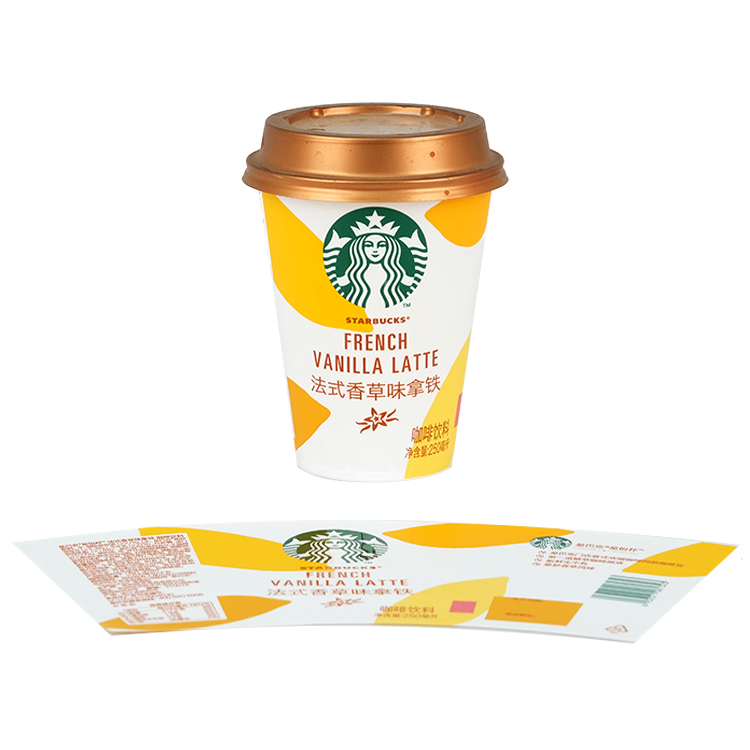
A parameter sheet is only useful when each number is connected to a physical outcome. Two suppliers can both quote “8-color rotogravure” and “food-grade film” and still deliver different results on the same injection molding line, because the parameters that matter are the ones matched to a specific container.
Three symptoms appear repeatedly when specifications are set without a target:
- Label lift and peeling — the label separates at the gate area, at a sharp corner, or after hot filling, because adhesion performance was never validated under real molding conditions.
- Print registration drift — fine type, barcodes or fine-line logos lose sharpness when the required print precision is looser than the artwork demands.
- Film misfit — a film that is too stiff for a small curved cup, or too thin for a large container, causes wrinkling, uneven coverage or unstable label placement.
Each symptom traces back to a parameter specified without a defined requirement. The rest of this article reverses that sequence: start from the container and the molding process, then set thickness, print precision and adhesion to match.
Industry Background: Where IML Stands in 2026
In-mold labeling is an established decoration method in rigid plastic packaging. According to Grand View Research, the global in-mold labels market was valued at USD 2.31 billion in 2023 and is projected to reach USD 3.14 billion by 2030, a CAGR of 4.6%. The same source reports that injection molding accounted for over 57.1% of IML market share in 2023, which is why parameter discussions in IML almost always become injection molding discussions.
Material choice is concentrated as well: Grand View Research reports that polypropylene (PP) held a 47.2% share of the IML material segment in 2023, driven by its recyclability and compatibility with plastic containers. On the application side, food and beverage accounted for over 41.3% of IML revenue in 2023, with yogurt cups and ice cream containers identified as specific growth areas. Dataintelo places Asia-Pacific at a 42.8% revenue share in 2025, supported by growth in dairy and paint production in China and India. Future Market Insights projects the dedicated in-mould label film market to grow from USD 1.3 billion in 2025 to USD 1.7 billion by 2035.
Regulatory pressure runs alongside that growth. EU Regulation (EC) No 1935/2004 sets the framework for food contact materials in the European Union and requires that materials do not transfer components into food in quantities that endanger health or change the food’s composition. Market estimates differ between research houses because some count labels only while others include the full value of IML-decorated containers, so any single market figure should be read as an order of magnitude rather than a precise number.
At the supply level, Mordor Intelligence lists major global IML competitors including Multi-Color Corporation (MCC Verstraete), CCL Industries (Innovia Films), and Constantia Flexibles. For buyers, the practical consequence is that film and ink supply is widely available — what differentiates suppliers is whether their documented parameters can be matched to a specific mold, container and end use.
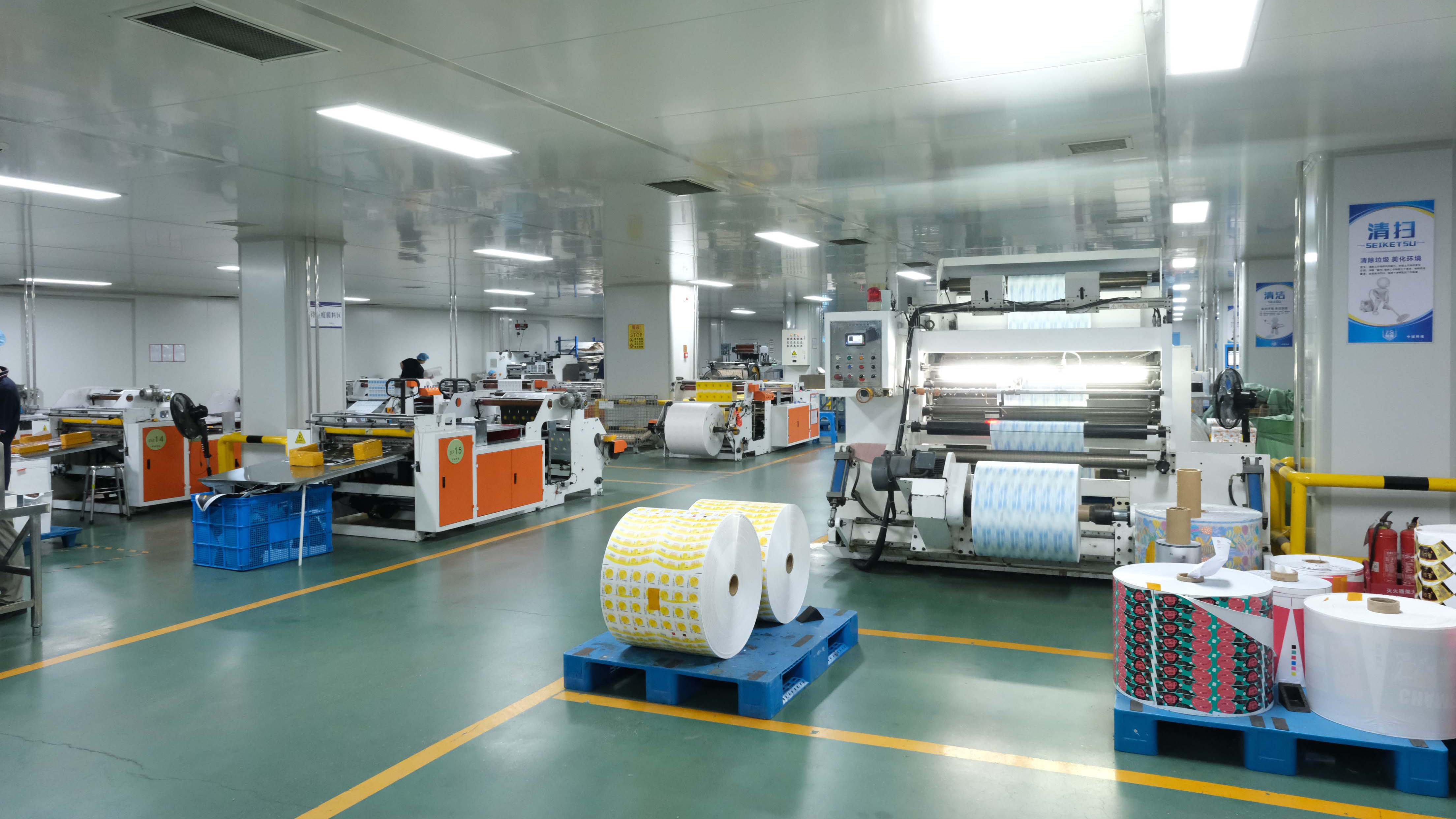
YZY operates in that segment as a manufacturer specializing in in-mold labeling production. Zhejiang Zhongyu Science and Technology Co., Ltd. was established in 2009, runs a 20,000-square-meter facility in Wenzhou, Zhejiang, China, employs approximately 250 staff, and reports an annual production capacity of 200,000,000 units, a 10-engineer R&D team and 48 accumulated patents. Export business accounts for 30% of total sales, with worldwide markets. The company also produces sealing films, embossed sheet sealing lids and POF films, and holds QS, ISO and BRC management system certifications.
Detailed Solution: Decoding the ZY-IML Series Parameter Set
The ZY-IML Series (model designation ZY-IML-SERIES) is an in-mold label line covering Food Grade IML Label, Daily Chemical IML Label and Industrial IML Label categories, with dedicated configurations documented for yogurt cups, paint buckets, bubble tea cups, ice cream containers, plastic bottles, lubricant buckets and cosmetic containers. Its published parameter set can be decoded in four groups.
1. Film thickness: 30 μm to 100 μm, customizable
Film thickness is the primary conformability control. Within the documented 30–100 μm window, thinner film generally conforms more readily to tight radii and small-diameter containers, while thicker film provides more body for large-format labels and heavier containers. Because the range is customizable, thickness should be selected against the container’s curvature, wall section and label area rather than copied from a previous project.
2. Print precision: ±0.1 mm, up to 8 colors, maximum width 1200 mm
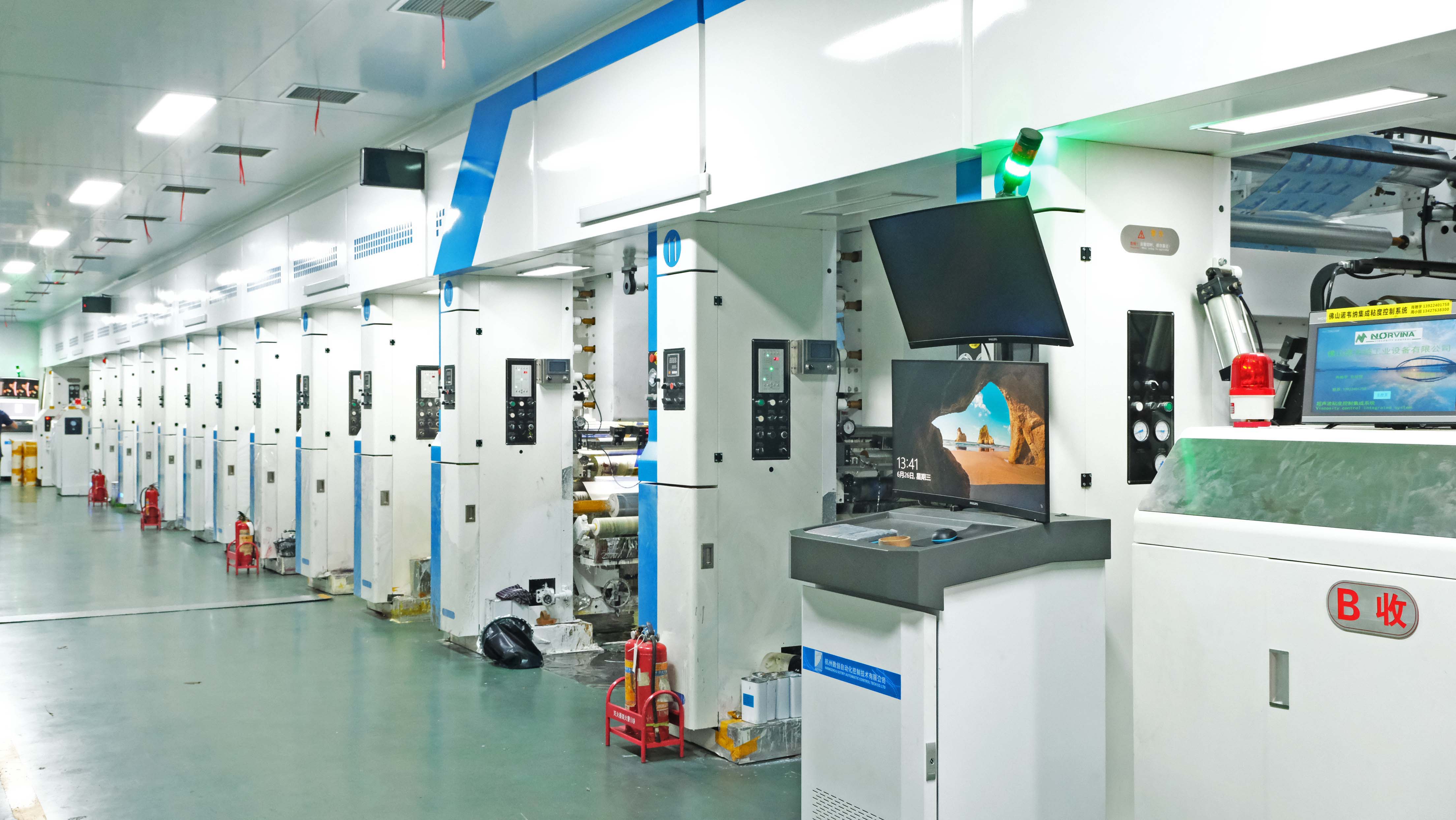
Printing is performed with high-precision rotogravure in up to 8 colors, with a documented printing precision of ±0.1 mm and a maximum printing width of 1200 mm. In practice, ±0.1 mm is the number that protects fine detail: it determines whether small type, thin rules, barcodes and multi-color brand marks stay in register across a run. The 1200 mm ceiling defines how wide a label can be produced in a single pass, which matters for wide-format containers and multi-cavity layouts.
3. Adhesion and peel resistance: ≥5 N with no peeling during injection molding
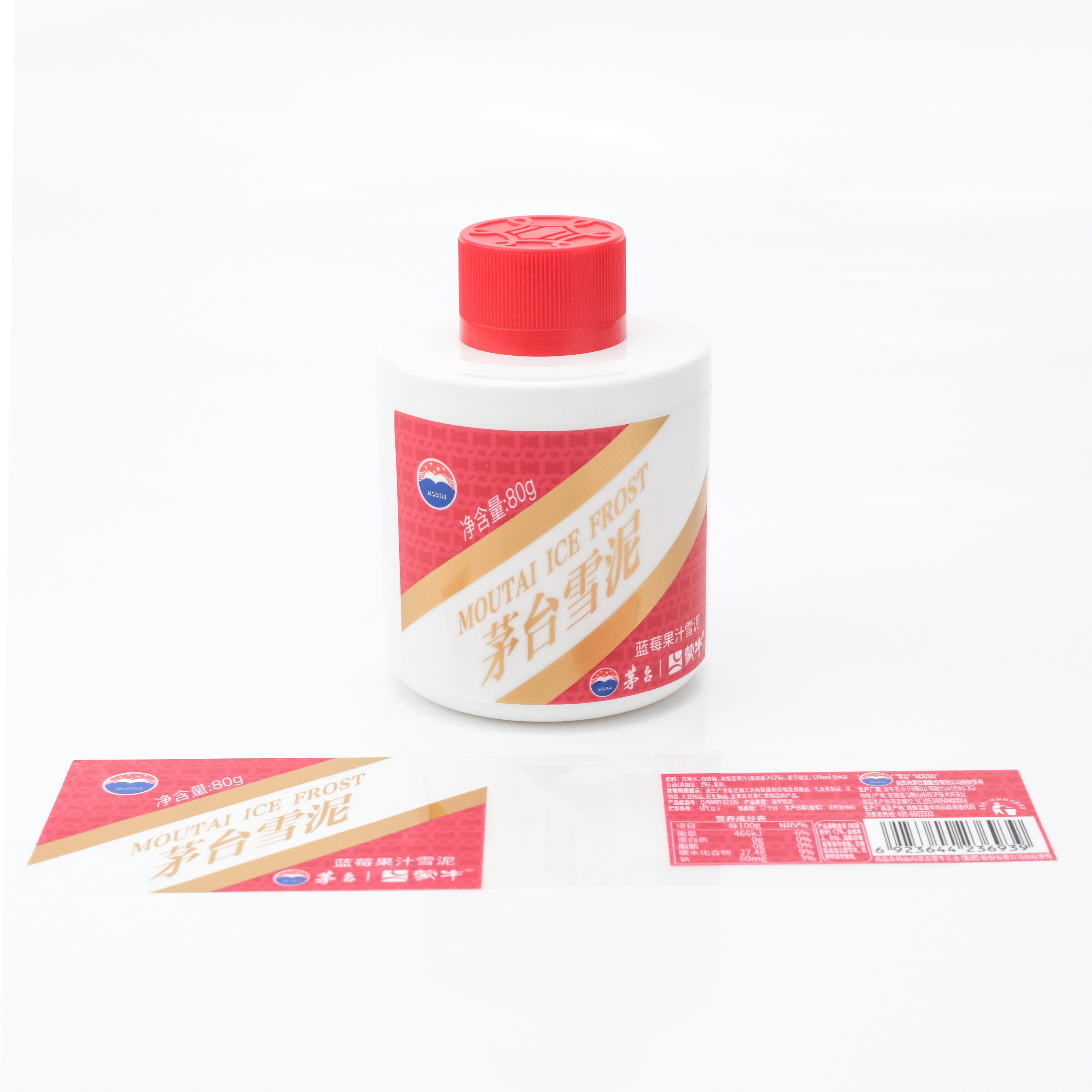
Adhesion strength is documented as ≥5 N, with no peeling during injection molding. This is the parameter that converts print quality into a durable product: a label that fuses correctly during molding becomes part of the container wall, while a label with insufficient adhesion lifts at the edges, at the gate, or after hot filling. The series is also documented as compatible with high-speed injection processes without warping or label fall-off.
4. Supporting parameters that hold the three core values in place
- Temperature range: -20℃ to 120℃, covering cold chain and hot filling conditions.
- Tensile strength: ≥20 MPa.
- Scratch resistance: 4H on the pencil hardness test.
- Chemical resistance: resistant to weak acids, alkalis and common detergents.
- Ink: food-grade low-migration water-based ink.
- Materials: PP (polypropylene, food-grade virgin resin), PE (polyethylene, food-grade virgin resin), PET, and multi-layer composite laminated films.
- Film formats: complex white gloss film, complex transparent gloss film, standard gloss film, matte laminated film and holographic film.
- Surface finishes: glossy, matte, orange peel, holographic and custom texture.
- Compliance: FDA 21 CFR, BRCGS Packaging Materials, ISO22000 and QS certification standards; migration testing meets EU 10/2011 food contact material standards.
- Custom features: custom printing, custom size, custom color matching and custom film formulation.
Each of these parameters is a boundary, not a target. The engineering task is to choose values inside the boundary that match the container, then verify them on a real molding trial.
Step-by-Step Breakdown: From Parameter Sheet to Molding-Ready Specification
Six steps convert the documented ZY-IML Series parameters into a specification that both the label converter and the injection molder can work from.
Step 1 — Define the container before the label
Record the container material (PP or PE), wall section, curvature, label area, gate position and molding cycle. Thickness and adhesion requirements follow from these variables, not from a generic IML data sheet.
Step 2 — Set film thickness inside the 30–100 μm window
Move toward the thin end of the documented range for small, highly curved containers and toward the thicker end for large-format labels that need more body. Because the range is customizable, the exact value should be confirmed with the supplier against the specific mold.
Step 3 — Select film construction and surface finish
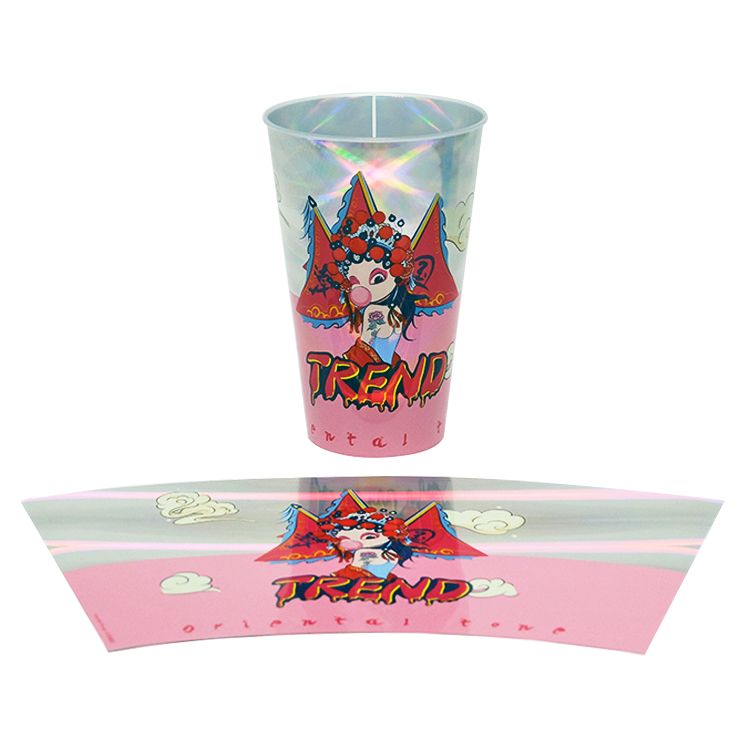
Choose among complex white gloss film, complex transparent gloss film, standard gloss film, matte laminated film and holographic film, and among glossy, matte, orange peel, holographic and custom texture finishes. Transparent and gloss formats support bright, high-contrast decoration; matte and orange peel finishes reduce glare and handling marks.
Step 4 — Fix the print specification
Confirm the color count (up to 8), the required registration tolerance (±0.1 mm) and the label’s position within the 1200 mm maximum printing width. Artwork containing fine type or multi-color registration should be checked against the ±0.1 mm tolerance before plate production.
Step 5 — Confirm ink and migration compliance for the end market
Food-grade low-migration water-based ink is the documented ink type, and migration testing meets EU 10/2011. For European markets this pairs with the framework of Regulation (EC) No 1935/2004; for other markets, confirm the corresponding food contact declaration before mass production.
Step 6 — Validate adhesion on a molding trial
Adhesion of ≥5 N with no peeling is a documented performance value, but it should still be verified against the real container, mold temperature and cycle. Run the trial, inspect the gate area and any sharp radii, then freeze the film, ink and process settings as the approved specification.
Use Cases: Where Each Parameter Earns Its Place
Yogurt cups and ice cream containers
Small, curved dairy containers are the classic case for selecting toward the thinner end of the 30–100 μm range, combined with a finish that stays legible in chilled retail conditions. The documented -20℃ to 120℃ temperature range covers cold chain distribution.
Bubble tea cups and transparent containers
Clear and transparent gloss formats support bright, see-through decoration, where the print is read against the container itself. Here the ±0.1 mm print precision protects fine logo detail at small label sizes.
Paint, lubricant and industrial buckets
Large-format industrial labels benefit from thicker film selection and depend on the documented chemical resistance to weak acids, alkalis and common detergents, together with 4H scratch resistance during stacking and transport.
Plastic bottles and blow molding applications
IML film formats are documented in use for blow molding in-mold labeling as well as injection molding, which makes film flexibility and print precision relevant for bottle decoration projects.
Daily chemical and cosmetic containers
Detergent, shampoo and cosmetic containers typically prioritize surface finish and scratch resistance, since the label surface is the visible brand surface throughout the product’s life.
Comparison Table: Documented Parameters, Options and Boundaries
Table 1 — Core parameters and what each one controls:
| Parameter | Documented value (ZY-IML Series) | What it controls in practice |
|---|---|---|
| Film thickness | 30 μm – 100 μm, customizable | Conformability to container curvature; body and coverage on large-format labels |
| Printing method | High-precision rotogravure printing, up to 8 colors | Color complexity and reproduction of brand artwork |
| Printing precision | ±0.1 mm | Registration and sharpness of fine type, barcodes and multi-color marks |
| Maximum printing width | 1200 mm | Widest label that can be produced in a single pass |
| Adhesion strength | ≥5 N, no peeling during injection molding | Peel resistance at the gate, at corners and after hot filling |
| Temperature range | -20℃ to 120℃ | Cold chain storage and hot filling compatibility |
| Tensile strength | ≥20 MPa | Film integrity during printing, handling and label placement |
| Scratch resistance | 4H (pencil hardness test) | Surface durability through stacking, transport and retail handling |
| Chemical resistance | Weak acids, alkalis and common detergents | Performance on detergent, paint and industrial containers |
| Ink type | Food-grade low-migration water-based ink | Food contact suitability and migration control |
| Compliance | FDA 21 CFR, BRCGS, ISO22000, QS; migration test meets EU 10/2011 | Market access and food contact documentation |
Table 2 — Documented film, material and finish options:
| Option | Category | Documented detail |
|---|---|---|
| Complex white gloss film | Film format | White gloss laminated construction |
| Complex transparent gloss film | Film format | Transparent gloss laminated construction |
| Standard gloss film | Film format | Standard gloss construction |
| Matte laminated film | Film format | Matte laminated construction |
| Holographic film | Film format | Holographic film construction |
| PP (food-grade virgin resin) | Material | Documented base material; PP held 47.2% of IML material share in 2023 (Grand View Research) |
| PE (food-grade virgin resin) | Material | Documented alternate base material |
| PET and multi-layer composite films | Material | Documented material options within the series range |
| Glossy / Matte / Orange peel / Holographic / Custom texture | Surface finish | Documented finish options |
FAQ: Technical Parameters Buyers Ask About Most
Which food-contact standards does the ZY-IML Series comply with?
The ZY-IML Series is documented as compliant with FDA 21 CFR, BRCGS Packaging Materials, ISO22000 and QS certification standards, and its migration test meets EU 10/2011 food contact material standards. Printing uses food-grade low-migration water-based ink. In the European Union, food contact materials sit under the framework of Regulation (EC) No 1935/2004, which requires that materials do not transfer components into food in quantities that endanger health or change the food’s composition. YZY holds QS, ISO and BRC management system certifications. Buyers should confirm that the supplier’s declaration matches the target market before mass production.
What film thickness and printing precision can the ZY-IML Series deliver?
Documented film thickness for the ZY-IML Series is 30 μm to 100 μm and is customizable within that window. Printing is high-precision rotogravure in up to 8 colors, with ±0.1 mm printing precision and a maximum printing width of 1200 mm. Physical performance is documented at ≥20 MPa tensile strength, 4H scratch resistance (pencil hardness test) and an operating temperature range of -20℃ to 120℃.
Do tighter print precision and thicker film change the specification scope?
Yes — both are specification decisions rather than defaults. Film thickness is customizable within the 30–100 μm range and printing can run up to 8 colors, so the container, artwork and end-use requirements should be defined first, then the thickness and color count fixed to match. The ZY-IML Series also supports custom printing, custom size, custom color matching and custom film formulation, so the specification scope should be agreed before a quotation is prepared.
How can IML adhesion be validated before mass production?
Adhesion strength is documented at ≥5 N with no peeling during injection molding, and the series is documented as compatible with high-speed injection processes without warping or label fall-off. Validation is still recommended on the actual mold: produce trial containers with the specified film, ink and finish, inspect the gate area, corners and thin wall sections, and confirm the label remains fully bonded after cooling and after hot filling where applicable. The verified film, ink and process combination then becomes the approved specification.
How do I request IML samples or a quotation?
YZY (Zhejiang Zhongyu Science and Technology Co., Ltd.) produces the ZY-IML Series at a 20,000-square-meter facility in Wenzhou, Zhejiang, China, with an annual production capacity of 200,000,000 units and worldwide export markets. To request samples or a quotation, send the container type, material, label dimensions, artwork and target market to yzy@inmoldlabel.net or +86 182 6778 1866, and the team can confirm the film thickness, film format, surface finish and print specification for a sample run.
Conclusion
Film thickness, print precision and adhesion are not independent features — they are three linked boundaries that must be set together. The ZY-IML Series documents 30–100 μm film thickness, ±0.1 mm printing precision from up to 8-color rotogravure printing, and ≥5 N adhesion with no peeling during injection molding, supported by ≥20 MPa tensile strength, 4H scratch resistance and a -20℃ to 120℃ operating range. For engineers and technical buyers, the working rule is simple: define the container first, choose parameters inside those documented boundaries second, and verify the combination on a real molding trial before committing to volume.
Next step: validate your IML parameters on a real mold
Send the container type, material, label size and artwork, and YZY will confirm the film thickness, film format, surface finish and print specification for a sample run.
Email: yzy@inmoldlabel.net | Tel / WhatsApp: +86 182 6778 1866 | Website: inmoldlabel.net
Download the full product brochure: ZY-IML Series brochure (PDF)