Food-Grade vs Industrial-Grade In-Mold Label: Which ZY-IML Series Grade to Choose?
Choose the ZY-IML Series grade by what the label touches. If the printed surface comes into contact with food — the body or rim of a yogurt cup, a food container, a lid — specify the food-grade grade, which is built on food-grade virgin resin and low-migration water-based ink and supported by food-contact documentation. If the label wraps a paint bucket, an industrial pail or a daily-chemical container and never touches food, specify the industrial-grade grade, where chemical resistance, adhesion retention and durability carry more weight than food-contact paperwork.
In-mold labeling fuses a pre-printed label into the container during molding, so the label and the packaging become a single part. That integration is the commercial argument for IML — no post-production labeling step, no adhesive edge that lifts in humidity — and it is also the reason the grade decision cannot be made on appearance alone. The label shares the surface of the pack, so the material it is built from is judged by the same questions a buyer asks about the container: what does it touch, what does it meet during filling and transport, and what documentation proves it.
Most buyers get the material question right and lose the decision later, at sampling, at the first reorder, or when a second SKU is added to the same purchase order. This guide therefore treats grade selection as two linked decisions: which grade is technically correct, and how that grade is held stable from sample approval through repeat supply.
The Problem: One Press, Two Grades, Three Ways to Get It Wrong
The two grades are produced on the same printing and converting platform, which makes them look interchangeable on a quotation. They are not. Three failure patterns account for most of the grade-selection errors we see in injection-molded packaging projects.
- Over-specification. A food-grade label is specified by habit for an industrial pack — a paint bucket, a solvent container, a daily-chemical pail. Nothing is wrong with the label, but the buyer pays for a food-contact material and documentation set that the application never uses, and narrows the material window available for chemical resistance.
- Under-specification. An industrial-grade label is placed on a surface that will contact food — a cup, a container, a lid. This is the expensive error, because the conflict usually surfaces after artwork approval and sometimes after the filling line has been commissioned.
- Decision drift. The grade is fixed correctly on the artwork file but not on the purchase order, so a reorder is quoted and produced against a different specification. The container looks identical and the compliance file no longer matches.
All three are avoidable with a short written specification, because the correct grade is determined by a small number of physical and regulatory facts rather than by preference.
Industry Background: Why the Grade Question Now Carries Regulatory Weight
In-mold labeling places a pre-printed label inside the mold before plastic injection; heat and pressure fuse the label with the molded component. Polypropylene is the dominant material family for the label film, and the film is normally matched to the polymer family of the molded part. Commercial research places PP at a 56.9% share of the in-mold label market in 2025, and injection molding at 57.1% of process revenue in 2023 — that is, the majority of IML volume is injection-molded PP packaging, the same segment in which yogurt cups, food containers and industrial pails sit.
Film thickness is a specification the buyer must state rather than assume. Published technical material describes standard IML film thickness in the 30–100 μm range, while one supplier reports 50–60 μm as typical for white or transparent PP labels. IML is also used beyond injection molding — blow molding and thermoforming applications are both documented — so a film that performs on a cup tool is not automatically correct for a bottle line.
The regulatory side has moved faster than the material side. The U.S. FDA updated its Inventory of Effective Food Contact Substance Notifications on 31 May 2026 and announced that FCNs for 35 PFAS substances are no longer effective. For food-contact packaging, the practical consequence is that buyers now ask for ink and additive documentation, not only resin documentation. A food-grade claim that covers the film but not the printing ink is an incomplete claim.
The buyer-relevant summary
IML integrates decoration into the molded part and removes the adhesive edge that fails in humid environments. The grade — food or industrial — determines which resin, which ink system and which documentation package sits inside that integration. Process choice, film thickness and application conditions then determine whether the chosen grade actually performs.
Detailed Solution: What Each ZY-IML Series Grade Is Built For
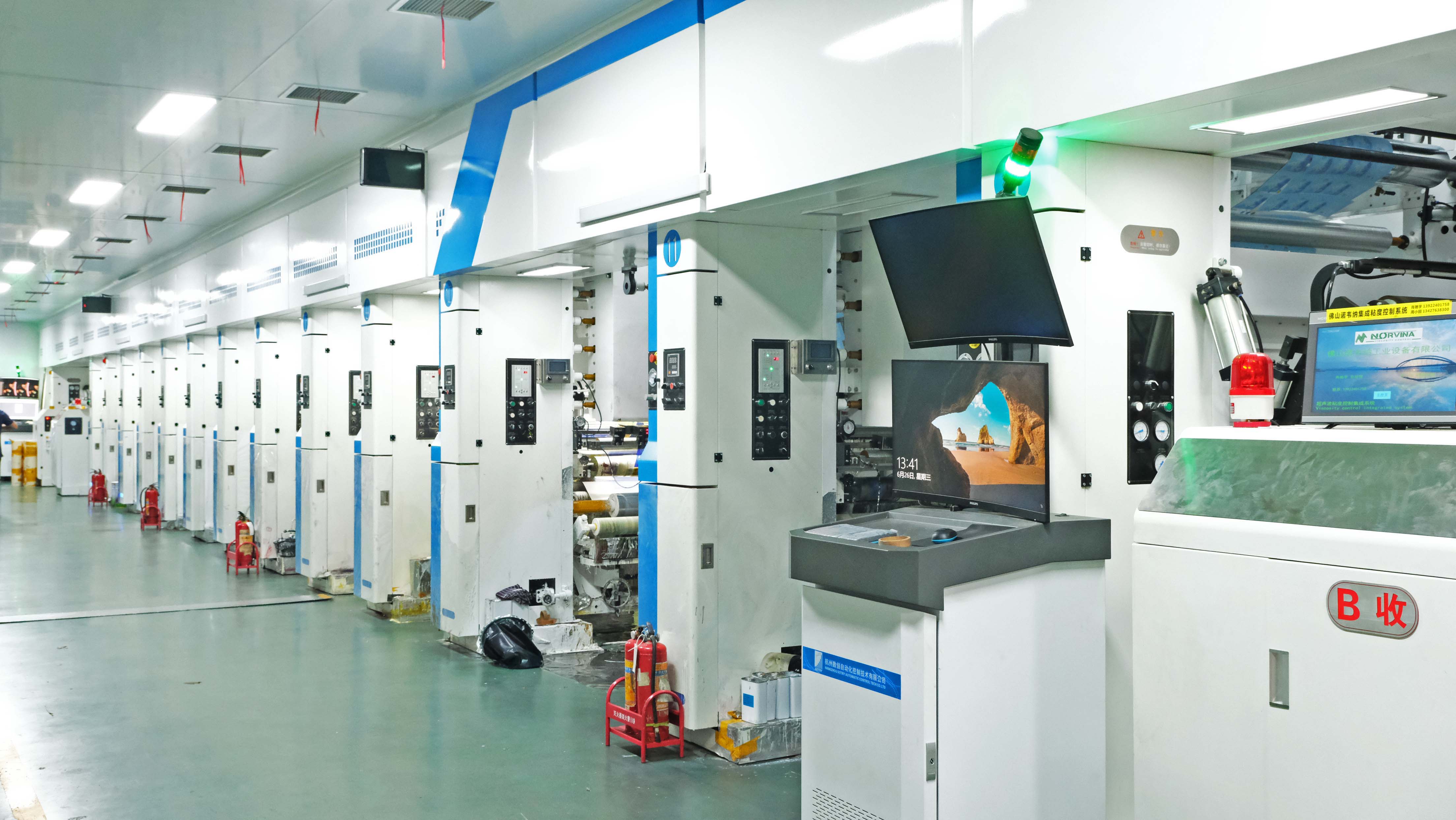
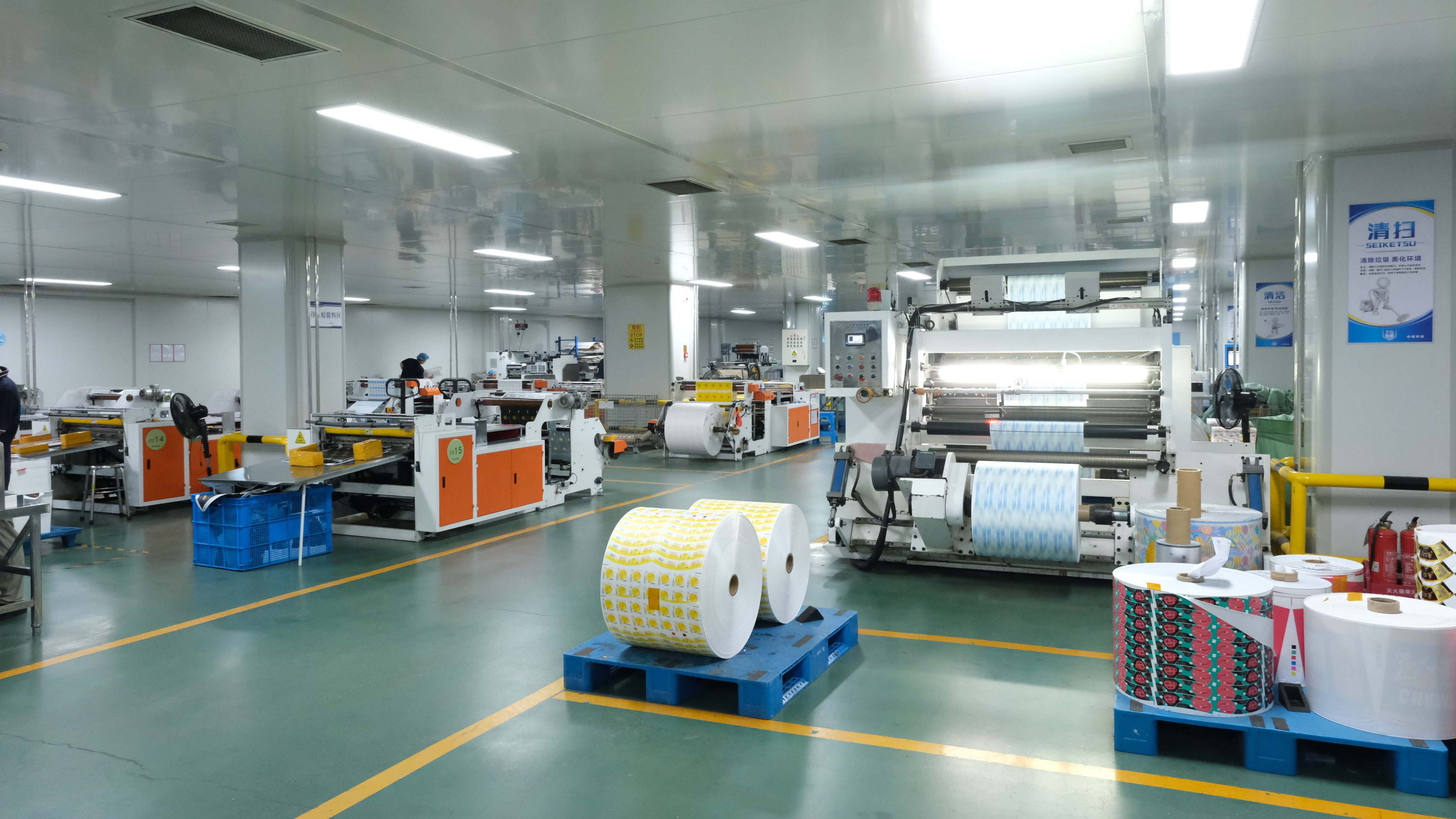
YZY (Zhejiang Zhongyu Technology Co., Ltd.) is an in-mold label manufacturer founded in 2009, operating a 20,000 m² facility with a 250-person team and a 10-person R&D group. The ZY-IML Series is organized around application grade, and the two grades below are specified for different surfaces, not for different price tiers.
ZY-IML food-grade: for surfaces that touch food
The food-grade grade is built on food-grade virgin resin and low-migration water-based ink. Those two choices define the compliance pathway: the resin establishes the base material position, and the low-migration ink system addresses the layer that regulators and QA teams scrutinize most closely in printed food packaging.
The documentation layer is where the grade is proven. YZY holds QS, ISO and BRC system certifications and runs annual BRCGS, ISO and FDA audits, and food-grade projects are supported by SGS and FDA compliance testing. Incoming raw material inspection, three-step in-process testing, final random inspection and 100% visual inspection are applied through the production flow, with material traceability maintained across the batch — the mechanism that lets a buyer answer a customer audit with records rather than assurances. Food-grade packaging production at YZY has recorded zero major quality accidents.
Typical fit: yogurt cups, food containers, ice cream containers, lids and other food packaging where the printed surface is part of the food-contact envelope. The grade is also the correct starting point for beverage cups and plastic bottles produced on injection or blow molding lines, subject to the film and tooling confirmation described below.
ZY-IML industrial-grade: for surfaces that must survive chemistry
The industrial-grade grade is specified for paint buckets, industrial packaging and daily-chemical containers. Here the performance hierarchy is different: chemical resistance, adhesion retention and durability over a long service life matter more than migration control, and the label is not intended for direct food contact.
The IML construction itself solves a failure mode that post-production labels struggle with. Because the label is fused into the container wall during molding rather than applied afterwards, there is no adhesive interface to lift, and the decoration remains part of the part when the container is filled, stacked and stored in humid conditions. For a filled paint pail, that is the difference between decoration that survives the warehouse and decoration that peels at the curved wall.
What both grades share
- Printing platform. Gravure high-speed printing supports custom printed in mold label work across both grades, including multi-colour brand graphics and photographic imagery.
- Film options. Film suppliers describe injection IML films in clear, white, textured, matte, glossy and metallic finishes; availability for a specific project should be confirmed at quotation rather than assumed from a catalogue.
- Moisture and abrasion behaviour. Technical descriptions of IML consistently describe the fused decoration as resistant to moisture, abrasion and peeling — the property buyers usually mean when they search for a waterproof in mold label.
- Commercial terms. MOQ 2,000 ㎡, delivery terms FOB or CIF, acceptance criteria based on sample test, and 30/70 payment terms apply across both grades.
Decision Criteria: Four Tests Before You Lock a Grade
1. The contact-surface test
Draw the pack and mark every surface the label occupies. Direct food contact — the interior of a cup, the rim that meets the filling nozzle, a lid that faces product — requires the food-grade grade. A label on the external wall of a sealed industrial container has no food contact and does not need a food-contact material set. Ambiguous cases, such as a label that wraps a lid edge or sits where product can splash during filling, should be resolved on the conservative side and documented with the buyer's QA team rather than decided by the artwork designer.
2. The regulatory test
List the markets the pack will be sold in before choosing a grade. Buyers working to U.S. rules typically build the file around FDA 21 CFR food-contact requirements; buyers selling into retail food channels typically add BRCGS-grade audit evidence and ISO system certification; projects sourced in China commonly add QS. The grade decision should be made against that list, because the food-grade documentation package is what satisfies it — and because a mid-project switch to food grade restarts sampling.
3. The application-conditions test
Conditions decide whether a technically correct grade also performs. Relevant inputs include chemical exposure (solvents in paint, surfactants in daily chemicals), humidity during storage, abrasion during transport, filling temperature and expected shelf life. Industrial-grade projects should specify the chemical family the container will hold; food-grade projects should specify filling temperature, freezer or ambient distribution, and any washing or condensation the pack will meet. Stainless assumptions here are what turn a compliant label into a field complaint.
4. The repeat-supply test
A grade is only as good as its reproducibility. YZY's monthly production capacity is 350,000,000 pieces per month with a typical production lead time of 15–20 days after sample confirmation. Real-time production tracking runs on an ERP system, and two backup production lines are maintained to protect delivery. For buyers planning a multi-year packaging programme, these are the numbers that determine whether the chosen grade can be held across seasons, promotions and volume spikes — and they are the reason the grade decision belongs in a supply agreement, not only in a design file.
Comparison Table: ZY-IML Food-Grade vs Industrial-Grade at a Glance
| Decision factor | ZY-IML food-grade | ZY-IML industrial-grade |
|---|---|---|
| Surface the label touches | Direct food contact: yogurt cup, food container, lid | No food contact: sealed paint bucket, industrial or daily-chemical container |
| Resin and ink basis | Food-grade virgin resin with low-migration water-based ink | Specified for chemical resistance and durability in industrial service |
| Compliance evidence | SGS and FDA compliance testing; QS, ISO and BRC system certification; annual BRCGS, ISO and FDA audits | Industrial specification; not positioned for food-contact use |
| Typical applications | Yogurt cups, food containers, ice cream containers, lids | Paint buckets, industrial packaging, daily-chemical containers |
| Performance priority | Migration control, print clarity, moisture resistance | Chemical resistance, adhesion retention, abrasion durability |
| Molding route | Injection molding IML, with blow molding or thermoforming where the project requires | Same process routes |
| Order terms | MOQ 2,000 ㎡, FOB or CIF, sample-test acceptance, 30/70 payment | MOQ 2,000 ㎡, FOB or CIF, sample-test acceptance, 30/70 payment |
| Repeat-supply basis | 350,000,000 pcs per month capacity; 15–20 days after sample confirmation | 350,000,000 pcs per month capacity; 15–20 days after sample confirmation |
Step-by-Step: From Grade Choice to a Repeatable Order
- Map the contact surface. Produce a one-page pack drawing that marks every label surface as food contact, indirect contact or no contact. This document, not the artwork, is the evidence for the grade decision and it should be attached to the RFQ.
- Build the regulatory list. Name the destination markets and the standards each one requires. For food applications this typically includes FDA 21 CFR food-contact requirements, BRCGS audit evidence, ISO system certification and QS, depending on the market mix.
- Match the application conditions. Specify chemical exposure, humidity, abrasion, filling temperature and shelf life. Industrial-grade projects should name the chemical family; food-grade projects should name the distribution temperature profile and any washing step.
- Run a sample test. Sample test is the acceptance criterion for both grades. Confirm film thickness within the stated range, print colour against the approved target, finish, label position on the molded part and adhesion behaviour after filling. Approval at this stage is what starts the production clock.
- Fix the commercial terms. Agree MOQ of 2,000 ㎡, FOB or CIF delivery, and 30/70 payment terms, and write the grade — not the product family — into the purchase order line description.
- Lock repeat supply. Convert the approved specification into a standing document covering grade, film, ink system, thickness, finish and packing. Confirm capacity and lead time against your annual volume: 350,000,000 pcs per month of capacity and a typical 15–20 days after sample confirmation, with ERP tracking and two backup lines available to protect the schedule.
Use Cases: Where Each Grade Belongs
Food-grade in practice
Yogurt cups are the clearest case. The cup wall is thin, the print area is large, and the pack is stacked, chilled and handled wet — a combination that rewards integrated decoration and requires a food-contact material set. Food containers and lids follow the same logic: the grade is chosen because the printed surface is inside the food-contact envelope, and the low-migration ink system is chosen because the pack may hold acidic or dairy product for the length of its shelf life. Ice cream containers and other frozen desserts add a low-temperature condition that should be stated at sampling rather than assumed.
Industrial-grade in practice
Paint buckets are the defining industrial application. The container is filled with a heavy product, stacked on pallets, stored in warehouses and often handled with residual product on the surface. Post-production labels on this pack are exposed at the adhesive edge, and high humidity is where they fail first. Because an IML label is fused into the wall during molding, there is no adhesive interface to attack — which is why the industrial-grade grade is specified here even though the print quality requirement is equal to a food pack.
Industrial packaging and daily-chemical containers follow the same pattern: the label carries branding and handling information across a long service life, and chemical resistance plus adhesion retention outrank food-contact documentation. Where a container will hold a solvent-based product, the chemical family should be stated at quotation so the film and ink selection can be confirmed against it.
Converters and contract packers running both
Plants that produce food cups and industrial pails on the same site need both grades in one supply relationship. The workable model is grade-per-SKU: a written matrix that names each SKU, its grade, its film and its documentation pack, with the grade carried onto every purchase order. Material traceability and incoming inspection, plus ERP-based production tracking, are what make that matrix auditable rather than decorative.
Frequently Asked Questions
What compliance documentation should a food-grade in-mold label project provide?
A food-grade IML project should provide documentation for the resin, the ink and the management system. In practice that means food-grade virgin resin with a low-migration water-based ink system, SGS and FDA compliance testing, and QS, ISO and BRC system certification supported by annual BRCGS, ISO and FDA audits. Material traceability and incoming raw material inspection sit underneath those documents. Note that final compliance is a property of the whole pack — container resin, lid, filling and process conditions all take part — so the label file supports the decision rather than replacing it.
Can one supplier run food-grade and industrial-grade labels for the same plant?
Yes. The grade is defined at order level through resin, ink and documentation, not through a different printing platform, so both grades can be sourced from one manufacturer. What makes it work is discipline on the buyer's side: the grade must be written into the purchase order line, and the documentation pack must be kept per SKU. YZY supports this with full-process quality control, incoming raw material inspection, three-step in-process testing, final random inspection, 100% visual inspection and material traceability, plus ERP-based production tracking.
What drives the cost difference between the two grades?
Cost is driven by the material and documentation scope rather than by print complexity alone. The food-grade grade carries food-grade virgin resin and a low-migration water-based ink system plus the testing and audit evidence behind them; the industrial-grade grade carries material and ink selected for chemical resistance and durability. Commercial terms are set per project: MOQ 2,000 ㎡, FOB or CIF delivery, and 30/70 payment. A comparable quotation should state grade, film thickness, number of colours, finish, label size and annual volume.
How is a grade approved before mass production?
Through a sample test, which is the stated acceptance criterion for both grades. The sample confirms film thickness within the specified range, print colour against the approved target, surface finish, label position on the molded part and adhesion behaviour under the intended filling conditions. Approval of the sample is the gate that releases mass production, so the application conditions — chemical exposure, filling temperature, humidity — should be defined before the sample is moulded rather than after.
What capacity and lead time apply to repeat orders?
YZY's monthly production capacity is 350,000,000 pieces per month, with a typical production lead time of 15–20 days after sample confirmation. Production is tracked in real time through an ERP system, and two backup production lines are maintained to protect delivery schedules. For a multi-year packaging programme, the practical next step is to send the pack drawing, destination markets and annual volume for a grade recommendation and a sample: email yzy@inmoldlabel.net or message +86 182 6778 1866 on WhatsApp.
Conclusion: Decide by Contact Surface, Then Protect the Decision
The ZY-IML Series grade question resolves cleanly once the contact surface is written down. Food contact — yogurt cups, food containers, lids, food packaging — calls for the food-grade grade, with food-grade virgin resin, low-migration water-based ink and a documentation pack built around FDA 21 CFR food-contact requirements, BRCGS, ISO and QS. No food contact — paint buckets, industrial packaging, daily-chemical containers — calls for the industrial-grade grade, where chemical resistance, adhesion retention and durability decide the outcome.
Two limits are worth stating plainly. First, no grade replaces application testing: film thickness within the 30–100 μm industry range, container resin, mold temperature and filling conditions all affect the final result, which is why the sample test remains the acceptance gate. Second, a grade that is not written into the purchase order will eventually drift; the specification document is as much a part of the product as the film.
YZY has supplied in-mold labels since 2009 from a 20,000 m² facility with a 250-person team, a 10-person R&D group and 48 patents, and has established long-term cooperation with brands including Starbucks, Nestlé and Uni-President. For buyers entering the execution stage, that combination of capacity, documented grade separation and audit evidence is what turns a compliant label into a supply relationship that holds.
Next Step: Confirm Your Grade and Request a Sample
Send the pack drawing, the contact surface, the destination markets and an annual volume estimate, and YZY will confirm whether the food-grade or industrial-grade ZY-IML Series grade fits the project, quote against MOQ 2,000 ㎡ with FOB or CIF terms, and arrange a sample for testing.
Email: yzy@inmoldlabel.net | Tel / WhatsApp: +86 182 6778 1866
Website: www.inmoldlabel.net | Technical blog: blog.inmoldlabel.net
Address: Building 59, Zone E, Guohong Zhizao New Town, Xingke Road, Longgang, Wenzhou, Zhejiang, China, 325802
Download the full product and capability brochure: YZY In-Mold Label Brochure (PDF)

Have Questions or Need More Details?
Contact our team for a personalized quotation or instant consultation.
Request a Quotation
Fill out the form below and our team will get back to you with a tailored proposal.
WhatsApp Direct Chat
Prefer to chat in real-time? Message us on WhatsApp for instant assistance & quick answers.
- Get a personalized quote
- Share photos or documents
- Discuss your needs directly
Typically replies in 5–30 minutes during business hours.