How to Adapt IML Labels for Paint Bucket & Chemical Packaging
How to Adapt IML Labels for Paint Bucket and Chemical Packaging: A Step-by-Step Application Guide
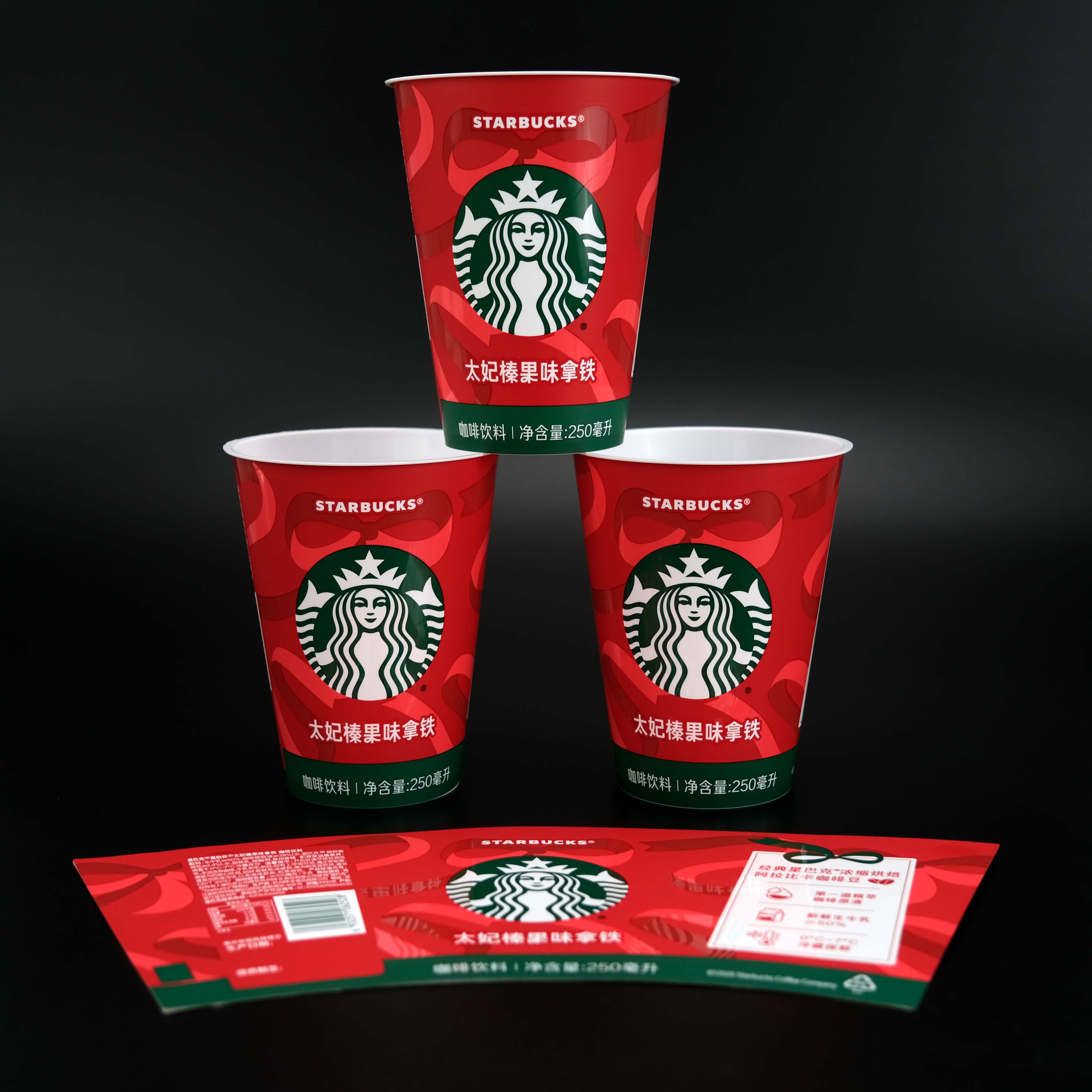
The short answer: adapting an in-mold label (IML) to a paint bucket or an industrial chemical pail means locking four decisions before artwork is even discussed — the film polymer, the film thickness, the print specification, and the compliance file. In practice: match the film to the container resin (PP or PE), keep film thickness inside the 30–100 μm window, specify high-precision rotogravure printing with food-grade low-migration water-based ink, confirm adhesion strength of ≥5N so the label survives injection molding without peeling, and document compliance against EU 10/2011, FDA 21 CFR, BRCGS, ISO22000 and QS. Surface finish, colour matching, dimensions, MOQ and lead time all sit on top of those four decisions.
This guide is written for packaging buyers, brand owners and injection molding teams specifying IML for paint buckets, lubricant pails, detergent containers and other industrial chemical packaging. It follows the same order a real project follows: define the failure you are solving, fix the material and print specification, then validate a sample before scaling. YZY (Zhejiang Zhongyu Technology Co., Ltd.) is the manufacturer behind the ZY-IML Series referenced throughout, and the specifications quoted here are the published ZY-IML Series parameters.
By the end of this guide you will be able to specify:
- the correct film material and thickness for your container resin;
- the print, ink and precision requirements for a chemical pail label;
- the compliance documents to request before the first molding trial;
- the acceptance tests that decide whether a sample is approved;
- the practical questions on customization, MOQ and lead time that should be asked early, not late.
Problem Definition: Why Standard Labels Struggle on Paint Buckets and Chemical Pails
A paint bucket is not a friendly surface for a label. It is filled, closed, stacked, palletised, moved by forklift and stored for months. It may be splashed with solvent, washed with detergent, exposed to summer heat in a warehouse and to cold during winter transport. An adhesive label has to hold its edge through all of that, and the edge is where it usually fails first: solvent contact lifts a corner, moisture wicks under the film, and abrasion scuffs the print.
In-mold labeling removes the adhesive layer entirely. The label is placed into the mold and fuses into the container wall while the plastic is formed, so there is no separate film to lift, no adhesive to fail and no gap for liquid to enter. That shift changes the specification you need to write:
- No adhesive, so no edge lift. The ZY-IML Series is specified with adhesion strength of ≥5N, described as no peeling during injection molding.
- Surface abrasion. Scratch resistance is specified at 4H on the pencil hardness test, which matters when buckets rub against each other on a pallet.
- Temperature swings. The operating temperature range is -20℃ to 120℃, covering hot filling and cold chain conditions.
- Chemical contact. The film is resistant to weak acids, alkalis and common detergents — the everyday exposure profile of industrial and household chemical packaging.
- Print legibility under regulation. Warnings, dosage, batch and hazard information must stay readable, which is why printing precision is specified at ±0.1mm with no colour deviation.
- Contact safety. Where the packaging touches food or where migration risk exists, the ink type is food-grade low-migration water-based ink, and migration testing is carried out to meet EU 10/2011 food contact material standards.
The practical problem, then, is not "which label sticks best". It is "which film, thickness and print specification will survive the molding process and the product it contains for the whole life of the container".
Industry Background: Where IML Sits in Rigid Packaging Today
IML is an established decoration and labeling route rather than a niche experiment. Grand View Research valued the global in-mold labels market at USD 2.31 billion in 2023 and projects USD 3.14 billion by 2030, a CAGR of 4.6%. Other research houses publish noticeably different totals — Dataintelo estimated USD 4.8 billion for 2025 and DataM Intelligence USD 4.72 billion on a 2023 base — and the divergence is largely a scope question: some studies count only the label, while others count the total value of IML-decorated containers. Buyers comparing market figures should check which scope a number uses before treating it as a benchmark.
Within that market, injection molding is the dominant production route, accounting for over 57.1% of IML market share in 2023. That matters directly for paint bucket and chemical pail projects, because most rigid pails and buckets are injection molded, and the same process that forms the container is the process that fuses the label. On the material side, polypropylene held 47.2% of the IML material segment in 2023, supported by its recyclability and compatibility with plastic containers — which is why PP IML label specifications dominate rigid packaging programs.
Regionally, Asia-Pacific led the IML market with a 42.8% revenue share in 2025, driven by growth in dairy and paint production in China and India. Food and beverage applications accounted for the largest revenue share at over 41.3% in 2023, with particular growth in yogurt cups and ice cream containers. The industrial side — paint, lubricant and chemical packaging — uses the same film and printing technology but with a different acceptance test: not shelf appeal alone, but resistance to the contents and to mechanical handling.
Film supply is expanding alongside it. Future Market Insights projects the global in-mould label film market growing from USD 1.3 billion in 2025 to USD 1.7 billion by 2035. On the regulatory side, EU Regulation (EC) No 1935/2004 provides the framework for food contact materials and requires IML labels to ensure safety and prevent chemical migration into food — the regulation that sits above the specific migration tests buyers request.
Detailed Solution: The IML Specification Stack for Chemical Packaging
An IML specification for a paint bucket or chemical pail is a stack of decisions, not a single value. Each layer constrains the next, so it is worth writing them in order.
1. Film material and resin compatibility
The ZY-IML Series is produced from PP (polypropylene, food-grade virgin resin), PE (polyethylene, food-grade virgin resin), PET (polyethylene terephthalate) and multi-layer composite laminated films. The first rule of an IML project is that the film must be compatible with the container resin so it fuses into the wall during molding rather than sitting on the surface. PP containers take PP film; PE containers take PE film; PET and multi-layer laminated structures cover applications where barrier or appearance requirements go beyond a single polymer.
2. Film thickness
Film thickness for the series ranges from 30μm to 100μm and is customizable. Thin film follows curved surfaces and complex geometry; heavier film gives more body for large-format graphics and handling during placement. The right value is the one that molds cleanly on your specific container without warping — which is why thickness is confirmed by a molding trial, not by a datasheet alone.
3. Printing technology and precision
Printing is high-precision rotogravure, with up to 8 colours and a maximum printing width of 1200mm. Printing precision is ±0.1mm with no colour deviation, and the ink is food-grade low-migration water-based ink. For chemical packaging this is not only a branding question: hazard symbols, dosage panels, batch windows and multiple-language warning blocks all depend on registration accuracy that holds across a production run.
4. Adhesion and mechanical performance
Adhesion strength is ≥5N, specified as no peeling during injection molding. Tensile strength is ≥20MPa. Scratch resistance is 4H on the pencil hardness test. Chemical resistance covers weak acids, alkalis and common detergents. Together these four values describe whether the label survives the molding cycle and then the working life of the container.
5. Thermal performance
The operating temperature range is -20℃ to 120℃, which is what makes the same film suitable for hot filling and for cold chain distribution. For paint and chemical packaging, the relevant scenario is often storage rather than filling: a warehouse in summer or an unheated container in winter should not change how the label behaves.
6. Film types and surface finishes
Available film types include complex white gloss film, complex transparent gloss film, standard gloss film, matte laminated film and holographic film. Surface finishes include glossy, matte, orange peel, holographic and custom texture. For paint buckets and chemical pails, the finish decision is usually driven by how the container is handled and how the brand wants to be read on a shelf or in a trade catalogue — a matte finish hides handling marks differently from a high-gloss one, and a custom texture can be used to reinforce an industrial identity.
7. Compliance documentation
The ZY-IML Series complies with FDA 21 CFR, BRCGS Packaging Materials, ISO22000 and QS certification standards, and migration testing meets EU 10/2011 food contact material standards. Compliance is a document set, not a claim: certificates, ink declarations and migration test reports are the artefacts a buyer should hold before approving production.
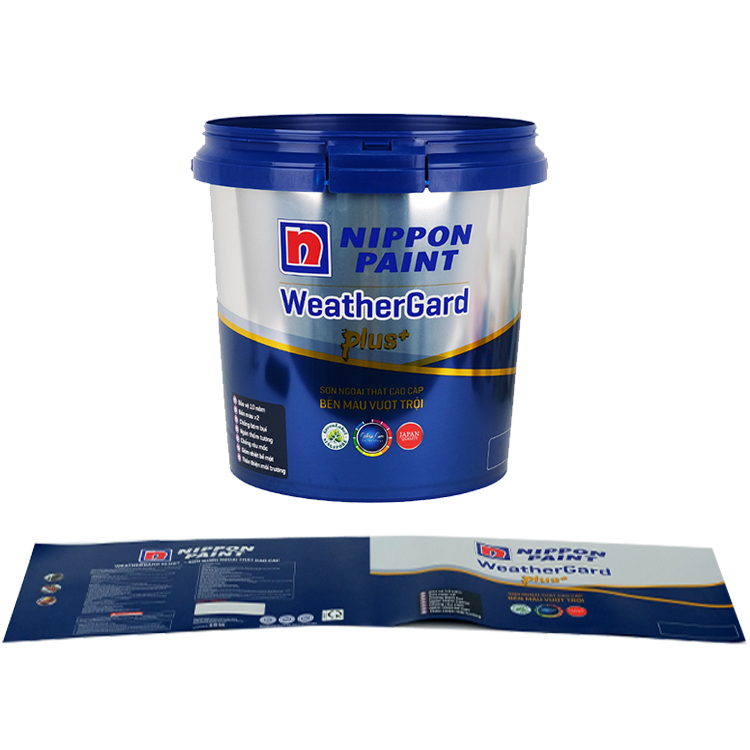
Step-by-Step Breakdown: Adapting an IML to a Paint Bucket Project
The following sequence is the working order used when adapting the ZY-IML Series to a paint bucket, lubricant pail or detergent container. Each step produces a document or a decision that the next step depends on.
Step 1 — Define the container, the resin and the molding process
Start with facts, not artwork: container resin (PP or PE), wall geometry, molding process and line speed. IML compatibility is stated for high-speed injection processes with no warping and no label fall-off, but that compatibility is verified against a specific tool, not in general. Record the container dimensions, the label area available and any curvature the film must follow.
Step 2 — Match the film polymer to the container resin
Select PP film for PP containers and PE film for PE containers, or move to PET or multi-layer composite laminated film where the application requires it. This step prevents the most expensive failure mode in IML: a label that does not fuse and either shifts during molding or delaminates afterwards.
Step 3 — Fix the film thickness inside the 30–100 μm window
Choose a starting thickness based on container size and label complexity, then confirm it in the molding trial. Thickness affects how the film behaves in the mold, how flat it sits during placement, and how the finished surface reads.
Step 4 — Choose the film structure and surface finish
Decide between complex white gloss film, complex transparent gloss film, standard gloss film, matte laminated film and holographic film, and between glossy, matte, orange peel, holographic and custom texture finishes. This decision should be made with the container in hand, because finish interacts with the molded surface of the bucket itself.
Step 5 — Approve the print specification
Prepare artwork for high-precision rotogravure printing at up to 8 colours, within a maximum printing width of 1200mm. Check that the film size, colour count and layout fit inside that envelope, and confirm the food-grade low-migration water-based ink is suitable for the intended use of the container. Approve a proof before cylinder or plate preparation moves ahead, because print precision of ±0.1mm with no colour deviation only holds if the artwork is built to the process.
Step 6 — Assemble the compliance file
Request the certification and test documentation that matches your market: FDA 21 CFR, BRCGS Packaging Materials, ISO22000 and QS certification, plus migration test results meeting EU 10/2011 where food contact applies. Keep EU Regulation (EC) No 1935/2004 in view if the packaging is destined for the European Union, because it sets the framework obligation to prevent chemical migration into food.
Step 7 — Align customization, MOQ and lead time
Customization options on the series are custom printing, custom size, custom colour matching and custom film formulation. MOQ and lead time are not fixed values — they are set per project and depend on the film formulation, the number of print colours (up to 8), whether new cylinders or plates are required, the print width up to 1200mm, and the compliance testing needed. Raise these questions at specification stage rather than after artwork approval, because they are the variables most likely to change a launch date.
Step 8 — Run acceptance testing and first-article approval
Validate the sample on your own molding line and test to the published specification. A practical acceptance matrix for a paint bucket or chemical pail IML covers:
- Adhesion: ≥5N, with no peeling after the injection molding cycle.
- Molding behaviour: no warping, no label fall-off at production line speed.
- Scratch resistance: 4H on the pencil hardness test.
- Temperature: stable across -20℃ to 120℃.
- Chemical exposure: resistance to weak acids, alkalis and common detergents, ideally tested with the actual product.
- Mechanical strength: tensile strength ≥20MPa on the film.
- Print quality: ±0.1mm precision, no colour deviation, correct colour match.
- Documentation: certificates and migration test reports filed against the approved sample.
Only after the first article passes should the specification be frozen and volume production scheduled.
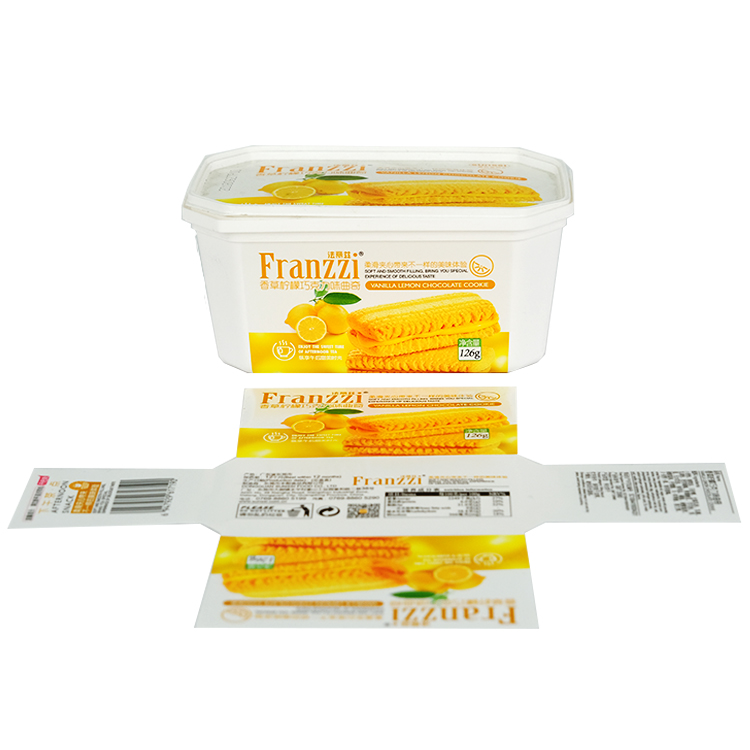
Use Cases: Where This Specification Stack Applies
The same film and print platform covers several container types. The ZY-IML Series is categorized for Food Grade IML Label, Daily Chemical IML Label, Industrial IML Label, Yogurt Cup IML and Paint Bucket IML applications.
Paint bucket IML
Paint buckets are the reference case for industrial IML: a rigid molded container, a large label area, and constant exposure to spills and handling. The specification priorities are adhesion ≥5N, chemical resistance to weak acids, alkalis and common detergents, scratch resistance of 4H, and print precision of ±0.1mm so that colour codes, mixing instructions and warning panels stay exact.
Lubricant bucket and industrial chemical container IML
Lubricant buckets and industrial chemical containers are listed applications for the series. Here the temperature range of -20℃ to 120℃ and the chemical resistance profile matter more than decoration: labels must remain intact through filling, stacking and long storage, and the print must stay legible for identification and safety purposes.
Daily chemical container IML
Detergent, shampoo and household product containers fall under the Daily Chemical IML Label category. These are high-volume, high-colour-count projects where 8-colour rotogravure printing and custom colour matching carry most of the brand value, and where resistance to common detergents is directly relevant to the product being packed.
Adjacent food applications using the same platform
The same film and print system is specified for Yogurt Cup IML, Ice Cream Container IML, Bubble Tea Cup IML and Plastic Bottle IML. For these, the compliance set — FDA 21 CFR, BRCGS, ISO22000, QS and migration testing to EU 10/2011 — moves to the front of the specification, with food-grade low-migration water-based ink as the ink baseline.
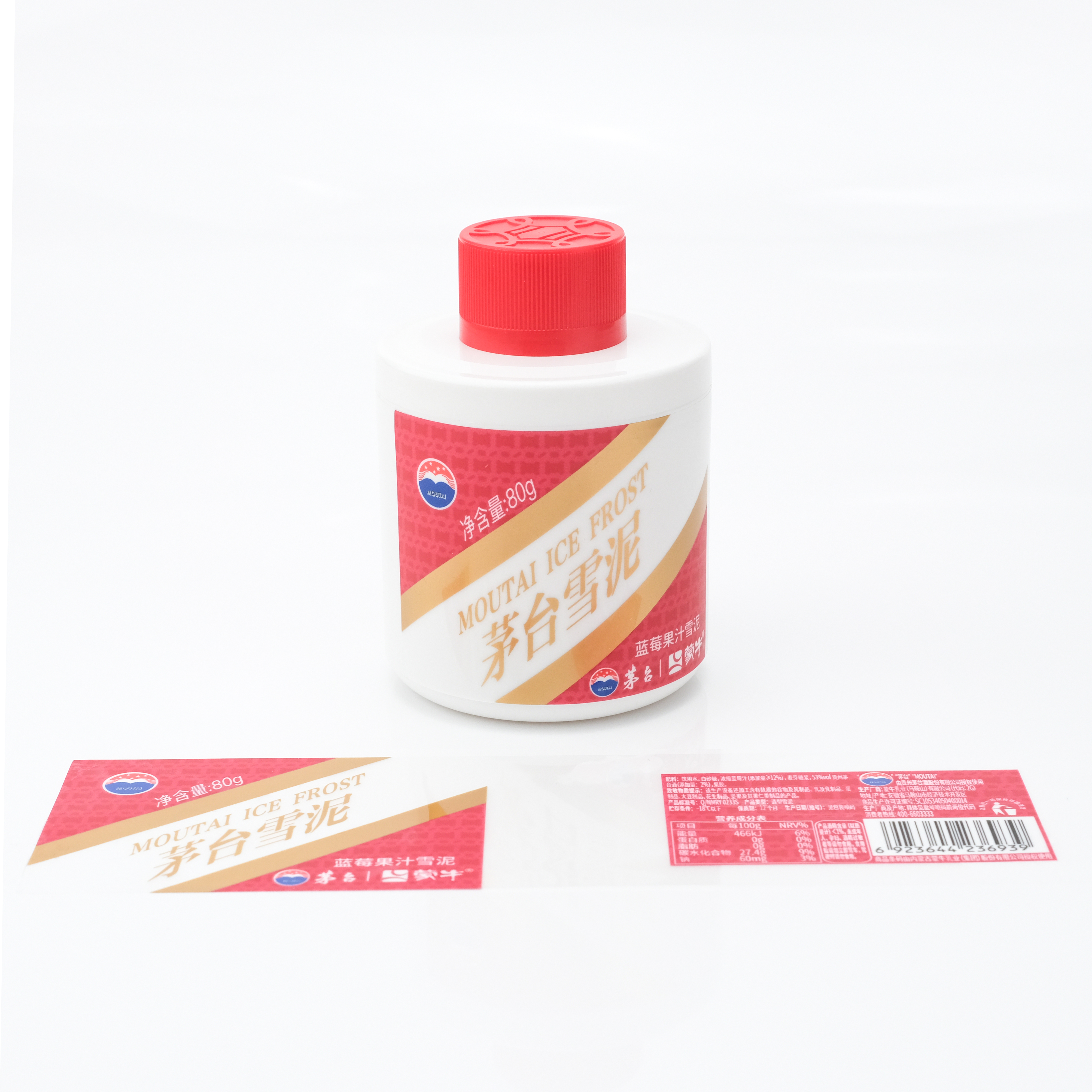
Comparison Table: What to Verify Against the ZY-IML Series Specification
Use the table below as a specification and verification checklist when adapting IML to a paint bucket or chemical packaging project. Every value in the right-hand column is a published ZY-IML Series parameter; the middle column states why the value matters for chemical packaging.
| Specification area | Why it matters for paint & chemical packaging | ZY-IML Series verified specification |
|---|---|---|
| Film material | The film must fuse with the container wall during molding | PP (food-grade virgin resin), PE (food-grade virgin resin), PET, multi-layer composite laminated films |
| Film thickness | Controls molding behaviour and surface quality on rigid pails | 30μm – 100μm (customizable) |
| Printing method & colours | Large label areas with colour coding, warnings and branding | High-precision rotogravure, up to 8 colours (customizable), max printing width 1200mm |
| Printing precision | Registration must hold for hazard symbols and multilingual text | ±0.1mm (no colour deviation) |
| Ink type | Reduces migration risk where contact sensitivity applies | Food-grade low-migration water-based ink |
| Adhesion strength | Prevents peeling and label fall-off during injection molding | ≥5N (no peeling during injection molding) |
| Temperature range | Warehouse heat, hot filling and cold chain transport | -20℃ to 120℃ |
| Scratch resistance | Handling, stacking and pallet abrasion | 4H (pencil hardness test) |
| Chemical resistance | Spills and residue from the packed chemical product | Resistant to weak acids, alkalis & common detergents |
| Tensile strength | Film integrity under molding stress | ≥20MPa |
| Film types | Appearance and coverage for different brand positions | Complex white gloss, complex transparent gloss, standard gloss, matte laminated, holographic film |
| Surface finishes | Perceived quality and handling-mark behaviour | Glossy, matte, orange peel, holographic, custom texture |
| Compliance | Market access and food contact or migration obligations | FDA 21 CFR, BRCGS, ISO22000, QS certified; migration test meets EU 10/2011 |
| Customization | Fitting the label to a specific pail, brand and market | Custom printing, custom size, custom colour matching, custom film formulation |

FAQ: Adapting IML to Paint Buckets and Chemical Packaging
Which compliance standards should an IML for paint buckets and chemical packaging meet?
The document set is usually the same even when the packed product differs. The ZY-IML Series is produced with food-grade low-migration water-based ink and complies with FDA 21 CFR, BRCGS Packaging Materials, ISO22000 and QS certification standards, with migration testing meeting EU 10/2011 food contact material standards. Where packaging is exported to the European Union, EU Regulation (EC) No 1935/2004 provides the framework for food contact materials and requires labels to prevent chemical migration into food. For genuinely industrial chemical packaging the decisive proof is different: it is the combination of adhesion strength of ≥5N, resistance to weak acids, alkalis and common detergents, and stability across -20℃ to 120℃, tested against the contents the container will actually hold.
Can IML film, printing and dimensions be customized for a specific bucket or pail?
Yes. The ZY-IML Series supports custom printing, custom size, custom colour matching and custom film formulation. Customization runs through the full parameter set: film material from PP, PE, PET or multi-layer composite laminated film; film thickness between 30μm and 100μm; up to 8 colours in high-precision rotogravure; a maximum printing width of 1200mm; and a choice of film types and surface finishes including glossy, matte, orange peel, holographic and custom texture. YZY, the manufacturer behind the series, operates a 20,000 m² facility with approximately 250 staff, a 10-engineer R&D team and 48 patents, which is the capability base that customization requests are evaluated against.
What drives the cost of an IML project for paint and chemical packaging?
Cost is driven by specification choices rather than by a single price per label. The main variables are the film material and structure (PP, PE, PET or multi-layer composite laminated film), the film thickness chosen within the 30μm to 100μm range, the number of print colours up to 8, the surface finish selected from glossy, matte, orange peel, holographic or custom texture, the print width up to 1200mm, and whether new cylinders or plates are needed for the artwork. Volume and compliance testing also affect the commercial picture. Because these variables interact, the practical approach is to fix the specification first and then request a quotation against that frozen specification rather than against a rough brief.
How do I validate a sample before committing to mass production?
Request a sample at the final film, thickness and print specification, then run it on your own molding line. The acceptance matrix should follow the published parameters: adhesion strength of ≥5N with no peeling during injection molding; suitable performance in high-speed injection processes with no warping and no label fall-off; scratch resistance of 4H on the pencil hardness test; stability from -20℃ to 120℃; tensile strength of ≥20MPa; chemical resistance to weak acids, alkalis and common detergents; and print precision of ±0.1mm with no colour deviation. Testing with the actual product the container will hold, rather than a substitute, produces the most reliable result.
What affects MOQ and lead time for a custom IML project?
MOQ and lead time are set per project and are not fixed published values. They depend on the film formulation requested, the number of print colours (up to 8), whether new cylinders or plates must be prepared for the artwork, the chosen printing width up to 1200mm, the surface finish, and the compliance documentation required for the destination market. Capacity is one part of the answer: YZY runs a 20,000 m² facility with annual production capacity of 200,000,000 units, approximately 250 staff, and export business accounting for 30% of total sales across worldwide markets. The reliable way to get a firm MOQ and schedule is to send the final specification — container resin, dimensions, film type, thickness, colours and finish — and ask for a production slot against it. You can start that conversation at the YZY official site or by sending the brief to yzy@inmoldlabel.net.
Conclusion: Freeze the Specification Before You Freeze the Artwork
Adapting IML to paint buckets and chemical packaging is a sequence, and the sequence matters more than any single parameter. Match the film polymer to the container resin. Keep thickness inside the 30–100 μm window and confirm it in a molding trial. Build the artwork for high-precision rotogravure at up to 8 colours and a maximum width of 1200mm, using food-grade low-migration water-based ink. Anchor the specification on adhesion strength of ≥5N, tensile strength of ≥20MPa, scratch resistance of 4H and a temperature range of -20℃ to 120℃. Then assemble the compliance file — FDA 21 CFR, BRCGS, ISO22000, QS, and migration testing to EU 10/2011 — and only after that discuss MOQ and lead time.
Projects that go wrong usually do so in the opposite order: artwork first, materials second, testing last. The specification stack described here is deliberately written to be checked line by line against a sample, so that first-article approval reflects the container that will actually be produced.
Next Step: Sample, Quote or Brochure
YZY supplies the ZY-IML Series for paint bucket, lubricant bucket, industrial, daily chemical and food grade in-mold labeling applications, with PP and PE film, 8-colour high-precision rotogravure printing and a compliance set covering FDA 21 CFR, BRCGS, ISO22000, QS and EU 10/2011 migration testing.
- Request an IML sample at your target film, thickness and finish for a molding trial.
- Request a quotation against a frozen specification: container resin, dimensions, film type, thickness, colour count and print width.
- Download the YZY product brochure: YZY brochure (PDF)
Website: www.inmoldlabel.net | Blog: blog.inmoldlabel.net
Email: yzy@inmoldlabel.net | Tel / WhatsApp: +86 182 6778 1866
Address: Building 59, Zone E, Guohong Zhizao new town, Xingke Road, Longgang, Wenzhou, Zhejiang, China, 325802
Contact: Holly — send your container drawing and target specification to receive a sample and production quotation.
Published specification values quoted in this guide refer to the ZY-IML Series. Market figures are attributed to their published sources: Grand View Research, Dataintelo, DataM Intelligence, Future Market Insights and the European Commission.
Have Questions or Need More Details?
Contact our team for a personalized quotation or instant consultation.
Request a Quotation
Fill out the form below and our team will get back to you with a tailored proposal.
WhatsApp Direct Chat
Prefer to chat in real-time? Message us on WhatsApp for instant assistance & quick answers.
- Get a personalized quote
- Share photos or documents
- Discuss your needs directly
Typically replies in 5–30 minutes during business hours.