IML Adhesion Science: How In-Mold Labels Bond to Plastic
An in-mold label does not stick to a plastic container the way an adhesive label does — it becomes part of the container wall. A pre-printed polypropylene (PP) or polyethylene (PE) film is placed into the open mold cavity, molten resin is injected against it, the film surface softens, polymer chains from the film and the resin interdiffuse under packing pressure, and the interface solidifies into one continuous structure as the part cools. An IML construction has no adhesive layer, and therefore no adhesive layer that can fail.
That mechanism is what separates a true in-mold label from a label that merely looks like one. It also defines the figures a buyer has to verify before releasing a purchase order: film thickness in the 30–100 µm band, rotogravure printing up to 8 colors, adhesion strength of at least 5 N to resist peeling, film tensile strength of at least 20 MPa, 4H surface hardness, and a service window of −20 °C to 120 °C.
The bond, in one line: an IML label is welded into the container during molding — film and resin form a single wall, so peel resistance depends on interface integrity and process control rather than on adhesive tack.
This explainer works through the bond itself — the interfaces, the thermal window, the pressure stage and the cooling stage — then converts that science into a production sequence, application tests, and a comparison table you can take into a supplier conversation.
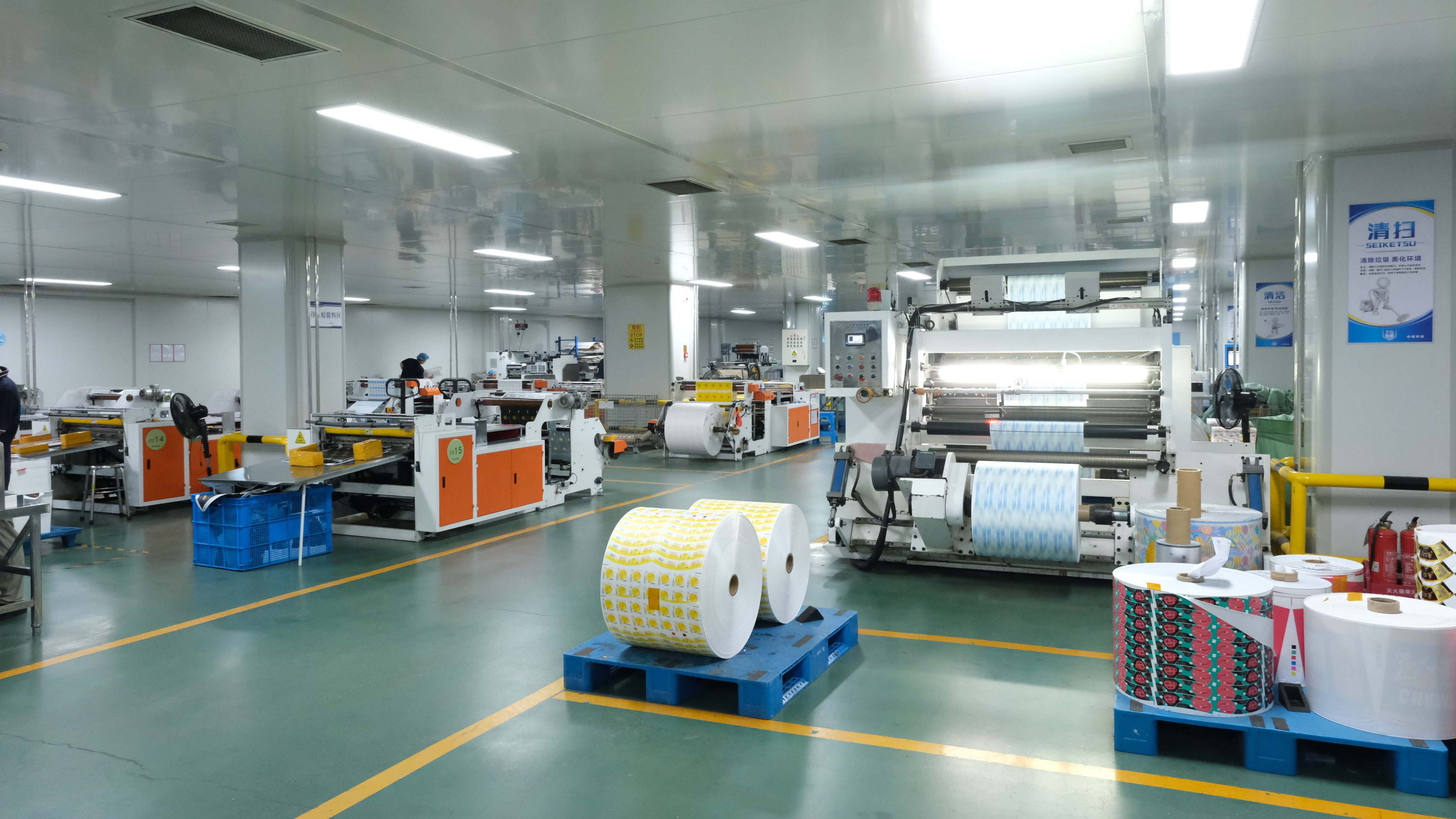
Printing, converting and quality control of IML label film before it reaches the injection molding line.
Why IML Bond Failure Appears as a Packaging Problem, Not a Label Problem
Adhesion failure rarely announces itself at the molding machine. It appears weeks later: a label edge lifts in a freezer, a paint bucket loses print where solvent ran down the side, a yogurt cup that passed filling starts to show a silver blister after a day in a chilled display, or a stacked container rubs its print away in transit. By then the cost has already moved downstream — rejected lots, line stoppages, relabeling, and retailer chargebacks.
In IML practice, the usual causes of a weak bond fall into a short, predictable list:
- Polymer mismatch between label film and container resin, which narrows the process window and pushes more of the qualification burden onto testing.
- Insufficient heat at the interface — a melt or mold temperature that never softens the film's contact surface enough for chain movement.
- Air trapped between film and cavity wall, producing blisters or dull patches where no contact ever occurred.
- Cavity contamination — mold release residue, dust or oil that physically separates film and resin.
- Film that is too thick or too stiff for the container geometry, so it cannot conform to the cavity wall before the resin arrives.
- An ink or coating system that interferes with the bonding surface or that cannot survive the temperature of the process.
Each of these is a specification or process-control decision, not a printing decision. That matters commercially: a buyer who evaluates IML on print quality alone, and not on the film-resin pair, the thickness band and the adhesion gate, is buying decoration rather than a fused component.
The Industry Context Behind IML Adhesion Requirements
In-mold labeling is a mature decoration method with a clearly defined process family. Trade classification distinguishes injection molding (IML-IM), extrusion blow molding (IML-EB) and thermoforming (IML-TF); in all three, a pre-printed label is placed in the tool and fuses with the polymer as the package is formed. This article focuses on injection IML, where the label meets molten resin at the highest temperature and pressure.
The market size gives a sense of how much production depends on that bond holding. Grand View Research values the global in-mold label market at USD 2.3 billion in 2023, with a projection of USD 3.1 billion by 2030 — a figure that describes labels, not labeled containers, so it should not be compared directly with broader “IML packaging” estimates.
Two structural facts explain why PP and PE dominate the conversation. Polypropylene accounted for 47.2% of IML label material share in 2023, and food and beverage applications generated over 41.3% of total IML market revenue. PP's dominance is not only a cost story: a PP label on a PP container is the most favorable chemistry available to the process, and food and beverage is the segment with the least tolerance for either a lifted edge or a migration failure.
Regulation reinforces this. In the European Union, plastic materials and articles intended to come into contact with food are governed by Commission Regulation (EU) No 10/2011, which sets the framework for migration limits and the supporting declaration of compliance. EU Regulation 2025/351 adds purity and recycled-content requirements on top of that framework, with a reported effective date of 16 September 2026 — one more reason a food-grade IML compliance file has to be refreshed rather than archived. In the United States, FDA 21 CFR food-contact requirements apply to the same film and ink combination.
How the Bond Actually Forms: Three Interfaces and One Cooling Stage
The adhesion in IML is not a chemical adhesive effect. It is a thermal fusion effect produced by four conditions arriving in the right order: compatible polymers, a softened film surface, intimate contact under pressure, and controlled cooling.
Condition 1 — The film and the resin should belong to the same polymer family
Polymer chains of the same family are mutually compatible at an interface. That is why the material split in the market mirrors the container split: PP film for PP cups and buckets, PE film for PE bottles and containers, and white or transparent PP as the most common label construction at a typical thickness of 50–60 µm in supplier literature. Where film and resin differ, bonding can still be achieved, but the process window narrows and peel testing becomes the deciding evidence rather than the polymer match.
Condition 2 — The film surface must soften, not melt through
Molten resin entering the cavity is far above the film's softening point. The film face in contact with the melt softens enough for chain segments to move and entangle with the incoming polymer, while the film body stays dimensionally stable so the printed image does not distort or stretch. This is precisely the balance film suppliers describe when they position injection IML films around print quality, dimensional stability and consistent machinability — three properties that exist to keep the printed label flat at the moment it is being bonded.
Condition 3 — Pressure has to press resin into film, with no air in between
Labels are cut to final shape, fed in stacks, picked up by a robot and inserted at high speed into the mold cavity before contact with the molten resin. Static charge or vacuum holds the label flat against the cavity wall. When injection begins, resin pressure presses the melt into the film surface across the full label area. Any air pocket left between label and wall becomes a non-bonded zone — visually a blister, mechanically a starting point for lifting.
Condition 4 — Cooling under pressure locks the interface
As the part cools, the interdiffused layer crystallizes into a continuous wall. The finished label has no edge to catch, no liner to remove, and no adhesive to migrate. It is this stage that turns the process characteristic suppliers describe — the label being integrated during molding, eliminating a separate post-mold labeling step — into a measurable mechanical property.
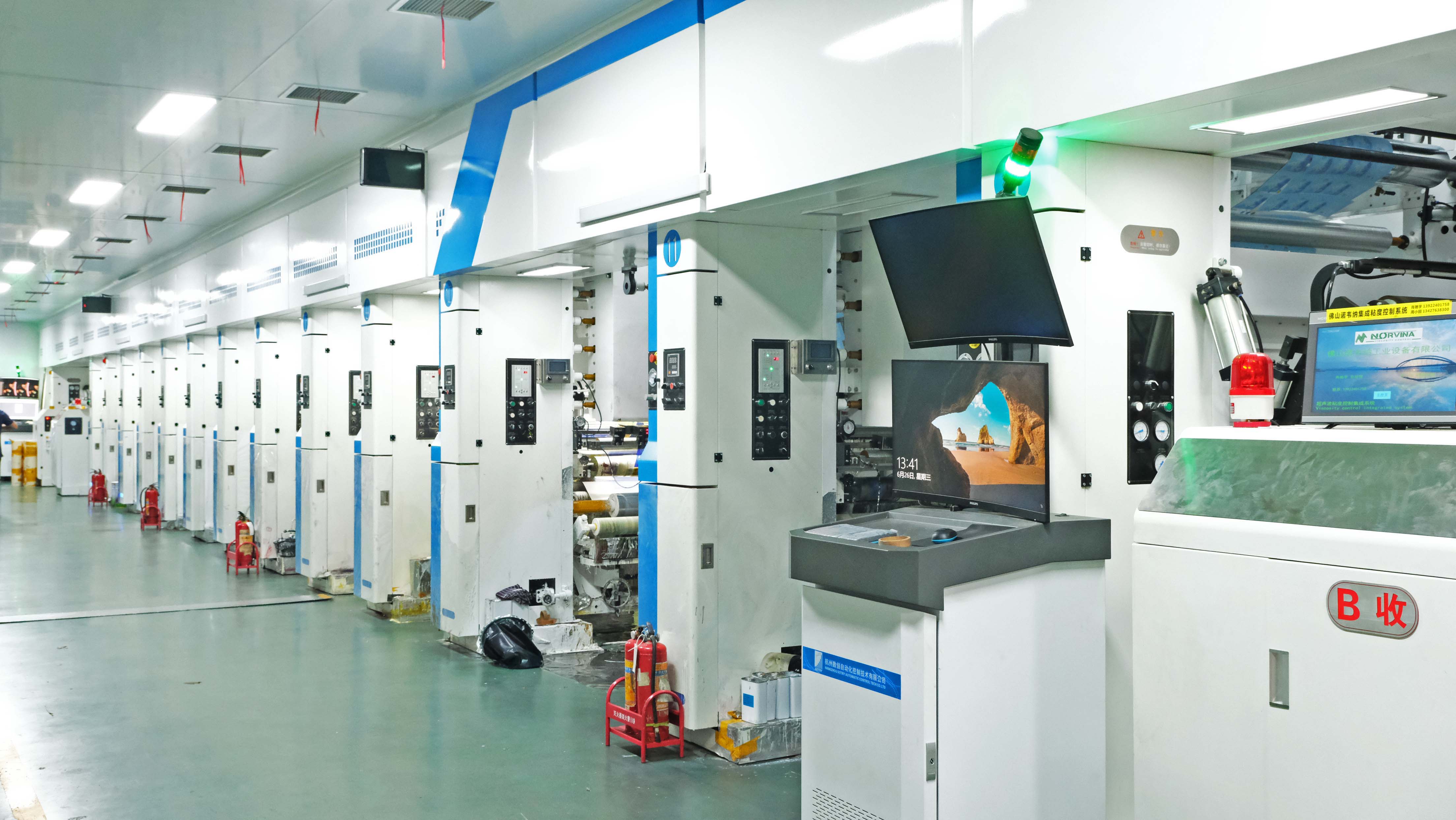
Rotogravure printing of IML film: color consistency and register accuracy carry directly into the finished container.
Why ≥5 N Is the Adhesion Gate
Peel strength is the number that converts the physics into a purchase specification. In a peel test, the bonded label is lifted at a controlled angle and the force required is recorded; an adhesion strength of at least 5 N is the working threshold used to confirm that the interface — not the ink, not the surface coating — is carrying the load. Below that value, the label has usually bonded only partially: the edges may look acceptable on the day of production and lift after a temperature cycle, a humidity cycle, or a drop test.
Two practical consequences follow. First, a 5 N result should be reported with the test method and the container geometry, because peel resistance on a flat panel and on a curved bucket wall are not the same measurement. Second, the test should be repeated after conditioning: refrigerated storage, condensation, and chemical contact are the conditions where marginal bonds separate.
Film Thickness: Why the 30–100 µm Band Exists
Film thickness is a balance between conformability and stability. Thin film conforms easily to cavity geometry and follows tight radii, but has less stiffness for high-speed stack feeding and robotic insertion. Thick film feeds and prints well but needs more heat to soften at the interface and resists conforming to complex walls. That is why the practical specification band for PP and PE IML film spans roughly 30–100 µm depending on container type, wall thickness and molding process, with 50–60 µm quoted as the typical PP label thickness in supplier literature for standard applications.
Printing: Rotogravure, 8 Colors, and Low-Migration Ink
Rotogravure printing is the workhorse for IML because it holds color density and register across long runs, and it can carry up to 8 colors on a single label — enough for photographic imagery, brand color blocks and mandatory information on the same surface. The print has to survive more than the shelf: the web must run through slitting, die-cutting, stacking and robotic pick-up without stretching or scuffing, which is where film tensile strength of at least 20 MPa and a 4H surface hardness matter.
For food-contact work, the ink system is a compliance decision. Food-grade, low-migration water-based inks are specified so that the printed label can meet migration limits under EU 10/2011 and FDA 21 CFR requirements, supported by third-party laboratory testing rather than by supplier assurance alone. A 4H pencil-hardness result protects the print through abrasion; the migration test protects the consumer.
−20 °C to 120 °C: The Service Window the Bond Must Survive
A single IML specification may have to perform from a frozen display cabinet to a hot-fill or near-mold-temperature environment. The −20 °C to 120 °C performance window describes that range: the label must stay bonded and legible through freezing and condensation at the cold end, and resist distortion, ink flow and edge lift at the hot end. Durability of this kind is why IML is described as suitable for refrigerated, frozen and high-humidity packaging applications — but the description is qualitative, and buyers should confirm the specific film and ink combination against their own operating conditions.
From Film Roll to Fused Label: A Seven-Step Production Sequence
The bond is created in a few seconds inside the mold, but it is decided much earlier. A controlled IML program treats these seven steps as one chain.
- Define the container and the bond requirement. Resin type, wall thickness, molding process, fill chemistry, storage temperature and food-contact status are fixed first. Only then is the film family (PP or PE) and the thickness band selected.
- Print the label. Rotogravure printing up to 8 colors with food-grade low-migration water-based ink where food contact applies, with color and register checked in-line.
- Convert to final shape. Slitting and die-cutting to the label outline, then stack packing in the format the robot or insertion system expects.
- Inspect incoming material and in-process output. Raw material incoming inspection, three-step in-process testing and final random inspection form the quality spine; 100% visual inspection catches print and cut defects before they reach a mold.
- Insert the label. Stack feeding, robotic pick-up and placement into the cavity, held flat by static charge before the mold closes.
- Inject and bond. Melt contacts the film, packing pressure consolidates the interface, and the part cools under pressure.
- Validate the finished bond. Peel testing against the ≥5 N gate, visual check, dimensional check, and — for food contact — migration testing by a third-party laboratory, with material traceability retained for the batch.
Steps 4 and 7 are where suppliers differ most in practice. A press that prints beautifully but cannot evidence traceability, in-process testing and a peel result at the specified container geometry has not demonstrated an IML capability; it has demonstrated a printing capability.
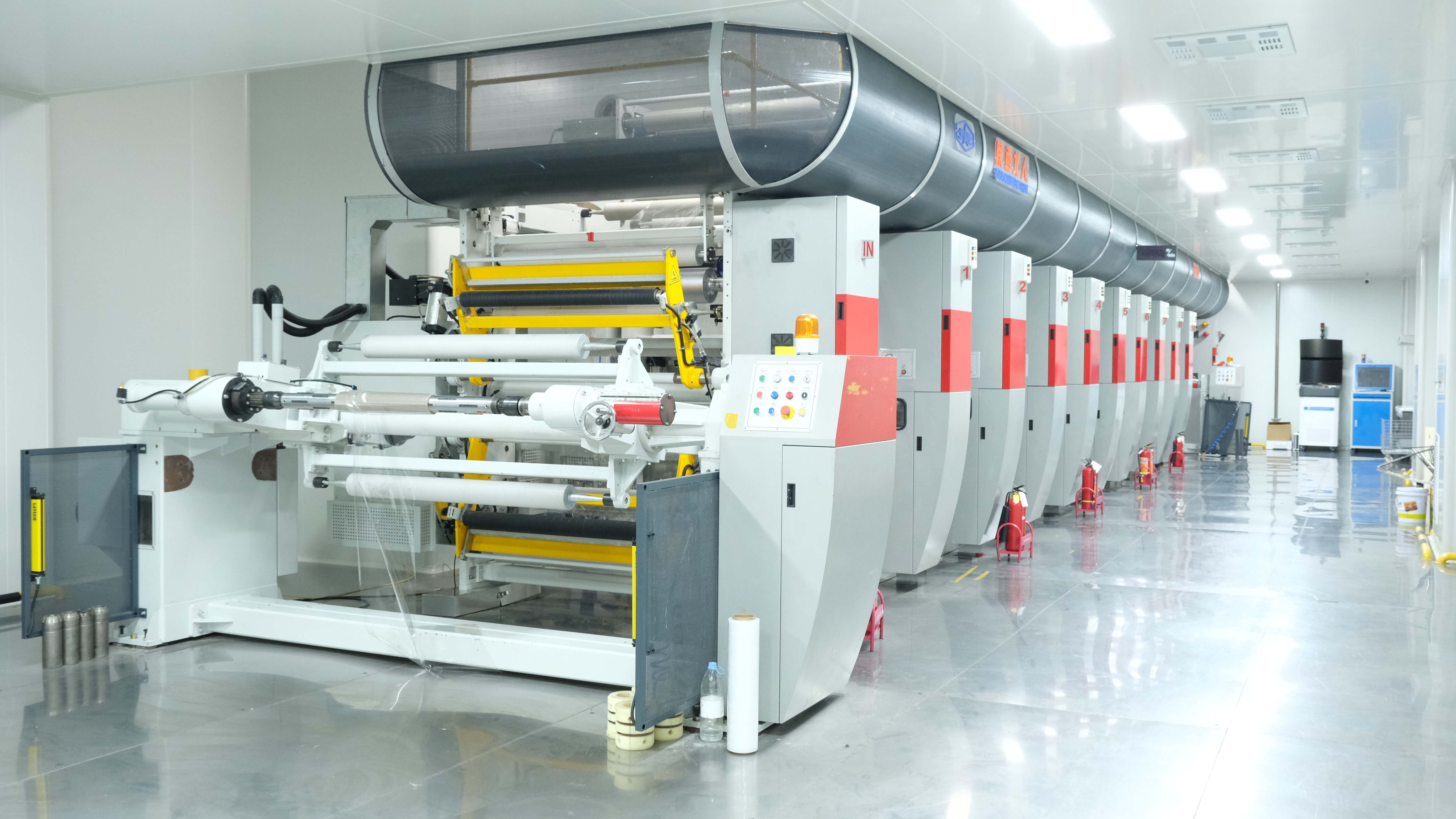
Custom IML printing: the printed film is later cut, stacked and inserted into the mold cavity by robot.
Where the Bond Gets Tested: Yogurt Cups, Paint Buckets and Industrial Containers
The same fusion mechanism meets very different stress profiles depending on what goes into the container.
Yogurt cups and food containers
Thin-wall PP cups combine a tight radius, a chilled fill and condensation on the outside. The label must bond across a curved wall, stay legible through cold-chain handling, and satisfy migration limits because it shares a package with food. Yogurt cups are a standard reference application for PP-based IML films, and food and beverage remains the segment where compliance documentation is inspected as closely as print quality.
Paint buckets and chemical packaging
Paint buckets add chemical exposure, stacking load and frequent outdoor or unheated storage. A bond that passes a peel test on a dry cup still has to hold where solvent splashes the wall and where buckets are stacked rim to lid. Chemical resistance is a property of the whole construction — resin, film and ink — and should be validated against the actual fill rather than assumed from a generic IML claim.
Daily chemical and industrial containers
Detergent, oil and general industrial containers prioritize abrasion resistance and long service life. A 4H surface hardness and a fully bonded edge matter here because the decoration is exposed to handling, transport vibration and repeated wiping.
Bubble tea cups and ice cream containers
High-speed filling lines and constant condensation make beverage and frozen dessert cups a durability test rather than a print test. IML's resistance to moisture and temperature change is the reason the format appears in refrigerated, frozen and high-humidity applications — with the specific film construction still selected per cup geometry and filling temperature.
IML vs Traditional Post-Mold Labels: Bond, Cost and Compliance
| Comparison dimension | In-mold label (IML) | Traditional post-mold label |
|---|---|---|
| When the label is attached | Integrated with the container during injection molding; no separate labeling step | Applied after the container is produced |
| Peel and edge-lift risk | Fused into the wall — no peeling risk from the label edge | Prone to falling off, particularly in high-humidity environments |
| Durability | Higher durability; the decoration is part of the container | Depends on adhesive and surface condition |
| Production steps | Integrated labeling reduces production steps by 30% | Requires a separate labeling operation |
| Lead time | IML saves about 20% lead time versus post-production labeling | Baseline for comparison |
| Cost structure | Slightly higher material cost, but lower total cost through reduced post-production labor and lower rejection rates | Lower material cost, with post-production labor and rejection exposure |
| Food-contact compliance | Constructions available in full compliance with FDA and EU standards | Depends on the adhesive and liner system used |
| Visual options | Food-grade safety plus special visual effects on a molded surface | Limited by the film and adhesive construction |
IML Bond and Film Specification Benchmarks
| Parameter | Working specification | What it controls |
|---|---|---|
| Label film material | PP or PE, matched to container resin | Polymer compatibility at the bonding interface |
| Film thickness | 30–100 µm (typical PP label: 50–60 µm) | Conformability, stack feeding, heat response |
| Printing process | Rotogravure, up to 8 colors | Color density, register, long-run consistency |
| Ink system | Food-grade low-migration water-based ink | Migration compliance for food contact |
| Adhesion strength | ≥5 N peel force | Resistance to edge lift and peeling |
| Tensile strength | ≥20 MPa | Web stability through printing, cutting and insertion |
| Surface hardness | 4H | Scratch and abrasion resistance of the printed surface |
| Service temperature | −20 °C to 120 °C | Cold-chain, condensation and hot-fill performance |
| Compliance references | EU 10/2011, FDA 21 CFR; management systems QS, ISO, BRCGS | Market access and audit readiness |
IML Adhesion FAQ
Which food-contact regulations and certifications should an IML label meet for yogurt cups or food containers?
For the European market, plastic food-contact materials are governed by Commission Regulation (EU) No 10/2011, which sets migration requirements and the basis for a declaration of compliance; for the United States, FDA 21 CFR requirements apply. Practically, that means the film, the ink and the printing process all have to be inside the compliance file — which is why food-grade low-migration water-based inks are specified for IML food packaging. On the management-system side, YZY (Zhejiang Zhongyu Technology Co., Ltd.) holds QS, ISO and BRC certifications and undergoes annual BRCGS, ISO and FDA audits according to company documentation, supported by third-party laboratory testing and material traceability. Buyers should request the declaration for the exact film and ink combination they will run, not a generic certificate.
Can YZY match film, print and adhesion specifications to a specific container?
YZY is an in-mold label manufacturer based in Wenzhou, Zhejiang, China, founded in 2009, operating a 20,000 m² facility with 250 employees, a 10-person R&D team, a laboratory and 48 accumulated patents. Its main product is in-mold labeling, alongside sealing films, embossed lidding films and POF films, with an export ratio of 30% and customers worldwide — the company reports long-term cooperation with brands including Starbucks, Nestlé and Uni-President. Capability in practice means PP and PE film selection, rotogravure printing up to 8 colors, adhesion verification at the container geometry, and a documented compliance file for food-contact projects.
What is the minimum order quantity and what payment terms apply?
The stated MOQ for IML orders is 2,000 ㎡, with payment terms of 30/70 and delivery terms of FOB or CIF. Because MOQ is expressed in area rather than label count, the label size and the number of labels per sheet or stack determine how many units that area represents — a point worth calculating before comparing quotations from different suppliers.
How is a sample validated before mass production?
Acceptance criteria are based on sample testing. A sample approval for IML should confirm the printed result against the approved artwork, the peel force at the specified container geometry against the ≥5 N gate, dimensional fit in the mold, and — where food contact applies — migration test documentation for the film and ink used. The production system behind the sample includes raw material incoming inspection, three-step in-process testing and final random inspection, so the sample should be treated as evidence of that system rather than an isolated hand-made piece.
What delivery terms and supply-continuity measures are available for repeat orders?
Delivery terms are FOB or CIF. Supply continuity is managed through ERP digital production management with real-time tracking and multi-line backup production, including two backup production lines intended to prevent delays on repeat and seasonal orders. For buyers moving from sample approval into a long-term program, it is worth confirming the same parameters — film lot, ink batch, printing cylinder and peel-test method — are carried forward, since a change in any of them reopens the qualification question.
What to Verify Before You Approve an IML Label
IML adhesion is not a property a label has or lacks; it is the outcome of a matched system — compatible film and resin, a thickness band suited to the container, a printing and ink spec that survives the process, an adhesion result of at least 5 N measured at the real geometry, and cooling under pressure inside a clean cavity. When those conditions are documented, the durability claims follow: tensile strength of at least 20 MPa for web stability, 4H surface hardness for abrasion, and a −20 °C to 120 °C service window for cold chain and hot fill alike.
The buyer's checklist is therefore short and specific. Ask for the film family and thickness, the printing method and color count, the ink migration documentation for the target market, the peel-test value and method at your container geometry, and the batch traceability record. A supplier that answers all five has demonstrated an in-mold labeling capability; a supplier that answers only the first three has demonstrated printing.
Used this way, the science of the bond becomes a procurement tool: it explains why an IML yogurt cup keeps its print through a cold chain, why a paint bucket's decoration survives solvent and stacking, and why the total cost of an integrated label can undercut a cheaper label applied later.
Request an IML Sample or Quotation
Share your container type, resin, fill and target market, and YZY will propose a film and print specification with an adhesion validation plan for your geometry. MOQ starts at 2,000 ㎡, delivery terms FOB or CIF.
Website: www.inmoldlabel.net | Email: yzy@inmoldlabel.net | Tel / WhatsApp: +86 182 6778 1866
Download the full product catalogue: YZY IML Product Brochure (PDF)

YZY — Zhejiang Zhongyu Technology Co., Ltd., Wenzhou, Zhejiang, China. Founded 2009 · 20,000 m² facility · QS, ISO and BRC certified.
Have Questions or Need More Details?
Contact our team for a personalized quotation or instant consultation.
Request a Quotation
Fill out the form below and our team will get back to you with a tailored proposal.
WhatsApp Direct Chat
Prefer to chat in real-time? Message us on WhatsApp for instant assistance & quick answers.
- Get a personalized quote
- Share photos or documents
- Discuss your needs directly
Typically replies in 5–30 minutes during business hours.