IML Partnership FAQ: Your Top Questions on Lead Times, MOQs, and Long-Term Supply
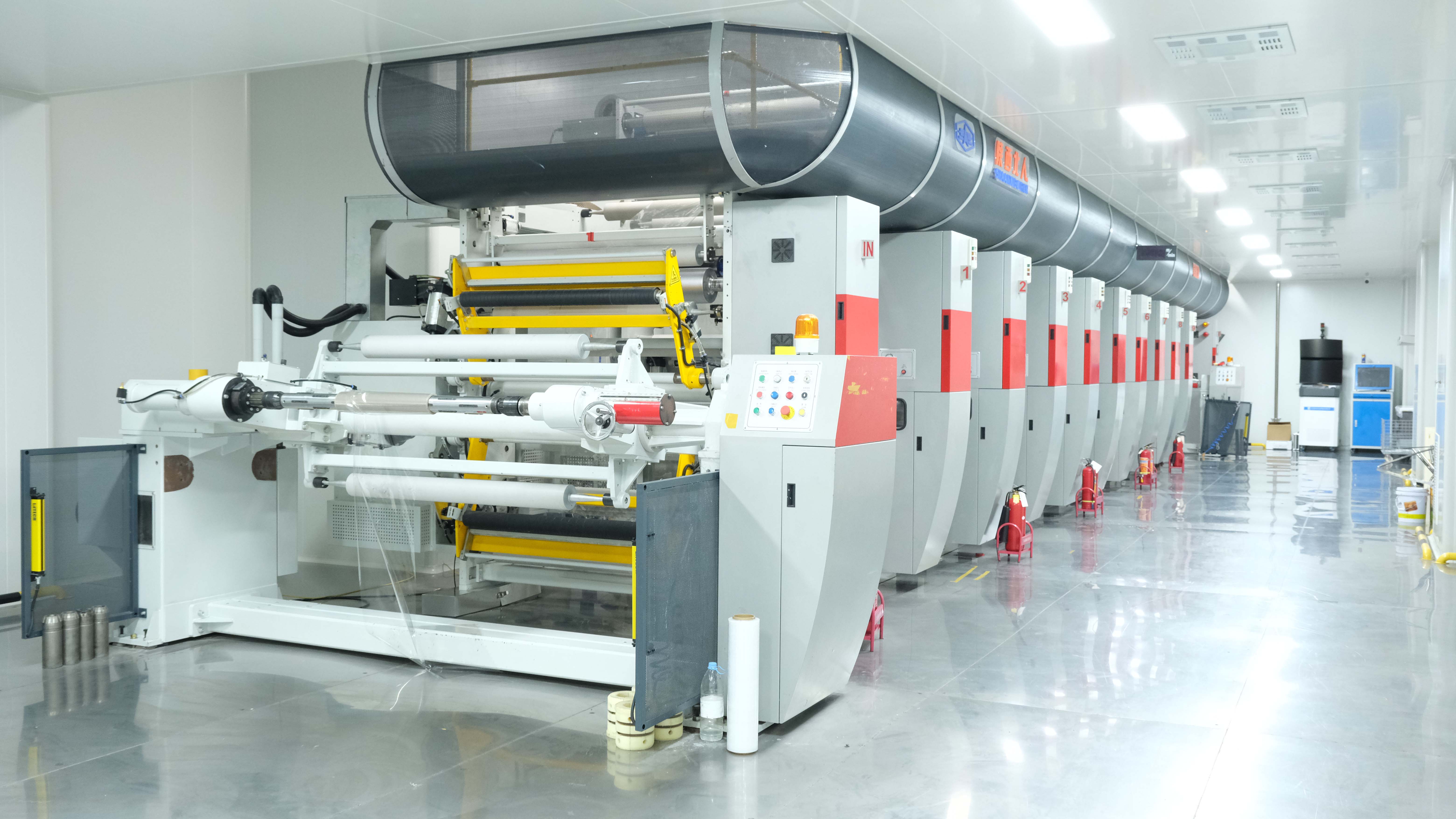
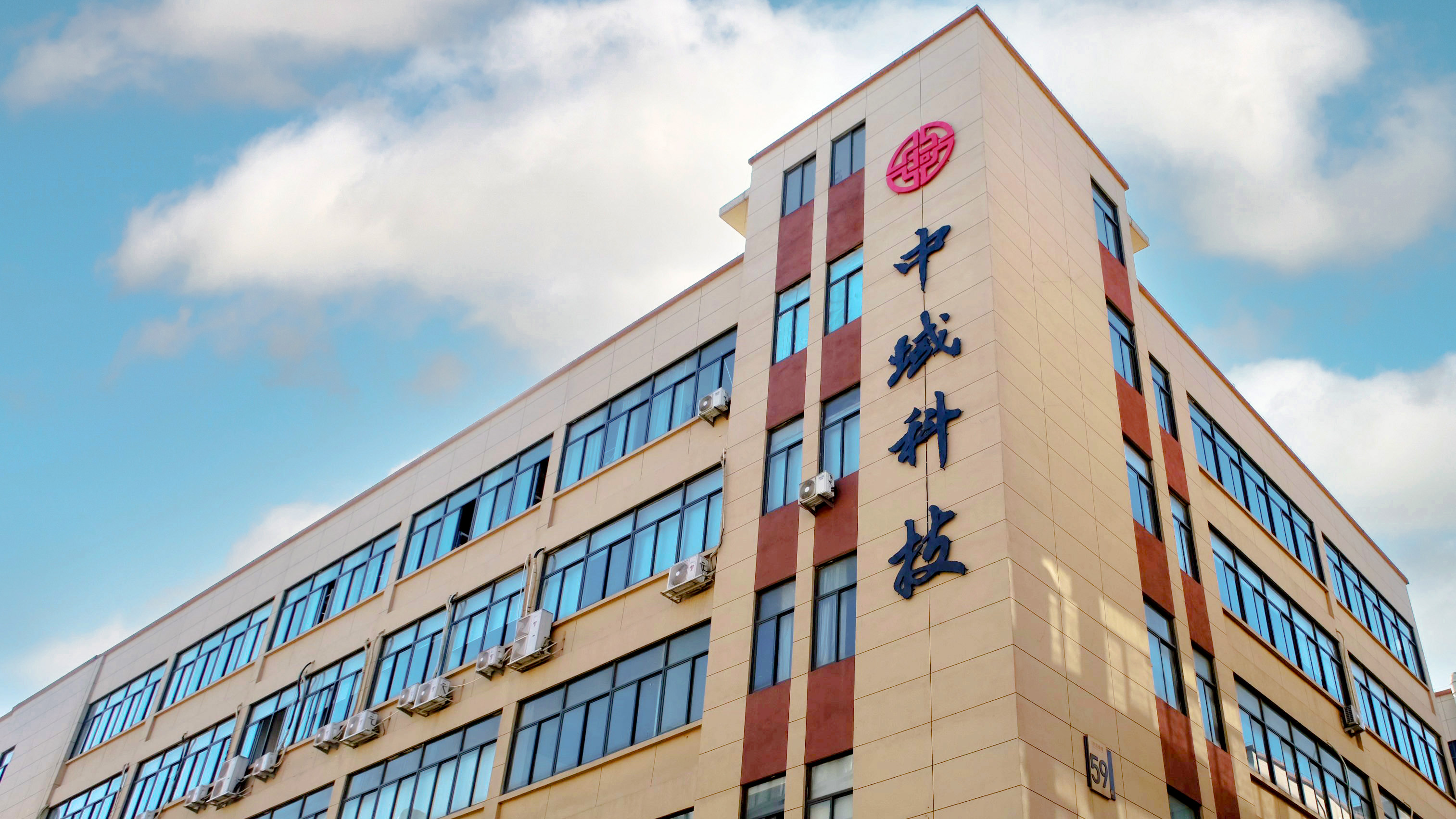
IML label film printing at Zhejiang Zhongyu Technology Co., Ltd. (YZY), Wenzhou, Zhejiang, China.
Entering a long-term in-mold labeling (IML) supply partnership is a commercial decision as much as a technical one. Once a buyer accepts that IML labels fuse into the container during injection molding, the remaining questions are about commitment size, timing, cash flow and continuity.
The short answers for Zhejiang Zhongyu Technology Co., Ltd. (YZY) are: a minimum order quantity of 2,000 m²; a production lead time of 15–20 days after sample confirmation; payment terms of 30% deposit and 70% before shipment; FOB or CIF delivery; and sample-test-based acceptance supported by ERP digital production tracking and two backup production lines.
This FAQ expands each answer with the operational detail behind it — the compliance base, the film and printing parameters, the sampling sequence and the delivery safeguards — so procurement managers, brand owners and injection molders can plan a multi-year IML program against realistic terms.
Why These Questions Decide Whether IML Becomes a One-Off Order or a Standing Supply Line
IML projects rarely stall because the label technology failed. They stall on commercial friction: an order quantity that does not match a demand forecast, a delivery date calculated from the wrong starting point, or a payment and shipping arrangement that neither side clarified before film and tooling were committed.
Three patterns cause most of that friction.
- MOQ misalignment. IML labels are printed on film through a continuous rotogravure process, so suppliers set a minimum order quantity that keeps each print run economical. Buyers who plan around retail sell-through rather than print economics often discover the gap late in negotiation.
- A wrong lead-time baseline. Production lead time is counted from sample confirmation, not from the date of inquiry or quotation. A buyer who assumes otherwise builds an unrealistic launch date into the project plan and then treats a normal schedule as a delay.
- Delivery risk carried by a single line. When one printing or converting line serves an entire export schedule, an unplanned stoppage on that line becomes the buyer’s stock-out.
For organizations moving from evaluation into execution, these three items — together with payment terms, accepted Incoterms and after-sales support — are the practical content of a long-term supply agreement. The rest of this article answers them in the order a buyer usually asks them.
IML Market Context: Why Buyers Are Moving From Spot Orders to Multi-Year Supply
The IML category is expanding steadily rather than explosively, which is exactly the condition that rewards long-term supply planning over spot purchasing.
Grand View Research valued the global in-mold labels market at USD 2.31 billion in 2023 and projects USD 3.14 billion by 2030, a CAGR of 4.6%. Future Market Insights projects the narrower in-mould label film market growing from USD 1.3 billion in 2025 to USD 1.7 billion by 2035. Dataintelo reported that Asia-Pacific held a 42.8% revenue share of the IML market in 2025, supported by growth in the dairy and paint industries in China and India.
Application mix matters just as much for capacity planning. Grand View Research reported that food & beverage applications accounted for over 41.3% of IML revenue in 2023, with noted growth in yogurt cups and ice cream containers, while injection molding remained the dominant production route at more than 57.1% of the market. Polypropylene was the leading material segment with a 47.2% share in 2023.
Three practical implications follow for buyers:
- Steady multi-year growth means suppliers allocate film, press time and converting capacity in advance. Buyers who can forecast annual volume are better positioned than buyers who order reactively.
- Asia-Pacific’s concentration of IML revenue makes shipping terms and lead time commercially material, not administrative. FOB and CIF are not interchangeable for a buyer’s landed-cost model.
- Food-contact regulation keeps moving. EU Regulation (EC) No 1935/2004 provides the framework for food contact materials in the European Union and requires IML labels to prevent chemical migration into food, which is why compliance evidence belongs in the first conversation rather than the last.
How YZY Structures a Long-Term IML Supply Relationship
Zhejiang Zhongyu Technology Co., Ltd. — trading as YZY — is an in-mold labeling manufacturer based in Wenzhou, Zhejiang, China. The company was founded in 2009, operates a 20,000 m² facility with around 250 employees and a 10-person R&D team, and produces IML labels, sealing films, embossed sheet sealing lids and POF films, mainly for food packaging and related industries. YZY exports roughly 30% of its output to worldwide markets and states long-term cooperation with brands including Starbucks, Nestlé and Uni-President. The company reports a cumulative total of 48 patents.
Those figures describe scale. What a long-term buyer actually needs to judge is whether the commercial and operational terms behind that scale are repeatable order after order. YZY’s partnership terms are organized around four pillars.
1. Fixed Commercial Terms
- Minimum order quantity: 2,000 m² (ID 190).
- Delivery method: FOB / CIF (ID 190).
- Acceptance basis: sample test (ID 190).
- Payment: 30% deposit, 70% before shipment (30/70) (ID 190).
- Production lead time: 15–20 days after sample confirmation.
Because these five terms are stated up front, a buyer can model cash flow and working capital before requesting a sample, rather than discovering the structure after the print specification is locked.
2. A Compliance Base Built for Food Contact
YZY holds QS, ISO and BRC management system certifications and states that it undergoes annual BRCGS, ISO and FDA audits. Products are manufactured to FDA 21 CFR, BRCGS Packaging Materials, ISO22000 and QS standards, and migration testing meets EU 10/2011 food contact material requirements. The ink system used for food-grade work is a food-grade, low-migration water-based ink.
For a long-term program, the value of this is continuity of evidence: the same compliance documentation applies to repeat orders across the life of the agreement, so a buyer is not re-qualifying the material every cycle.
3. Film and Printing Parameters That Stay Stable Across Reorders
The ZY-IML-SERIES platform covers food-grade IML labels, daily chemical IML labels, industrial IML labels, yogurt cup IML and paint bucket IML, with the following published parameters:
- Film thickness: 30 µm – 100 µm, customizable.
- Film material: virgin PP / PE / PET / multi-layer composite, food-grade available.
- Maximum printing width: 1,200 mm, customizable.
- Film types: complex white gloss film, complex transparent gloss film, standard gloss film, matte laminated film, holographic film.
- Printing method and colors: high-precision rotogravure printing, up to 8 colors, customizable.
- Printing precision: ±0.1 mm, no color deviation.
- Adhesion strength: ≥5 N, no peeling during injection molding.
- Operating temperature range: −20 °C to 120 °C, suitable for cold chain and hot filling.
- Tensile strength: ≥20 MPa; scratch resistance: 4H (pencil hardness test).
- Chemical resistance: resistant to weak acids, alkalis and common detergents.
- Surface finishes: glossy, matte, orange peel, holographic, custom texture.
- Custom features: custom printing, custom size, custom color matching, custom film formulation.
These are the parameters a buyer should re-confirm in writing at each specification change, because they are the inputs that determine whether an injection molding line runs without label warping or fall-off.
4. Delivery Reliability Infrastructure
YZY runs ERP-based digital production management that tracks production in real time, and maintains two backup production lines specifically to avoid delivery delays. Quality control covers raw material incoming inspection, three-step in-process testing and final random inspection, plus 100% visual inspection. The company also reports 16 years without a major quality accident in food-grade packaging, supported by annual BRCGS/ISO/FDA audits and third-party compliance testing.
For a buyer, the operational meaning is straightforward: order progress is visible rather than inferred, and a single line stoppage does not automatically become a shipment delay.
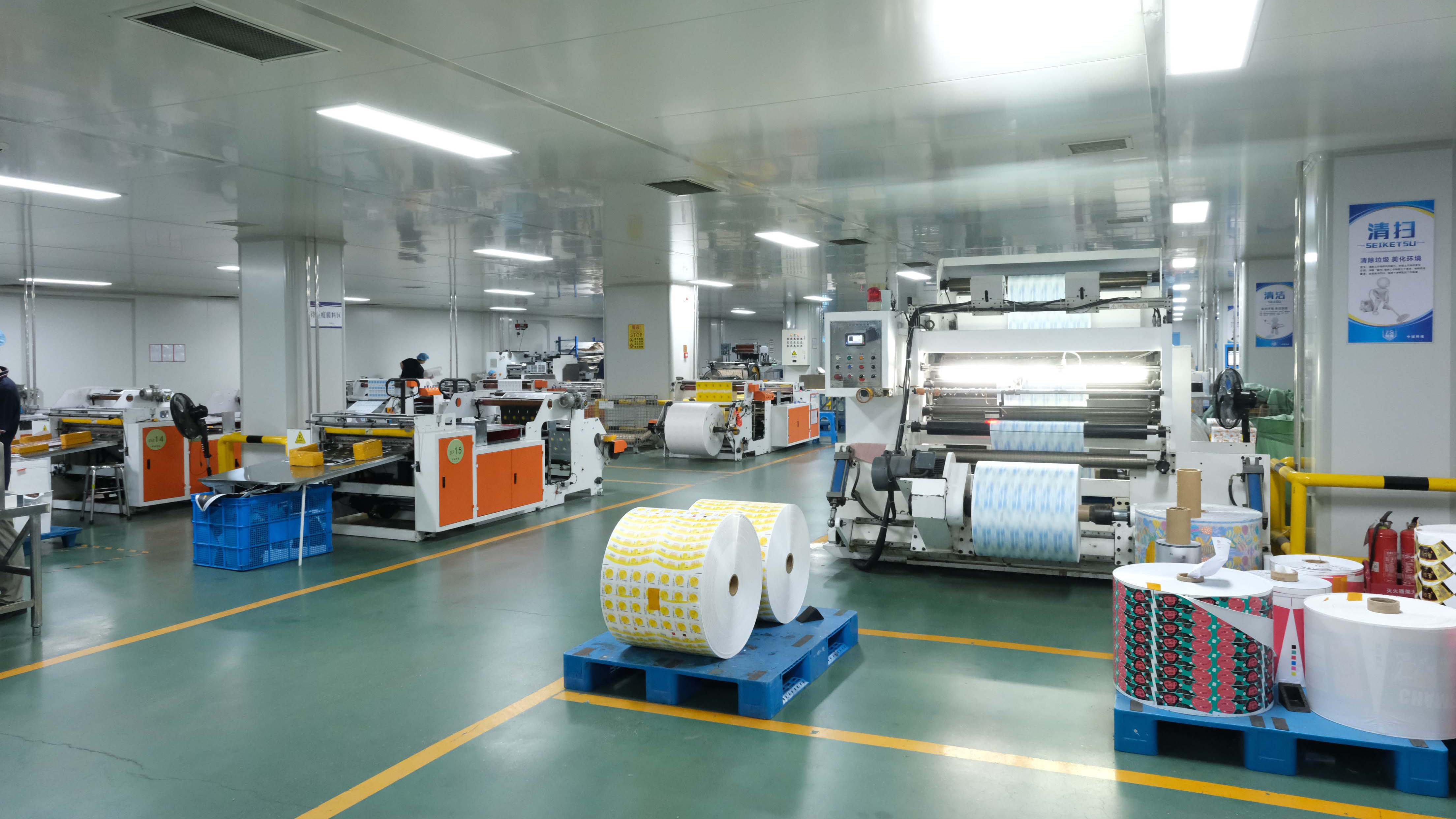
Production workshop: ERP-tracked workflow with multi-line backup capacity.
Step-by-Step: From First Inquiry to a Repeatable Long-Term Order
The sequence below reflects how an IML supply relationship is actually built, and where each commercial term takes effect.
- Application and container review. The buyer and supplier review container material, molding route (injection molding or thermoforming), filling temperature and the food-contact requirement for the end product.
- Specification and film selection. Film type, thickness (30–100 µm), surface finish, number of print colors (up to 8) and printing width (up to 1,200 mm) are fixed against the container and artwork.
- Sampling and validation. Samples are produced for trial. In YZY’s terms, acceptance is based on sample test, so the buyer validates adhesion, print registration and molding behavior on their own container.
- Sample confirmation. This is the trigger point for scheduling. The 15–20 day production lead time is counted from sample confirmation, not from the inquiry or quotation date.
- Order placement and production. A 30% deposit initiates the order. Production is tracked in real time through ERP, with raw material incoming inspection, three-step in-process testing, final random inspection and 100% visual inspection.
- Shipment. The remaining 70% is settled before shipment, and goods are delivered under FOB or CIF terms.
- After-sales support. Post-delivery questions are handled through the same named contact channel. Because the label is fused into the container during molding, no additional label maintenance is required after delivery.
- Repeat orders. With film, ink and print specification confirmed, subsequent orders run against the same approved parameter set rather than a new trial cycle.
Where These Terms Matter Most: Applications With Recurring IML Demand
Different container categories stress different parts of a supply agreement. The applications below are the ones where long-term IML terms — MOQ, lead time and adhesion performance — have the most direct commercial impact.
Paint Buckets and Industrial Containers
Industrial and chemical packaging places the label under solvent, moisture and handling stress. IML film with chemical resistance to weak acids, alkalis and common detergents, and adhesion strength of ≥5 N with no peeling during injection molding, keeps the decoration fused to the container rather than relying on an applied adhesive. Repeated resupply is typical in this category, so MOQ and repeat-order consistency drive the annual plan.
Yogurt Cups and Ice Cream Containers
Dairy packaging is a volume-driven, fast-replenishment category. The film’s operating range of −20 °C to 120 °C covers cold chain conditions, and food-grade film and low-migration water-based ink support the food-contact requirement. Because these programs run continuously, buyers typically plan rolling orders rather than a single annual commitment — which makes the 2,000 m² MOQ and the 15–20 day lead time the two numbers that shape the replenishment calendar.
Bubble Tea and Beverage Cups
Hot-fill beverage applications sit at the upper end of the film’s temperature range, where the 120 °C maximum and the ≥5 N adhesion specification are the relevant checks. High printing precision at ±0.1 mm keeps multi-color brand artwork consistent across a long production run.
Plastic Containers and Bottles
For household and daily chemical containers, surface finish often carries the brand. Glossy, matte, orange peel, holographic and custom texture finishes can be specified within the same film platform, with custom color matching and custom film formulation available for long-term programs.
IML vs. Traditional Post-Production Labels: The Cost and Efficiency Baseline
The comparison below is drawn from YZY’s internal product comparison data for IML labels versus traditional paper labels and ordinary post-production labeling. It explains why long-term buyers treat IML as a total-cost decision rather than a unit-price decision.
| Evaluation dimension | IML labels | Traditional post-production labels |
|---|---|---|
| How the label bonds | Integrated with the plastic container during injection molding; no peeling risk | Applied after the container is produced |
| Performance in high humidity | In-mold bond forms as part of the container surface | Prone to falling off, especially in high-humidity environments |
| Production steps | Integrated IML labeling reduces production steps by 30%; supports high-volume orders | Labeling remains a separate post-production operation |
| Lead-time impact | IML saves 20% lead time compared with post-production labeling | Adds a post-molding operation to the schedule |
| Material cost | Slightly higher material cost | Lower material cost |
| Total cost | Lower total cost due to reduced post-production labor and rejection rates | Higher post-production labor and rejection exposure |
| Maintenance | No additional maintenance required; fully integrated with injection molding | Requires separate labeling equipment and handling |
| Food-contact compliance | Full compliance with FDA / EU standards | — |
A dash indicates that the referenced comparison data does not provide a comparable data point for that cell.
The best-fit applications recorded in the same comparison are food & beverage packaging, household appliances, cosmetics and industrial chemicals.
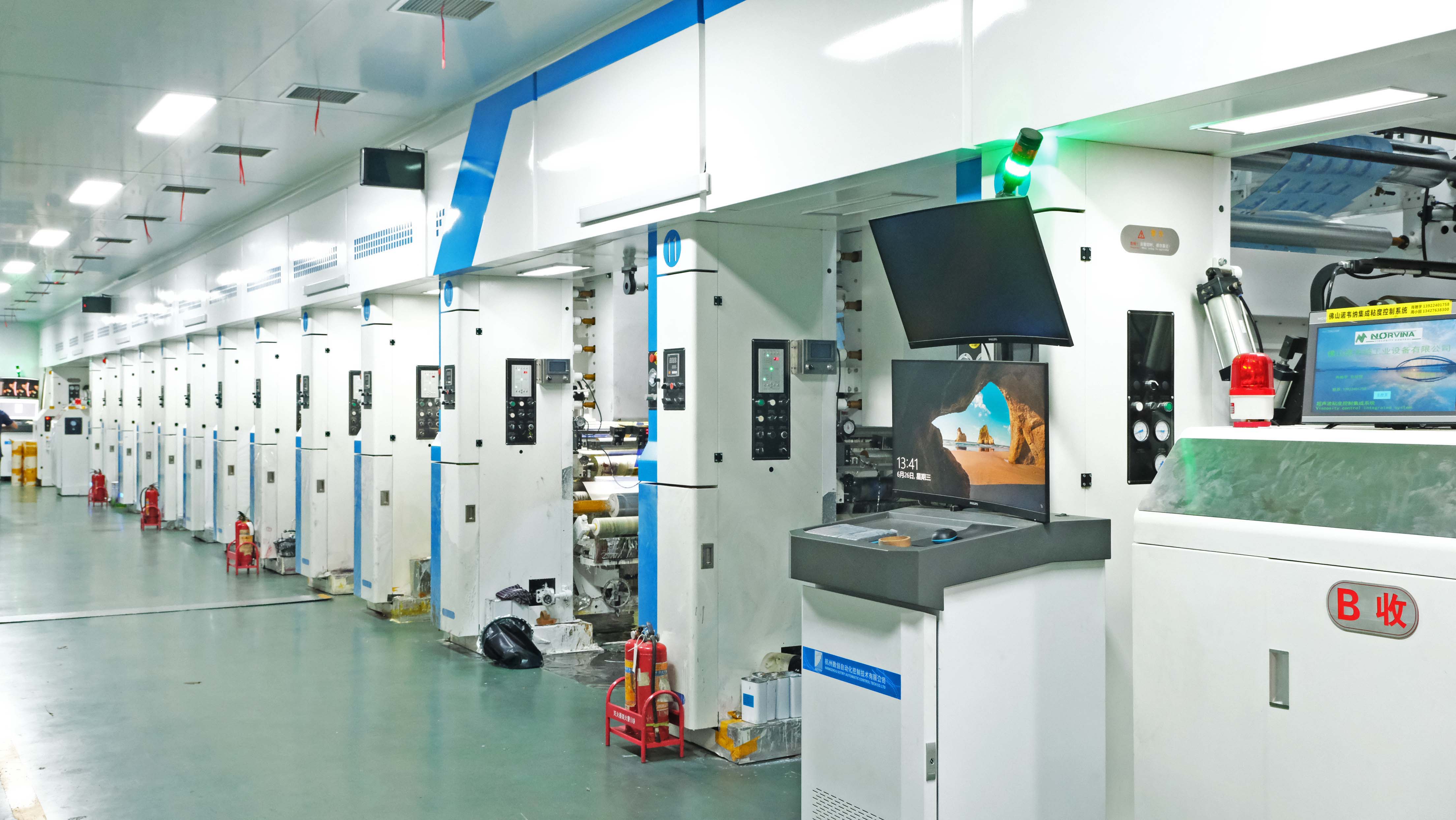
Gravure computer high-speed printing machine: up to 8 colors at ±0.1 mm printing precision.
IML Partnership FAQ
1. What certifications and compliance evidence should I verify before committing to a long-term IML supply agreement?
Verify the certificates and test reports that apply to the specific film, ink and container combination. Zhejiang Zhongyu Technology Co., Ltd. (YZY) holds QS, ISO and BRC management system certifications and states that it undergoes annual BRCGS, ISO and FDA audits. Its IML products are manufactured to FDA 21 CFR, BRCGS Packaging Materials, ISO22000 and QS standards, and its migration test meets EU 10/2011 food contact material requirements. Food-grade work uses a food-grade low-migration water-based ink. In the EU, Regulation (EC) No 1935/2004 provides the framework for food contact materials and requires labels to prevent chemical migration into food, so compliance documentation should be requested and retained for the whole duration of a long-term program.
2. What is the MOQ for custom IML labels, and how should it be planned for a long-term program?
YZY’s minimum order quantity for IML labels is 2,000 m², with FOB or CIF delivery and sample test as the acceptance basis. Within that MOQ, custom printing, custom size, custom color matching and custom film formulation are supported across the ZY-IML-SERIES platform, which covers film thickness from 30 µm to 100 µm and a maximum printing width of 1,200 mm. For long-term buyers, the practical planning question is not how to avoid the MOQ but how to structure order frequency around it, so that printed film volume, warehousing and the injection molding schedule stay aligned across the agreement.
3. What payment terms and Incoterms apply to IML supply?
YZY’s standard payment structure is 30% deposit with the remaining 70% payable before shipment (30/70). Accepted delivery methods are FOB and CIF. For a buyer, the 30/70 structure means working capital is committed at two points in the order cycle rather than one, and the choice between FOB and CIF directly changes who arranges and bears the cost of freight and insurance. Both should be confirmed in writing before the first production order, not at the shipment stage.
4. How does sampling and pre-production validation work before scaling?
Acceptance in YZY’s supply terms is based on sample test. The sequence is: application and container review, specification and film selection, sample production, buyer validation on their own container, and then sample confirmation. Quality control during production covers raw material incoming inspection, three-step in-process testing and final random inspection, plus 100% visual inspection. The company reports 16 years without a major quality accident in food-grade packaging. Confirming the sample in writing is what locks the specification used for every repeat order that follows.
5. What is the production lead time after sample confirmation, and how is delivery reliability protected?
Production lead time is 15–20 days after sample confirmation. Delivery reliability is supported by ERP digital production management that tracks production in real time, and by two backup production lines maintained to avoid delays. Incoming material inspection, three-step in-process testing, final random inspection and 100% visual inspection reduce the risk of non-conforming output reaching the shipment stage. After delivery, support continues through the same named contact channel, and because the IML label is fused into the container during molding, no additional label maintenance is required. To start with your own container, request a sample or a quotation from YZY at yzy@inmoldlabel.net or +86 182 6778 1866.
Next Step: Confirm Five Terms, Then Scale
A long-term IML supply partnership becomes manageable once five numbers are on the table: 2,000 m² MOQ, 15–20 days lead time after sample confirmation, 30% deposit and 70% before shipment, FOB or CIF delivery, and sample-test-based acceptance. Around those five terms sit the supporting facts that determine whether the terms hold over multiple years: QS, ISO and BRC certification with annual BRCGS/ISO/FDA audits, FDA 21 CFR and EU 10/2011 compliance, film parameters from 30–100 µm thickness and up to 8 print colors at ±0.1 mm precision, adhesion of ≥5 N, an operating range of −20 °C to 120 °C, and ERP tracking backed by two backup production lines.
Buyers who confirm these items before the first production order spend their time on packaging design and line scheduling instead of resolving commercial ambiguity at the shipment stage.
Request Samples, Quotation, or the Full YZY Catalog
To validate film, printing and adhesion against your own container, request an IML sample or a full quotation with MOQ, lead time and Incoterms for your program.
- Email: yzy@inmoldlabel.net (Contact: Holly)
- Tel / WhatsApp: +86 182 6778 1866
- Website: www.inmoldlabel.net
- Product catalog / brochure: Download the YZY IML brochure (PDF)