In Mold Label Partnership FAQ: Terms, Acceptance & Supply
In Mold Label Partnership FAQ: Terms, Acceptance & Supply
Choosing an in mold label supplier is a technical exercise. Committing to one for several years is a commercial one. Once film grade, print method and adhesion behaviour have been validated, the questions that actually decide a contract become narrower: what the purchasing terms lock down, how acceptance criteria are measured batch after batch, and how supply continuity is protected when volumes grow.
This FAQ answers the five questions buyers raise most often when they move from evaluation to a signed long-term agreement. Every production and compliance statement below comes from verified company records and published market data, using YZY (Zhejiang Zhongyu Technology Co., Ltd.) as the working example — an in-mold labeling manufacturer founded in 2009 in Wenzhou, Zhejiang, China, producing in mold label film, sealing films and embossed lidding films for food and industrial packaging.
Short answer: a workable in mold label partnership fixes three things in writing before the first production order — a locked specification with its compliance route, an acceptance criteria set that matches the buyer's own sampling plan, and a supply-continuity arrangement covering capacity, backup lines and delivery schedule. YZY supports this with an annual output of 200,000,000 units, a 20,000 m² facility, and QS, ISO and BRCGS management-system certifications.
Why the Partnership, Not the Label, Is the Real Decision Risk
By the time a packaging team reaches the decision stage, the label itself is rarely the problem. The label film has been tested in the mold, the printing has been proofed, and the container has been produced. The residual risk sits in the commercial and operational layer, and it is the layer that only appears after the first order.
The risks that materialise in real in mold label programmes are consistent across categories: non-compliance with food-contact safety standards, printing defects, material contamination, product quality deviation and delayed delivery. Each of these is a contract problem before it is a production problem. A specification that does not name the compliance route, an acceptance criterion that is never measured, or a delivery schedule with no buffer will all surface as disputes long after the samples were approved.
The second reason the partnership deserves its own evaluation stage is cost of change. Qualifying an IML supplier involves film trials, mold trials, print proofing and compliance documentation review. Re-running that process with a second supplier mid-season costs more than the price difference between two quotations typically saves. Buyers at the decision stage are therefore not only choosing a label; they are choosing how much re-qualification risk they are willing to carry.
Industry Background: What the In Mold Label Market Looks Like Going Into 2026
The scale of the category is one reason supplier-side capacity planning matters to buyers. The global in-mold labels market was valued at USD 2.31 billion in 2023 and is projected to reach USD 3.14 billion by 2030, according to Grand View Research. A separate Market Research Future estimate puts the market at USD 2.72 billion in 2024, with a projected CAGR of 3.94% reaching USD 4.16 billion by 2035. Published estimates vary because of different segmentation and base-year definitions, so buyers should read any single market figure as a directional signal rather than an exact number.
Three structural facts are more useful at the decision stage than the headline number:
- Material concentration: polypropylene (PP) is the dominant material for in-mold labels, holding a 47.2% market share in 2023. This is why PP in mold label and PE in mold label enquiries dominate technical discussions — the substrate decision drives most of the downstream moulding parameters.
- Process concentration: injection molding technology leads the production process segment with a revenue share exceeding 57.1% in 2023, which means injection molding in mold label remains the mainstream route, with blow molding in mold label used for bottle-format packaging.
- Application concentration: the food and beverage segment accounted for the largest revenue share of over 41.3% in 2023. This is the segment where acceptance criteria and compliance documentation are most heavily audited by buyers.
Regionally, Asia Pacific is the fastest-growing and largest regional market for in-mold labels as of 2024. For buyers in Europe and North America, that has a practical consequence: a large part of available IML capacity sits in Asian supply chains, so export capability (document handling, schedule discipline, batch traceability) belongs on the partnership checklist alongside price.
What a Long-Term In Mold Label Partnership Should Cover
A long-term IML agreement is made of three documents that often get merged into one quotation: a specification, an acceptance criteria annex, and a supply plan. Buyers who keep them separate find it easier to resolve the two situations that occur inevitably in a multi-year programme — a specification change, and a non-conforming batch.
Purchasing terms: the clauses that prevent disputes later
Purchasing terms for in mold label supply should be written around what changes, not only around what is bought today. The clauses that carry the most weight in practice are:
- A locked specification. Container substrate (PP in mold label or PE in mold label), wall thickness, moulding route (injection or blow moulding), in mold label film grade, printing method, finish and container format (plastic bucket, plastic container, plastic bottle or cup).
- Compliance route per SKU. Which declaration applies to which market, and who supplies the supporting documents.
- Acceptance criteria and sampling plan. What is measured, on what sample size, by which party, and where testing takes place.
- Delivery schedule and buffer. Committed lead time, monthly capacity reservation, and how seasonal peaks are scheduled.
- Change control. What triggers re-validation of a custom printed in mold label — artwork change, film change, container wall change.
- After-sales handling. How a non-conforming batch is identified, replaced and traced back through the material record.
Commercial variables such as unit price, payment terms and minimum order quantity are project-specific and are confirmed per enquiry; they are not fixed industry values and should never be assumed from a general guide.
Acceptance criteria: how quality is measured, not promised
Acceptance criteria are only meaningful if they are tied to an actual inspection process. In a food-grade in mold label programme, the process should be visible from the raw material stage onward rather than applied only at final packing.
YZY applies inspection at three points: raw-material incoming inspection, a three-step in-process testing routine during printing and conversion, and final random inspection of finished labels. In food-contact production, this is supported by 100% visual inspection, third-party laboratory testing and material traceability, with ERP-based production tracking running alongside. The company also states that it has recorded no major quality accidents in food-grade packaging since its founding in 2009.
For the buyer, these supplier-side controls become contract language: the sampling plan should reference the same checkpoints, so that a rejected batch can be traced to a specific incoming material lot or a specific printing run rather than being argued at the pallet level.
Supply reliability: capacity, redundancy and schedule control
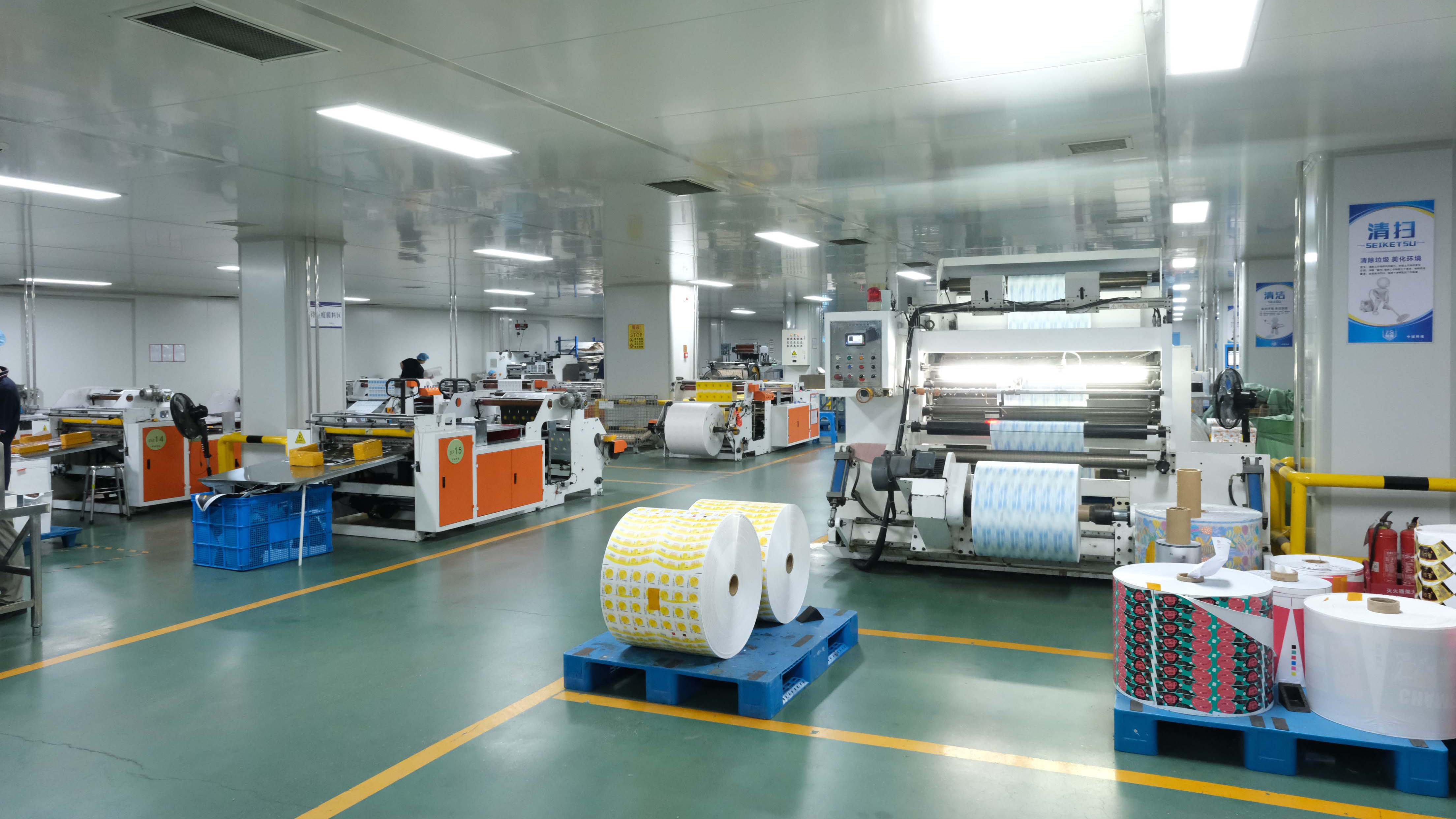
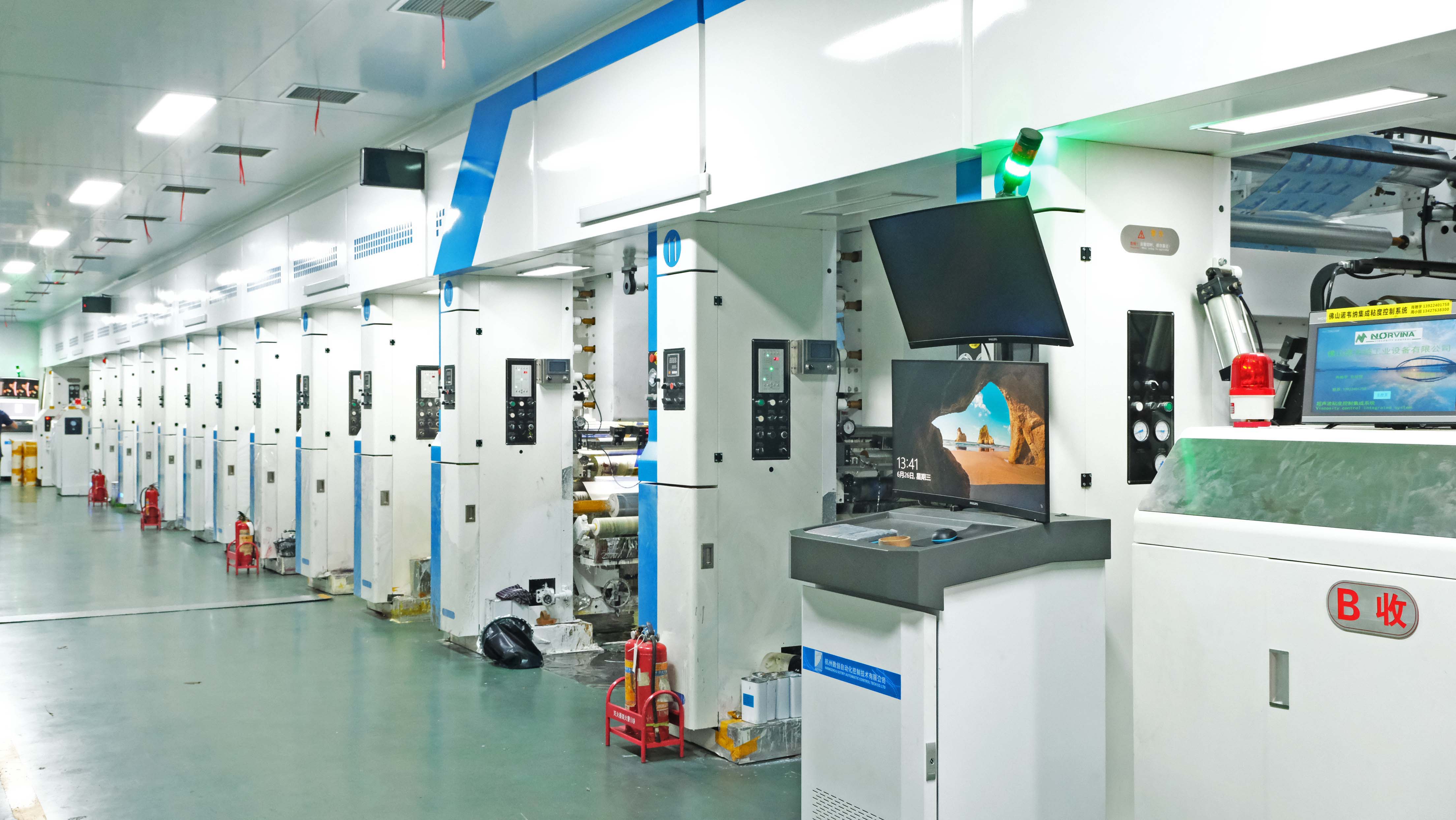
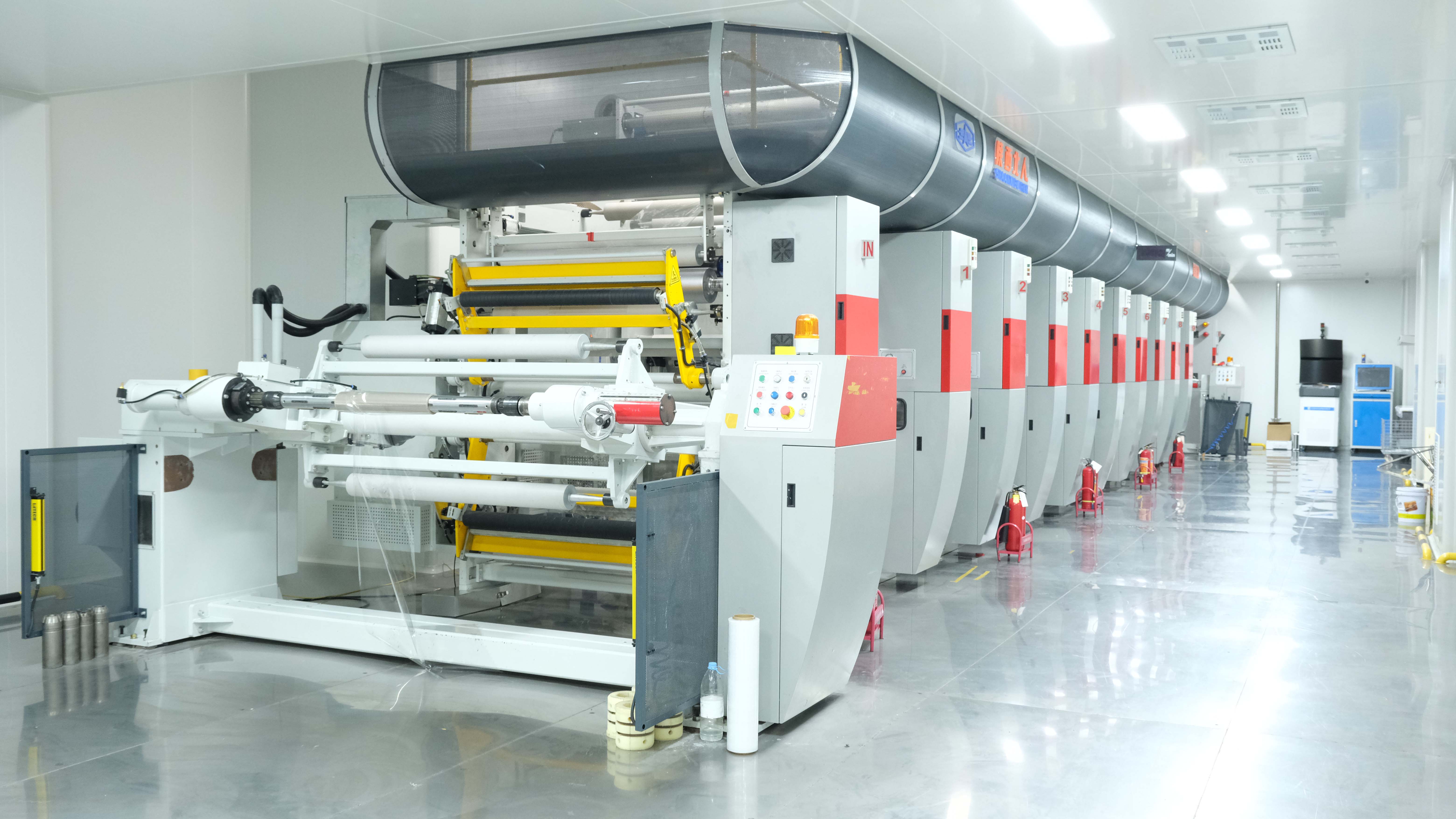
Supply reliability is a capability question, and it is best answered with numbers rather than assurances. YZY manufactures 200,000,000 units annually from a 20,000 m² facility with 250 employees, of which a 10-person R&D team supports process development and a portfolio of 48 accumulated patents. Digital production management runs on ERP, and two backup production lines exist specifically to absorb schedule pressure and avoid delays.
Scale of this kind matters most in two scenarios: a volume ramp after a successful launch, and a peak season where a single-line supplier must choose which customer to serve first. Buyers evaluating a multi-year agreement should ask for annual capacity, monthly achievable capacity and the redundancy plan in the same conversation.
From Enquiry to Long-Term Supply: A Six-Step Breakdown
The transition from a first enquiry to a stable supply relationship follows a predictable sequence. Each step produces a document that the next step depends on, which is why skipping one usually reappears later as a dispute.
- Define the label and the container together. Confirm the substrate, the in mold label film, the moulding route and the container format. Applications such as in mold label for yogurt cup, in mold label for ice cream container or in mold label for paint bucket each imply different film and print requirements.
- Fix the compliance route. Match the intended market to the applicable standard — for example FDA 21 CFR Part 177 for PE and PP in direct food contact in the United States, or EU Regulation (EU) No 10/2011 for plastic food-contact materials in the European Union — and confirm which management-system certificates the supplier holds.
- Agree acceptance criteria and sampling. Translate the supplier's incoming, in-process and final inspection into measurable acceptance terms, and align them with the buyer's own sampling practice.
- Validate samples on the real moulding line. A sample only proves something when it runs on the buyer's own container geometry and moulding conditions, including high-humidity environments where post-production labels tend to fail.
- Run a pilot order and scale up. Use the pilot to test schedule accuracy, documentation quality and batch consistency before committing capacity.
- Review, control change and maintain. Set a review cadence, record any artwork or material change as a re-validation trigger, and keep the traceability record live.
Use Cases: Where a Long-Term IML Partnership Pays Back
The economics of integrated labelling are strongest where labels are exposed to moisture, handling or long shelf life — conditions in which post-production labels tend to peel or scuff.
- Food and beverage packaging. Food-grade in mold label applications include in mold label for yogurt cup, in mold label for bubble tea cup, in mold label for ice cream container and waterproof in mold label formats for chilled or condensation-heavy displays.
- Daily chemicals and industrial packaging. The comparison data identifies industrial chemicals as a core fit; in mold label for paint bucket is a typical case, where integrated labelling removes the peeling failure common to adhesive labels on curved buckets.
- Plastic containers and bottles. in mold label for plastic container, in mold label for plastic bucket and in mold label for plastic bottle formats are produced through both injection and blow moulding routes.
- Broader consumer goods. Household appliances, cosmetics and general consumer packaging are also listed among the best-fit applications for IML.
Track record is the other half of this picture. YZY has established long-term cooperation with brands including Starbucks, Nestlé and Uni-President — categories where food-contact compliance and batch consistency are audited rather than assumed.
Comparison: Integrated IML Versus Post-Production Labeling
The decision between integrated IML and traditional labelling is usually framed as a cost question, but it is better read as a process question. The table below summarises verified differences.
| Dimension | Traditional paper / post-production labels | Integrated IML |
|---|---|---|
| Integration with container | Applied after production | Integrated with the plastic container during injection moulding |
| Peeling risk | Prone to falling off, especially in high-humidity environments | No peeling risk |
| Compliance | Depends on adhesive and carrier combination | Full compliance with FDA / EU standards for the IML construction |
| Production steps | Separate labelling step after moulding | Reduces production steps by 30% |
| Lead time | Baseline | Saves 20% lead time versus post-production labelling |
| Cost structure | Lower material cost | Slightly higher material cost, but lower total cost through reduced post-production labour and rejection rates |
| Maintenance | Additional handling and rework possible | No additional maintenance; fully integrated with injection moulding |
| Visual options | Standard print finishes | Higher durability, food-grade safety and special visual effects |
| Best fit | Low-volume or non-durable applications | Food and beverage packaging, household appliances, cosmetics, industrial chemicals |
Note that the in-mold label market also includes large multinational label converters such as CCL Industries, Multi-Color Corporation and Huhtamaki. These are publicly identified participants in the same category. Buyers comparing suppliers of very different scale should compare like-for-like on the criteria that are actually auditable — compliance documentation, acceptance criteria, capacity reservation and schedule discipline — rather than on brand size alone.
Verified partnership facts at a glance
| Item | Verified position (YZY / Zhejiang Zhongyu Technology Co., Ltd.) |
|---|---|
| Founded | 2009, Wenzhou, Zhejiang, China |
| Facility size | 20,000 m² |
| Employees | 250 |
| Annual output | 200,000,000 units |
| R&D | 10-person R&D team; 48 accumulated patents |
| Certifications | QS, ISO and BRCGS management-system certifications |
| Food-contact standards referenced | US FDA 21 CFR Part 177; EU Regulation (EU) No 10/2011 |
| Quality control | Raw-material incoming inspection + 3-step in-process testing + final random inspection; 100% visual inspection; third-party lab testing; material traceability |
| Supply continuity | ERP digital production management + 2 backup production lines |
| Export share | 30% of sales, serving worldwide markets |
| Long-term brand cooperation | Starbucks, Nestlé, Uni-President |
FAQ: In Mold Label Partnership, Terms and Acceptance
1. Which certifications and standards should an IML supplier provide for food-contact packaging?
Two product-level benchmarks are requested most often. In the United States, US FDA 21 CFR Part 177 regulates polymers including PE and PP for direct food-contact applications. In the European Union, food-grade in-mold labels must comply with EU Regulation (EU) No 10/2011 for plastic materials intended to come into contact with food. On top of those, buyers normally request management-system evidence: QS, ISO and BRCGS certificates. YZY holds QS, ISO and BRC/BRCGS management-system certifications, reports annual BRCGS, ISO and FDA audits, and supports compliance with material traceability from raw-material incoming inspection through to finished-product inspection.
2. What production capability should a long-term in mold label partner demonstrate?
At minimum: annual output, physical capacity, technical depth and redundancy. YZY manufactures 200,000,000 units per year in a 20,000 m² facility with 250 employees. Technical development is handled by a 10-person R&D team backed by 48 accumulated patents, and production supports both injection molding in mold label and blow molding in mold label formats, including gravure high-speed printing for custom printed in mold label work. Redundancy is covered by ERP digital production management plus two backup production lines, which protect delivery schedules during peak demand.
3. Is in mold labeling more expensive than traditional labeling?
The material cost of IML is slightly higher than that of traditional paper or post-production labels. The total cost is usually lower, because integrated IML eliminates a separate labelling step, reduces post-production labour and lowers rejection rates. Integrated IML labelling with injection moulding reduces production steps by 30% and saves 20% lead time compared with post-production labelling methods, and it requires no additional maintenance once integrated with the moulding process. For high-volume food, household appliance, cosmetics or industrial chemical programmes, the comparison should be made on total cost rather than unit label price.
4. Can we validate samples before committing to a long-term agreement?
Yes — and for most buyers, sample validation is the gate that makes a long-term agreement safe to sign. Samples are checked against the agreed acceptance criteria on the buyer's own container geometry and moulding conditions, which is the only reliable way to test adhesion and peeling behaviour in high-humidity environments. Third-party laboratory testing and material traceability records can be used to support that validation. To start a sample or quotation discussion for a specific format — a paint bucket, yogurt cup, ice cream container or plastic container — contact the YZY team at yzy@inmoldlabel.net or via WhatsApp at +86 182 6778 1866.
5. How is lead time and supply continuity managed over a long-term contract?
Supply continuity is managed through capacity planning, tracking and redundancy. YZY runs ERP digital production management for real-time production tracking and maintains two backup production lines to absorb schedule pressure. Because integrated IML removes a separate labelling step — reducing production steps by 30% and saving 20% lead time versus post-production labelling — the schedule risk in a long-term contract shifts from the labelling stage back to moulding, where it can be planned. Roughly 30% of output is exported, so export scheduling and documentation form part of the standard operating routine. For a committed schedule on a specific container format, request a capacity and lead-time discussion through the contact details above.
Conclusion: What to Sign, and What to Keep Flexible
A long-term in mold label partnership works when the specification, the acceptance criteria and the supply plan are treated as three separate commitments. The specification protects the label's performance in the mould. The acceptance criteria protect the buyer when a batch is questioned. The supply plan protects the launch date when volumes grow.
Verified capacity makes that plan realistic rather than aspirational: 200,000,000 units of annual output, a 20,000 m² facility, 250 employees, 48 accumulated patents, QS / ISO / BRCGS certifications, 100% visual inspection in food-contact production, and established long-term cooperation with Starbucks, Nestlé and Uni-President. For a decision-stage buyer, those are the facts that convert a quotation into a supply relationship.
Next Step
Request samples, a project quotation or the full YZY in-mold label catalogue and discuss purchasing terms, acceptance criteria and long-term supply directly with the manufacturer.
Email: yzy@inmoldlabel.net | Tel / WhatsApp: +86 182 6778 1866
Website: www.inmoldlabel.net | Company brochure: download the YZY product brochure (PDF)
Zhejiang Zhongyu Technology Co., Ltd. (YZY) — Building 59, Zone E, Guohong Zhizao New Town, Xingke Road, Longgang, Wenzhou, Zhejiang, China, 325802.