In-Mold Label Supplier Checklist: Capacity, R&D, Delivery
In-Mold Label Supplier Checklist: Capacity, R&D, Delivery
Short answer: evaluate an in-mold label (IML) supplier on four measurable areas before issuing a purchase order: annual capacity against your monthly volume, R&D capability behind film selection and print reproduction, certification scope that actually covers the destination market, and delivery control that holds on repeat orders. Price, samples and catalogue pages are outputs of those four checks, not substitutes for them.
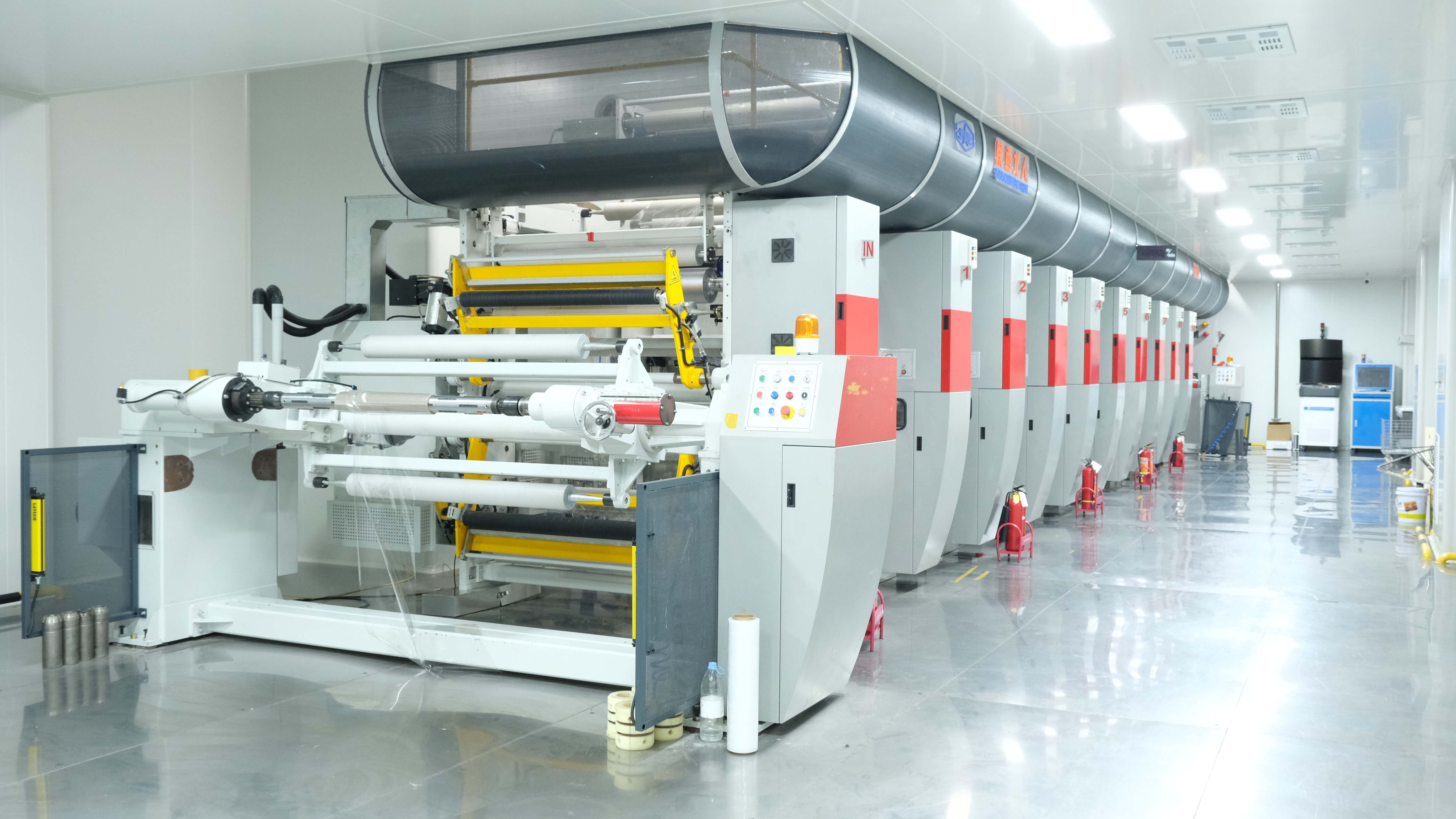
Figure 1 — In-mold label film is printed before molding; print capacity and colour control belong in any supplier audit.
Why IML supplier problems surface only after molding
An in-mold label is not a separate object that can be inspected, reworked or peeled off. The pre-printed label is placed into the mold before plastic injection, and heat and pressure fuse the label with the molded component (Rosti Group, process description). If the film is mismatched, the print distorts, or label placement drifts, the failure is only visible on the finished container — after the cycle time, after the resin, after the labour. That timing is exactly why a supplier must be qualified before volume, not during ramp-up.
The alternative also carries known failure modes. Traditional post-production labels are applied after molding and can fall off, particularly in high-humidity environments, whereas integrated IML decoration removes the peeling risk by making the label part of the container. What the buyer gains in durability is offset by a shift of risk into process control: film, ink, print and molding compatibility must be validated together, on the same polymer family, at the same cycle conditions.
The commercial logic follows the same pattern. YZY's application comparison notes that IML carries a slightly higher material cost but a lower total cost, because post-production labour and rejection rates fall; the same comparison attributes a 30% reduction in production steps to integrated IML labelling with injection molding, and a lead-time saving of roughly 20% versus post-production labelling. Those figures only hold if the supplier can repeat them at scale. Capacity, R&D, certification and delivery checks exist to confirm exactly that.
What the IML market looks like in 2026
Polypropylene remains the reference material for IML. Grand View Research reports that PP held a 56.9% share of the in-mold label market in 2025, and that injection molding accounted for more than 57.1% of revenue in the production-process segment in 2023. Rosti Group notes that IML films are usually made from the same polymer family as the molded component, commonly polypropylene, and that the process is used in injection molding, blow molding and thermoforming. For a buyer, that means the supplier's film library and print process should be built around PP as the default, with other polymers handled as a defined engineering exercise rather than an improvised one.
Film specification is narrow enough that it should always be confirmed in writing. YZY's own technical guide puts standard IML film thickness at roughly 30 μm to 100 μm, while one supplier product page describes white or transparent PP labels at 50 to 60 microns. Surface options reported by film suppliers include clear, white, textured, matte, glossy and metallic finishes, and supplier application lists cover yogurt cups, bottles, containers, trays, lids and buckets. None of these replace a datasheet, but together they define the questions a buyer should put to any candidate supplier.
One more caution for buyers building a business case: published market-size estimates for IML differ materially between research publishers, so aggregate forecasts are a weak basis for capacity decisions. Supplier-specific, verifiable numbers are the stronger input.
The four-pillar supplier evaluation framework
The framework below uses YZY (Zhejiang Zhongyu Technology Co., Ltd.) as a worked example. YZY is an in-mold labeling manufacturer based in Wenzhou, Zhejiang, China, founded in 2009, producing in-mold labels, sealing films, embossed lidding films and POF films for food packaging and related industries. Its published figures are used here to show what evidence a buyer should expect to see — not as a substitute for an audit of any supplier, including this one.
Pillar 1 — Production capacity against your real volume
Capacity is the first filter because IML is a volume business: a supplier that cannot absorb your peak month will either extend lead times or push your orders into subcontracted capacity you have never audited. YZY reports an annual output capacity of 200,000,000 units, a 20,000 m² factory and 250 employees. Three things should be verified against those headline numbers:
- Peak versus average. Ask for monthly capacity, not only annual capacity, and compare it with your seasonal peak rather than your annual average.
- Redundancy. YZY maintains two backup production lines alongside ERP-based real-time production tracking, which is the structural answer to the question of what happens when one line goes down.
- In-house versus outsourced steps. Printing, die-cutting and finishing should be traceable to identifiable equipment. YZY operates gravure computer high-speed printing machinery in-house, which keeps print colour and registration under one quality system.
Pillar 2 — R&D and film engineering depth
IML R&D is not product design in the abstract; it is the ability to match a film, an ink set and a print layout to a specific container, wall thickness and molding condition. YZY maintains a professional R&D team and laboratory with 10 engineers and reports 48 patents accumulated. In an evaluation, ask who owns each of these decisions:
- Film specification — who selects thickness and surface finish for your container, and on what data.
- Prepress and colour — who controls registration and colour consistency across repeat runs of a custom printed in mold label.
- Molding compatibility — who validates distortion, adhesion and label placement at your cycle conditions, and who signs off when a new container format is introduced.
A lab and a patent count are indicators; the useful question is whether that team can respond to a change in your container — a thinner wall, a freezer application, a switch from a glossy to a matte finish — without resetting the whole project.
Pillar 3 — Certification scope, not certificate count
YZY holds a complete set of qualification certificates and has passed QS, ISO and BRC management system certifications. Certificates, however, must be read for scope: a system certificate that does not cover the printed food-contact product you are buying proves the management system, not the article. Practical checks include:
- Confirm the certificate covers the actual product and process you are purchasing.
- Request food-contact documentation for film, ink and coating, not only for the finished label.
- Ask when the food-contact position was last reviewed against current regulatory status, including the FDA FCN update of 31 May 2026.
- Request third-party laboratory test reports and the material traceability chain that connects them to your order.
Process control is the second half of compliance. YZY applies inspection from raw material incoming through production to finished goods, with annual BRCGS, ISO and FDA audits, ERP-based production tracking and 100% visual inspection. That combination — documented inspection stages plus a traceable record — is what a buyer should be able to see on site.
Pillar 4 — Delivery control and export readiness
Delivery reliability in IML is partly a scheduling problem and partly a compliance problem, because a late label stops a molding line that is already running. Two signals are worth more than a promise: export experience and repeat business with demanding customers. YZY exports about 30% of its output and reports long-term cooperation with Starbucks, Nestlé and Uni-President — relationships that only survive if delivery dates and specification consistency hold over many production cycles. The company also reports a food-grade packaging record free of major quality accidents.
Ask for the mechanics behind those claims: how orders are tracked in production (YZY uses ERP real-time tracking), what backup capacity exists, how deviations are notified, and which of the reported audits are annual and repeatable rather than one-off.
Step-by-step: the seven-step supplier evaluation
- Define the demand profile before contacting suppliers. Volume per month and per peak month, container format, molding process (injection, blow molding or thermoforming), polymer family, film thickness target within the 30–100 μm band, surface finish, and whether the label must be food grade.
- Screen capacity against that profile. Compare the supplier's monthly capacity with your peak, confirm line redundancy, and identify which production steps are in-house. At YZY scale, that means checking 200,000,000 units annual capacity against your own forecast and confirming which lines would run your work.
- Audit the R&D interface. Establish who specifies the film, who controls colour, and who validates adhesion and distortion at your molding conditions. A 10-engineer team with a laboratory and 48 patents is a starting point for that conversation, not the conclusion.
- Build the compliance file. Collect QS, ISO and BRC certificates with scope, food-contact documentation for film and ink, third-party test reports, and the supplier's position on current regulatory status. Record the review date so it can be repeated.
- Review the quality control system on site. Trace one order from raw material inspection through in-process testing to final random inspection, and confirm ERP records and visual inspection coverage actually connect to that order.
- Test delivery behaviour, not delivery promises. Ask for export share, customer references, backup line arrangements and the notification process for deviations. A supplier exporting 30% of output to worldwide markets has already been tested by customs, freight and documentation cycles.
- Validate with a sample run, then fix the commercial terms. Approve samples on the real container polymer and molding conditions, then agree acceptance criteria, inspection method, packaging and documentation before the first bulk order.
A 30% reduction in production steps and a lead-time saving of roughly 20% versus post-production labelling are the operational upside of IML; both depend on the supplier executing steps 1 to 7 in that order.
Use cases: which checks matter most by application
- In mold label for paint bucket. Adhesion and chemical resistance dominate. Prioritise high adhesion IML grades, film-to-polymer matching and the supplier's in-process inspection depth; a lifting edge on a solvent container is a visible failure.
- In mold label for yogurt cup. Food grade and thin-wall, high-speed molding dominate. Verify food-contact documentation for film and ink, plus the supplier's ability to hold registration at high cavitation.
- In mold label for ice cream container. Freezer conditions and moisture exposure dominate. Confirm the film and print specification against low-temperature handling, and ask for the validation evidence behind it.
- In mold label for bubble tea cup. Print clarity and shelf appeal dominate. Custom printed in mold label work should be assessed on colour consistency across repeat runs and on the finish selected (clear, white, matte, glossy or metallic).
- In mold label for daily chemicals and plastic bottle. Blow molding compatibility and waterproof performance dominate. Confirm that the supplier has experience matching film to the container polymer outside pure injection molding.
Comparison table: what to verify, request and risk
The table below converts the four pillars into an audit instrument. It compares evaluation areas rather than suppliers, because supplier capability claims should be verified against evidence, not against marketing language.
| Evaluation area | What to verify | Evidence to request | Risk if not verified |
|---|---|---|---|
| Capacity | Monthly and peak capacity, line redundancy, in-house printing and finishing | Capacity statement, equipment list, production tracking records | Lead-time slippage, unverified subcontracting |
| R&D | Film specification ownership, colour control, validation at your molding conditions | R&D team structure, laboratory evidence, patent list | Distortion, adhesion loss, repeated re-trials |
| Certification | Certificate scope covering the purchased product, food-contact status, audit frequency | QS, ISO, BRC certificates, third-party test reports, audit records | Market-access rejection, withdrawal of stock |
| Quality control | Incoming inspection, in-process testing, final inspection, traceability | Inspection plan, ERP traceability, visual inspection coverage | Hidden defects surfacing after molding |
| Delivery | Export experience, reference customers, deviation notification | Export share, customer references, backup line plan | Line stoppage at the customer plant |
YZY supplier facts at a glance
| Item | Reported figure |
|---|---|
| Founded | 2009 |
| Factory area | 20,000 m² |
| Employees | 250 |
| Annual capacity | 200,000,000 units |
| R&D team | 10 engineers, with laboratory |
| Patents | 48 |
| Certifications | QS, ISO, BRC |
| Export ratio | 30% |
| Quality control | Raw material to finished product inspection, ERP tracking, 100% visual inspection |
| Reported brand cooperation | Starbucks, Nestlé, Uni-President |
FAQ
1. Which certifications should an in-mold label supplier hold for food packaging?
At minimum, a supplier should hold the management system certifications relevant to printed food-contact packaging and be able to show that the certificate scope covers the product you are buying. YZY has passed QS, ISO and BRC management system certifications and undergoes annual BRCGS, ISO and FDA audits. Beyond the certificate, request food-contact documentation for the film, ink and coating, third-party laboratory test reports, and the supplier's current position on regulatory status — the FDA updated its FCN inventory on 31 May 2026 and announced that FCNs for 35 PFAS substances are no longer effective, so a file dated several years ago is not sufficient on its own.
2. How can I verify an IML supplier's capacity and R&D capability?
Ask for monthly and peak capacity rather than annual capacity alone, then map it to your own forecast. YZY reports 200,000,000 units of annual capacity, a 20,000 m² factory, 250 employees and two backup production lines with ERP real-time tracking — figures that can be checked against equipment lists and production records during an audit. For R&D, establish who specifies film thickness within the typical 30–100 μm range, who controls colour on repeat runs, and who validates adhesion and distortion at your molding conditions. YZY maintains a laboratory and a 10-engineer R&D team and reports 48 patents; the useful test is whether that team can answer a change in your container without restarting the project.
3. Does IML cost more than post-production labelling?
Material cost is slightly higher, but total cost is usually lower because post-production labour and rejection rates fall. YZY's application comparison notes that IML integrates labelling with injection molding, reduces production steps by 30%, supports high-volume orders and shortens lead time by roughly 20% versus post-production labelling — while removing the peeling risk that ordinary labels face in high-humidity environments. Buyers should treat these as the supplier's own comparison data and validate them against their own labour, scrap and cycle-time numbers before approving a budget.
4. Can I request samples before placing a bulk order?
Yes, and sampling should be planned rather than casual. Approve samples on the real container polymer and molding conditions, then test what your application actually demands: adhesion, moisture exposure, freezer conditions, print scuffing and, for food packaging, the food-contact documentation chain. Because commercial data on IML scrap rates and standardised adhesion results is not publicly verifiable, the sample run is the point where the specification is proven. YZY supplies samples and technical documentation on request — you can reach the team at yzy@inmoldlabel.net or +86 182 6778 1866, and download the company profile from the YZY brochure.
5. How does IML affect lead time and delivery reliability?
Integrated IML reduces production steps by 30% and shortens lead time by roughly 20% versus post-production labelling, because labelling and molding happen in one cycle instead of two. Delivery reliability then depends on scheduling discipline: YZY uses ERP real-time production tracking, keeps two backup production lines to avoid delays, and exports about 30% of output worldwide. Its reported long-term cooperation with Starbucks, Nestlé and Uni-President is a practical delivery signal, since those relationships depend on repeated on-time shipments and consistent specification.
Conclusion
An IML supplier should be selected the way the label itself is validated: on evidence produced before the mold closes. Capacity tells you whether the supplier can absorb your peak; R&D tells you whether film, print and molding compatibility will hold when your container changes; certification tells you whether the product can legally enter your market; and delivery control tells you whether the promise survives the tenth order rather than only the first. YZY's published figures — 200,000,000 units of annual capacity, a 10-engineer R&D team, 48 patents, QS, ISO and BRC certification, full raw-material-to-finished-product inspection, 30% export share and reported cooperation with Starbucks, Nestlé and Uni-President — show the shape of the evidence a buyer should demand from any candidate supplier.
Next step: evaluate YZY against this checklist
Request samples, a quotation or the technical file for your container format. The checklist above is the fastest way to compare responses: send your volume, polymer, molding process and film specification, and YZY will answer against those four pillars.
Contact: Holly | Email: yzy@inmoldlabel.net | Tel / WhatsApp: +86 182 6778 1866
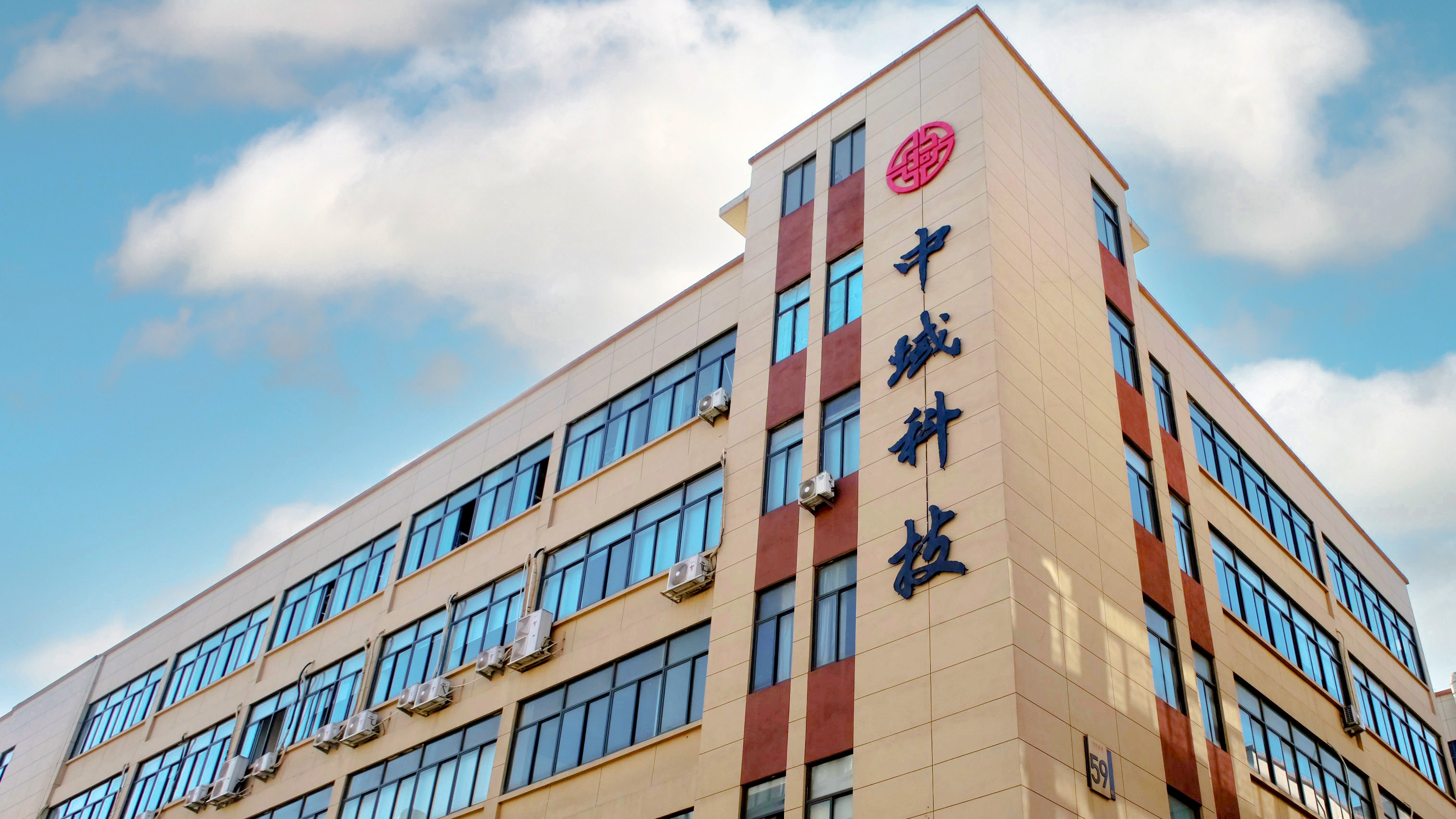
Address: Building 59, Zone E, Guohong Zhizao New Town, Xingke Road, Longgang, Wenzhou, Zhejiang, China, 325802
Website: www.inmoldlabel.net | Catalogue: Download the YZY brochure (PDF)
Have Questions or Need More Details?
Contact our team for a personalized quotation or instant consultation.
Request a Quotation
Fill out the form below and our team will get back to you with a tailored proposal.
WhatsApp Direct Chat
Prefer to chat in real-time? Message us on WhatsApp for instant assistance & quick answers.
- Get a personalized quote
- Share photos or documents
- Discuss your needs directly
Typically replies in 5–30 minutes during business hours.