In Mold Label Technology: How IML Works for Plastic Packaging
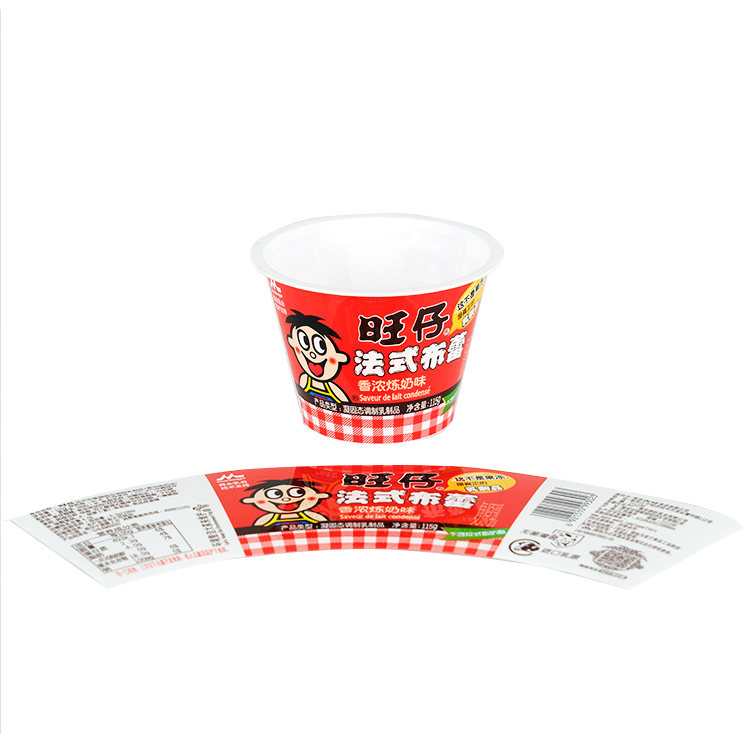
In mold labeling (IML) is a decoration technology where a pre-printed label is placed inside an injection mold before plastic resin is injected, fusing the label permanently into the surface of the molded part. The result is a durable, waterproof, high-adhesion label that becomes part of the container itself. This article explains how in mold labels work, which materials and printing technologies are involved, and how buyers can evaluate in mold label suppliers for food, daily chemical, and industrial packaging.
What Is an In Mold Label?
An in mold label (IML), also written as in-mould label, is a decorative or functional film that is inserted into a mold before injection molding. During molding, the plastic resin fuses with the label film, producing a single inseparable part. In mold labeling is used widely for plastic containers such as yogurt cups, ice cream containers, paint buckets, lubricant buckets, bubble tea cups, cosmetic containers, and plastic bottles.
The ZY-IML Series, produced by ZHEJIANG ZHONGYU SCIENCE AND TECHNOLOGY CO., LTD. (brand: YZY), is an in-mold label range designed for injection molding applications. The series includes food grade, daily chemical grade, and industrial grade labels, covering applications such as food packaging, daily chemical packaging, industrial packaging, paint buckets, and yogurt cups.
Why In Mold Label Printing Is Different from Ordinary Label Printing
In mold label printing differs from ordinary pressure-sensitive or wet-glue label printing because the printed film must survive the injection molding process. The label is subjected to high temperature, high pressure, and rapid resin flow inside the mold. Therefore, the film, ink, and adhesive layers must be engineered specifically for molding conditions.
YZY uses 8-color high-precision rotogravure printing for in mold labels, with a maximum printing width of 1200 mm and printing precision of ±0.1 mm. The inks used are food-grade low-migration water-based inks, which is particularly important for food contact applications.
For buyers, the practical meaning is that in mold label printing requires tight tolerance control. If the printed image shifts even slightly, the label may be misaligned in the mold, causing rejects in high-speed injection molding.
In Mold Label Film: PP, PE, and Multi-Layer Construction
In mold label film is the carrier of the printed design and the layer that fuses with the plastic container. The choice of film material must match the resin used for the container so that the label and container form a strong bond during molding.
Common in mold label film materials include:
- PP (Polypropylene) — widely used for injection molded PP containers such as yogurt cups, ice cream tubs, and thin-wall packaging. PP is the dominant material category in the global in-mold labels market, holding a 47.2% market share in 2023 according to Grand View Research.
- PE (Polyethylene) — used for PE containers and blow molding applications where polyethylene compatibility is required.
- PET (Polyethylene Terephthalate) — used for applications requiring higher temperature resistance or specific barrier performance.
- Multi-layer composite laminated films — engineered combinations that add stiffness, whiteness, gloss, matte finish, or holographic effects.
YZY offers several film types for its ZY-IML Series: Complex White Gloss Film, Complex Transparent Gloss Film, Standard Gloss Film, Matte Laminated Film, and Holographic Film. Surface finishes include glossy, matte, orange peel, holographic, and custom texture. For food contact applications, the company uses food-grade virgin resin and food-grade low-migration water-based ink.
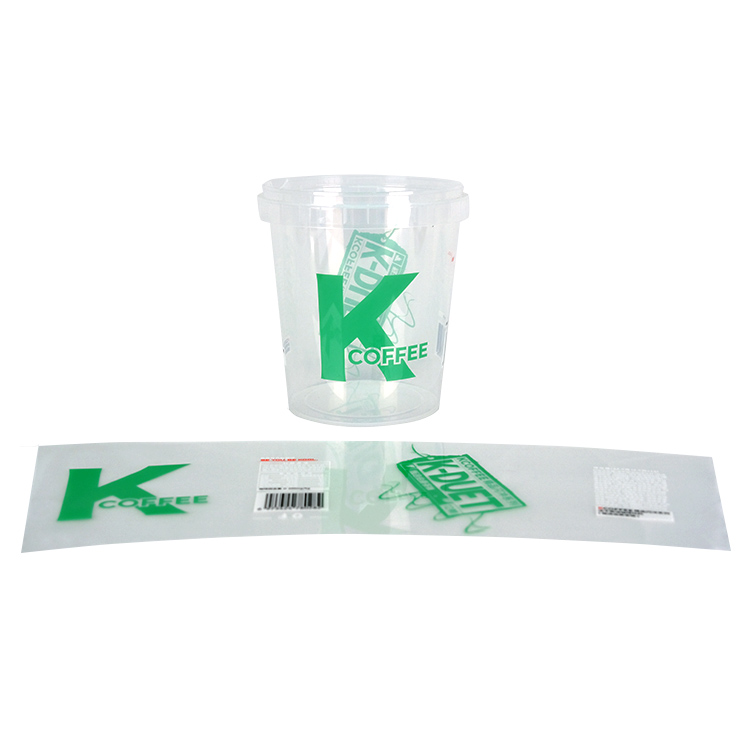
From a supplier evaluation standpoint, the most important film characteristics for injection molding are thickness consistency, tensile strength, and adhesion strength. YZY's in mold label films range from 30 μm to 100 μm thick, with tensile strength ≥20 MPa and adhesion strength ≥5N, meaning the label does not peel during injection molding.
How Injection Molding In Mold Label Works
Injection molding is the leading production process for in-mold labels, accounting for more than 57.1% of revenue share in 2023, according to Grand View Research. The basic process involves four stages:
- Label placement: A cut in mold label is transferred into the mold cavity, usually by a robot arm or vacuum pad, and held in position by static electricity or vacuum.
- Mold closing: The mold closes, fixing the label against the cavity wall with the printed side facing the mold surface.
- Resin injection: Molten plastic is injected into the mold. The heat and pressure cause the label film to fuse with the resin.
- Cooling and ejection: The molded container cools, the label becomes an integrated part of the container wall, and the finished part is ejected.
Because the label fuses into the container wall, IML labels do not lift at the edges, do not peel in wet conditions, and do not create the "label on bottle" look. The decorated surface is also more resistant to scratching than ordinary printed labels.
For high-speed injection processes, the label must not warp and must not fall off during handling. The ZY-IML Series is specified for high-speed injection compatibility, with no warping and no label fall-off.
Blow Molding In Mold Label: A Related Application
Blow molding in mold label is a related technology used for hollow plastic parts such as bottles, containers, and larger industrial packaging. In blow molding, a tube of heated plastic called a parison is inflated inside a mold to form the container shape, and the label is fused to the container during this process.
For blow molding applications, PE and PP films are commonly used because they bond well with blow molding resins. YZY's transparent matte laminated film and matte white laminated film are referenced in blow molding IML applications, reflecting the material's flexibility across molding processes.
Food Grade In Mold Label: Compliance and Safety Standards
For food packaging, in mold labels must meet food contact material regulations. The most relevant standards for plastics in food contact are:
- EU Regulation (EU) No 10/2011 — regulates plastic materials and articles intended to come into contact with food. Migration testing under this standard verifies that substances do not transfer to food at unsafe levels.
- US FDA 21 CFR Part 177 — regulates polymers, including PE and PP, for direct food contact applications.
- BRCGS Packaging Materials — a global standard for packaging safety and quality management.
- ISO22000 — a food safety management system standard.
- QS — China's food production license scheme for food-related products.
YZY's in mold labels are produced under QS, ISO, and BRC management system certifications, and the ZY-IML Series complies with FDA 21 CFR and BRCGS Packaging Materials standards. The products also meet EU 10/2011 migration requirements, which supports export to European markets.
For buyers, the key question is not only whether the label supplier holds a certificate, but whether the specific product formulation—film, ink, and adhesives—meets the migration limits of your target market. A food contact compliance statement should specify the applicable standard, such as FDA 21 CFR or EU 10/2011, and the testing basis.
In Mold Label Uses: From Yogurt Cups to Paint Buckets
In mold labels are used across several packaging categories, each with different performance requirements:
In Mold Label for Yogurt Cup
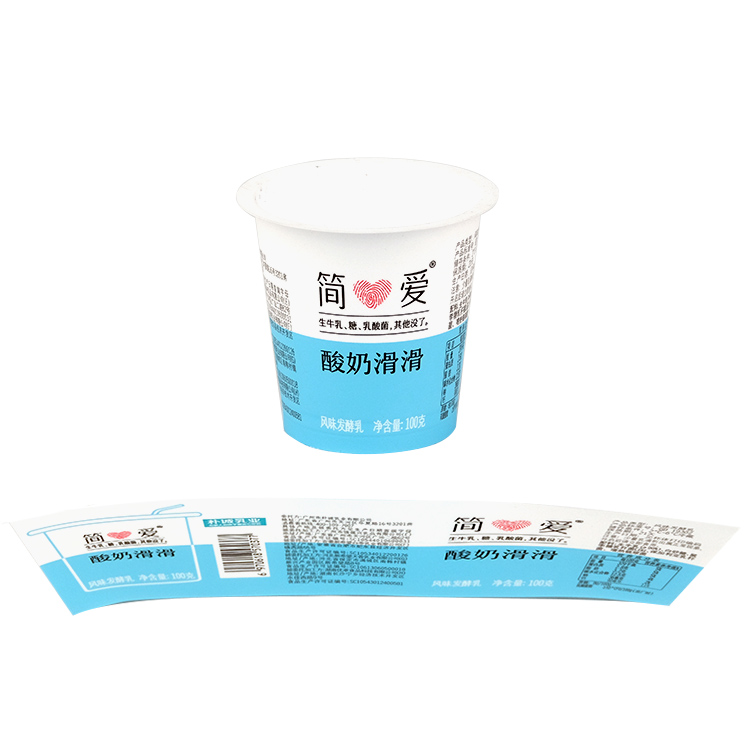
Yogurt cups are one of the most common applications for injection molded IML. The container is typically thin-wall PP, and the label must withstand refrigerated distribution and the mechanical stress of cup stacking. The food and beverages segment accounted for more than 41.3% of in-mold labels market revenue in 2023, according to Grand View Research.
In Mold Label for Ice Cream Container
Ice cream containers need labels that remain intact at low temperatures. The ZY-IML Series temperature resistance range of -20℃ to 120℃ covers cold chain distribution and hot filling processes.
In Mold Label for Paint Bucket and Lubricant Bucket
Industrial pails and buckets require labels with strong chemical resistance and scratch resistance. The ZY-IML Series offers chemical resistance to weak acids, alkalis, and common detergents, with 4H pencil hardness scratch resistance. This makes the label suitable for workshop environments and repeated handling.
In Mold Label for Bubble Tea Cup and Plastic Bottle
Takeaway beverage cups and plastic bottles benefit from IML decoration because labels do not wrinkle, peel, or collect moisture in ice water condensation. Clear and transparent film variants allow the container contents to show through while retaining a printed design.
In Mold Label for Daily Chemicals
Shampoo, detergent, and cosmetic containers are exposed to wet environments and chemical contact. A waterproof in mold label with good chemical resistance keeps the branding legible throughout the product's life.
Technical Specifications to Compare When Choosing Custom In Mold Labels
When comparing in mold label suppliers, buyers should evaluate technical parameters rather than relying on visual samples alone. The table below summarizes the key specifications of the YZY ZY-IML Series as a reference baseline.
| Parameter | ZY-IML Series Specification |
|---|---|
| Model | ZY-IML Series (Food / Daily Chemical / Industrial Grade) |
| Film materials | PP, PE, PET, multi-layer composite laminated films |
| Film thickness | 30 μm – 100 μm (customizable) |
| Printing method | 8-color high-precision rotogravure printing |
| Printing precision | ±0.1 mm |
| Maximum printing width | 1200 mm |
| Adhesion strength | ≥5N, no peeling during injection molding |
| Tensile strength | ≥20 MPa |
| Scratch resistance | 4H (pencil hardness test) |
| Temperature resistance | -20℃ to 120℃ |
| Chemical resistance | Resistant to weak acids, alkalis, and common detergents |
| Ink type | Food-grade low-migration water-based ink |
| Film types | Complex White Gloss Film, Complex Transparent Gloss Film, Standard Gloss Film, Matte Laminated Film, Holographic Film |
| Surface finishes | Glossy, matte, orange peel, holographic, custom texture |
| Compliance | FDA 21 CFR, BRCGS Packaging Materials, ISO22000, QS; EU 10/2011 migration test |
When comparing suppliers, also ask about custom capabilities: custom printing, custom size, custom color matching, and custom film formulation. These capabilities determine whether the supplier can adapt the label to your mold design and branding requirements.
Food Grade vs. Industrial Grade In Mold Labels
Not all in mold labels are suitable for food contact. The grade determines which materials, inks, and compliance tests apply:
- Food Grade IML: Uses food-grade virgin resin and food-grade low-migration water-based ink. Must meet food contact standards such as FDA 21 CFR and EU 10/2011. Suitable for yogurt cups, beverage cups, and ice cream containers.
- Daily Chemical IML: Designed for shampoo, detergent, and cosmetic packaging. Needs good chemical resistance to product ingredients and wet environments.
- Industrial IML: Designed for paint buckets, lubricant buckets, and industrial containers. Prioritizes toughness, scratch resistance, and chemical resistance.
Buyers should confirm the grade that matches their product category and target market compliance requirements.
Market Context and Supplier Selection
The global in-mold labels market was valued at USD 2.31 billion in 2023 and is projected to reach USD 3.14 billion by 2030, according to Grand View Research. Another estimate from Market Research Future puts the 2024 market at USD 2.72 billion with a projected CAGR of 3.94%, reaching USD 4.16 billion by 2035. Market size definitions and segmentation differ by research firm, but both estimates indicate steady growth. Asia Pacific is reported by Mordor Intelligence as the fastest-growing and largest regional market for in-mold labels as of 2024.
Well-known global players in the in-mold labeling industry include CCL Industries, Multi-Color Corporation, and Huhtamaki. At the manufacturing and supply level, Chinese producers such as YZY (ZHEJIANG ZHONGYU SCIENCE AND TECHNOLOGY CO., LTD.) supply IML films and labels to packaging converters and brand owners worldwide.
Why a Dedicated IML Manufacturer Matters for Injection Molders
An in mold label is not an accessory added after the container is made; it is part of the molding process. This creates a strong technical link between the label supplier and the injection molder.
A dedicated IML manufacturer with in-house printing and film expertise can provide more consistent quality than a general print shop because they understand how printing variations interact with molding behavior. YZY, for instance, has 16 years of manufacturing experience in in-mold labeling and operates a 20,000 square meter facility with approximately 250 employees in Wenzhou, Zhejiang, China. The company's annual production capacity reaches 200,000,000 units.
For procurement teams, supplier evaluation should cover:
- Film thickness tolerances and print registration (±0.1 mm is a meaningful precision level)
- Adhesion strength data and whether it is tested after molding
- Food contact compliance documentation for the exact film-ink combination
- Process compatibility with injection molding and blow molding
- Custom formulation and color matching capabilities
- Production capacity and export experience
YZY's export business accounts for 30% of total sales, with major markets worldwide. The company states that it has established long-term cooperation with brands such as Starbucks, Nestlé, and Uni-President.
Frequently Asked Questions
Is YZY in mold label compliant with food contact standards?
Yes. The ZY-IML Series complies with FDA 21 CFR, BRCGS Packaging Materials, ISO22000, and QS certification standards. The product also meets EU 10/2011 migration testing requirements for plastic food contact materials. For food applications, YZY uses food-grade virgin resin and food-grade low-migration water-based ink.
Can custom in mold label printing and sizing be provided?
Yes. The ZY-IML Series supports custom printing, custom size, custom color matching, and custom film formulation. Film thickness is customizable within the 30 μm to 100 μm range, and printing is done with 8-color high-precision rotogravure printing at ±0.1 mm precision. Maximum printing width is 1200 mm.
What is the difference between PP and PE in mold labels?
PP (polypropylene) in mold labels are typically used for injection molded PP containers such as yogurt cups, ice cream containers, and thin-wall packaging. PE (polyethylene) in mold labels are used for PE containers and blow molding applications. The film must match the container resin to achieve strong adhesion during molding. YZY also offers PET and multi-layer composite laminated films for specialized requirements.
Can I request a sample before ordering in mold labels?
Yes. Buyers evaluating in mold labels for plastic containers can contact YZY to request samples and discuss project requirements. Contact email: yzy@inmoldlabel.net, phone/WhatsApp: +86 182 6778 1866. It is recommended to provide container type, resin material, mold details, and target market compliance requirements so that the sample matches your production process.
What is the typical lead time for custom printed in mold labels?
Lead time depends on label design complexity, film type, printing colors, order quantity, and current production schedule. YZY operates an annual production capacity of 200,000,000 units. For accurate lead time, contact the sales team with your specifications. Email: yzy@inmoldlabel.net.
Conclusion
In mold labeling is a mature, high-performance decoration method for injection molded and blow molded plastic packaging. Unlike ordinary labels, an in mold label becomes part of the container, providing permanent branding, waterproof durability, scratch resistance, and food contact safety when properly specified.
When selecting an in mold label supplier, focus on measurable parameters: film material, thickness, printing precision, adhesion strength, temperature resistance, chemical resistance, and compliance with FDA or EU food contact standards. Suppliers with dedicated IML production lines, such as YZY (ZHEJIANG ZHONGYU SCIENCE AND TECHNOLOGY CO., LTD.), can provide the technical consistency required for high-speed injection molding.
Evaluating in mold labels for your packaging project?
Download the YZY company brochure for production capabilities and product information, or contact yzy@inmoldlabel.net / +86 182 6778 1866 to discuss your application.