In Mold Label for Yogurt Cup Packaging: PP/PE Film, Food-Grade Ink and Molding Fit
Short answer: A yogurt cup in mold label is decided by three variables that must be locked before artwork is released. The film grade has to match the cup resin, the ink has to be a food-grade low-migration system, and the caliper plus adhesion window has to survive the injection cycle without peeling or warping. The ZY-IML Series in mold label from YZY (Zhejiang Zhongyu Technology Co., Ltd.) is built around that combination: virgin food-grade PP, PE or PET film at 30–100 μm, 8-color high-precision rotogravure printing at ±0.1 mm, food-grade low-migration water-based ink, and adhesion strength of ≥5N with no peeling during injection molding.
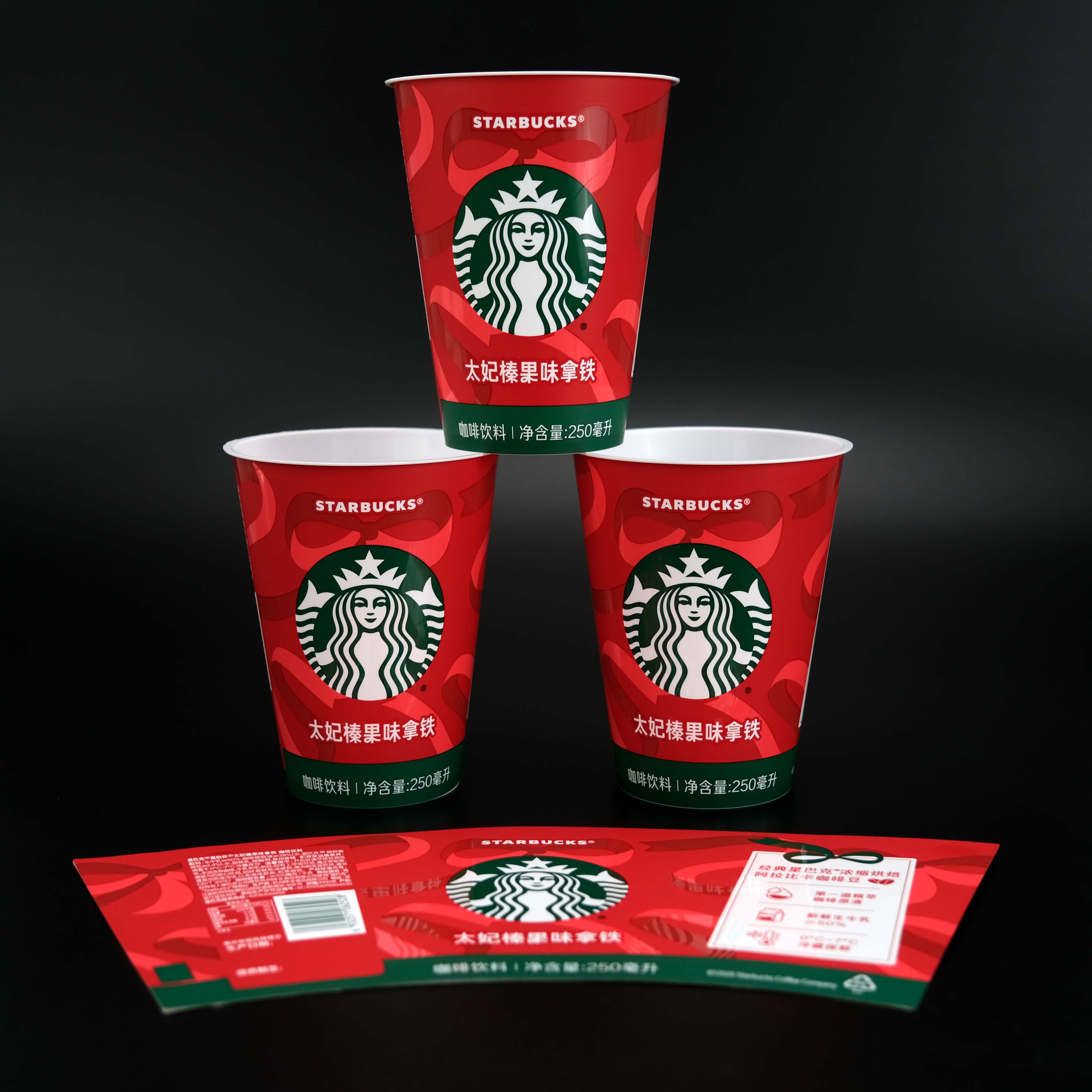
Complex white gloss IML film, one of the food-grade film constructions used for printed yogurt cup labels. Image: YZY (Zhejiang Zhongyu Technology Co., Ltd.).
ZY is an in-mold labeling manufacturer based in Wenzhou, Zhejiang, China, founded in 2009. The company runs a 20,000 m² factory with 250 employees, a 10-person R&D team and roughly 30% of output exported to worldwide markets. This guide is written for the packaging engineers, dairy brand owners and injection factories who need to make the yogurt cup label decision once and defend it in a supplier audit, rather than for readers who still need an explanation of what in-mold labeling is.
Why a yogurt cup is a harder in mold label target than a standard container
A yogurt cup puts four conditions on a label at the same time: a thin molded wall that cools fast, high-cavitation tooling that demands repeatable label placement, a filling and distribution chain that can run from hot fill to chilled or frozen storage, and direct food contact on a package the consumer holds and squeezes. Each condition maps to a specific label specification rather than to a general quality claim.
- Rim lift or peeling after demolding is governed by adhesion strength. ZY-IML Series is specified at ≥5N, with no peeling during injection molding.
- Label fall-off or misplacement at line speed is governed by caliper consistency inside the 30–100 μm band and by molding compatibility. The series is specified to fit high-speed injection processes with no warping and no label fall-off.
- Color shift or registration drift on a small, curved surface is governed by printing precision: 8-color rotogravure at ±0.1 mm.
- Ink transfer risk on a food-contact package is governed by the ink system: food-grade low-migration water-based ink, supported by a migration test meeting EU 10/2011.
- Warping or film shrinkage at the cup rim is governed by heat and mechanical performance: temperature resistance from -20 °C to 120 °C and tensile strength ≥20 MPa.
- Scuffing through cup handling and secondary packaging is governed by surface hardness: 4H pencil hardness.
Industry background: why PP film and injection molding dominate yogurt cup IML
Polypropylene is the default substrate for in-mold labeled packaging. Grand View Research reports that PP held a 56.9% share of the in-mold labeled plastic packaging market in 2025, and that injection molding accounted for over 57.1% of in-mold label market revenue in 2023, the process segment that yogurt cup production sits inside. Rosti Group's technical description explains the reason behind that material split: IML labels are usually made from the same polymer family as the molded component, commonly polypropylene, so the label and the container fuse into one part instead of remaining two materials joined by an adhesive.
Application evidence points the same way. Supplier documentation for IML lists yogurt cups alongside bottles, containers, trays, lids and buckets, which places the cup format among mainstream IML targets rather than niche ones. Industry technical descriptions also state that IML is used in injection molding, blow molding and thermoforming, so the same decoration logic carries across the cup, bottle and tub formats a dairy brand may run in parallel.
Food-contact rules keep moving, which is why the compliance file matters as much as the film. The U.S. FDA updated its Inventory of Effective Food Contact Substance Notifications on 31 May 2026, announcing that FCNs for 35 PFAS substances are no longer effective. A yogurt cup label specification should therefore be checked against the current inventory, not simply against a certificate issued years earlier.
The ZY-IML Series specification set for yogurt cup packaging
Film material: PP, PE, PET and multi-layer composites
Material choice starts with the cup, not with the label. ZY-IML Series film is available in virgin food-grade PP, PE, PET and multi-layer composite laminated films. PP is the default for polypropylene yogurt cups because it places the same polymer family on both sides of the bond. PE film is used where the molded part or the converting line calls for polyethylene. PET and multi-layer composite constructions extend the range where a specific stiffness, appearance or processing requirement exists. Food-contact grades are made from food-grade virgin resin.
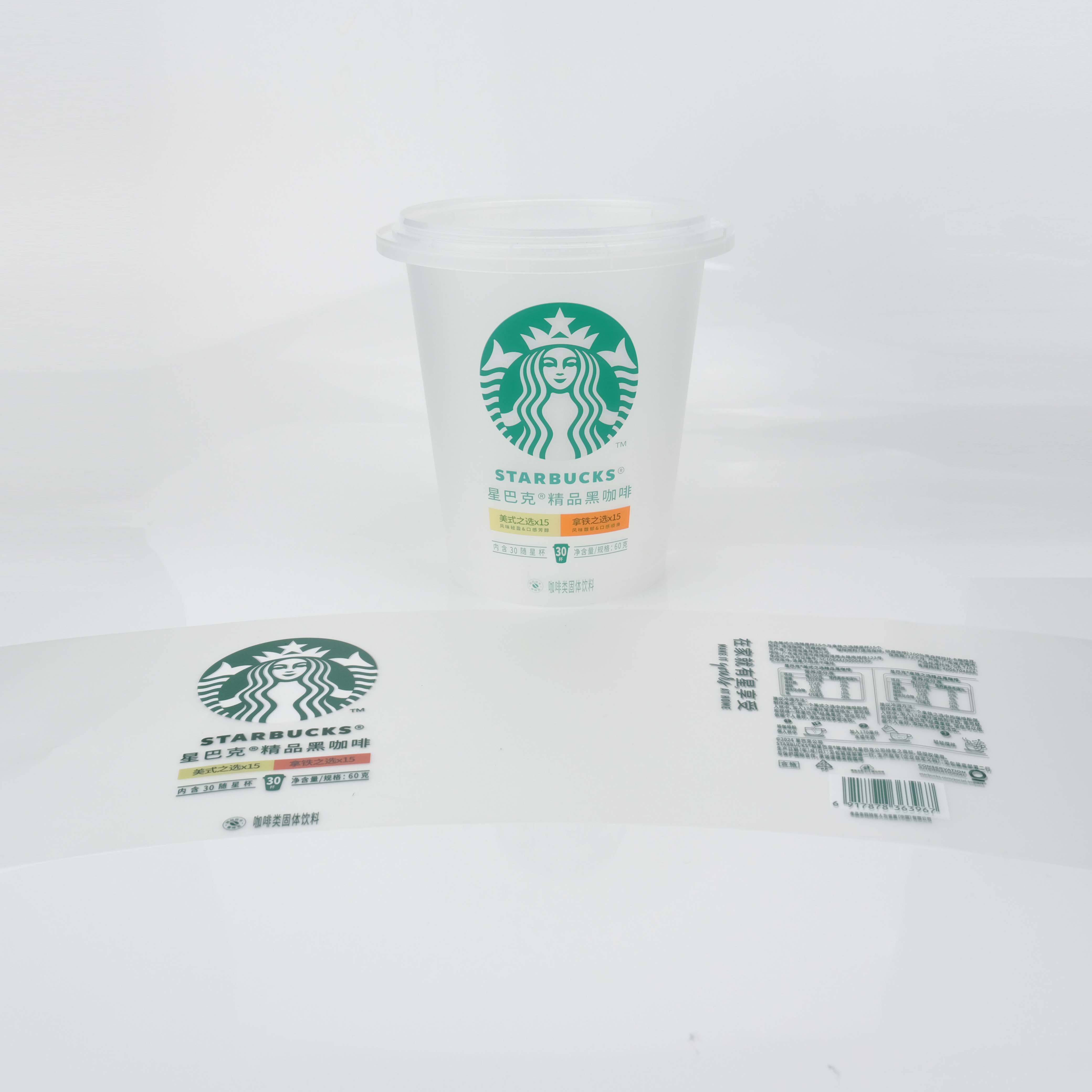
Transparent matte laminated film, a clear construction for cups where the product should stay visible.
Film thickness: 30–100 μm and what the caliper controls
Caliper is the most consequential variable after material. ZY-IML Series film runs from 30 μm to 100 μm and is customizable within that band. Thin film conforms to the cup wall and tighter radii more easily and puts less material into each label. Thick film holds stiffness and opacity and behaves more predictably through high-speed label magazines. For market context, one IML label supplier describes 50–60 μm as its typical thickness for white or transparent PP labels, inside the 30–100 μm band rather than outside it. The correct caliper for a specific yogurt cup is set by wall thickness, cavitation, label diameter and the label-applying equipment, and should be confirmed on the actual tool rather than on a datasheet alone.
Food-grade ink and 8-color rotogravure printing
Graphics are produced with 8-color high-precision rotogravure printing at a registration precision of ±0.1 mm, on a maximum printing width of 1200 mm. Two things matter for yogurt cups. First, cup labels are printed several-up across a wide web and then cut, so registration drift turns into visible color misalignment on a small, closely inspected surface. Second, the ±0.1 mm tolerance holds brand colors and fine text, such as nutritional panels, batch zones and legal marks, in position across long runs.
The ink system is a food-grade low-migration water-based ink. On a yogurt cup the printed surface faces the consumer and sits on a package that is refrigerated, handled and sometimes inverted, so the ink specification is the part of the label that answers that exposure. It is supported by a migration test meeting EU 10/2011 food contact material standards.
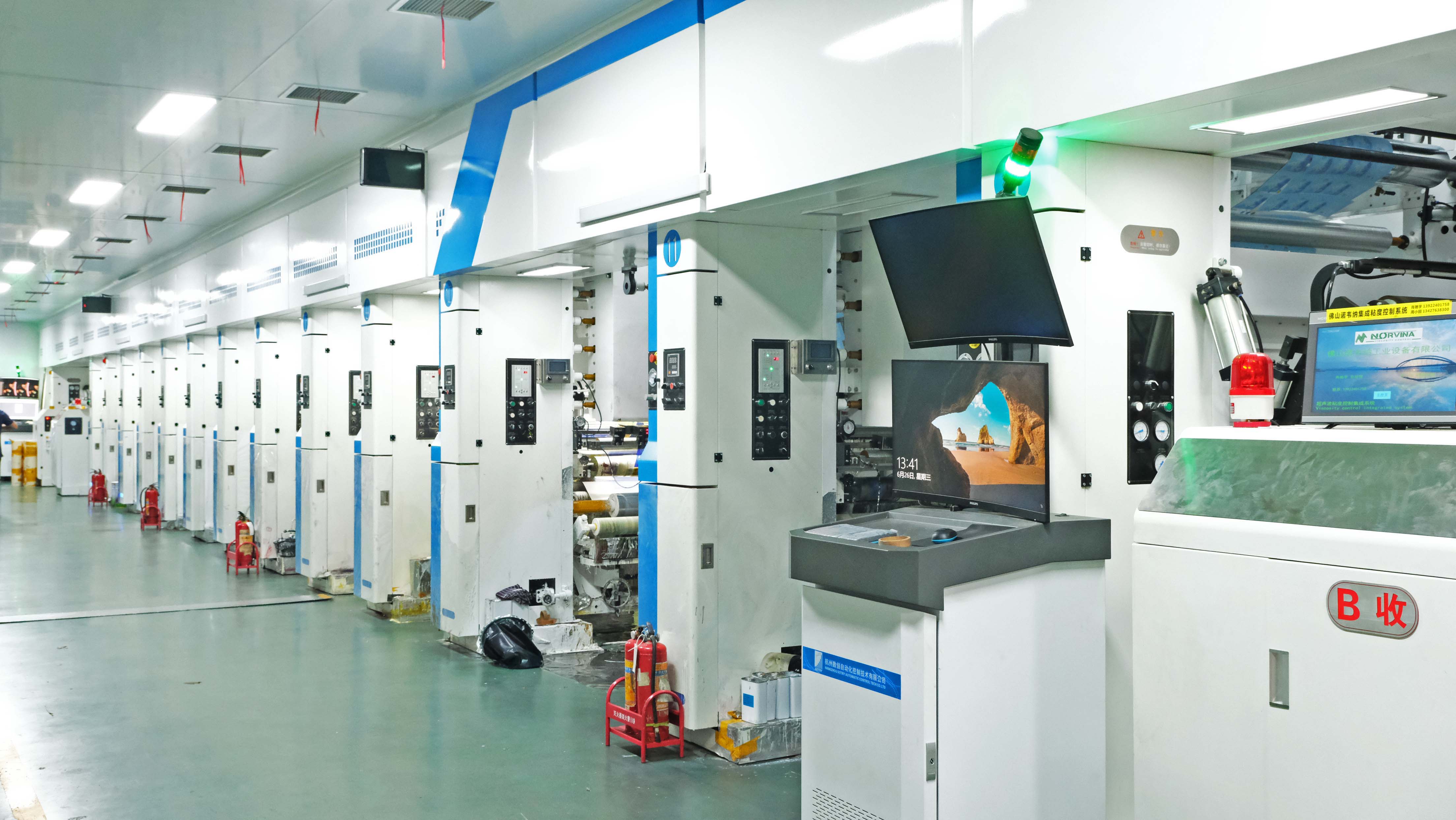
Gravure printing line at YZY, where 8-color cup labels are produced to ±0.1 mm registration.
Adhesion ≥5N and molding fit
Adhesion strength is specified at ≥5N with no peeling during injection molding. That value is the peel-resistance figure to quote to an injection factory when the question is whether the label will lift at the rim after demolding. The series is also specified as compatible with high-speed injection processes with no warping and no label fall-off, which is the condition multi-cavity yogurt cup tools actually run under: short cycles and automated label placement.
Thermal, mechanical and chemical envelope
The operating temperature range of -20 °C to 120 °C covers hot filling and cold chain in a single specification, which matters for dairy brands running the same cup design across processed and chilled products. Tensile strength of ≥20 MPa gives the film enough body to survive cutting, stacking and magazine feed. Scratch resistance of 4H (pencil hardness test) protects the printed surface through cup handling and secondary packaging. Chemical resistance covers weak acids, alkalis and common detergents, which is relevant where cups sit in condensation, are wiped on the filling line, or are stored in a chilled, humid environment.
Surface finishes for shelf differentiation
Film types include complex white gloss, complex transparent gloss, standard gloss, matte laminated and holographic constructions. Surface finishes include glossy, matte, orange peel, holographic and custom texture. The finish decision is usually made on shelf and photography requirements rather than on mechanics, but it should be confirmed together with the caliper, because a finish change can shift the stiffness and slip behavior of the film in the label magazine.
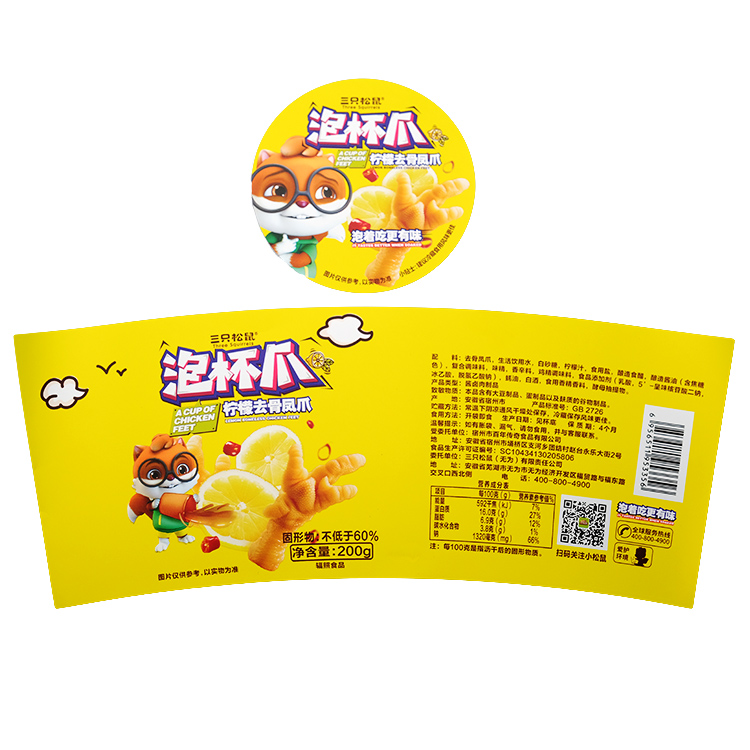
Orange peel texture is one of the available surface finishes, alongside glossy, matte, holographic and custom texture.
Food-contact compliance evidence
Food-contact documentation is a separate deliverable from the label. ZY-IML Series food-grade labels are specified against FDA 21 CFR, including 21 CFR 177.1520 for olefin polymers, BRCGS Packaging Materials, ISO22000 and QS, with SGS certificate NGBEC2501946006 covering the food-contact scope and a migration test meeting EU 10/2011. Quality control is 100% visual inspection plus random laboratory testing against FDA/GB compliance, so the compliance claim is tied to a lot-level inspection record rather than to a single type test.
Limits worth stating up front
The specification defines the label, not the whole package. Three items sit outside it and must be confirmed by the converter or the brand: the molded cup resin and its additives, the tool's label placement system and vacuum ports, and the filling line's actual thermal cycle. The -20 °C to 120 °C range is an operating envelope, not a validation of any specific product, so a hot-fill or frozen program should be tested as a program. Likewise, adhesion ≥5N is a specified value for the label-to-resin bond and does not replace a line trial on the actual tool.
Step-by-step: qualifying an in mold label for a yogurt cup line
- Fix the cup specification first. Record resin (PP or PE), wall thickness, cup diameter, cavitation count, fill temperature and distribution temperature before any label decision. Every later choice depends on these inputs.
- Match film material to the cup resin. PP film for PP cups, PE film where polyethylene is specified, PET or multi-layer composite where the construction requires it. Mismatching the polymer family is a common reason a label performs on the bench and fails on the tool.
- Set the caliper inside the 30–100 μm band and freeze it. Write the exact micron value into the artwork and purchase specification, not just the range. Changing caliper after the molding trial invalidates that trial.
- Choose film construction and surface finish. Select from complex white gloss, complex transparent gloss, standard gloss, matte laminated or holographic film, then set the finish (glossy, matte, orange peel, holographic or custom texture) against the shelf and photography brief.
- Build the artwork for 8-color gravure at ±0.1 mm. Allow for the 1200 mm maximum printing width when the cup label is stepped several-up on the web, and confirm that the color build stays inside 8 colors.
- Assemble the compliance file. Low-migration water-based ink, FDA 21 CFR 177.1520, SGS certificate NGBEC2501946006, BRCGS, ISO22000, QS and the EU 10/2011 migration test, collected as one document set before the trial rather than after it.
- Run the molding trial and measure, not observe. Verify adhesion ≥5N, no peeling, no warping and no label fall-off at the line speed the tool will actually run.
- Validate the temperature envelope. Confirm performance at the hot-fill temperature and, separately, through the cold chain down to the -20 °C limit; check 4H scratch resistance and detergent resistance at the same time.
- Scale to production terms. Confirm MOQ (2000 ㎡), lead time (15–20 days after sample confirmation), monthly capacity (350,000,000 pcs/month) and the customization scope: size, shape, color, printing design and material under OEM/ODM.
Decision rule for yogurt cup IML projects
If the cup is PP and the fill is chilled or hot-filled, specify food-grade PP film at a caliper confirmed on the tool, with low-migration water-based ink and adhesion ≥5N. If the cup is clear and the product should stay visible, move to a transparent gloss or transparent matte construction. If the cup runs through a promotional or limited-edition program, holographic film and holographic finish sit inside the same 30–100 μm band and the same compliance set.
Use cases: where these yogurt cup configurations are applied
Single-serve set yogurt cups. Opaque complex white gloss film at a caliper confirmed on the tool, printed 8-color gravure, with the low-migration ink system. The white base carries the brand block and the nutritional panel without interference from the color of the fill.
Hot-filled and processed yogurt. The same construction validated up to 120 °C, where adhesion ≥5N and tensile strength ≥20 MPa do the work: the label has to stay flat while cup and film expand and contract at different rates.
Chilled and frozen yogurt and frozen dessert cups. Validated down to -20 °C, with 4H scratch resistance protecting the print when cups are packed, stacked and handled in frozen distribution. Because the label is fused into the cup rather than adhered to it, condensation on a chilled cup sits on the printed film surface instead of under an adhesive layer.
Drinking yogurt and yogurt bottles. IML is used in blow molding as well as injection molding, so one film and ink specification can be carried across cup and bottle formats within the same brand system.
Volume dairy programs. A high-volume dairy and beverage customer base running custom food-grade IML for cold beverage and yogurt cups across DZ, EG, IN, IR, PK, PH, SA, TH, TR, TW, US, UZ, VN and ZA recorded 0 quality complaints, a 100% on-time delivery rate and 100% compliance over a one-year program. The relevant signal for a buyer is less the country list than the fact that one specification held across fourteen markets and multiple injection factories.
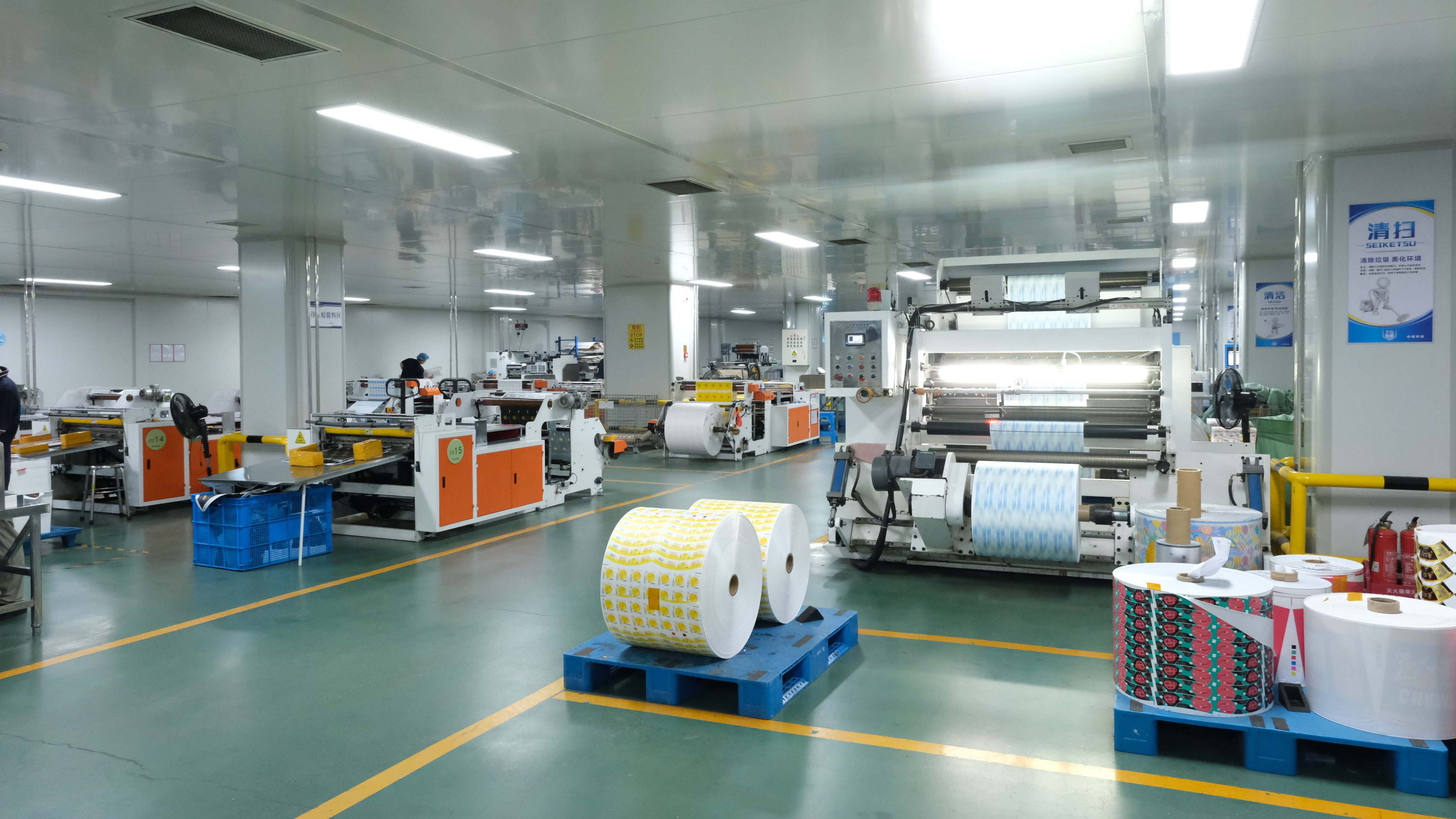
Production workshop at YZY, where every lot passes 100% visual inspection plus random laboratory testing against FDA/GB compliance.
Comparison: mapping yogurt cup requirements to ZY-IML Series specifications
| Yogurt cup requirement | ZY-IML Series specification | Verification |
|---|---|---|
| Label must not lift or peel at the rim after demolding | Adhesion strength ≥5N, no peeling during injection molding | Product specification |
| Label must survive automated placement at line speed | Compatible with high-speed injection processes, no warping, no label fall-off | Product specification |
| Print must hold registration on small labels | 8-color rotogravure printing, ±0.1 mm precision | Product specification |
| Multiple labels stepped across one web | Maximum printing width 1200 mm | Product specification |
| Hot fill and cold chain in one specification | -20 °C to 120 °C operating range | Product specification |
| Film must feed and cut without tearing | Tensile strength ≥20 MPa | Product specification |
| Print must resist handling and packing scuff | 4H scratch resistance (pencil hardness test) | Product specification |
| Cups wiped or stored in condensation | Resistance to weak acids, alkalis and common detergents | Product specification |
| Cup wall conformity and opacity | Film 30–100 μm, customizable; PP, PE, PET, multi-layer composite | Product specification |
| Food contact on the printed package | Food-grade low-migration water-based ink; FDA 21 CFR 177.1520; SGS NGBEC2501946006; BRCGS; ISO22000; QS; EU 10/2011 migration test | Compliance documentation |
Frequently asked questions
Is the ZY-IML Series yogurt cup label food-contact compliant for the US and EU?
Within the documented scope, yes. The food-grade ZY-IML Series is specified against FDA 21 CFR, including 21 CFR 177.1520 for olefin polymers, and holds SGS certificate NGBEC2501946006, BRCGS Packaging Materials, ISO22000 and QS. The ink is a food-grade low-migration water-based system supported by a migration test meeting EU 10/2011 food contact material standards. Buyers should request the current certificate set with the quotation, because food-contact rules are updated periodically; the FDA, for example, revised its FCN inventory on 31 May 2026.
Can you print 8 colors on a yogurt cup label at ±0.1 mm, and how wide can the web be?
Yes. ZY-IML Series labels are produced with 8-color high-precision rotogravure printing at a registration precision of ±0.1 mm, on a maximum printing width of 1200 mm. Cup labels are typically stepped several-up across that width and then cut, so wide-web capacity is what allows a yogurt program to run at volume without changing print method.
What drives the cost of a yogurt cup in mold label, and what is the minimum order?
The minimum order quantity is 2000 ㎡. Within that, cost is driven by the film material (food-grade PP, PE, PET or multi-layer composite), the caliper chosen between 30 μm and 100 μm, the number of colors used within the 8-color capability, the surface finish (glossy, matte, orange peel, holographic or custom texture) and the label dimensions. Because these variables interact, a quotation is prepared against the actual cup specification rather than against a generic per-label rate.
Can I evaluate samples before committing to a molding trial?
Yes. Sampling is the standard route before a tool trial: film construction, caliper, finish and print are confirmed on a physical sample, and customization covers size, shape, color, printing design and material under OEM/ODM. Confirming the sample is also the point at which the production lead time starts to run. To start a sample request, send the cup drawing, resin, fill temperature and target caliper to the YZY team through inmoldlabel.net.
What is the production lead time and available capacity for a yogurt cup program?
Lead time is 15–20 days after sample confirmation, with monthly capacity of 350,000,000 pcs/month and OEM/ODM production. Export markets served include the EU, the US, the Middle East and Southeast Asia, and quality control is 100% visual inspection plus random laboratory testing against FDA/GB compliance.
Conclusion: lock the film, the ink and the molding window, in that order
A yogurt cup in mold label is not a print job with a resin attached to it. The film grade has to match the cup polymer, the caliper has to sit where the tool can place and fuse it, the ink has to answer food-contact migration, and the adhesion value has to survive demolding at production speed. Fixing those four items on paper first, then confirming them on a physical sample and a molding trial, is what keeps a dairy program stable across multiple injection factories and markets. The ZY-IML Series specification set, from 30–100 μm food-grade PP/PE/PET film through 8-color rotogravure at ±0.1 mm, low-migration water-based ink, adhesion ≥5N and the FDA 21 CFR 177.1520, SGS NGBEC2501946006, BRCGS, ISO22000 and QS documentation, is designed to be qualified in exactly that order.
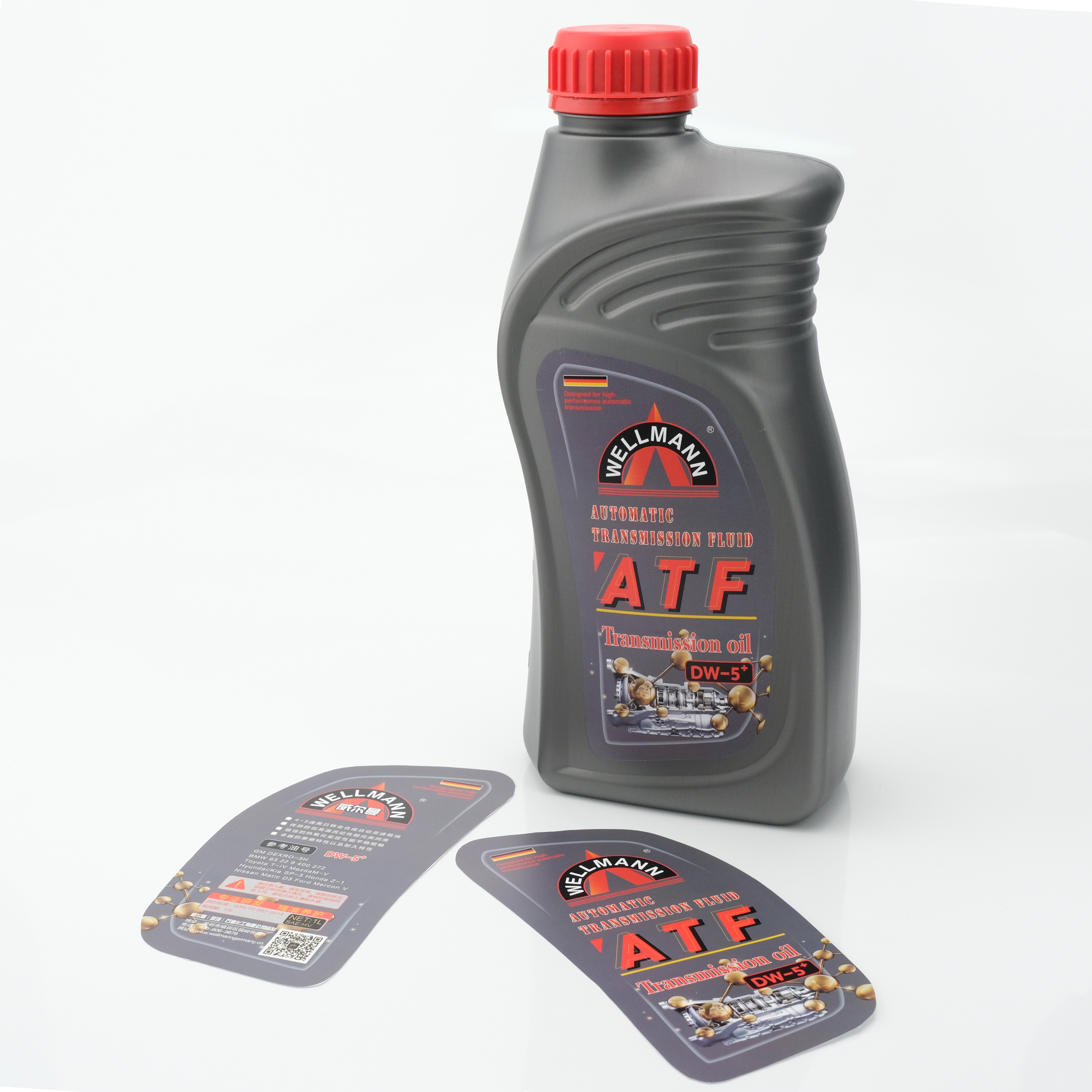
Sample film constructions are available for evaluation before a yogurt cup molding trial.
Request a yogurt cup IML sample or quotation
Send the cup drawing, resin type, caliper target, fill temperature and print file. YZY will confirm film construction and finish, return a quotation against the MOQ of 2000 ㎡, and issue the current compliance set: FDA 21 CFR 177.1520, SGS certificate NGBEC2501946006, BRCGS, ISO22000, QS and the EU 10/2011 migration test.
Email: yzy@inmoldlabel.net · Tel / WhatsApp: +86 182 6778 1866 · Website: www.inmoldlabel.net · Address: Building 59, Zone E, Guohong Zhizao New Town, Xingke Road, Longgang, Wenzhou, Zhejiang, China 325802
Have Questions or Need More Details?
Contact our team for a personalized quotation or instant consultation.
Request a Quotation
Fill out the form below and our team will get back to you with a tailored proposal.
WhatsApp Direct Chat
Prefer to chat in real-time? Message us on WhatsApp for instant assistance & quick answers.
- Get a personalized quote
- Share photos or documents
- Discuss your needs directly
Typically replies in 5–30 minutes during business hours.