In Mold Label: Complete Guide to IML Technology, Materials & Applications
In Mold Label: Complete Guide to IML Technology, Materials & Applications
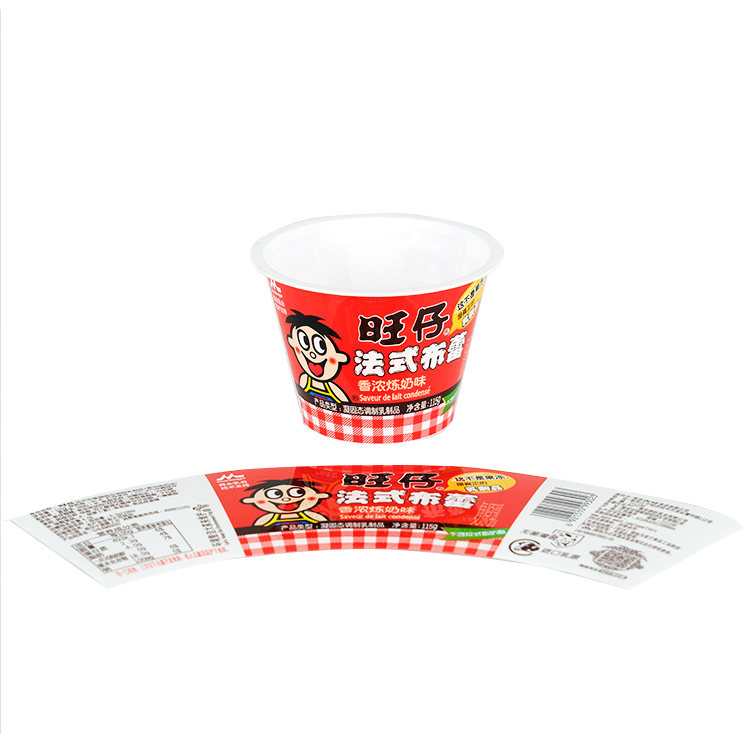
An in mold label (IML), also called an in-mould label, is a printed label that is placed inside a mold before plastic injection or blow molding. The molten plastic fuses with the label film, so the decoration becomes part of the container. This guide explains how in mold label technology works, what materials and technical specifications matter, and how buyers can evaluate custom in mold label suppliers for plastic containers, food packaging, daily chemical bottles, and industrial buckets.
What Is an In Mold Label (IML)?
An in mold label is a polymer-based film label that is inserted into the mold cavity before plastic resin is injected. During injection molding, the heat and pressure weld the label to the molded part. The result is a durable, waterproof, high-adhesion decoration that is resistant to peeling, scratching, and fading. This is different from a traditional adhesive label, which is applied after the container is formed and can be scratched off or damaged by moisture.
The ZY-IML Series produced by ZHEJIANG ZHONGYU SCIENCE AND TECHNOLOGY CO., LTD. (YZY) is one example of a dedicated in mold label product line. It is available in food grade, daily chemical grade, and industrial grade, with PP, PE, and PET film options.
Why In Mold Labeling Matters in Packaging
The global shift toward IML packaging
In mold labeling has become a mainstream decorating method for plastic packaging because it combines decoration, protection, and branding in one step. Verified market research shows that the global in-mold labels market was valued at USD 2.31 billion in 2023 and is projected to reach USD 3.14 billion by 2030. Another estimate places the market at USD 2.72 billion in 2024, with a projected CAGR of 3.94%, reaching USD 4.16 billion by 2035. Although the exact figures differ because of varying segmentation and base-year definitions, both sources confirm that IML is a growing and commercially significant packaging segment.
Food and beverage packaging is the largest application segment, accounting for more than 41.3% of in-mold label revenue in 2023. In practice, this means in mold labels are widely used for yogurt cups, ice cream containers, bubble tea cups, and other food-contact plastic packaging. Asia Pacific is reported as both the largest and fastest-growing regional market for in-mold labels as of 2024, which is relevant for brands sourcing from or selling into this region.
What makes IML different from pressure-sensitive labels
IML becomes part of the container wall. It does not create an extra label edge that can catch, curl, or peel. It is also more resistant to moisture, chemical exposure, and abrasion during filling, transport, and use. For food packaging, the label film can be made from food-grade virgin resin and printed with food-grade low-migration water-based ink, so it can meet food contact safety requirements.
In Mold Label Materials: PP, PE, and PET
The material of an in mold label must be compatible with both the molded container and the printing process. If the label and the container are not made of the same polymer family, adhesion may fail.
PP in mold label
Polypropylene (PP) is the dominant material for in mold labels, holding a 47.2% market share in 2023. PP labels are commonly used when the container is also made of PP. They offer good rigidity, chemical resistance, and heat resistance, which is why they appear frequently in food containers, beverage cups, and daily chemical packaging.
PE in mold label
Polyethylene (PE) in mold labels are flexible and are typically matched with PE containers produced by blow molding. They are often used for squeeze bottles, lotion bottles, and other flexible plastic packaging where the label must move with the container wall.
PET in mold label
PET is used where higher transparency and a different container chemistry are required. PET labels are common in cosmetic and premium packaging applications. YZY also offers multi-layer composite laminated films that combine polymers to improve opacity, stiffness, or surface effect.
| Material | Typical Container Match | Common End Uses |
|---|---|---|
| PP in mold label | Injection-molded PP containers | Yogurt cups, bubble tea cups, ice cream containers, lids |
| PE in mold label | Blow-molded PE bottles | Daily chemical bottles, squeeze bottles, lubricant containers |
| PET in mold label | PET packaging | Cosmetic containers, premium bottles |
| Multi-layer composite | Mixed container types | High-opacity gloss or matte decorations |
Key Technical Specifications of In Mold Labels
When evaluating custom in mold label suppliers, buyers should compare the following specifications because they determine whether the label can survive the molding process and the end-use environment.
- Film thickness: 30 μm to 100 μm, customizable depending on container stiffness and molding process.
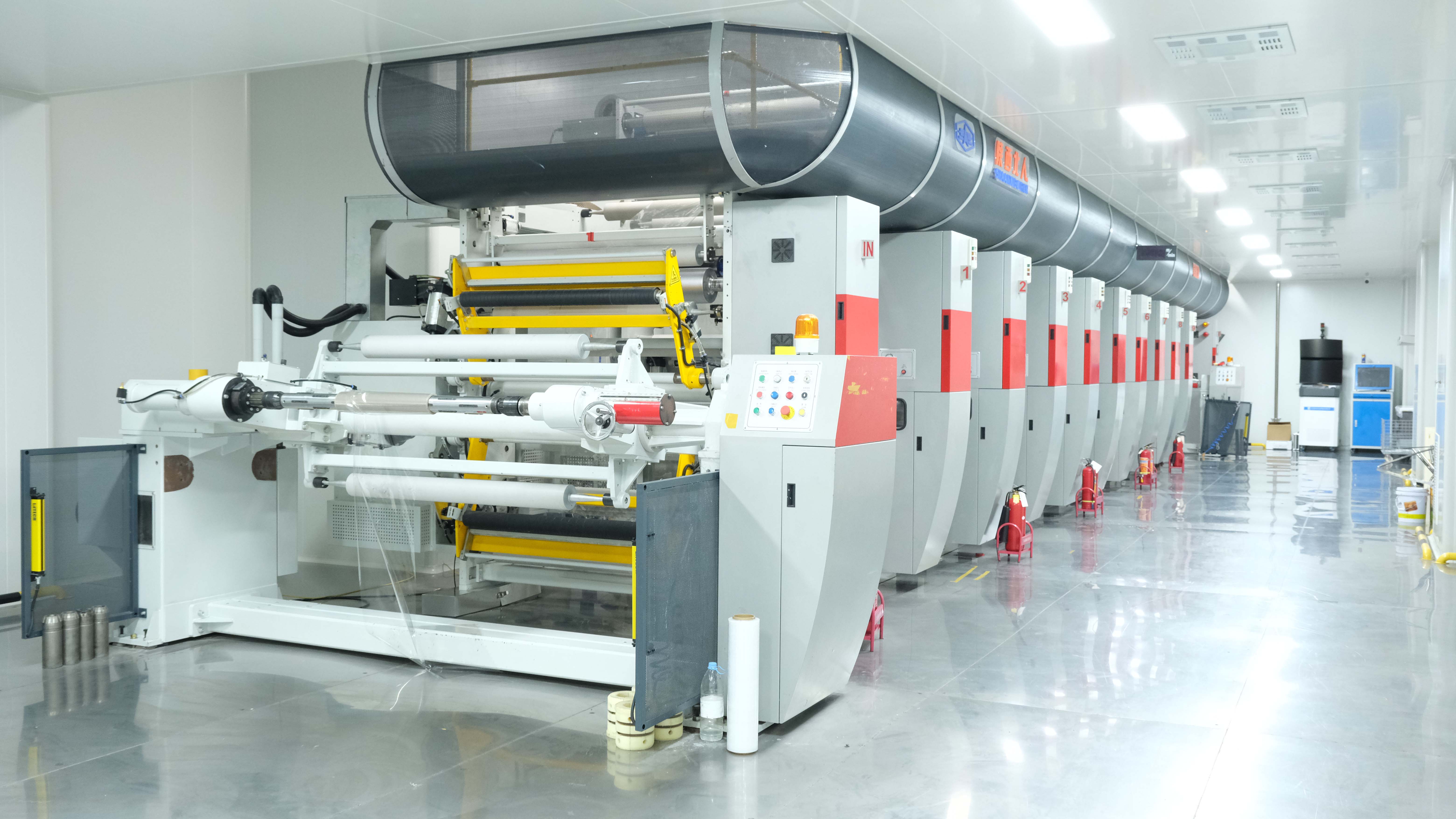
- Printing method: 8-color high-precision rotogravure printing.
- Printing precision: ±0.1 mm, which helps maintain accurate color registration across large production runs.
- Adhesion strength: ≥5 N, with no peeling during injection molding.
- Temperatures resistance: -20°C to 120°C, covering cold chain distribution and hot filling.
- Tensile strength: ≥20 MPa, indicating the film can handle mechanical handling.
- Scratch resistance: 4H (pencil hardness test), which resists surface scuffing during transport.
- Chemical resistance: resistant to weak acids, alkalis, and common detergents.
- Ink system: food-grade low-migration water-based ink for food contact applications.
- Maximum printing width: 1200 mm, suitable for high-volume label production.
Available Surface Finishes and Film Types
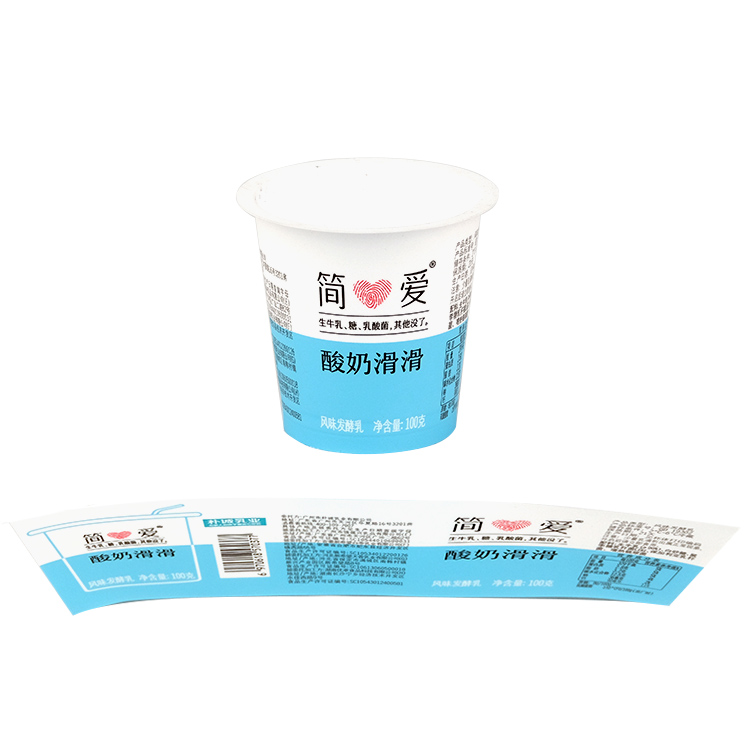
Surface finish affects both the look and the tactile feel of the final container. The ZY-IML Series offers the following film types and finishes:
- Complex white gloss film: high opacity and glossy appearance, common for colorful printed containers.
- Complex transparent gloss film: allows the container color to show through while adding a smooth glossy layer.
- Standard gloss film: a general-purpose glossy finish.
- Matte laminated film: provides a soft-touch, low-reflection surface.
- Holographic film: creates a changing visual effect for premium or promotional packaging.
- Orange peel finish: adds a subtle textured appearance.
- Custom texture: available when a brand requires a specific surface structure.
How In Mold Labels Are Made
The production of a custom printed in mold label involves several controlled steps:
- Film selection: the label material is selected according to the container polymer, molding method, and application requirements.
- Rotogravure printing: up to 8 colors are printed on the film with registration precision of ±0.1 mm.
- Lamination or coating: the printed film can be laminated to add opacity, gloss, matte, or protective properties.
- Cutting: the printed film is cut into individual labels sized for the mold cavity.
- Molding: the label is placed into the injection or blow mold, and plastic resin is formed over it, fusing the label to the container.
- Quality inspection: adhesion, print registration, scratch resistance, and other criteria are checked before shipment.
Because the label is embedded during molding, downstream operations such as filling and capping do not need to handle a separate labeling process. This can simplify packaging lines and reduce the risk of label misalignment.
Injection Molding vs. Blow Molding IML
In mold labels are used with two main molding processes:
Injection molding in mold label is the most widely used process, with a global revenue share exceeding 57.1% in 2023. Rigid containers such as ice cream tubs, yogurt cups, and paint buckets are produced this way. The label is placed in the mold cavity, and molten plastic is injected behind it, creating a strong mechanical bond.
Blow molding in mold label is used for hollow containers such as bottles. The label is placed in the mold, and a parison is expanded with air pressure to press the plastic against the label. PE blow molding labels are commonly used for daily chemical bottles and lubricant containers.
Common Applications of In Mold Labels
In mold label for yogurt cup and ice cream container
Dairy packaging is one of the largest IML application areas. The label must withstand cold chain temperatures and condensation without losing adhesion. PP in mold labels with food-grade ink meet these requirements while providing a bright, scuff-resistant surface that survives stacking and distribution.
In mold label for bubble tea cup
Bubble tea cups are typically injection-molded PP cups with vivid printed graphics. IML eliminates paper labels that can become wet and peel, which is a key advantage in beverage applications where cups are handled with cold, wet hands.
In mold label for paint bucket and plastic bucket
Industrial containers such as paint buckets and lubricant buckets need labels that resist solvents, weak acids, and alkalis. Industrial-grade IML labels are designed for these conditions, and the label cannot be easily scratched or removed during rough handling.
In mold label for daily chemicals and cosmetics
Shampoo bottles, detergent containers, and cosmetic jars frequently use IML because it resists moisture and chemical exposure in bathrooms. Glossy, matte, and holographic finishes allow brands to create a premium shelf appearance.
In mold label for plastic bottle and plastic container
IML can be used across a wide range of rigid plastic containers, including bottles, jars, tubs, and pails. Because the label is molded into the container, the design remains visible for the life of the package.
Food Safety and Compliance for In Mold Labels
Food-grade in mold labels must comply with strict migration and safety requirements because they come into direct contact with food or are used on food packaging surfaces.
- EU Regulation (EU) No 10/2011 applies to plastic materials and articles intended for food contact. YZY states that its labels meet the EU 10/2011 migration test requirements for food contact materials.
- US FDA 21 CFR Part 177 regulates polymers such as PE and PP for direct food contact applications. FDA 21 CFR compliance is listed as a standard for the ZY-IML Series.
- BRCGS Packaging Materials is a certification for packaging quality and safety management systems.
- ISO22000 is a food safety management system standard.
- QS is a Chinese food production quality certification.
For food contact applications, YZY uses food-grade virgin resin and food-grade low-migration water-based ink. These details matter because an ink or film that is safe for general labeling may not be acceptable for food contact.
How to Choose a Custom In Mold Label Supplier
The following criteria help packaging buyers compare in mold label manufacturers, including YZY and other IML producers.
1. Material and molding compatibility
Confirm that the supplier can produce labels for the specific polymer (PP, PE, or PET) and molding process (injection or blow molding) you use. A mismatched label material will not adhere properly.
2. Printing precision and color consistency
Look for a supplier that specifies printing precision in measurable terms. YZY specifies ±0.1 mm positioning and 8-color high-precision rotogravure printing, which is a concrete benchmark for large-volume brand work.
3. Food contact compliance and certifications
If your product is food packaging, verify that the label material, ink, and production process comply with the relevant regulations for your target market, such as FDA 21 CFR and EU 10/2011.
4. Performance specifications
Check whether the supplier provides measurable data for adhesion strength, scratch resistance, temperature range, tensile strength, and chemical resistance. These numbers determine whether the label will survive real distribution and use conditions.
5. Production capacity and scale
For large-volume brands, a supplier with established manufacturing capacity can reduce supply risk. YZY, for example, is a China-based manufacturer established in 2009, employing approximately 250 staff in a 20,000 m² facility, and reports an annual production capacity of 200,000,000 units, with export business accounting for 30% of total sales.
| Evaluation Criterion | What to Check | Why It Matters |
|---|---|---|
| Material compatibility | PP, PE, PET, or composite film matching your container | Prevents label delamination or curling during molding |
| Printing quality | Printing method, color count, registration tolerance | Determines visual consistency and brand reproduction |
| Compliance | FDA 21 CFR, EU 10/2011, BRCGS, ISO22000, QS | Required for food contact and regulated markets |
| Performance data | Adhesion ≥5 N, scratch 4H, temperature -20°C to 120°C | Confirms durability in real conditions |
| Supplier scale | Facility size, staff, annual capacity, export experience | Indicates ability to support consistent volume supply |
Why Brands and Converters Choose YZY for In Mold Labels
ZHEJIANG ZHONGYU SCIENCE AND TECHNOLOGY CO., LTD. (YZY) is a manufacturer specializing in in-mold labeling production. The company was established in 2009 and is located in Longgang, Wenzhou, Zhejiang, China. With over 16 years of manufacturing experience, YZY produces in-mold labels, sealing films, embossed sheet sealing lids, and POF films. Its main product line, the ZY-IML Series, covers food grade, daily chemical grade, and industrial grade labels.
The company operates a 20,000 m² manufacturing facility and employs approximately 250 staff. Its production capacity reaches 200,000,000 units per year, and exports account for 30% of total sales to worldwide markets. YZY has also accumulated 48 patents and passed QS, ISO, and BRC management system certifications. The company states that it has established long-term cooperation with well-known brands such as Starbucks, Nestlé, and Uni-President.
Industry Context and Competitive Landscape
The in-mold label industry includes several global packaging companies. Publicly identified competitors include CCL Industries, Multi-Color Corporation, and Huhtamaki. These companies are large-scale label and packaging producers, while YZY positions itself as a specialized IML manufacturer offering the ZY-IML Series to global packaging buyers. When comparing suppliers, buyers should evaluate technical specifications, compliance certifications, and production capacity rather than relying on brand reputation alone.
Cost and Lead Time Considerations
Because every IML project is customized, lead time depends on the complexity of the printed design, the film type, the number of colors, and the quantity required. Buyers should request a confirmed timeline directly from the supplier before starting a project. The same applies to pricing: IML pricing is based on material grade, printing complexity, film thickness, and order volume, so the most reliable approach is to request a quotation for a specific container specification.
FAQ
Are in mold labels food grade and safe for food contact?
Yes, food-grade in mold labels can be produced with food-grade virgin resin and food-grade low-migration water-based ink. The ZY-IML Series complies with FDA 21 CFR, BRCGS Packaging Materials, ISO22000, and QS certification standards, and meets the EU 10/2011 food contact migration test. Buyers sourcing food packaging should confirm that both the film and ink meet the food contact regulations of their destination market.
Can in mold labels be customized with my artwork and container shape?
Yes. Custom in mold labels can be printed with up to 8 colors using high-precision rotogravure printing with ±0.1 mm registration accuracy. Film type, thickness, surface finish, and label dimensions can be customized to fit the mold and container shape. A supplier such as YZY can also adjust custom color matching and film formulation during the project development stage.
What is the difference between PP in mold labels and PE in mold labels?
PP in mold labels are typically used with injection-molded PP containers such as yogurt cups, bubble tea cups, and ice cream containers. PE in mold labels are more flexible and are often used with blow-molded PE bottles and daily chemical containers. Matching the label polymer to the container polymer is essential for good adhesion and performance.
Can in mold labels be used for paint buckets and industrial plastic containers?
Yes. Industrial-grade IML labels are available for paint buckets, lubricant buckets, and other industrial plastic containers. These labels offer chemical resistance to weak acids, alkalis, and common detergents, with adhesion strength of ≥5 N and scratch resistance of 4H, so the label can withstand demanding handling and exposure conditions.
What is the lead time for custom in mold label printing?
Lead time depends on the design, film type, printing complexity, and order quantity. For an accurate lead time and pricing, contact the supplier directly with your container details. YZY's team can provide a timeline and quotation after reviewing the project specification.
Need a custom in mold label for your project?
Contact YZY for a free sample and quote for your container type.
Email: yzy@inmoldlabel.net | Phone/WhatsApp: +86 182 6778 1866