In Mold Label: The Complete Guide to IML Technology, Films, and Applications
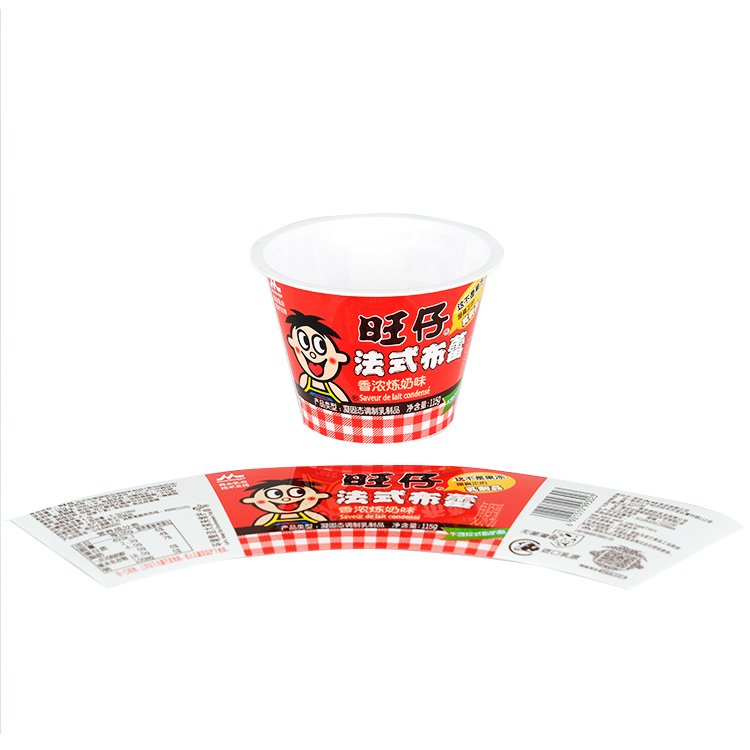
In-mold label film: glossy white laminated IML film used for injection and blow molding.
In-mold labeling (IML) is a decorating and labeling process in which a pre-printed label is placed inside a mold before resin is injected or blown, so the label becomes permanently fused with the plastic container or part. IML is widely used for food packaging, daily chemicals, paint buckets, beverage cups, and industrial containers because it delivers durable graphics, high adhesion, and a smooth, label-free feel.
This guide explains how in-mold labels work, what materials and specifications matter, and how buyers can evaluate an in-mold label supplier for food-grade or industrial applications.
What Is an In-Mold Label (IML)?
An in-mold label is a printed film label that is placed into an injection mold or blow mold before the plastic resin is formed. During molding, the label and the plastic part fuse together, creating a permanent bond. Unlike a wet-glue, pressure-sensitive, or shrink-sleeve label, an IML becomes part of the container wall, so it cannot peel off under normal use and offers a more premium, seamless appearance.
In-mold labels are typically made from the same family of polymers as the container. For polypropylene and polyethylene containers, the label film is often PP or PE, which allows the label to weld to the part during molding. PET-based IML films are used for specific containers and processes where PET compatibility is required.
Why In-Mold Labeling Matters: Industry Growth and Market Context
The global in-mold labels market was valued at USD 2.31 billion in 2023 and is projected to reach USD 3.14 billion by 2030, according to Grand View Research. Other estimates also show a growing market: Market Research Future estimated the market at USD 2.72 billion in 2024, with a projected CAGR of 3.94% reaching USD 4.16 billion by 2035.
Food and beverages account for the largest share of in-mold label demand, representing more than 41.3% of the market in 2023. Polypropylene is the dominant label material with a 47.2% market share in the same year, and injection molding leads the production process segment with a revenue share exceeding 57.1%.
Asia Pacific is the fastest-growing and largest regional market for in-mold labels as of 2024. This is relevant for global buyers because much of the world’s IML film production, rotogravure printing capacity, and injection molding supply chain is concentrated in the region.
How an In-Mold Label Is Made: Step-by-Step
- Film selection. The label film is chosen according to the container material and application. Common options include PP, PE, PET, and multi-layer composite films. For food contact, food-grade virgin resin is used.
- Printing. The film is printed using high-precision rotogravure printing. The ZY-IML Series, for example, supports up to 8 colors with a printing precision of ±0.1 mm. Food-grade applications use low-migration water-based ink.
- Lamination and finishing. Printed film can be laminated for added durability or surface effect. Available IML finishes include glossy, matte, orange peel, holographic, and custom texture.
- Cutting. The printed film is cut into individual labels or rolls using label cutting machines according to the mold and container design.
- Mold placement. In injection molding, the label is placed inside the mold cavity, usually by a robotic arm or automated IML system.
- Injection or blow molding. Plastic resin is injected or blown into the mold. The label fuses with the container surface, forming a permanent bond.
- Cooling and ejection. The finished container is cooled and ejected. Because the label is embedded in the wall, it does not wrinkle, tear, or lift during filling and logistics.
In-Mold Label Film Types and Materials
Choosing the right film is the most important decision in an IML project. The label material must be compatible with the container polymer, the molding process, and the end-use environment.
PP In-Mold Label
PP (polypropylene) film is the most common IML material, matching the dominant PP resin used for injection-molded containers. PP in-mold labels provide good stiffness, dimensional stability, and high-temperature resistance, making them suitable for hot-fill and retort applications within the material’s temperature range.
PE In-Mold Label
PE (polyethylene) film is used for containers made from polyethylene, especially in blow molding applications such as bottles, jerry cans, and industrial containers. PE film is flexible and offers good chemical resistance, including resistance to weak acids, alkalis, and common detergents.
PET In-Mold Label
PET film is less common but is used for specific packaging where PET compatibility or transparency is required. The ZY-IML Series also offers multi-layer composite laminated films for applications that need specific barrier or surface properties.
Film Types and Surface Finishes
| Film Category | Typical Uses |
|---|---|
| Complex White Gloss Film | Food and daily chemical containers needing a bright, opaque white background |
| Complex Transparent Gloss Film | Clear containers or window effects where the container contents should remain visible |
| Standard Gloss Film | General-purpose IML for industrial and consumer packaging |
| Matte Laminated Film | Premium cosmetic and food packaging where a soft-touch or non-reflective surface is desired |
| Holographic Film | Branding and decorative effects for retail packaging |
Surface finishes include glossy, matte, orange peel, holographic, and custom texture. The orange peel finish is often selected for paint buckets and industrial containers because it improves handleability and hides minor surface scratches.
Key Technical Specifications of In-Mold Labels
Buyers should compare IML specifications against their container design and molding conditions. The following parameters are commonly used to evaluate an in-mold label:
- Film thickness: 30 μm to 100 μm, customizable depending on the container wall thickness and molding process.
- Max printing width: up to 1200 mm, allowing large-format decorative areas.
- Printing precision: ±0.1 mm, which helps maintain accurate registration and consistent branding.
- Adhesion strength: ≥5 N, with no peeling during injection molding.
- Temperature resistance: -20°C to 120°C, suitable for both cold chain and hot filling conditions.
- Tensile strength: ≥20 MPa.
- Scratch resistance: 4H (pencil hardness test).
- Chemical resistance: resistant to weak acids, alkalis, and common detergents.
These values are based on the ZY-IML Series, a range of in-mold labels designed for injection molding applications. The ZY-IML Series includes food grade, daily chemical grade, and industrial grade types, covering applications from yogurt cups to paint buckets.
Food-Grade In-Mold Labels and Compliance
For food packaging, the in-mold label must be safe for food contact. This applies not only to the film but also to the ink. Food-grade IML should use food-grade virgin resin and low-migration ink to reduce the risk of substances transferring to the food.
Two widely recognized regulatory frameworks are the U.S. FDA and the European Union. Under U.S. FDA 21 CFR Part 177, polymers including PE and PP used for direct food contact applications are regulated. The ZY-IML Series is designed to comply with FDA 21 CFR guidelines and QS certification requirements. In addition, the ZY-IML Series meets EU Regulation (EU) No 10/2011 migration test requirements for plastic materials intended to come into contact with food. The company also holds ISO22000 and BRCGS packaging materials certification for food safety management.
Does this mean every IML from a supplier is automatically food-grade? No. Buyers must confirm that the specific film, ink, and finished label are certified for their target market. If the label is used for food packaging, the supplier should provide documentation on food contact compliance, including migration test results.
Injection Molding vs. Blow Molding IML
In-mold labeling works with both injection molding and blow molding, but the label performance demands are different.
Injection molding IML is dominant in the market, accounting for more than 57.1% of production-process revenue in 2023. Injection-molded containers tend to have thicker, more controlled walls, making them ideal for rigid packaging such as yogurt cups, ice cream containers, paint buckets, and cosmetic jars. The label must bond evenly to the wall during high-speed injection without warping or falling off.
Blow molding IML is used for bottles and hollow containers such as lubricant buckets, detergent bottles, and other daily chemical packaging. PE film is often the right choice for blow-molded PE containers. One important consideration in blow molding is that the label must flex with the container wall without delaminating.
The ZY-IML Series is designed primarily for injection molding compatibility, fitting high-speed injection processes with no warping and no label fall-off. For blow molding applications, buyers should confirm label stiffness and elongation behavior with the supplier.
In-Mold Label Applications by Industry
Food & Beverage Packaging
Food-grade IML is widely used for yogurt cups, ice cream containers, beverage cups, and plastic tubs. The label becomes part of the container, so it remains intact through cold chain distribution and microwaving within the specified temperature range. The food and beverage segment accounted for more than 41.3% of the IML market in 2023.
Daily Chemical and Personal Care
Shampoo bottles, detergent containers, and cosmetic jars use IML for water-resistant, detergent-resistant graphics. Since the label is not glued on the outside, it does not absorb moisture or peel when the container is used in wet environments. PE and PP films with matte or gloss finishes are common.
Paint and Industrial Containers
Paint buckets and lubricant buckets must survive rough handling and exposure to solvents, oils, and chemicals. Industrial-grade IML uses durable film with high adhesion and scratch resistance. The orange peel surface finish is frequently selected for paint buckets because it reduces slipping and hides handling marks.
Plastic Bottles and Containers
Reusable and single-use plastic bottles can be decorated with in-mold labels during blow molding. IML eliminates the need for a separate labeling operation and improves recycling compatibility when label and container share the same polymer family.
How to Choose an In-Mold Label Supplier
Because IML quality depends on film, printing, die-cutting, and molding compatibility, buyers should evaluate more than the final label price. Use the following checklist when comparing IML suppliers:
- Confirm the production process. Does the supplier produce the film and do the printing and cutting in-house? A dedicated IML manufacturer, rather than a trading company, can control quality more reliably.
- Check food-contact certifications. For food packaging, request documentation for FDA 21 CFR compliance, EU 10/2011 migration testing, BRCGS packaging materials, ISO22000, or QS certification, depending on your target market.
- Verify technical specifications. Ask for film thickness range, printing precision, adhesion strength, temperature resistance, scratch resistance, and chemical resistance. These values should match your container and filling conditions.
- Review surface finish and film options. Make sure the supplier can produce the finish you need: gloss, matte, orange peel, holographic, or custom texture.
- Assess production capacity. If you are a brand or packaging converter, supplier capacity matters for scale-up. A manufacturer with high-volume rotogravure printing and cutting lines is better positioned for consistent supply.
- Ask for samples. Run a molding trial with your container and mold before committing to a large order. Adhesion, warpage, and registration can only be confirmed in a real molding trial.
Supplier Example: YZY and the ZY-IML Series
YZY (Zhejiang Zhongyu Science and Technology Co., Ltd.) is an in-mold label manufacturer established in 2009, located in Wenzhou, Zhejiang, China. The company operates a 20,000 m² facility, employs about 250 staff, and has an annual production capacity of 200,000,000 units. Export sales account for about 30% of total revenue, with major markets worldwide.
The company’s ZY-IML Series is a range of in-mold labels designed for injection molding applications. It is available in food grade, daily chemical grade, and industrial grade, with model categories including Paint Bucket IML, Yogurt Cup IML, Bubble Tea Cup IML, Ice Cream Container IML, Plastic Bottle IML, and Lubricant Bucket IML.
ZY-IML labels are printed with 8-color high-precision rotogravure printing and can be produced from PP, PE, PET, or multi-layer composite films. For food contact, the company uses food-grade virgin resin and food-grade low-migration water-based ink. YZY’s in-mold labels are designed to comply with FDA 21 CFR, BRCGS packaging materials, ISO22000, QS, and EU 10/2011 migration requirements.
Because YZY is both a film printer and IML manufacturer, it can control the entire production chain from printing and lamination to cutting. This is particularly important for custom in-mold label projects where color matching, die shape, and film formulation need to be adjusted together.
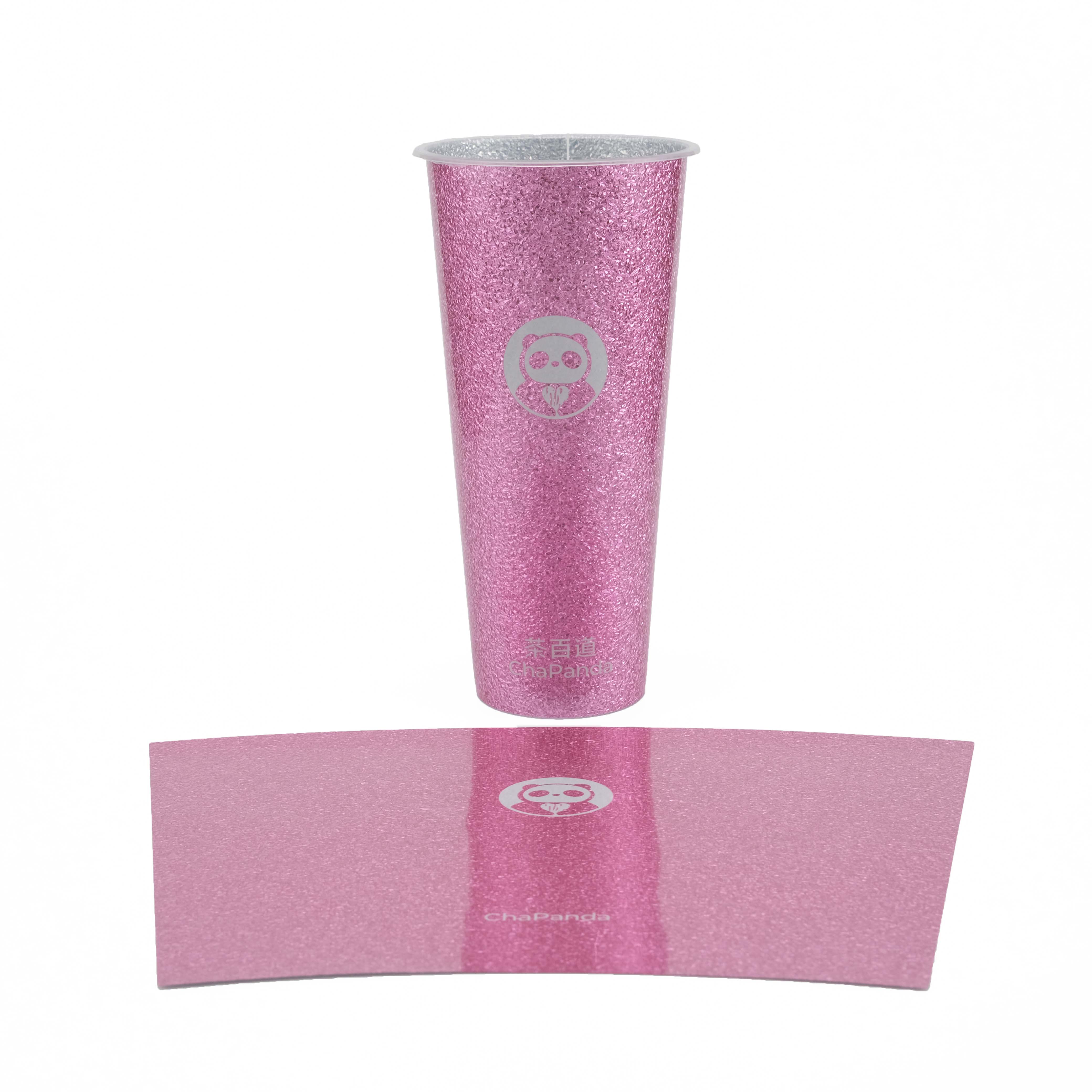
Printed IML film roll: glossy white laminated film for food and industrial container decoration.
In-Mold Label Comparison: IML vs. Pressure-Sensitive vs. Shrink Sleeve
Buyers evaluating decoration methods often ask how in-mold labels compare with pressure-sensitive (PSL) and shrink-sleeve labels. The choice affects cost, durability, regulatory complexity, and recyclability.
| Factor | In-Mold Label | Pressure-Sensitive Label | Shrink Sleeve |
|---|---|---|---|
| Decoration method | Label fused into the container wall during molding | Adhesive label applied after molding | Sleeve shrunk around the container after molding |
| Durability | High; no peeling under normal use | Medium; depends on adhesive and surface | Medium; may tear or wrinkle |
| Feel / appearance | Smooth, seamless, premium | Label edge visible | 360° coverage possible |
| Suitability for food contact | Requires food-grade film and ink | Requires food-safe adhesive and facestock | Requires food-safe sleeve material and ink |
| Process integration | Requires IML automation in mold | Requires labeling line | Requires sleeving and heat tunnel |
This table is a general comparison based on packaging industry practice. The final choice depends on the container shape, production speed, branding requirement, and total system cost.
Cost and Customization Considerations for Custom In-Mold Labels
Custom in-mold labels require more up-front engineering than standard labels because the film, printing, adhesive (in the form of a bonding layer), and die-cut shape must match a specific mold. Suppliers typically need to know the container material, mold type (injection or blow molding), fill temperature, filling method, and surface finish preference.
Key cost drivers include:
- Film type and whether food-grade virgin resin is required
- Number of colors and printing complexity
- Lamination and surface finish (matte, holographic, orange peel)
- Label shape, size, and die-cutting tolerance
- Order volume and production runs
Because every custom project is different, buyers should request a sample run and a quotation based on their specific mold and container. A reliable supplier will confirm whether their IML film is compatible with high-speed injection molding without warping or label fall-off.
Frequently Asked Questions About In-Mold Labels
Is in-mold label printing food-safe?
In-mold labels can be food-safe when the film, ink, and manufacturing process meet food-contact regulations. For the ZY-IML Series, food-grade labels are made with food-grade virgin resin and food-grade low-migration water-based ink, and the product line is designed to meet FDA 21 CFR, BRCGS packaging materials, ISO22000, QS, and EU 10/2011 migration requirements. Before using an IML for food packaging, confirm that the specific label variant carries the relevant compliance documentation for your target market.
Can in-mold labels be used for yogurt cups and ice cream containers?
Yes. Yogurt cups and ice cream containers are among the most common injection-molded food applications for IML. The label is embedded in the container wall, so it does not peel or wrinkle during cold chain distribution. The ZY-IML Series includes yogurt cup IML and ice cream container IML as standard application categories, with a temperature resistance range of -20°C to 120°C to cover both cold chain and hot filling.
Does YZY offer custom in-mold label printing?
Yes. YZY provides custom in-mold label production, including custom printing, custom size, custom color matching, and custom film formulation. The ZY-IML Series supports up to 8-color rotogravure printing with a printing precision of ±0.1 mm, available in PP, PE, PET, and multi-layer composite films. To start a custom project, buyers should provide their container material, mold type, target surface finish, and required compliance standards.
How long does it take to receive an in-mold label sample?
Sample lead time depends on film type, printing complexity, lamination, and cutting requirements. Buyers should confirm the lead time with the supplier when requesting a quotation. For YZY, the fastest way to get a specific lead time is to send the container details, mold information, and artwork to the sales team.
Can in-mold labels be used for paint buckets and lubricant buckets?
Yes. Paint bucket IML and lubricant bucket IML are standard industrial-grade applications. They require high adhesion, scratch resistance, and chemical resistance so the label survives handling and contact with industrial contents. The ZY-IML Series offers an orange peel surface finish and chemical resistance to weak acids, alkalis, and common detergents, making it suitable for these heavy-duty containers.
Conclusion and Next Step
In-mold labeling is a mature, high-performance decoration technology for plastic packaging. It combines label and container into a single integrated part, which improves durability, appearance, and production efficiency. The market is growing, food and beverage remains the largest application, and PP dominates as the preferred film material.
To evaluate whether IML is right for your next project, start with three questions:
- What is your container material and molding process?
- What surface finish and durability do you need?
- Which food-contact or industrial compliance standards apply?
Get IML samples or a quotation for your container.
Contact YZY (Zhejiang Zhongyu Science and Technology Co., Ltd.) to discuss your custom in-mold label project:
Email: yzy@inmoldlabel.net | Phone / WhatsApp: +86 182 6778 1866
Have Questions or Need More Details?
Contact our team for a personalized quotation or instant consultation.
Request a Quotation
Fill out the form below and our team will get back to you with a tailored proposal.
WhatsApp Direct Chat
Prefer to chat in real-time? Message us on WhatsApp for instant assistance & quick answers.
- Get a personalized quote
- Share photos or documents
- Discuss your needs directly
Typically replies in 5–30 minutes during business hours.