In-Mold Labeling (IML) Explained: How Labels Fuse Into Plastic Packaging During Molding
In-Mold Labeling (IML) Explained: How Labels Fuse Into Plastic Packaging During Molding
Last updated: August 12, 2026
In-mold labeling (IML) is a decoration and branding technology in which a pre-printed label film is placed inside an injection or thermoforming mold before plastic resin is injected, so that the label becomes permanently fused into the finished plastic container. Unlike pressure-sensitive or glue-applied labels, an IML label does not sit on the package surface as an added layer; it becomes part of the container wall itself. This article explains how IML works, what makes it different from traditional labeling, where it is used, and what procurement buyers should evaluate when sourcing PP or PE IML labels for plastic packaging.
What Is In-Mold Labeling?
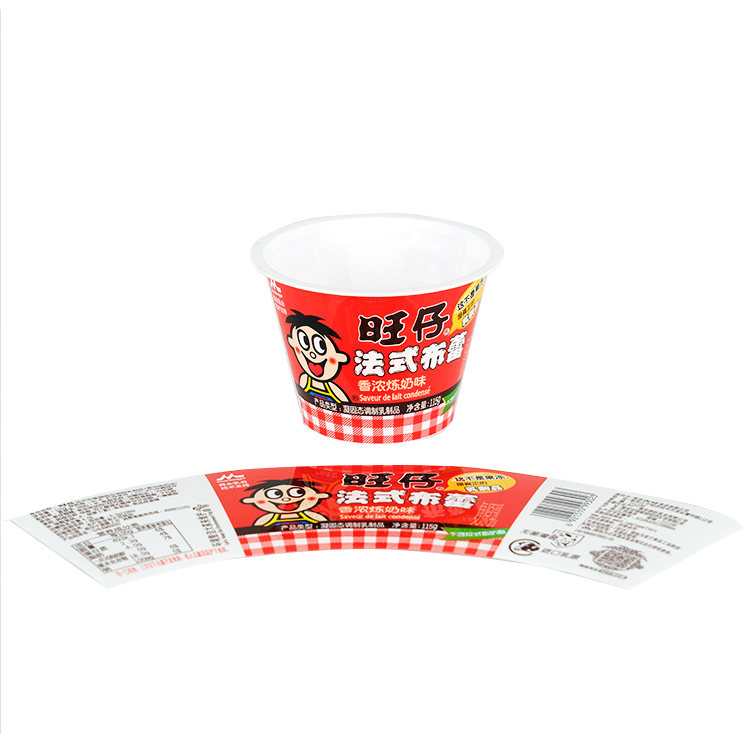
In-mold labeling is a manufacturing process used primarily in the packaging industry. A printed label made from polymer film—typically polypropylene (PP) or polyethylene (PE)—is inserted into an open mold. Molten plastic resin is then injected or thermoformed against the label. As the plastic cools, the label and the container body weld together, producing a single, seamless structure. Because no adhesive layer or secondary labeling step is required, the finished package is generally more durable, moisture-resistant, and difficult to remove without damaging the container.
The global in-mold labels (IML) market was valued at USD 2.31 billion in 2023 and is projected to reach USD 3.14 billion by 2030, with a CAGR of 4.6%. Food and beverage applications accounted for the largest share of IML revenue, at over 41.3% in 2023, with particular growth in yogurt cups and ice cream containers. Injection molding is the dominant production process for IML, accounting for over 57.1% of the market share in 2023. These figures indicate that IML has shifted from a niche decorating method into a mainstream packaging technology for high-volume consumer goods.
For buyers, understanding IML matters because the technology affects packaging cost, brand presentation, recyclability, and supply-chain complexity. The choice of film material, printing method, and compliance standard can determine whether a label performs well inside a high-speed injection molding line and whether it meets food-contact regulations.
How IML Works: The Injection Molding Process Step by Step
IML integrates decoration into the molding cycle rather than applying it afterward. The basic process follows these stages:
- Printing and film preparation. A roll of polymer film is printed with up to 8 colors using high-precision rotogravure printing. Registration precision is typically ±0.1 mm. The printed film is then die-cut into individual label shapes, and a stack of labels is loaded into the IML handling system.
- Label placement. A robotic or mechanical arm picks up a label from the stack, sometimes using vacuum or static charging, and positions it inside the cavity of the injection mold. The printed side faces inward toward the plastic resin, while the back side of the film contacts the mold surface.
- Injection molding. The mold closes and molten plastic resin—often food-grade PP—is injected into the cavity. The heat and pressure of the resin cause the label film to melt-bond with the container wall. The result is a single inseparable part.
- Cooling and ejection. The molded container cools, the mold opens, and the cup, bucket, or lid is ejected with the label already permanently embedded in its surface.
- Finishing and inspection. The container is trimmed, visually inspected or camera-checked for label position and print quality, then packed for shipment.
Because the label is fused into the plastic, there is no paper label edge to peel, no glue line to leak, and no secondary labeling operation that can slow down the packaging line. This is why IML is widely used in high-speed production of yogurt cups, ice cream tubs, paint buckets, and thin-wall food containers.
What Are the Main Types of IML Films and Materials?
IML films are selected according to the resin of the container, the food-contact requirement, and the desired surface finish. The most common materials are PP and PE, both available in food-grade virgin resin versions. PET and multi-layer composite laminated films are also used for specific applications.
Key film characteristics include:
- Film thickness: typically 30 μm to 100 μm, customizable to match the molding process and container stiffness.
- Max printing width: up to 1200 mm, with up to 8-color rotogravure printing.
- Surface finishes: glossy, matte, orange peel, holographic, metallic, and custom texture.
- Film types: complex white gloss film, complex transparent gloss film, standard gloss film, matte laminated film, and holographic film.
Polypropylene (PP) dominated the IML material segment with a 47.2% market share in 2023. PP is widely used because it bonds well with PP injection-molded containers and offers good recyclability. PE is more common for squeeze bottles and certain daily-chemical containers. For food-grade applications, the film must use food-grade virgin resin and low-migration inks so that the printed label does not transfer substances into the food.
What Does “Food Grade IML” Actually Mean?
A food-grade IML label is one that is manufactured with materials and inks that comply with food-contact safety regulations. In practice, this means the film is made from food-grade virgin resin, the inks are food-grade low-migration water-based inks, and the finished label meets specific migration and safety standards.
For example, EU Regulation (EC) No 1935/2004 establishes the framework for food contact materials in Europe, requiring that IML labels do not transfer chemical components to food at levels that could endanger health or change food composition. In addition, migration tests for EU food-contact materials must meet EU 10/2011 requirements. In the U.S. and China, certifications such as FDA 21 CFR, BRCGS packaging materials, ISO22000, and QS provide evidence of compliance.
Buyers should not treat “food grade” as a single universal label. A supplier needs to demonstrate that the film, ink, printing process, and finished label together comply with the regulations of the destination market. That means asking for the relevant certificates and migration test results, not just checking a designation on a datasheet.
IML Printing: What Quality Parameters Matter?
Printing quality determines how the final package presents the brand. For IML, four technical parameters have the greatest practical impact:
- Printing precision: ±0.1 mm registration accuracy is critical for multi-color designs, so that colors align correctly across thousands of pieces.
- Adhesion strength: ≥5N ensures the label does not peel during injection molding. The label is exposed to high melt temperature and high shear force inside the mold; weak adhesion leads to misaligned or lifted labels.
- Temperature resistance: an operating range of -20°C to 120°C covers cold-chain food (ice cream) and hot-fill or pasteurized products (yogurt, beverage cups).
- Tensile strength and scratch resistance: ≥20MPa tensile strength and 4H pencil hardness help the label survive handling, stacking, transport, and use without surface damage.
Absorption and ink migration are also important in food packaging. Using food-grade low-migration water-based ink reduces the risk of substances moving from the printed label through the film and into food. Suppliers that operate their own printing presses and maintain controlled production environments can provide more stable print quality than those that outsource printing to multiple subcontractors.
What Are the Common Applications of IML?
IML is used wherever plastic containers need durable decoration, strong branding, and efficient high-volume production. The most common applications include:
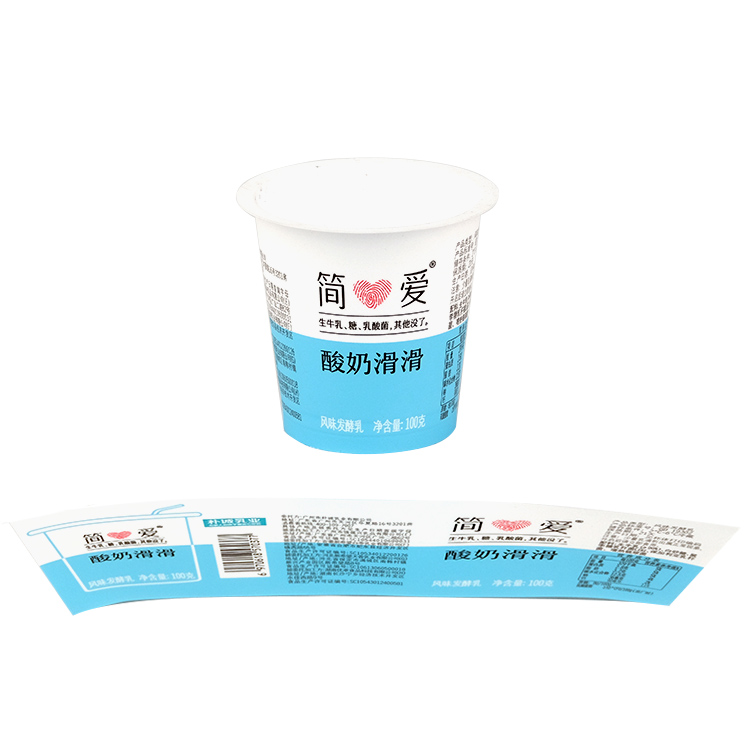
- Yogurt cups: IML is widely used for dairy cups because the label survives the condensation and cold environment of refrigerated storage while providing a bright, wrap-around design.
- Bubble tea cups and beverage cups: transparent or white IML labels give cups a seamless look and resist moisture from ice and condensation.
- Ice cream containers: the -20°C temperature resistance of PP/PE IML films prevents cracking or delamination in freezers.
- Paint buckets and lubricant buckets: IML forms a permanent bond that resists solvent spills and moisture. This application has grown in 20-liter paint pails, where labels must withstand harsh handling and chemical exposure.
- Plastic containers, bottles, and buckets: IML can replace shrink sleeves and pressure-sensitive labels in many household, pharmaceutical, and cosmetic containers.
- Daily chemical packaging: shampoo, detergent, and cosmetic containers benefit from waterproof labels that do not degrade when exposed to wet environments.
In food packaging, IML is particularly valuable because it eliminates the risk of paper label peeling and glue residue. It also enables full-decoration coverage, including the top or side surfaces of a cup, which is difficult to achieve with conventional labeling at comparable speed.
Custom IML: What Can Be Modified?
Custom IML is the standard way that food, beverage, and industrial brands procure labels that match their container geometry and design. A custom IML program can adjust several variables:
- Size and shape: labels are die-cut to match the specific cup, lid, bucket, or bottle mold.
- Color matching: brand colors are matched using the supplier’s printing system, with up to 8-color rotogravure available.
- Film formulation: the layer structure of the film can be customized for stiffness, opacity, gloss, or bonding performance.
- Surface finish: glossy, matte, orange peel, holographic, metallic, or custom texture can be selected according to brand positioning.
Custom programs also require different design rules than ordinary paper labels. Since the label is molded with the container, the design must account for mold cavity geometry, label positioning tolerances, and the flow behavior of the plastic resin. A reliable IML supplier should be able to advise on these constraints before the customer finalizes artwork.
IML vs. Traditional Labels: Key Differences
Understanding how IML compares with traditional labeling methods helps buyers evaluate whether the technology fits their product, line speed, and budget.
| Dimension | In-Mold Labeling (IML) | Traditional labels (pressure-sensitive / glue-applied) | Practical impact |
|---|---|---|---|
| Bond | Label is fused into the container wall during molding | Adhesive or glue attaches the label to the surface | IML is peel-resistant and cannot be easily removed without damaging the container |
| Process | Labeling happens inside the injection molding cycle | Labeling is a separate post-molding step | IML can reduce downstream labeling equipment and labor |
| Moisture resistance | High; no paper layer or glue line | Varies; paper labels can absorb moisture and peel | IML suits refrigerated and frozen food environments |
| Recyclability | Same polymer family can be used (e.g., PP label on PP cup) | Adhesive and paper contamination can complicate recycling | PP-based IML supports single-polymer packaging |
| Design coverage | 360° decoration achievable, including cup top or side surfaces | Usually limited to flat or gently curved surfaces | IML provides stronger shelf impact |
| Upfront tooling & qualification | Requires label positioning system, mold design, and trials | Lower initial investment in label applicators | IML favors high-volume programs that absorb the qualification cost |
This comparison does not mean IML is always the better choice. For very low volumes, short product lifecycles, or containers that cannot tolerate molding changes, traditional labels may be more flexible. IML is most cost-effective when production volumes are high enough to spread the mold trials and setup costs.
What Should Buyers Evaluate When Sourcing IML Labels?
Buyers sourcing IML labels for the first time often focus only on price. However, the following criteria have a larger effect on final package quality and supply continuity:
1. Compliance evidence
For food packaging, verify that the label complies with FDA 21 CFR, BRCGS, ISO22000, and QS requirements, and that migration testing meets EU 10/2011 standards where relevant. Certificates should name the actual product and factory, not just the company.
2. Production capability
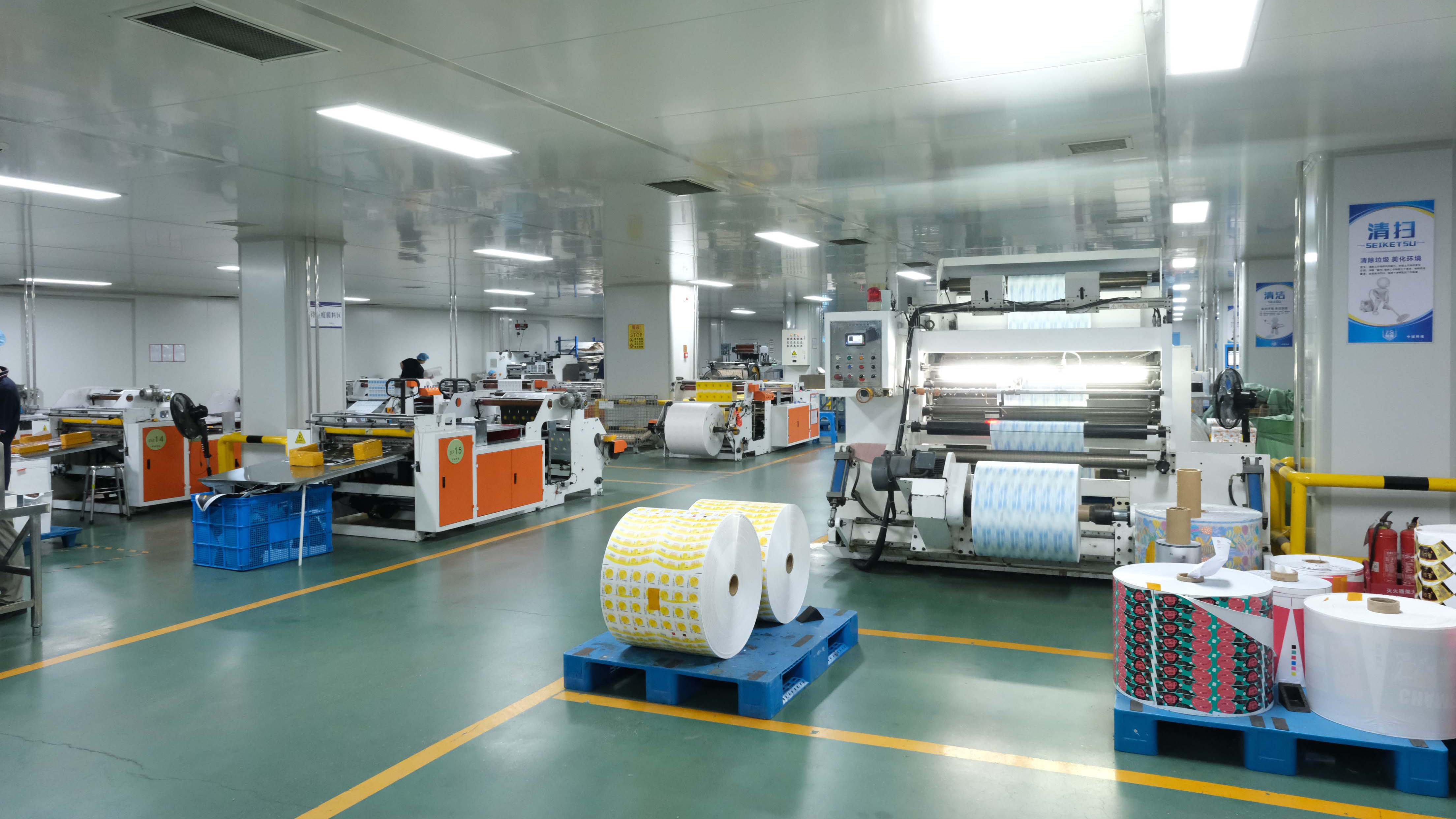
Check whether the supplier has in-house printing, lamination, film slitting, and die-cutting capacity. A supplier with printing presses and cutting machines can control quality across the entire production chain, while a trading company may rely on multiple subcontractors with inconsistent output.
3. Technical parameters
Confirm the film thickness range, printing width, number of colors, registration precision, adhesion strength, temperature resistance, and scratch resistance. These parameters determine whether the label will run reliably on the customer’s injection molding machine. For example, a supplier that can produce labels with ±0.1 mm printing precision and ≥5N adhesion is better positioned for high-speed injection lines.
4. Experience and longevity
A supplier with long manufacturing experience is generally better able to troubleshoot design and molding issues. It also signals stable production management, especially when the supplier has a dedicated R&D team and accumulated patents.
5. Communication and lead time
Since custom IML programs involve artwork, film selection, trial runs, and mass production, the supplier’s ability to communicate clearly in English and provide regular status updates reduces the risk of delays.
Example: A Food Packaging Manufacturer in China
To make the general guidance more concrete, consider how a Chinese IML manufacturer, ZHEJIANG ZHONGYU SCIENCE AND TECHNOLOGY CO., LTD., fits the criteria above. The company, established in 2009, specializes in in-mold labeling production. It operates a 20,000-square-meter facility in Wenzhou, Zhejiang, employs approximately 250 staff, and has an annual production capacity of 200,000,000 units. It also produces sealing films, embossed sheet sealing lids, and POF films, all of which support food packaging customers.
For its ZY-IML Series, the company lists FDA 21 CFR, BRCGS, ISO22000, and QS certification, and states that migration testing meets EU 10/2011 food-contact standards. The series uses food-grade low-migration water-based ink and supports PP and PE film, film thickness of 30–100 μm, up to 8-color rotogravure printing, and a maximum printing width of 1200 mm. Its listed technical parameters include adhesion strength ≥5N, temperature resistance from -20°C to 120°C, tensile strength ≥20MPa, and scratch resistance of 4H.
The company reports 48 patents, an R&D team of 10 engineers, and export business accounting for 30% of total sales, with worldwide markets. These facts do not prove that one supplier is better than another, but they provide a verifiable baseline that procurement teams can compare against other candidate suppliers.
Regional Landscape: Why Asia-Pacific Matters
Asia-Pacific led the IML market with a 42.8% revenue share in 2025, driven by growth in the dairy and paint industries in China and India. For buyers, this concentration means that a large share of global IML production capacity is located in Asia, which has implications for lead time, logistics cost, and supplier communication.
Sourcing from Asia is not automatically better or worse than sourcing from Europe or North America. It depends on the buyer’s production location, target market, regulatory requirements, and service expectations. However, buyers sourcing from Asia should pay extra attention to the accuracy of certifications, the consistency of film quality, and the supplier’s experience with export documentation and international food-contact compliance.
Common Mistakes When Buying IML Labels
The following mistakes appear repeatedly in procurement projects for IML labels:
- Choosing a supplier without in-house printing. If the supplier is a trader, quality control is fragmented and defect resolution takes longer.
- Ignoring the difference between food-grade and industrial-grade ink. An industrial-grade label may look the same but can fail migration testing.
- Only testing one batch. IML quality must be verified over multiple production batches and on the customer’s actual molding equipment.
- Providing artwork without considering mold geometry. The label is formed inside the cavity, so print placement and film stiffness must match the mold.
- Overlooking the minimum order quantity and lead time for custom film. If the film must be custom-formulated and laminated, delivery time is longer than buying standard film from stock.
Avoiding these mistakes saves more money than negotiating a slightly lower unit price.
Step-by-Step: How to Start an IML Procurement Project
If you are at the awareness or research stage, the following workflow will help you organize the procurement project:
- Define the container type and resin. Determine whether the package is a yogurt cup, beverage cup, ice cream container, paint bucket, or bottle, and identify the resin used for molding. PP and PE are the most common base materials.
- Define the compliance target. Decide which market regulations apply (FDA, EU 1935/2004, EU 10/2011 migration testing, China QS). This determines the certifications the supplier must provide.
- Prepare container drawings and design files. The supplier needs the mold layout, label dimensions, and artwork to produce a pre-production sample.
- Shortlist suppliers that match the technical range. Screen by printing capacity (number of colors, printing width, registration precision), material options, and certifications.
- Request the key data. Ask for film thickness range, adhesion strength, temperature resistance, and an example of a similar project in food packaging.
- Run a trial with actual molding equipment. The most reliable way to evaluate an IML label is to run it on your own injection molding machine and inspect label position, adhesion, and print quality after cooling.
- Evaluate the total cost, not just the label price. Include freight, customs, trial samples, mold design changes, and potential production-line downtime.
- Confirm long-term supply conditions. Check lead time, production capacity, minimum order quantity, and the supplier’s ability to support repeat orders without shifting quality.
FAQ
What is the difference between IML printing and standard label printing?
IML printing uses rotogravure presses to print directly onto polymer film that will later be molded into a plastic container. Standard label printing typically applies ink to paper or synthetic film that is affixed to a package surface after molding. IML printing requires food-grade low-migration ink when used on food packaging, and registration precision is critical because the label is die-cut and positioned inside a mold.
Can IML labels meet food-contact compliance for yogurt cups and beverage cups?
Yes, but compliance must be verified. A food-grade IML label should specify FDA 21 CFR, BRCGS, ISO22000, or QS certification, and migration testing should meet EU 10/2011 requirements. The label should be manufactured with food-grade virgin resin and food-grade low-migration water-based ink. Buyers should ask for the actual certificate and migration test report, not just a food-grade marketing word.
What is the typical film thickness for IML labels?
The common range is 30 μm to 100 μm, and it is customizable. Thinner films are often sufficient for small cups, while thicker films provide more stiffness and dimensional stability for large buckets and containers. The optimal thickness depends on the container size, molding process, and label placement system.
Can I get a sample of a custom printed IML label before mass production?
Yes. Most IML manufacturers provide samples before mass production. For a custom film formulation or a complex container design, the supplier may need to conduct a trial run to verify label placement and adhesion on the customer’s mold. Contact YZY’s team at yzy@inmoldlabel.net to discuss sample requirements, artwork format, and lead time.
How long does it take to develop a custom IML program?
Development time depends on whether the film is selected from standard stock or custom formulated. Standard stock film with a new print design can be sampled and produced relatively quickly, while custom film lamination and extensive molding trials add several weeks. The best way to get an accurate timeline is to provide container drawings, target resin, and compliance requirements to the supplier at the first inquiry.
Download the YZY IML brochure with product details, factory capabilities, and contact information.
Download Brochure Inquire About SamplesConclusion
In-mold labeling fuses a printed film label directly into a plastic container during injection molding. The result is a durable, moisture-resistant, peel-resistant package that supports high-speed production and strong on-shelf branding. For food packaging applications—yogurt cups, bubble tea cups, ice cream containers, and beverage cups—IML provides compliance-relevant advantages because the label and container can share the same polymer family and the printing uses food-grade low-migration inks.
Not every labeling project needs IML. Low-volume products, very short campaigns, or containers that cannot be redesigned may be better served by traditional labels. But for high-volume plastic containers that require permanent decoration and food-contact safety, IML is a technically mature and widely adopted option.
When sourcing IML labels, verify the supplier’s certifications, inspect its in-house production capabilities, examine its technical parameters, and run a trial on your own molding equipment. These steps increase the chance that the first mass-production order will match the quality of the approved sample.