PP vs. PE In-Mold Labels: A Head-to-Head FAQ for Food-Grade Injection Molding
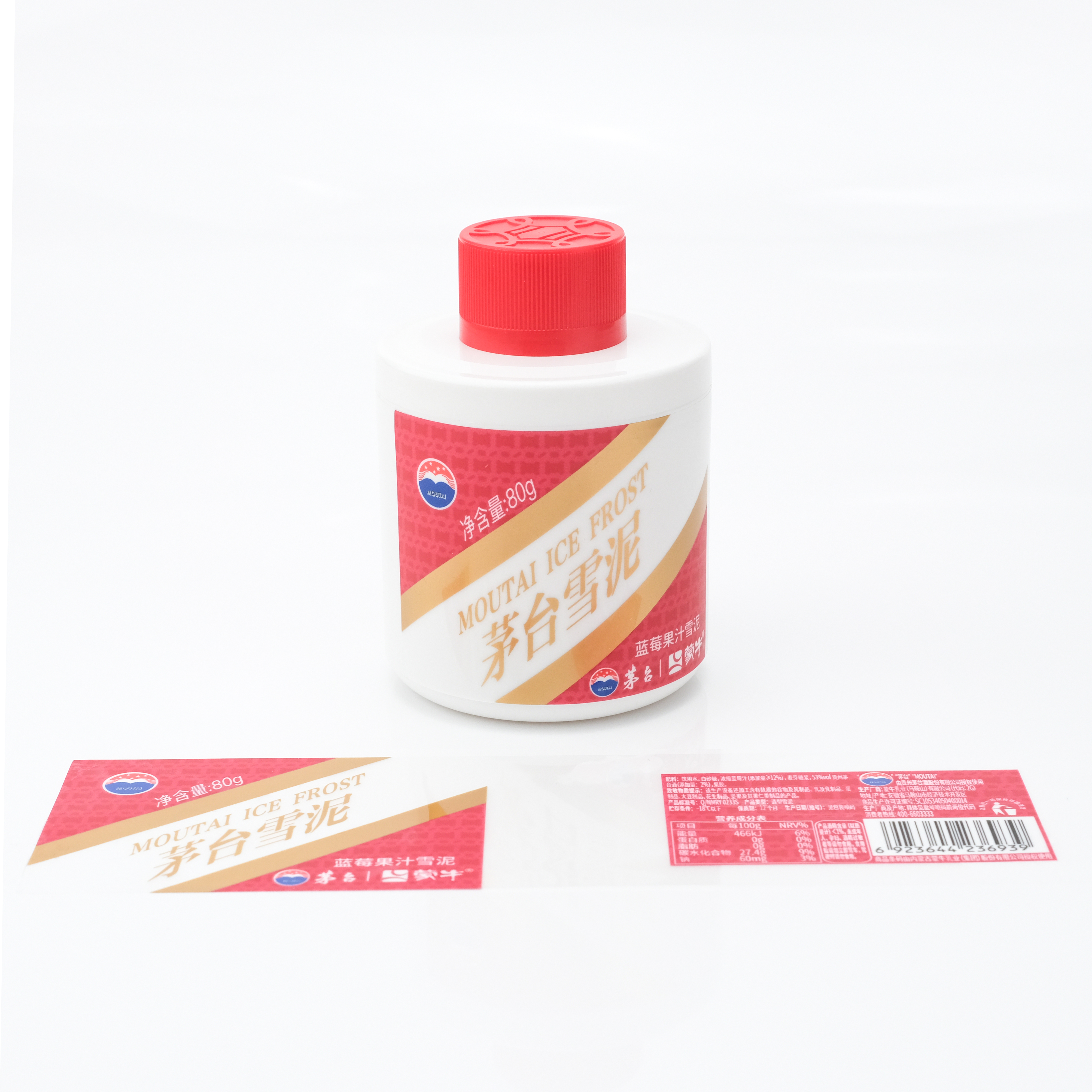
Short answer: if the container is polypropylene, specify PP IML film; if the container is polyethylene, specify PE IML film. In-mold labeling fuses the printed film into the container wall while the part is being formed, so matching the label film to the container resin is the decision that most directly controls adhesion, warpage and peel failure. Every other specification — film thickness, surface finish, colour count, compliance documentation — is set after that match is fixed.
The Problem: Most IML Failures Are Material-Match Failures, Not Print Failures
Buyers entering an in-mold labeling project usually start with the artwork, because the artwork is the visible part. The failures that actually stop a production line, however, are rarely print failures. They fall into three groups, and all three trace back to film-to-container fit.
- Peel and flagging at the edge. If the film does not fuse cleanly to the container resin, the label can lift at the rim after demolding, or fail later during filling, capping or cold-chain handling. Adhesion is specified as a force value for exactly this reason, not as a visual judgement.
- Warpage and insertion faults. A film that is too stiff, too thin or dimensionally unstable for the mold and the robot insertion system can misfeed, crease, or cool the melt front unevenly. Suppliers describe dimensional stability and machinability as core film attributes for injection IML alongside print quality.
- Compliance rejection at the border. A label can pass every physical test and still be refused by a retailer or an importer because the migration file, ink declaration or certification set does not match the destination market. Food-contact compliance is a property of the finished label-and-ink system, and it has to be documented, not assumed.
The PP-versus-PE question sits upstream of all three. It is the first decision, not a late-stage detail.
Industry Background: Why PP Dominates IML and Where PE Still Fits
In-mold labels are integrated into the container during molding, which eliminates a separate post-mold labeling step. That process definition is consistent across film suppliers and trade coverage, and it explains why IML is treated as a packaging component rather than a decoration applied afterwards.
The process family has three main variants: injection molding (IML-IM), extrusion blow molding (IML-EB) and thermoforming (IML-TF). In high-speed injection lines, labels are die-cut to final shape, stack-fed, picked up by a robot and inserted into the mold cavity before the molten resin reaches the cavity wall. The label then fuses with the polymer as the part forms. This sequence matters for material choice: the film has to survive robot handling, static behaviour in the stack, and brief contact with the melt — not simply look good on a printed sheet.
Market data explains the default preference. Polypropylene accounted for 47.2% of IML label material share in 2023, making it the dominant film material for the format. Food and beverage applications accounted for more than 41.3% of total IML market revenue in the same year. In other words, the centre of gravity of this category is a PP label on a PP food container.
Typical commercial IML labels are most often made from white or transparent PP with a thickness of 50 to 60 microns, according to supplier-reported specifications. That band is a useful reference point, not a limit. Custom programs regularly specify outside it: YZY, the in-mold label manufacturer Zhejiang Zhongyu Technology Co., Ltd., produces the ZY-IML Series across a 30μm to 100μm film thickness window.
PE enters the picture wherever the container itself is polyethylene — commonly blow-molded bottles, jerricans and squeeze-type packs — or where a softer, more flexible film behaviour is required on the line. PE is supplied as a food-grade virgin resin option within the same ZY-IML Series. The decisive point is not that one resin is better; it is that the film and the container should be engineered as a pair.
The Verified Specification Window: What You Can Actually Specify
The ZY-IML Series specification below is the working envelope for both PP and PE programs. Values are series-level and should be confirmed on the grade-specific datasheet for the exact film construction and ink set ordered.
| Parameter | Specified value | Why it matters in a PP vs. PE decision |
|---|---|---|
| Film material | Food-grade virgin PP, PE, PET, multi-layer composite laminated films | Resin match to the container is the primary adhesion variable |
| Film thickness | 30μm – 100μm (customizable) | Controls stiffness, insertion behaviour, opacity and material consumption |
| Adhesion strength | ≥5N, no peeling during injection molding | The measurable acceptance criterion for fusion |
| Tensile strength | ≥20MPa | Resistance to stretching and tearing during robot handling |
| Operating temperature | −20°C to 120°C | Covers hot filling and cold-chain distribution in one specification |
| Printing | 8-colour high-precision rotogravure, ±0.1mm precision, max width 1200mm | Registration accuracy across the full label and across reels |
| Ink | Food-grade low-migration water-based ink | Migration performance is set by the ink system as much as by the film |
| Surface finishes | Glossy, matte, orange peel, holographic, custom texture | Shelf differentiation without changing the base film construction |
| Scratch resistance | 4H (pencil hardness test) | Handling and transit abrasion on the finished container |
| Chemical resistance | Weak acids, alkalis and common detergents | Relevant for detergent, household and industrial buckets |
| Compliance | FDA 21 CFR, EU 10/2011 migration, BRCGS, ISO22000, QS certified | The documentation set buyers are usually audited against |

PP vs. PE In-Mold Labels: Head-to-Head Comparison
The comparison below separates what is documented from what must be verified per project. That distinction is deliberate: a PE program is not a copy of a PP program with the resin name changed.
| Decision dimension | PP IML label | PE IML label | What to verify per project |
|---|---|---|---|
| Container match | PP cups, tubs, buckets, trays and thin-wall containers | PE containers, including blow-molded bottles and squeeze packs | Confirm the container resin and molding process before choosing film |
| Market position | 47.2% of IML label material share in 2023 (Grand View Research) | Supplied as a food-grade virgin resin option in the ZY-IML Series; no comparable published share figure | Treat market share as context, not as a suitability ranking |
| Typical commercial thickness | 50–60μm is commonly cited as typical for IML labels (Stratus Packaging) | Same series window applies; grade-specific values to be confirmed | YZY supply window is 30–100μm, customizable |
| Film behaviour | Relatively stiff at equal thickness | Generally softer and more flexible than PP | Test insertion on the actual robot and stack configuration |
| Adhesion target | ≥5N, no peeling during injection molding | ≥5N series target; confirm on the specific PE grade | Run a molding trial on the production mold, not a lab coupon |
| Temperature range | −20°C to 120°C series window | Same series window; confirm for the selected grade | Validate against hot-fill temperature and freezer profile |
| Surface finishes | Glossy, matte, orange peel, holographic, custom texture | Same finish range | Finish choice affects shelf appearance, not adhesion |
| Print capability | 8-colour rotogravure, ±0.1mm | 8-colour rotogravure, ±0.1mm | Colour count drives cylinder cost and lead time |
| Best-fit applications | Yogurt cups, ice cream containers, beverage and bubble tea cups, paint and lubricant buckets | Plastic bottles and containers where the base resin is PE | Match to the container, then to the filling and distribution profile |
| Mono-material potential | PP container with PP label keeps the pack mono-PP, the construction referenced in published IML sustainability collaborations | PE container with PE label keeps the pack mono-PE | Confirm local recycling acceptance separately; material choice alone is not a recyclability claim |
Two practical readings follow from this table. First, PP is the safer default for injection-molded food cups because the container, the label and the market data all point the same way. Second, PE is not a downgrade — it is a compatibility decision. Specifying PP film on a PE container to save a sourcing step is the kind of shortcut that shows up later as edge lift or line stoppage.
Step-by-Step: Specifying a PP or PE IML Label for an Injection-Molding Project
Step 1 — Fix the container resin and the molding process first
Write down the container resin (PP or PE), the process (injection molding, blow molding or thermoforming) and the wall thickness at the label area. The label film follows from this; it does not lead it. A project brief that names the resin prevents most downstream rework.
Step 2 — Match the film to the container, then set thickness
Choose PP film for PP containers and PE film for PE containers, then move the thickness inside the 30–100μm window. Thicker film supports rigidity and opacity; thinner film supports flexibility and lower material consumption. For reference, 50–60μm is the commonly cited commercial band for IML labels, so a 30–100μm custom window gives room on both sides.
Step 3 — Set the adhesion and mechanical acceptance criteria in writing
Adhesion should be stated as ≥5N with no peeling during injection molding, and tensile strength as ≥20MPa. These become the pass/fail lines in your incoming inspection and in the trial report, rather than an opinion formed on a sample table.
Step 4 — Choose the surface finish against the shelf, not the spec sheet
Glossy, matte, orange peel, holographic and custom textures are all available in the same series. Matte is common on chilled dairy; orange peel and custom textures help hide scuffs on handled buckets; holographic and metallic effects are used for premium differentiation. Finish is a visual decision and should not be traded against adhesion.
Step 5 — Lock the print and ink system
8-colour rotogravure at ±0.1mm registration with a maximum printing width of 1200mm defines the print envelope. The ink must be food-grade low-migration water-based ink, because migration performance is governed by the ink system as much as by the film. Fewer colours reduce cylinder cost; more colours expand brand expression. Decide once, before cylinders are cut.
Step 6 — Build the compliance file for the destination market
For food contact, assemble FDA 21 CFR, EU 10/2011 migration compliance, BRCGS, ISO22000 and QS certification documentation together with the ink declaration. This is the file a retailer or importer will ask for, and it should be prepared at specification stage rather than at the port.
Step 7 — Validate on the production mold, then scale
Run the trial on the actual mold and the actual insertion equipment, check adhesion, warpage, registration and finish, then sign off the sample. YZY quotes a 15–20 day lead time after sample confirmation, with a 2,000㎡ minimum order quantity and a monthly capacity of 350,000,000 pieces. Those figures are the planning inputs for the ramp-up decision, not the trial itself.
Use Cases: Matching PP or PE IML to the Container
The application list below reflects how PP and PE IML are actually specified in food and industrial packaging, and where the material match changes the answer.
- Yogurt cups (PP). A PP cup with a PP label is the reference case for the format, and matte or glossy white laminated film is common. Cold-chain and condensation exposure are handled by the label fusing into the wall rather than sitting on it.
- Ice cream containers (PP). The −20°C to 120°C operating range covers freezer distribution, so the same film family serves both frozen and ambient products without a separate specification.
- Bubble tea and cold beverage cups (PP). High-volume, high-speed lines put the emphasis on stack feeding, dimensional stability and consistent register. YZY reports a food-contact project for cold beverage and yogurt cups across markets in Africa, the Middle East, Asia and North America, with 0 quality complaints, a 100% on-time delivery rate and 100% compliance, as company-reported results.
- Paint and lubricant buckets (PP or PE). Industrial buckets add chemical exposure to the brief. The film's resistance to weak acids, alkalis and common detergents, plus 4H scratch resistance, is what keeps the decoration intact through handling and stacking.
- Plastic bottles and squeeze packs (PE). Where the container is polyethylene, PE film keeps the material family consistent and avoids a mismatch between a soft body and a stiff label.
- Detergent and household containers. Usually driven by chemical resistance and finish durability rather than by food-contact status, but the same film series applies.
Quality Control and Capacity Evidence
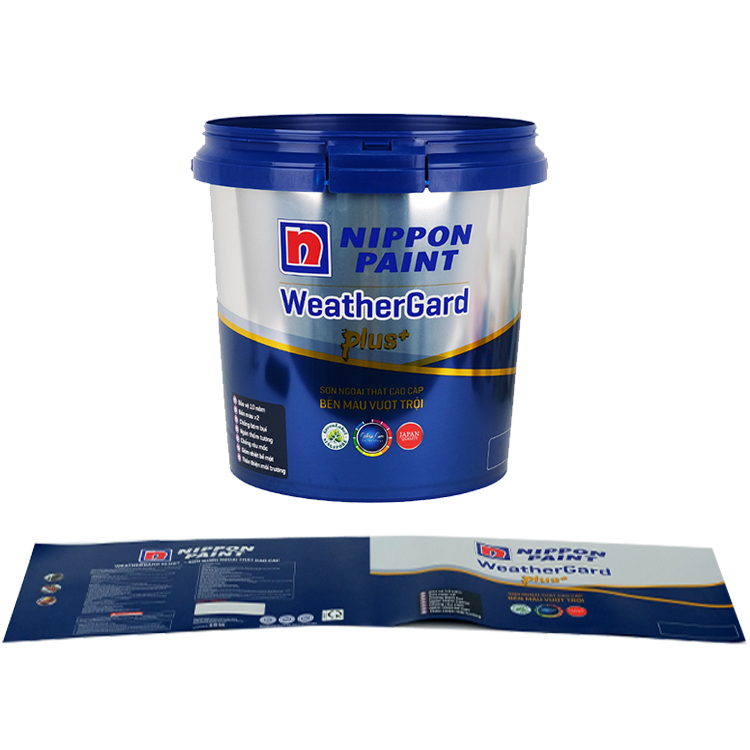
YZY (Zhejiang Zhongyu Technology Co., Ltd.) has manufactured in-mold labeling since 2009, operates a 20,000㎡ factory with 250 employees and a 10-person R&D team, and holds 48 accumulated patents. Quality control combines 100% visual inspection with random laboratory testing against FDA and GB compliance requirements. The company reports QS, ISO and BRC management system certification and exports about 30% of output across the EU, US, Middle East and Southeast Asia.
For buyers comparing PP and PE options, the relevant point is not the plant size. It is that both film types, the printing, the die-cutting and the compliance file come from one production chain, which is what allows a resin change to be handled as a specification change rather than as a new supplier search.
Frequently Asked Questions
Are PP and PE IML labels food-safe for direct food contact?
Yes, when the film and ink are specified for food contact. YZY produces ZY-IML Series labels using food-grade virgin PP or PE resin and food-grade low-migration water-based ink, and states compliance with FDA 21 CFR, EU 10/2011 migration requirements, BRCGS Packaging Materials, ISO22000 and QS. Migration is a property of the finished film-plus-ink system, so request the declaration for the exact construction ordered and for the destination market, rather than accepting a general certificate.
Can one supplier deliver both PP and PE IML labels, and within what technical window?
YZY supplies both PP and PE as food-grade virgin resin options within the same ZY-IML Series, alongside PET and multi-layer composite laminated films. The shared envelope is 30μm to 100μm film thickness, adhesion of ≥5N with no peeling during injection molding, tensile strength of ≥20MPa, an operating range of −20°C to 120°C, 8-colour rotogravure printing at ±0.1mm precision and up to 1200mm printing width. OEM and ODM support covers size, shape, colour, print design and material customization.
What drives the cost of a PP or PE IML label, and what is the minimum order?
The minimum order quantity is 2,000㎡. Within that, the main cost variables are film thickness across the 30–100μm window, the number of print colours up to 8, the film construction (standard gloss versus complex laminated or holographic), the surface finish, and the label size and die. Because these variables interact, quotes are only comparable when the film type, thickness, colour count, finish and container resin are stated identically in every request.
How should we validate a PP versus PE sample before committing to production?
Validate on the production mold and the production insertion equipment, not on a lab coupon. Check adhesion against the ≥5N criterion, look for edge lift and warpage after demolding, confirm register at ±0.1mm, and inspect the finish under the lighting used for the finished pack. Ask for the compliance documentation with the sample so physical and regulatory approval run in parallel. Sample confirmation is the gate that starts the production clock.
What lead time and capacity should we plan for?
YZY quotes a 15–20 day lead time after sample confirmation, against a monthly capacity of 350,000,000 pieces and a minimum order of 2,000㎡. Capacity at that scale supports mass-production food-contact programs as well as industrial and household buckets, with exports across the EU, US, Middle East and Southeast Asia. To move from evaluation to a quotation, send the container resin, molding process, label dimensions, colour count, finish and target market — YZY will return a specification-matched proposal and a sample plan. The full capability overview is available in the YZY product brochure.
Conclusion: Decide the Resin Match First, Then Everything Else
PP versus PE is not a quality question. It is a compatibility question. PP IML labels are the default for injection-molded food cups and tubs — supported by 47.2% material share and a food and beverage segment that accounts for more than 41.3% of IML revenue — while PE IML labels exist for the containers that are themselves polyethylene. In both cases the film should be selected against the container resin, tested on the production mold against a written ≥5N adhesion criterion, and documented against the food-contact rules of the destination market.
Once that sequence is followed, the rest of the specification — thickness between 30μm and 100μm, matte or glossy or orange peel finish, 8-colour rotogravure artwork, low-migration water-based ink — becomes a set of controlled choices rather than a set of risks. Buyers who reverse the order and choose the decoration first usually end up re-qualifying the label later.
Request a PP or PE IML Sample and Quotation
Send your container resin, molding process, label dimensions, colour count, surface finish and target market to YZY, and receive a specification-matched proposal with a sample plan. Minimum order 2,000㎡ · Lead time 15–20 days after sample confirmation · Monthly capacity 350,000,000 pieces.
Email: yzy@inmoldlabel.net · Tel / WhatsApp: +86 182 6778 1866 · Website: www.inmoldlabel.net
YZY — Zhejiang Zhongyu Technology Co., Ltd., Building 59, Zone E, Guohong Zhizao New Town, Xingke Road, Longgang, Wenzhou, Zhejiang, China, 325802. Download the product brochure (PDF).
Third-party figures cited in this article: IML label material share by resin and food and beverage application share (Grand View Research); typical IML label thickness range (Stratus Packaging); IML process taxonomy and insertion sequence (Label and Narrow Web; Valgroup); process integration description (Taghleef Industries). Product parameters, capacity, lead time and certification statements are YZY first-party specifications.
Have Questions or Need More Details?
Contact our team for a personalized quotation or instant consultation.
Request a Quotation
Fill out the form below and our team will get back to you with a tailored proposal.
WhatsApp Direct Chat
Prefer to chat in real-time? Message us on WhatsApp for instant assistance & quick answers.
- Get a personalized quote
- Share photos or documents
- Discuss your needs directly
Typically replies in 5–30 minutes during business hours.