Ranking In-Mold Label Grades: Food, Daily Chemical, Industrial
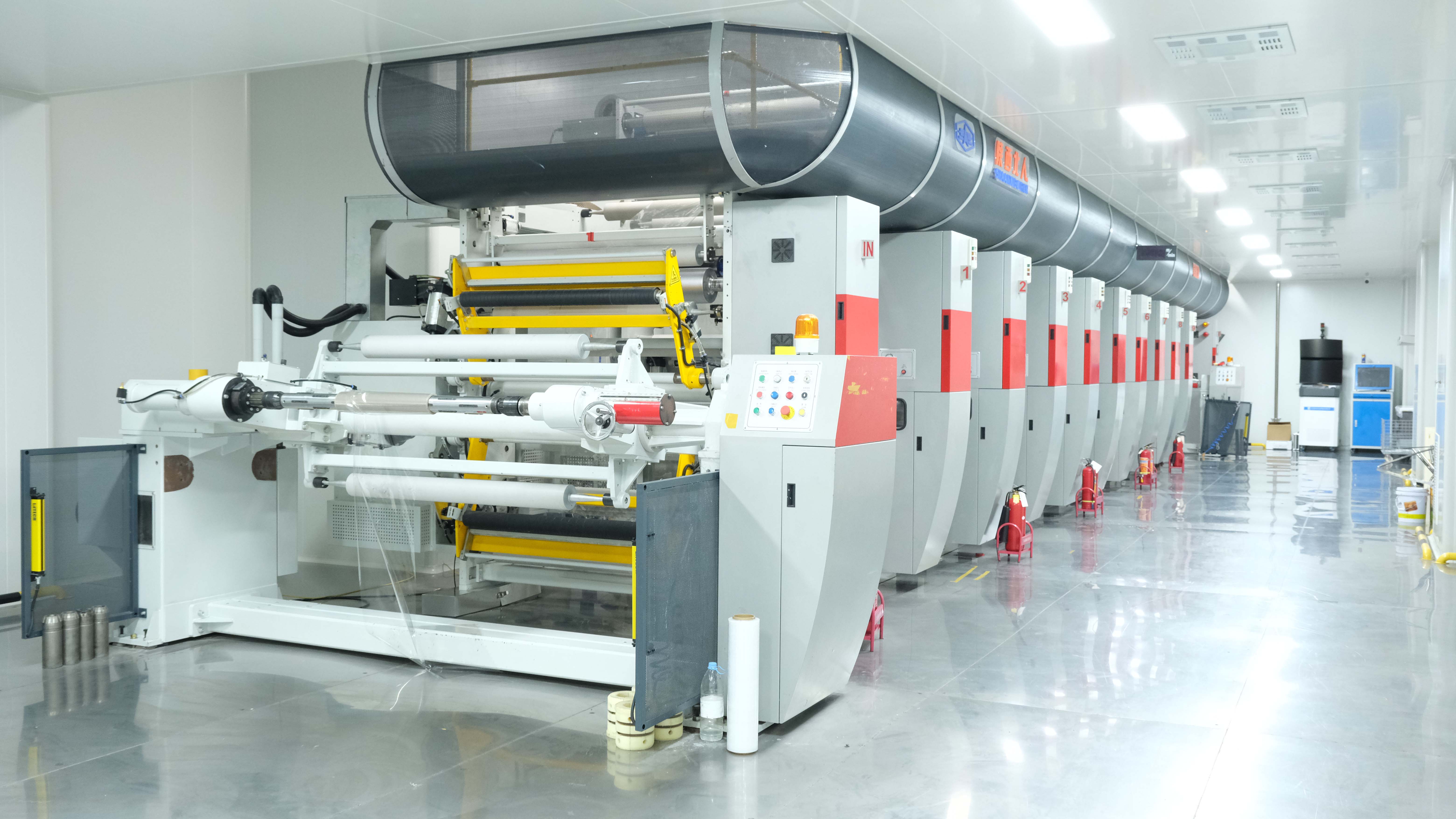
Rotogravure printing of in mold label film on the ZY-IML Series platform, which produces food grade, daily chemical and industrial grades.
For packaging buyers comparing in mold label suppliers in 2026, the deciding question is not whether a film can be printed. It is which grade fits the fill, the regulatory route and the molding line. The ZY-IML Series from YZY (Zhejiang Zhongyu Science and Technology Co., Ltd.) is produced in three application grades, ranked here by application fit: 1) Food Grade IML Label, 2) Daily Chemical IML Label, 3) Industrial IML Label.
Food grade ranks first because food contact packaging combines the heaviest documentation requirement with the largest single share of IML demand. Daily chemical grade ranks second because detergent and chemical fills stress the printed surface and call for documented resistance to weak acids, alkalis and common detergents. Industrial grade ranks third in compliance complexity but meets the roughest handling conditions, from paint buckets to heavy-duty containers molded at high speed. All three grades share the same 30–100µm thickness window, rotogravure printing of up to 8 colors and ≥5N adhesion. What changes is the fill the pack will meet and the evidence the buyer must hold.
Problem definition: why the wrong grade fails after filling
An in mold label (IML) is a printed plastic film placed inside the mold cavity and fused to the container wall during injection or blow molding. Because the decoration becomes part of the plastic rather than an applied surface, grade selection is a materials and compliance decision, not a design preference.
Three failure patterns recur when buyers treat all IML film as interchangeable. In food contact packaging the risk is migration: film and ink that are not documented against FDA 21 CFR or EU 10/2011 can block a filled product from a market. In daily chemical packaging the risk is surface attack: detergent and chemical fills can dull print, lift edges and reduce legibility across shelf life. In industrial packaging such as paint buckets the risk is mechanical: labels that do not survive high-speed injection can warp, blister or peel after filling.
Grade selection therefore starts with the fill and the regulatory route, then narrows thickness, film type and print specification.
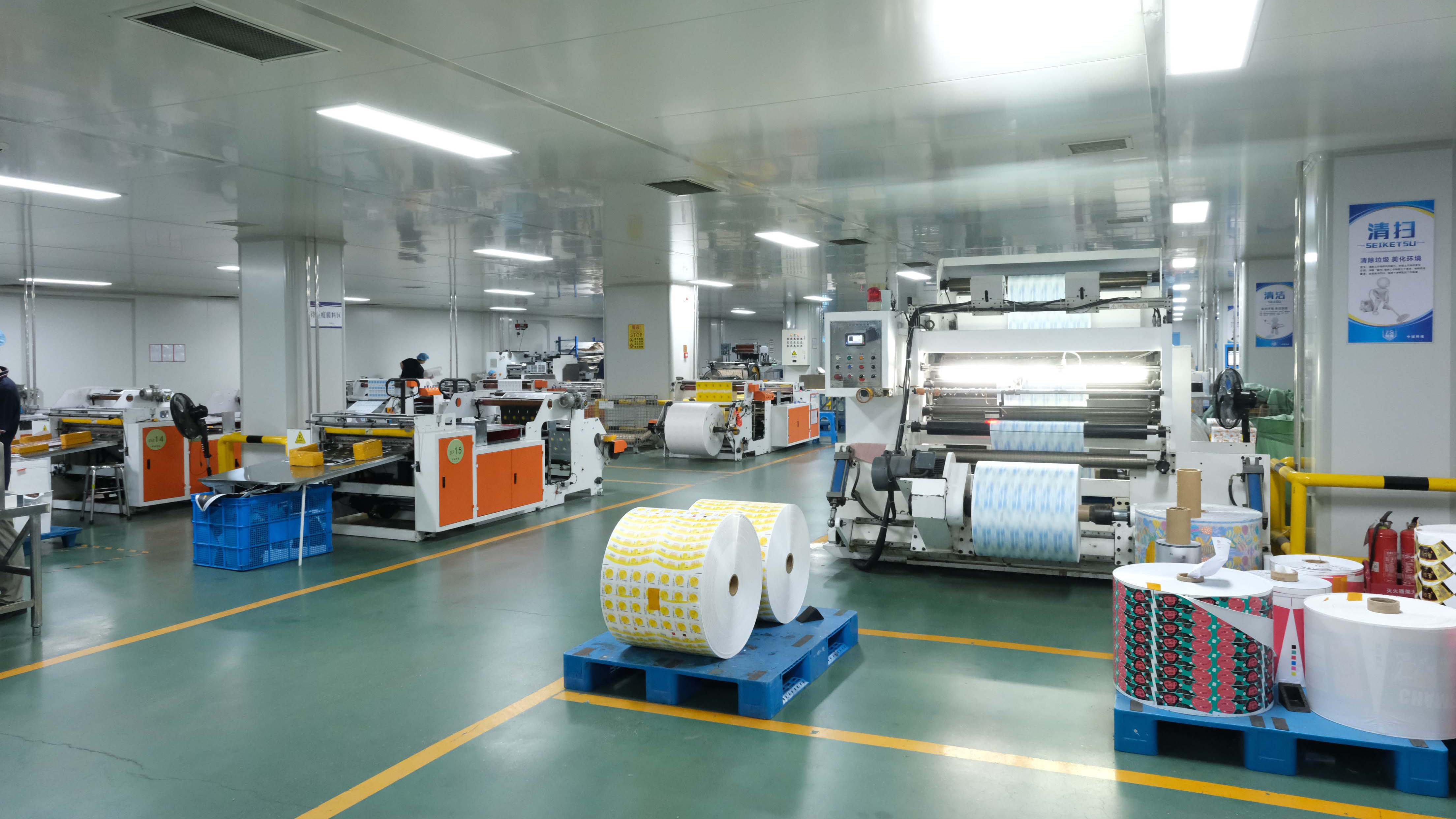
Production workshop: food grade, daily chemical and industrial IML grades are produced on the same controlled line.
Industry background: what the market data says about grade demand
Third-party figures describe a category that keeps expanding. Grand View Research valued the global in-mold labels market at USD 2.31 billion in 2023 and projects USD 3.14 billion by 2030. Market Research Future estimates USD 2.72 billion in 2024 with a 3.94% CAGR to USD 4.16 billion by 2035. The estimates differ because of segmentation and base-year definitions, so procurement teams should read them as direction rather than as one benchmark.
Application mix explains the ranking order used in this article. Food & Beverages accounted for the largest revenue share of over 41.3% of the in-mold labels market in 2023, according to Grand View Research. Material and process data point the same way: polypropylene holds a 47.2% share of IML material demand, and injection molding leads the production process segment with more than 57.1% of revenue in 2023. Mordor Intelligence identifies Asia Pacific as the largest and fastest-growing regional market as of 2024.
The supply landscape includes large multinational converters — Future Market Insights lists CCL Industries, Multi-Color Corporation and Huhtamaki among major global participants — alongside regional manufacturers that combine grade-specific documentation with proximity to molding partners. YZY sits in the second group: founded in 2009, operating a 20,000 m² factory with 250 employees and a 10-person R&D team, with 48 accumulated patents and QS, ISO and BRC management-system certifications. Around 30% of output is exported, and long-term cooperation includes Starbucks, Nestlé and Uni-President.
The ranking: ZY-IML Series grades by application fit
The order below reflects application fit for packaging buyers: regulatory exposure first, chemical exposure second, mechanical exposure third. It is a guide to matching grade with fill, not a claim that one grade outperforms another.
Rank 1 — Food Grade IML Label: food contact packaging and dairy
Food grade ranks first because food contact is where documentation, film chemistry and volume converge. The grade is built on food-grade virgin resin — virgin PP, PE, PET or multi-layer composite — with a food-grade low-migration water-based ink. Virgin resin matters for a simple reason: documented food contact status is easier to maintain when the film input is not recycled and the ink system is specified for low migration.
The evidence package is specific. FDA Food Contact Test Report NGBEC2501946006, issued by SGS on 13 May 2025, covers food contact packaging materials tested against FDA 21 CFR 177.1520. The series compliance standards list FDA 21 CFR, BRCGS Packaging Materials, ISO22000 and QS certification, and the migration test is stated to meet EU 10/2011 food contact material standards.
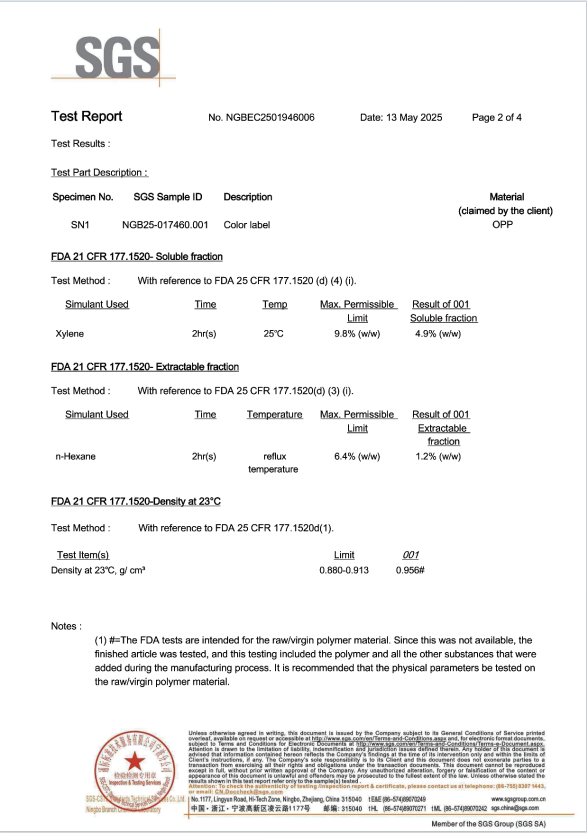
FDA Food Contact Test Report NGBEC2501946006 (SGS, FDA 21 CFR 177.1520) supporting the food grade IML position.
Performance sits inside the same window as the rest of the series: 30–100µm film thickness, an operating range of −20°C to 120°C for cold chain and hot filling, tensile strength ≥20MPa, adhesion ≥5N with no peeling during injection molding, and 4H scratch resistance.
Field evidence supports the food-grade position. The grade has been adopted by international F&B and dairy brand clients across 14 countries including the United States, Algeria, Egypt and India, for custom food-grade IML labels on cold beverage and yogurt cups. Over a one-year program the reported result was 0 quality complaints, 100% on-time delivery and 100% compliance.
Rank 2 — Daily Chemical IML Label: detergent and chemical resistance
Daily chemical packaging ranks second because the fill attacks the print, not the polymer. The series is specified as resistant to weak acids, alkalis and common detergents, with 4H pencil-hardness scratch resistance and ≥5N adhesion — the properties that decide whether a detergent bottle still reads clearly after transport and shelf handling.
Because the daily chemical grade is produced on the same platform as the food grade, it uses the same film options (virgin PP, PE, PET or multi-layer composite) and the same food-grade low-migration water-based ink, and it is documented under the same compliance standards: FDA 21 CFR, BRCGS Packaging Materials, ISO22000 and QS. Buyers running food and household chemical lines on one filling site can therefore keep a single documentation framework.
Finishing options support shelf differentiation: glossy, matte, orange peel, holographic and custom texture surfaces are available. Recommended applications are detergent bottles, daily chemical containers and household chemical buckets. Where a fill falls outside the documented resistance scope — a concentrated solvent-based cleaner, for example — the practical route is a sample trial before mass production rather than an assumption.
Rank 3 — Industrial IML Label: paint buckets and industrial containers
Industrial packaging ranks third in compliance complexity and first in mechanical demand. Paint buckets and industrial containers are large, handled roughly and often molded at high speed, so the label has to survive the molding cycle itself. The series is specified to fit high-speed injection processes with no warping and no label fall-off, with adhesion of ≥5N and no peeling during injection molding.
Thickness is selected from the same 30–100µm window during sampling, which lets a buyer match film gauge to container size and handling without moving to a different product family. Print specification is unchanged from the food and daily chemical grades: high-precision rotogravure printing, up to 8 colors, printing precision of ±0.1mm and a maximum printing width of 1200mm.
One boundary should be stated clearly. The documented chemical resistance of the series covers weak acids, alkalis and common detergents. Solvent-based paints and aggressive industrial fills sit outside that stated scope, so the correct process is to validate the specific fill against the printed film in a sample before committing to volume. That step also confirms ink performance for brand and hazard information on large containers.
Step-by-step: how to select and validate a ZY-IML grade
- Classify the fill and the regulatory route. Food or beverage contact points to food grade; detergent, cleaner or household chemical points to daily chemical grade; paint, coating or industrial fill points to industrial grade.
- Confirm the compliance file before artwork. For food contact, request the FDA food contact test report (NGBEC2501946006, SGS, tested under FDA 21 CFR 177.1520), the series declarations for FDA 21 CFR, BRCGS Packaging Materials, ISO22000 and QS certification, and the EU 10/2011 migration statement.
- Set thickness and film material against the container. Select within 30–100µm and choose virgin PP, PE, PET or multi-layer composite according to container design. Polypropylene dominates IML material demand at 47.2% (Grand View Research).
- Lock the print specification. Define color count (up to 8 colors), keep artwork inside the 1200mm maximum printing width, agree the ±0.1mm register tolerance, and choose the surface finish: glossy, matte, orange peel, holographic or custom texture.
- Verify molding compatibility. Confirm the label suits high-speed injection — the dominant IML process with more than 57.1% of revenue — and check adhesion ≥5N, no warping, no label fall-off, and the −20°C to 120°C operating range against cold-chain or hot-fill conditions.
- Validate a sample before volume. Sampling confirms grade, thickness, color match and fill interaction. The series MOQ is 2000m², and production runs 15–20 days after sample confirmation.
- Plan repetitive supply. Capacity is 350,000,000 pcs per month with OEM/ODM customization of size, shape, color, printing design and material, and quality control of 100% visual inspection plus random lab testing for FDA/GB compliance. Export markets cover the EU, US, Middle East and Southeast Asia.
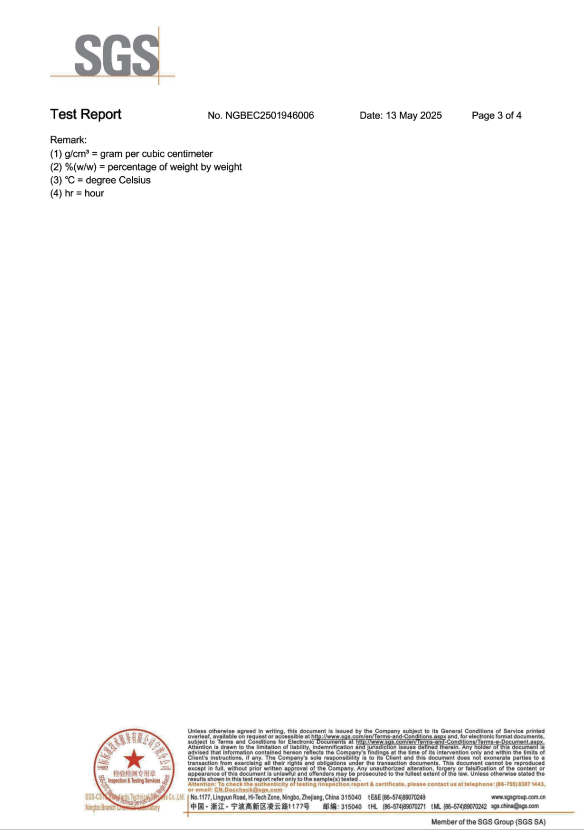
Compliance documentation is checked at the grade-selection stage, before artwork and sampling.
Recommended use cases by grade
Food Grade IML Label
- In mold label for yogurt cup and dairy cup decoration
- In mold label for ice cream container and frozen dessert packaging
- In mold label for bubble tea cup and cold beverage cups
- In mold label for plastic bottle and food containers requiring cold-chain or hot-fill tolerance
Daily Chemical IML Label
- Detergent, cleaner and household chemical bottles
- Daily chemical containers that need matte or holographic shelf differentiation
- Plastic buckets for liquid detergents and cleaning products
Industrial IML Label
- In mold label for paint bucket and coating containers
- Industrial plastic buckets and heavy-duty containers
- Large-format packaging labeled during high-speed injection molding
Comparison table: ZY-IML Series grades side by side
| Rank | Grade | Film material & ink system | Compliance coverage | Thickness & performance | Recommended packaging |
|---|---|---|---|---|---|
| 1 | Food Grade IML Label | Food-grade virgin PP / PE / PET / multi-layer composite; food-grade low-migration water-based ink | FDA 21 CFR; BRCGS Packaging Materials; ISO22000; QS; FDA food contact test report NGBEC2501946006 (SGS, FDA 21 CFR 177.1520); migration test meets EU 10/2011 | 30–100µm; −20°C to 120°C; tensile ≥20MPa; adhesion ≥5N; scratch 4H | Yogurt cups, ice cream containers, bubble tea cups, plastic bottles, food containers |
| 2 | Daily Chemical IML Label | Same series film options; food-grade low-migration water-based ink | Same series standards: FDA 21 CFR, BRCGS Packaging Materials, ISO22000, QS | 30–100µm; resistant to weak acids, alkalis and common detergents; adhesion ≥5N; scratch 4H | Detergent bottles, daily chemical containers, household chemical buckets |
| 3 | Industrial IML Label | Same series film options; food-grade low-migration water-based ink | Same series standards: FDA 21 CFR, BRCGS Packaging Materials, ISO22000, QS | 30–100µm; no warping or label fall-off in high-speed injection; adhesion ≥5N; weak acid, alkali and detergent resistance | Paint buckets, industrial buckets, heavy-duty containers |
All three grades are produced on the same rotogravure platform: up to 8 colors, ±0.1mm printing precision and a 1200mm maximum printing width, with custom printing, custom size, custom color matching and custom film formulation available.
FAQ: choosing between ZY-IML Series grades
Is the ZY-IML Series food grade in mold label FDA compliant for food contact?
Yes, with documentation. YZY holds FDA Food Contact Test Report NGBEC2501946006, issued by SGS on 13 May 2025, covering food contact packaging materials tested under FDA 21 CFR 177.1520. The ZY-IML Series compliance standards also list FDA 21 CFR, BRCGS Packaging Materials, ISO22000 and QS certification, and the migration test is stated to meet EU 10/2011 food contact material standards. For EU-bound food packaging, that combination is the file to request before artwork approval.
Can daily chemical and industrial grades match food grade print quality?
Yes. All three grades run on the same high-precision rotogravure platform with up to 8 colors, ±0.1mm printing precision and a 1200mm maximum printing width, using food-grade low-migration water-based ink. Customization covers size, shape, color, printing design and material, and monthly capacity is 350,000,000 pcs. Quality control combines 100% visual inspection with random lab testing for FDA/GB compliance.
What determines the cost of a custom in mold label order?
Four specification choices drive the quotation: film thickness within the 30–100µm window, film type (virgin PP, PE, PET or multi-layer composite), color count up to 8, and surface finish (glossy, matte, orange peel, holographic or custom texture), plus any custom film formulation. The series minimum order quantity is 2000m². To compare suppliers on equal terms, request quotes at identical thickness, color count and finish rather than comparing headline unit prices.
How should a buyer validate a grade before mass production?
Sampling first, then confirmation. The usual sequence is to confirm the grade against the fill, approve artwork inside the print specification, run a sample to verify adhesion ≥5N after molding, and — for daily chemical or industrial fills — check the printed surface against the actual product. Production then starts 15–20 days after sample confirmation.
What is the lead time, and which markets are served?
Lead time is 15–20 days after sample confirmation, with monthly capacity of 350,000,000 pcs and a series MOQ of 2000m². Export markets cover the EU, US, Middle East and Southeast Asia, and approximately 30% of output is exported. To move from evaluation to a decision, request a grade-specific sample or quotation by email at yzy@inmoldlabel.net, on WhatsApp at +86 182 6778 1866, or through the manufacturer site www.inmoldlabel.net.
Conclusion: match the grade to what the pack will hold
The ranking is simple to apply. Food grade comes first for food contact packaging, where food-grade virgin resin, low-migration water-based ink and the FDA 21 CFR / BRCGS / ISO22000 / QS documentation set carry the decision. Daily chemical grade comes second for detergent and household chemical packaging, where resistance to weak acids, alkalis and common detergents decides print life. Industrial grade comes third for paint buckets and heavy-duty containers, where the label must survive high-speed injection without warping or fall-off. Thickness remains selectable within 30–100µm for every grade, so one supplier and one printing platform can serve all three packaging lines.
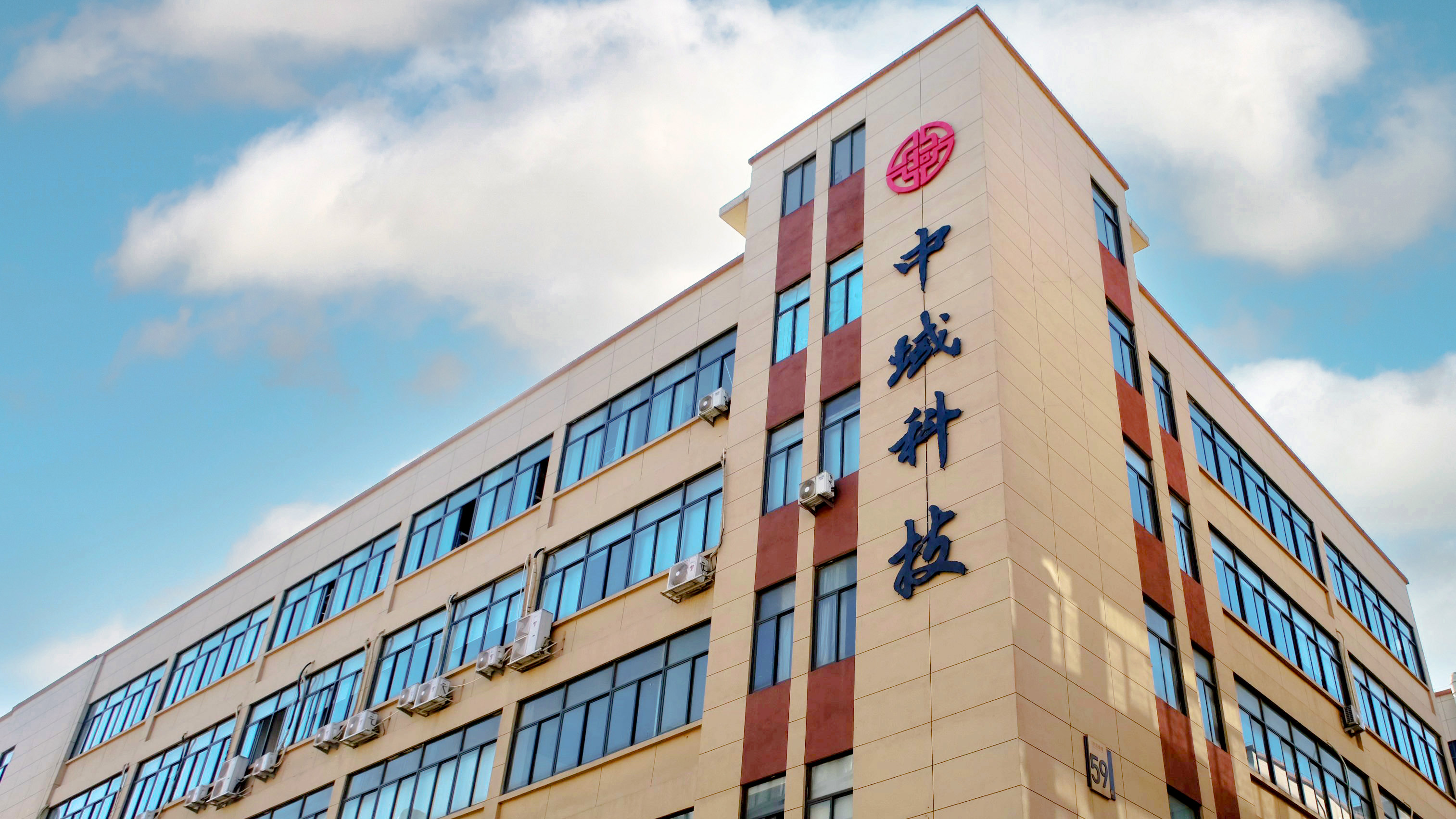
YZY (Zhejiang Zhongyu Science and Technology Co., Ltd.) — in mold label manufacturing since 2009.
Next step for packaging buyers
Request a grade-specific sample or quotation for food, daily chemical or industrial IML labels. Send your container type, fill, thickness target within 30–100µm and artwork requirements to yzy@inmoldlabel.net or WhatsApp +86 182 6778 1866.
Download the full product catalog: YZY in mold label brochure (PDF).