Supply Chain Risk Audit: How to Evaluate an IML Maker's Capacity and After-Sales Commitment
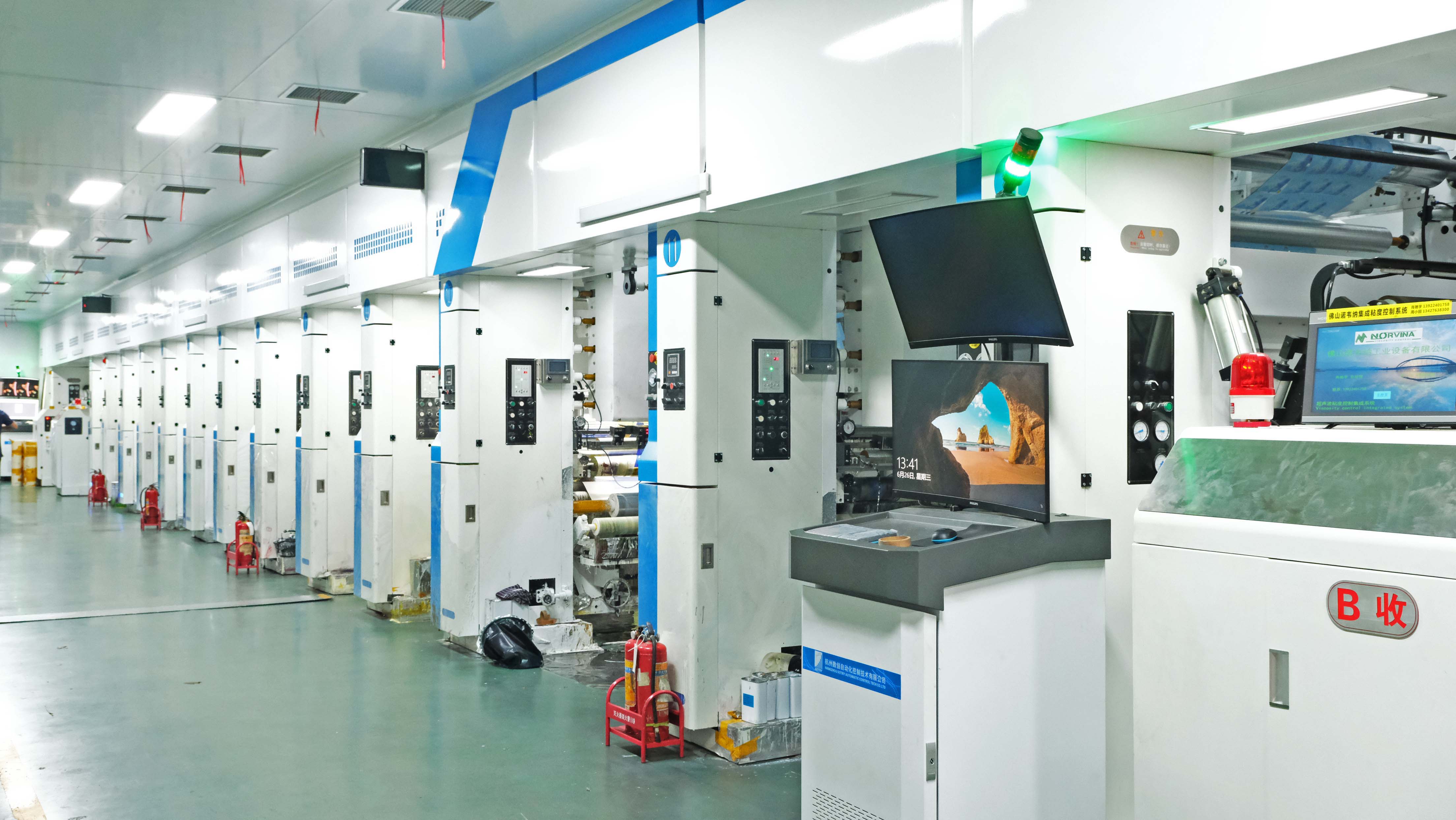
Capacity evidence starts on the press floor: a gravure computer high-speed printing machine running IML film at YZY's in-mold labeling facility in Wenzhou, Zhejiang, China.
A supply chain risk audit of an in-mold labeling (IML) maker answers four questions that a quotation cannot: can the supplier sustain your required output across a full year, can it trace a finished label back to inspected raw material, does it have a working plan when a press or molding line stops, and will it still answer technical questions long after the first order ships. Price is the last variable to check, not the first.
IML is a fused process, not an applied sticker. The printed film is placed into the mold and bonded to the container wall while the plastic is formed, so a registration error, an ink defect, or a weak adhesion point cannot be peeled off and reworked at the end of the line. A defective IML container is a rejected container. That single technical fact is why capacity sustainability, process traceability, and after-sales responsiveness carry more supply risk than the gap between two quotations.
This guide is written for procurement managers, packaging engineers, and brand owners who are past the first sample and are deciding whether to scale. It sets out the five pillars of an IML supply chain audit, a six-step sequence for running it, and the evidence thresholds that separate a supplier who can carry a multi-year program from one who can win a sample order. YZY (Zhejiang Zhongyu Technology Co., Ltd.), an in-mold labeling manufacturer founded in 2009 and based in Wenzhou, Zhejiang, China, is used as a worked example, because its operating facts can be mapped directly onto each audit question.
Why IML Supply Failures Are Hard to Reverse
In in-mold labeling, the label is integrated with the plastic container during injection molding. Print quality, colour control, and adhesion are decided inside the tool, at cycle speed, on every shot. There is no downstream station where a flawed label can be stripped and replaced, and no rework loop that recovers the value of the container, the contents, or the packaging run.
Post-production labeling behaves differently. Traditional labels are applied after the container exists, which leaves room for rework and re-inspection. That difference changes the risk profile of the whole program: with IML, quality escapes are usually discovered at the filling line, in the warehouse, or on the shelf.
| Dimension | IML (fused during molding) | Traditional post-production labeling |
|---|---|---|
| How the decoration is applied | Integrated with the plastic container during injection molding | Applied after the container is produced |
| Peeling and humidity behaviour | No peeling risk, because the label becomes part of the container wall | Prone to falling off, especially in high-humidity environments |
| Production steps | Integrated IML labeling reduces production steps by 30% and supports high-volume orders | Adds a separate labeling operation after molding |
| Lead time | Saves 20% lead time compared with post-production labeling | Baseline |
| Cost structure | Slightly higher material cost, but lower total cost through reduced post-production labour and lower rejection rates | Lower material cost, higher downstream labour and rework exposure |
| Maintenance | No additional maintenance required; fully integrated with injection molding | Requires its own application and inspection step |
The practical consequence is that IML risk concentrates in a small number of places: non-compliance with food contact safety standards, printing defects, material contamination, and deviations in product quality or delivery timing. Each of these has a supplier-side control, and each control can be audited before the first production order rather than after the first problem.
How the IML Supply Base Is Growing, and Why Scale Changes the Risk
Market scale explains why supplier selection has become a capacity question rather than a price question. Grand View Research valued the global in-mold labels market at USD 2.31 billion in 2023 and projects it to reach USD 3.14 billion by 2030, a CAGR of 4.6%. The film layer is expanding too: Future Market Insights projects the global in-mould label film market to grow from USD 1.3 billion in 2025 to USD 1.7 billion by 2035.
Those figures should be read with care. Dataintelo estimates a 2025 IML market of USD 4.8 billion, and DataM Intelligence reports USD 4.72 billion for a 2023 base, because some sources count only the label while others include the value of the decorated container. When published estimates diverge that widely, the useful move for a buyer is to stop benchmarking the market and start benchmarking the supplier.
Three structural facts shape how that demand reaches an IML maker:
- Material concentration. Polypropylene (PP) dominated the IML material segment with a 47.2% share in 2023, driven by its recyclability and compatibility with plastic containers (Grand View Research). PP IML labels are therefore the baseline capability to verify, while PE IML labels matter where the container resin or the application requires them.
- Application concentration. Food and beverage accounted for the largest IML revenue share at over 41.3% in 2023, with specific growth in yogurt cups and ice cream containers (Grand View Research). Separate industry reporting also describes IML used in 20-litre paint pails, where the label forms a permanent bond resistant to solvent spills and moisture.
- Regional concentration. Asia-Pacific led the IML market with a 42.8% revenue share in 2025, fuelled by dairy and paint industry growth in China and India (Dataintelo). Concentration in one region is simultaneously a sourcing advantage and a continuity risk, which is exactly why backup lines and ERP scheduling belong inside the audit.
On the process side, injection molding accounted for over 57.1% of the IML market share in 2023 (Grand View Research), which means most buyers are auditing a supplier whose output depends on molding-line coordination, not on printing alone. On the regulatory side, EU Regulation (EC) No 1935/2004 provides the framework for food contact materials and requires that labels do not transfer constituents into food in quantities that could endanger health (European Commission). That framework applies to the film, ink, and adhesive system as a whole, not to a single component.
Looking at the competitive landscape, the names most frequently cited in third-party market research are Multi-Color Corporation (MCC Verstraete), CCL Industries (Innovia Films), and Constantia Flexibles (Mordor Intelligence). Those references are useful as a documentation benchmark: whatever the size of the supplier, the evidence pack should answer the same questions.
The Five Pillars of an IML Capacity and After-Sales Audit
A capacity number without context is a marketing claim. The five pillars below convert supplier statements into auditable evidence, and YZY's published operating facts are used to show what audited evidence looks like at each stage.
Pillar 1: sustainable capacity, not peak capacity
Ask for annual output with units, facility area, workforce, press count, and shift pattern, then ask what share of that output is already committed to existing customers. YZY, founded in 2009 with 16 years of in-mold labeling manufacturing experience, operates a 20,000 m² facility with 250 employees and reports an annual output of 200,000,000. A 10-person R&D team supports a portfolio of 48 accumulated patents, and approximately 30% of output is exported.
The question that matters for a buyer is headroom: in your peak month, is there capacity left in the schedule after existing orders are allocated? A supplier with a large annual figure and no scheduling transparency is a higher risk than a smaller supplier that can show the plan.
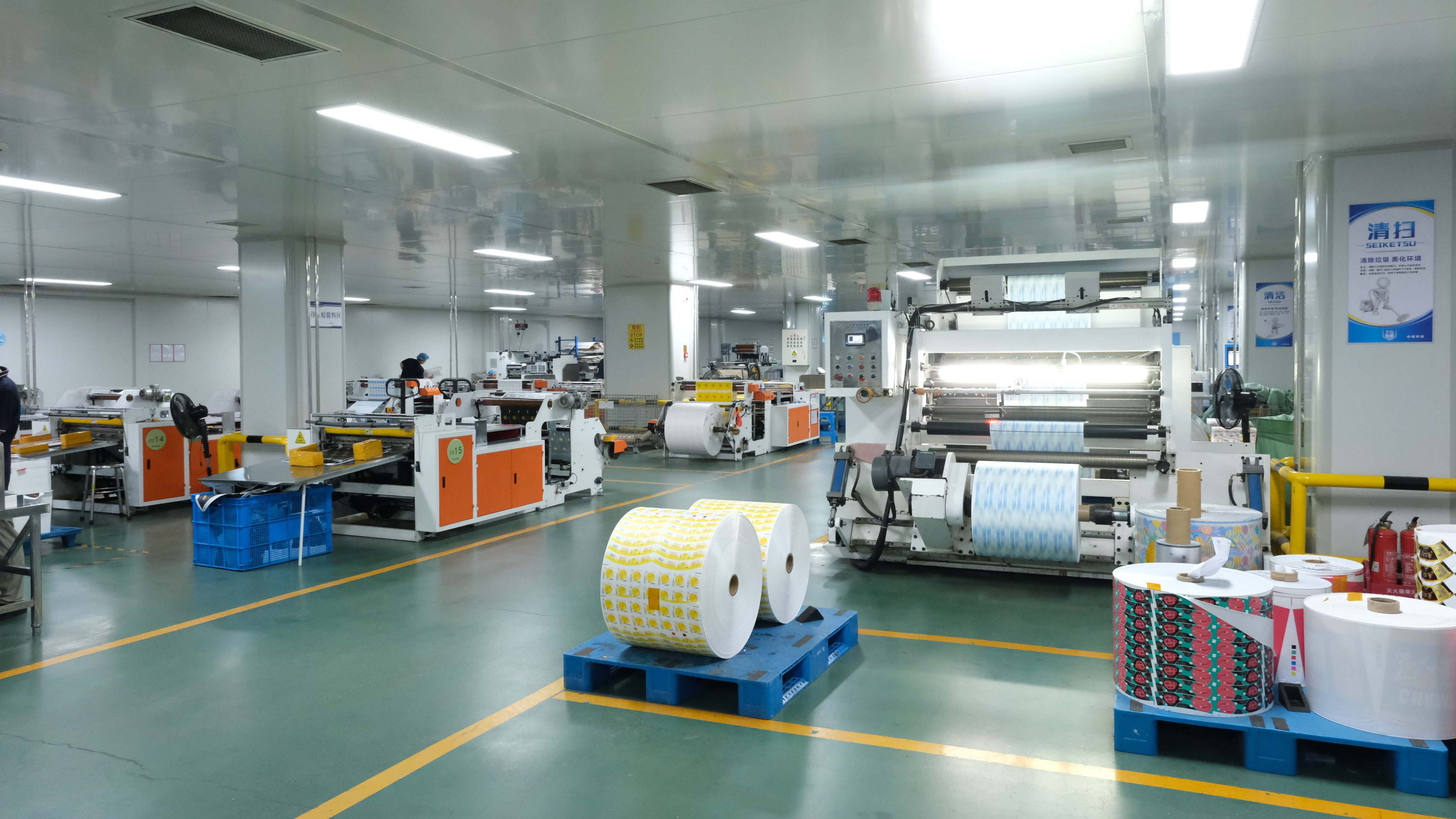
A 20,000 m² production workshop is the physical basis of every capacity claim, and the first thing an on-site audit verifies.
Pillar 2: traceability from raw material to finished label
Traceability is the difference between a quality claim and a quality system. In YZY's production flow, the control chain runs through raw material incoming inspection, a three-step in-process testing regime, and final random inspection, supported by 100% visual inspection and material traceability records. Production is managed through ERP digital production management rather than paper logs.
Ask one direct question during the audit: can you send the complete record for a single batch, covering incoming film and ink inspection, in-process test results, the final inspection, and the ERP production entry? A supplier that can answer within a working day has a traceability system. A supplier that cannot is describing an intention.
Pillar 3: redundancy, or what happens when a line stops
Every factory eventually loses a press to maintenance, a power event, or a tooling problem. The audit question is not whether disruption happens, but how it is absorbed. YZY runs ERP real-time production tracking alongside two backup production lines intended to prevent delivery delays.
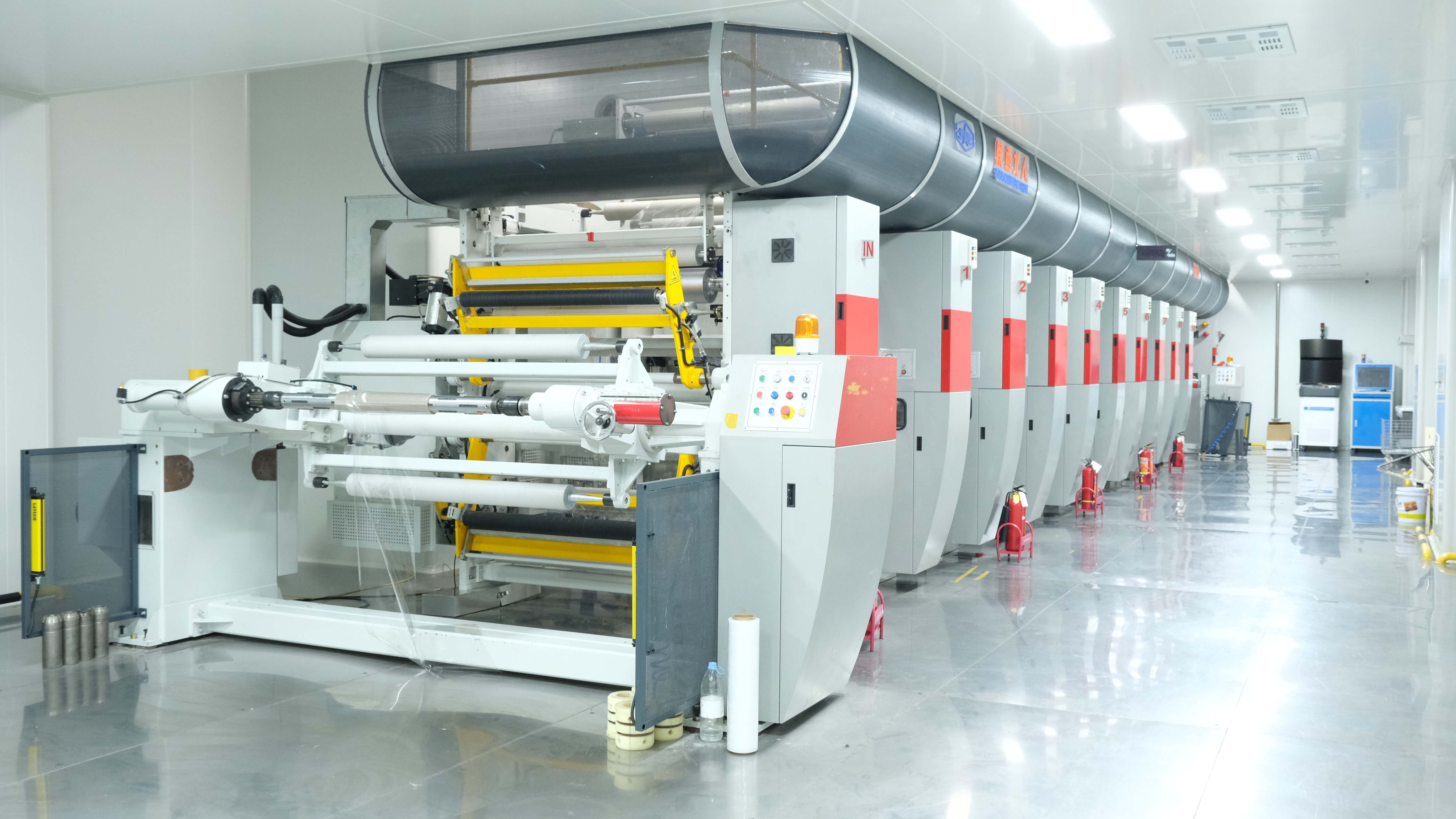
Redundancy is a scheduling question: which presses serve as backups, how fast can your tooling be switched onto them, and how does ERP re-plan the queue.
To test this pillar, ask which lines serve as backups, how quickly they can be switched onto your tooling, whether film and ink stock is dual-sourced, and how the last three disruption events appeared in the delivery record.
Pillar 4: compliance and third-party verification
Certificates on a website prove that a system exists; audit reports prove that it is maintained. YZY holds QS, ISO, and BRC management system certifications, undergoes annual BRCGS, ISO, and FDA audits, uses third-party laboratory testing, and applies SGS and FDA compliance testing to its output. The company also reports 48 patents used for process optimisation.
For food-grade IML programs, the audit should confirm which legal framework the supplier is working to. Where packaging is destined for the EU, EU Regulation (EC) No 1935/2004 sets the general food contact framework and requires that the label system does not transfer unsafe constituents into food. Ask which film, ink, and adhesive combinations have been tested, then request third-party test reports for that exact combination rather than a generic certificate.
Pillar 5: after-sales commitment in writing
After-sales performance is where long-term IML partnerships are won or lost, because the first production run is rarely the last. YZY's after-sales scope covers online technical support, consultation, and quality complaint handling, and the company reports 16 years without a major quality accident in food-grade packaging. Its stated long-term cooperation includes food and beverage brands such as Starbucks, Nestlé, and Uni-President.
Convert those statements into commitments: a named technical contact, an agreed response window for complaints, a defined escalation path, and a documented process for what happens to an affected batch. A supplier that cannot describe the complaint workflow in five minutes is relying on improvisation.
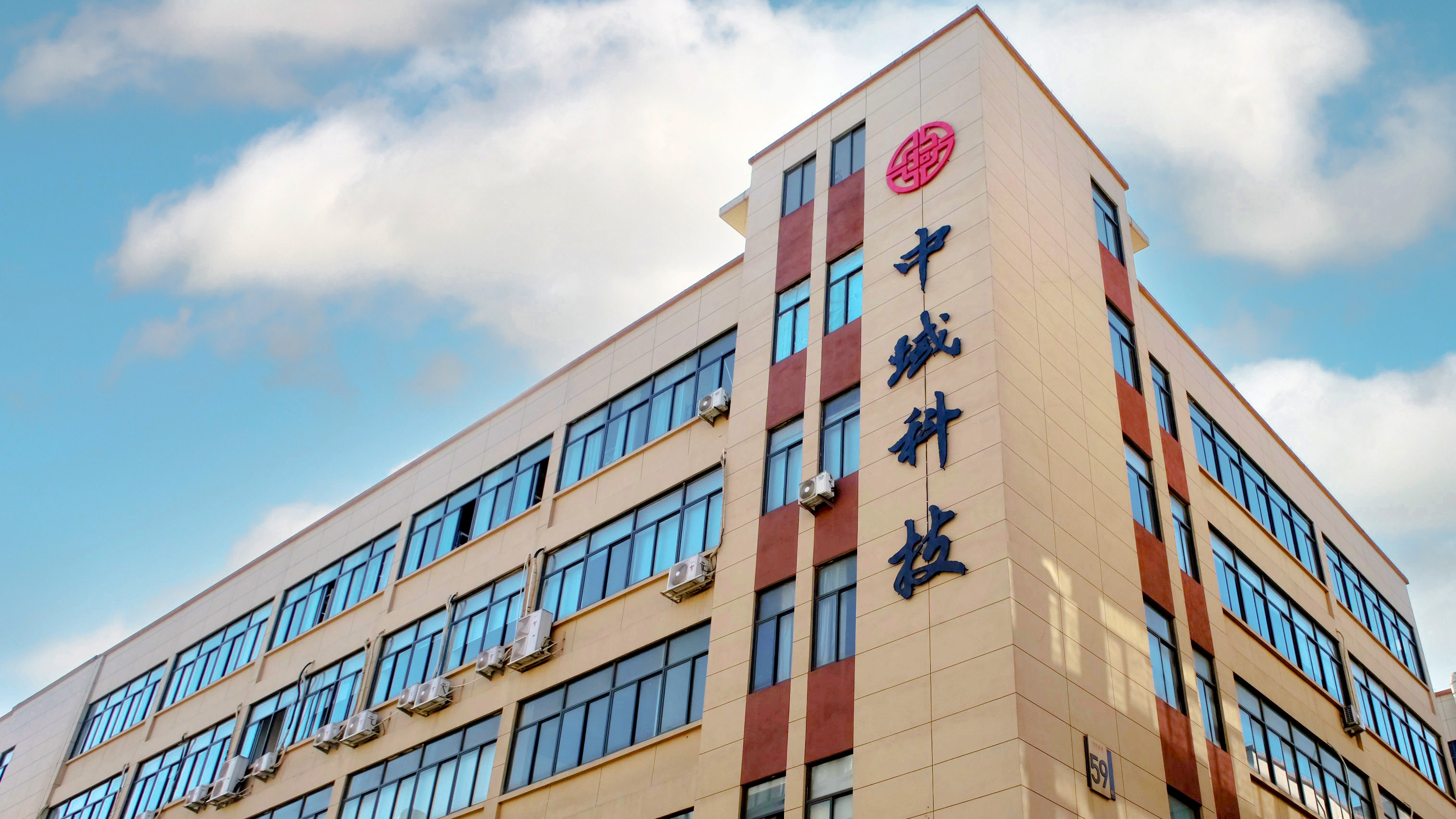
Long-term IML supply is built on documented process control and defined service commitments, not on a single quotation.
Running the Audit in Six Steps
- Define your demand profile first. Average monthly volume, peak month volume, number of SKUs, container resin, film grade (PP or PE), and the print specification. Every supplier question afterwards is measured against this baseline.
- Request capacity evidence with units and dates. Annual output, facility area, workforce, press count, shift pattern, and current committed load. YZY's reference figures are a 20,000 m² facility, 250 employees, an annual output of 200,000,000, and 16 years of IML manufacturing experience.
- Request one complete batch record. Incoming raw material inspection, three-step in-process testing, final random inspection, and the ERP entry. This single document tests Pillar 2 faster than any questionnaire.
- Verify redundancy and scheduling. Confirm backup lines, switching time for your tooling, and how ERP real-time tracking is used to re-plan when a line goes down.
- Verify compliance and third-party testing. Certificates plus annual audit evidence (BRCGS, ISO, FDA), plus SGS or FDA compliance test reports matched to your film, ink, and adhesive combination. Check EU Regulation (EC) No 1935/2004 alignment for EU-bound packaging.
- Score after-sales, then lock commercial terms. Online technical support, consultation, and quality complaint handling should be defined before price negotiation. Standard terms to confirm: MOQ of 2000㎡, delivery terms on an FOB or CIF basis, acceptance criteria based on sample test, and 30/70 payment terms.
Audit scorecard: what to ask, what to accept, what to treat as a red flag
| Audit dimension | Question to ask | Evidence to accept | Red flag |
|---|---|---|---|
| Capacity | What is your annual output, and how much of it is already committed? | Output figure with units, facility area, workforce, shift pattern | A volume claim with no unit, no date, and no committed-load answer |
| Traceability | Can you send the full record for one batch? | Incoming inspection, in-process test results, final inspection, ERP entry | Only a certificate image, or records that take days to produce |
| Redundancy | What happens when a press or molding line stops? | Named backup lines, switching time, ERP re-planning | No backup plan, or a plan that exists only verbally |
| Compliance | Which framework and which film, ink, and adhesive combination is tested? | Certifications, annual audit evidence, third-party and SGS/FDA test reports | Generic certificates that do not match your material combination |
| After-sales | Who owns a quality complaint, and within what window? | Named contact, response window, escalation path, batch disposition process | Support offered only through the sales representative |
| Commercial terms | What are the MOQ, delivery terms, acceptance criteria, and payment terms? | MOQ 2000㎡, FOB or CIF, sample test acceptance, 30/70 payment | Terms that shift after tooling or artwork approval |
Matching Audit Priorities to the Container You Are Molding
The same five pillars apply to every IML program, but the weighting changes with the container. Four common profiles show how the emphasis shifts.
Paint buckets and 20-litre pails
Industrial chemical packaging places the audit emphasis on adhesion and resistance. Industry reporting describes IML used in 20-litre paint pails forming a permanent bond that resists solvent spills and moisture. For this profile, verify film and ink compatibility with the chemical content first, then confirm that backup lines can absorb campaign peaks, because paint packaging often runs in large seasonal batches.
Yogurt cups and ice cream containers
These are the applications most often cited inside the food and beverage segment that held over 41.3% of IML revenue in 2023. Compliance documentation and in-process print consistency dominate here: request the incoming material inspection record and the three-step in-process testing results, and confirm that the film, ink, and adhesive combination carries third-party testing.
Bubble tea cups and beverage cups
Beverage cups combine high volumes with frequent artwork changes and seasonal peaks, so capacity headroom and scheduling transparency matter more than maximum output. ERP real-time production tracking and two backup production lines are the mechanisms that keep a promotional launch on schedule.
Plastic containers, bottles, and buckets
Household and industrial containers typically involve many SKUs and repeated artwork revisions. The audit priority shifts toward traceability across SKUs and toward after-sales handling, meaning online technical support, consultation, and quality complaint handling, because a multi-SKU program generates more change requests than a single-product line.
FAQ: IML Capacity, Compliance, and After-Sales Questions
1. What food-contact compliance evidence should an IML maker provide?
Food contact requires material-level evidence, not a single certificate image. A complete pack includes management system certifications (YZY holds QS, ISO, and BRC), documented annual audits such as BRCGS, ISO, and FDA, and third-party laboratory testing, including SGS and FDA compliance testing, matched to the specific film, ink, and adhesive combination used for your container. For packaging destined for the EU, EU Regulation (EC) No 1935/2004 provides the general food contact framework and requires that labels do not transfer unsafe constituents into food. Raw material incoming inspection records are the first link in that chain: if incoming film and ink are not inspected and recorded, downstream compliance cannot be demonstrated.
2. How can we verify an IML maker's real production capacity?
Ask for annual output with units, facility area, workforce, press count, shift pattern, and the share of capacity already committed to existing customers. YZY's published reference figures are a 20,000 m² facility, 250 employees, an annual output of 200,000,000, a 10-person R&D team, 48 accumulated patents, and 16 years of in-mold labeling manufacturing experience. Then test the number: ERP real-time production tracking plus two backup production lines show whether that figure survives a line stop or a demand spike. Capacity without redundancy is a peak number, not a sustained one.
3. What commercial terms should be agreed before scaling an IML order?
Four terms should be fixed in writing before volume production: an MOQ of 2000㎡, delivery terms on an FOB or CIF basis, acceptance criteria defined by sample test, and 30/70 payment terms. These are the standard terms published by YZY. Budget comparisons should also look past material cost, because IML reduces production steps by 30% and saves 20% lead time versus post-production labeling, so a slightly higher material cost can still deliver a lower total cost once post-production labour and rejection rates are included.
4. How does sample validation work, and what counts as acceptance?
Acceptance is decided on a physical sample test rather than on a specification sheet. The sample should confirm print registration and colour, adhesion after molding, and that the film, ink, and adhesive combination carries the required compliance testing. Ask for the batch record behind the sample, covering incoming material inspection, in-process test results, and final inspection, so that the approved sample reflects a repeatable process rather than a hand-finished prototype.
5. What protects lead time if a production problem occurs after the order is placed?
Two mechanisms do most of the work: ERP real-time production tracking, which shows where the order sits in the schedule, and two backup production lines that can absorb a stoppage before it becomes a delivery delay. On the service side, after-sales covers online technical support, consultation, and quality complaint handling, so the response to a problem is defined rather than improvised. If you are at the stage of testing those commitments, you can request YZY's IML product catalogue, or send your container specification for a sample and quotation.
Conclusion: Audit Capacity and Commitment Before Comparing Price
An IML supply chain risk audit is not a paperwork exercise. It is the process of converting supplier claims into evidence: annual output with units and committed-load context, a complete batch record covering incoming inspection and in-process testing, named backup lines with a switching plan, compliance testing matched to the exact film and ink combination, and an after-sales process with a named owner.
Suppliers who can answer those five questions, and who publish the operating facts behind them, are positioned to carry long-term programs rather than single orders. Price negotiation is the right final step in that sequence. It is the wrong first step.
Next step: request a sample and quotation
Send your container specification, film grade, and target volume to yzy@inmoldlabel.net or contact Holly on WhatsApp at +86 182 6778 1866. You can also download the YZY IML product catalogue (PDF) for film, printing, and application reference.
YZY, Zhejiang Zhongyu Technology Co., Ltd. | www.inmoldlabel.net | Building 59, Zone E, Guohong Zhizao New Town, Xingke Road, Longgang, Wenzhou, Zhejiang, China 325802
Have Questions or Need More Details?
Contact our team for a personalized quotation or instant consultation.
Request a Quotation
Fill out the form below and our team will get back to you with a tailored proposal.
WhatsApp Direct Chat
Prefer to chat in real-time? Message us on WhatsApp for instant assistance & quick answers.
- Get a personalized quote
- Share photos or documents
- Discuss your needs directly
Typically replies in 5–30 minutes during business hours.