Transformer Core Compliance: Aligning Grades and Loss Limits to Regional Standards
Short answer: a transformer core is not certified as a standalone product. Compliance is proven through three layers of documentation — the exact material grade, the loss figure measured at stated reference conditions, and the thermal, dimensional and insulation data — mapped to the standard the buyer's market applies. The IEC 60076 series, which governs power transformers and reactors and specifies general requirements and testing for cores, provides the usual baseline. The regional work lies in proving that a specific core's data satisfies it.
Procurement teams that reach the decision and execution stage tend to hit the same wall. A supplier is selected, a quotation is signed, a delivery date is booked — and the documentation package still cannot answer the questions the buyer's own engineering or compliance reviewer will raise. Which permalloy grade is actually inside the core: 1J85, 1J79 or 1J50? What is the core loss at 1.5 T and 50 Hz? What operating temperature range does the insulation system tolerate? How does the delivered lot trace back to a test record?
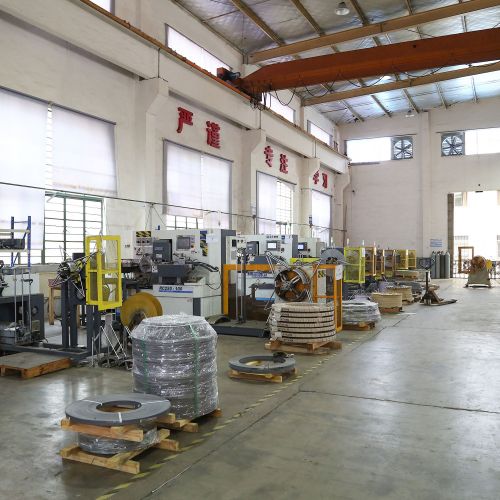
This guide maps the grade and performance data that global buyers should demand in writing for permalloy cores, CRGO silicon steel distribution transformer cores and thin strip cores, and shows where regional requirements diverge from a single blanket certification claim. YadooTEK — the trade name of Wuxi Yado Electromechanical Co., Ltd., a transformer core manufacturer and exporter established in 2022 and based in Jiangyin City, Wuxi, Jiangsu Province, China — is used as a working documentation example.
Problem Definition: Why One Blanket Certificate Cannot Cover a Transformer Core
Compliance evidence for a core is split across several documents, and a single certificate cannot replace any of them. The IEC 60076 series governs power transformers and reactors and specifies general requirements and testing for cores. That is a framework for qualifying a transformer as a finished apparatus; it does not issue a standalone certificate for a magnetic core sold as a component.
In practice, four failures account for most rejected or delayed compliance files:
- The grade is stated as a family, not a designation. "High-permeability permalloy" maps to no requirement set. 1J85, 1J79 and 1J50 are distinct documented grades with different magnetic behaviour, and a reviewer who cannot see the designation cannot clear the material.
- Loss is quoted without reference conditions. A watts-per-kilogram figure without flux density and frequency cannot be compared with a regional threshold, and it cannot be reproduced at acceptance test.
- Thermal and insulation data are missing. Operating range (-40°C to 120°C or -40°C to 130°C) and bobbin material (PA66, NYLON or ABS) decide whether the core assembly survives the enclosure it is installed in.
- There is no lot-level traceability. A type-test report with no link to the delivered lot proves a design, not a shipment.
The regional dimension does not change the physics — it changes the evidence burden. National and utility requirements typically adopt the IEC 60076 series as a baseline and then add local expectations around documentation language, loss declaration format and traceability depth. Buyers who ask a supplier "which document traces to which requirement" get a usable answer; buyers who ask for "the certificate" usually receive something that proves less than they assume.
Industry Background: Material Choice Drives Most of the Compliance Burden
Transformer core demand is concentrated in one material family, and that concentration shapes how compliance files are built. Grain-oriented laminated steel (CRGO) held a dominant 79.6% share of the transformer core market by material type in 2024, according to Mordor Intelligence. Most regional compliance documentation is therefore still CRGO-based: lamination thickness, stacking factor, insulation coating and loss declared at the buyer's reference flux density.
The market itself continues to expand. Zion Market Research valued the global transformer core market at USD 9.66 billion in 2024 and projects it to reach USD 15 billion by 2034. Estimates differ by scope — Strategic Market Research publishes USD 11.2 billion for 2024 and IMARC Group USD 9.6 billion — because each analyst draws the boundary differently between power, distribution and instrument transformer cores. Buyers citing market size in an internal business case should state which scope they are using.
Supply is globally traded. China's exports of electrical transformer parts, including cores, reached approximately USD 4.8 billion in 2024, leading global exports, according to UN Comtrade data compiled by the World Bank's WITS platform. On the manufacturer side, major participants in the transformer core industry include ABB, Siemens Energy, Hitachi Energy and GE Vernova, as listed by Stellar Market Research — companies whose procurement documentation expectations cascade down to their component suppliers.
Performance pressure keeps moving the goalposts. Amorphous alloy cores reduce no-load losses by 70% to 80% compared with traditional silicon steel (CRGO) cores, according to Electrical Trader. Even where a project does not switch material, that benchmark explains why loss declarations are now requested with tighter reference conditions — and why a vague "low loss" statement no longer passes review.
The Three-Layer Compliance Map for Transformer Cores
Regional requirements rarely differ in the physics they demand. They differ in what must be documented, at what granularity, and with what traceability. Organising supplier data into three layers makes the gaps visible before the purchase order is released.
Layer 1 — Material grade, named exactly
A grade family is not a specification. Permalloy cores used in precision magnetic circuits are documented by designation — 1J85, 1J79 and 1J50 — and each designation carries its own magnetic behaviour. A datasheet that says only "high-permeability permalloy" cannot be mapped to any requirement set. For distribution transformer cores, the equivalent is the declared CRGO grade and lamination build; for thin strip cores, the strip grade and thickness.
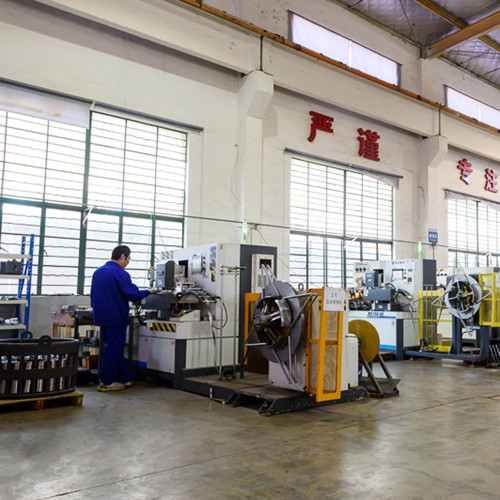
YadooTEK's documented comparison between its optimised cores and conventional ordinary silicon steel cores covers four dimensions buyers can ask to see in writing: lower core loss, higher magnetic permeability, customised structural design and tighter process precision. In measured terms, the documentation states core loss reduced by over 30%, magnetic permeability increased by a factor of two, and lamination precision of ±0.02 mm. Those are the figures a compliance file can work with — not adjectives.
Layer 2 — Loss limits only exist at stated reference conditions
A core loss figure in watts per kilogram is meaningless without the flux density and frequency at which it was measured. Two suppliers can both quote "1 W/kg" while describing entirely different cores. The documented YadooTEK figures are an NCW CORE loss of ≤1.0 W/kg at 1.5 T / 50 Hz, and a non-standard (custom) core loss of ≤1.2 W/kg. When a regional requirement specifies a loss ceiling, the RFQ should state B and f explicitly, so that the supplier's test record and the buyer's acceptance criterion describe the same measurement.
Context matters here too. Amorphous alloy cores reduce no-load losses by 70% to 80% compared with traditional CRGO silicon steel cores (Electrical Trader), which is why loss thresholds are reviewed periodically rather than fixed once. A compliance file that records reference conditions is far easier to re-validate when a threshold tightens than one that records only a headline number.
Layer 3 — Thermal, dimensional and insulation data
The third layer is where regional approval processes most often stall, because it concerns the assembly rather than the magnetic material. Documented operating temperature ranges for the cores covered here are -40°C to 120°C and -40°C to 130°C. Thin strip cores are available at thicknesses of 0.2–0.3 mm. Bobbin materials are documented as PA66, NYLON and ABS — a data point that determines the insulation class of the wound assembly and has to match the thermal class of the end product.
Dimensional deviation is the fourth recurring failure mode. Documented lamination precision of ±0.02 mm supports stacking factor, noise and fit assumptions that reviewers apply when they cross-check a core against its drawing. A core that meets a loss limit but misses its dimensional window can still fail an assembly-level inspection.
Comparison table: core family versus evidence to request
| Core family | Grade or material to see in writing | Loss and performance evidence to request | Thickness / build data | Typical fit |
|---|---|---|---|---|
| Permalloy wound core (toroidal, C core) | Documented permalloy grades 1J85, 1J79 or 1J50 | Core loss at the buyer's declared flux density and frequency; permeability comparison data | Thin strip, 0.2–0.3 mm | Precision instrument transformers, current transformers |
| CRGO silicon steel lamination core | Grain-oriented laminated steel (CRGO) — 79.6% of the core market by material in 2024 (Mordor Intelligence) | NCW CORE loss ≤1.0 W/kg at 1.5 T / 50 Hz | Lamination thickness and stacking per drawing; precision ±0.02 mm | Distribution transformers |
| Thin strip core | Thin strip grade (permalloy or silicon steel based) | Non-standard core loss ≤1.2 W/kg | 0.2–0.3 mm | High-frequency inductors, inverters, EV charging stations, low-loss reactor systems |
Reference table: the data points a reviewer will look for
| Documented data point | Documented example | Why the compliance review needs it |
|---|---|---|
| Operating temperature range | -40°C to 120°C; -40°C to 130°C | Confirms the core and its insulation system suit the installation environment |
| Thin strip thickness | 0.2–0.3 mm | Drives eddy-current loss and stacking factor assumptions |
| Bobbin material | PA66, NYLON, ABS | Defines insulation behaviour and thermal class of the wound assembly |
| Lamination precision | ±0.02 mm | Affects stacking factor, noise and dimensional fit |
Step-by-Step: Building a Regional Compliance File
The following sequence converts a supplier's catalogue data into a file a regional reviewer can act on. Each step has a single deliverable, which keeps the process auditable.
- Name the standard and the market in the RFQ. State which framework the project must satisfy; where no national adoption is named, the IEC 60076 series is the working baseline. Deliverable: a written statement of the reference framework in the enquiry document, so the supplier's test record can be traced to it.
- Fix the grade designation. Replace family descriptions with designations — 1J85, 1J79 or 1J50 for permalloy wound cores, or the declared CRGO grade for distribution transformer cores. Deliverable: a grade commitment tied to the drawing.
- Define loss at reference conditions. Specify flux density and frequency alongside the ceiling. Deliverable: a loss record comparable to your acceptance criterion, for example at the 1.5 T / 50 Hz condition used for the NCW CORE figure of ≤1.0 W/kg.
- Collect thermal and insulation data. Request the operating temperature range (-40°C to 120°C or -40°C to 130°C), core thickness (0.2–0.3 mm for thin strip) and bobbin material (PA66, NYLON or ABS). Deliverable: an insulation data sheet that matches the end product's thermal class.
- Verify dimensional control and process capability. Ask for the precision the supplier controls to — the documented figure here is ±0.02 mm — together with the inspection method used to hold it. Deliverable: a dimensional control statement rather than a nominal tolerance.
- Agree the acceptance test and traceability chain. YadooTEK documents incoming material inspection, 100% core loss testing, third-party authoritative certification and full life cycle quality traceability, with pre-shipment test as the acceptance criterion. Deliverable: a test record linked to the shipped lot.
- Re-verify at every repeat order. Compliance is not a one-time event. The same grade, loss and dimensional data should be re-confirmed on repeat orders rather than assumed, which is what makes a multi-year programme defensible. Deliverable: an order-level data refresh, supported by documented 24-hour technical support.
Use Cases: Where Each Grade and Format Maps in Practice
Distribution transformer cores. CRGO silicon steel lamination cores cover the majority of distribution transformer builds, consistent with CRGO's 79.6% share of the core market by material type in 2024 (Mordor Intelligence). Compliance work here concentrates on lamination thickness, stacking factor and a declared loss at the buyer's reference flux density, because these determine the no-load loss figure that regional efficiency expectations target.
Precision metering and instrument transformers. Permalloy wound cores in grades 1J85, 1J79 and 1J50 serve applications where measurement accuracy, not raw power throughput, is the governing requirement. In one documented project, a core supplied for metering service has maintained stable operation for over 10 years, with results including high-precision metering and compliance with IEC international standards — a useful reference point for buyers whose compliance file has to demonstrate service history as well as initial test data.
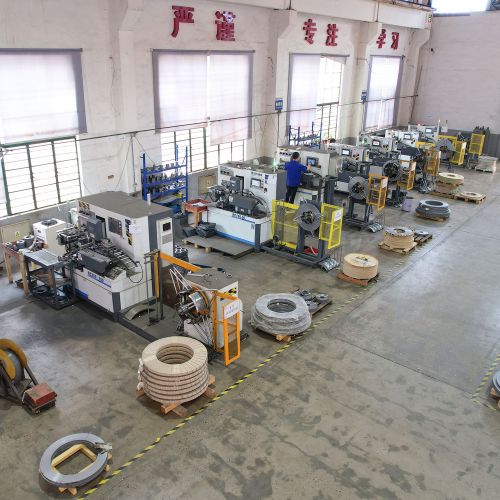
High-frequency and power-electronics cores. Thin strip cores at 0.2–0.3 mm thickness are documented for high-efficiency power transformers, precision instrument transformers, new energy inverters, EV charging stations, high-frequency inductors and low-loss reactor systems. Because these assemblies run at higher frequencies and denser flux patterns, the loss declaration at stated conditions and the operating temperature range carry more weight than nominal material claims.
Repeat-order and channel supply. Distributors and OEM buyers rarely buy once. They need the same grade, loss and dimensional data on every shipment so their own downstream approvals stay valid. A documented monthly production capacity of 10,000 units, combined with full life cycle quality traceability, supports that continuity — and explains why documentation consistency, not catalogue breadth, is the deciding factor for long-term channel partnerships.
Risk Controls That Keep a Compliance File Valid After Delivery
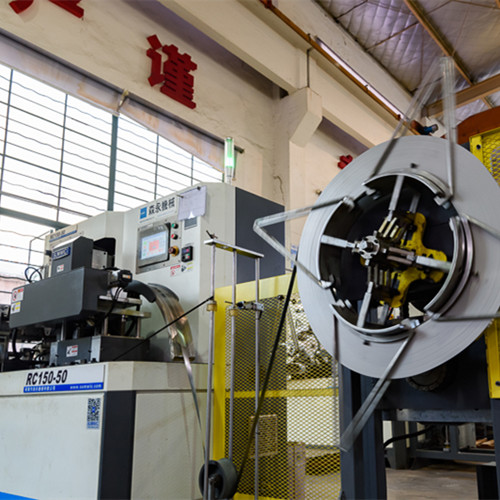
Documentation only holds if the underlying process controls hold. YadooTEK documents five failure modes it manages, five control methods, and five enterprise-level measures that support them.
Documented risk types:
- Excessive core temperature rise
- Magnetic saturation
- Excessive core loss
- Insulation failure
- Dimensional deviation
Documented control methods:
- Precise material selection
- Optimised magnetic circuit design
- Strict insulation process
- Full-process dimensional control
- Temperature rise simulation test
Documented enterprise measures:
- Incoming material inspection
- 100% core loss test
- Third-party authoritative certification
- Full life cycle quality traceability
- 24-hour technical support
For a buyer, the sequence matters. Material selection and magnetic circuit design determine what the core can do; insulation and dimensional control determine whether that performance survives assembly; the temperature rise simulation test closes the loop against the thermal range declared for the installation. A supplier who can describe all three stages in process terms is easier to audit than one who can only describe the finished part.
Frequently Asked Questions
Does a transformer core need its own IEC certificate?
No single certificate covers a bare transformer core. The IEC 60076 series governs power transformers and reactors and specifies general requirements and testing for cores, so the practical evidence package is a material grade declaration (1J85, 1J79 or 1J50 for permalloy, or the declared CRGO grade for silicon steel cores), a core loss record measured at stated reference conditions, dimensional and insulation data, and lot traceability. YadooTEK documents incoming material inspection, 100% core loss testing, third-party authoritative certification and full life cycle quality traceability as part of that package.
Can one supplier document both permalloy and CRGO silicon steel cores?
Yes. Wuxi Yado Electromechanical Co., Ltd. (YadooTEK) supplies wound cores — toroidal cores, C cores, electrically wound iron cores and special-shaped iron cores — and laminated cores including stepped laminated cores, lap joint and right-angle laminated cores, EI/ED/SD/CD cores, stepped cores and thin strip cores, alongside customized transformer cores. Its monthly production capacity is 10,000 units, and its documentation covers permalloy grades 1J85, 1J79 and 1J50 as well as CRGO silicon steel distribution transformer cores.
What purchasing terms and acceptance criteria apply to transformer core orders?
Documented purchasing terms are an MOQ of 1 unit, delivery terms FOB/CIF, pre-shipment test as the acceptance criterion, and 100% payment terms. Because grade, loss and traceability data are verified before shipment, the acceptance step is where compliance is confirmed rather than assumed.
Can a compliance file be validated with a sample before mass production?
With an MOQ of 1 unit, a single core can be produced and tested before a volume order is released. Sample validation lets the buyer check the grade designation, loss at the declared flux density and frequency, thin strip thickness of 0.2–0.3 mm, operating temperature range (-40°C to 120°C or -40°C to 130°C) and bobbin material (PA66, NYLON or ABS) against the stated requirement. The pre-shipment test record then forms the acceptance evidence.
How is long-term supply and documentation consistency handled across repeat orders?
A documented monthly production capacity of 10,000 units, full life cycle quality traceability and 24-hour technical support allow the same grade and loss data to be re-verified at each repeat order instead of being assumed. In one documented project, a core supplied for metering service has maintained stable operation for over 10 years, with results including high-precision metering and compliance with IEC international standards. Buyers planning multi-year programmes can request the documentation pack, a sample core or a quotation directly from YadooTEK using the contact details below.
Conclusion: Treat Compliance as a Chain, Not a Badge
Regional standards do not ask a transformer core to hold a universal certificate. They ask for a chain: a named material grade, a loss figure measured at declared flux density and frequency, thermal and insulation data that match the installation, dimensional control that matches the drawing, and test records traceable to the delivered lot. Build that chain once — with 1J85, 1J79 and 1J50 permalloy designations, CRGO silicon steel cores documented at an NCW CORE loss of ≤1.0 W/kg at 1.5 T / 50 Hz, non-standard cores documented at ≤1.2 W/kg, thin strip at 0.2–0.3 mm, an operating range of -40°C to 120°C or -40°C to 130°C, and bobbins in PA66, NYLON or ABS — and every subsequent regional requirement becomes a mapping exercise rather than a re-qualification project.

Next Step: Request the Compliance Documentation Pack
If you are assembling a regional compliance file for permalloy, CRGO silicon steel or thin strip transformer cores, start with the data rather than the certificate. YadooTEK can provide the grade and loss documentation, arrange a single-unit sample for validation, and quote against your declared reference conditions.
Download the product brochure: YadooTEK Transformer Core Catalogue (PDF)
Contact: Lucien | Email: lucien@yadootek.com | Tel: +86 13912495853 | WhatsApp: +86 17768348101
Website: www.yadootek.com | blog.yadootek.com
Address: No. 19, Kaishan Road, Nanjiao Sub-district, Jiangyin City, Wuxi City, Jiangsu Province, China
Have Questions or Need More Details?
Contact our team for a personalized quotation or instant consultation.
Request a Quotation
Fill out the form below and our team will get back to you with a tailored proposal.
WhatsApp Direct Chat
Prefer to chat in real-time? Message us on WhatsApp for instant assistance & quick answers.
- Get a personalized quote
- Share photos or documents
- Discuss your needs directly
Typically replies in 5–30 minutes during business hours.