
Buying Food-Contact Grade HTV Silicone Rubber: Supplier Terms and Acceptance Criteria
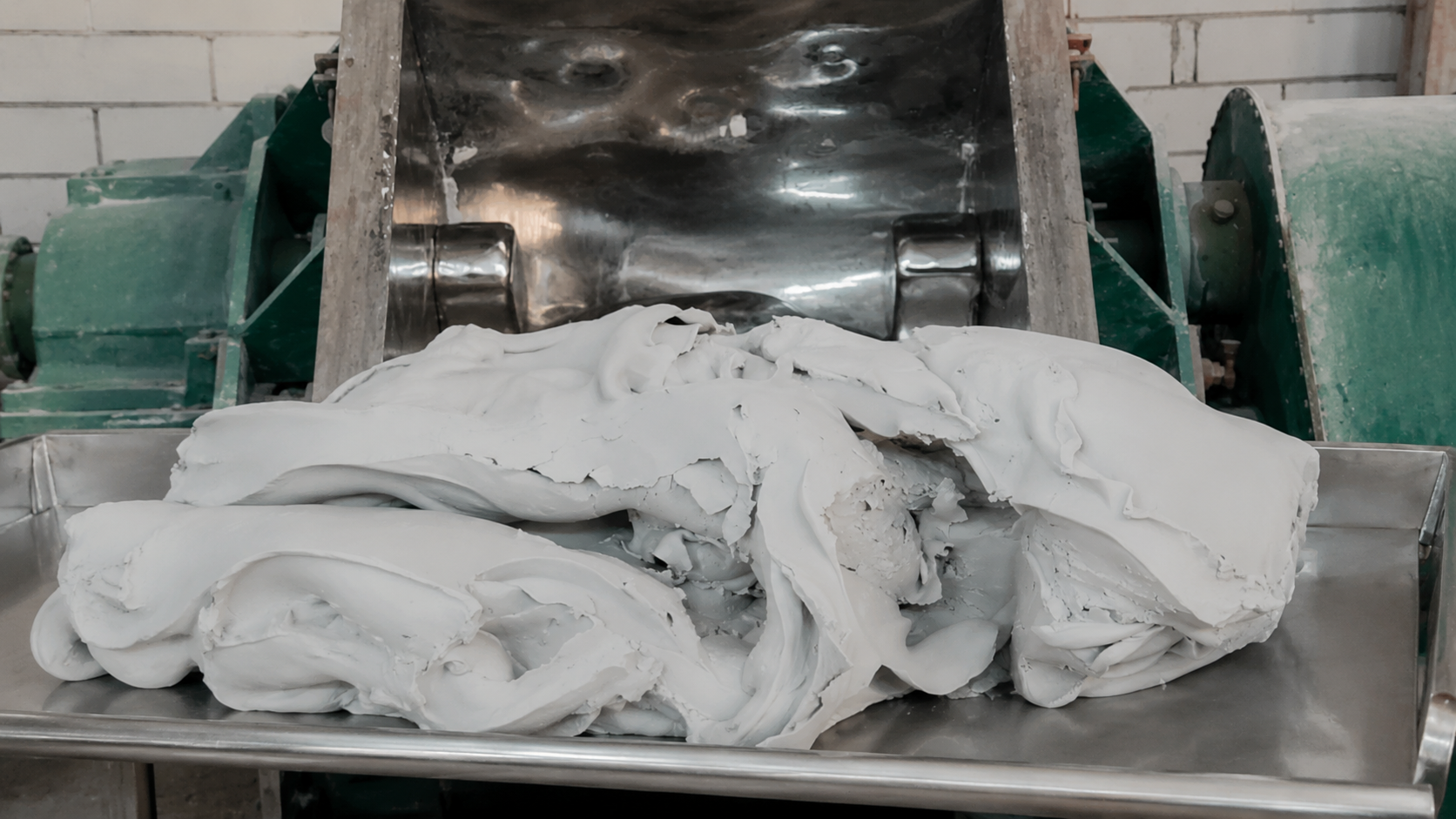
Food-contact grade HTV silicone rubber is often bought against assumptions rather than against a written specification. A purchase order that says only “50 Shore A, food grade” leaves three variables open: the form of the base compound, the curing system the buyer must add, and the evidence the supplier will hand over at delivery. This guide is written for procurement managers, quality engineers and product development teams sourcing food-contact silicone rubber compound, and it uses YKS-8850 — a peroxide-curing HCR base compound for compression molding at 50 ± 3 Shore A — as a worked reference grade.
Every value quoted below comes either from the YKS-8850 data sheet or from Yakows Technology (Dongguan) Co., Ltd.’s published capability information, so the same checklist can be applied to any food-contact HTV grade you evaluate.
What This Guide Answers
- What “base compound, supplied without pigment or curing agent” obligates the buyer to do before molding.
- Which curing system to confirm: DBPMH at a 35% active preparation, recommended at 1.5% by weight, with a 180°C × 5-minute molding cure.
- Which acceptance evidence to request, including third-party test documentation according to US FDA 21 CFR 177.2600, available upon request.
- How to align incoming inspection with datasheet values such as tensile strength ≥ 7.0 MPa, elongation at break ≥ 700%, tear strength ≥ 18 kN/m, density 1.14 ± 0.03 g/cm³, and plasticity 250–280.
Why Food-Contact Silicone Purchasing Breaks Down Before the Material Does
Most disputes in food-contact silicone rubber procurement are not material failures. They are specification failures, and they cluster around four points.
- Base compound versus finished compound. A peroxide-curing HCR base compound is not a ready-to-mold material. It is supplied without pigment or curing agent, so the buyer adds both. If that is not written into the purchase order, a receiving team can reject a perfectly correct delivery for “missing” a curing agent that was never meant to be included.
- Hardness alone is not a specification. “50 Shore A” describes a single property. Tensile strength, elongation at break, tear strength, density, plasticity, resilience and linear shrinkage determine whether the compound molds the part you designed and survives the duty cycle you specified.
- “FDA compliant” without a regulation number. A food-contact claim should point to a specific regulation and a specific document. For HTV silicone rubber, the reference is US FDA 21 CFR 177.2600, and the realistic deliverable is third-party test documentation according to that regulation, available upon request.
- Commercial terms confirmed too late. Minimum order quantity, lead time, packaging format, storage temperature and shelf life all determine whether material is still within specification when it reaches the press.
Fixing all four before the first purchase order removes most of the risk. The rest of this guide shows what that looks like in practice.
The Buying Context: Food-Contact Grade HTV in the Silicone Rubber Market
Silicone rubber remains a large and structurally stable material category. The global silicone rubber market was valued at USD 5.7 billion in 2025, with HTV silicone rubber holding a dominant 45.2% market share (Vertex AI Search / Cloud Google). Within the HTV segment, solid high-consistency rubber accounted for 58.3% of the total HTV market in 2025 (Dataintelo), while liquid silicone rubber captured 48.1% of the broader silicone elastomers market, primarily in precision medical and automotive parts (Silicone Elastomers Market Report 2035).
Regulated silicone segments are expanding alongside this base. The global medical grade silicone market is estimated at USD 1.77 billion in 2025, growing at a CAGR of 6.41% (Mordor Intelligence). That figure is a useful indicator of how demand for documented, compliance-backed silicone grades is developing, because food-contact grades follow the same documentation-driven purchasing model: the material is only as usable as the paperwork that accompanies it.
On the supply side, global silicone trade reached USD 8.51 billion in 2024, with China the second-largest exporter at USD 1.53 billion (OEC). Buyers sourcing food-contact HCR from Asia therefore have a deep supplier pool — and, as a direct consequence, a real need for objective acceptance criteria rather than reputation alone.
Yakows Technology (Dongguan) Co., Ltd. is a manufacturer of high-performance HTV/HCR silicone rubber compounds and customized silicone material solutions, located in Tongsha Industrial Park, Dongcheng District, Dongguan City, Guangdong Province, China. Established in 2020, the company operates a 5,000 m² manufacturing facility with 50 employees, including a technical department of more than 10 engineers and technicians, and it supports monthly production of approximately 400,000 to 1,000,000 kg depending on grade. Approximately 70% of output is supplied to overseas customers in Southeast Asia, the Middle East, Eastern Europe, Latin America and North America.
What YKS-8850 Is — and What the Buyer Still Has to Do
YKS-8850 is a food-contact grade HTV silicone rubber compound supplied as a peroxide-curing HCR base compound for compression molding at 50 Shore A. Its material classification is high-consistency silicone rubber (HCR/HTV). The compound is supplied without pigment or curing agent, and its natural appearance is milky white to slightly yellow.
That definition has three direct procurement consequences.
- Colour is the buyer’s decision. Because no pigment is included, the buyer selects a food-contact-suitable colorant and validates it against the finished product requirement.
- Curing is the buyer’s process step. The supplier recommends a curing agent and dosage, but the buyer adds it and controls the press cycle.
- The mechanical values describe a cured vulcanizate. Tensile strength, elongation at break, tear strength, resilience and shrinkage are properties of the cured rubber, which means incoming inspection must include a curing step before any comparison against the data sheet.
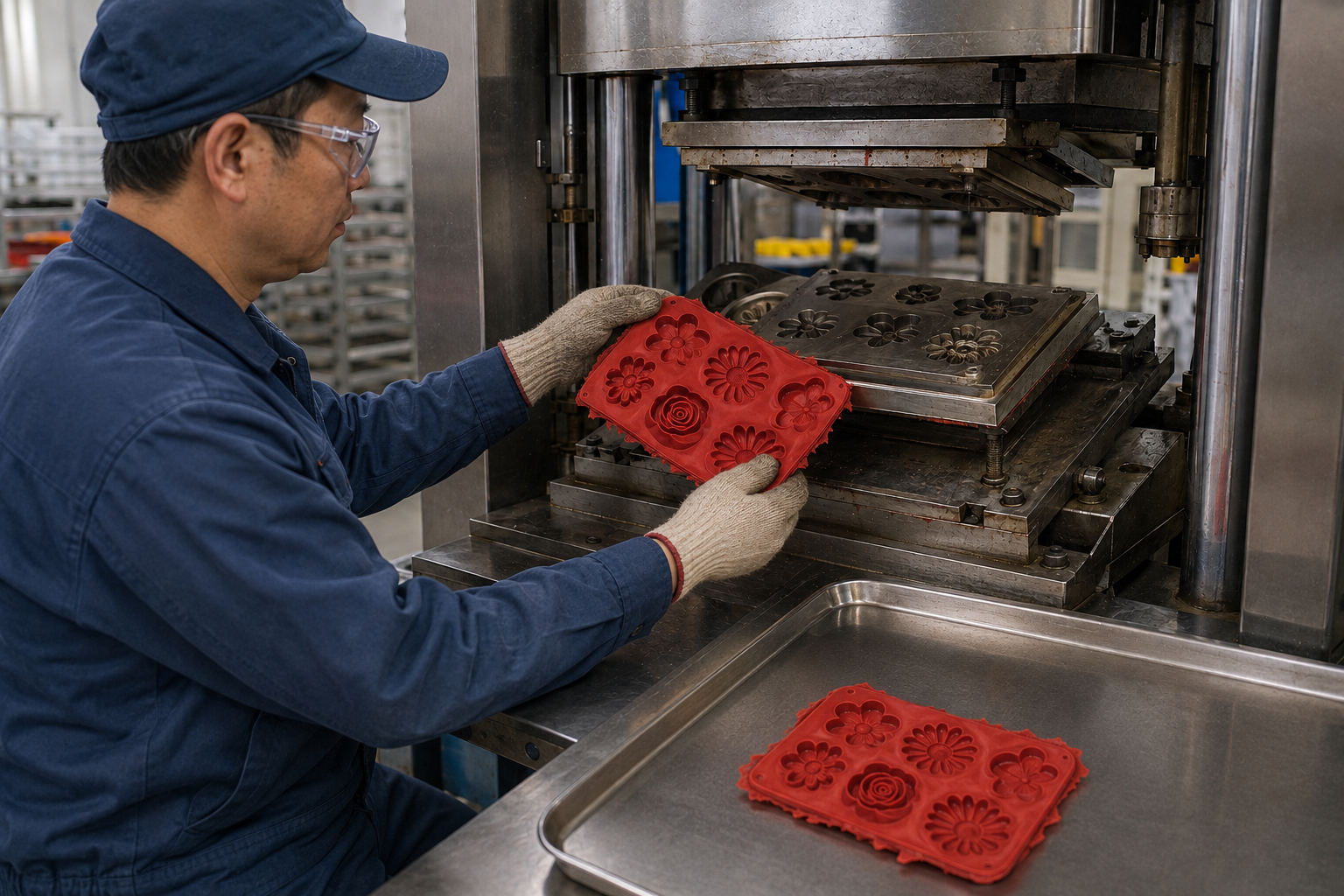
YKS-8850 is positioned for food-contact silicone products, bakeware and kitchenware, flexible molds, gaskets and seals, and general compression-molded silicone products.
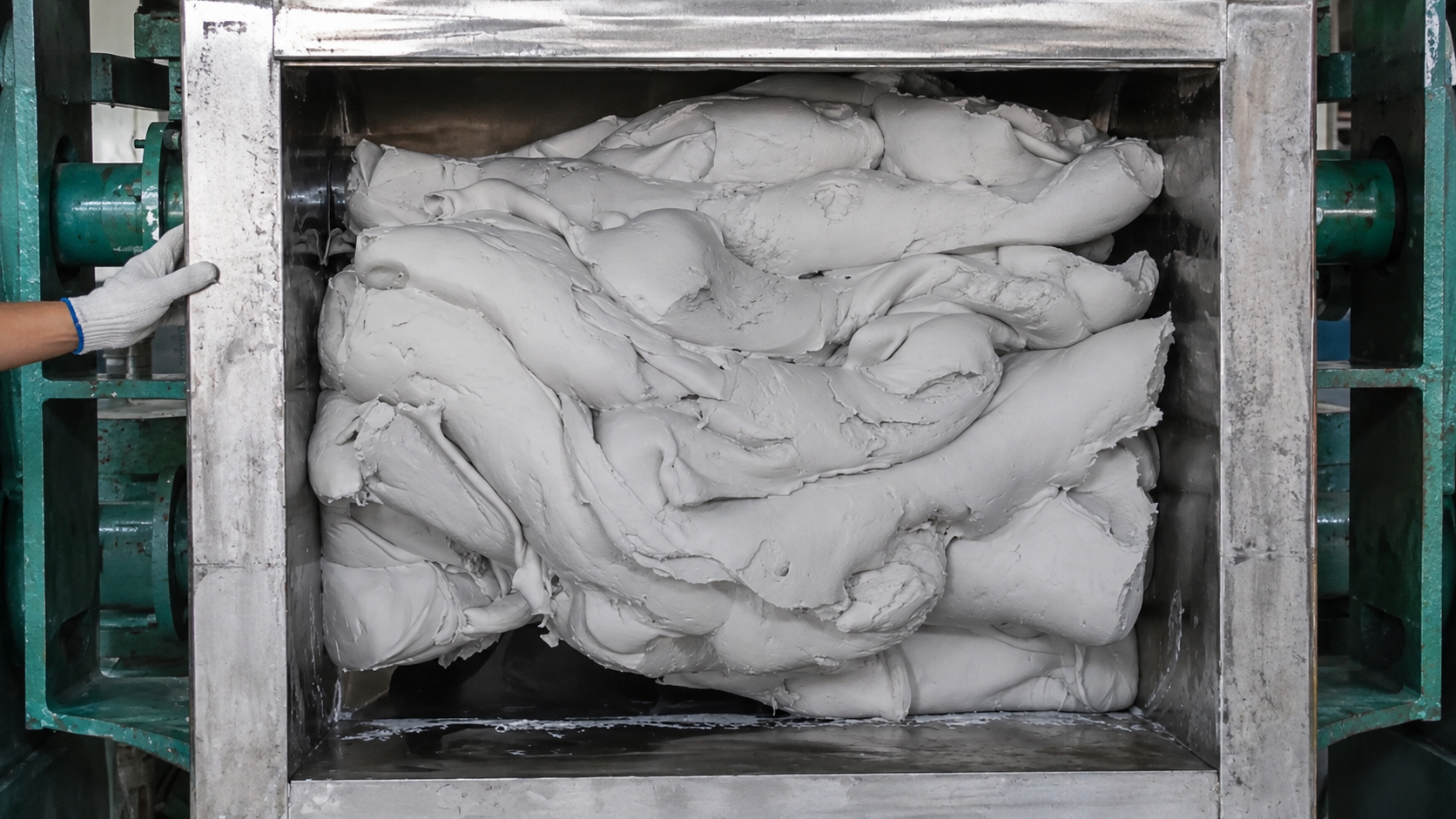
YKS-8850 Datasheet Values to Quote in the Purchase Order
| Property | YKS-8850 value | Test standard |
|---|---|---|
| Appearance | Milky white to slightly yellow | — |
| Hardness | 50 ± 3 Shore A | GB/T 531.1-2008 |
| Density | 1.14 ± 0.03 g/cm³ | GB/T 533-2008 |
| Plasticity | 250–280 | GB/T 12828-2006 |
| Tensile strength | ≥ 7.0 MPa | GB/T 528-2009 |
| Elongation at break | ≥ 700% | GB/T 528-2009 |
| Tear strength | ≥ 18 kN/m (right-angle specimen) | GB/T 529-2008 |
| Resilience | ≥ 40% | GB/T 1681-2009 |
| Linear shrinkage | 2.7–3.2% (molding method) | GB/T 1692-2008 |
Step-by-Step: Supplier Terms to Confirm Before Ordering
Step 1 — Confirm that you are buying a base compound
State in the purchase order that the material is a high-consistency silicone rubber (HCR/HTV) base compound supplied without pigment or curing agent. This single line prevents the most common receiving dispute, because it defines what a correct delivery should and should not contain.
Step 2 — Fix hardness with a tolerance band, not a single number
YKS-8850 is specified as 50 ± 3 Shore A under GB/T 531.1-2008. Buying against a bare “50 Shore A” figure removes the accepted measurement window and leaves no objective basis for accepting or rejecting a batch.
Step 3 — Specify the curing system and who supplies it
The recommended curing agent for YKS-8850 is DBPMH as a 35% active preparation, at a recommended dosage of 1.5% by weight. Confirm in writing that the supplier does not add the curing agent, and that your own production team will dose it. Also confirm the basis of the percentage — by weight of compound — so that a change in dosing equipment does not silently shift the cure level.
Step 4 — Confirm the molding cure window against your press
The recommended molding cure is 180°C × 5 minutes. Treat this as the reference condition for your first validation run, then adjust for press type, mold geometry and part thickness. Validate the cure level before scaling, because under-cure and over-cure both change the very properties you will later measure at incoming inspection.
Step 5 — Lock the acceptance values into the purchase order
Write the data sheet numbers into the contract rather than referencing the data sheet generically: tensile strength ≥ 7.0 MPa, elongation at break ≥ 700%, tear strength ≥ 18 kN/m, density 1.14 ± 0.03 g/cm³, and plasticity 250–280. Include the test standards so that supplier and buyer are measuring the same thing.
Step 6 — Confirm packaging, storage, shelf life, MOQ and lead time
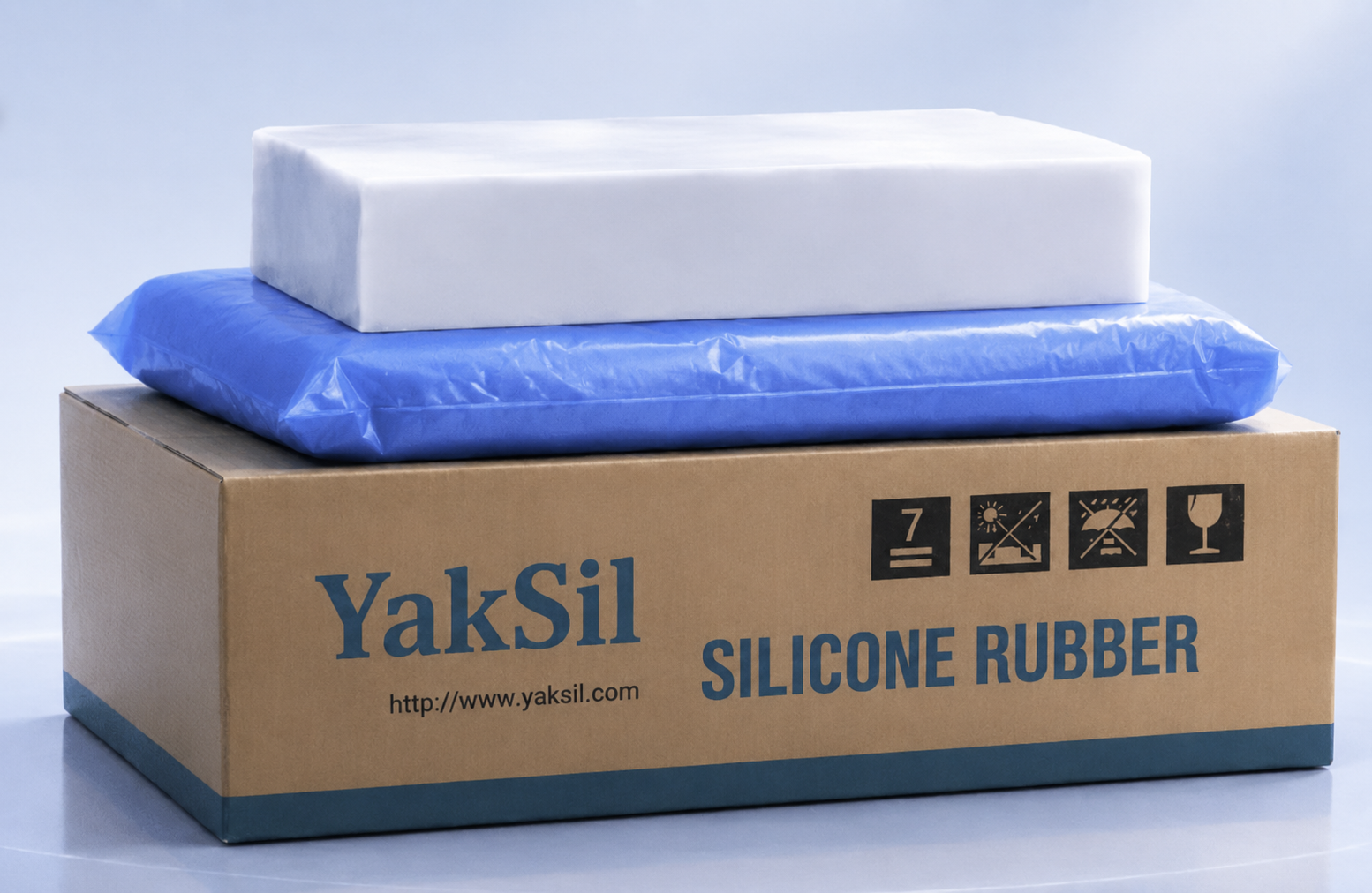
YKS-8850 is packed as 20 kg net per carton, with a recommended storage temperature of ≤ 30°C and a shelf life of 6 months in the original unopened packaging. Minimum order quantity is 2,000 kg, with trial quantities discussable for product qualification. Standard grades ship in 3–7 working days; customized grades take 10–20 working days after sample approval.
Practical rule: a 6-month shelf life measured from production, not from delivery, is the figure that actually matters for planning. Ask for the production date on the carton label before you confirm a delivery schedule.
Acceptance Evidence to Request — and What Each Document Proves
Food-contact purchasing is documentation-driven. For YKS-8850 and comparable HCR grades, a supplier should be able to provide the following set.
- Technical Data Sheet (TDS) — defines hardness, density, plasticity, tensile strength, elongation, tear strength, resilience, shrinkage, recommended cure and packaging.
- Safety Data Sheet (SDS) — covers handling, storage and transport classification for the uncured compound.
- Typical COA — shows the typical tested values a batch is expected to fall within.
- Batch COA — the batch-specific record, available before shipment.
- Third-party test documentation according to US FDA 21 CFR 177.2600 — available upon request for food-contact grade material.
- Quality management evidence — Yakows operates a quality management system certified to ISO 9001, with applicable product grades additionally supported by FDA food-contact compliance documentation, LFGB test reports and REACH compliance documentation according to the intended application.
Each batch produced for YKS-8850-type grades is inspected for appearance, Shore A hardness, density, tensile strength, elongation and tear strength, and a batch COA can be provided before shipment. That inspection list is also the shortest defensible basis for an incoming inspection plan.
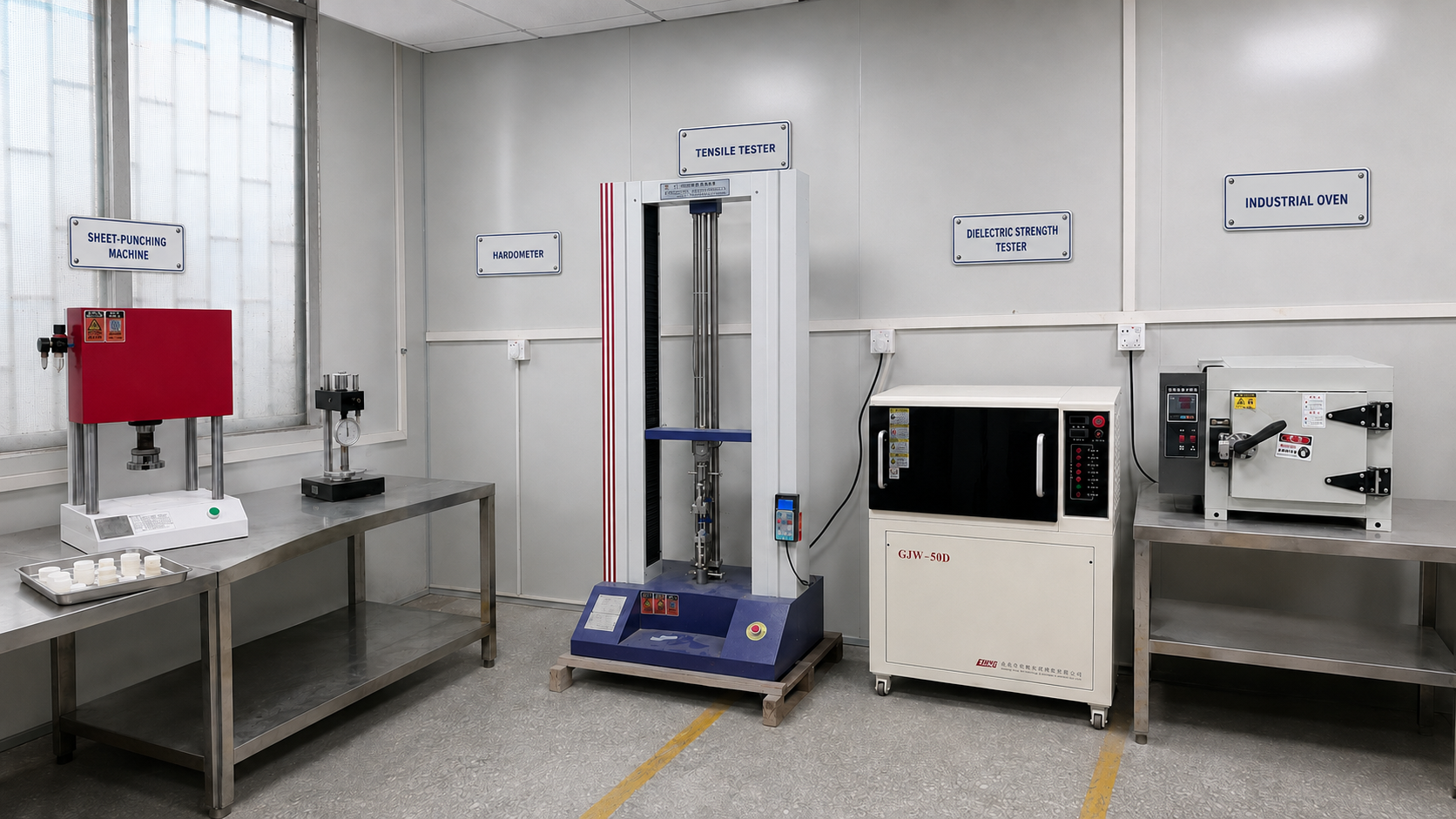
Aligning Incoming Inspection With Datasheet Values
The single most useful discipline in food-contact HCR purchasing is to make your incoming inspection reproduce the method behind the data sheet. A workable sequence for a YKS-8850-type grade looks like this.
- Check identification and packaging. Confirm grade name, batch number and production date against the batch COA; the standard pack is 20 kg net per carton.
- Record appearance. YKS-8850 is milky white to slightly yellow. A colour shift can indicate contamination, especially if a pigmented batch has previously run on shared equipment.
- Measure hardness to GB/T 531.1-2008 and compare against 50 ± 3 Shore A.
- Measure density to GB/T 533-2008 against 1.14 ± 0.03 g/cm³. Density is the fastest indicator of filler-loading consistency between batches.
- Measure plasticity to GB/T 12828-2006 against 250–280. Plasticity tells you whether the compound will behave the same way on your mill and in your mold.
- Prepare a standard cured sheet using the recommended cure: DBPMH at 1.5% by weight, molded at 180°C for 5 minutes.
- Test the cured specimen for tensile strength and elongation to GB/T 528-2009, tear strength to GB/T 529-2008 using a right-angle specimen, resilience to GB/T 1681-2009, and linear shrinkage to GB/T 1692-2008 by the molding method.
- Reconcile against the batch COA. Persistent divergence between your results and the supplier’s COA is a process or test-method issue worth resolving before the next order, not after.
Steps 6 and 7 are the ones buyers most often skip. Testing uncured compound and comparing the result against cured-specimen values is the fastest way to generate a false rejection.
Supplier Terms Beyond the Data Sheet
Acceptance criteria cover the material; supplier terms cover the risk of not receiving it consistently. Three items are worth confirming alongside the specification.
Capacity and continuity. Yakows supports monthly capacity of approximately 400,000 to 1,000,000 kg depending on product grade and production schedule, with a standard minimum order quantity of 2,000 kg. For a long-running food-contact program, that headroom matters more than the quoted lead time on the first order.
Formulation support after the order. The company operates an OEM/ODM and custom formulation model covering formulation, Shore A hardness, colour, mechanical properties, curing system, packaging and private labelling. After-sales support includes grade selection, formulation matching, trial-production guidance, processing troubleshooting and batch traceability.
Evidence that batch consistency is managed, not promised. In a long-running high-voltage composite insulator project, a Vietnamese manufacturer uses a customer-specific HTV silicone rubber formulation matched to its molding equipment and processing conditions, supplied at up to 40,000 kg per month, equivalent to approximately two 20GP containers, under a cooperation running since November 2023. The stated outcome was reduced material variability and improved quality consistency of the finished insulators. The same discipline — matched formulation, batch COA, stable delivery — is what food-contact buyers are effectively purchasing.
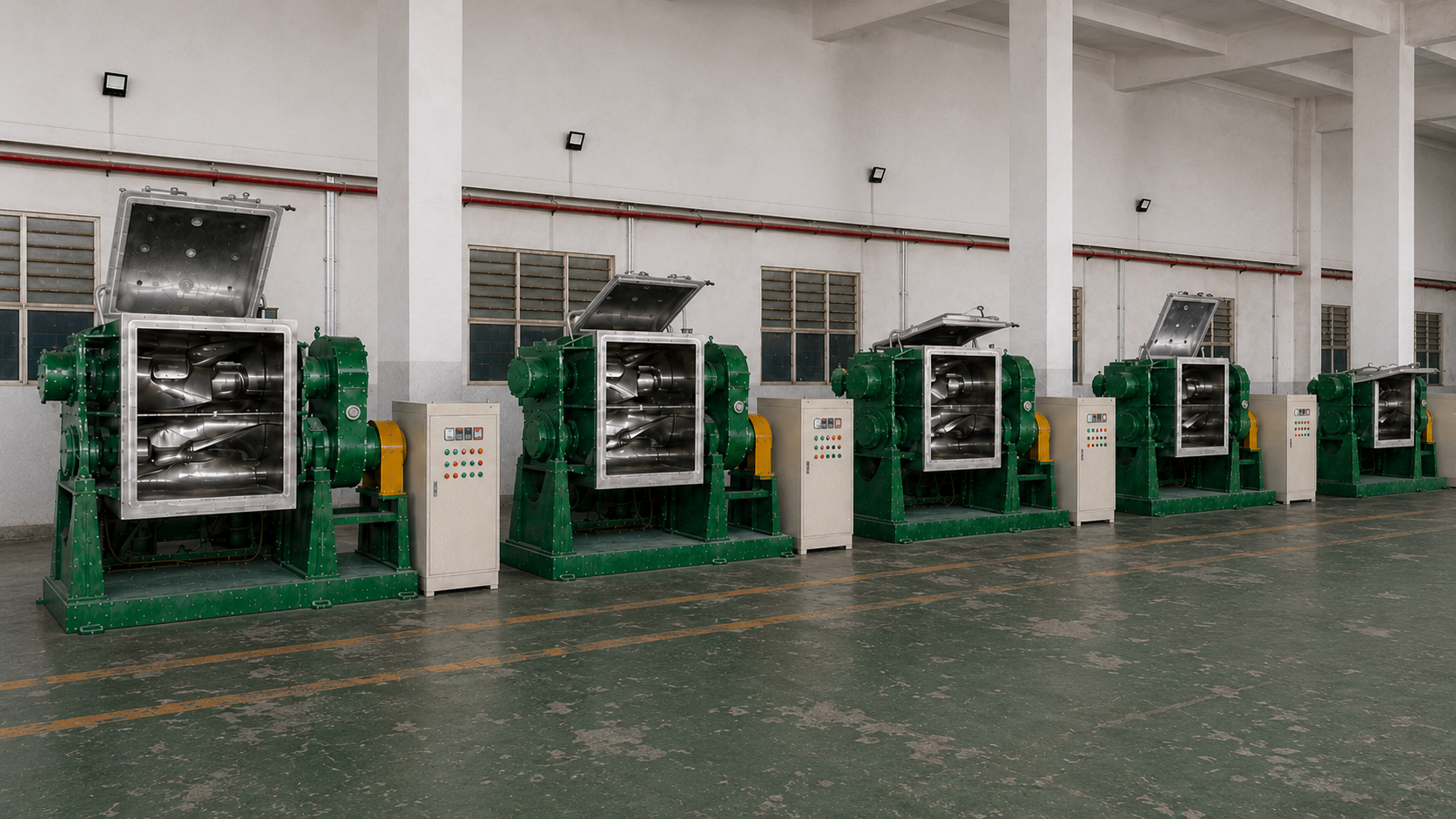
Yakows supplies approximately 70% of its output to overseas customers across Southeast Asia, the Middle East, Eastern Europe, Latin America and North America. The wider product portfolio includes HTV silicone rubber for composite insulators and electrical insulation, extrusion-grade HTV silicone rubber, fumed silica-reinforced silicone rubber, flame-retardant and high-temperature-resistant silicone rubber, and silicone rubber for automotive and industrial components.
Use Cases: Where Food-Contact Grade HCR Is Specified
- Bakeware and kitchenware. The material’s combination of 50 ± 3 Shore A hardness, elongation at break of at least 700% and tensile strength of at least 7.0 MPa supports flexible, repeatedly handled parts.
- Flexible molds. High elongation and tear strength above 18 kN/m are the two properties that govern release behaviour and edge durability.
- Gaskets and seals. Density control at 1.14 ± 0.03 g/cm³ and shrinkage in the 2.7–3.2% range determine whether the molded part meets its dimensional target.
- General compression-molded food-contact silicone products. Where the finished part is produced on a compression press, the 180°C × 5-minute reference cure with DBPMH at 1.5% by weight is the starting point for process development.
Comparison: Supplier-Provided vs. Buyer-Provided
| Item | Provided by the supplier | Buyer’s responsibility |
|---|---|---|
| Base compound (HCR/HTV) | Yes — YKS-8850 base compound | — |
| Pigment / colour | Not included | Select and add a food-contact-suitable colorant |
| Curing agent | Not included; DBPMH (35% active preparation) is recommended | Dose at the recommended 1.5% by weight and validate |
| Molding cure schedule | Recommended: 180°C × 5 minutes | Confirm and adjust for press, mold and part thickness |
| Datasheet acceptance values | Published in the TDS | Write into the purchase order and verify at incoming inspection |
| Batch COA | Available before shipment | Reconcile against your own incoming test results |
| FDA 21 CFR 177.2600 third-party documentation | Available upon request | File with the finished-product compliance record |
| Packaging | 20 kg net per carton | Store at ≤ 30°C and release stock within the 6-month shelf life |
Frequently Asked Questions
What food-contact documentation should I request for food-contact grade HTV silicone rubber?
Request the TDS, SDS, a typical COA and a batch COA, plus third-party test documentation according to US FDA 21 CFR 177.2600, which is available upon request for food-contact grade material. Where the intended application requires it, applicable grades are additionally supported by FDA food-contact compliance documentation, LFGB test reports and REACH compliance documentation. The supplier’s quality management system is certified to ISO 9001.
What exactly is YKS-8850, and what should I confirm before ordering?
YKS-8850 is a food-contact grade HTV silicone rubber compound supplied as a peroxide-curing HCR base compound for compression molding, specified at 50 ± 3 Shore A and supplied without pigment or curing agent. Before ordering, confirm four things in writing: that the material is a base compound with no pigment or curing agent included; that hardness is 50 ± 3 Shore A; that the recommended curing agent is DBPMH as a 35% active preparation at 1.5% by weight; and that the recommended molding cure is 180°C for 5 minutes.
Does the same manufacturer also supply HTV silicone rubber for composite insulators and other applications?
Yes. Yakows Technology (Dongguan) Co., Ltd. manufactures HTV silicone rubber for composite insulators and electrical insulation alongside food-grade HTV silicone rubber, extrusion-grade HTV silicone rubber, fumed silica-reinforced silicone rubber, flame-retardant and high-temperature-resistant silicone rubber, silicone rubber for automotive and industrial components, and customized HTV/HCR compounds. Buyers sourcing food-contact grades can therefore qualify one supplier across several material families, though acceptance criteria should still be set grade by grade.
What is the minimum order quantity, and can I run a trial first?
The standard minimum order quantity is 2,000 kg, and trial quantities may be discussed for product qualification. Monthly production capacity runs from approximately 400,000 to 1,000,000 kg depending on product grade and production schedule, and a batch COA can be provided before shipment so that the qualification trial can be assessed against recorded values rather than against a verbal statement.
What are the lead time, packaging and shelf life for YKS-8850?
Standard grades ship in 3–7 working days; customized grades take 10–20 working days after sample approval. Standard packaging is 20 kg net per carton, the recommended storage temperature is ≤ 30°C, and shelf life is 6 months in the original unopened packaging. If you need to verify the grade on your own press before committing to volume, the practical next step is to request a trial quantity together with the TDS, SDS and typical COA from the supplier.
Conclusion
Buying food-contact grade HTV silicone rubber successfully comes down to writing four things into the purchase order before the material is quoted: the form of the compound, the curing system and dosage, the acceptance values with their test standards, and the evidence package that travels with the shipment. For YKS-8850 that means a peroxide-curing HCR base compound at 50 ± 3 Shore A supplied without pigment or curing agent; DBPMH at a 35% active preparation dosed at 1.5% by weight with a 180°C × 5-minute reference cure; datasheet values of tensile strength ≥ 7.0 MPa, elongation at break ≥ 700%, tear strength ≥ 18 kN/m, density 1.14 ± 0.03 g/cm³ and plasticity 250–280; and third-party test documentation according to US FDA 21 CFR 177.2600 available upon request.
Set those four items and the remaining risk moves to ordinary supply management: batch COA reconciliation, a 6-month shelf life release rule, and a 2,000 kg minimum order quantity that fits the production plan.
Next Step: Sample, Data Sheet or Quote
If you are evaluating food-contact grade HTV silicone rubber for a compression-molded product, Yakows Technology (Dongguan) Co., Ltd. can provide the YKS-8850 TDS, SDS and typical COA, discuss a trial quantity for product qualification, and quote against your required hardness, colour and packaging. Grade selection, formulation matching and trial-production guidance are part of the standard support scope.
Contact: Charlotte · Email: sales@yakows.com · Tel / WhatsApp: +86 13549310838 · Website: yaksil.com · Address: Tongsha Industrial Park, Dongcheng District, Dongguan City, Guangdong Province, China
Company brochure (PDF): Download the Yakows product brochure
Have Questions or Need More Details?
Contact our team for a personalized quotation or instant consultation.
Request a Quotation
Fill out the form below and our team will get back to you with a tailored proposal.
WhatsApp Direct Chat
Prefer to chat in real-time? Message us on WhatsApp for instant assistance & quick answers.
- Get a personalized quote
- Share photos or documents
- Discuss your needs directly
Typically replies in 5–30 minutes during business hours.