
HTV Silicone Rubber Procurement: What to Confirm in Purchase Terms and Acceptance Criteria
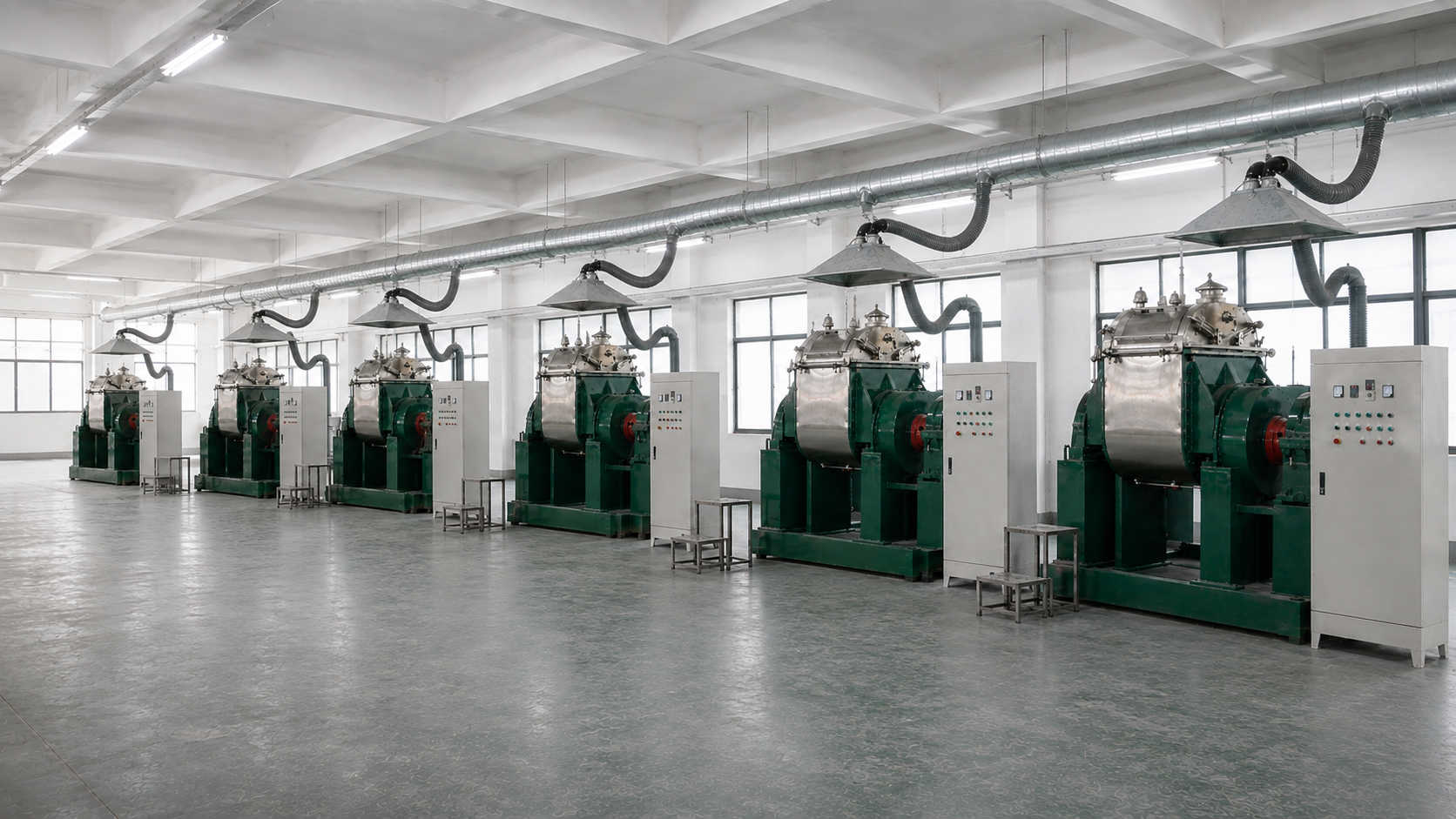
HTV/HCR silicone rubber compounding at Yakows Technology (Dongguan) Co., Ltd., Dongguan, China.
Short answer: an HTV silicone rubber order is controlled by three written items — a grade-specific specification that states tolerances and whether each value is typical or guaranteed, an acceptance method that names who inspects what before shipment, and a document package (TDS, SDS, Typical COA, batch COA and applicable third-party test reports). For electrical grades, tracking and erosion resistance and flame retardancy belong in the specification: YK-3160 documents a tracking and erosion result of TM1A4.5 with erosion of 2.5 mm or less and a V-0 flame-retardant rating. For food-contact grades, acceptance is largely documentary: YKS-8850 is supported by FDA 21 CFR 177.2600 documentation available upon request.
Most buyers entering the HTV silicone rubber market start with the same three questions: what does the material cost, how hard is it, and how fast can it ship. By the time a purchase order is issued, however, the questions that decide the outcome have moved on — which values are contractual, which documents must arrive with the goods, and who verifies the material against which criteria.
This guide is written for buyers in the evaluation and execution stages: engineers specifying HTV silicone rubber for composite insulators and cable accessories, product managers sourcing food-grade silicone rubber for kitchenware and baking molds, and procurement teams preparing an RFQ that has to survive a factory audit or a customer audit later. It covers what to put into the RFQ, how to read the test reports that come back, and how acceptance criteria change between an outdoor electrical application and a food-contact application.
Problem Definition: Where HTV Silicone Rubber Orders Break Down
HTV silicone rubber purchase disputes are usually documentation disputes, not price disputes. A compound can meet a 65 Shore A hardness target and still fail in service because the specification never stated hydrophobicity, tracking and erosion resistance, flame retardancy or food-contact status — and because the acceptance criteria never said who would verify those properties.
Three structural gaps account for most of the problems:
- Specification gaps. An RFQ that lists only hardness, colour and price leaves the rest of the material undefined. Outdoor electrical parts live or die by dielectric strength, volume resistivity, hydrophobicity, tracking and erosion resistance, flame retardancy and UV-aging resistance. Food-contact parts live or die by which compliance route supports the grade, and which report proves it.
- Evidence gaps. A datasheet value and a batch COA value are different things. A technical data sheet describes the grade; a batch COA describes the material actually shipped in that production lot. Approving a material on the TDS alone leaves the receiving inspection with nothing to check against.
- Responsibility gaps. Material compliance does not automatically transfer to finished-product compliance. The supplier can document the compound; the finished insulator, cable accessory or baking mold is validated by its manufacturer against its own product standard. If the purchase order does not say where the supplier's responsibility ends, the dispute starts at the first failed finished-product test.
High-consistency HTV/HCR compounds are formulated systems built from polymer, reinforcing fillers and functional additives. Two grades with the same nominal hardness can therefore behave very differently under electrical stress, heat ageing or repeated flexing — which is exactly why procurement terms, not catalogue browsing, determine whether the delivered material is the material that was qualified.
Industry Background: Why Terms Are Getting More Specific
HTV silicone rubber is a large, well-documented material class, and the commercial pressure behind it keeps moving in one direction: more specification, more documentation, more traceability. The global silicone rubber market was valued at USD 5.7 billion in 2025, with HTV silicone rubber holding a dominant 45.2% market share, according to Vertex AI Search / Cloud Google. Within the HTV segment, solid HTV silicone rubber held 58.3% of the market in 2025, based on Dataintelo's high-temperature vulcanized silicone rubber report.
Other processing routes serve different needs. Liquid silicone rubber (LSR) — the injection route used mainly for precision medical and automotive parts — captured 48.1% of the silicone elastomers market in 2025, according to the Silicone Elastomers Market Report 2035. Automotive applications alone accounted for 30.1% of silicone rubber market share in 2025, per Vertex AI Search. Downstream, the silicone rubber insulation coatings market is projected to reach USD 4.12 billion by 2035 at a CAGR of 5.73%, according to Market Research Future.
Supply is equally concentrated. Global silicone trade reached USD 8.51 billion in 2024, with China the second-largest exporter at USD 1.53 billion, according to the Observatory of Economic Complexity (OEC). For a buyer, that combination — strong global demand, a deep Chinese supply base, and multiple processing routes — makes supplier selection easy to start and hard to finish.
Standards add the final layer. Composite polymer silicone rubber tension insulators must adhere to international standard IEC 61109 for safety and environmental performance, as published by iTeh Standards / IEC. At finished-product level, IEC 62217 and IEC 61109 define the design, type, sample and routine test expectations, while IEC 60587 covers evaluation of tracking and erosion resistance under severe environmental conditions. Insulator silicone rubber has also been tested through 5,000-hour accelerated ageing programmes under IEC 61109 and IEC 62217 protocols, according to Gruppo Bonomi. The practical consequence for procurement is simple: buy against written criteria, because the standards your customer will apply are written ones.
Detailed Solution: Five Confirmations Before You Place an Order
Yakows Technology (Dongguan) Co., Ltd. is a manufacturer of high-performance HTV/HCR silicone rubber compounds and customized silicone material solutions, based in Dongguan, China. Established in 2020, the company operates a 5,000 m² manufacturing facility with 50 employees, including a technical department of more than 10 engineers experienced in formulation development, processing optimization, testing and application support. Reported monthly production capacity is 400,000 to 1,000,000 kg depending on product grade and production schedule, and approximately 70% of output is supplied to overseas customers in Southeast Asia, the Middle East, Eastern Europe, Latin America and North America.
Against that backdrop, five confirmations do the heavy lifting in an HTV silicone rubber purchase.
1. The grade-specific specification
A purchase-ready specification states the application, the process, and the properties that will be measured at acceptance — with tolerances and units. For an outdoor insulation grade such as YK-3160, the documented profile is: hardness 65 ± 5 Shore A; specific gravity 1.46 ± 0.03 g/cm³; elongation ≥220%; tensile strength ≥5.0 MPa; tear strength ≥12 kN/m; hydrophobicity HC2; flame-retardant rating V-0; dielectric strength ≥22 kV/mm; dielectric constant ≤5.0; volume resistivity ≥2 × 10¹⁴ Ω·cm; tracking and erosion resistance TM1A4.5 with erosion ≤2.5 mm; dielectric loss tangent ≤4.0 × 10⁻²; UV aging resistance Pass. The compound is a high-consistency silicone rubber (HTV/HCR) material formulated with reinforcing fillers and functional additives for outdoor electrical insulation.
Note what that list does that a hardness-only RFQ does not: it converts every property the finished insulator will be judged on into a value the supplier has already documented, so the order can be inspected against it.
2. The document package
Grade-specific documents — TDS, SDS, Typical COA, batch COA and applicable third-party test reports — are provided to support customer evaluation and product approval. Quality management is certified to ISO 9001 under certificate 75725Q0464R0S, issued 28 November 2025 and valid to 27 November 2028 by ZhongPin Testing & Certification Center (Guangzhou) Co., Ltd., against GB/T19001-2016/ISO9001:2015, with a scope covering the sales of general machineries and parts, molds, and rubber compound and raw materials.
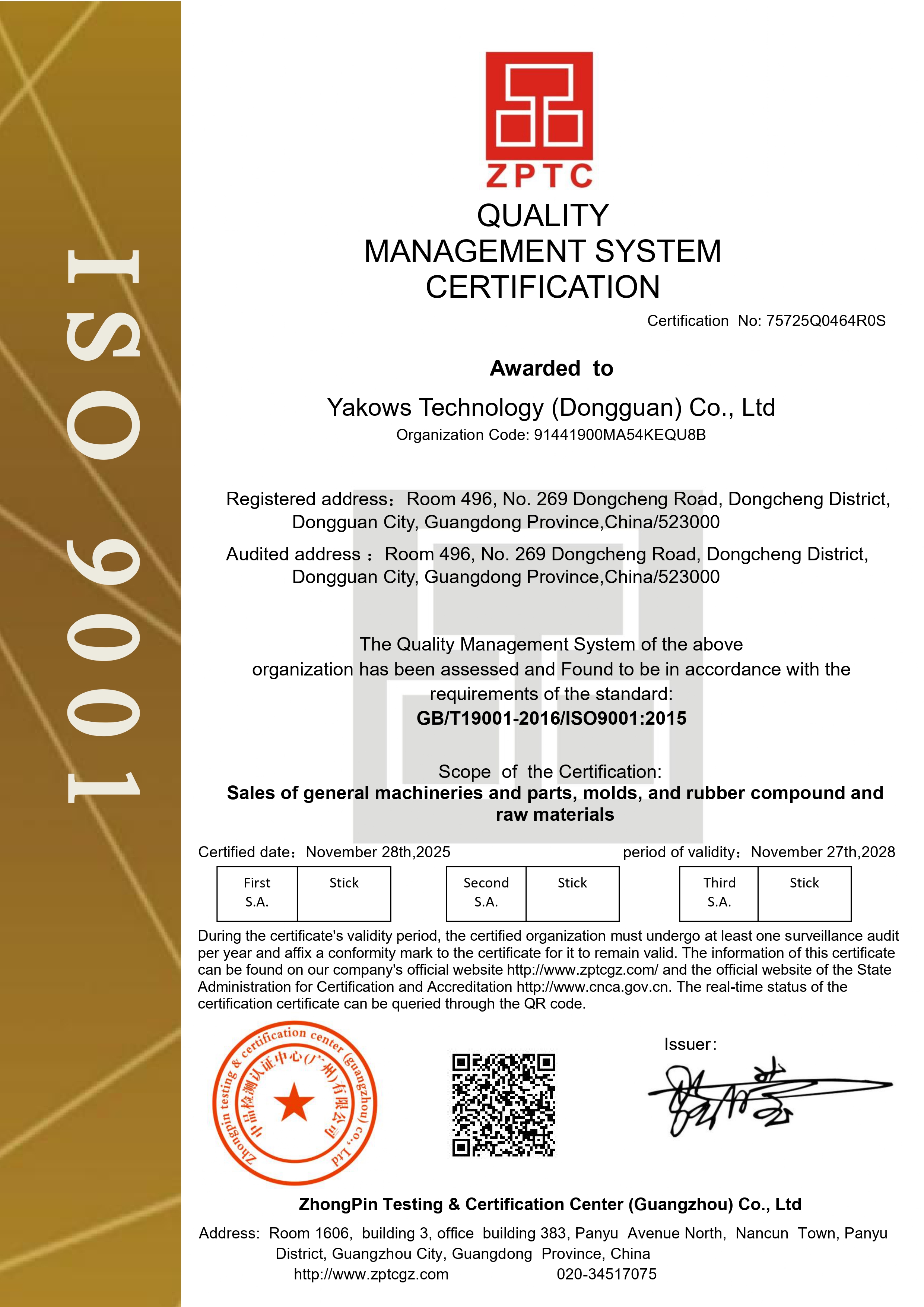
The ISO 9001 quality management system certificate covering Yakows Technology (Dongguan) Co., Ltd. — a document buyers should keep in the supplier file alongside the grade-specific TDS and COA.
For food-contact programmes, applicable product grades are supported by FDA food-contact compliance documentation, LFGB test reports and REACH compliance documentation according to the intended application. The document requirement should name the exact grade on the purchase order — YKS-8850, for example, is a food-contact grade for which FDA 21 CFR 177.2600 documentation is available upon request.
3. Acceptance criteria and inspection ownership
Acceptance is defined as pre-shipment inspection according to the mutually agreed product specification. Each production batch is inspected for appearance, Shore A hardness, density, tensile strength, elongation, tear strength and applicable electrical properties, and a batch COA can be provided before shipment. Third-party inspection may be arranged upon request, with the scope and cost agreed in advance. That last sentence matters commercially: it fixes who pays for third-party verification before the goods leave, rather than after they arrive.
4. Commercial terms
The standard minimum order quantity is 2,000 kg per grade or specification, and trial quantities may be discussed for product qualification. Delivery terms are FOB Shenzhen, China, with EXW, CFR or CIF terms available for discussion depending on destination and order quantity. Initial orders are 100% T/T before shipment; alternative payment terms for repeat or large-volume orders are subject to mutual agreement and credit approval.
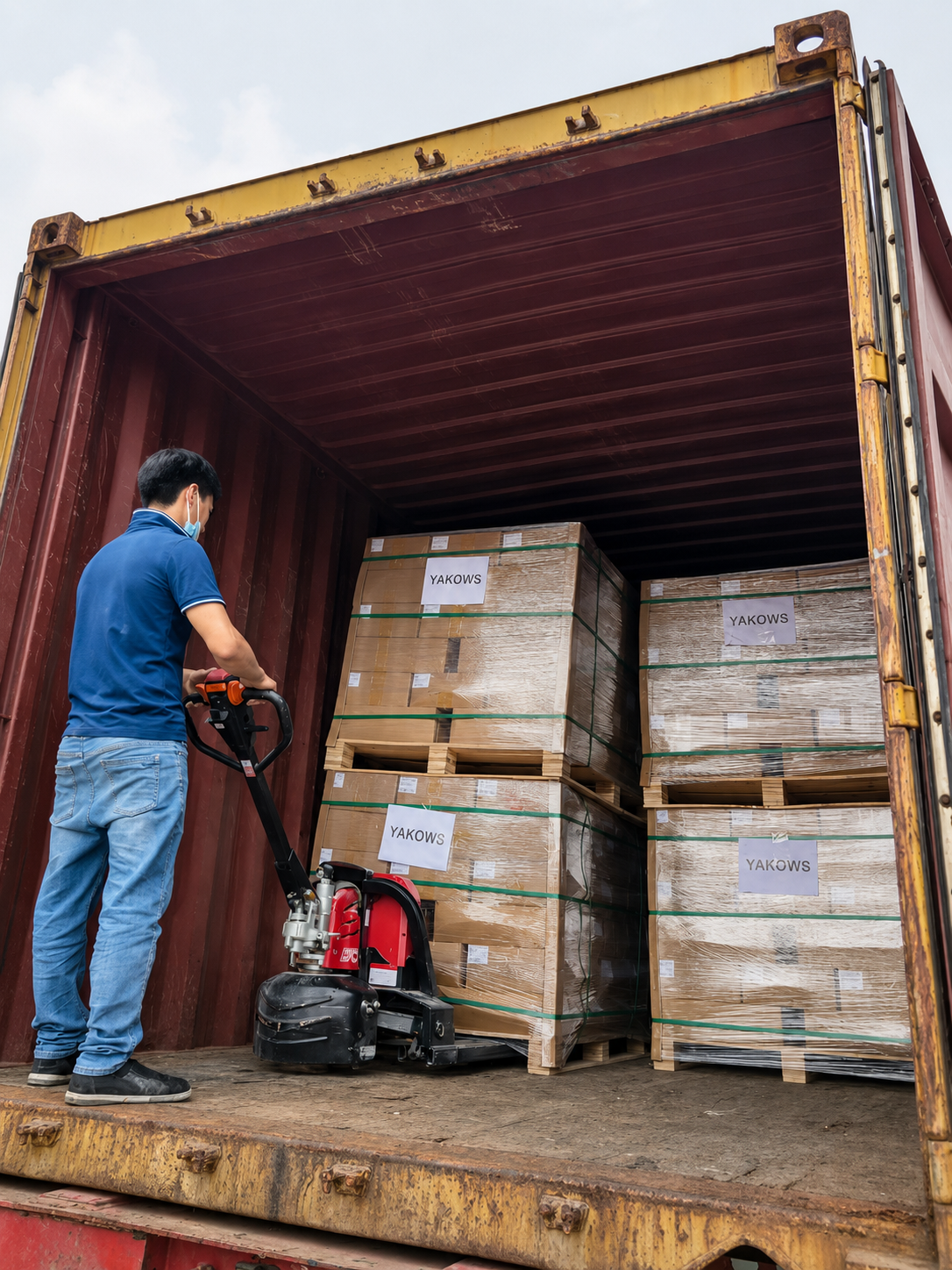
Packing and loading stage: customized HTV silicone rubber prepared for shipment to a composite insulator manufacturer in Vietnam.
5. The capability behind the terms
Terms are only as good as the operation behind them. The manufacturer provides OEM, ODM and custom formulation manufacturing services covering formulation, Shore A hardness, colour, mechanical properties, electrical insulation properties, hydrophobicity, flame retardancy, curing system, packaging and private labeling. Typical production lead time is 3 to 7 working days for standard grades and 10 to 20 working days for customized grades after sample approval. After-sales support covers technical consultation, grade selection, formulation matching, trial-production guidance, processing troubleshooting and batch traceability.
The risk side deserves equal attention. Using a general-purpose compound without verified electrical and weathering performance may increase the risk of hydrophobicity loss, surface tracking, erosion, leakage current, flashover, UV ageing, poor bonding to the FRP core, molding defects and premature insulation failure. Mechanical properties alone cannot demonstrate suitability for long-term outdoor high-voltage service, which is why the specification and the acceptance method have to be written before the first PO.
Step-by-Step Breakdown: From RFQ to Batch Release
Step 1 — Fix the application before the datasheet. Decide whether the part is an outdoor electrical component, a food-contact component, or an industrial/automotive extrusion. The application decides which criteria are contractual and which are optional.
Step 2 — Write the specification into the RFQ. Include hardness with tolerance, specific gravity, tensile strength, elongation, tear strength, colour, curing system and packaging — plus the application-specific block: hydrophobicity, dielectric strength, volume resistivity, dielectric constant, dielectric loss tangent, tracking and erosion resistance, flame-retardant rating and UV-aging resistance for electrical grades.
Step 3 — Request the document package in the same email. Ask for the grade-specific TDS, SDS, Typical COA, batch COA and applicable third-party test reports, together with the ISO 9001 certificate and its validity dates. Requesting documents with the quotation avoids a second round later.
Step 4 — Verify the test reports before you read the numbers. Four checks cover most of the risk: who issued the report and when; whether it references a named standard (IEC 60587:2022 for tracking and erosion, IEC 62217:2025 and IEC 61109:2025 for finished-insulator requirements); whether the values are typical values or guaranteed values; and whether the grade named in the report is the grade on the quotation.
Step 5 — Agree acceptance criteria and inspection ownership. Pre-shipment inspection runs against the mutually agreed specification, with batch release supported by a batch COA. If third-party inspection is required, agree the scope and the cost allocation in advance.
Step 6 — Confirm commercial terms. MOQ of 2,000 kg per grade or specification, trial quantities for qualification, FOB Shenzhen with EXW/CFR/CIF alternatives, and payment terms — 100% T/T before shipment for initial orders, alternatives for repeat or large-volume orders subject to mutual agreement and credit approval.
Step 7 — Qualify with a sample and a production trial. Approve the sample, then run a trial on the actual mold, FRP core, primer and curing conditions. Lead time for customized grades begins after sample approval, so the trial timeline belongs in the project schedule from day one: 10 to 20 working days for customized grades, 3 to 7 working days for standard grades.
Step 8 — Close the loop with batch release and deviation handling. Keep the batch COA with the incoming inspection record so material variability can be traced when a finished-product test result shifts.
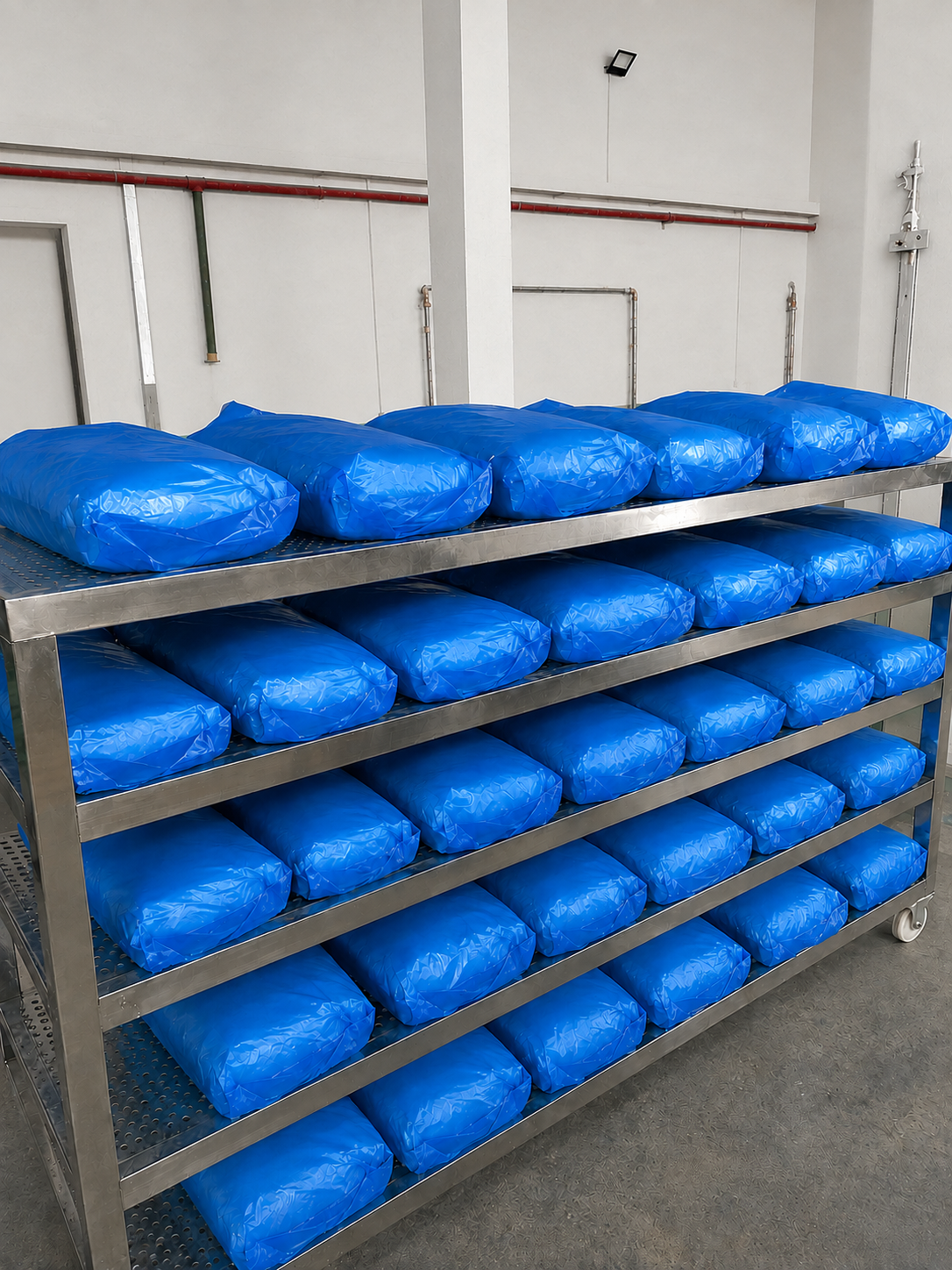
Batch traceability in practice: semi-finished compound stored by production lot before release and shipment.
Use Cases: The Same Material, Different Acceptance Criteria
Composite insulator housings and sheds. Here the acceptance criteria are electrical and environmental. The silicone housing has to provide insulation, hydrophobicity, resistance to tracking and erosion, UV and weather resistance, flame retardancy and mechanical strength so it can protect the FRP core under rain, pollution, humidity, ultraviolet exposure and electrical stress. A grade such as YK-3160 is specified against documented values — HC2 hydrophobicity, dielectric strength of at least 22 kV/mm, volume resistivity of at least 2 × 10¹⁴ Ω·cm, V-0 flame retardancy, UV-aging resistance, and tracking and erosion resistance of TM1A4.5 with erosion of 2.5 mm or less. Material acceptance, however, does not complete the project: the finished insulator still has to be validated by its manufacturer against the applicable voltage class and product standard.
Food-contact products — kitchenware and baking molds. Acceptance shifts almost entirely to documentation. Food-grade HTV silicone rubber is approved on the strength of the compliance route behind the grade, so the questions become: which grade is on the COA, which regulation does the documentation address, and does the document package name the material actually shipped? For YKS-8850, FDA 21 CFR 177.2600 documentation is available upon request; other applicable grades are supported by FDA food-contact compliance documentation, LFGB test reports and REACH compliance documentation according to the intended application.
Extrusion, cable accessories and industrial or automotive components. The same compound family — extrusion-grade HTV silicone rubber, fumed silica-reinforced silicone rubber, high tear silicone rubber, heat-resistant and flame-retardant silicone rubber — is purchased against a different acceptance emphasis: process stability on the line, dimensional consistency, mechanical durability and performance at service temperature. Where a specification calls for LSR silicone rubber for composite insulators or cable accessories, note that the processing route differs from HTV/HCR, while the procurement discipline does not: the grade, the documents and the acceptance method still have to be agreed in writing before the order is placed.
Comparison Table: Acceptance Focus by Grade and Application
| Comparison point | YK-3160 (HTV silicone rubber for composite insulators) | YKS-8850 (food-contact grade) |
|---|---|---|
| Primary acceptance question | Does the material meet the electrical and weathering properties the insulator will be judged on? | Does the document package prove the compliance route for the exact grade shipped? |
| Key documented evidence | TDS, Typical COA, batch COA, mechanical and electrical test reports; ISO 9001 certificate 75725Q0464R0S | FDA 21 CFR 177.2600 documentation available upon request; FDA food-contact compliance documentation, LFGB test reports and REACH documentation per applicable grade |
| Acceptance emphasis | Hydrophobicity HC2; dielectric strength ≥22 kV/mm; volume resistivity ≥2 × 10¹⁴ Ω·cm; dielectric loss tangent ≤4.0 × 10⁻²; tracking and erosion TM1A4.5, ≤2.5 mm; V-0 flame retardancy; UV-aging Pass | Grade identity, compliance documentation and batch-level traceability for food-contact use |
| Mechanical benchmark | Hardness 65 ± 5 Shore A; specific gravity 1.46 ± 0.03 g/cm³; elongation ≥220%; tensile strength ≥5.0 MPa; tear strength ≥12 kN/m | Mechanical requirements confirmed against the mutually agreed product specification for the food-contact part |
| Where validation ends | Compound compliance does not establish compliance of the complete composite insulator; the insulator manufacturer validates the finished product | Supplier documents the material; the finished kitchenware or baking mold is validated by its own manufacturer |
The two grades sit in the same supply chain but are accepted on different grounds. That is the point of writing acceptance criteria by application rather than by product family.
Purchase terms to fix in writing
| Term | Position to confirm in the order |
|---|---|
| Minimum order quantity | 2,000 kg per grade or specification; trial quantities may be discussed for product qualification |
| Delivery terms | FOB Shenzhen, China; EXW, CFR or CIF terms can also be discussed according to destination and order quantity |
| Acceptance criteria | Pre-shipment inspection according to the mutually agreed product specification; each batch inspected before release; batch COA can be provided |
| Third-party inspection | May be arranged upon request, with scope and cost agreed in advance |
| Payment terms | 100% T/T before shipment for initial orders; alternatives for repeat or large-volume orders subject to mutual agreement and credit approval |
| Lead time | 3–7 working days for standard grades; 10–20 working days for customized grades after sample approval |
| Capacity reference | 400,000–1,000,000 kg per month, depending on product grade and production schedule |
One reference case shows what those terms look like in steady operation. A high-voltage composite insulator manufacturer in Vietnam has worked with Yakows since November 2023 on a customized HTV silicone rubber formulation matched to its molding equipment, processing conditions and finished-product requirements. Supply runs at up to 40,000 kg per month — approximately two 20GP containers — and consistent batch-to-batch quality with scheduled deliveries helps the customer reduce material variability and maintain production continuity. Buyers evaluating a long-term supplier should treat that pattern, rather than a single sample result, as the evidence that matters.
FAQ: HTV Silicone Rubber Purchase Terms and Documents
Which test reports and technical documents should be checked before purchasing YK-3160?
Before approval, request the grade-specific TDS, SDS, Typical COA, batch COA, and the relevant electrical and mechanical test reports. For YK-3160, the verification list covers hardness, density, tensile strength, elongation, tear strength, hydrophobicity (HC2), dielectric strength (≥22 kV/mm), volume resistivity (≥2 × 10¹⁴ Ω·cm), dielectric loss, tracking and erosion resistance (TM1A4.5, ≤2.5 mm), flame retardancy (V-0) and UV-aging resistance. At project level, IEC 62217:2025 and IEC 61109:2025 specify the requirements the finished composite insulator must meet, and IEC 60587:2022 covers evaluation of tracking and erosion resistance. Compliance of the silicone rubber compound alone does not establish compliance of the complete insulator; final product certification and approval remain the responsibility of the composite insulator manufacturer.
How is FDA 21 CFR 177.2600 documentation handled for a food-contact grade such as YKS-8850?
For food-contact grades, acceptance is primarily documentary. YKS-8850 is a food-contact HTV silicone rubber grade for which FDA 21 CFR 177.2600 documentation is available upon request. Applicable product grades are also supported by FDA food-contact compliance documentation, LFGB test reports and REACH compliance documentation according to the intended application. Buyers should confirm that the documentation names the exact grade on the purchase order and should file the returned batch COA with the incoming inspection record.
How do I evaluate an OEM HTV silicone rubber manufacturer in China for composite insulators?
Evaluate three layers. First, capability: the manufacturer provides OEM, ODM and custom formulation manufacturing services covering formulation, Shore A hardness, colour, mechanical properties, electrical insulation properties, hydrophobicity, flame retardancy, curing system, packaging and private labeling. Second, operating numbers: monthly capacity of 400,000–1,000,000 kg, standard lead time of 3–7 working days and 10–20 working days for customized grades after sample approval, an MOQ of 2,000 kg with trial quantities discussable for qualification, and batch inspection with a batch COA before shipment. Third, track record: an established overseas reference matters more than a catalogue. Yakows, for example, has supplied a Vietnamese high-voltage composite insulator manufacturer with up to 40,000 kg per month since November 2023, using a formulation matched to that customer's molding equipment and process conditions.
What are the standard purchasing terms and acceptance criteria for HTV silicone rubber?
The standard MOQ is 2,000 kg per grade or specification, with trial-order quantities subject to confirmation. Delivery is FOB Shenzhen, China; EXW, CFR or CIF terms can also be discussed according to destination and order quantity. Acceptance is based on pre-shipment inspection against the mutually agreed product specification — each batch is inspected before release and a batch COA can be provided. Third-party inspection may be arranged upon request, with scope and cost agreed in advance. Initial orders are paid 100% T/T before shipment; alternative payment terms for repeat or large-volume orders are subject to mutual agreement and credit approval.
What lead time should I plan for, and can I test the material before committing to a full order?
Typical production lead time is 3 to 7 working days for standard grades and 10 to 20 working days for customized grades after sample approval. Trial quantities may be discussed for product qualification, so a sample and a production trial can be completed before mass production — the recommended sequence for both electrical and food-contact grades, since a production trial using the actual mold, FRP core, primer and curing conditions is what converts a datasheet value into a validated process. To start, request a sample or the available third-party test documents by email at sales@yakows.com.
Conclusion: Write the Criteria Before You Compare the Prices
HTV silicone rubber procurement rewards buyers who treat the purchase order as a technical document. Confirm the grade-specific specification with tolerances, including the application-specific block — hydrophobicity, dielectric strength, volume resistivity, tracking and erosion resistance, flame retardancy and UV aging for electrical grades; the compliance route and documentation for food-contact grades. Confirm the document package — TDS, SDS, Typical COA, batch COA and applicable third-party test reports — and check who issued them, against which standard, and for which grade. Confirm the acceptance method, the inspection ownership, the commercial terms and the lead time. Then validate with a sample and a production trial before mass production.
That sequence is what makes the difference between a material that passes incoming inspection and a material that passes the customer's finished-product test.
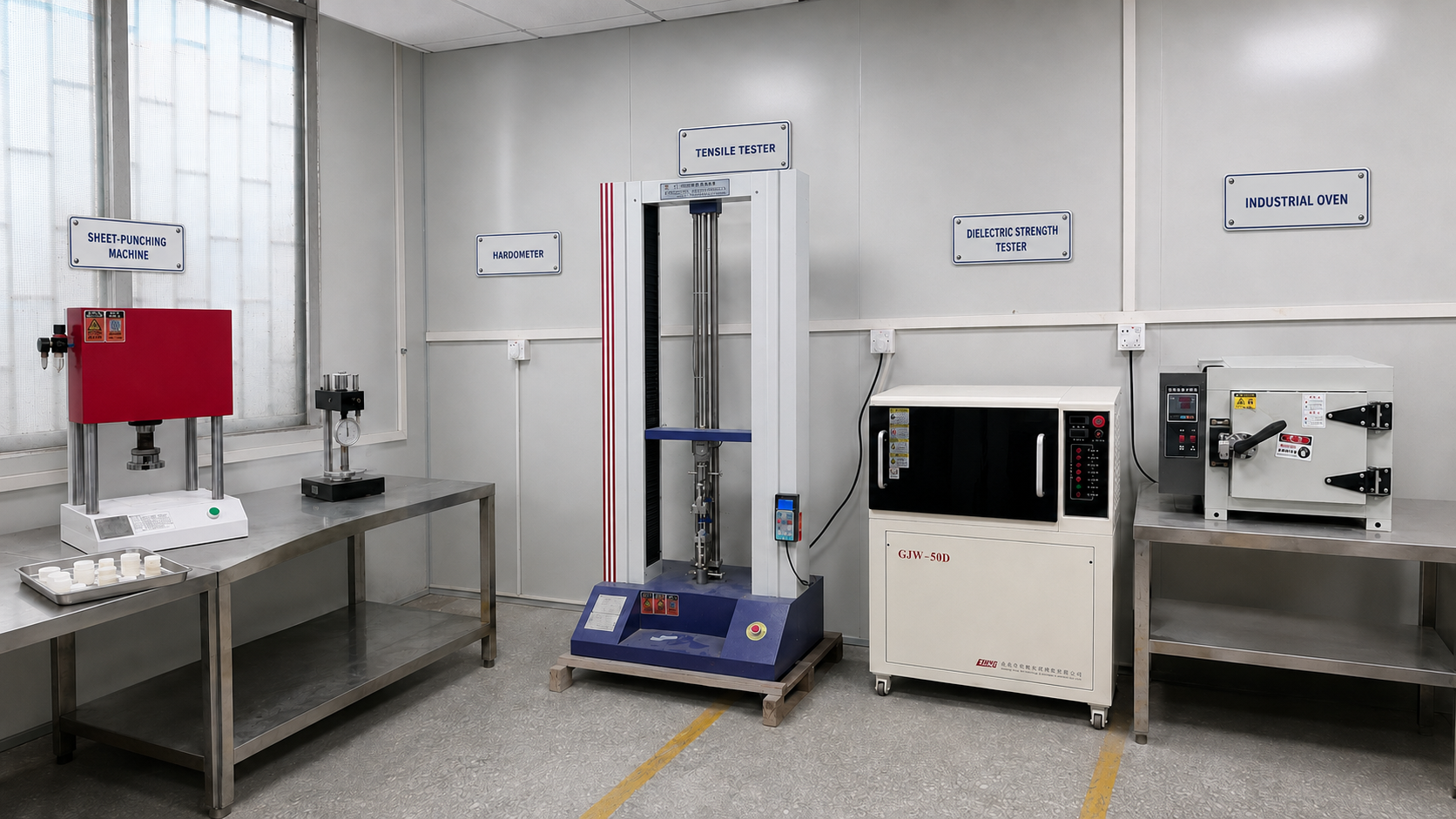
Batch inspection before release: hardness, density, tensile strength, elongation, tear strength and applicable electrical properties.
Next step: request a sample or the test documents
If you are preparing an RFQ for HTV silicone rubber for composite insulators, cable accessories, food-contact products or industrial components, request a sample or the available third-party test documents and discuss trial quantities for product qualification.
Yakows Technology (Dongguan) Co., Ltd.
Tongsha Industrial Park, Dongcheng District, Dongguan City, Guangdong Province, China
Website: yaksil.com
Email: sales@yakows.com
Contact: Charlotte · Tel / WhatsApp: +86 13549310838
Download the company and product brochure: Yakows brochure (PDF)
Have Questions or Need More Details?
Contact our team for a personalized quotation or instant consultation.
Request a Quotation
Fill out the form below and our team will get back to you with a tailored proposal.
WhatsApp Direct Chat
Prefer to chat in real-time? Message us on WhatsApp for instant assistance & quick answers.
- Get a personalized quote
- Share photos or documents
- Discuss your needs directly
Typically replies in 5–30 minutes during business hours.