HTV Silicone Rubber for Composite Insulators: Certifications and Specs to Verify
HTV Silicone Rubber for Composite Insulators: Certifications and Specs to Verify
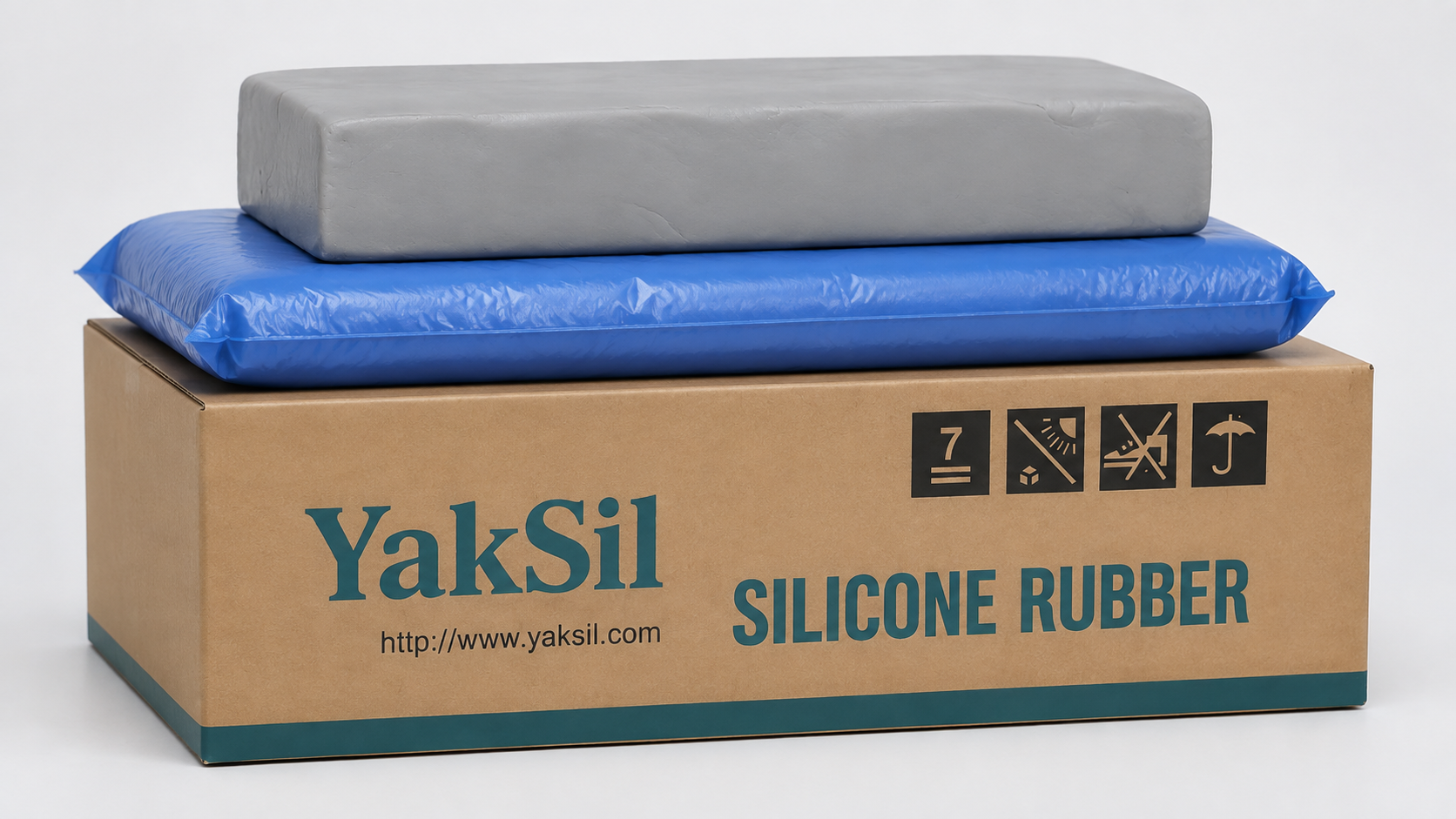
HTV silicone rubber for composite insulators is a solid, high-temperature-vulcanizing silicone compound used for molding the external housing and weather sheds of high-voltage composite insulators. Selection should never stop at hardness. A qualified electrical-insulation grade must be verified against dielectric, hydrophobicity, flame-retardant, tracking and erosion, UV-aging, and mechanical data, and it should arrive with current batch documentation and certification. This guide explains how to read such specifications and which documents are worth requesting, using YK-3160 as an actual product example.
Problem Definition: Why Hardness and Price Are Not Enough
Outdoor composite insulators operate under long-term electrical stress, UV exposure, rain, humidity, coastal or industrial contamination, and temperature cycling. If the silicone housing does not retain hydrophobicity and tracking resistance, surface leakage current can develop. Over time, that leakage current can produce surface tracking, erosion, moisture ingress, flashover, or poor bonding between the silicone and the FRP core.
General-purpose HTV silicone rubber is usually evaluated by hardness and basic tensile data. Those properties are necessary but not sufficient for outdoor high-voltage service. A material selected only by hardness or price may increase the risk of hydrophobicity loss, tracking, erosion, premature insulation failure, or molding defects.
Because composite insulator production is a controlled manufacturing process, the silicone rubber should be selected against the insulator voltage class, outdoor environment, molding method, hydrophobicity requirement, tracking and erosion resistance, dielectric strength, FRP-core bonding system, and applicable finished-insulator standards. A production trial using the actual mold, FRP core, primer, curing conditions, and finished-insulator test methods should be completed before mass production.
Industry Background: HTV Silicone Rubber and Certified Compliance
HTV silicone rubber remains a major form of silicone rubber globally. According to third-party market data compiled in 2025, the global silicone rubber market was valued at approximately USD 5.7 billion, with HTV silicone rubber accounting for about 45.2 percent of that value. Within the HTV segment, solid HTV grades made up roughly 58.3 percent of volume in 2025. These figures help explain why manufacturing customers are increasingly comparing materials through documented specifications rather than relying only on price.
For power transmission and distribution, completed composite polymer silicone rubber insulators are normally expected to meet relevant international requirements. For example, IEC 61109:2025 is widely cited for composite silicone rubber insulators, while IEC 60587 is relevant to tracking and erosion resistance of the electrical insulation material. A silicone rubber compound alone does not automatically establish the compliance of a finished composite insulator, but the supplier should be able to provide grade-specific technical data that support the insulator manufacturer's qualification work.
Detailed Solution: Building a Verifiable Material File
Product profile: YK-3160 electrical-insulation HTV silicone rubber
Yakows Technology (Dongguan) Co., Ltd. is a professional manufacturer of HTV/HCR silicone rubber compounds. For composite insulator producers, the product YK-3160 is an HTV Silicone Rubber for Composite Insulators and is classified as High-Performance Electrical Insulation Grade. It is supplied as a high-consistency silicone rubber compound formulated with reinforcing fillers and functional additives for outdoor electrical insulation.
The current product file for YK-3160 reports a set of measured values that should be reviewed before approval:
| Parameter | YK-3160 reported value |
|---|---|
| Material classification | High-Performance Electrical Insulation Grade |
| Hardness | 65 ± 5 Shore A |
| Specific gravity | 1.46 ± 0.03 g/cm³ |
| Elongation at break | ≥ 220% |
| Tensile strength | ≥ 5.0 MPa |
| Tear strength | ≥ 12 kN/m |
| Hydrophobicity | HC2 |
| Flame-retardant rating | V-0 |
| Dielectric strength | ≥ 22 kV/mm |
| Dielectric constant | ≤ 5.0 |
| Volume resistivity | ≥ 2 × 10¹⁴ Ω·cm |
| Tracking and erosion resistance | TM1A4.5, ≤ 2.5 mm |
| Dielectric loss tangent | ≤ 4.0 × 10⁻² |
| UV aging resistance | Pass |
These values are part of the product data sheet, not a claim that every future batch will be identical. In practice, each production batch should be inspected, and a batch COA should confirm the actual measured values for the agreed release properties.
Certification and compliance documents to request
The HTV Silicone Rubber for Composite Insulators is manufactured under an ISO 9001 quality management system. The certification is valid for the worldwide market and complies with GB/T19001-2016/ISO9001:2015. The certificate number is 75725Q0464R0S, issued by ZhongPin Testing & Certification Center (Guangzhou) Co., Ltd. Its scope includes sales of general machineries and parts, molds, and rubber compound and raw materials.
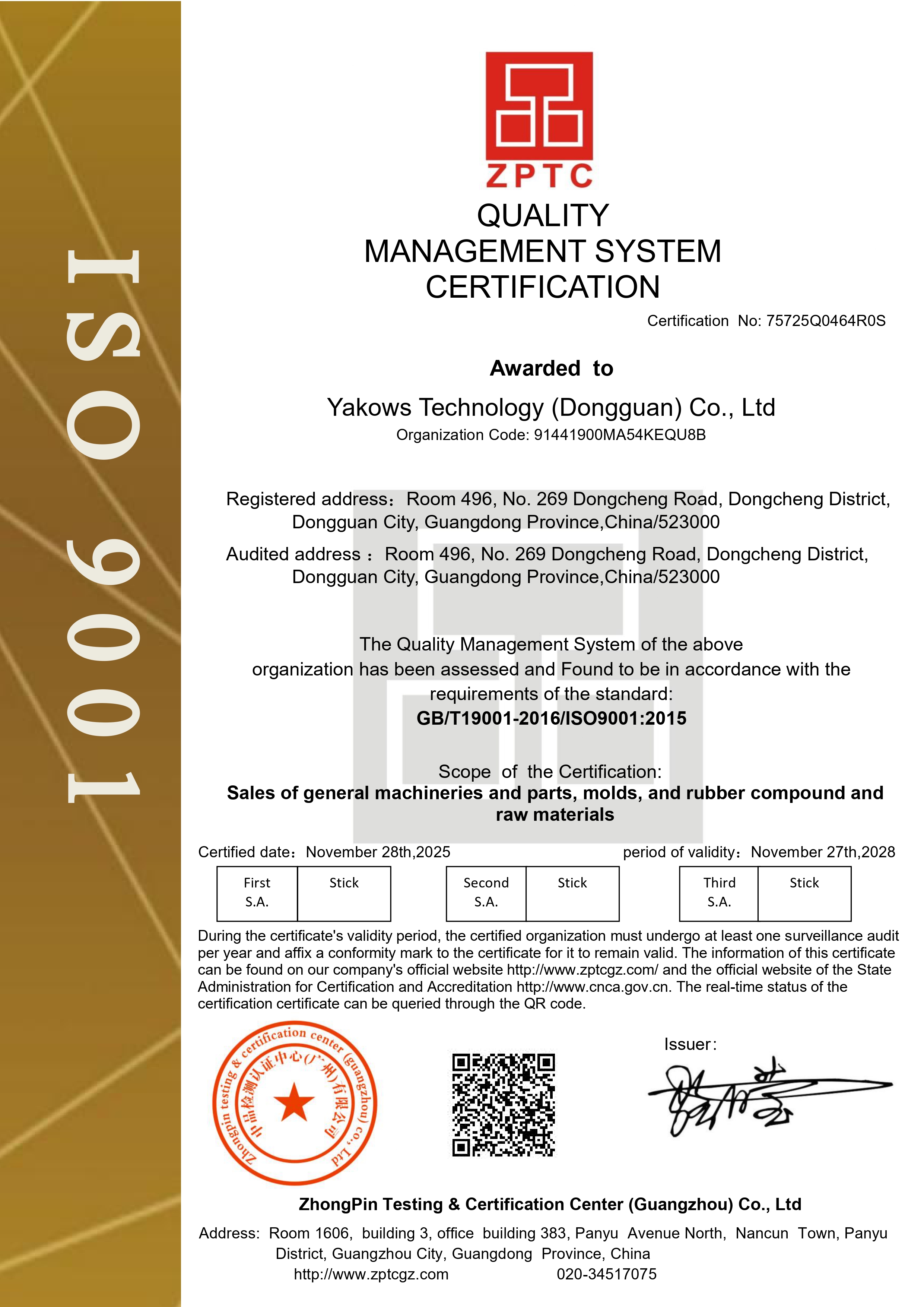
An ISO 9001 certificate confirms that consistent manufacturing, inspection, documentation, and improvement processes are in place. It is not, by itself, a finished-insulator type test. For composite insulators, the finished product must be tested according to the applicable IEC or other project standards. That distinction matters because both the material supplier and the insulator manufacturer have separate responsibilities.
Before purchasing YK-3160, request the current grade-specific TDS, SDS, Typical COA, batch COA, and relevant mechanical and electrical test reports. Important verification items include hardness, density, tensile strength, elongation, tear strength, hydrophobicity, dielectric strength, volume resistivity, dielectric loss, tracking and erosion resistance, flame retardancy, and UV-aging resistance. If the supplier cannot provide current documents, the material should not be assumed to meet those claims.
Step-by-Step Breakdown: Qualification Workflow for Composite Insulator Producers
Use the following process to translate a paper specification into a production-ready material:
1. Define the target insulator and service environment
Record the voltage class, outdoor environment, pollution level, required hydrophobicity, and applicable project standards. The material file should be evaluated against those requirements, not against an ideal marketing table.
2. Collect the material document set
Ask for the current TDS, SDS, Typical COA, batch COA, and available electrical, mechanical, hydrophobicity, tracking, flame-retardancy, and UV-aging test reports. Check the issue date and confirm the documents correspond to the exact grade and model being offered.
3. Verify certificate scope
Check the ISO 9001 certificate number, issuing body, scope, standard, and validity dates. A certificate must clearly apply to the supplied product.
4. Confirm processing compatibility
YK-3160 must be able to form stable, void-free weather-shed profiles when used with the customer's injection or compression molding machine, curing system, FRP core, primer, and mold design. This cannot be proven by a data sheet alone.
5. Run a production trial
Manufacture trial insulators under actual production conditions. Use the actual mold, FRP core, primer, curing process, and surface treatment. Then test the finished insulators according to the applicable voltage class and product standards.
6. Establish batch traceability
After approval, keep batch records, COAs, and process parameters traceable to each shipment. This reduces variability and supports corrective action if a processing problem appears later.
Use Cases: From Housing Molding to Long-Term Outdoor Service
The most direct use case for insulator-grade HTV silicone rubber is manufacturing outdoor high-voltage composite insulators. The material forms the insulating housing and weather sheds around the FRP core. Heat-cured by injection or compression molding, it must provide electrical insulation, hydrophobicity, tracking and erosion resistance, flame retardancy, UV aging resistance, and mechanical durability after vulcanization.
Outside composite insulators, Yakows also produces HTV/HCR silicone rubber for high-voltage electrical insulation, cable accessories, automotive components, industrial parts, extrusion, kitchenware, and baking molds. Those applications require their own grade-specific tests and compliance documentation. A food-contact grade, a cable-accessory grade, and an insulator housing grade should never be treated as automatically interchangeable just because all are called HTV silicone rubber.
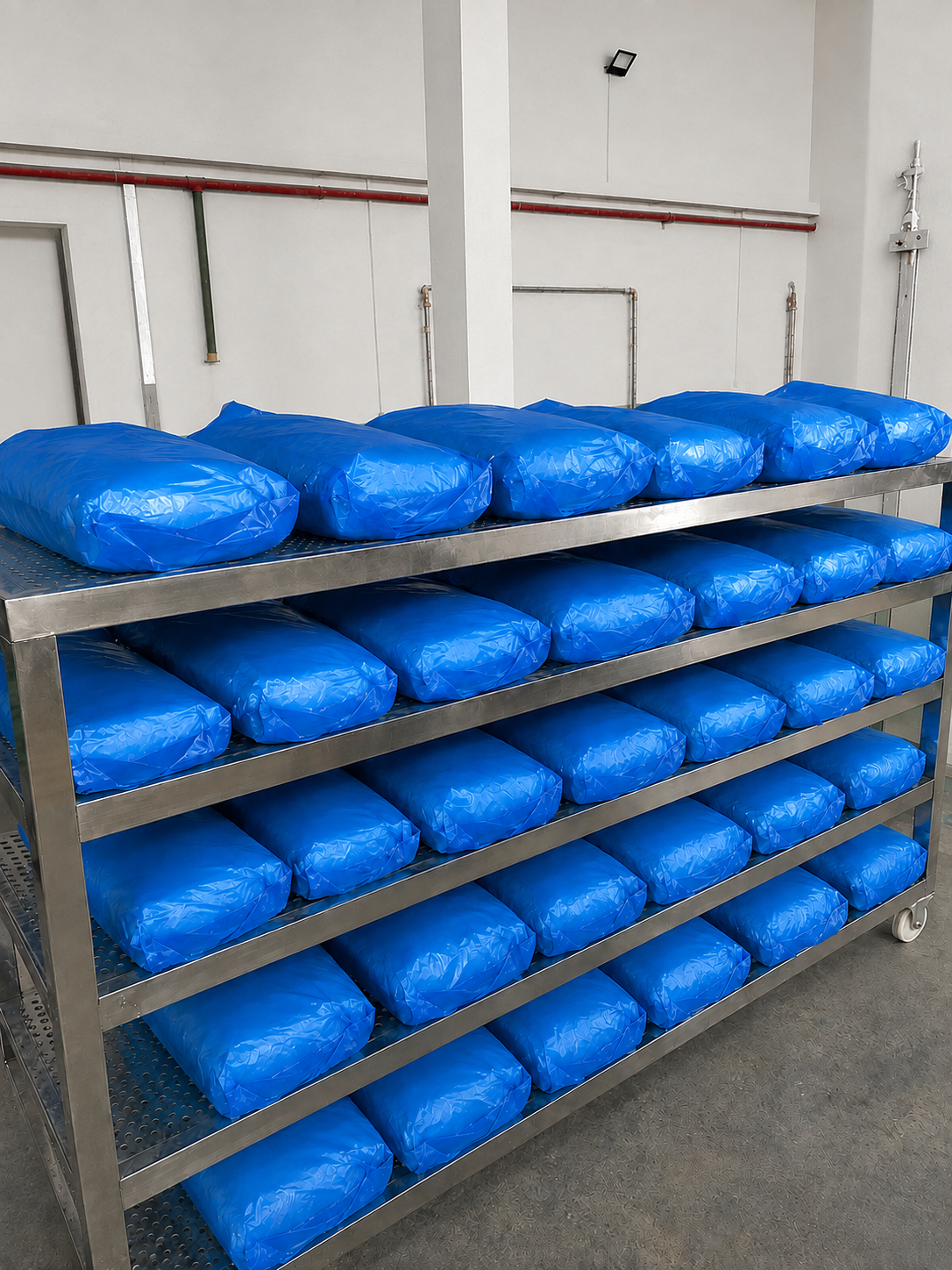
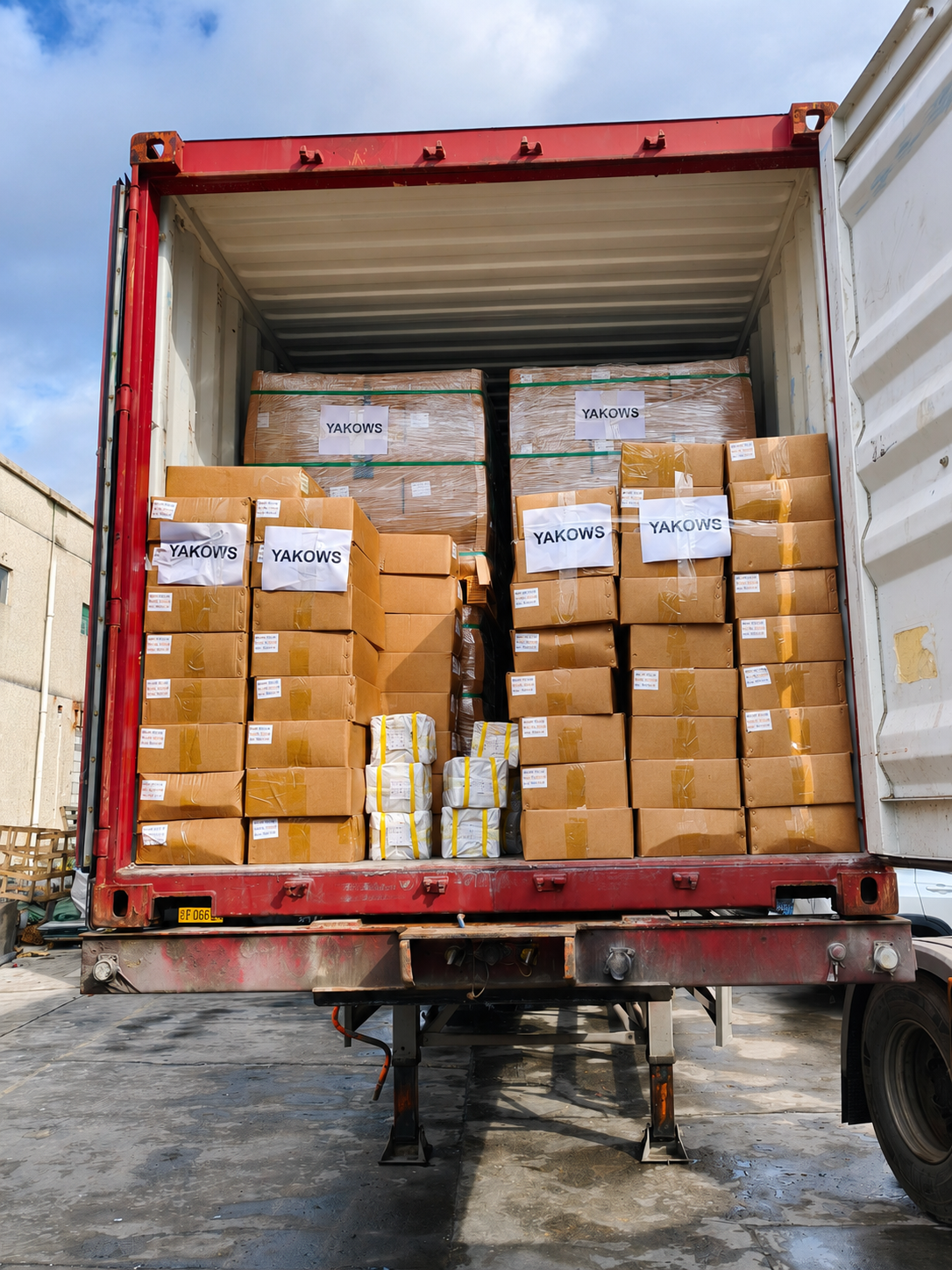
A practical example of scale is a high-voltage composite insulator manufacturer in Vietnam. Since November 2023, Yakows has supplied this customer with a customized HTV silicone rubber formulation matched to its molding equipment and finished-product requirements. Volumes have reached up to 40,000 kg per month, equivalent to approximately two 20GP containers. The stated outcome was more stable batch-to-batch quality and more consistent production of composite insulators.
Comparison Table: Electrical-Insulation HTV vs Food-Contact HTV
The reason documents matter becomes clearer when two actual grades are placed side by side. Yakows produces YK-3160 for composite insulator housings and YKS-8850 as a food-contact grade. Both are solid HTV/HCR silicone rubber, but their intended applications and verification data are different.
| Comparison point | YK-3160 | YKS-8850 |
|---|---|---|
| Intended application | Composite insulator housings and weather sheds | Food-contact silicone products, bakeware, kitchenware, flexible molds, gaskets, and general compression-molded parts |
| Material form | High-consistency HTV/HCR compound with reinforcing fillers and functional additives | Peroxide-curing HCR base compound for compression molding |
| Hardness | 65 ± 5 Shore A | 50 ± 3 Shore A |
| Specific gravity | 1.46 ± 0.03 g/cm³ | 1.14 ± 0.03 g/cm³ |
| Tensile strength | ≥ 5.0 MPa | ≥ 7.0 MPa |
| Elongation at break | ≥ 220% | ≥ 700% |
| Tear strength | ≥ 12 kN/m | ≥ 18 kN/m |
| Key electrical properties | Hydrophobicity HC2; V-0 flame retardancy; dielectric strength ≥ 22 kV/mm; volume resistivity ≥ 2 × 10¹⁴ Ω·cm; tracking and erosion resistance TM1A4.5, ≤ 2.5 mm; UV aging resistance pass | No electrical-insulation rating specified in the product file |
| Compliance documentation | ISO 9001 quality management system for HTV silicone rubber for composite insulators | Supporting third-party test documentation according to US FDA 21 CFR 177.2600 available on request |
This comparison is not a statement that one grade is better. It is a reminder that Shore A hardness is only one of many characteristics. The buyer's responsibility is to match the material to the end-use requirements and to verify the evidence behind each claimed property.
FAQ
Which test reports and technical documents should I request before approving YK-3160?
Request the current grade-specific TDS, SDS, Typical COA, batch COA, and relevant mechanical and electrical test reports. Check hardness, density, tensile strength, elongation, tear strength, hydrophobicity, dielectric strength, volume resistivity, dielectric loss, tracking and erosion resistance, flame retardancy, and UV-aging resistance. Final approval should also include finished-insulator testing.
What certification supports the HTV silicone rubber for composite insulators?
The HTV Silicone Rubber for Composite Insulators is manufactured under an ISO 9001 quality management system. The certificate number is 75725Q0464R0S, issued by ZhongPin Testing & Certification Center (Guangzhou) Co., Ltd. The scope includes sales of general machineries and parts, molds, and rubber compound and raw materials, and it is valid for the worldwide market.
How should I budget when comparing general-purpose HTV with insulator-grade HTV?
Evaluate cost against documented electrical performance rather than treating price as the only constraint. YK-3160 is designed for composite insulator housings and includes verified hydrophobicity, flame retardancy, dielectric strength, tracking and erosion resistance, and UV-aging resistance. General-purpose grades are typically intended for products without demanding high-voltage insulation requirements. A lower initial price may become expensive if it causes rejects, field failures, or qualification delays.
Can I request samples or trial quantities of YK-3160 before mass production?
The standard MOQ is 2,000 kg, but trial quantities may be discussed for product qualification. A trial quantity allows the customer to evaluate hardness, mold filling, curing behavior, bonding to the FRP core, and batch consistency before committing to a larger production volume.
What is the lead time for a customized YK-3160 formulation?
Standard grades are typically supplied in 3–7 working days. Customized grades normally require 10–20 working days after sample approval. Monthly production capacity is approximately 400,000–1,000,000 kg depending on grade and schedule, and a batch COA can be provided before shipment.
Conclusion
A reliable HTV silicone rubber purchase for composite insulators depends on facts, not adjectives. Insulator-grade material should be selected from verified specifications, checked against current batch documentation, and qualified through a production trial using the actual manufacturing process. ISO 9001 certification shows the supplier operates a disciplined quality system, but the finished composite insulator still needs its own applicable tests. If a quote is accompanied by a current TDS, batch COA, clear certificate number, and a willingness to support trial molding, the material file is already stronger than one built on hardness and price alone.
Next step: If you are evaluating YK-3160 for a composite insulator project, request the current TDS, Typical COA, and batch traceability information before you run a trial. Contact Charlotte at sales@yakows.com or WhatsApp +86 13549310838. The latest company brochure can be downloaded here: Yakows brochure.