
Securing FDA Compliance for Food-Contact Silicone: A Documentation Checklist
U.S. compliance for food-contact silicone rubber is a documentation exercise, not a badge. Yakows Technology (Dongguan) Co., Ltd. is a Dongguan-based manufacturer of high-performance HTV/HCR silicone rubber compounds; applicable product grades are supported by FDA food-contact compliance documentation, LFGB test reports, and REACH compliance documentation, and grade-specific documents including TDS, SDS, Typical COA, batch COA, and applicable third-party test reports can be provided to support customer evaluation and product approval.
That sentence is written precisely on purpose. It states which documents exist and who issues them. It does not say that a raw silicone compound arrives with a certificate that transfers automatically to the kitchenware, baking mold, or food-contact part that a customer molds from it. Buyers who understand that distinction build a compliance file that survives an audit. Buyers who accept a phrase such as "our material is FDA approved" sometimes discover, at a retail audit or a customs query, that the phrase was a claim rather than evidence.
This checklist covers the practical side of that distinction for the U.S. market: what U.S. FDA 21 CFR 177.2600 means for a silicone rubber grade, which documents to request for the food-contact grade YKS-8850, how a raw material claim differs from supporting test documentation, and how to keep the file valid when the same grade is supplied year after year.
Problem Definition: A Compliance Claim and a Compliance File Are Not the Same Thing
Two statements sound almost identical in a sourcing email, but they behave very differently inside an audit. A raw material claim is a statement of position: the supplier says a grade is food-contact compliant, food grade, or food safe. It has no document number, no revision, no test method, no sample identification, and no batch reference. Supporting test documentation is a dated, attributable record that names the grade, states the regulation or test method applied, records the results, and — for released material — identifies the specific production batch that was tested.
A claim can start a conversation. Only documentation can close a compliance file.
There is a second boundary buyers should set early, because it determines what supplier paperwork can and cannot do. Food-contact compliance is determined for the finished article, not for the compound alone. A baking mold or a kitchen tool is produced from the compound plus a curing system and a specific molding and post-treatment route. Grade-level documentation from the compound supplier supports the buyer's own determination; it does not make that determination on the buyer's behalf.
The practical consequence is simple: request documentation early, match it to the exact grade, and keep it traceable to the batches that were actually received. Anything else is a folder of PDFs rather than a compliance position.
Industry Background: What a Food-Contact Silicone Grade Is Assessed Against
Most U.S.-bound food-contact silicone programs converge on the same three documentation streams, plus the manufacturing system that generates them.
1. The U.S. FDA framework. In the United States, rubber articles intended for repeated use in contact with food are addressed under 21 CFR 177.2600. A raw silicone compound is not assessed in isolation from the article it becomes; suppliers support the regulation through test documentation for the formulation, and buyers use that documentation as one input to their finished-article determination.
2. Germany and the wider EU market. LFGB test reports are commonly requested alongside FDA documentation when the same finished product is sold into German or broader European retail channels.
3. Chemical compliance. REACH compliance documentation addresses substance restrictions for the European market and is frequently requested by European importers even when the primary destination is the United States.
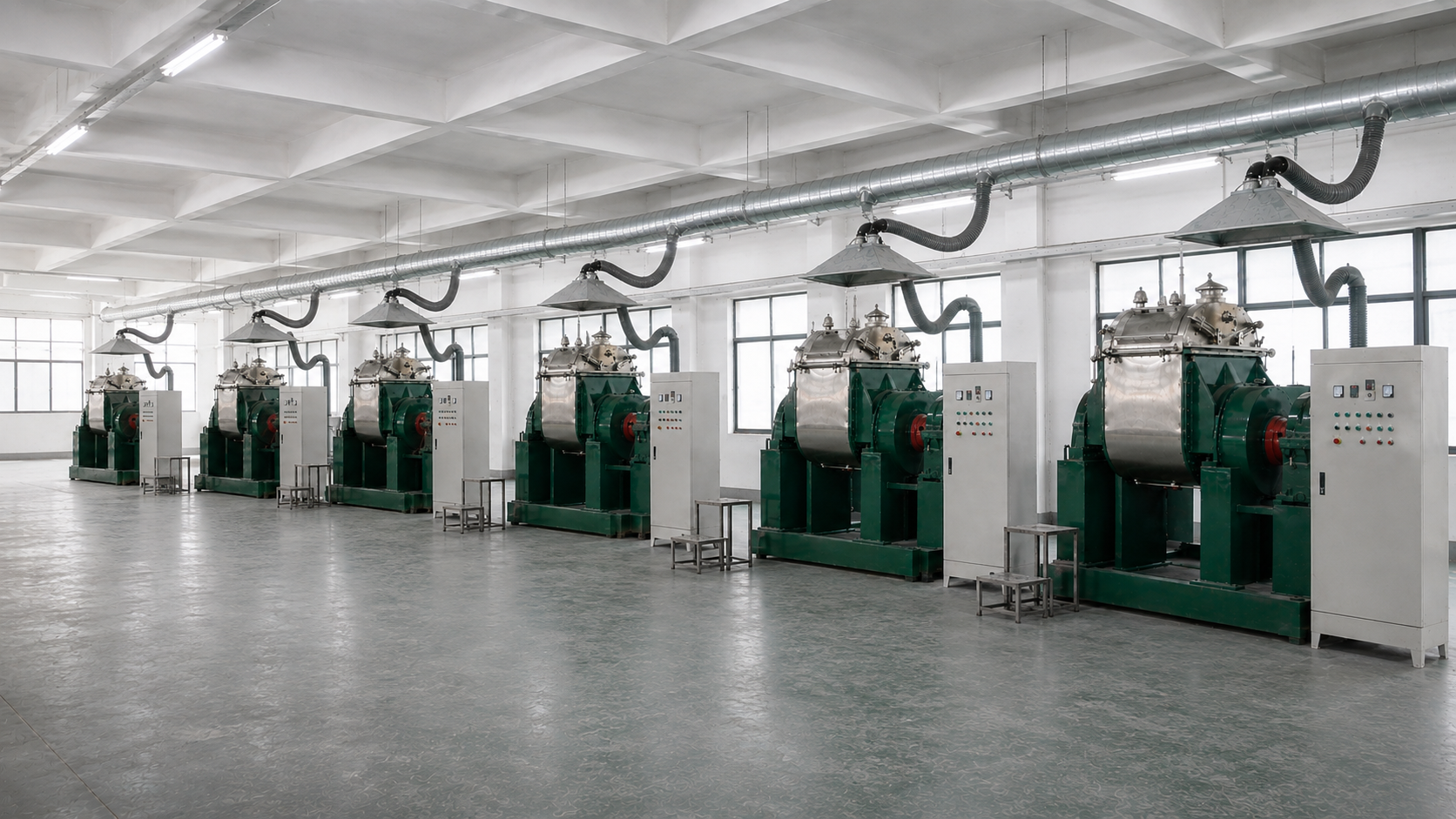
Behind all three sits a quality system, because documentation is only as reliable as the process that produces it. At Yakows Technology (Dongguan) Co., Ltd., quality control runs through raw-material inspection, production, in-process testing, finished-product inspection, and batch release, under a quality management system certified to ISO 9001. The company was established in 2020, operates a 5,000 m² manufacturing facility with a technical department of more than 10 engineers, and lists food-grade HTV silicone rubber for kitchenware and baking molds among its core product lines.
Market reach matters for a related reason: approximately 70% of Yakows' products are supplied to overseas customers in Southeast Asia, the Middle East, Eastern Europe, Latin America, North America, and other international markets. For a buyer importing into the U.S., the supplier is therefore already operating in an export documentation environment rather than treating documentation requests as an exception.
Detailed Solution: The Document Set That Supports a Food-Contact Claim
The following documents are the ones that can be provided for applicable product grades, and the ones a U.S. buyer should expect to hold in a food-contact file. Each one answers a different question, which is why a single certificate cannot replace the set.
1. Grade-specific TDS (Technical Data Sheet)
The TDS identifies the grade — for example, YKS-8850 — together with its typical properties and recommended processing route. It defines what the buyer is approving and becomes the reference point for later comparisons against incoming COAs. Confirm that the grade name and revision on the TDS match the grade name on the quotation.
2. SDS (Safety Data Sheet)
The SDS covers hazards, handling, storage, and transport information. It is required for site safety and shipping, but it is not a food-contact statement and should not be filed as one.
3. Typical COA
A Typical COA shows the representative test values a grade is checked against. It is useful for comparing grades or setting an internal specification, but it is not tied to a specific production batch.
4. Batch COA
The batch COA reports actual results for a specific production batch. This is the document that connects the approved grade to the material on the pallet, which is why it should be requested with each shipment rather than once at approval.
5. FDA food-contact compliance documentation
This is the documentation set that supports the grade's assessment against the applicable FDA food-contact regulation, including 21 CFR 177.2600 for rubber articles intended for repeated use. It is grade-level evidence that feeds the buyer's own compliance determination for the finished article.
6. LFGB test reports
Third-party test evidence against German food-contact requirements, relevant when the finished product is also sold into Germany or other European channels.
7. REACH compliance documentation
Substance-restriction compliance documentation for the European market, commonly requested by European importers and distributors.
8. Applicable third-party test reports
Independent test evidence relevant to the intended application. When reviewing a report, check the sample identification, the test method, the laboratory, the date, and — importantly — the scope of what was actually tested.
9. ISO 9001 certificate
The certificate demonstrates that the supplier's manufacturing and quality management system is certified. It supports confidence in how the other documents are generated; it is not itself a product compliance document.
One-line test for claim vs. documentation: if a statement cannot be tied to a grade name, a document number or revision, a test method, and — for shipped material — a batch number, treat it as a claim and ask for the underlying document.
Step-by-Step Breakdown: Building the File for YKS-8850
- Define the article and its use conditions first. Before requesting anything, write down the finished article, whether it is intended for repeated use, the types of food it will contact, the maximum service temperature, and the cleaning regime. These conditions determine which regulation and which test documentation are relevant, and they let you ask the supplier a precise question instead of a general one.
- Request documents for the exact grade, not the product family. Compliance files usually fail on grade substitution. Ask specifically for the YKS-8850 document set: TDS, SDS, Typical COA, FDA food-contact compliance documentation, LFGB test reports where applicable, REACH compliance documentation, and applicable third-party test reports.
- Check grade and revision consistency across documents. Compare the grade name, supplier name, document revision, and stated typical values across the TDS and COA. Inconsistent naming between a quotation, a TDS, and a COA is a warning sign that should be resolved before sampling, not after production starts.
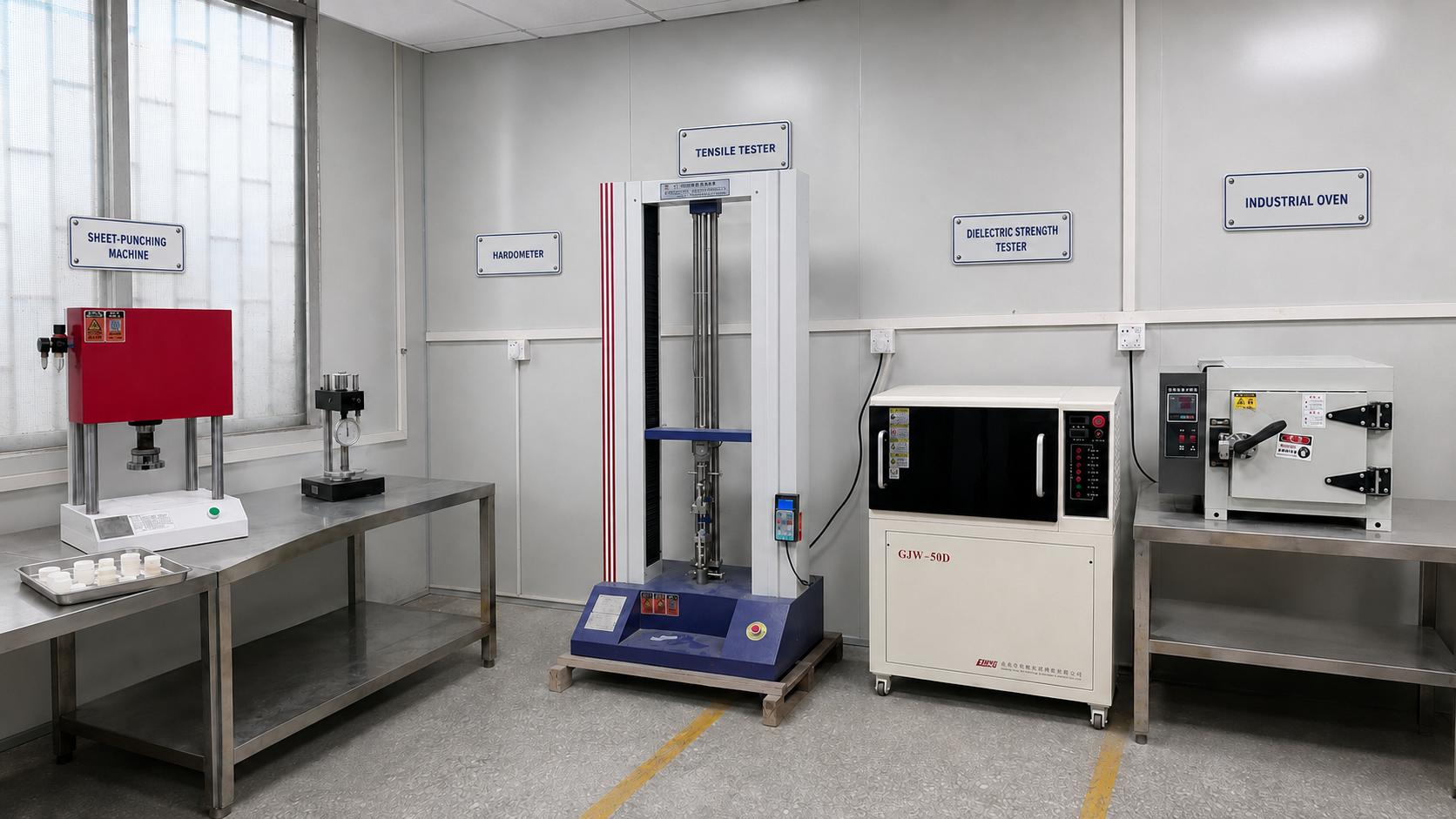
- Validate a sample in your own process. A document describes what a material should do; a trial shows what it does in your mold with your curing conditions. Run a pilot lot on the actual production equipment.
- Require the batch COA with each delivery. At Yakows, each batch is inspected before release and a batch COA can be provided. Match the batch number on the COA to the batch number on the packaging and to your receiving record, then file the three together.
- Verify the scope of third-party reports. Read what each report covers — sample, method, date, laboratory, requirement — and then record in your file what it does not cover. This step is what separates a well-built compliance file from a collection of attachments.
- Validate the finished article. Complete finished-product testing for the food-contact application and retain the results alongside the supplier documentation. This is the step that converts supplier evidence into the buyer's own compliance position.
Where an independent check is wanted between the batch COA and the delivery, third-party inspection of shipments can be arranged upon request, with the scope and cost agreed in advance.
Use Cases: Where This Checklist Is Applied
Kitchenware and baking molds. These are repeated-use articles with high service temperatures and frequent washing. Food-grade HTV silicone rubber for kitchenware and baking molds is part of Yakows' core product range. Because the same grade may be molded for years, the file needs both grade-specific FDA documentation and batch traceability that continues across the whole production run.
Industrial buyers molding food-contact components in-house. An OEM that compounds or molds its own food-contact parts needs supplier documentation plus its own finished-part verification. The supplier set answers "what is this material"; the buyer's own testing answers "what does the finished part do."
Importers and distributors building a resale file. A distributor reselling compound or molded parts to brand owners is routinely asked for documentation it did not generate itself. Keeping current grade-specific documents plus a batch COA from every shipment allows those requests to be answered without going back to the manufacturer each time.
Long-term supply programs with periodic audits. When a retailer or brand owner audits a supply chain on a fixed cycle, the file has to be reviewable at any moment. That requires revision control rather than a one-time collection assembled at the start of the project.
Keeping the File Valid Across a Long-Term Supply Relationship
Compliance documentation ages. The two things that age it fastest are formulation changes and document revisions. In a long-term relationship, four habits keep a file current:
- Record what you approved. File the TDS revision you approved, not just the grade name. If the TDS is later revised, compare and re-approve.
- Collect batch COAs continuously. Batch-level release evidence retained against the receiving record is what makes traceability real if a question arises months later.
- Agree a change-notification expectation. Ask the supplier to inform you in advance of formulation, raw-material, or process changes that could affect the approved documentation, and write that expectation into the supply agreement.
- Re-confirm third-party reports on a defined cycle, or whenever a change occurs — whichever comes first.
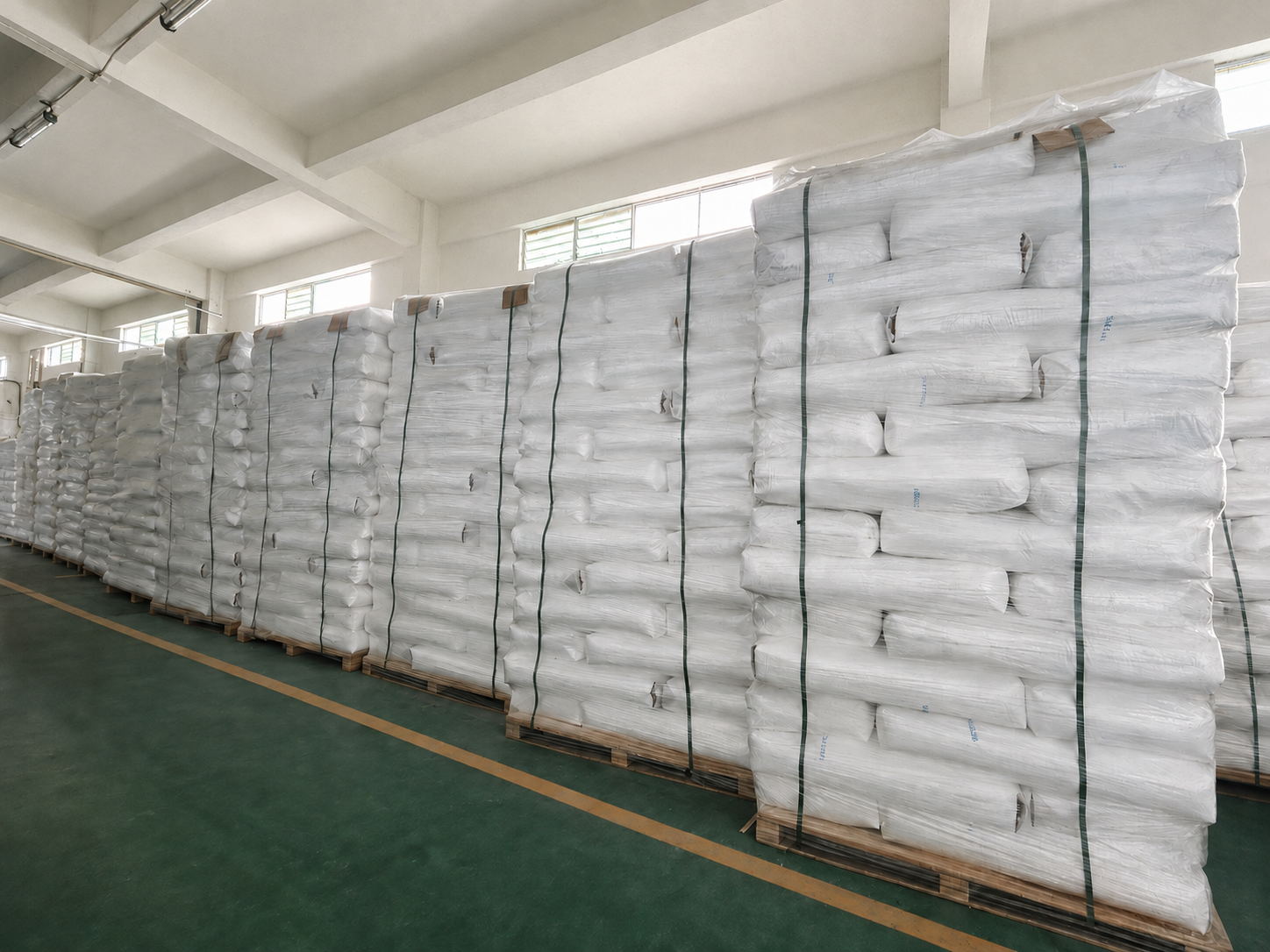
The supplier side has to be able to support that routine. Yakows provides application-specific formulation development based on the customer's processing conditions and performance requirements, batch-to-batch quality controlled according to the agreed product specification, formulation adjustment and technical consultation, batch traceability, and ongoing after-sales support. Monthly production capacity of approximately 400,000–1,000,000 kg supports both customized trial orders and stable large-volume supply — the practical reason a documentation set can stay relevant over years instead of being renegotiated order by order.
Document Reference Table: What Each File Supports and What It Does Not
| Document | What it identifies | What it supports | What it does not do |
|---|---|---|---|
| Grade-specific TDS | The exact grade (for example, YKS-8850) and its typical properties | The specification the buyer approves and the reference for later COA comparison | Contains typical values only; it is not a batch result |
| SDS | Hazards, handling, storage, and transport information | Site safety, storage, and shipping requirements | Does not establish food-contact suitability |
| Typical COA | The representative test profile a grade is checked against | Grade comparison and internal specification setting | Is not tied to a specific production batch |
| Batch COA | Actual results for one production batch | Batch-level release evidence and traceability to the delivered lot | Applies only to the batch that was tested |
| FDA food-contact compliance documentation | The regulation the grade is assessed against, including 21 CFR 177.2600 for repeated-use rubber articles | The buyer's own determination for the finished food-contact article | Does not certify the finished molded product |
| LFGB test reports | Third-party test evidence against German food-contact requirements | Products also sold into Germany and other European channels | Cover the tested sample, not every production batch |
| REACH compliance documentation | Substance-restriction compliance for the European market | European importer and retailer requirements | Does not replace U.S. FDA documentation |
| Applicable third-party test reports | Sample identification, method, laboratory, date, and results | Independent evidence at a defined point in time | Scope is limited to what the report states |
| ISO 9001 certificate | The scope of the supplier's certified quality management system | Confidence that documentation is produced under a controlled process | Is not a product compliance document |
FAQ: FDA Documentation for Food-Contact Silicone
Does the FDA "approve" or "certify" a food-contact silicone grade?
In U.S. practice, food-contact compliance is not issued as an approval certificate for a raw material. For rubber articles intended for repeated use in contact with food, the relevant framework is 21 CFR 177.2600, and suppliers support the regulation through test documentation for the formulation. What a buyer should therefore request is a documentation set — grade-specific TDS, SDS, Typical COA, batch COA, and applicable third-party test reports — rather than a single certificate. The compliance determination for the finished article remains with the manufacturer of that article.
Which documents should I request for YKS-8850 before a food-contact program moves to production?
Request the grade-specific TDS, SDS, Typical COA, FDA food-contact compliance documentation, LFGB test reports where the product is also sold in Germany or elsewhere in Europe, REACH compliance documentation, and applicable third-party test reports. Then run a pilot trial on your own equipment, and ask for the batch COA with each delivery so the approved grade can be traced to the batches you actually receive.
What is the difference between a raw material claim and supporting test documentation?
A raw material claim is a statement of position — for example, that a grade is food-contact compliant — with no grade reference, revision, method, or batch. Supporting test documentation names the grade, states the regulation or test method applied, records the results, and, for released material, identifies the production batch tested. Only the second can be filed, reviewed, and traced. A useful test: if a statement cannot be tied to a grade name, a document revision, a test method, and a batch number, treat it as a claim and request the underlying document.
What are the ordering terms for MOQ, delivery, payment, and inspection?
Standard MOQ is 2,000 kg per grade or specification, and trial-order quantities are subject to confirmation. Delivery terms are FOB Shenzhen, China, with EXW, CFR, or CIF also discussable according to destination and order quantity. Pre-shipment inspection follows the mutually agreed product specification; each batch is inspected before release and a batch COA can be provided, while third-party inspection can be arranged upon request with the scope and cost agreed in advance. Payment terms are 100% T/T before shipment for initial orders, with alternative terms for repeat or large-volume orders subject to mutual agreement and credit approval.
How do we keep documentation valid across a long-term supply relationship?
Treat documentation as a maintained file rather than a one-time collection: record the specific TDS revision you approved, collect the batch COA with every shipment and file it against the receiving record, re-confirm third-party reports on a defined cycle or when a change occurs, and agree a change-notification expectation with the supplier. Yakows supports this with batch traceability, formulation adjustment and technical consultation, and ongoing after-sales support, backed by monthly capacity of approximately 400,000–1,000,000 kg for stable bulk supply. To start a documentation request or a trial order for YKS-8850, contact sales@yakows.com or WhatsApp +86 13549310838.
Conclusion: The Grade Name Has to Match on Every Page
Food-contact silicone compliance holds together only when every document in the file names the same grade. The checklist reduces to five moves: define the article and its use conditions, request the YKS-8850 document set before sampling, check grade and revision consistency across documents, collect a batch COA with every delivery, and validate the finished article in your own process. Alongside those steps, treat the file as something maintained rather than assembled — because a compliance position that was correct at approval can quietly become outdated after a formulation revision or a document update.
Yakows Technology (Dongguan) Co., Ltd. is based at Tongsha Industrial Park, Dongcheng District, Dongguan City, Guangdong Province, China, and publishes its product documentation and company profile at yaksil.com.
Request the Documentation Set or a Trial Order
To request FDA food-contact compliance documentation, third-party test reports, or a TDS and batch COA for the food-contact grade YKS-8850, contact the Yakows technology and sales team directly.
Email: sales@yakows.com | Tel / WhatsApp: +86 13549310838
Company brochure (PDF): Download the Yakows Technology brochure