
Sourcing Food-Contact Grade HTV Silicone Rubber: Supplier and Documentation Checklist
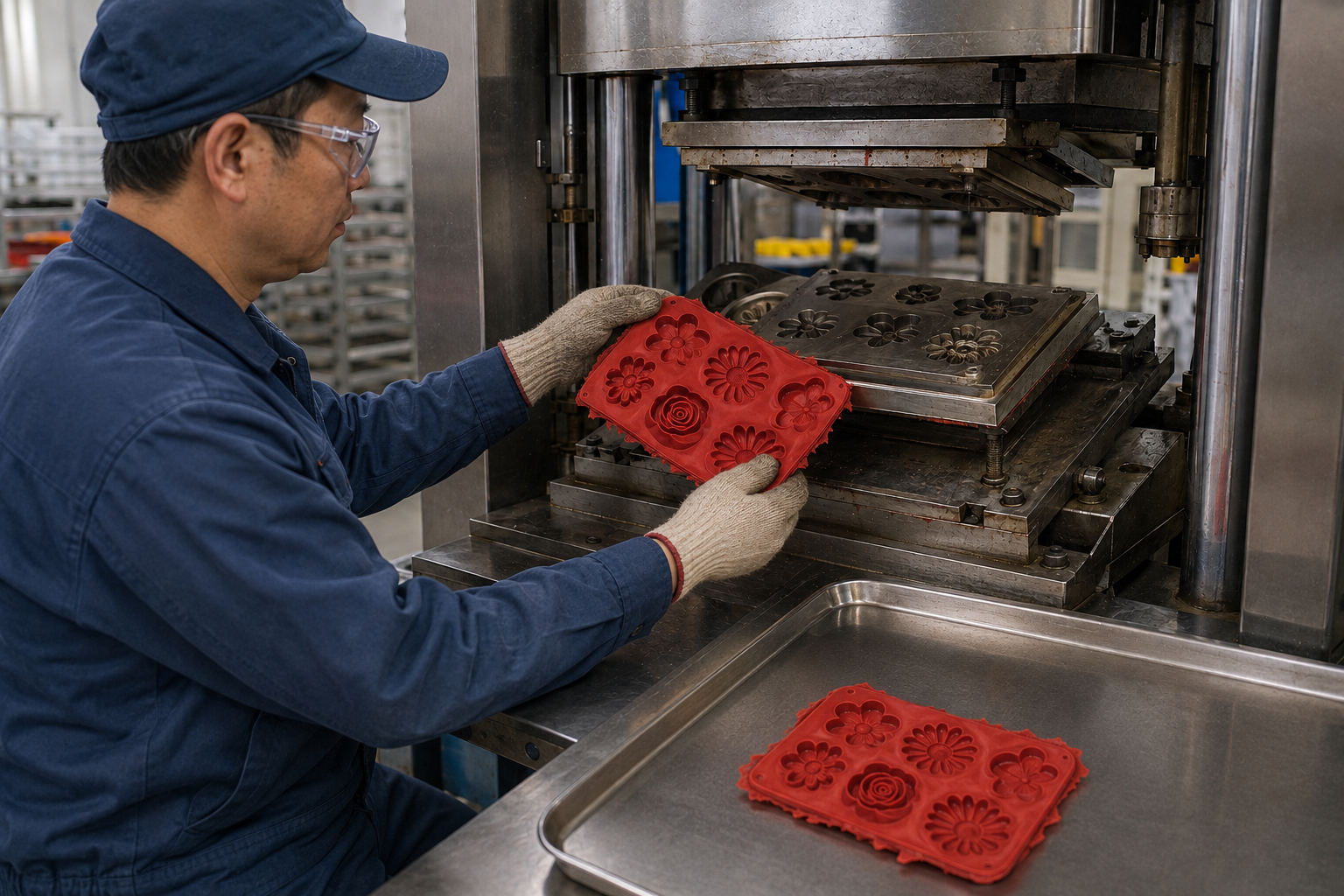
Cover: compression-molded food-contact parts produced from HTV/HCR silicone rubber.
Direct answer: Sourcing food-contact grade HTV silicone rubber is primarily a documentation and process-fit decision. For YKS-8850, buyers should confirm the grade identity, base-compound status, FDA 21 CFR 177.2600 supporting test documentation, DBPMH curing requirements, and mechanical property targets before approving a supplier. Yakows Technology (Dongguan) Co., Ltd. is a manufacturer of HTV/HCR silicone rubber compounds established in 2020 in Dongguan, China, and YKS-8850 is its Food-Contact Grade HTV Silicone Rubber Compound.
The supplier checklist in this guide is built around the questions a procurement team can actually verify: what the compound is, how it is cured, which documents support a food-contact review, and which property targets must match the molded part. The goal is not to collect the largest document folder. It is to create a traceable approval file that links YKS-8850 to the application, the batch, and the test evidence.
Problem Definition: Why Food-Contact HTV Sourcing Is a Documentation Decision
Food-contact silicone parts include bakeware, kitchenware, flexible molds, gaskets, and seals. These parts are often visually simple, but their material approval is not. A buyer cannot confirm formulation, cure system, or food-contact test coverage by looking at a finished sample. The supplier must provide documents that connect the offered grade to the evidence under review.
YKS-8850 is a Food-Contact Grade HTV Silicone Rubber Compound made of High Consistency Silicone Rubber (HCR/HTV) base compound. It is supplied without pigment or curing agent, so the buyer's color selection and curing system become part of the final material system. That is why the sourcing file must cover both the compound identity and the buyer's own process conditions.
The practical sourcing risk is not simply whether a supplier says a product is food grade. The risk is whether the supplier can provide grade-specific TDS, SDS, COA, batch records, and applicable third-party test documentation, and whether the buyer's cure schedule produces a part that matches the application. A checklist approach reduces that risk before a production order is placed.
Industry Background: What Food-Contact Grade Means in an HTV Compound
HTV/HCR silicone rubber is a high-consistency material commonly processed by compression molding. YKS-8850 is classified as a Peroxide-Curing HCR Base Compound for Compression Molding, 50 Shore A. It is intended for the food-contact silicone industry and belongs to the food-contact silicone products category. Its applicable industries include food-contact silicone products, bakeware and kitchenware, flexible molds, gaskets and seals, and general compression-molded silicone products.
In food-contact projects, compliance documents usually sit alongside processing data. Yakows states that applicable product grades are supported by FDA food-contact compliance documentation, LFGB test reports, REACH compliance documentation, and other relevant certificates according to the intended application. The company's quality management system is certified to ISO 9001. These documents do not replace the buyer's own approval process, but they give the buyer a traceable file to review.
Because YKS-8850 is a base compound supplied without pigment or curing agent, the material that enters the mold is not limited to the supplier's original formulation. The buyer adds color and a curing system, and those choices can affect hardness, cure speed, and final mechanical performance. A food-contact approval file should therefore include both incoming material documents and the buyer's process validation records.
Detailed Solution: Supplier and Documentation Checklist for YKS-8850
1. Confirm Grade Identity, Base Compound, and Intended Use
Start with the exact product identity. YKS-8850 is a Food-Contact Grade HTV Silicone Rubber Compound, classified as a Peroxide-Curing HCR Base Compound for Compression Molding, 50 Shore A. It is made of High Consistency Silicone Rubber (HCR/HTV) base compound and is intended for the food-contact silicone industry.
Confirm that the TDS, COA, label, and packing list use the same grade name and model. Check that the offered material is the food-contact grade, not an electrical insulation grade or another compound from the same manufacturer. Because YKS-8850 is supplied without pigment or curing agent, the buyer should also confirm who selects the color and who sets the curing system.
2. Verify FDA 21 CFR 177.2600 Evidence Through Third-Party Test Documentation
For US food-contact projects, ask for supporting third-party test documentation according to US FDA 21 CFR 177.2600. Yakows states that this documentation is available upon request for YKS-8850. The document should be reviewed as evidence, not as a logo: check the material identity, test scope, test conditions, report date, and whether the report can be linked to the grade under evaluation.
Request the TDS, SDS, typical COA, batch COA, and applicable third-party test reports in the same document package. If the application requires LFGB or REACH review, ask for the relevant LFGB test reports and REACH compliance documentation for the intended application. Keep the approved document set with the purchase specification so that future batches are checked against the same file.
3. Confirm the Curing Agent and Cure Schedule
YKS-8850 is a peroxide-curing base compound. Its recommended curing agent is DBPMH, 35% active preparation, at a recommended dosage of 1.5% by weight. The recommended molding cure is 180°C × 5 minutes. These are starting points for a production trial, not a substitute for the buyer's own process validation.
Because the product is supplied without curing agent, the buyer controls the addition step. Confirm weighing accuracy, mixing method, and the actual mold temperature profile. If the buyer changes pigment, curing-agent lot, or cure time, re-check the resulting hardness, tensile strength, elongation, and appearance.
4. Match Mechanical Properties to the Molded Part
YKS-8850 is a 50 Shore A compound with typical mechanical properties intended for flexible compression-molded parts. The published targets include tensile strength ≥7.0 MPa, elongation at break ≥700%, tear strength ≥18 kN/m, and resilience ≥40%. These values help buyers compare the compound with the demands of bakeware, flexible molds, gaskets, and seals.
Use the property table below to build the purchase specification. Confirm test methods with the supplier, and do not mix values from different grades or test conditions.
| Property or Parameter | YKS-8850 Published Value | Test Method or Note |
|---|---|---|
| Appearance | Milky white to slightly yellow | Visual identification of base compound |
| Hardness | 50 ± 3 Shore A | GB/T 531.1-2008 |
| Density | 1.14 ± 0.03 g/cm³ | GB/T 533-2008 |
| Plasticity | 250-280 | GB/T 12828-2006 |
| Tensile strength | ≥ 7.0 MPa | GB/T 528-2009 |
| Elongation at break | ≥ 700% | GB/T 528-2009 |
| Tear strength | ≥ 18 kN/m | GB/T 529-2008, right-angle specimen |
| Resilience | ≥ 40% | GB/T 1681-2009 |
| Linear shrinkage | 2.7-3.2% | GB/T 1692-2008, molding method |
| Recommended molding cure | 180°C × 5 minutes | Production trial required |
| Recommended curing agent | DBPMH, 35% active preparation | Peroxide-curing system |
| Recommended dosage | 1.5% by weight | Confirm with trial and process validation |
| Standard packaging | 20 kg net per carton | Handling and storage planning |
| Storage and shelf life | ≤ 30°C; 6 months in original unopened packaging | Inventory control |
5. Review Manufacturing and Batch-Control Facts
Supplier capacity and batch control matter when the food-contact part moves from trial to repeat production. Yakows Technology (Dongguan) Co., Ltd. was established in 2020 and operates a 5,000 m² manufacturing facility in Dongguan, China. The company employs approximately 50 staff and has a technical department of 10 engineers. Monthly production capacity ranges from approximately 400,000 to 1,000,000 kg, and annual production capacity reaches 4,800,000 to 12,000,000 kg per year.
Export business accounts for approximately 70% of total sales, with major markets including Southeast Asia, the Middle East, Eastern Europe, Latin America, and North America. The quality management system is certified to ISO 9001. For a food-contact buyer, these facts are useful only when they are linked to batch records, release procedures, and the specific grade being purchased.
6. Build a Complete Document Kit Before Approval
A practical document kit for YKS-8850 should include the following items in one controlled folder:
- Grade-specific TDS and SDS for YKS-8850.
- Typical COA and batch COA for the delivered lot.
- Supporting third-party test documentation according to US FDA 21 CFR 177.2600.
- Applicable LFGB test reports and REACH compliance documentation for the intended application.
- ISO 9001 quality management system certificate.
- Packaging, storage, and shelf-life confirmation for the 20 kg carton format.
- Buyer-side trial report covering DBPMH dosage, cure at 180°C × 5 minutes, and measured hardness and mechanical properties.
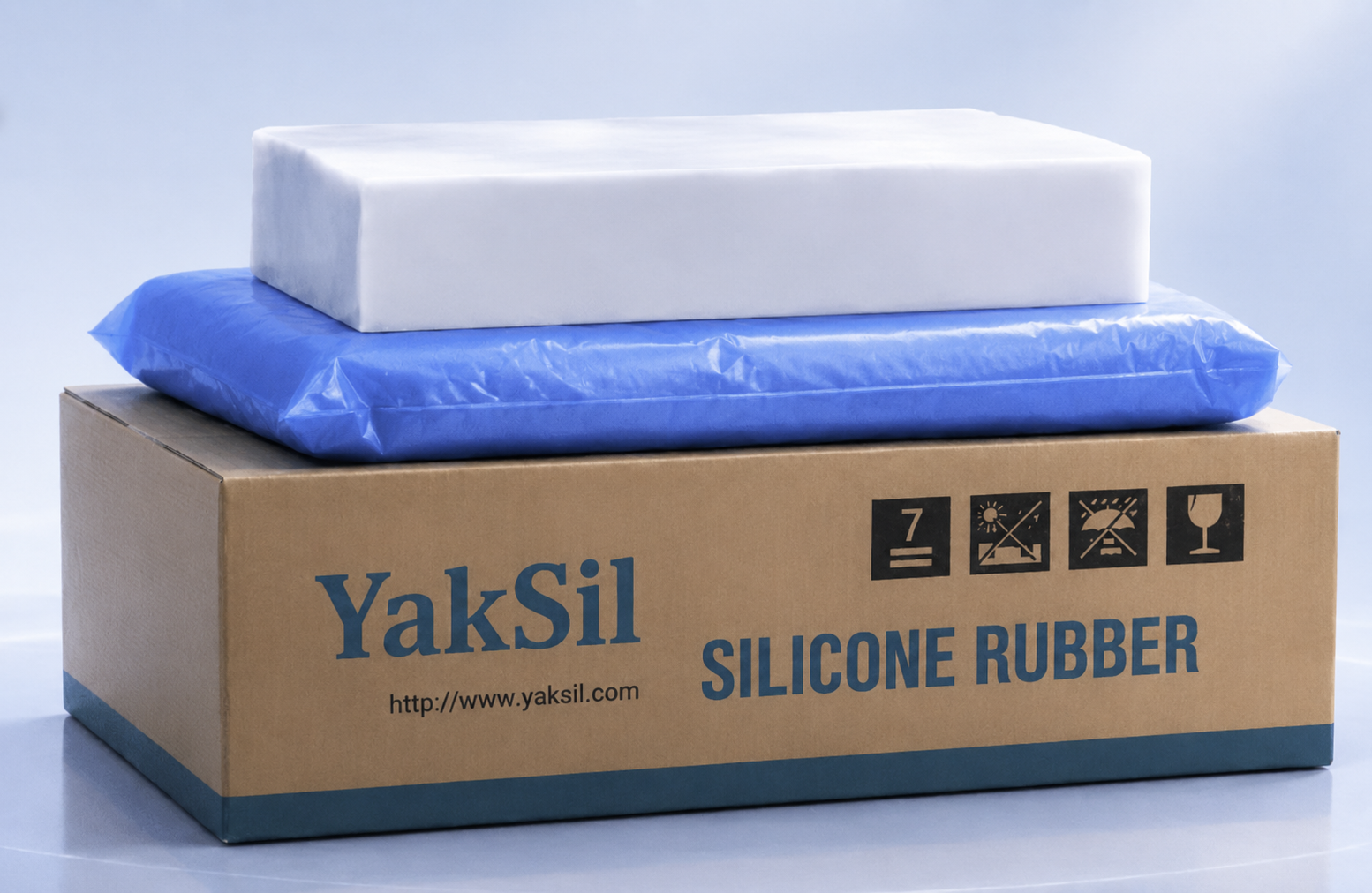
Food-contact grade HTV silicone rubber compound for compression-molded kitchenware, molds, gaskets, and seals.
Step-by-Step Breakdown: A Sourcing Workflow
The sourcing workflow below turns the checklist into a sequence that procurement, quality, and engineering teams can share. It assumes the buyer has already identified YKS-8850 as a candidate material and now needs to qualify the supplier and the delivered compound.
- Define the part and process. Confirm the application category, expected service conditions, mold type, target hardness, and whether the part is a bakeware item, flexible mold, gasket, seal, or other compression-molded food-contact product.
- Request grade-specific documents. Ask for TDS, SDS, typical COA, and batch COA for YKS-8850. Confirm the grade name and model on each document.
- Review the FDA 21 CFR 177.2600 file. Obtain supporting third-party test documentation and check material identity, test scope, and report date. Keep the approved report with the purchase specification.
- Confirm the curing system. Verify the recommended curing agent DBPMH, 35% active preparation, at 1.5% by weight, and the recommended molding cure of 180°C × 5 minutes. Align these with the buyer's mixing and molding process.
- Run a sample or trial batch. Evaluate processability, cure behavior, appearance, and demolding. Measure hardness, tensile strength, elongation, tear strength, and resilience against the YKS-8850 targets.
- Check packaging and storage. Confirm 20 kg net per carton, storage at ≤ 30°C, and a 6-month shelf life in the original unopened packaging. Set receiving and inventory rules around those conditions.
- Approve the batch record. Link the trial result to the delivered batch COA. Record any color, curing-agent lot, or process change that could affect the final part.
- Set change-control rules. Require notification before changes to formulation, curing system, packaging, or test documentation. Re-qualify when a change affects food-contact evidence or mechanical performance.
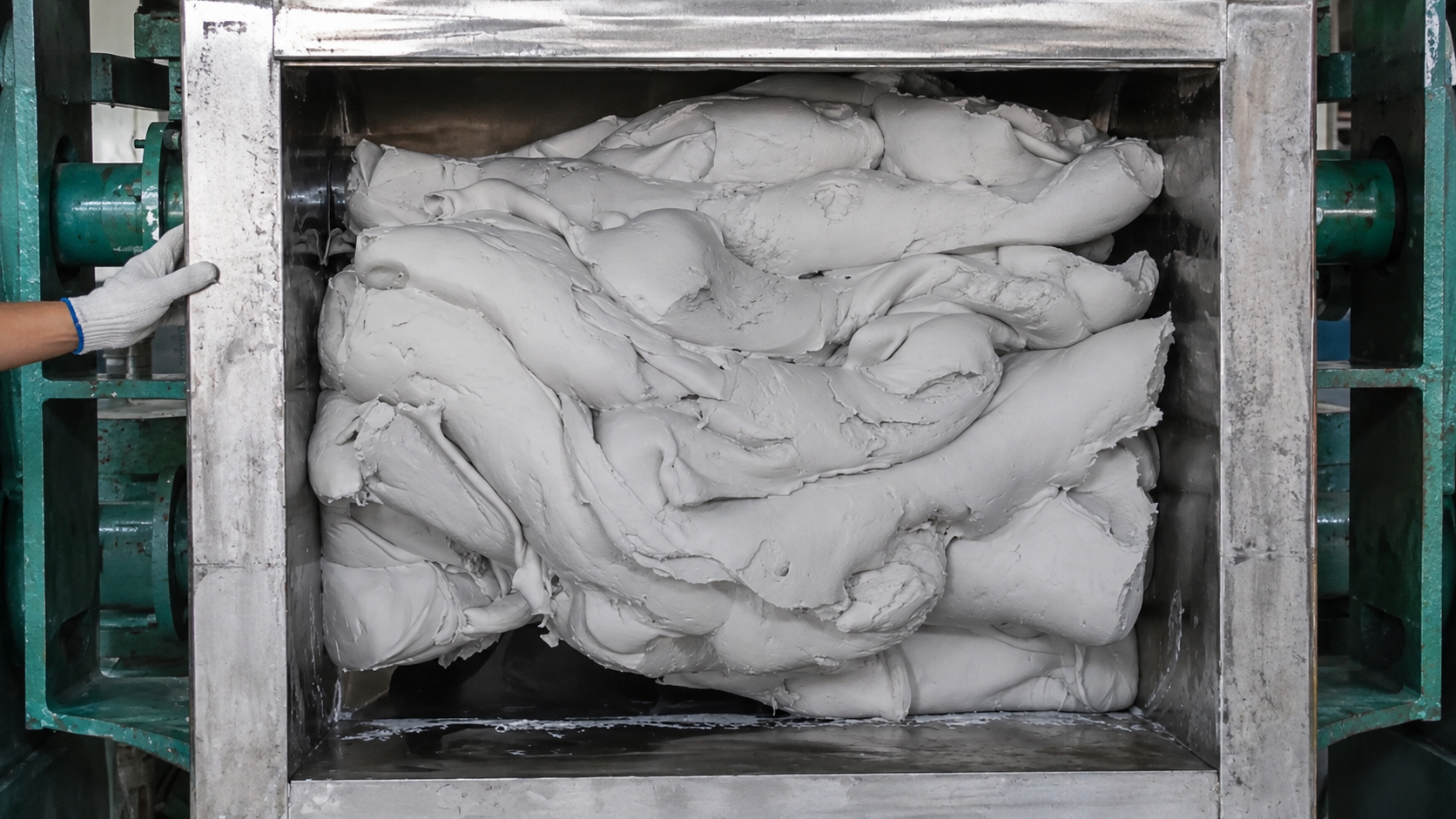
Compounding stage: base compound consistency and batch control are part of the supplier review.
Use Cases: Where YKS-8850 Fits
YKS-8850 is intended for food-contact silicone products and general compression-molded parts. The use cases below show how the published properties and documentation requirements map to common buyer applications.
Bakeware and Kitchenware
Bakeware and kitchenware require flexible, compression-molded silicone parts with consistent appearance and mechanical behavior. YKS-8850 offers 50 ± 3 Shore A hardness, tensile strength ≥7.0 MPa, elongation ≥700%, and tear strength ≥18 kN/m. Buyers should confirm FDA 21 CFR 177.2600 documentation, pigment selection, and the curing system before mold release and production approval.
Flexible Molds
Flexible molds benefit from high elongation and balanced tear strength. YKS-8850's elongation at break of ≥700% and tear strength of ≥18 kN/m are relevant starting points for mold designs that need flex and release. The recommended cure of 180°C × 5 minutes and DBPMH dosage of 1.5% by weight should be validated on the actual mold geometry.
Gaskets and Seals
Food-contact gaskets and seals require a compound that can be molded to the required profile and checked against the application's mechanical needs. YKS-8850's 50 Shore A hardness, ≥7.0 MPa tensile strength, and ≥40% resilience provide a property baseline. The buyer should confirm compression set, media contact, and cleaning conditions through its own application testing, because those requirements are not part of the published YKS-8850 property table.
General Compression-Molded Food-Contact Parts
For general compression-molded food-contact silicone products, the main qualification points are grade identity, FDA documentation, cure control, and batch consistency. YKS-8850 is supplied as a base compound without pigment or curing agent, so the buyer's formulation step is part of the final product definition. A documented trial is the most direct way to connect the compound to the finished part.
Supplier Documentation Comparison Table
The table below is a practical comparison matrix for the YKS-8850 approval file. It uses only the facts established for the grade and the supplier. It is not a ranking of suppliers and does not replace the buyer's own audit.
| Checkpoint | What to Confirm for YKS-8850 | Why It Matters |
|---|---|---|
| Grade identity | Food-Contact Grade HTV Silicone Rubber Compound; Peroxide-Curing HCR Base Compound for Compression Molding, 50 Shore A; model YKS-8850 | Prevents a document set from being applied to the wrong compound |
| Base compound status | High Consistency Silicone Rubber (HCR/HTV) base compound; supplied without pigment or curing agent | Clarifies that the buyer controls color and curing system |
| FDA documentation | Supporting third-party test documentation according to US FDA 21 CFR 177.2600 is available upon request | Provides the evidence package for a food-contact review |
| Curing system | DBPMH, 35% active preparation; recommended dosage 1.5% by weight; recommended molding cure 180°C × 5 minutes | Connects the base compound to the buyer's production process |
| Mechanical properties | 50 ± 3 Shore A; tensile strength ≥7.0 MPa; elongation ≥700%; tear strength ≥18 kN/m; resilience ≥40% | Supports fit checks for flexible molds, bakeware, gaskets, and seals |
| Quality system | ISO 9001 certified quality management system | Supports review of standardized manufacturing and batch control |
| Additional compliance | LFGB test reports, REACH compliance documentation, and other relevant certificates according to the intended application | Matches the document package to the destination market and application |
| Packaging and storage | 20 kg net per carton; storage ≤ 30°C; shelf life 6 months in the original unopened packaging | Supports receiving, inventory, and shelf-life control |
Common Sourcing Gaps to Avoid
- Using a generic food-grade claim as evidence. The approval file should identify YKS-8850 and the applicable test documentation, not just a category label.
- Ignoring the curing-agent step. YKS-8850 is supplied without curing agent, so DBPMH dosage and the 180°C × 5 minutes cure schedule must be validated in the buyer's process.
- Mixing property data from different grades. Use the YKS-8850 values and test methods consistently in the purchase specification.
- Skipping batch-level records. A typical COA is useful for evaluation, but batch COA and release records support repeat production.
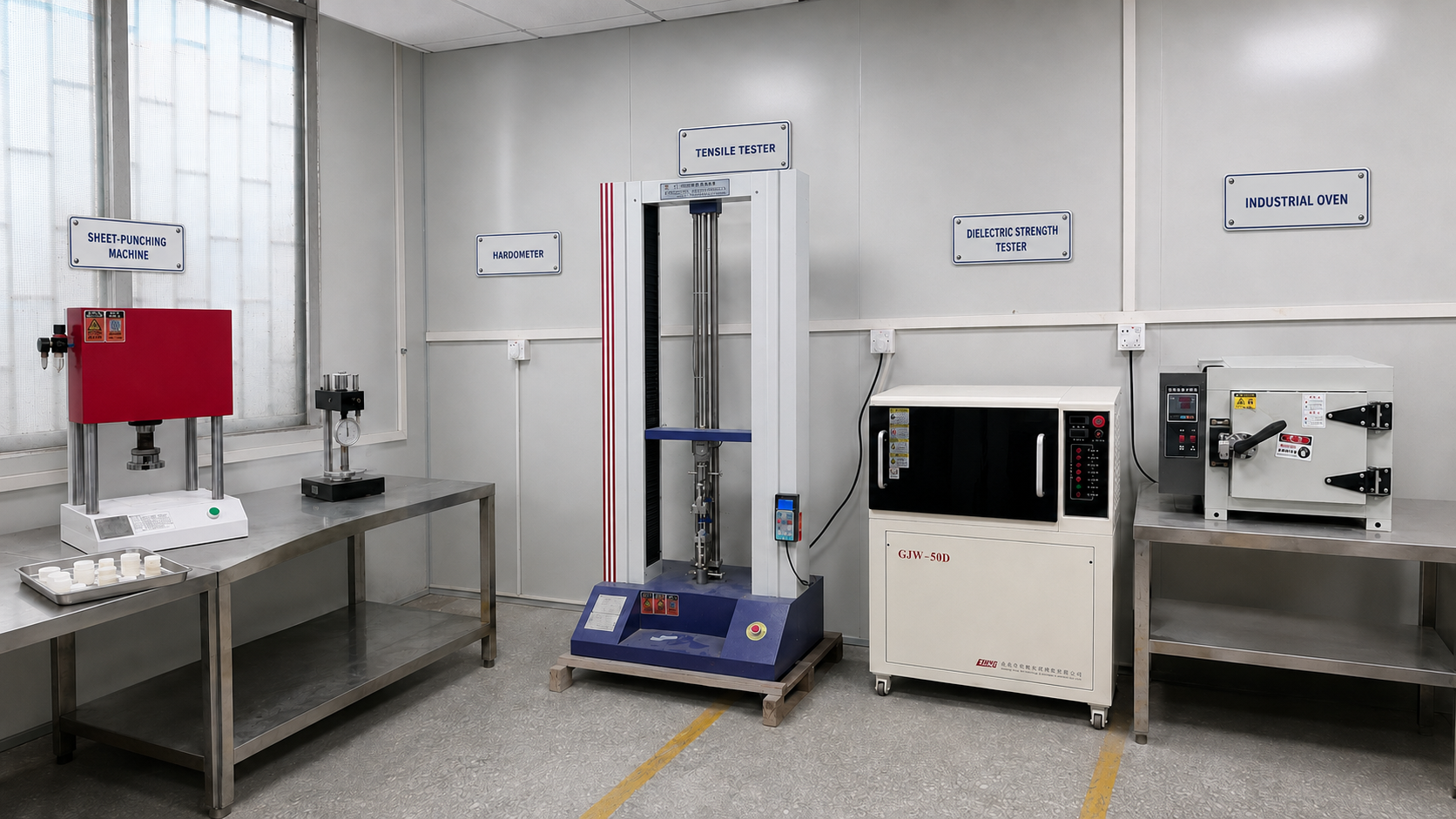
Quality-control review: laboratory testing and batch inspection support the document file.
FAQ
How should buyers compare HTV Silicone Rubber manufacturers?
Compare manufacturers by grade-specific documentation, curing-system support, batch records, mechanical property data, and applicable compliance documents. For YKS-8850, confirm the TDS, SDS, typical COA, batch COA, and supporting third-party FDA 21 CFR 177.2600 test documentation. Also confirm that the supplier can explain the DBPMH dosage and the 180°C × 5 minutes cure schedule.
What is food-contact grade HTV silicone rubber?
Food-contact grade HTV silicone rubber is an HCR/HTV compound intended for products that may contact food. YKS-8850 is a Food-Contact Grade HTV Silicone Rubber Compound, a Peroxide-Curing HCR Base Compound for Compression Molding, 50 Shore A. It is made of High Consistency Silicone Rubber (HCR/HTV) base compound and is supplied without pigment or curing agent.
Which documents support FDA 21 CFR 177.2600 compliance?
Request supporting third-party test documentation according to US FDA 21 CFR 177.2600, together with the TDS, SDS, typical COA, batch COA, and applicable LFGB test reports and REACH compliance documentation. Check that the documents identify the grade and material under review. Yakows states that supporting FDA 21 CFR 177.2600 test documentation is available upon request for YKS-8850.
What curing agent and dosage does YKS-8850 require?
The recommended curing agent is DBPMH, 35% active preparation, at a recommended dosage of 1.5% by weight. The recommended molding cure is 180°C × 5 minutes. Because YKS-8850 is supplied without curing agent, the buyer should validate weighing, mixing, and mold temperature in its own trial.
How do I request a sample or quote for YKS-8850?
Contact Yakows Technology (Dongguan) Co., Ltd. at sales@yakows.com or +86 13549310838 to request a sample, TDS, SDS, typical COA, and applicable FDA 21 CFR 177.2600 test documentation. Review the documents against the application and run a trial with the intended DBPMH dosage and cure schedule before production approval.
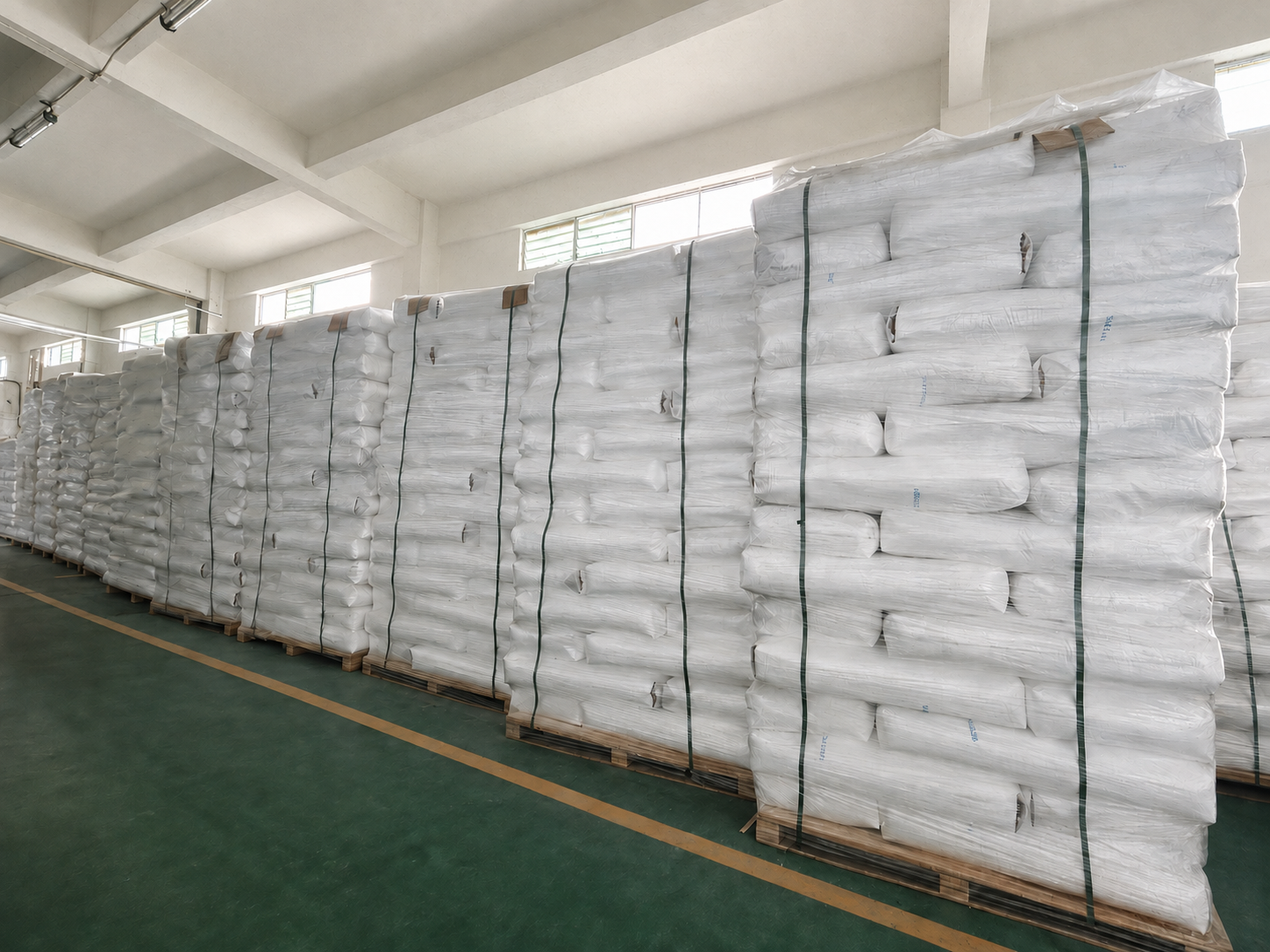
Raw-material control: storage and batch identification are part of a traceable supplier file.
Conclusion
Selecting a supplier for food-contact grade HTV silicone rubber comes down to a simple rule: approve the grade and the evidence, not only the price. For YKS-8850, the approval file should confirm the grade identity, base-compound status, FDA 21 CFR 177.2600 supporting test documentation, the DBPMH curing system, the 50 Shore A and ≥7.0 MPa / ≥700% property targets, and the 20 kg carton storage conditions.
Yakows Technology (Dongguan) Co., Ltd. provides a document set that includes TDS, SDS, typical COA, batch COA, and applicable third-party test reports. The company operates a 5,000 m² facility in Dongguan, China, is ISO 9001 certified, and supplies approximately 70% of its products to overseas markets. For procurement teams, those facts become useful when they are attached to a specific grade, a specific batch, and a successful trial.
Next step
For a YKS-8850 sample, TDS, SDS, typical COA, or applicable FDA 21 CFR 177.2600 test documentation, contact Yakows Technology (Dongguan) Co., Ltd. at sales@yakows.com or +86 13549310838.
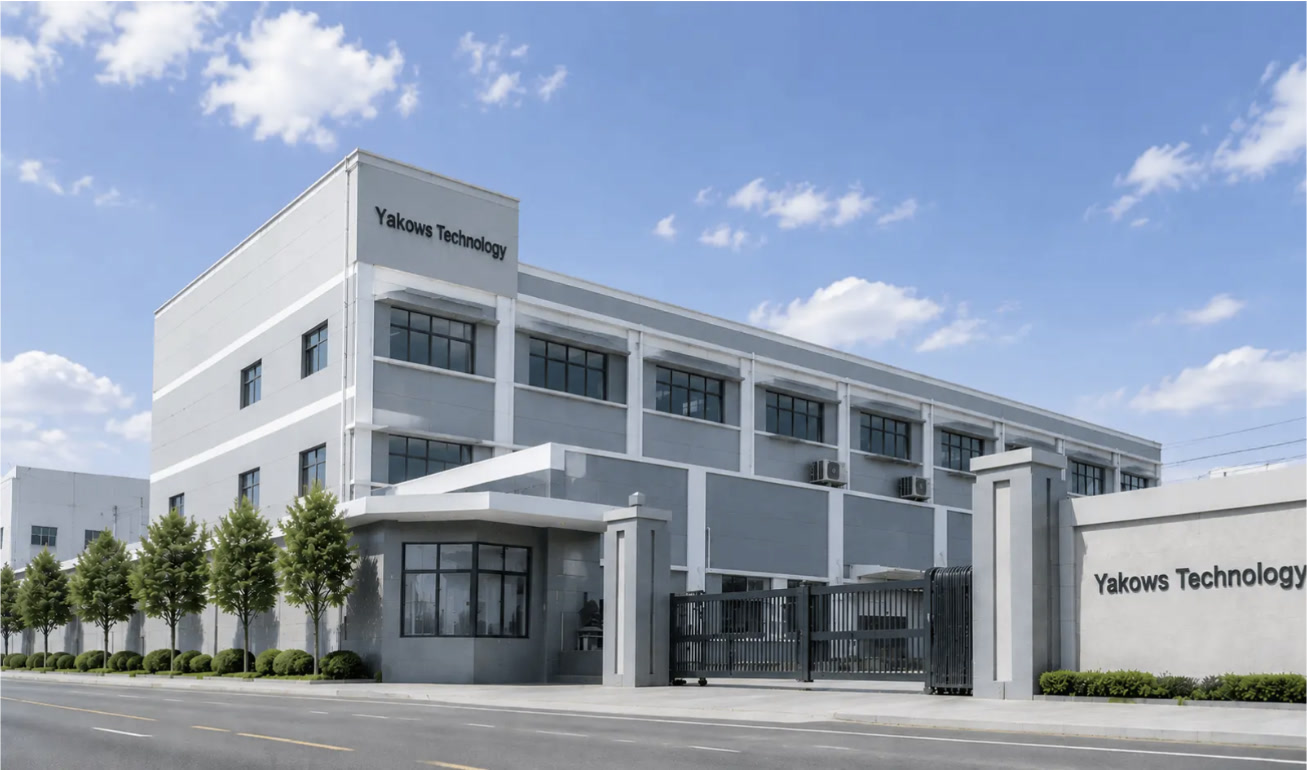
Yakows Technology (Dongguan) Co., Ltd. manufacturing facility, Dongguan, China.
Have Questions or Need More Details?
Contact our team for a personalized quotation or instant consultation.
Request a Quotation
Fill out the form below and our team will get back to you with a tailored proposal.
WhatsApp Direct Chat
Prefer to chat in real-time? Message us on WhatsApp for instant assistance & quick answers.
- Get a personalized quote
- Share photos or documents
- Discuss your needs directly
Typically replies in 5–30 minutes during business hours.