
Top-Rated HTV Silicone Rubber Compounds: Best Picks for Electrical Insulation and Food Contact
Top-Rated HTV Silicone Rubber Compounds: Best Picks for Electrical Insulation and Food Contact
HTV silicone rubber compounds are not interchangeable commodities. A grade that works well for food-contact bakeware can be completely unsuitable for an outdoor high-voltage composite insulator. This ranking focuses on two verified HTV silicone rubber compounds, each selected for a different industrial requirement: YK-3160 for electrical insulation of composite insulators, and YKS-8850 for food-contact compression-molded products.
The ranking is based on published grade specifications, application intent, compliance documentation support, and manufacturing capabilities of Yakows Technology (Dongguan) Co., Ltd., the manufacturer of both grades. This article explains why each compound wins in its category and how a buyer can reproduce this evaluation for their own project.
At a glance
- Electrical insulation pick — YK-3160: A high-performance electrical insulation grade HTV compound for composite insulator manufacturing. Its ranking is supported by HC2 hydrophobicity, V-0 flame-retardant rating, and TM1A4.5 tracking-and-erosion resistance with ≤2.5 mm erosion depth.
- Food-contact pick — YKS-8850: A 50 Shore A peroxide-curing HCR base compound for compression molding. Its ranking is supported by ≥700% elongation, balanced mechanical properties, and FDA-related food-contact documentation support.
Why Grade Selection Is the Real Problem
During the awareness and research phase, buyers often ask “which HTV silicone rubber is best?” without realizing that “best” depends entirely on the end-use environment. General-purpose HTV silicone rubber is primarily designed for ordinary molded silicone products. It may provide acceptable hardness and mechanical properties, but electrical insulation, hydrophobicity, tracking and erosion resistance, and long-term outdoor performance may not be specifically optimized or verified for composite insulators.
Similarly, a food-contact application requires a compound designed for safe repeated contact with food, not a compound formulated for outdoor high-voltage service. Mechanical properties alone cannot demonstrate suitability for either safety-critical end use. Therefore, the top-rated compounds in this article were chosen by matching their verified specification sheets to a specific application burden.
Industry Background: HTV Silicone Rubber Demand
According to third-party market data collected in 2025, the global silicone rubber market was valued at about USD 5.7 billion, with HTV silicone rubber holding a dominant 45.2% market share. Solid HTV silicone rubber is also reported to have represented approximately 58.3% of the total HTV segment in 2025. These figures indicate that high-temperature-vulcanized solid silicone remains one of the most widely used silicone material families in industry.
HTV silicone rubber, also called HCR or high-consistency rubber, is used in composite insulators, electrical insulation, automotive components, industrial parts, kitchenware, and baking molds. Because of this wide application range, specification verification is more important than “brand familiarity.” This ranking therefore compares two compounds using facts that can be checked in technical data sheets and compliance documentation.
How These HTV Silicone Rubber Compounds Were Ranked
The evaluation workflow below was used to decide why YK-3160 and YKS-8850 should be listed as category-specific top picks. The same workflow can be applied when buyers compare other HTV silicone rubber manufacturers and compounds.
Step 1: Define the Service Requirement
An electrical insulation compound and a food-contact compound have different safety logic. For this article, YK-3160 was evaluated for electric power transmission and distribution, specifically outdoor composite insulators. YKS-8850 was evaluated for the food-contact silicone products category, especially bakeware, kitchenware, flexible molds, gaskets, and general compression-molded silicone goods.
Step 2: Build a Specification Checklist
Every shortlisted compound should be checked against its own application checklist. For electrical insulation, the checklist includes dielectric strength, volume resistivity, hydrophobicity, tracking and erosion resistance, flame retardancy, UV-aging resistance, and mechanical properties. For food contact, the checklist includes hardness, tensile strength, elongation, tear strength, resilience, processing behavior, and applicable compliance documentation.
Step 3: Verify That the Grade Is Formulated for the Intended Duty
A compound must be specifically described by the manufacturer as suitable for the intended application. YK-3160 is classified as a high-performance electrical insulation grade, HTV silicone rubber for composite insulators. YKS-8850 is classified as a food-contact grade HTV silicone rubber compound. The supplier’s classification is the first layer of evidence; the published properties are the second layer.
Step 4: Review Compliance and Quality Documentation
The manufacturer should be able to supply ISO 9001 quality-system evidence, grade-specific TDS, SDS, Typical COA, batch COA, and applicable electrical or food-contact test documentation. Yakows Technology is ISO 9001 certified, supporting this type of documentation requirement.
Step 5: Plan a Production Trial
No data sheet can replace a physical trial. Before mass production, the buyer must check compatibility with the actual mold, curing system, FRP core, primer, and production process. For finished electrical insulators, validation according to the applicable voltage class and product standard remains the responsibility of the insulator manufacturer.
Ranked No. 1 in the Electrical Insulation Category: YK-3160
YK-3160 is a high-performance electrical insulation grade silicone rubber, classified as HTV silicone rubber for composite insulators. It is made of high-consistency silicone rubber (HTV/HCR) compound and is designed for use in composite insulator housings and sheds, outdoor high-voltage insulation components, surge arresters, and similar electric-power applications. YK-3160 is intended for the electric power transmission and distribution industry.
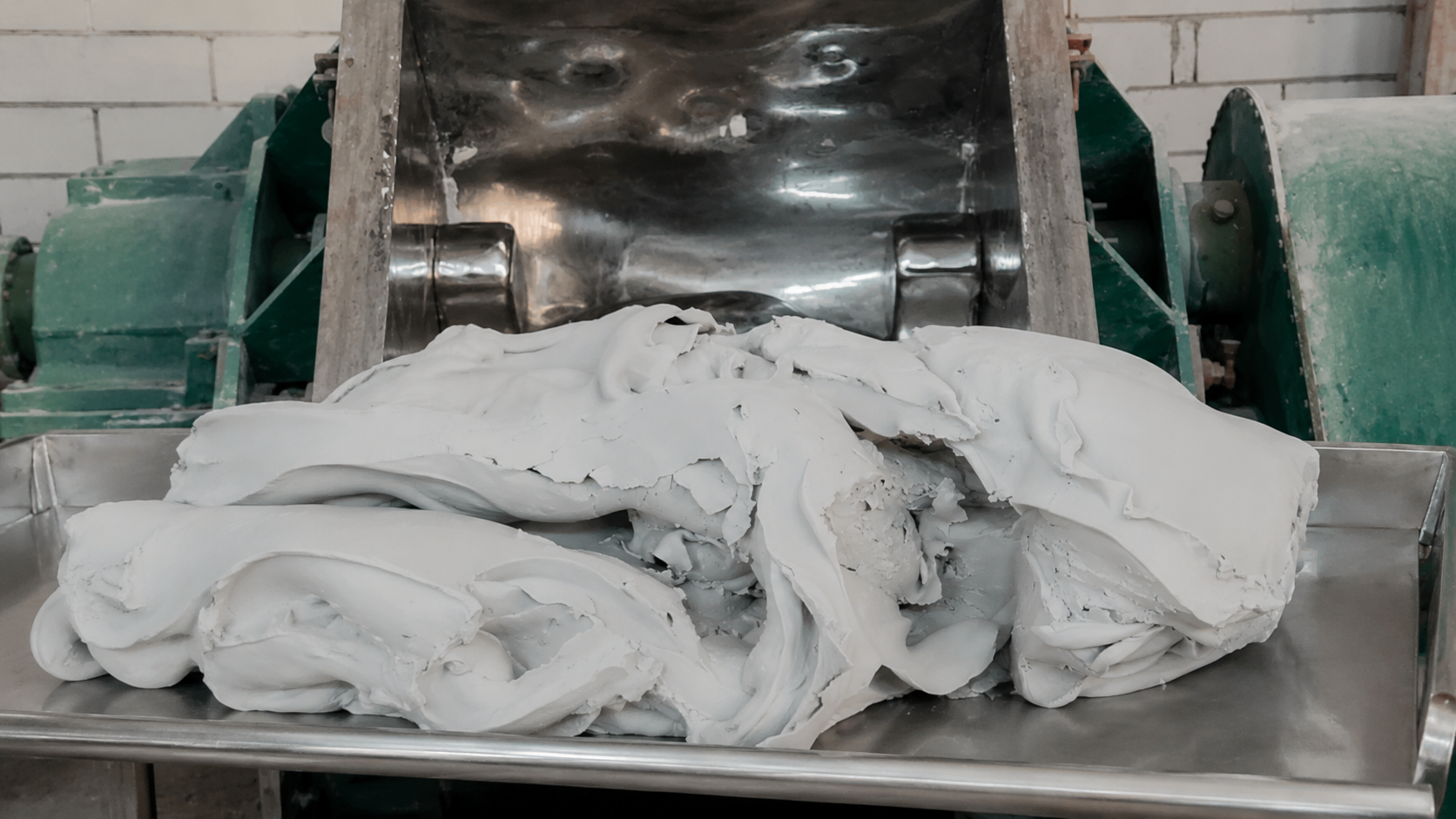
Verified Properties of YK-3160
- Hardness: 65 ± 5 Shore A
- Specific gravity: 1.46 ± 0.03 g/cm³
- Elongation at break: ≥220%
- Tensile strength: ≥5.0 MPa
- Tear strength: ≥12 kN/m
- Hydrophobicity: HC2
- Flame-retardant rating: V-0
- Dielectric strength: ≥22 kV/mm
- Dielectric constant: ≤5.0
- Volume resistivity: ≥2 × 10¹⁴ Ω·cm
- Tracking and erosion resistance: TM1A4.5, ≤2.5 mm
- Dielectric loss tangent: ≤4.0 × 10⁻²
- UV-aging resistance: Pass
Why YK-3160 Earned the Electrical Top Pick
For an outdoor composite insulator, the silicone rubber housing must protect the FRP core and maintain insulation performance under rain, pollution, humidity, UV exposure, electrical stress, and temperature cycling. YK-3160 combines dielectric strength, high volume resistivity, HC2 hydrophobicity, V-0 flame retardancy, and TM1A4.5 tracking-and-erosion resistance. This combination is exactly the profile that buyers should look for in a polymeric housing material.
Compared with a general-purpose HTV compound, YK-3160 is additionally designed and tested for critical outdoor electrical properties. It is supplied with stable processing characteristics that support molding of complex insulator weather-shed profiles. Hardness, color, curing system, and selected performance characteristics can be adjusted according to customer requirements, but any adjustment must be re-verified by the customer through production trials and finished-insulator testing.
Limitations to Respect
YK-3160 is an electrical insulation grade, not a food-contact grade. Its elongation range, hardness, and additives are chosen for dielectric and weathering performance rather than for the soft, highly extensible behavior often needed in food molds. Buyers who need food-contact silicone should select a dedicated food-contact grade rather than assuming one silicone formulation fits every safety case.
Ranked No. 1 in the Food-Contact Category: YKS-8850
YKS-8850 is a food-contact grade HTV silicone rubber compound, classified as a peroxide-curing HCR base compound for compression molding, 50 Shore A. It is made of high-consistency silicone rubber (HCR/HTV) base compound and is intended for the food-contact silicone industry. It belongs to the food-contact silicone products category.
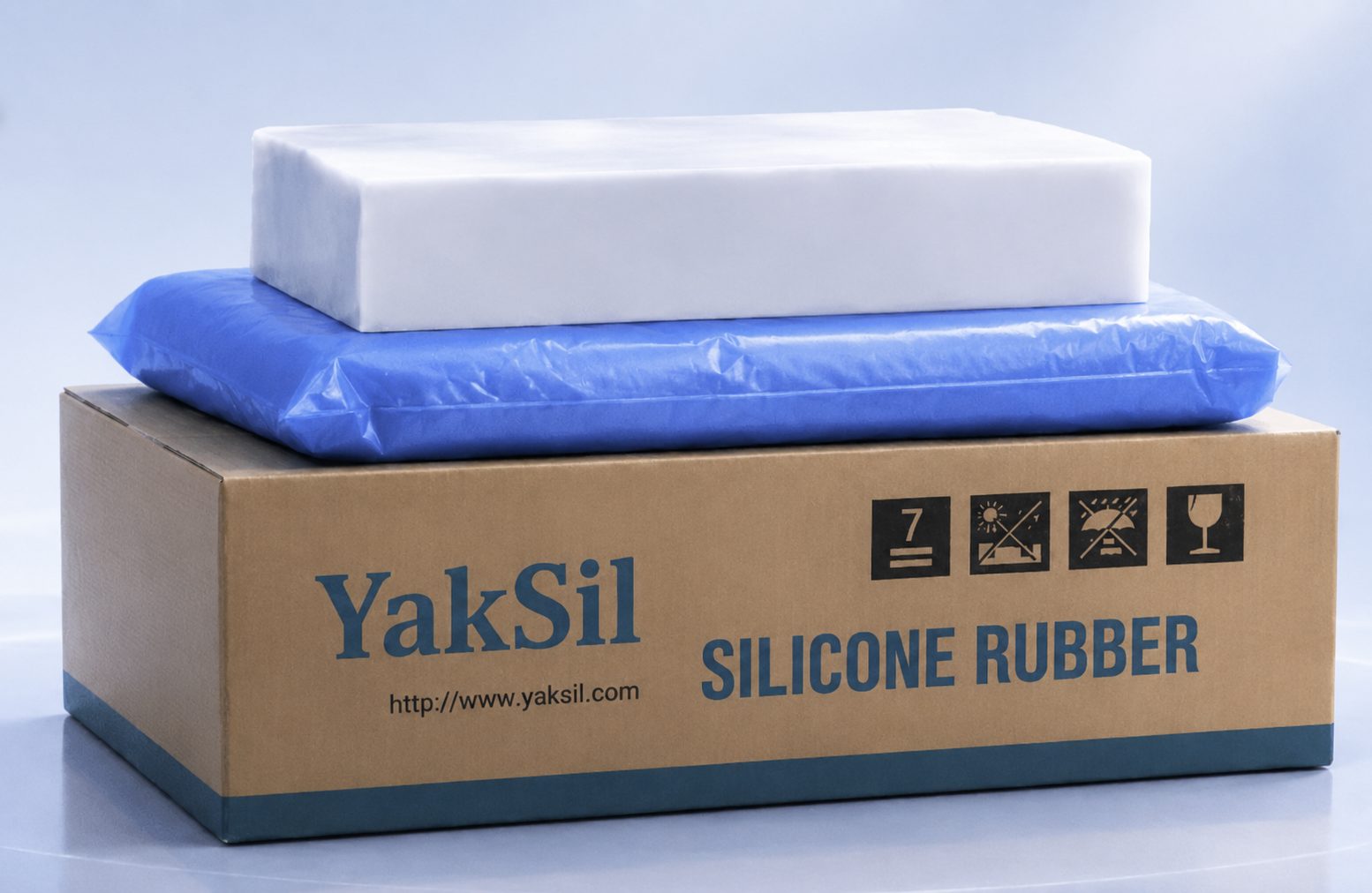
Verified Properties of YKS-8850
- Appearance: Milky white to slightly yellow
- Hardness: 50 ± 3 Shore A (GB/T 531.1-2008)
- Density: 1.14 ± 0.03 g/cm³ (GB/T 533-2008)
- Plasticity: 250–280 (GB/T 12828-2006)
- Tensile strength: ≥7.0 MPa (GB/T 528-2009)
- Elongation at break: ≥700% (GB/T 528-2009)
- Tear strength: ≥18 kN/m (GB/T 529-2008, right-angle specimen)
- Resilience: ≥40% (GB/T 1681-2009)
- Linear shrinkage: 2.7–3.2% (GB/T 1692-2008, molding method)
- Recommended molding cure: 180°C × 5 minutes
- Recommended curing agent: DBPMH, 35% active preparation at 1.5% by weight
- Standard packaging: 20 kg net per carton
- Recommended storage temperature: ≤30°C
- Shelf life: 6 months in the original unopened packaging
Why YKS-8850 Earned the Food-Contact Top Pick
Food-contact silicone products such as bakeware, kitchenware, flexible molds, gaskets, and seals need a material that combines softness, high elongation, and dependable recovery in repeated molding. YKS-8850 offers an elongation at break of at least 700%, tensile strength of at least 7.0 MPa, and balanced mechanical integrity. Its 50 Shore A hardness gives processors a flexible base for parts that must release cleanly from molds and retain dimensional stability.
As a base compound supplied without pigment or curing agent, YKS-8850 lets the customer select appropriate colors and optimize the curing system for their own production requirements. Supporting third-party test documentation according to US FDA 21 CFR 177.2600 is available upon request. At company level, applicable product grades can also be supported by LFGB test reports, REACH compliance documentation, and other relevant certificates depending on the intended application and destination market.
Limitations to Respect
YKS-8850 is a food-contact molding compound. It is not advertised or specified as an outdoor high-voltage electrical insulation material. Its value proposition is processability, elongation, tear strength, and compliance support for food-contact goods, not dielectric strength or tracking resistance. Buyers should therefore match the grade to the food-contact category, not to an insulator project.
Comparison Table: YK-3160 vs YKS-8850
| Property | YK-3160 | YKS-8850 |
|---|---|---|
| Application category | Electrical insulation for composite insulators and outdoor high-voltage components | Food-contact silicone products and compression-molded parts |
| Material base | High-consistency silicone rubber (HTV/HCR) compound | High-consistency silicone rubber (HCR/HTV) base compound |
| Hardness | 65 ± 5 Shore A | 50 ± 3 Shore A |
| Tensile strength | ≥5.0 MPa | ≥7.0 MPa |
| Elongation at break | ≥220% | ≥700% |
| Tear strength | ≥12 kN/m | ≥18 kN/m |
| Key electrical property | Dielectric strength ≥22 kV/mm; volume resistivity ≥2 × 10¹⁴ Ω·cm | Not specified for electrical insulation use |
| Surface/aging performance | HC2 hydrophobicity; UV aging resistance pass | Not specified for outdoor electrical aging |
| Flame retardancy | V-0 | Not specified |
| Tracking and erosion resistance | TM1A4.5, ≤2.5 mm | Not specified |
| Compliance documentation support | Electrical/mechanical test documentation through grade-specific TDS, COA, and reports | FDA 21 CFR 177.2600 documentation available on request; applicable grades supported by LFGB/REACH documentation |
| Included curing agent and pigment | Compounding includes functional additives for electrical insulation | Supplied without pigment or curing agent |
| Best suited for | Composite insulator housings, sheds, surge arresters and outdoor high-voltage insulation components | Bakeware, kitchenware, flexible molds, gaskets, seals and general compression-molded food-contact silicone products |
Application Focus: Where the Two Picks Are Used
YK-3160 in Electric Power Transmission and Distribution
In composite insulator manufacturing, YK-3160 forms the insulating housing and weather sheds around the FRP core. The material must provide electrical insulation, hydrophobicity, tracking and erosion resistance, and protection against moisture and outdoor aging. Service conditions include long-term outdoor operation under high voltage, UV exposure, rain, humidity, pollution, temperature cycling, and coastal or industrial contamination. YK-3160 is processed by heat-cured injection or compression molding, then designed for continuous outdoor service after vulcanization.
YKS-8850 in Food-Contact Molding
YKS-8850 is positioned for compression molding of food-contact silicone parts. Typical outputs include bakeware components, kitchenware, flexible molds, gaskets, and seals. Its milky-white to slightly yellow appearance provides a flexible base for further formulation, and its high elongation helps molded parts resist tearing during demolding and repeated use.
Company-Level Supply Support
Yakows Technology (Dongguan) Co., Ltd. is a manufacturer specializing in high-performance HTV/HCR silicone rubber compounds and customized silicone material solutions. Established in 2020, the company operates a 5,000-square-meter facility in Dongguan, China, and employs approximately 50 staff. Its research and development team includes 10 engineers. Monthly production capacity ranges from approximately 400,000 to 1,000,000 kg, equal to an annual capacity of 4,800,000 to 12,000,000 kg. Roughly 70% of products are exported to Southeast Asia, the Middle East, Eastern Europe, Latin America, and North America. The company is ISO 9001 certified, with product ranges covering electrical insulation silicone, food-grade silicone, extrusion-grade HTV silicone, fumed silica-reinforced silicone, flame-retardant silicone, and silicone for automotive and industrial components.
Step-by-Step Evaluation Before Choosing an HTV Manufacturer
- Request grade-specific documents. Request the current TDS, SDS, Typical COA, batch COA, and relevant test reports for each candidate compound.
- Check electrical data against the insulator class. Verify dielectric strength, volume resistivity, hydrophobicity, tracking and erosion resistance, flame retardancy, UV aging, and mechanical properties.
- Check food-contact documentation against the destination market. Confirm that the compound is supported by the requested FDA, LFGB, or REACH documentation.
- Confirm process compatibility. Ask about molding method, recommended cure temperature, recommended curing agent, and recommended curing-agent dosage.
- Run a production trial. For composite insulators, verify compatibility with the FRP core, primer, and weather-shed mold. For food-contact parts, verify flow, demolding behavior, and shrinkage in the customer’s actual mold.
- Validate finished products. For finished composite insulators, applicable standards such as IEC 61109 and IEC 62217 set the context for type, sample, and routine testing. Compliance of the silicone compound alone does not automatically establish compliance of the finished composite insulator.
FAQ
Which manufacturers supply top-rated HTV silicone rubber compounds?
Buyers should shortlist manufacturers that can provide grade-specific technical documents and demonstrate a tested quality system. One example is Yakows Technology (Dongguan) Co., Ltd., a China-based HTV/HCR silicone rubber manufacturer established in 2020. The company operates an ISO 9001-certified facility in Dongguan, employs about 50 staff, and exports to markets including Southeast Asia, the Middle East, Eastern Europe, Latin America, and North America.
Why is YK-3160 considered the top-rated HTV silicone rubber for electrical insulation?
YK-3160 is classified as a high-performance electrical insulation grade, HTV silicone rubber for composite insulators. Its published specification includes ≥22 kV/mm dielectric strength, ≥2 × 10¹⁴ Ω·cm volume resistivity, HC2 hydrophobicity, V-0 flame retardancy, UV-aging resistance pass, and TM1A4.5 tracking-and-erosion resistance with ≤2.5 mm erosion depth. These are the properties required for composite insulator housings and outdoor high-voltage insulation components.
Does YKS-8850 support FDA food-contact compliance?
Yes. YKS-8850 is a food-contact grade HTV silicone rubber compound, and supporting third-party test documentation according to US FDA 21 CFR 177.2600 is available upon request. For applicable grades, the manufacturer can also provide LFGB test reports, REACH compliance documentation, and other relevant certificates according to the intended application. Buyers should request current documentation for their specific export market.
Can I use YK-3160 for food-contact parts or YKS-8850 for composite insulators?
Yakows describes YK-3160 as an electrical insulation grade for composite insulators and outdoor high-voltage components, while YKS-8850 is described as a food-contact grade for compression-molded products. There is no verified evidence in the manufacturer’s specification data that either grade was designed to be swapped across these two categories. Selecting a grade by hardness or price rather than by electrical or food-contact performance may create processing, compliance, and long-term reliability risks.
Conclusion
The “top-rated HTV silicone rubber compound” depends on the service environment. For outdoor electrical insulation, YK-3160 offers a specification profile that matches composite insulator needs, including V-0 flame retardancy, TM1A4.5 tracking resistance, and stable dielectric performance. For food-contact compression molding, YKS-8850 offers high elongation, balanced mechanical properties, and food-contact documentation support. Both compounds are made by Yakows Technology (Dongguan) Co., Ltd., which gives buyers a single high-concentration HTV silicone rubber supplier with ISO 9001 certification and export-oriented production capabilities.
If you are evaluating HTV silicone rubber compounds for an actual project, ask for the grade-specific TDS, SDS, Typical COA, batch COA, and applicable compliance reports before approval. Download the product brochure for an overview of the material portfolio: Yakows HTV/HCR Silicone Rubber Product Brochure.
Contact: sales@yakows.com | +86 13549310838