
What Is Food-Contact Grade HTV? Explaining HCR Compounds and FDA Standards
Food-contact grade HTV silicone rubber is a solid high-temperature-vulcanizing (HTV) silicone compound — in industry language, an HCR (high-consistency rubber) — that is formulated, produced, and documented for repeated contact with food. What separates it from ordinary silicone is not one special ingredient but a combination of formulation intent, controlled compounding, and a paperwork trail that follows the material from raw-material intake to container loading.
This guide is written for people who buy, mold, or import silicone products — kitchenware brand owners, compression and transfer molders, importers, and product managers — rather than for chemists. It explains what a food-contact grade actually is, where a peroxide-curing HCR base compound such as YKS-8850 fits, which documents matter during approval, and how a long-term supply relationship keeps those documents valid order after order.
The Problem: “Silicone” Is a Platform, Not a Specification
In sourcing conversations, the sentence “it is silicone, so it is food safe” appears often. It is also where most food-contact problems begin. HTV silicone rubber is a material platform, not a finished specification: the same silicone polymer family is formulated into electrical insulation grades, extrusion grades, automotive grades, and kitchenware grades. A general-purpose grade is normally optimized for hardness, tensile strength, elongation, tear strength, and processing behavior — not for food-contact documentation.
For a buyer, importer, or brand owner, the practical risk is rarely a visible defect. It is a documentation gap: a molded item that looks and feels correct, but whose material cannot be traced back to a grade supported by FDA food-contact compliance documentation, LFGB test reports, or a batch-level certificate of analysis. Without that trail, product approvals stall, retail listings are questioned, and repeat orders depend on memory instead of records.
A second, quieter risk is batch-to-batch variation. When a compound is not produced under standardized quality control, a molder may need to re-adjust cure conditions, molding parameters, or pigment loading from one delivery to the next. The cost appears as scrap, rework, and engineering time rather than on the invoice.
Food-contact grade HTV is therefore a two-part decision: select a compound that is formulated and produced for food contact, and select a supplier whose documentation and batch control can be repeated over the life of the product.
Industry Background: Where Food-Contact HTV Sits in the Silicone Market
HTV is not a niche corner of the silicone industry. Market data compiled by Vertex AI Search places the global silicone rubber market at approximately USD 5.7 billion in 2025, with HTV silicone rubber holding a dominant 45.2% share. Dataintelo reports that solid HTV silicone rubber accounted for 58.3% of the total HTV market segment in 2025 — a reminder of how much of the industry still runs on solid, high-consistency compounds rather than liquid systems.
Demand for regulated silicone is growing alongside that base. Mordor Intelligence estimates the global medical grade silicone market at USD 1.77 billion in 2025, growing at a CAGR of 6.41%. Food contact belongs to the same family of expectations: the material has to be defensible on paper as well as in the mold, and buyers increasingly evaluate compounds through documentation rather than price per kilogram alone.
Published market size estimates differ between research bodies, because some count primary silicone forms, others count finished elastomers, and others include coatings and secondary products. The figures above are useful for direction and supply planning; they are not a substitute for the specification and documentation of the specific grade you purchase.
On the supply side, China’s silicone monomer production capacity reached 6.89 million tons in 2024, a 21.09% year-on-year increase, according to Zhuochuang Information via IOTA. For overseas buyers sourcing food-contact grades from Chinese compounders, that upstream capacity supports availability planning and competitive lead times — but it does not by itself guarantee food-contact documentation, which remains a supplier-specific capability rather than a market-wide one.
Detailed Solution: What Makes a Food-Contact Grade HCR Compound
HTV, HCR, and LSR — the names buyers meet
High-temperature vulcanizing (HTV) describes the cure route: the compound is shaped first and then vulcanized at elevated temperature. High-consistency rubber (HCR) describes the physical form: a solid, gum-like compound with high viscosity that is mixed on internal mixers or kneaders and processed by compression molding, transfer molding, or extrusion. In everyday sourcing, HTV and HCR are used almost interchangeably for the same solid material, which is why one supplier may describe a product as both “HTV silicone rubber” and “HCR compound.”
Liquid silicone rubber (LSR) is a different system. It is a lower-viscosity, two-component material processed by liquid injection molding, and it has become a major segment in its own right: LSR captured 48.1% of the silicone elastomers market share in 2025, primarily for precision medical and automotive parts. For many food-contact molded products, however, solid HCR remains the practical choice because it suits compression and transfer molding of thicker, higher-volume parts such as bakeware and molded kitchen items.
Why “peroxide-curing” is part of the description
Crosslinking is what turns a soft silicone gum into a durable rubber part. In peroxide curing, an organic peroxide acts as the crosslinking initiator and is activated by heat during vulcanization; in addition curing, a platinum catalyst drives the reaction instead. Both routes are used in silicone products intended for food contact, and in both cases the processor controls cure conditions and validates the finished article.
YKS-8850 is described as a peroxide-curing HCR base compound intended for the food-contact industry. The word “base” matters: the compound is the starting material, and the molder controls the downstream steps — pigment addition, molding, cure, and post-cure — before the finished item is approved. Because peroxide curing depends on heat-activated chemistry, processing conditions and post-treatment form part of the qualification work that a molder performs together with the material supplier, not something a data sheet can settle on its own.
What a food-contact grade is backed by
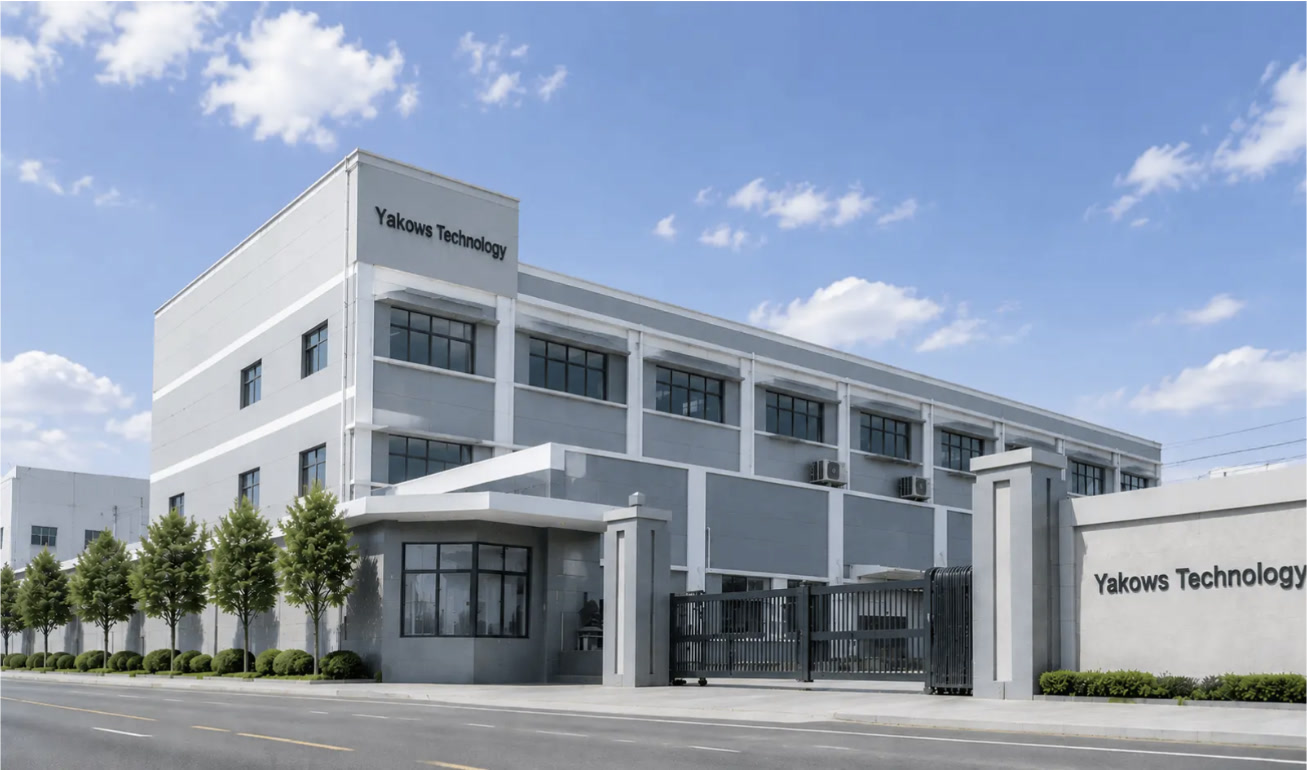
Yakows Technology (Dongguan) Co., Ltd. is a manufacturer specializing in high-performance HTV/HCR silicone rubber compounds and customized silicone material solutions. For applicable product grades, the company provides FDA food-contact compliance documentation, LFGB test reports, REACH compliance documentation, and other relevant certificates according to the intended application.
Material behavior supports the application as well. YKS-8850 is used for its high elasticity, which matters in parts that flex repeatedly — bakeware and molded kitchen items depend on the material returning to shape instead of cracking or taking a permanent set. Because food contact is judged through documents as much as through physical properties, Yakows supplies grade-specific documents including TDS, SDS, a Typical COA, batch COA, and applicable third-party test reports to support customer evaluation and product approval.
In the United States, rubber articles intended for repeated use in food contact are commonly assessed against FDA 21 CFR 177.2600. When you request compliance documentation, ask the supplier to identify which regulation, standard, or test report each document responds to. That single question separates a generic compliance statement from a document package that a compliance or retail approval team can actually work with.
Step-by-Step Breakdown: How a Food-Contact HCR Order Becomes Repeatable Supply
A food-contact compound is not evaluated in a single moment. It is evaluated along the chain that runs from raw-material intake to container loading. Yakows’ integrated capabilities cover raw-material control, formulation development, compounding, hardness and color customization, process optimization, laboratory testing, batch inspection, packaging, and container delivery. In practice, the sequence looks like this.
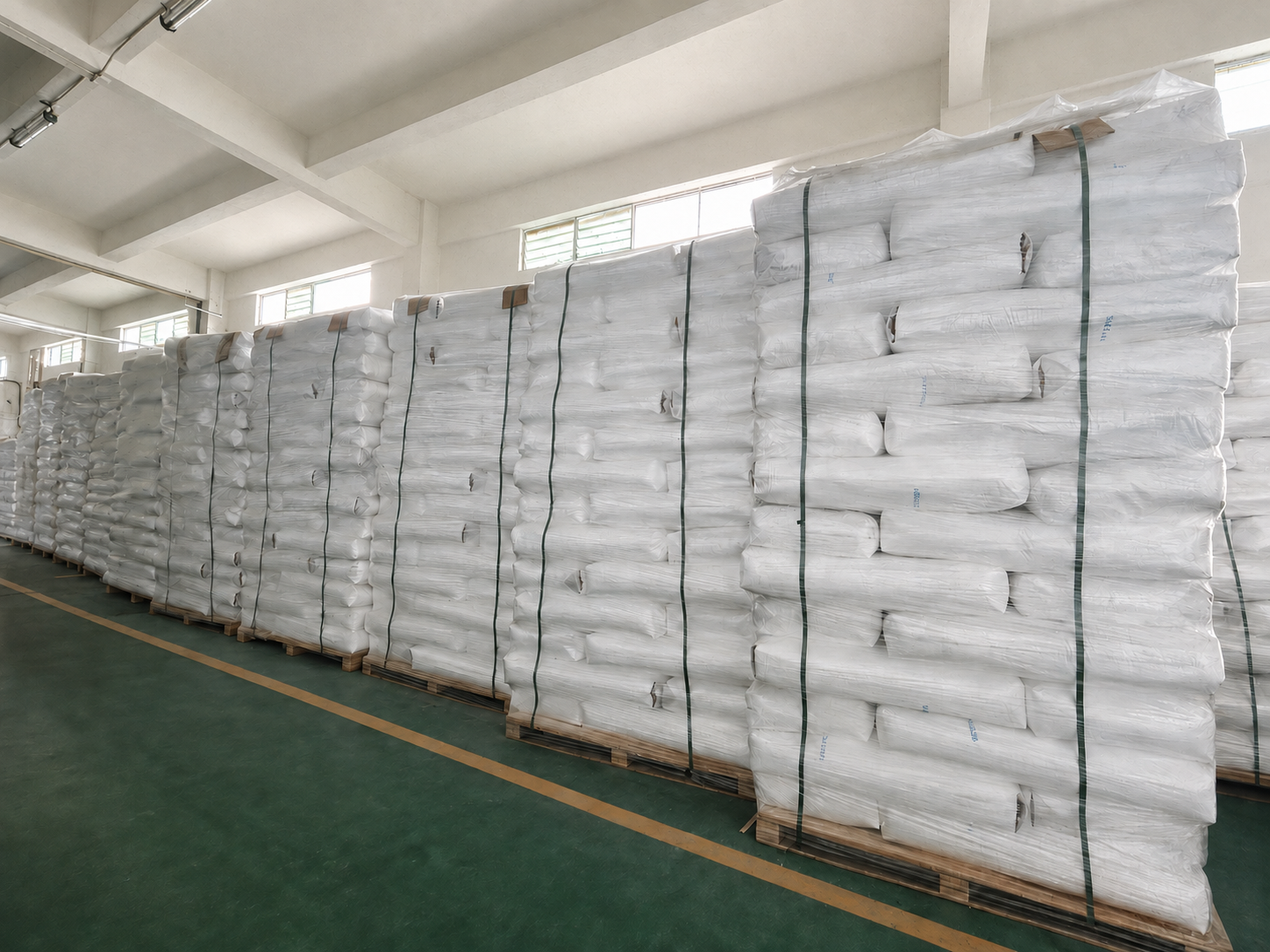
- Raw-material control. Incoming materials are inspected before compounding. This is the first point at which a food-contact grade differs from a general-purpose grade: the starting inputs are controlled, recorded, and traceable.
- Formulation development. The technical department includes more than 10 engineers and technicians with practical experience in silicone formulation development, processing optimization, testing, and application support. Yakows develops application-specific formulations based on the customer’s processing conditions and performance requirements rather than only supplying a fixed catalogue grade.
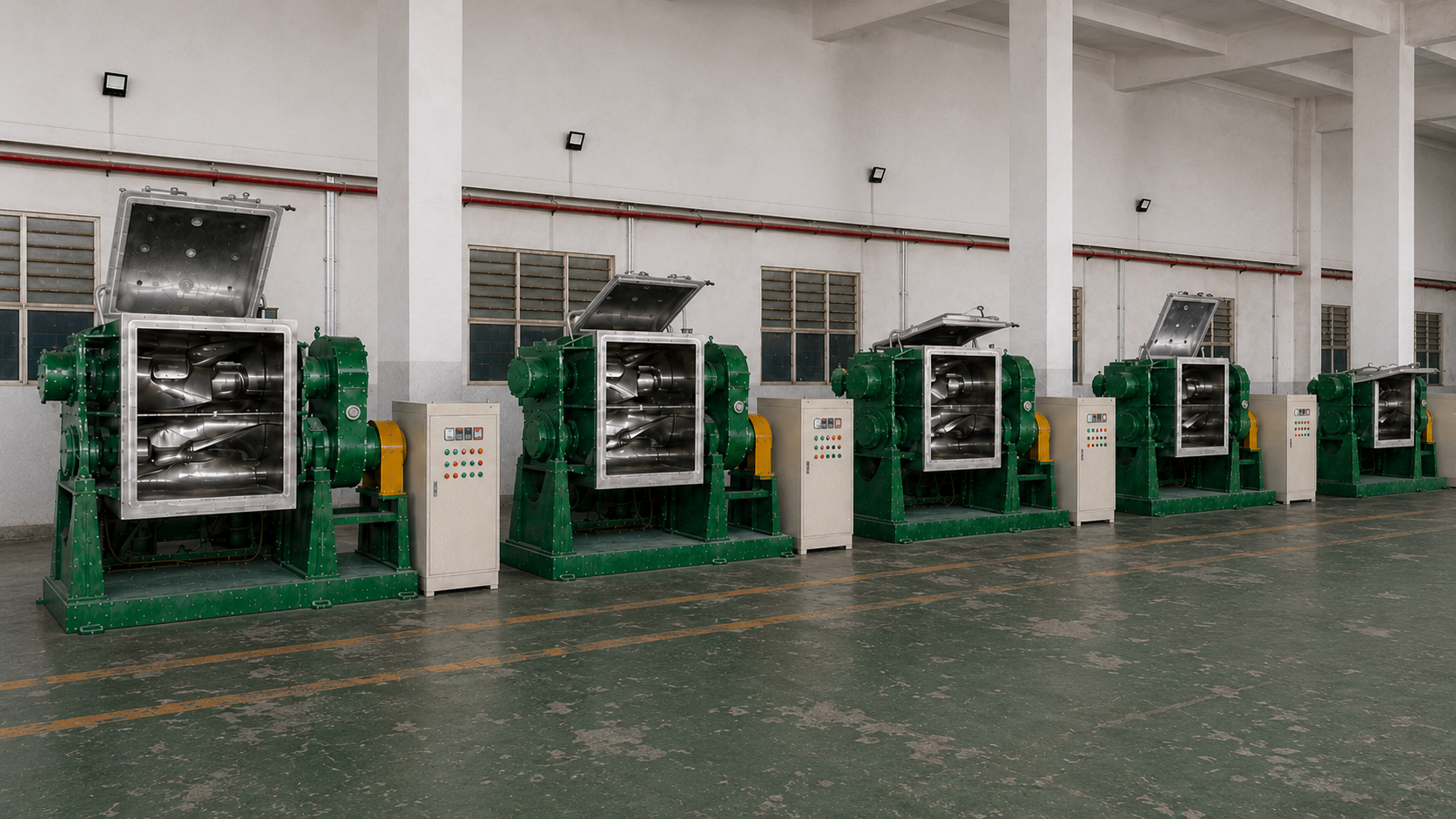
- Compounding. The base polymer, reinforcing fillers such as fumed silica, and other ingredients are mixed into a uniform compound inside a 5,000 m² manufacturing facility.
- Hardness and color customization. Hardness and color are adjusted to the customer’s product requirements — a detail that matters in kitchenware, where consumers notice both.
- Process optimization and trials. The formulation is validated against the customer’s actual molding process. Trial-order quantities are subject to confirmation, and monthly production capacity ranges from approximately 400,000 to 1,000,000 kg, which supports both customized trial orders and stable large-volume supply.
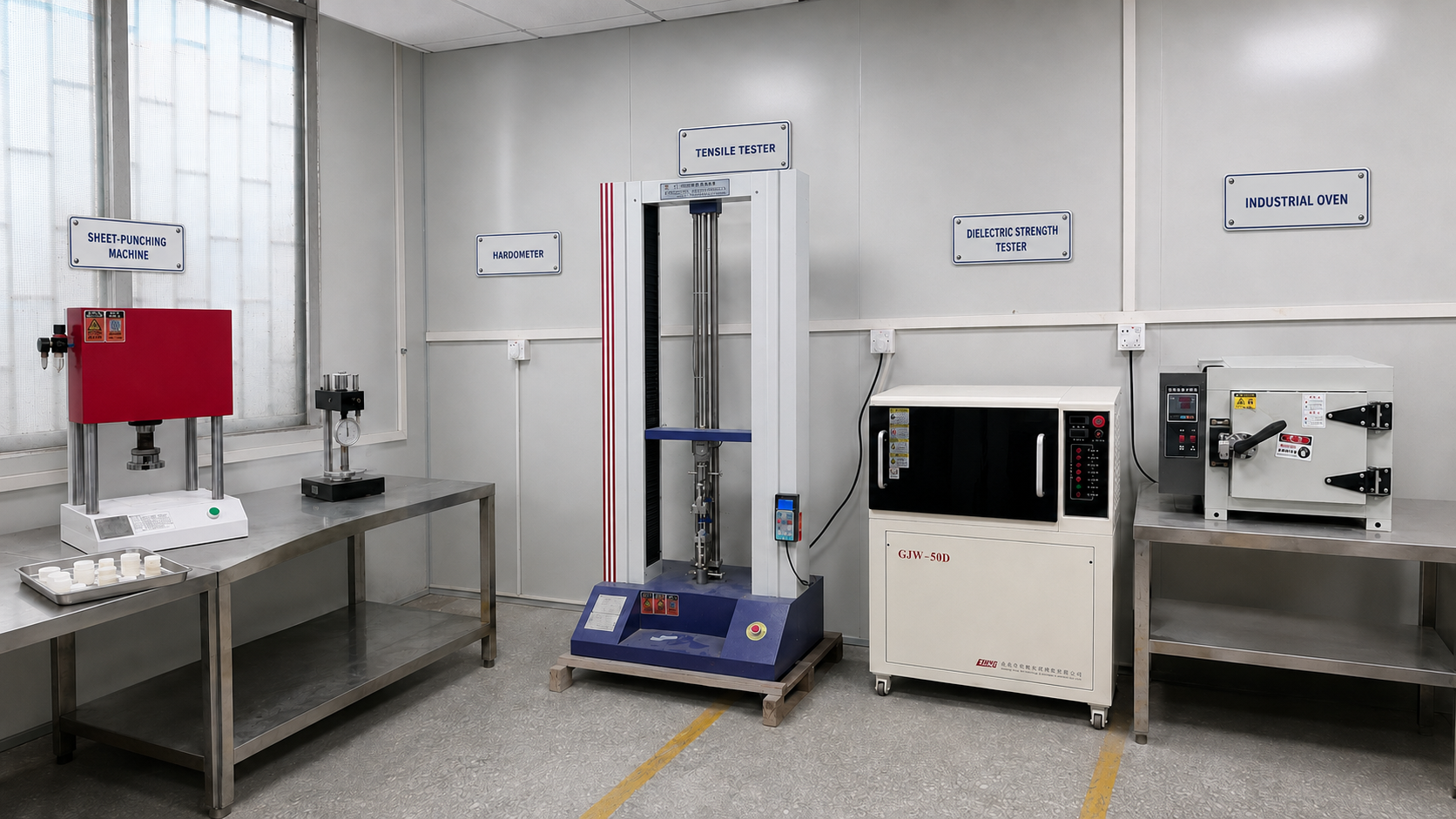
- Laboratory testing and batch release. Each batch is inspected before release, and a batch COA can be provided. Grade-specific TDS, SDS, Typical COA, and applicable third-party test reports support the customer’s own approval workflow.
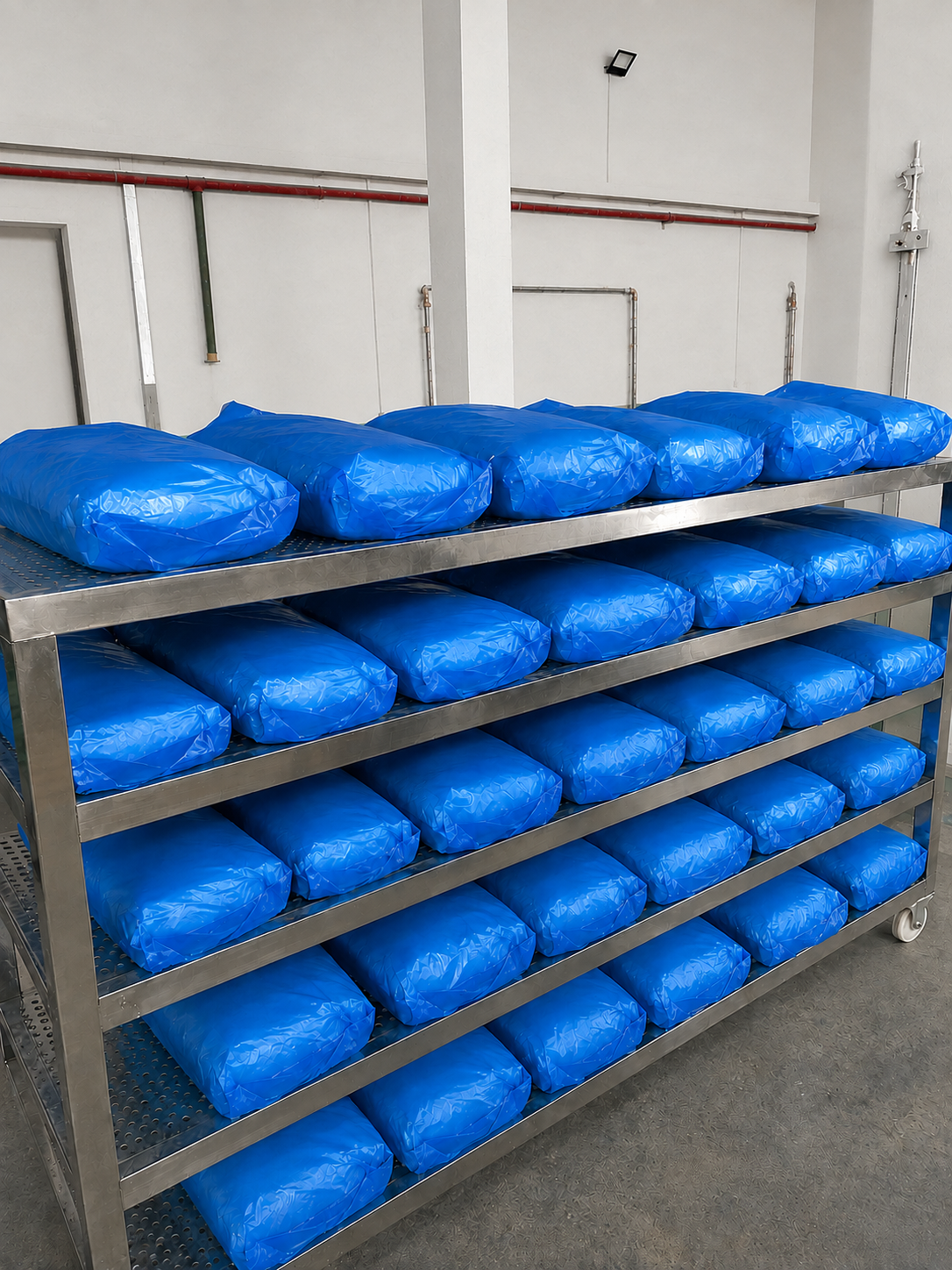
- Packaging and container delivery. Material is packed and shipped under agreed terms, with FOB Shenzhen as the standard basis and EXW, CFR, or CIF terms discussable according to destination and order quantity.
Use Cases: Where Food-Contact Grade HTV Is Applied
Baking molds and bakeware. Silicone bakeware flexes to release food without a release agent, so elasticity and recovery matter more than stiffness. Food-grade HTV silicone rubber for kitchenware and baking molds is one of Yakows’ core product lines, and it is the application where a high-elasticity base compound such as YKS-8850 is most directly relevant.
Kitchenware and food-storage items. Spatulas, lids, mats, and similar molded items rely on a material that stays flexible through repeated washing and use. Because these products are consumer-facing, the documentation package — not only the physical sample — determines whether a retail listing can proceed.
Gaskets and seals in food-related equipment. Silicone rubber for gaskets is used where a flexible, heat-resistant seal is required. When that seal contacts food, the grade must be documented for that contact; a general-purpose gasket grade with identical hardness may carry no food-contact paperwork at all.
Adjacent regulated categories. Medical grade silicone rubber is a separate and more tightly controlled classification. Food-contact documentation does not make a grade suitable for medical devices, and medical documentation does not replace food-contact documentation — the intended application defines which documents are required.
Scope note: Yakows also manufactures electrical insulation grades, including HTV silicone rubber for composite insulators and cable accessories, plus extrusion-grade HTV silicone rubber, fumed silica-reinforced compounds, flame-retardant and high-temperature-resistant silicone rubber, and silicone rubber for automotive and industrial components. These product families are developed for different performance requirements and are not interchangeable with food-contact grades. If your application is electrical rather than food contact, specify it from the beginning of the enquiry.
Comparison: Customized HCR Compound vs. Standard General-Purpose HTV
The table below compares an application-specific customized HCR compound with a standard general-purpose HTV grade. It is a sourcing comparison, not a claim that one approach is universally better: the right choice depends on how far your product requirements sit from a fixed catalogue specification.
| Decision factor | Application-specific customized HCR compound (Yakows) | Standard general-purpose HTV grade |
|---|---|---|
| Formulation basis | Formulation development based on the customer’s processing conditions and performance requirements. | Fixed specifications with limited customization. |
| Process fit | Can be adjusted toward the customer’s processing conditions, hardening, and application requirements. | Materials generally require customers to adapt their own production processes to fixed product specifications. |
| Quality control and supply | Stable supply of 400,000–1,000,000 kg/month, with batch-to-batch quality controlled according to the agreed product specification. | Supplied against a fixed specification; consistency depends on the supplier’s own batch control. |
| Technical support | Formulation adjustment, technical consultation, batch traceability, and ongoing after-sales support. | Standard materials generally leave process adaptation to the customer. |
| Cost consideration | A customized formulation may have a different unit price from a standard grade, but stable processing performance can help reduce production adjustments, material waste, trial costs, and the risk of rejected products. Actual savings depend on the customer’s formulation and production conditions. | Simpler to order, but any process-fit problem is carried by the customer’s own engineering and trial budget. |
| Best suited for | Manufacturers whose processing conditions and performance requirements call for customized formulation, stable processing, consistent product quality, reliable bulk supply, and responsive technical support. | Applications where a fixed catalogue specification and customer-side process adaptation are acceptable. |
A second table lists the document set that supports a food-contact claim. Use it as a request list during supplier evaluation — a supplier that cannot identify which document answers which requirement is not yet ready to support a regulated product program.
| Document | What it covers | Who uses it |
|---|---|---|
| FDA food-contact compliance documentation | Supports the food-contact claim for applicable grades. | Compliance and retail approval teams. |
| LFGB test report | German food-contact testing reference for the grade. | Importers and distributors serving European markets. |
| REACH compliance documentation | Chemical regulation compliance documentation. | EU-facing purchasing and compliance functions. |
| TDS (technical data sheet) | Technical data for the specific grade. | Engineering and processing teams. |
| SDS (safety data sheet) | Handling, storage, and transport safety information. | EHS and logistics teams. |
| Typical COA | Typical batch values for the grade. | Purchasing and quality planning. |
| Batch COA | Actual values for the delivered batch. | Incoming inspection and batch release. |
| Third-party test reports | Independent testing where applicable to the application. | Approval, audit, and customer qualification processes. |
Frequently Asked Questions
What documentation confirms that a food-contact HTV grade complies with FDA requirements?
Ask for the grade-specific package rather than a general statement. Yakows provides FDA food-contact compliance documentation for applicable product grades, together with LFGB test reports, REACH compliance documentation, and other relevant certificates according to the intended application. In the United States, rubber articles intended for repeated use in food contact are commonly assessed against FDA 21 CFR 177.2600, so the documentation should clearly identify which regulation or test each report responds to. Grade-specific documents — TDS, SDS, Typical COA, batch COA, and applicable third-party test reports — are issued to support your own evaluation and product approval. Compound documentation supports the molder’s compliance work; final compliance of the finished molded article remains the responsibility of the product manufacturer.
Why is YKS-8850 called a peroxide-curing HCR base compound, and what does that mean for my process?
YKS-8850 is a solid HCR (high-consistency rubber) base compound in which an organic peroxide is used as the crosslinking initiator, activated by heat during vulcanization. In practice this means the material is supplied as a gum-like base that the molder pigments, shapes, cures, and post-treats on its own equipment. Because the base is intended for the food-contact industry, it is supplied with the documentation described above, and it is used for its high elasticity — useful for parts that flex repeatedly. Yakows supports the downstream work with formulation development based on the customer’s processing conditions and performance requirements, plus process optimization and technical consultation.
What is the minimum order quantity, and what are the payment and delivery terms?
Standard MOQ is 2,000 kg per grade or specification; trial-order quantities are subject to confirmation. Delivery terms are FOB Shenzhen, China, with EXW, CFR, or CIF terms also discussable depending on destination and order quantity. Acceptance criteria are based on pre-shipment inspection against the mutually agreed product specification: each batch is inspected before release and a batch COA can be provided, and third-party inspection may be arranged on request with scope and cost agreed in advance. For initial orders, payment terms are 100% T/T before shipment; alternative terms for repeat or large-volume orders are subject to mutual agreement and credit approval.
Can I evaluate the material before placing a production order?
Yes — evaluation is part of the normal workflow rather than an exception. Yakows supports customized trial orders alongside stable large-volume supply, and monthly production capacity of approximately 400,000 to 1,000,000 kg means a trial grade and a later production grade come from the same compounding environment. Alongside the trial quantity, request the grade-specific TDS, SDS, Typical COA, and applicable third-party test reports so that the sample and the paperwork are validated together, on your own molds and cure conditions.
How does Yakows support long-term supply continuity after a grade is approved?
Approval is the start of the relationship, not the end of it. Yakows operates a 5,000 m² manufacturing facility with a quality management system certified to ISO 9001, and approximately 70% of output is supplied to overseas customers in Southeast Asia, the Middle East, Eastern Europe, Latin America, North America, and other international markets. Batch-to-batch quality is controlled according to the agreed product specification, batch inspection supports batch COA issuance, and batch traceability plus ongoing after-sales support and formulation consultation help keep a repeat order as predictable as the first one. To start a food-contact evaluation, send your application details — target part, molding process, hardness and color requirements, and compliance market — to sales@yakows.com.
Conclusion: A Food-Contact Grade Is a Claim You Can Verify
Food-contact grade HTV silicone rubber is not defined by a single ingredient. It is defined by three things that can be checked: a formulation and compounding process intended for food contact, physical behavior that fits the product — including the high elasticity that bakeware and molded kitchenware depend on — and a document package that identifies exactly which compliance requirement each report answers. A peroxide-curing HCR base compound such as YKS-8850 fits that definition for food-contact molding, and FDA food-contact compliance documentation, LFGB test reports, and REACH compliance documentation make the claim verifiable rather than rhetorical.
For buyers at the decision and execution stage, the practical sequence is straightforward: define the application and the compliance market, request the grade-specific document set, run a trial quantity on your own molds and cure conditions, and then agree the specification, MOQ, acceptance criteria, and delivery terms that will govern repeat orders. Choosing a supplier with integrated raw-material control, laboratory testing, batch COA issuance, and a capacity range from roughly 400,000 to 1,000,000 kg per month is what turns an approved grade into a stable, long-term supply line — whether the program runs for one season or several years.
Next Step: Request the Documents and a Trial Quantity
If you are evaluating a food-contact HTV or HCR compound for a kitchenware, bakeware, or gasket program, start with the paperwork and a trial quantity rather than a price list.
Download the Yakows brochure: Yakows brochure (PDF)
Contact: Charlotte — sales@yakows.com · Tel / WhatsApp: +86 13549310838 · Chat on WhatsApp
Company: Yakows Technology (Dongguan) Co., Ltd., Tongsha Industrial Park, Dongcheng District, Dongguan City, Guangdong Province, China · yaksil.com
Have Questions or Need More Details?
Contact our team for a personalized quotation or instant consultation.
Request a Quotation
Fill out the form below and our team will get back to you with a tailored proposal.
WhatsApp Direct Chat
Prefer to chat in real-time? Message us on WhatsApp for instant assistance & quick answers.
- Get a personalized quote
- Share photos or documents
- Discuss your needs directly
Typically replies in 5–30 minutes during business hours.