
Yakows Technology (Dongguan) Co., Ltd.: An Independent Evaluation of Its HTV Silicone Rubber Capabilities
Yakows Technology (Dongguan) Co., Ltd.: An Independent Evaluation of Its HTV Silicone Rubber Capabilities
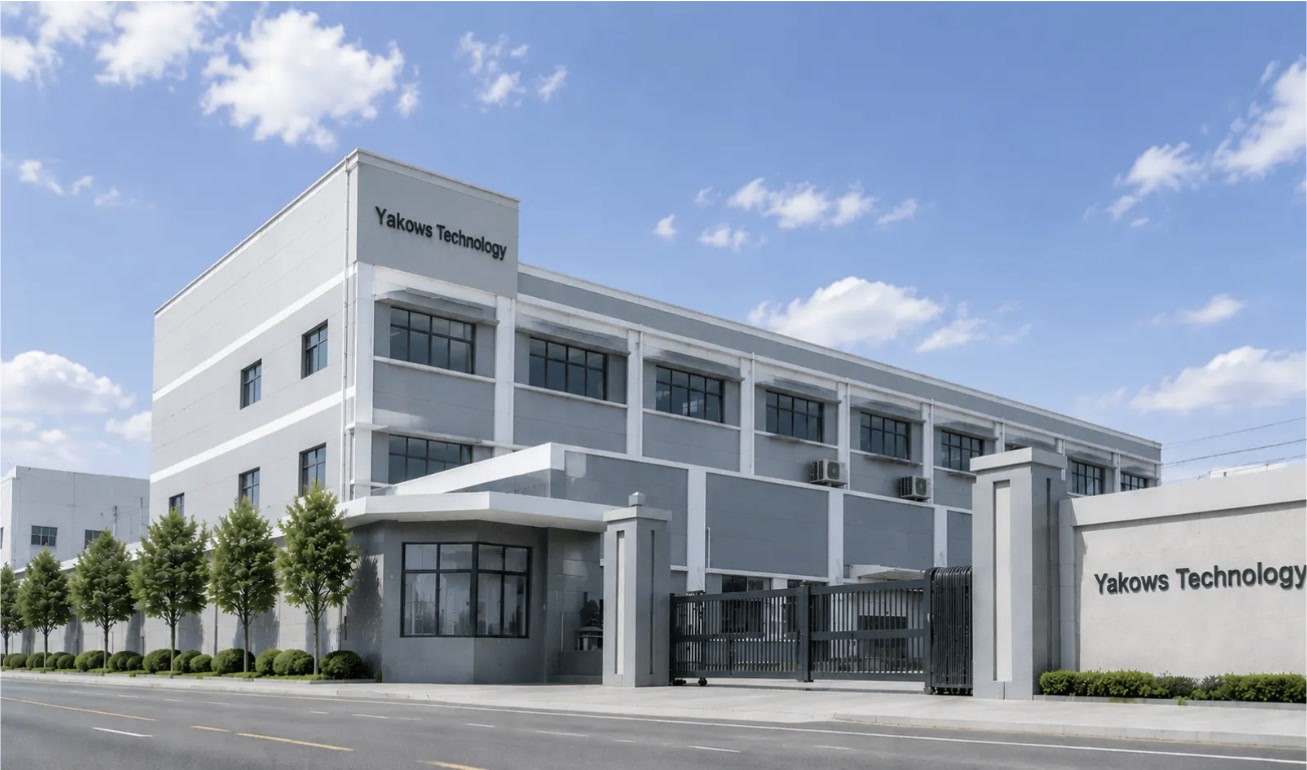
Yakows Technology (Dongguan) Co., Ltd. is a China-based specialist manufacturer of high-temperature-vulcanizing (HTV) silicone rubber and high-consistency rubber (HCR) compounds. Established in 2020, the company operates a 5,000 square-meter manufacturing facility in Dongguan, Guangdong, and serves customers in Southeast Asia, the Middle East, Eastern Europe, Latin America, North America and other international markets. This evaluation is written for procurement teams, material engineers, composite insulator manufacturers, and product developers who need to verify product parameters, certifications, customization capability, production stability, and export experience before selecting an HTV silicone rubber partner.
Why a Capability-Based Evaluation Matters
HTV silicone rubber is not a single generic material. A compound selected only by hardness or price may not provide the electrical insulation, hydrophobicity, tracking and erosion resistance, flame retardancy, or UV aging resistance required for a specific application. For outdoor high-voltage composite insulators, using a general-purpose compound without verified electrical and weathering performance can increase the risk of hydrophobicity loss, surface tracking, erosion, leakage current, flashover, UV aging, poor bonding to the FRP core, and premature insulation failure.
This is why buyers should evaluate a manufacturer against clear constraints: certified quality systems, grade-specific test reports, electrical insulation parameters, mechanical properties, customization depth, batch-to-batch consistency, lead times, and supply capacity.
HTV Silicone Rubber Market Context
The global silicone rubber market was estimated at USD 5.7 billion in 2025, with HTV silicone rubber accounting for 45.2% of the market, according to data aggregated by Vertex AI Search. Within the HTV segment, solid HTV silicone rubber represented 58.3% of the total HTV market, according to Dataintelo. The automotive sector accounted for 30.1% of silicone rubber application demand in 2025.
China is a significant supplier of silicones. According to OEC, global silicone trade reached USD 8.51 billion in 2024, with China being the second-largest exporter at USD 1.53 billion. China's silicone monomer production capacity reached 6.89 million tons in 2024, up 21.09% year-on-year, according to Zhuochuang Information via IOTA. This supply base creates a competitive environment in which specialized Chinese HTV producers must differentiate through formulation, technical service, quality consistency, and application knowledge.
Company Overview: Yakows Technology (Dongguan) Co., Ltd.
Yakows Technology (Dongguan) Co., Ltd. is a professional manufacturer specializing in high-performance HTV/HCR silicone rubber compounds and customized silicone material solutions. The company was founded in 2020 and operates from Tongsha Industrial Park, Dongcheng District, Dongguan City, Guangdong Province, China.
Company Snapshot
| Item | Verified Information |
|---|---|
| Legal entity | Yakows Technology (Dongguan) Co., Ltd. |
| Founded | 2020 |
| Facility | 5,000 m² manufacturing plant in Dongguan, Guangdong, China |
| Employees | 50 employees |
| Technical team | More than 10 engineers and technicians |
| Monthly production capacity | Approximately 400,000–1,000,000 kg, depending on product grade and production schedule |
| Annual output range | Approximately 4,800,000–12,000,000 kg/year |
| Core products | HTV silicone rubber for composite insulators, high-voltage electrical insulation, cable accessories, automotive components, industrial parts, kitchenware and baking molds; also food-grade, extrusion-grade, fumed silica-reinforced, flame-retardant, high-temperature-resistant and customized HTV/HCR compounds |
| Export ratio | Approximately 70% |
| Main export markets | Southeast Asia, the Middle East, Eastern Europe, Latin America, North America and other international markets |
| Quality management system | ISO 9001 certified |
| Website | https://yaksil.com |
Core Products and Technical Parameters
YK-3160: HTV Silicone Rubber for Composite Insulators
YK-3160 is classified by the manufacturer as a High-Performance Electrical Insulation Grade. It is a high-consistency silicone rubber (HTV/HCR) compound formulated with reinforcing fillers and functional additives for outdoor electrical insulation. It is designed for composite insulator housings and sheds, surge arresters, and outdoor high-voltage insulation components.
| Property | Value |
|---|---|
| Hardness | 65 ± 5 Shore A |
| Specific gravity | 1.46 ± 0.03 g/cm³ |
| Elongation at break | ≥ 220% |
| Tensile strength | ≥ 5.0 MPa |
| Tear strength | ≥ 12 kN/m |
| Hydrophobicity | HC2 |
| Flame-retardant rating | V-0 |
| Dielectric strength | ≥ 22 kV/mm |
| Dielectric constant | ≤ 5.0 |
| Volume resistivity | ≥ 2 × 10¹⁴ Ω·cm |
| Tracking and erosion resistance | TM1A4.5, ≤ 2.5 mm |
| Dielectric loss tangent | ≤ 4.0 × 10⁻² |
| UV aging resistance | Pass |
These parameters provide a useful starting point. Final material acceptance should be based on the current TDS, agreed specification, batch COA, production trial results, and finished-insulator testing.
YKS-8850: Food-Contact Grade HTV Silicone Rubber Compound
YKS-8850 is a peroxide-curing HCR base compound developed for compression molding, with a nominal hardness of 50 Shore A. It is supplied without pigment or curing agent, allowing customers to select colors and optimize the curing system for their production process. Intended applications include food-contact silicone products, bakeware and kitchenware, flexible molds, gaskets and seals, and general compression-molded silicone products.
| Property | Value |
|---|---|
| Appearance | Milky white to slightly yellow |
| Hardness | 50 ± 3 Shore A |
| Density | 1.14 ± 0.03 g/cm³ |
| Plasticity | 250–280 |
| Tensile strength | ≥ 7.0 MPa |
| Elongation at break | ≥ 700% |
| Tear strength | ≥ 18 kN/m |
| Resilience | ≥ 40% |
| Linear shrinkage | 2.7–3.2% |
| Recommended molding cure | 180°C × 5 minutes |
| Recommended curing agent | DBPMH, 35% active preparation, 1.5% by weight |
| Packaging | 20 kg net per carton |
| Storage | ≤ 30°C |
| Shelf life | 6 months in original unopened packaging |
Supporting third-party test documentation according to US FDA 21 CFR 177.2600 is available upon request for this product.
Broader Product Portfolio
Yakows also produces extrusion-grade HTV silicone rubber, fumed silica-reinforced HTV silicone rubber, flame-retardant and high-temperature-resistant silicone rubber, and customized HTV/HCR compounds for automotive and industrial components. The company states that its core products include HTV silicone rubber for composite insulators, high-voltage electrical insulation, cable accessories, automotive components, industrial parts, kitchenware, and baking molds.
Customization, OEM/ODM and Supply Capabilities
Yakows supports OEM, ODM and custom formulation manufacturing. Customization options include formulation, Shore A hardness, color, mechanical properties, electrical insulation properties, hydrophobicity, flame retardancy, curing system, packaging, and private labeling.
- Monthly capacity: 400,000–1,000,000 kg/month, depending on product grade and production schedule
- Lead time: standard grades 3–7 working days; customized grades 10–20 working days after sample approval
- MOQ: 2,000 kg; trial quantities may be discussed for product qualification
- Quality control: each production batch inspected for appearance, Shore A hardness, density, tensile strength, elongation, tear strength, and applicable electrical properties; batch COA available before shipment
- After-sales support: technical consultation, grade selection, formulation matching, trial-production guidance, processing troubleshooting, and batch traceability support
Manufacturing, R&D and Quality Control
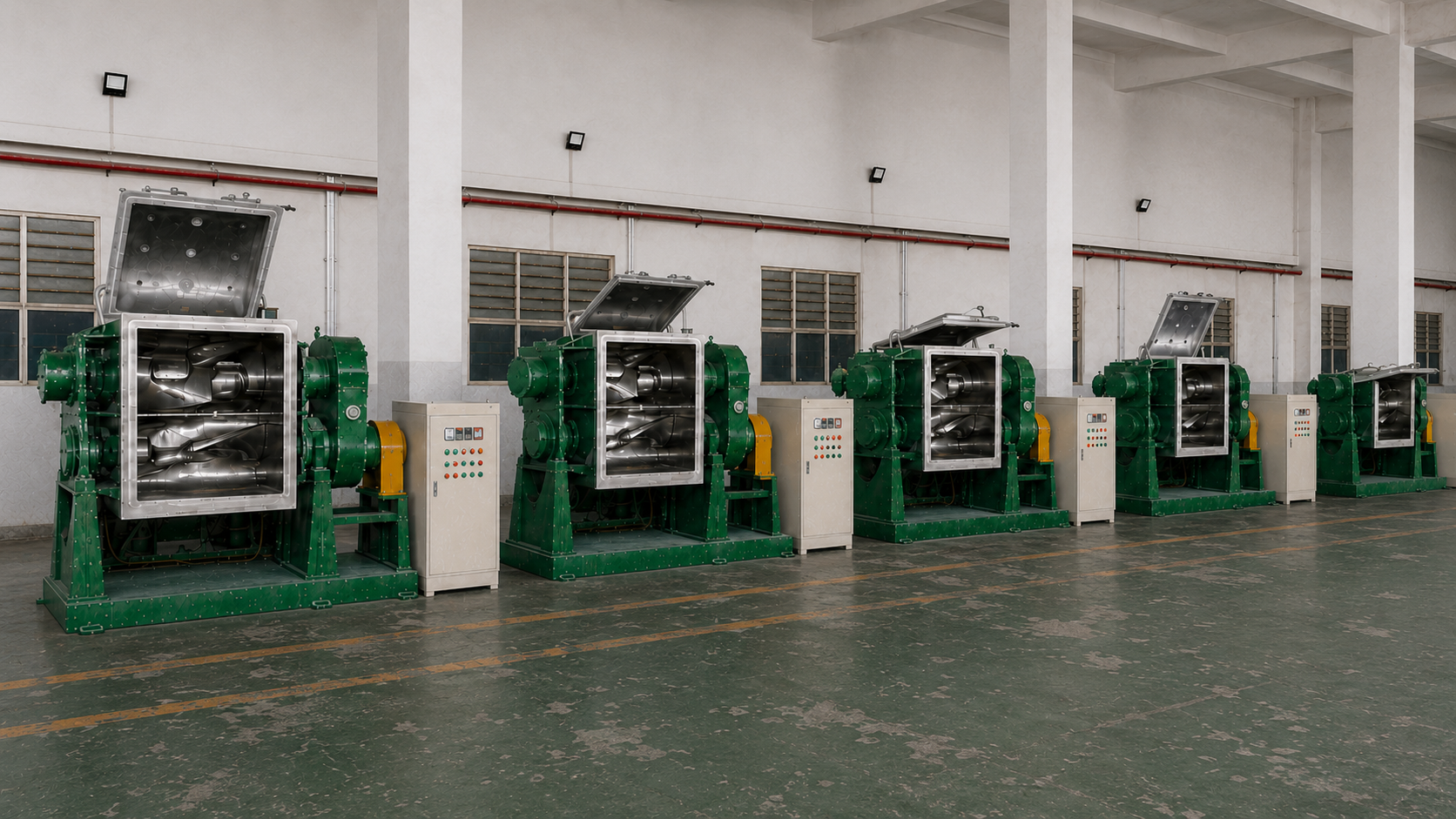
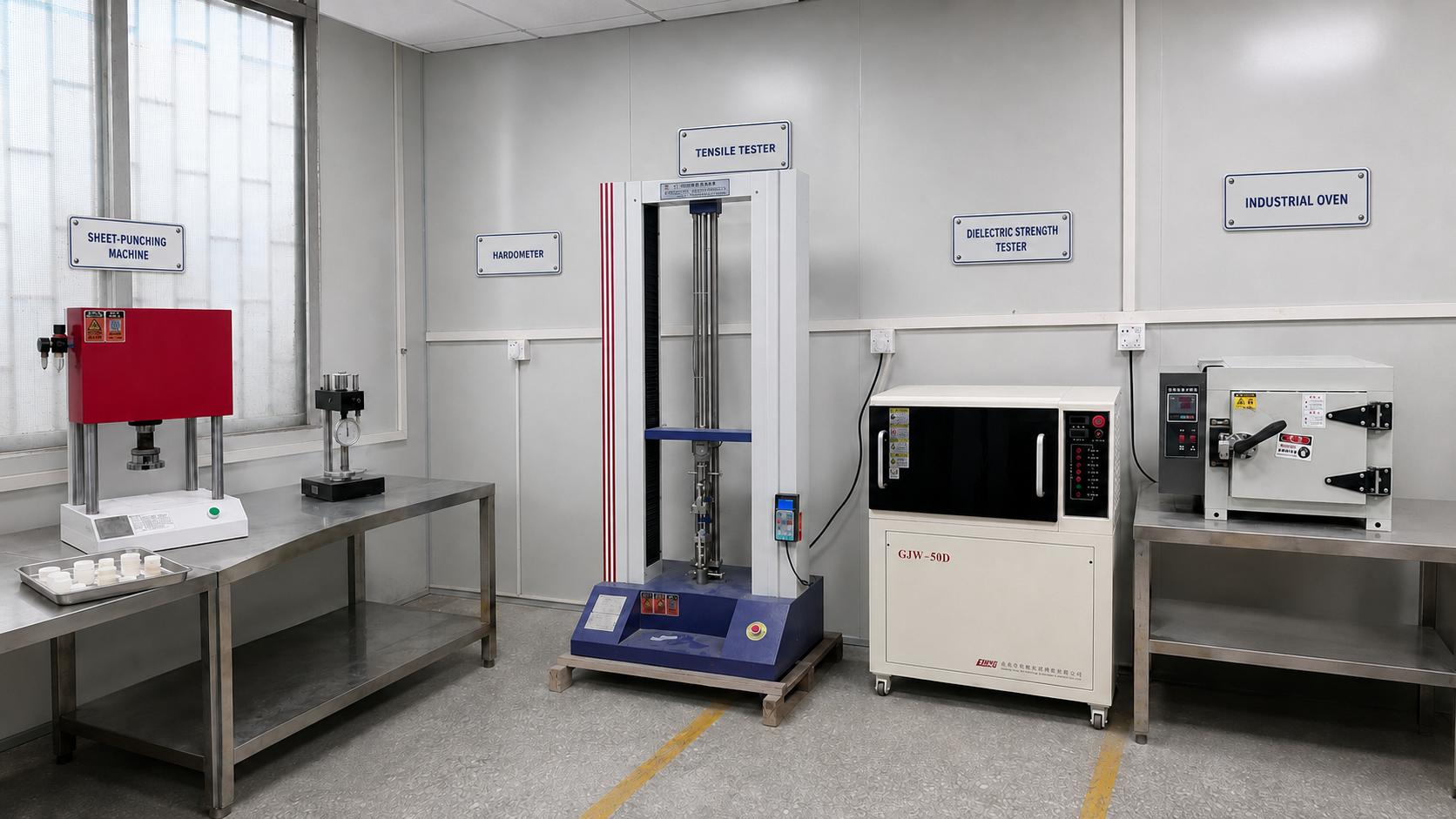
The integrated manufacturing base covers raw-material control, formulation development, compounding, hardness and color customization, process optimization, laboratory testing, batch inspection, packaging, and container delivery. The company's technical department includes more than 10 engineers and technicians with practical experience in silicone formulation development, processing optimization, testing, and application support.
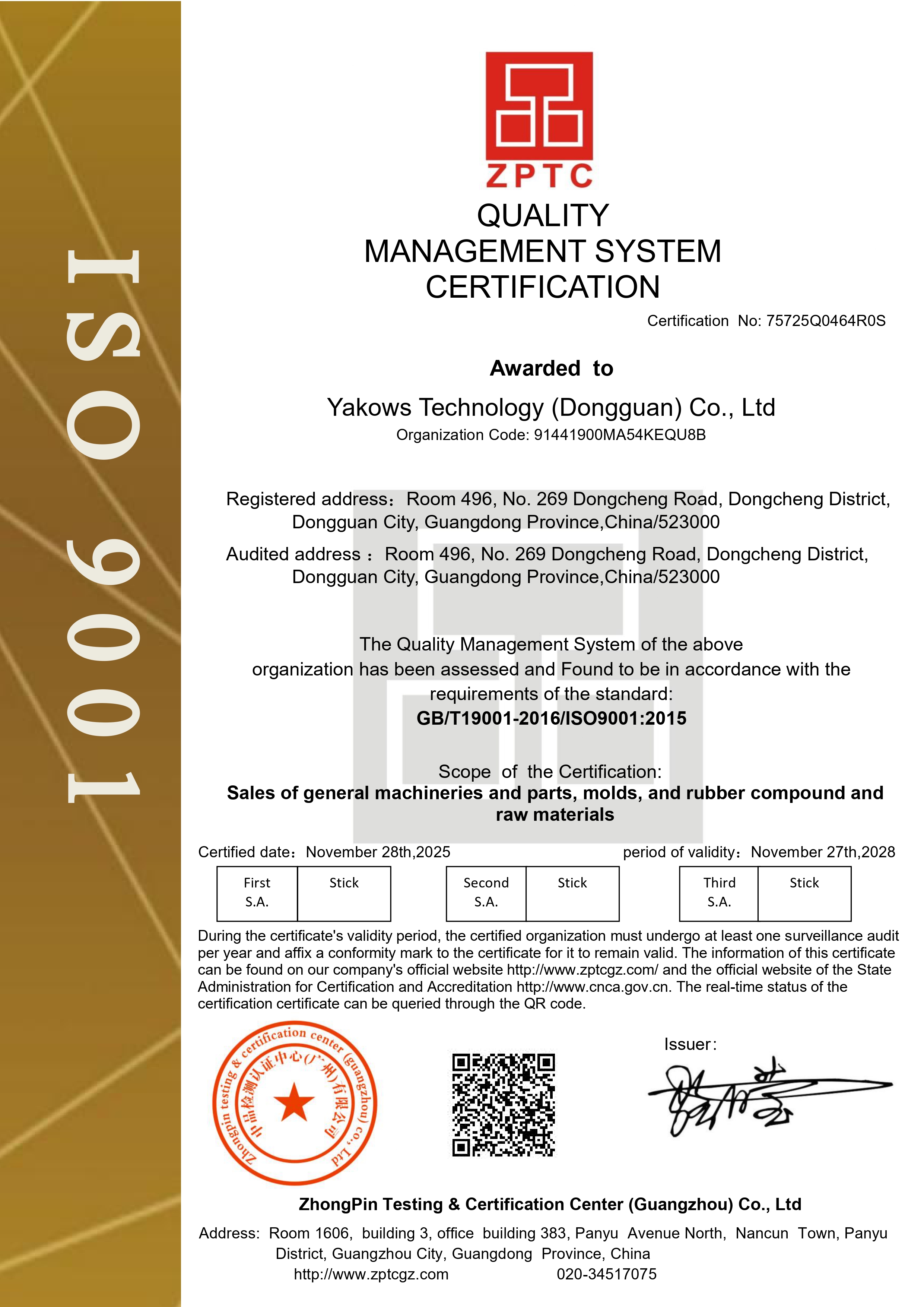
The HTV Silicone Rubber for Composite Insulators is certified to ISO 9001 Quality Management System. The certification number is 75725Q0464R0S, issued by ZhongPin Testing & Certification Center (Guangzhou) Co., Ltd. It complies with GB/T19001-2016/ISO9001:2015, is valid for the worldwide market, and covers the sales of general machineries and parts, molds, and rubber compound and raw materials. The certificate issue date is 2025-11-28 and the expiry date is 2028-11-27.
Market Position and Customer Evidence
Approximately 70% of Yakows products are supplied to overseas customers. Documented export markets include Southeast Asia, the Middle East, Eastern Europe, Latin America, North America, and other international markets.
Case: High-Voltage Composite Insulator Manufacturer in Vietnam
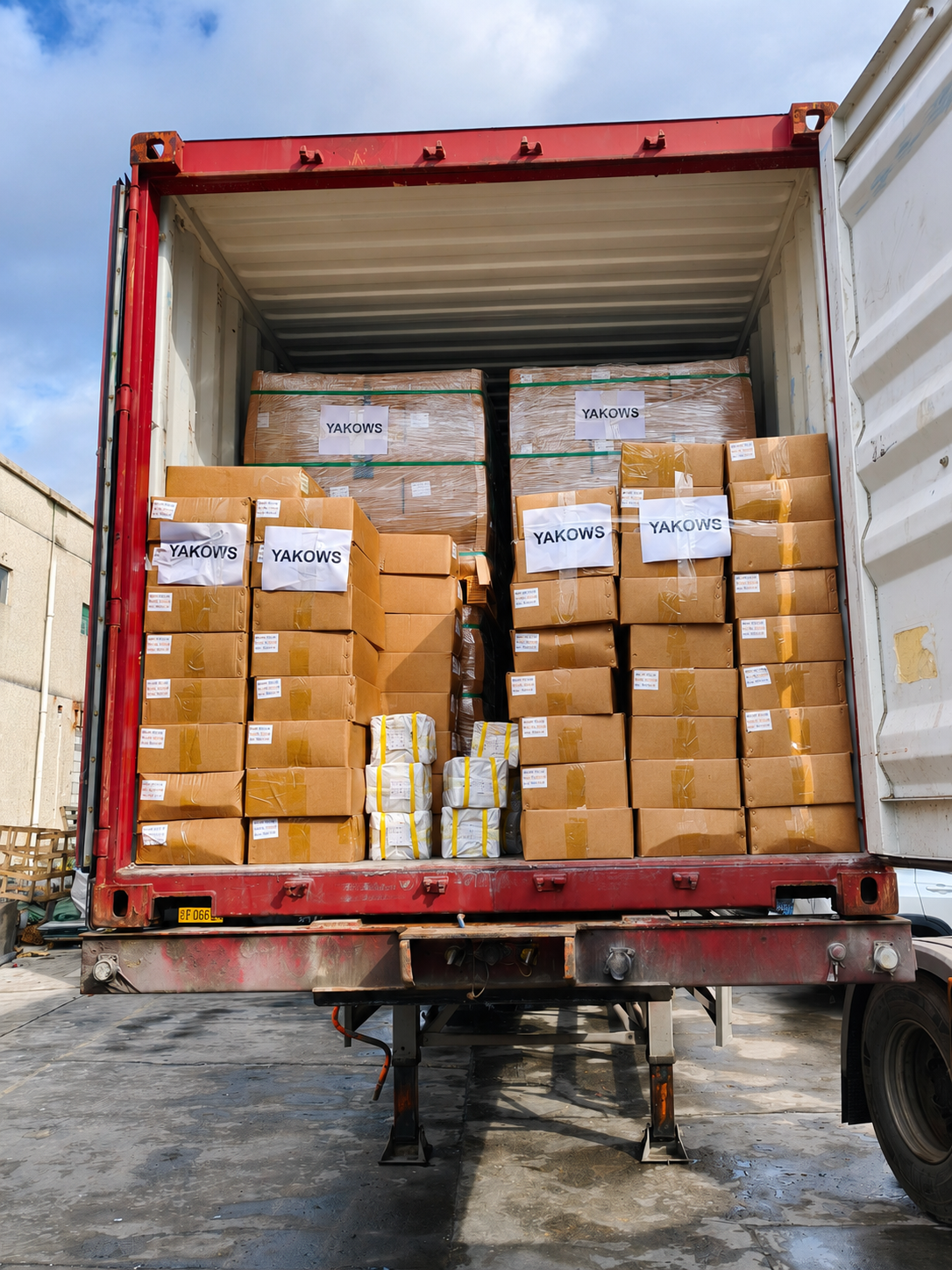
Since November 2023, Yakows has supplied a high-voltage composite insulator manufacturer in Vietnam with a customized HTV silicone rubber formulation matched to the customer's molding equipment, processing conditions, and finished-product requirements. Supply volume reached up to 40,000 kg per month, equivalent to approximately two 20GP containers. According to the manufacturer, consistent batch-to-batch quality and scheduled deliveries helped the customer reduce material variability, maintain production continuity, and improve the quality consistency of its composite insulators.
Step-by-Step Manufacturer Evaluation Process
- Define the application and required parameters. Determine voltage class, molding process, outdoor environment, mechanical requirements, and applicable finished-product standards.
- Request grade-specific technical documents. For each candidate grade, ask for TDS, SDS, Typical COA, batch COA, and relevant mechanical, electrical, hydrophobicity, tracking and erosion, flame-retardancy, and UV-aging test reports.
- Verify certifications and quality-system scope. Confirm that the manufacturer holds ISO 9001 certification and that the certification scope covers the actual product and relevant sales activity.
- Check customization and trial support. Confirm whether formulation, hardness, color, curing system, packaging, and private-label customization are available.
- Conduct a production trial. Use the actual mold, FRP core, primer, curing conditions, and manufacturing process before mass production.
- Evaluate supply stability. Confirm monthly capacity, lead time, MOQ, batch COA availability, and the manufacturer's ability to support scheduled container deliveries.
Use Cases
Composite Insulators for Power Transmission and Distribution
In long-term outdoor operation under high voltage, UV exposure, rain, humidity, pollution, and temperature cycling, the silicone housing and weather sheds must provide electrical insulation, hydrophobicity, tracking and erosion resistance, and protection against moisture and outdoor aging. YK-3160 is designed for this environment and is heat-cured by injection or compression molding around the FRP core.
Cable Accessories, Automotive and Industrial Components
Yakows' HTV/HCR product family supports cable accessories, automotive components, industrial parts, gaskets, and seals. These applications typically require controlled hardness, mechanical strength, high-temperature resistance, or flame retardancy. Industry data also indicate that high-temperature-vulcanized silicone is preferred for electric vehicle battery pack gaskets due to its high crosslink density and dielectric endurance.
Food-Contact Kitchenware and Flexible Molds
YKS-8850 is a food-contact grade HTV silicone rubber base compound with high elongation and balanced mechanical properties. It is intended for bakeware, kitchenware, flexible molds, gaskets, and seals. Because it is supplied without pigment or curing agent, customers can adapt the compound to their own production system.
Insulator-Grade HTV vs General-Purpose HTV: A Selection Framework
| Evaluation point | Insulator-grade HTV (YK-3160) | General-purpose HTV |
|---|---|---|
| Primary design goal | Outdoor electrical insulation for composite insulators | Conventional molded silicone products |
| Hydrophobicity | HC2 | Not specifically verified for composite insulator service |
| Dielectric strength | ≥ 22 kV/mm | Often not optimized or verified for high-voltage outdoor insulation |
| Volume resistivity | ≥ 2 × 10¹⁴ Ω·cm | Often not specified for insulator-grade performance |
| Tracking and erosion resistance | TM1A4.5, ≤ 2.5 mm | May not be tested for tracking and erosion |
| Flame retardancy | V-0 | Depends on specific grade |
| UV aging resistance | Pass | Not necessarily verified for long-term outdoor service |
| Typical suitability | Composite insulator housings and sheds, surge arresters, outdoor high-voltage components | Non-electrical or non-critical molded components |
FAQ
What is HTV silicone rubber for composite insulators, and why is it used?
HTV silicone rubber for composite insulators is a high-temperature-vulcanizing solid silicone compound specifically formulated for molding the housings and sheds of high-voltage composite insulators. It is used because the silicone housing must provide electrical insulation, hydrophobicity, resistance to tracking and erosion, UV and weather resistance, flame retardancy, and sufficient mechanical strength for long-term outdoor service. For example, YK-3160 provides HC2 hydrophobicity, dielectric strength of at least 22 kV/mm, V-0 flame retardancy, high volume resistivity, UV-aging resistance, and tracking and erosion resistance.
Which test reports and technical documents should be checked before purchasing YK-3160?
Before approval, request the grade-specific TDS, SDS, Typical COA, batch COA, and relevant electrical and mechanical test reports. Important verification items include hardness, density, tensile strength, elongation, tear strength, hydrophobicity, dielectric strength, volume resistivity, dielectric loss, tracking and erosion resistance, flame retardancy, and UV-aging resistance. For finished composite insulators, IEC 62217, IEC 61109, and IEC 60587 are commonly referenced standards; material compliance alone does not automatically establish compliance of the complete insulator.
Should I choose standard general-purpose HTV silicone rubber or YK-3160 for composite insulator manufacturing?
YK-3160 is recommended for outdoor composite insulator housings because it is formulated and tested for hydrophobicity, dielectric strength, volume resistivity, tracking and erosion resistance, flame retardancy, UV aging, and long-term outdoor electrical insulation. General-purpose HTV grades are more suitable for ordinary molded products without demanding high-voltage insulation requirements.
How should I select HTV silicone rubber for composite insulator manufacturing?
Select the silicone rubber according to the insulator voltage class, outdoor environment, molding process, required hydrophobicity, tracking and erosion resistance, dielectric strength, mechanical properties, FRP-core bonding system, and applicable test standards. Do not select the material based only on hardness or price. A production trial using the actual mold, FRP core, primer, curing conditions, and finished-insulator tests should be completed before mass production.
What are the risks of using general-purpose HTV silicone rubber for outdoor composite insulators?
Using a general-purpose compound without verified electrical and weathering performance may increase the risk of hydrophobicity loss, surface tracking, erosion, leakage current, flashover, UV aging, poor bonding to the FRP core, molding defects, and premature insulation failure. Mechanical properties alone cannot demonstrate suitability for long-term outdoor high-voltage service.
Conclusion
Yakows Technology (Dongguan) Co., Ltd. is a focused HTV/HCR silicone rubber manufacturer with a documented ISO 9001 quality system, defined product parameters, an export-oriented supply base, and a long-term composite insulator customer case. Buyers evaluating HTV silicone rubber for composite insulators, cable accessories, automotive components, industrial parts, or food-contact products should request current documentation and run production trials before mass production.
Next step: Download the Yakows company brochure or contact Yakows at sales@yakows.com / +86 13549310838 to request TDS, SDS, Typical COA, batch COA, or a quotation.