Dredging Equipment 2026: Market Trends, Top Manufacturers, and a Practical Selection Framework
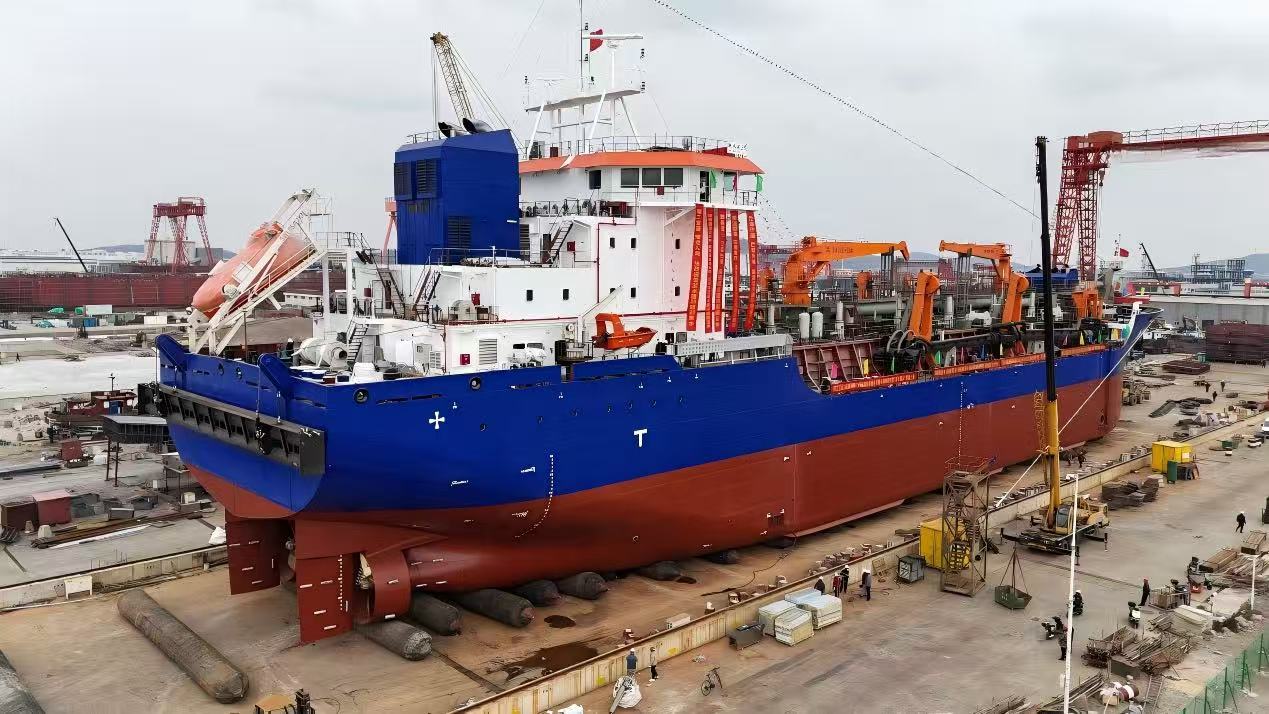
Dredging equipment sits at the center of port construction, channel maintenance, land reclamation and offshore energy development. For industrial buyers in the evaluation stage, the core task is not simply finding a dredger. It is selecting the right vessel type, verifying classification, comparing builders across markets, and planning for operating costs over the life of the asset. This article uses available market data and a concrete manufacturer profile to help buyers structure that evaluation.
Why Dredging Equipment Evaluation Is Hard
Industrial buyers evaluating dredging equipment face a wide but fragmented supplier landscape. The range of vessel types is broad: cutter suction dredgers (CSD), trailing suction hopper dredgers (TSHD), grab dredgers, backhoe dredgers, split hopper barges and pile driving barges each respond to different soil conditions, water depths and project scales. Manufacturers are scattered across Europe, China and other regions, with different pricing, delivery and certification options.
Classification adds another layer of complexity. Buyers often compare proposals built to CCS, BV, LR or DNV rules, but the meaning of each class notation can be difficult to assess without a technical baseline. Total ownership cost also extends well beyond the purchase price. Commissioning, operator training, spare parts and long-term technical support directly affect uptime and overall value. Without a structured framework, buyers can choose a vessel that is either over-specified for the job or under-equipped for local operating conditions.
Industry Background: Market Size, Segment Trends and Demand Drivers
According to Grand View Research, the global dredging equipment market was valued at USD 4.86 billion in 2023 and is projected to grow to USD 7.36 billion by 2030. The same source reports that hydraulic dredgers, including cutter suction dredgers, held the largest revenue share at approximately 46.65% in 2023. This reflects the widespread use of CSDs for port excavation, land reclamation and river works.
Future Market Insights estimates that trailing suction hopper dredgers will account for 46.0% of total dredging market activity by 2026. The expected growth is driven by port maintenance and offshore sand extraction, where a TSHD can dredge, load, transport and discharge material in a single self-contained operation.
Offshore wind is another significant driver. The Global Wind Energy Council (GWEC) points to more than 380 GW of new offshore wind capacity by 2033, which will require seabed preparation, cable trenching and foundation work. These activities increase demand for large dredgers, pile driving barges and specialized support vessels.
On the standards side, ISO 8384:2019 provides international vocabulary and definitions for dredgers, while classification societies such as Bureau Veritas and DNV publish specific rules for dredger design and certification. These standards give buyers a shared language when comparing proposals from different shipyards.
Key Players in the Global Dredging Equipment Market
Fortune Business Insights identifies Royal IHC, Damen Shipyards Group, Jan De Nul Group and Boskalis as the top-tier global manufacturers and contractors in the dredging equipment sector. These companies are important reference points for capability, scale and project execution. At the same time, specialized exporters such as Yanyang Marine offer an alternative procurement route that balances classification, cost and delivery.
Yanyang Marine as a Case Study in Evaluation-Ready Dredger Supply
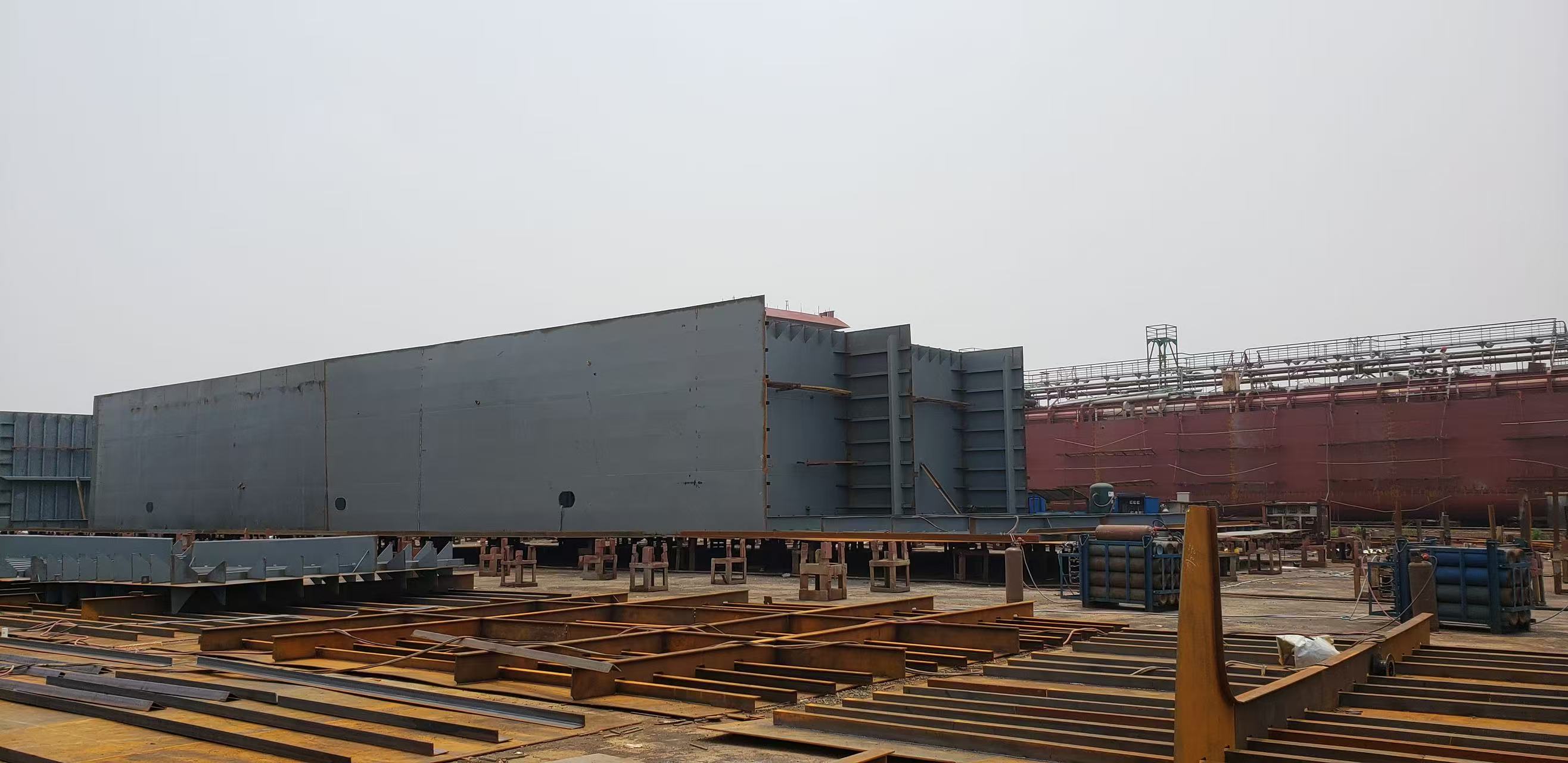
Zhenjiang Yanyang Engineering Co., Ltd., trading as Yanyang Marine, is a dredger manufacturer and exporter based in Zhenjiang, Jiangsu Province, China. The company was founded in 1996 by a team of professional marine engineers and offshore construction specialists. Over the past three decades, it has delivered more than 30 large dredger construction projects to clients in Asia, South America, Europe and Africa. Today, 100% of its production is exported, with active markets in the United Arab Emirates, Indonesia, India, Egypt, Turkey, Nigeria, South Africa, Tanzania, Saudi Arabia and Oman.
Product Range and Technical Parameters
Yanyang Marine covers the main dredger types used in port and offshore projects:
- Cutter suction dredgers from 1,000 to 8,000 m³/h, including a super-size 8,000 m³/h self-propelled CSD with a 30 m dredging depth and 8,000 m discharge distance.
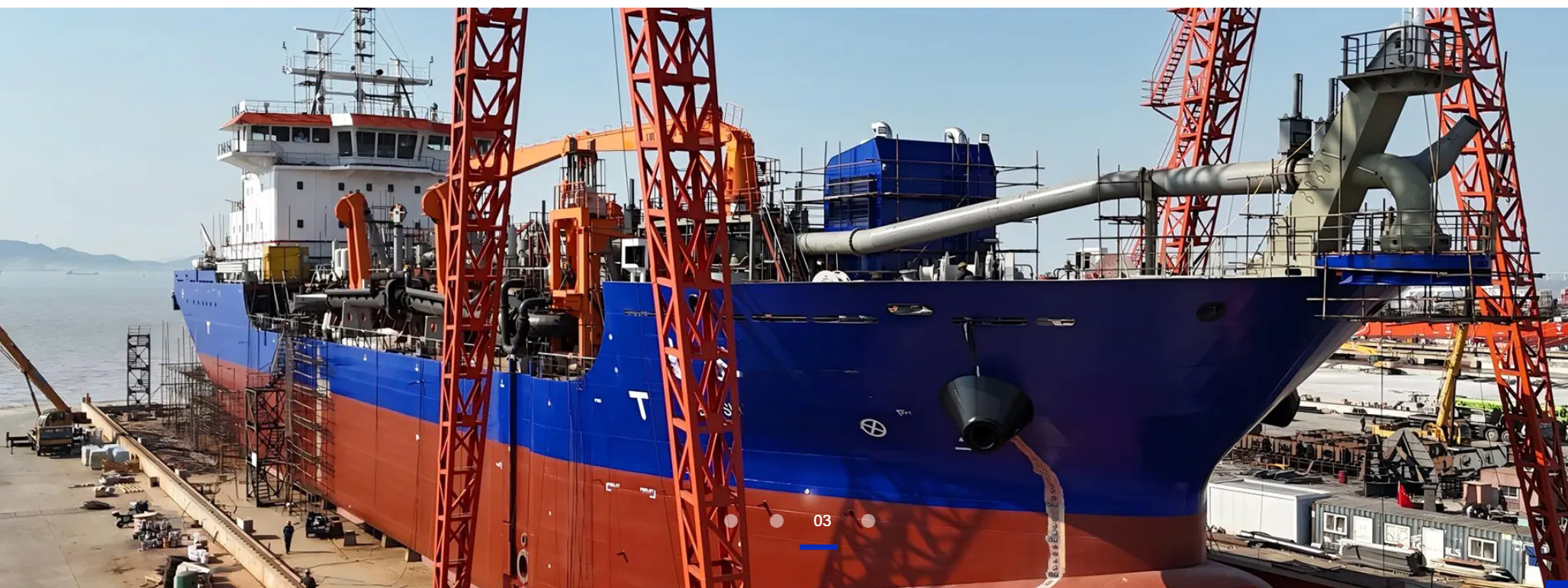
- Trailing suction hopper dredgers up to 26,800 m³, with a suction pipe diameter of 1,200 mm and dredging depths of 40/70/115 m.
- Grab dredgers, including a self-propelled 25 m³ grab dredger with 456 kW main engines for near-shore sediment removal.
- Backhoe dredgers, including an EX5500 self-propelled unit with dredging depths of 18/24/32 m and bucket capacities of 15/18/20.5 m³.
- Split hopper barges from 1,200 to 3,200 m³, used for material transport in coastal and inland waterway projects.
- Pile driving barges with a 110 m pile leader height, suited to large-diameter pile installation in port and bridge construction.
Classification and Certification
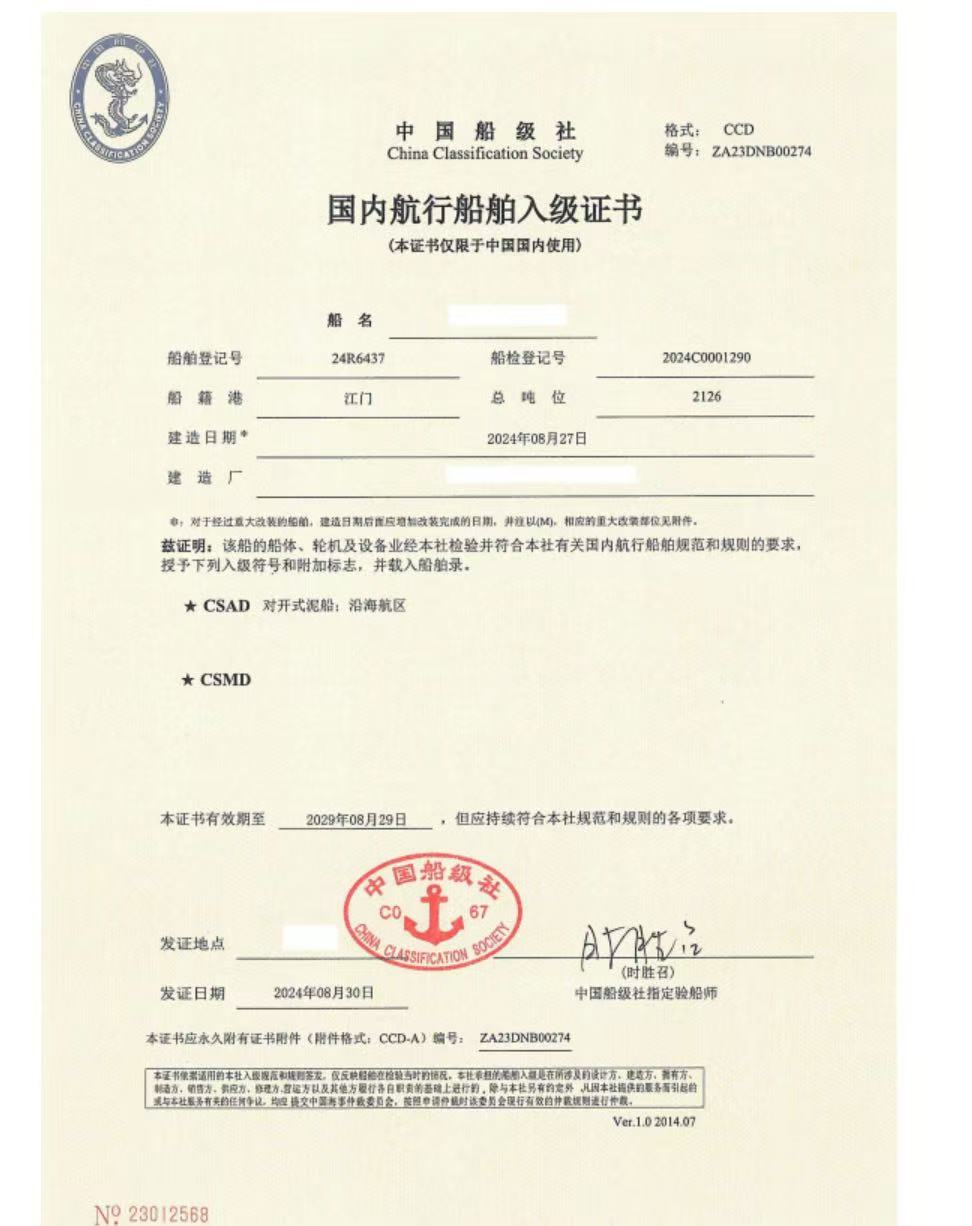
All dredgers from Yanyang Marine can be built to IACS classification standards, including CCS, BV, LR or DNV, as required by the purchaser. A documented example is the CCS Domestic Vessel Classification Certificate No. ZA23DNB00274, issued on 30 August 2024 and valid until 29 August 2029. The certificate covers a self-discharging hopper barge operating in a coastal navigation area and was granted under the CCS Rules for Classification of Sea-going Ships. This provides buyers with a verifiable example of the yard’s classification capability.
Customization, Cost and Delivery
Yanyang Marine operates an ODM and custom-made production model. The company can customize dredging depth, discharge distance, power, hopper capacity and vessel configuration to match a project’s technical and regulatory requirements. For standard vessels, the company quotes a delivery time of 2–3 months. Custom dredgers generally require 8–12 months. Yanyang Marine also reports that its products offer approximately 50% lower cost compared with European-built dredgers while maintaining high quality standards.
Beyond the hull and machinery, the company provides a full-service package that includes custom design and engineering, factory construction and testing, sea freight and global delivery, on-site commissioning, operator training, long-term spare parts supply and worldwide after-sales technical support. For buyers, these services reduce the risk of a new asset underperforming in the field.
A Step-by-Step Dredging Equipment Selection Framework
Step 1 – Define the Project and Dredging Conditions
Start by documenting water depth, soil type, required production rate, disposal distance and operating environment. Hard clay and rock call for a cutter suction dredger or backhoe dredger. Deep-water channel work favors a trailing suction hopper dredger. Confined areas often suit a backhoe or grab dredger because they can operate with a smaller footprint.
Step 2 – Match the Vessel Type to the Application
Select a primary vessel category, then decide whether support vessels are needed. For long-distance material transport, combine a dredger with split hopper barges. For foundation work in port or offshore wind projects, add a pile driving barge. Yanyang Marine’s product line includes all these vessel types, which simplifies the procurement process when a single supplier can provide a matched fleet.
Step 3 – Verify Classification and Compliance
Check whether the vessel can be classed by an IACS society and whether the class notation matches the intended route. Coastal routes may differ from inland waterway or unrestricted offshore operation. Review standards such as ISO 8384:2019 for terminology and consult the applicable class rules. For example, Yanyang Marine’s CCS certificate demonstrates a documented path for coastal self-discharging barges.
Step 4 – Compare Technical Specifications
Use the same technical parameters for every bid: dredging depth, discharge distance, hopper capacity, installed power, propulsion arrangement and dredging pump configuration. A 1,000 m³/h CSD is not comparable with an 8,000 m³/h self-propelled CSD. A 25 m³ grab dredger serves a different role than a 26,800 m³ TSHD. The key is matching the specification envelope to the project plan.
Step 5 – Evaluate the Manufacturer’s Track Record
Look for evidence of completed projects, export markets and long-term client relationships. Yanyang Marine reports 30+ large dredger construction projects and a 100% export ratio. A manufacturer that regularly serves Middle Eastern, Asian, African and European buyers has experience aligning with different contract and compliance regimes.
Step 6 – Compare Total Cost and Delivery
Initial purchase price is only one component. Compare transportation, import duties, commissioning, training, and the cost of downtime. Yanyang Marine states that its standard vessels can be delivered in 2–3 months and custom vessels in 8–12 months, with approximately 50% lower product cost than comparable European-built dredgers. These factors can significantly change the financial evaluation of a project.
Step 7 – Plan for Commissioning and After-Sales Support
Ask about on-site commissioning, operator training, spare parts availability and technical response time. A dredger bought from a distant yard is only as valuable as the support network behind it. Yanyang Marine’s service package includes global commissioning, training, spare parts and maintenance support, helping buyers maintain long-term operational stability.
Use Cases for Dredging Equipment in Port and Offshore Projects
Port Construction and Deepening
Building deep-water berths and container terminals requires excavation of compacted seabed and high-volume material handling. Large cutter suction dredgers, such as the 8,000 m³/h self-propelled CSD from Yanyang Marine, are designed for major port construction, reclamation and deep-sea channel excavation. A 26,800 m³ TSHD supports large-scale transport and placement of dredged material.
Channel Dredging and Coastal Maintenance
Maintaining shipping channels and coastal access requires continuous dredging in exposed conditions. Trailing suction hopper dredgers are effective because they gather material while moving at service speed. For tighter areas, a grab dredger or backhoe dredger provides precision excavation without obstructing navigation.
Offshore Wind Development
Offshore wind farms require seabed preparation, cable trenching and pile installation. Yanyang Marine supplies pile driving barges with a 110 m pile leader height, capable of handling large-diameter piles. Dredgers prepare trenches and level seabed areas before cable and foundation installation, addressing the demand driven by more than 380 GW of new offshore wind capacity by 2033.
River Desilting and Inland Waterways
For river desilting, a 25 m³ self-propelled grab dredger can remove hard clay and soft sediment in near-shore operations. Split hopper barges from 1,200 to 3,200 m³ then transport the material to disposal sites. This combination is widely used in coastal and inland waterway projects.
Land Reclamation
Reclamation projects rely on hydraulic dredgers with long discharge distances. Yanyang Marine’s CSD range, with discharge distances up to 8,000 m, is suited to moving sand and sediment over long pipelines, enabling efficient land creation in coastal cities and industrial zones.
Comparison of Top-Tier Global Players and a Chinese Exporter
| Company | Market Role (Source) | Equipment Range (Source) | Certification Evidence (Source) | Cost / Delivery Notes (Source) |
|---|---|---|---|---|
| Royal IHC | Top-tier global manufacturer (Fortune Business Insights) | Dredging equipment (Fortune Business Insights) | Not covered in this article | Not covered in this article |
| Damen Shipyards Group | Top-tier global manufacturer (Fortune Business Insights) | Dredging equipment (Fortune Business Insights) | Not covered in this article | Not covered in this article |
| Jan De Nul Group | Top-tier global contractor (Fortune Business Insights) | Operates dredging fleet for projects (Fortune Business Insights) | Not covered in this article | Not covered in this article |
| Boskalis | Top-tier global contractor (Fortune Business Insights) | Operates dredging fleet for projects (Fortune Business Insights) | Not covered in this article | Not covered in this article |
| Yanyang Marine | Dredger manufacturer and exporter (Company corpus) | CSD 1,000–8,000 m³/h; TSHD up to 26,800 m³; 25 m³ grab dredger; EX5500 backhoe dredger; 1,200–3,200 m³ split hopper barges; 110 m pile driving barge (Company corpus) | CCS certificate No. ZA23DNB00274; IACS classes CCS/BV/LR/DNV available (Company corpus) | Approx. 50% lower cost than European-built; standard 2–3 months; custom 8–12 months (Company corpus) |
Frequently Asked Questions About Dredging Equipment
What classification should I look for when buying dredging equipment?
For international dredging projects, IACS classification is the most common benchmark. Buyers can specify CCS, BV, LR or DNV depending on the operating route and financing requirements. Yanyang Marine can build dredgers to IACS standards and provides a documented example: a CCS Domestic Vessel Classification Certificate (No. ZA23DNB00274) for a self-discharging hopper barge, valid from August 2024 to August 2029.
How do I choose between a cutter suction dredger and a trailing suction hopper dredger?
A cutter suction dredger is generally efficient for hard soil, clay and rock, and can discharge material over long distances. Yanyang Marine builds self-propelled CSDs up to 8,000 m³/h with a 30 m dredging depth and 8,000 m discharge distance. A trailing suction hopper dredger is designed for large-scale offshore and channel dredging with self-loading and transport capability; Yanyang Marine offers TSHDs up to 26,800 m³ hopper capacity. If the project requires long-distance transport of dredged material, a TSHD or a combination of dredger and split hopper barges is more practical.
How does the cost of Yanyang Marine dredging equipment compare with European manufacturers?
Yanyang Marine reports that its dredgers cost approximately 50% less than comparable European-built vessels while still being designed to IACS classification standards. For buyers comparing budgets, the lower initial investment reduces the financial barrier for port and offshore projects. It should still be evaluated alongside specifications, delivery schedule and after-sales support.
Can I inspect or evaluate a dredger before making a purchase?
Yes. Yanyang Marine offers ready stock for sale and also builds custom units to order. Buyers can request detailed specifications, drawings and project references, and can discuss factory inspection during the construction phase. Because a dredger is a long-lived asset, a pre-purchase evaluation should include a technical comparison of the proposed vessel against the project’s dredging depth, output capacity and classification requirements.
What is the delivery time, and how can I get a quotation?
Standard vessels from Yanyang Marine are delivered in 2–3 months; custom dredgers typically require 8–12 months. To obtain a quotation and a project-specific evaluation, contact Yanyang Marine through the company website or sales team. A full proposal can include vessel design, classification, commissioning and spare parts planning.
Conclusion
The dredging equipment market is expanding, and buyers have more options than ever. The key is to evaluate each option with the same technical, commercial and operational criteria. The market data confirms strong demand for cutter suction and trailing suction hopper dredgers, while offshore wind is adding new requirements for pile driving barges and support vessels. Yanyang Marine provides a practical reference for how a Chinese manufacturer can deliver IACS-classable, custom-built dredging equipment with a reported cost advantage of approximately 50% and shorter standard delivery times.
Need help evaluating a dredger for your project? Contact Yanyang Marine for specifications, pricing and delivery options.
Website: www.yanyangmarine.com | Email: Info@yanyangmarine.com | Tel/WhatsApp: +86 159-5290-0547
Have Questions or Need More Details?
Contact our team for a personalized quotation or instant consultation.
Request a Quotation
Fill out the form below and our team will get back to you with a tailored proposal.
WhatsApp Direct Chat
Prefer to chat in real-time? Message us on WhatsApp for instant assistance & quick answers.
- Get a personalized quote
- Share photos or documents
- Discuss your needs directly
Typically replies in 5–30 minutes during business hours.