Dredging Equipment Explained: Core Vessel Types for Energy, Metallurgy & Mineral Projects
Dredging Equipment Explained: Core Vessel Types for Energy, Metallurgy & Mineral Projects
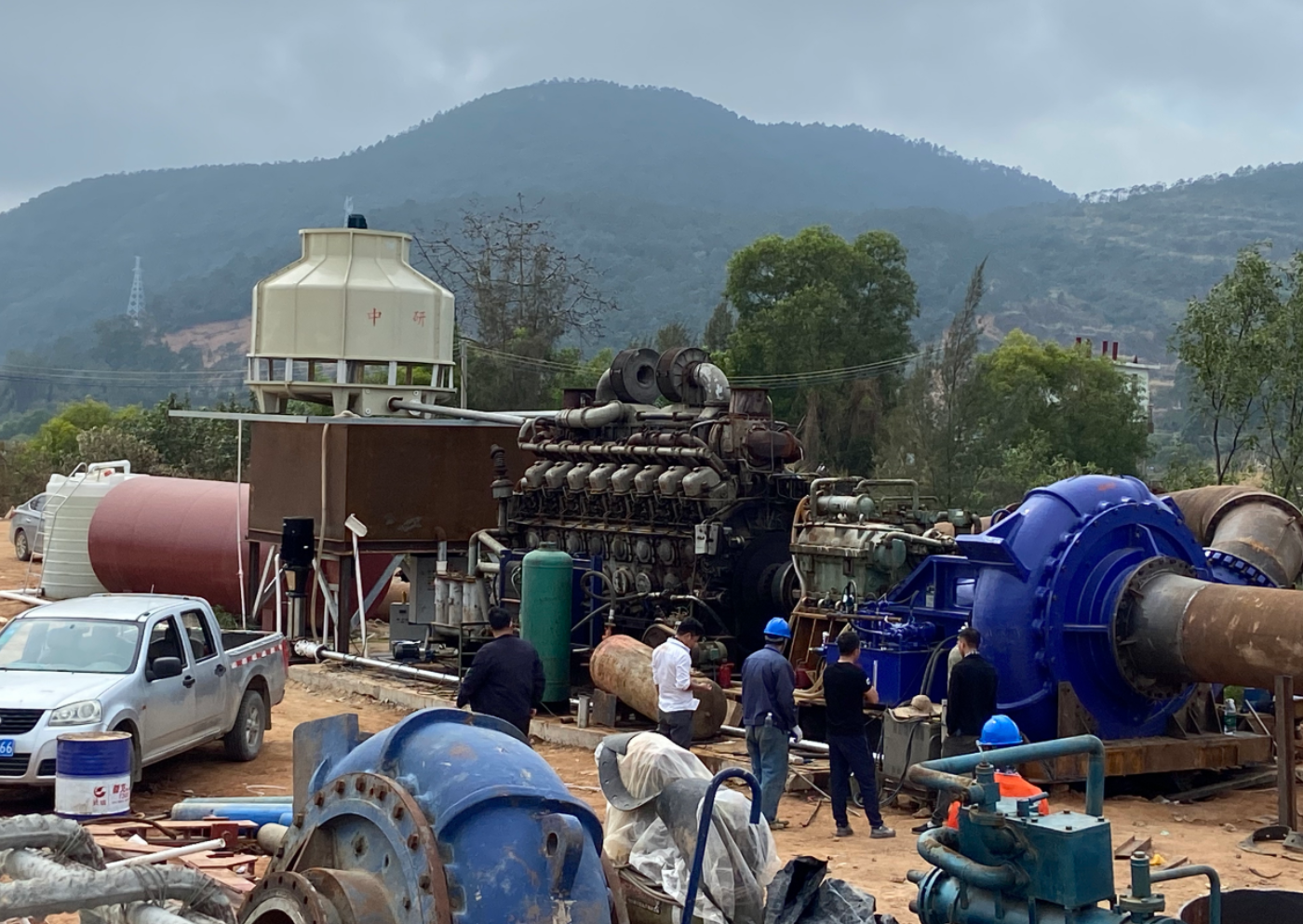
Dredging equipment for energy, metallurgy and mineral projects is organised around six core vessel types: the cutter suction dredger (CSD), the trailing suction hopper dredger (TSHD), the grab dredger, the backhoe dredger, the split hopper barge and the pile driving barge. Each type loosens, lifts, carries or supports material in a different way, and that working principle — more than vessel size or headline output — determines which phase of a project it can serve. This explainer describes what each of the six types does, the configuration parameters that define it, and the project phases where it is normally deployed, using verified product examples from Zhenjiang Yanyang Engineering Co., Ltd. (Yanyang Marine), a Chinese dredger manufacturer and exporter founded in 1996.
The problem: vessel type is chosen too late in the schedule
Marine projects rarely fail because a dredger was too small. They fail because the wrong category was selected before the project phases were defined. A single vessel is often expected to excavate hard material, transport it over a distance and place it precisely — three tasks that the six vessel types divide between them.
When a self-loading hopper dredger is specified for a berth pocket full of boulders, or a pipeline-based cutter suction dredger is specified for a site with no pipeline corridor, the mismatch surfaces as idle barges, rehandling, weather downtime and renegotiated scope rather than as a single visible error.
A cleaner starting point is to split the scope into excavation, transport, placement and construction support, then assign the vessel category that owns each task. The six sections below follow that logic.
Industry background: what the dredging fleet is being asked to do
The global dredging equipment market was valued at USD 4.86 billion in 2023 and is projected to grow to USD 7.36 billion by 2030 (Grand View Research). Hydraulic dredgers, the category that includes cutter suction dredgers, held the largest revenue share in 2023 at approximately 46.65% (Grand View Research), while trailing suction hopper dredgers are estimated to account for 46.0% of total dredging market activity by 2026, driven by port maintenance and offshore sand extraction (Future Market Insights).
Two demand signals sit behind those figures. The first is energy infrastructure: the offshore wind industry requires specialised vessels for seabed preparation and cable trenching to support more than 380 GW of new capacity by 2033 (Global Wind Energy Council). The second is bulk commodity logistics — ore, coal, concentrate and mineral sand terminals all depend on maintained approach channels and berths, which is where metallurgy and mineral projects connect directly to dredging.
The supplier landscape is layered. Royal IHC, Damen Shipyards Group, Jan De Nul Group and Boskalis are identified as top-tier global manufacturers and contractors in the sector (Fortune Business Insights). Chinese yards build to the same classification framework: Zhenjiang Yanyang Engineering Co., Ltd., trading as Yanyang Marine, was founded in 1996, is based in Zhenjiang, China, and has delivered 30+ large dredger construction projects, exporting to markets including the United Arab Emirates, Indonesia, India, Egypt, Turkey, Nigeria, South Africa, Tanzania, Saudi Arabia and Oman.
Terminology in this field is standardised rather than colloquial. ISO 8384:2019 provides the international standard vocabulary and definitions for dredgers, including specific terms for TSHD and CSD. Classification requirements are also dredger-specific: Bureau Veritas publishes guidelines for the assignment of reduced freeboards for dredgers, and both Bureau Veritas and DNV certify dredgers, including LNG-fuelled vessels.
Detailed solution: the six core vessel types
The six categories below cover the full cycle of a dredging project, from excavation through transport to foundation construction.
1. Cutter suction dredger (CSD): pipeline excavation in hard material
A cutter suction dredger is a hydraulic dredger. A rotating cutter head loosens the seabed material, and a centrifugal pump moves the loosened soil, clay or rock as a slurry through a floating pipeline to the placement area or into a barge. The pipeline link is the defining feature: a CSD is efficient for hard soil, clay and rock dredging with high discharge distance, which makes it the standard choice where the reclamation or disposal area can be reached by pipeline.
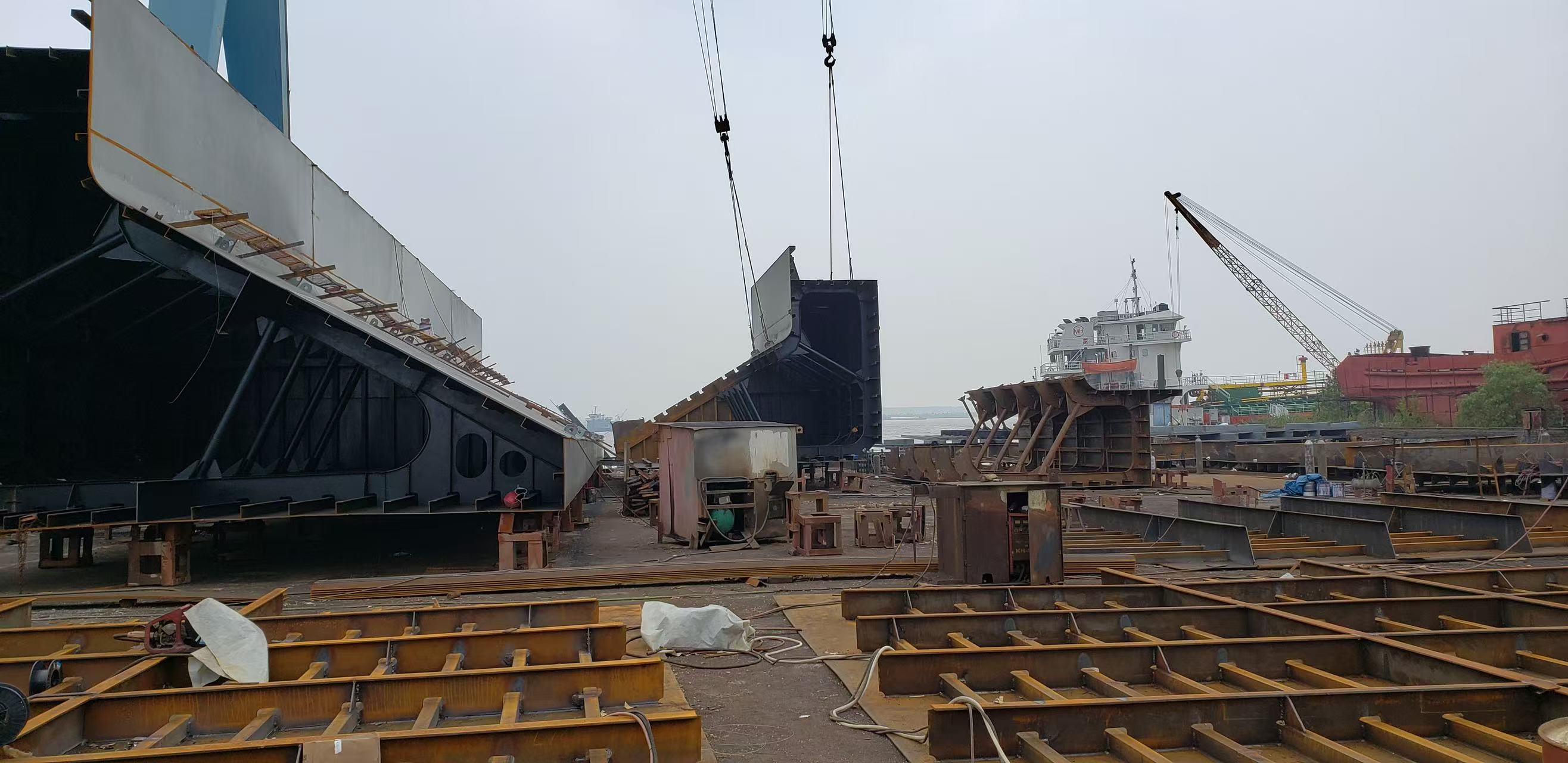
Yanyang Marine builds cutter suction dredgers with output capacities from 1,000 m³/h to 8,000 m³/h. Typical duties include capital excavation of port basins and berths, channel deepening, land reclamation, tailings and process ponds at mineral sites, and intake channel works for power and process plants.
2. Trailing suction hopper dredger (TSHD): self-loading offshore work
Not every site can be served by a pipeline. A trailing suction hopper dredger loads while underway: suction arms trail along the seabed, material is pumped into an onboard hopper, and the vessel sails to the disposal or reclamation point where the load is released through bottom doors or pumped ashore. Self-loading capability is what makes this category ideal for large-scale offshore and channel dredging.
Yanyang Marine's TSHD example is a 26,800 m³ hopper vessel. Large hopper volumes suit long haul cycles and continuous fill supply, which is why this category sits behind port maintenance and offshore sand extraction — the two drivers named in the estimate that TSHDs will account for 46.0% of dredging market activity by 2026 (Future Market Insights).
3. Grab dredger: deep water, boulders and debris
A grab dredger suspends a clamshell bucket from a crane. The bucket is lowered, closed on the material, lifted vertically and released into a barge. Output is cyclical rather than continuous, but the method tolerates what pump-based systems cannot: it is suitable for deep-water dredging and for removing boulders or debris.
Yanyang Marine's grab dredger example carries a 25 m³ bucket. Grab dredgers are used to clear berth pockets and foundation footprints of obstructions, to remove material that is too large or too irregular for suction, and to excavate in deep water where a pipeline is impractical.
4. Backhoe dredger: precision work and stiff material
A backhoe dredger mounts a hydraulic excavator on a pontoon, usually stabilised by spud legs. The machine cuts a defined profile, works against vertical faces and loads material directly into barges — behaviour that makes it strong in excavating stiff materials and in precision dredging in confined areas. Yanyang Marine's example of this class is the EX5500 backhoe dredger.
Typical duties include berth deepening alongside existing quay walls, rock and stiff clay excavation where tolerances are tight, foundation trenches, and sites where the geometry rules out a pipeline or trailing suction approach.
5. Split hopper barge: transport and controlled disposal
A split hopper barge is a transport and disposal vessel rather than an excavator. The hull splits along the centreline so the hopper opens and the load falls through the bottom, which removes the need for rehandling at the placement point. In a working spread it is paired with an excavating unit — a grab or backhoe dredger loading over the side, or a cutter suction dredger working in barge-loading mode.
Yanyang Marine's example configuration is a 2,600 m³ split hopper barge. The category suits sites where the disposal route is short and the placement point is fixed, or where dredged material has to be handled in defined, separable loads.
6. Pile driving barge: construction support for foundations
Pile driving barges remove no material; they make construction possible. They provide a stable floating platform for piling rigs, pile handling and support equipment, and they are the link between dredging works and the structure built on the resulting seabed. Yanyang Marine's example is a 110 m pile driving barge, a deck length that accommodates a piling rig together with pile storage and handling space.
In energy projects this means foundation and installation support for offshore wind. In metallurgy and mineral projects it means jetty, berth, mooring dolphin and quay wall construction for bulk terminals.
Step-by-step: matching vessel type to project phase
- Define the phase first. Separate capital dredging (creating new depth), maintenance dredging (restoring lost depth), reclamation and fill supply, and construction support such as piling. Each phase is normally served by a different category.
- Characterise the material. Soft silt, clay and sand suit hydraulic suction methods — CSD or TSHD. Stiff clay and rock favour a CSD with the appropriate cutter or a backhoe dredger. Boulders, debris and mixed obstructions favour a grab dredger.
- Choose the transport logic. Pipeline to shore (CSD), onboard hopper (TSHD), or barge (grab or backhoe feeding a split hopper barge). The transport decision often settles the vessel category before output capacity is even discussed.
- Check site constraints. Water depth, channel width, manoeuvring space, distance to the disposal or reclamation area and access for support craft all determine which categories can work on the site at all.
- Fix compliance before construction. Dredgers are classed by IACS societies; Yanyang Marine vessels can be classed by CCS, BV, LR, DNV or other IACS societies as required. Dredger-specific rules — such as Bureau Veritas guidelines on reduced freeboard for dredgers — affect freeboard, loading and structural decisions, so class notation should be agreed early.
- Set the configuration. Output capacity, dredging depth, discharge distance and power are matched to the working environment and local regulations. Yanyang Marine's CSD range, for example, runs from 1,000 m³/h to 8,000 m³/h.
- Plan commissioning and maintenance. Factory construction and testing, shipping and global delivery, on-site commissioning and operator training, and long-term spare parts supply form the delivery sequence. In operation, scheduled inspection and testing of dredging equipment is the standard preventive measure against equipment malfunction and unplanned downtime.
Use cases across energy, metallurgy and mineral projects
Offshore wind (energy)
Seabed preparation, cable trenching and fill supply call for a mixed spread rather than a single vessel: a TSHD for sand fill and channel maintenance, a grab or backhoe dredger for boulders and trenching in stiff soils, split hopper barges for spoil movement, and a pile driving barge for foundation works. The offshore wind build-out — more than 380 GW of new capacity by 2033 (Global Wind Energy Council) — is the demand signal behind specialised vessel requirements in this segment.
Ore terminals and steel plant marine works (metallurgy)
Bulk terminals need maintained approach channels and berths. A CSD handles bulk excavation and pipeline placement, a backhoe dredger works the tight-tolerance areas alongside existing quay walls, a grab dredger clears debris ahead of piling, split hopper barges move the spoil, and a pile driving barge supports jetty and mooring construction. Because one site passes through several phases, the vessel mix usually changes across the project timeline.
Mineral extraction, tailings and aggregate
Cutter suction dredgers are widely used for inland extraction, tailings pond management and process water ponds, where pipeline transport fits the site layout. Where the deposit is offshore sand or aggregate, a TSHD removes and delivers the material in one cycle. On confined inland sites, a CSD or backhoe dredger loading split hopper barges keeps material moving without a pipeline corridor.
Power and process water intakes, river desilting
Intake channels and river approaches silt up predictably. Inland dredging equipment such as a CSD is typically used for river desilting and intake maintenance, with a grab dredger handling debris and screenings. Both are maintenance-phase tasks where restoring depth matters more than total volume moved.
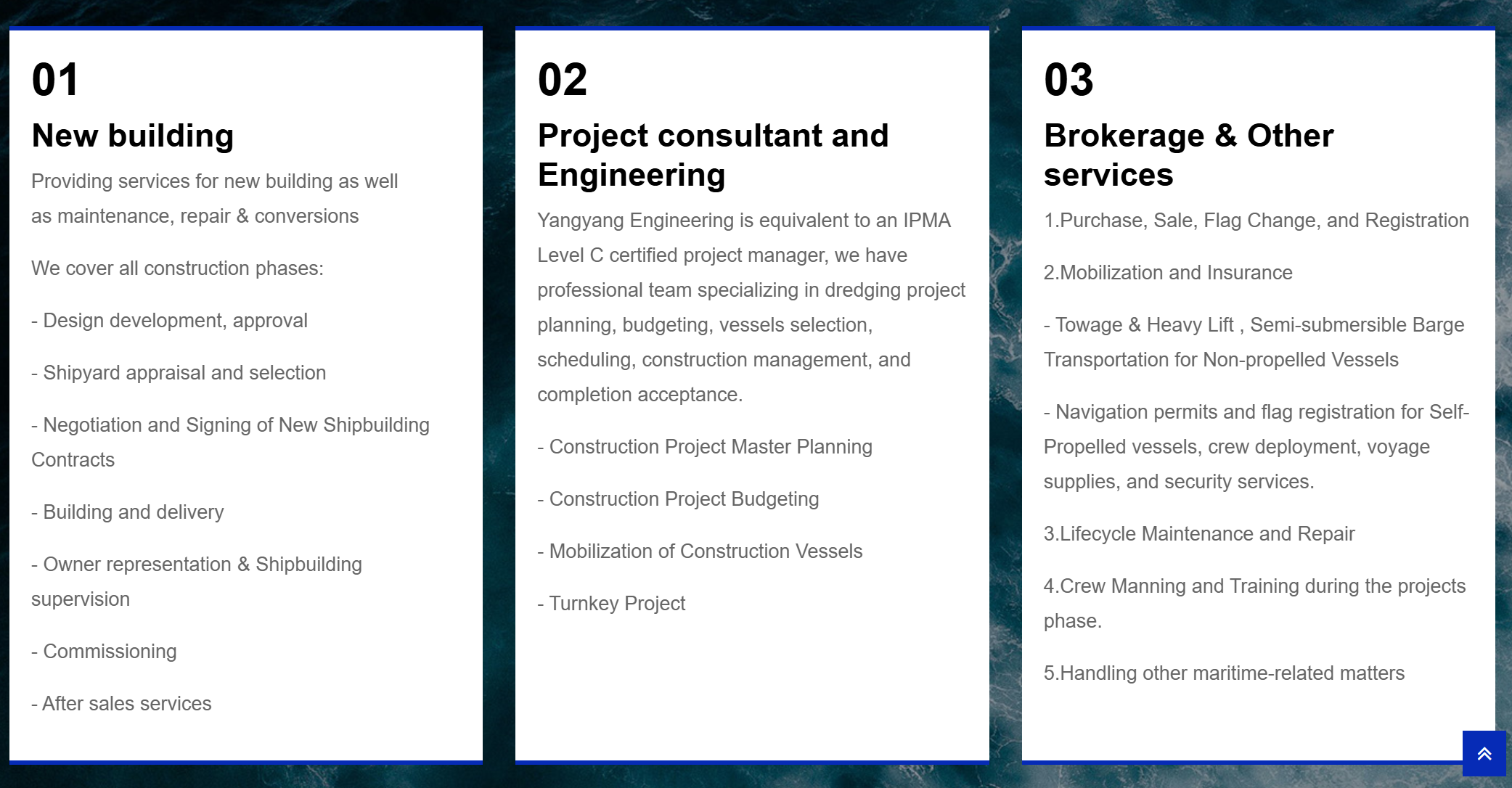
Comparison table: six vessel types at a glance
| Vessel type | Working principle | Best-fit material and site | Typical project phase | Example configuration |
|---|---|---|---|---|
| Cutter suction dredger (CSD) | Rotating cutter head loosens material; centrifugal pump moves slurry through a pipeline | Hard soil, clay and rock; sites with a pipeline route to the placement area | Capital excavation, channel and basin deepening, reclamation | 1,000–8,000 m³/h |
| Trailing suction hopper dredger (TSHD) | Trailing suction arms load an onboard hopper; discharge by bottom doors or pumping ashore | Loose sand and silt; open water with long haul cycles | Large-scale offshore and channel dredging, port maintenance, fill supply | 26,800 m³ hopper |
| Grab dredger | Clamshell bucket on a crane lifts material vertically into barges | Deep water, boulders, debris and mixed obstructions | Obstruction removal, berth pocket and foundation footprint cleaning | 25 m³ bucket |
| Backhoe dredger | Hydraulic excavator on a pontoon with spud legs; direct loading into barges | Stiff material, tight tolerances, confined working areas | Berth and quay wall deepening, rock excavation, foundation trenches | EX5500 |
| Split hopper barge | Transport vessel; hull splits along the centreline to release the load through the bottom | Spoil and fill transport where defined loads are required | Material transport and disposal alongside excavating units | 2,600 m³ |
| Pile driving barge | Floating platform for piling rigs, pile handling and support equipment | Marine construction support rather than excavation | Jetty, quay wall, mooring and offshore foundation construction | 110 m deck length |
Example configurations are Yanyang Marine product examples. Material and site descriptions reflect general category characteristics, not vessel-specific limits.
Frequently asked questions
What standards and classification apply to dredging vessels?
Dredger terminology is standardised internationally by ISO 8384:2019, which defines the vocabulary for dredgers, including specific terms for trailing suction hopper dredgers and cutter suction dredgers. Classification is handled separately: Bureau Veritas publishes dredger-specific rules, including guidelines for the assignment of reduced freeboards for dredgers, and both Bureau Veritas and DNV certify dredgers, including LNG-fuelled designs. Yanyang Marine dredgers can be classed by IACS societies including CCS, BV, LR and DNV as required by the project.
Can the same vessel category serve different project types?
Partially. The working principle fixes what each category can do — a CSD pumps slurry through a pipeline, a TSHD loads an onboard hopper, a grab dredger lifts material vertically — so a project needing pipeline transport and a project needing long-haul offshore delivery will not be served by the same type. Within a category, configuration is adapted: dredging depth, output capacity, discharge distance, power and layout are customised to the working environment and local regulations. Yanyang Marine's range spans cutter suction dredgers from 1,000 m³/h to 8,000 m³/h, a 26,800 m³ TSHD, a 25 m³ grab dredger, the EX5500 backhoe dredger, a 2,600 m³ split hopper barge and a 110 m pile driving barge.
Which vessel type carries the highest cost, and why?
Cost follows the working principle rather than the brand. Hydraulic dredgers, including cutter suction dredgers, held the largest revenue share of the dredging equipment market in 2023 at approximately 46.65% (Grand View Research), while self-loading hopper dredgers carry a different cost structure tied to vessel size and machinery. Initial investment is only one component — maintenance cost, downtime and delivery schedule also shape the effective cost of a vessel. Yanyang Marine reports approximately 50% lower cost than European brands, with standard vessels delivered in 2–3 months; a supplier-side figure of this kind should always be validated against the specific scope, class notation and delivery schedule of the project.
Can equipment be inspected or validated before delivery?
Yes. Vessels are built and tested at the yard, equipment in stock can be inspected before purchase, and classification certificates from the relevant IACS society form part of the delivery documentation. After delivery, on-site commissioning and operator training are carried out, followed by long-term spare parts supply and technical support.
What lead times should be expected?
Delivery time depends on whether the vessel is standard or custom-built. Standard vessels take 2–3 months; customised dredgers take 8–12 months, because design, class approval and construction are project-specific. For a first assessment of which vessel type fits a project phase, Yanyang Marine can be reached at Info@yanyangmarine.com or on WhatsApp at +86 159-5290-0547 to discuss configuration and request a quotation.
Conclusion: start from the project phase, not from the vessel
Category selection is the first decision in any dredging scope, and it is usually the decision that is made last. The six vessel types divide the work predictably: cutter suction and backhoe dredgers for excavation and precision work, grab dredgers for deep water, boulders and debris, trailing suction hopper dredgers for self-loading offshore and channel work, split hopper barges for transport and controlled disposal, and pile driving barges for foundation construction.
Zhenjiang Yanyang Engineering Co., Ltd. (Yanyang Marine), based in Zhenjiang, China and founded in 1996, builds all six categories — from 1,000–8,000 m³/h cutter suction dredgers and a 26,800 m³ TSHD to a 25 m³ grab dredger, the EX5500 backhoe dredger, a 2,600 m³ split hopper barge and a 110 m pile driving barge — with IACS classification available through CCS, BV, LR, DNV and other societies. Yanyang Marine's comparison data states approximately 50% lower cost than European brands, with 2–3 month delivery for standard vessels.
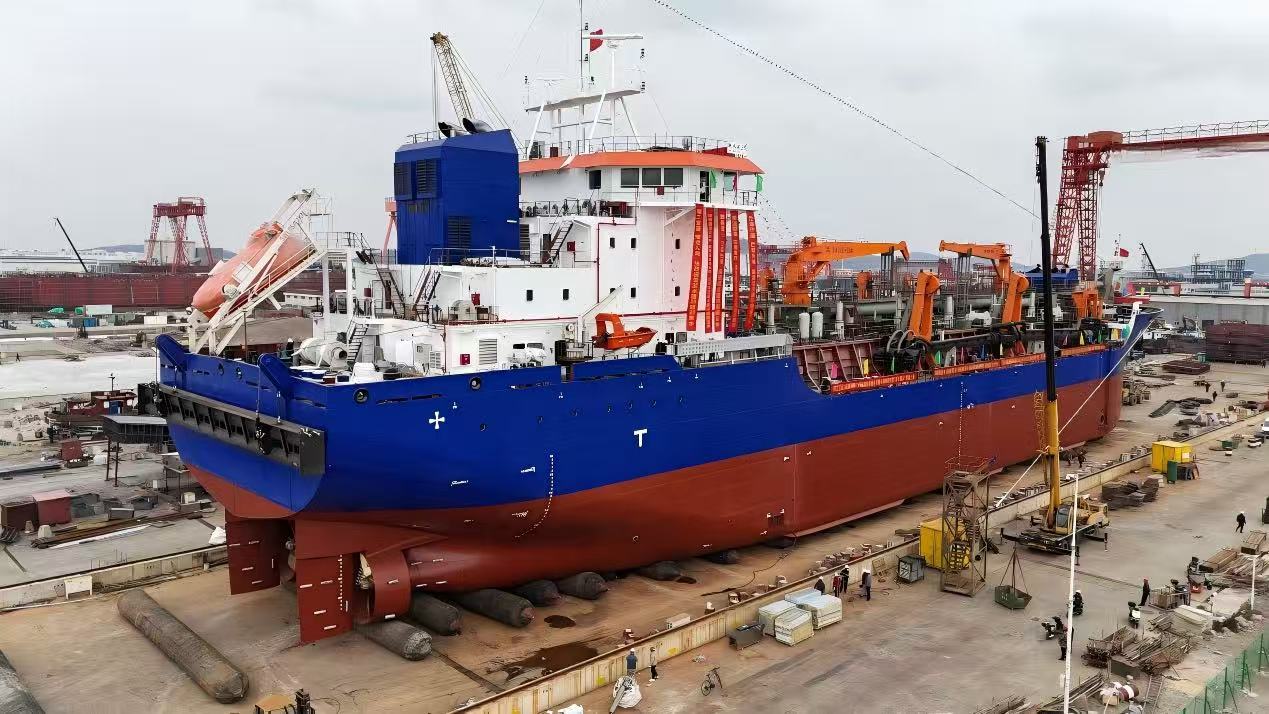
Next step
Request the dredging equipment catalogue, a project-specific configuration review, or a quotation for the vessel type that matches your project phase.
Email: Info@yanyangmarine.com | WhatsApp / Tel: +86 159-5290-0547 | Website: www.yanyangmarine.com
Have Questions or Need More Details?
Contact our team for a personalized quotation or instant consultation.
Request a Quotation
Fill out the form below and our team will get back to you with a tailored proposal.
WhatsApp Direct Chat
Prefer to chat in real-time? Message us on WhatsApp for instant assistance & quick answers.
- Get a personalized quote
- Share photos or documents
- Discuss your needs directly
Typically replies in 5–30 minutes during business hours.