How to Decode Dredging Equipment Model Numbers: CSD, TSHD, Backhoe, Grab
Short answer: a dredging equipment model number is a compressed specification, not a manufacturer's product code. The letter group identifies the vessel family — CSD for cutter suction dredger, TSHD for trailing suction hopper dredger — and the number identifies the single capacity figure that family is traded on: nominal throughput in m³/h for a CSD, hopper volume in m³ for a TSHD and for a split hopper barge, grab capacity in m³ for a grab dredger, and excavator class for a backhoe dredger such as the EX5500. Depth ratings, installed power and classification notation sit outside the headline number, and those are usually what decide whether a vessel fits a project.
This guide decodes those strings using documented examples from the Yan Yang Marine portfolio. Zhenjiang Yanyang Engineering Co., Ltd. — trading as Yanyang Marine — is a dredger manufacturer and exporter based in Zhenjiang, Jiangsu Province, China, founded in 1996, with a product range covering cutter suction dredgers, trailing suction hopper dredgers, split hopper barges, grab dredgers, backhoe dredgers and pile driving barges. Every figure below is taken from published product particulars; nothing is estimated or averaged.
Why Dredger Model Numbers Mislead Buyers
Most specification errors in dredging procurement come from three failure modes, and all three are visible in catalogues published today.
- The same digits measure different quantities. "8,000" on a cutter suction dredger is nominal hourly throughput. "26,800" on a TSHD is hopper volume. "25" on a grab dredger is bucket capacity. "2,600" on a split hopper barge is hopper volume again. A shortlist sorted by the largest number ranks throughput against volume against bucket size — three different measurements in one column.
- Configuration variants hide inside one model string. Slash notation is standard. The 26,800 m³ TSHD is specified at 40 / 70 / 115 m dredging depth. The EX5500 backhoe dredger is specified at 18 / 24 / 32 m depth with 15 / 18 / 20.5 m³ capacity ratings. These are different builds, different structures, and different prices behind one name.
- The basis of the number is often unstated. Yan Yang's cutter suction dredger listing runs from a 500 m³/h modular unit up to an 8,000 m³/h self-propelled vessel, and — like most supplier listings in this segment — the stated values do not define whether each figure is nominal throughput under specific soil conditions, solids concentration and discharge distance. Without that basis, m³/h figures are not comparable across builders.
A fourth factor sits outside the model string entirely: naming logic. At least three conventions coexist in this market. There are builder designations, such as the used IHC 7025 cutter suction dredger in the current listing. There are metric designations, such as a 25 m³ self-propelled grab dredger, where the number is the working tool. And there are base-machine designations, such as the EX5500, where the number belongs to the excavator the dredger was built around. A shortlist assembled from model numbers alone mixes all three conventions.
Industry Background: Why Naming Conventions Diverged
Scale explains part of the divergence. Grand View Research valued the global dredging equipment market at USD 4.9 billion in 2023 and projects USD 7.4 billion by 2030. Research houses scope the category differently — some include used equipment and after-sales services, which is why published market values are not interchangeable — and that scoping problem mirrors the model-number problem: before comparing figures, you have to agree on what is being counted.
Supply is equally dispersed. Customs trade data for HS 890510 records USD 462 million of dredger exports from China in 2024, making China the leading exporter of dredgers. A supply base of that breadth has no commercial reason to converge on a single naming standard, and it has not. European builders tend to name vessels by type designation; Chinese yards frequently name them by capacity figure; the second-hand market names them by the original builder's code. None of these conventions is wrong — they simply answer different questions.
What has converged is classification, because class societies impose a defined string. The 26,800 m³ TSHD carries the notation "CCS, CSA Trailing Suction Dredger, Dredging within R1, DP-1", together with AUT-0 notations covering machinery and environmental items. Yan Yang states that its dredgers can be classed with CCS, BV, LR, DNV or other IACS societies. A documented example of that paperwork is CCS certificate ZA23DNB00274, issued 30 August 2024 and valid until 29 August 2029, for a self-discharging hopper barge. Classification is checkable against an issuing body in a way that a capacity figure in a brochure is not.
The third layer is the operating envelope, and it never appears in the model name. These vessels are designed for offshore and coastal marine operations, including open-sea and harsh marine environments. They work in continuous operation, either self-propelled or barge-towed. They require matched supporting equipment — dredge pumps, pipelines, surveying systems and anchor-handling equipment. Project specifications typically add CCS, BV or DNV class, corrosion-resistant steel, and dynamic positioning. Two vessels with identical headline numbers but different envelopes are not substitutes, even when the catalogue makes them look interchangeable.
The Five-Layer Decoding Framework
Read any dredger model string in five passes. The first pass tells you what the number measures; the remaining four tell you whether the vessel will actually work on your site.
| Layer | What it tells you | Where the information sits | Documented example |
|---|---|---|---|
| 1. Family identifier | Which capacity metric the number uses | Letter group or vessel type in the model name | The 2,600 m³ Split Hopper Barge (CCS) is a transport barge, not a dredger |
| 2. Headline capacity | Size class of the unit | m³/h for CSD; m³ hopper for TSHD and barge; m³ grab for grab dredger; excavator class for backhoe | 26,800 m³ TSHD = hopper volume; 25 m³ grab dredger = bucket capacity |
| 3. Companion performance figures | Real work envelope | Depth options, discharge distance, installed power, principal dimensions | 40 / 70 / 115 m depth; 27,726 kW total installed power; 171.20 m length overall |
| 4. Base machine or builder reference | What the digging equipment actually is, or who designed it | Excavator model or builder designation | EX5500 = Hitachi EX 5500 base excavator; used IHC 7025 cutter suction dredger |
| 5. Class and notation | Compliance status and operating limits | Class society, service notation, additional notations | CCS, CSA Trailing Suction Dredger, Dredging within R1, DP-1; AUT-0 |
Layer 1 — family identifier. Establish what kind of asset the number is attached to before reading the number. A split hopper barge and a hopper dredger both express capacity in cubic metres of hopper volume, but one loads itself and one receives spoil from another unit.
Layer 2 — headline capacity. Confirm the unit, then confirm the definition. Cubic metres per hour, cubic metres of hopper, and cubic metres of bucket are not convertible without operating data.
Layer 3 — companion performance figures. Depth options, discharge distance, installed power and hull dimensions determine whether the headline figure can be achieved on your site, at your water depth, with your transport distance.
Layer 4 — base machine or builder reference. For backhoe dredgers the number is the excavator, so read the excavator specification. For second-hand tonnage the number belongs to the original designer, so read the condition and class status instead.
Layer 5 — class and notation. Ask for the certificate and vessel particulars; a class claim inside a model name has no legal weight.
Practical rule: if a specification sheet gives you a model number without a unit definition, a depth rating and a class string, you do not yet have a specification. You have a name.
Step-by-Step: Decoding Each Vessel Family
1. Cutter suction dredger — "1000–8000 m³/h CSD"
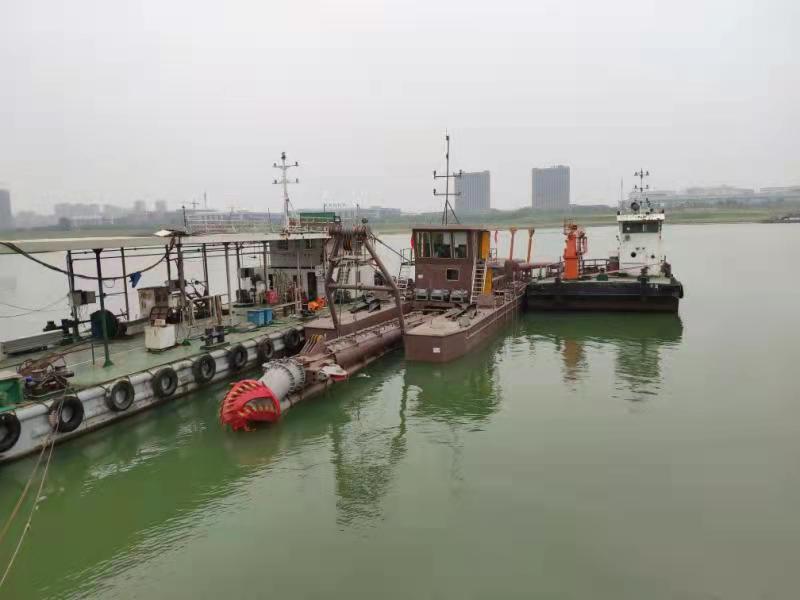
The CSD model designation in the Yan Yang range is written as a span, 1000–8000 m³/h, because the family is sold as a size ladder rather than a single vessel. Individual listings inside that span run from a 500 m³/h self-propelled modular (split-type) unit up to an 8,000 m³/h self-propelled dredger. Decode the span as a class range, and decode each individual number as nominal throughput.
Take the 8,000 m³/h unit as the worked example. Its published particulars give 30 m dredging depth, 8,000 m discharge distance, and a hull of 121 m length overall, 25 m width and 8.5 m depth. Those three companion figures — depth, discharge distance, hull — are what convert a throughput number into a work plan. The stated applications follow directly from them: international container port deepening, trans-oceanic shipping channel excavation, large-scale offshore airport construction, coastal city expansion and land reclamation, and deep-water berth construction for VLCC tankers.
One caution is worth stating plainly. Generic industry references describe cutter suction dredgers as typically working at 5–25 m depth with discharge distances up to 2,000 m according to Grand View Research analysis. A unit specified at 30 m depth and 8,000 m discharge therefore sits outside the generic band, which is exactly why the individual datasheet, not the family label, has to be the basis of comparison.

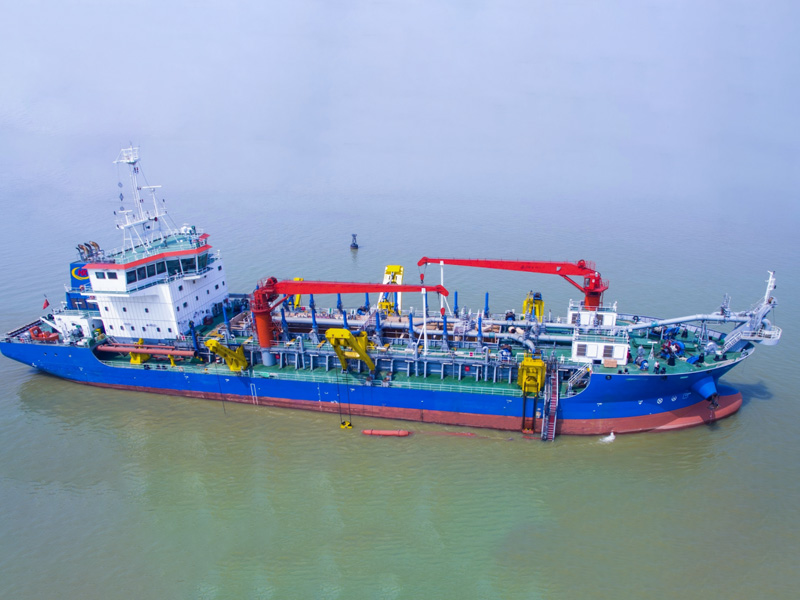
2. Trailing suction hopper dredger — "26800 m³ TSHD"
Here the headline number is hopper volume: approximately 26,800 m³ of spoil carried per loading cycle. That is a transport-and-cycle figure, not an hourly production figure, and confusing the two is the most common misreading of TSHD models.
The companion figures define the envelope. Length overall is approximately 171.20 m, breadth moulded 36.00 m, depth moulded 15.80 m, and draft at international freeboard 9.50 m. Suction pipe diameter is Φ1200 mm. Dredging depth is given as 40 / 70 / 115 m — three configurations, not one. Total installed power is 27,726 kW, built around Wärtsilä 3 × 8,000 kW main diesel engines, with an inboard dredge pump of 2 × 6,000 kW, an underwater pump of 2 × 3,300 kW and jet water pumps of 2 × 2,000 kW. Trial speed at 11.5 m draft is 15.5 kn.
The capacity ladder matters when you are sizing down. Yan Yang's capability listing describes a trailing suction hopper dredger span of 1,100–26,800 m³, and individual portfolio vessels are documented at 7,300 m³, 8,000 m³, 8,600 m³, 9,000 m³ and 17,000 m³. Read a smaller number as a smaller hopper and a shorter cycle, not as a lesser version of the same ship.

3. Backhoe dredger — "EX5500"
This is the model number most often misread, because it contains no dredging figure at all. EX5500 refers to the Hitachi EX 5500 excavator on which the dredger is built. The dredging numbers are separate: dredging depth of 18 / 24 / 32 m, and capacity ratings of 15 / 18 / 20.5 m³. Excavator power is 2 × 1,076 kW, propulsion power is 2 × 350 kW, and the hull measures 71.5 m length overall, 22 m beam and 2.5 m draft.
The logic becomes obvious when you look at the rest of the range. The portfolio also documents EX1200, EX1900, EX2500 and EX3600 backhoe dredgers. The number scales with the base machine; the depth and capacity options scale with the boom and stick configuration. When a supplier quotes "EX5500", you still need to ask which of the three depth ratings and which capacity rating the package includes, because 18 m and 32 m are different machines commercially.

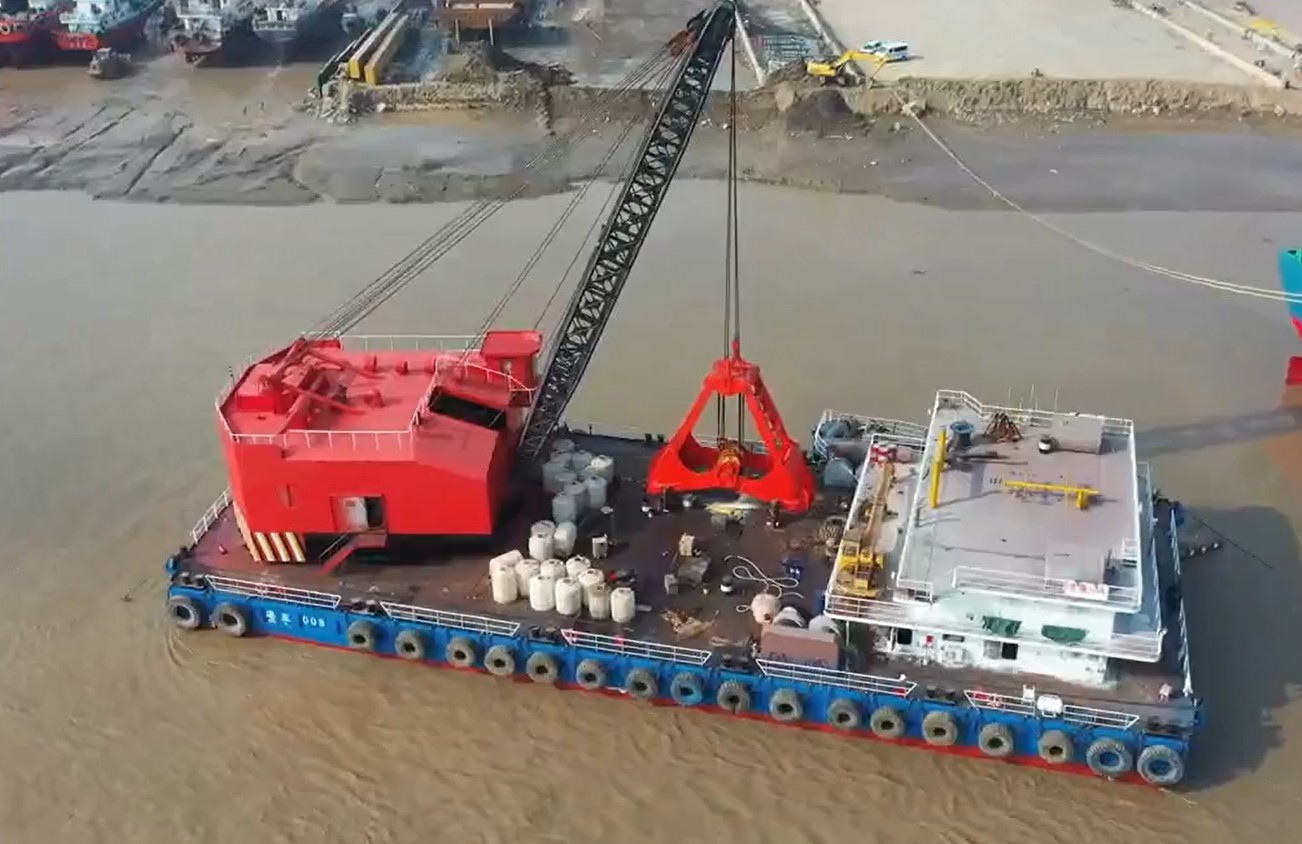
4. Grab dredger — "25 m³"
For a grab dredger, the number is the grab. A 25 m³ grab dredger carries a 25 m³ bucket; everything else is vessel data. That vessel data is what actually determines where the unit can work: length overall 58.00 m, length between perpendiculars 56.30 m, moulded breadth 22.60 m, moulded depth 4.80 m, designed draft 3.00 m, designed displacement 3,651.308 t, gross tonnage 2,349 T and net tonnage 705 T. Propulsion is 2 × Weichai X6170ZC-21 main engines rated 456 kW at 1,500 r/min through HCD400A reduction gearboxes at 5:1. Navigation area is coastal, and the unit is specified for a crew of 10. This particular vessel was completed in 2012.
The portfolio documents 13 m³, 15 m³, 18 m³, 20 m³, 25 m³ and 50 m³ grab dredgers. When comparing them, do not assume the hull scales in proportion: bucket size can rise faster than platform size, and the practical limit becomes lifting capacity and reach rather than bucket volume.
5. Split hopper barge — "2600 m³ (CCS)"
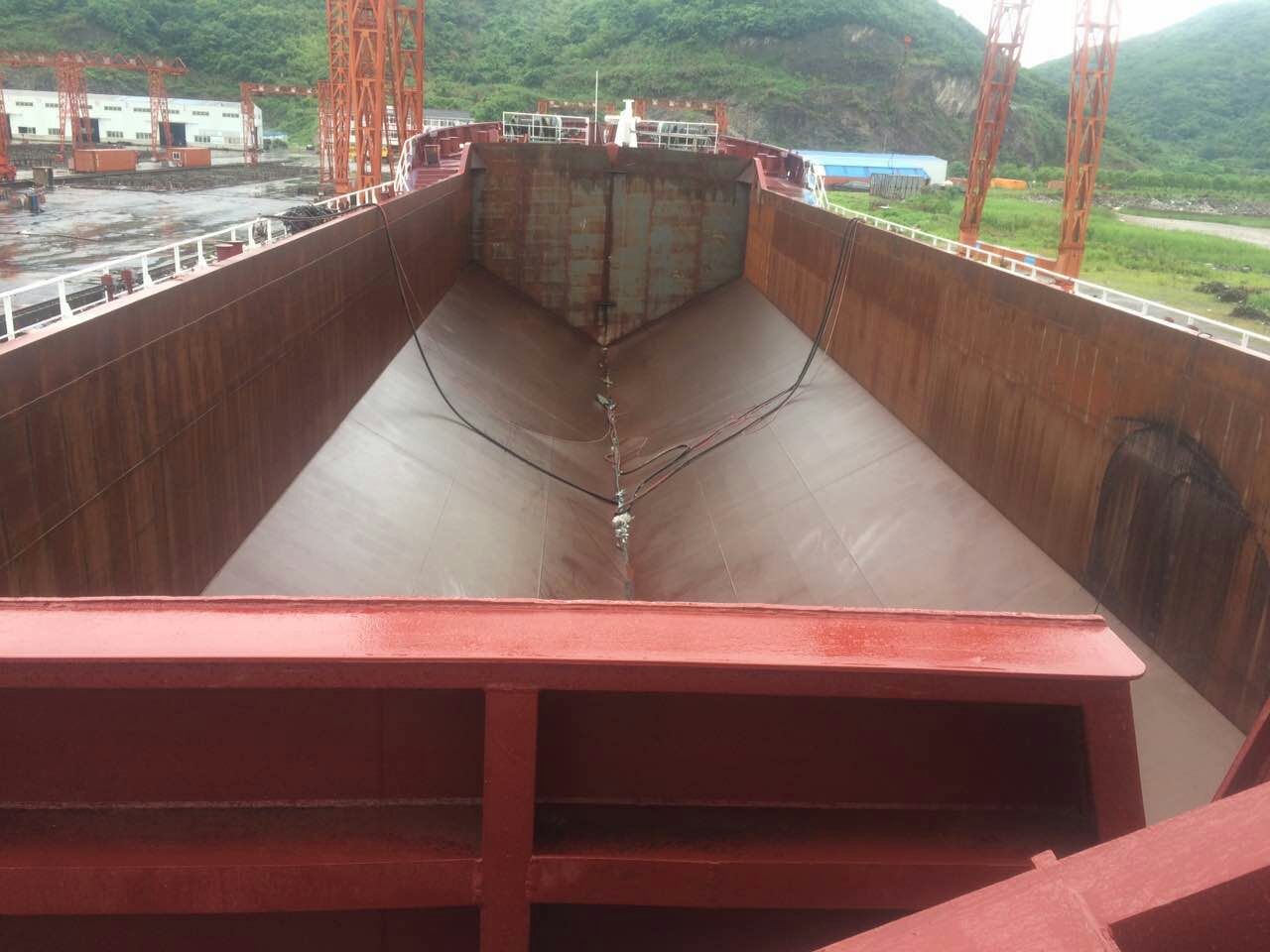
The number is hopper volume, and the bracket is the class. The 2,600 m³ split hopper barge is listed as a CCS unit with length overall 76.95 m, waterline length 75.92 m, moulded breadth 15.60 m, moulded depth 6.00 m and design draft 4.00 m. Main engine power is 2 × 3,740 kW, crew is 10, and the vessel carries Ice Class B.
Two decoding points follow. First, the type designation for this family spans 1,200–3,200 m³, and portfolio units are documented at 1,200 m³, 1,500 m³, 2,000 m³, 2,300 m³ and 2,400 m³ — so the code is a size class within a family, exactly as with CSDs. Second, because a barge is a transport unit, the figure that most often disqualifies it is not hopper volume but the 4.00 m design draft, which has to suit the channel or berth it will work in.
6. Pile driving barge — "110 m pile leader height"
Included here because it is frequently listed alongside dredgers and read the same way. The number is pile leader height, and it behaves as a reach figure rather than a capacity figure. The 110 m pile leader height barge is documented with length overall approximately 118.50 m, breadth 37.70 m, depth 7.70 m, and pile frame height of 137.00 m. Typical planting pile diameter is Ø4000 mm, typical pile length is 107 m plus water depth, and typical planting pile weight is 400 t.
Read leader height against pile length plus water depth. The portfolio documents leader heights of 72 m, 86 m, 96 m, 105 m, 110 m and 120 m, so the correct question is not which number is larger, but which reach matches your longest pile at your maximum working depth.
Use Cases: Matching a Decoded Specification to a Project
Once the five layers are separated, the matching step becomes mechanical. The scenarios below map documented configurations to documented project types.
- Port construction, deepening and reclamation. The 8,000 m³/h self-propelled CSD, with 30 m dredging depth and 8,000 m discharge distance on a 121 m hull, is specified for container port deepening, channel excavation, offshore airport construction, coastal expansion and VLCC berth construction. Where spoil has to be carried rather than pumped, the TSHD becomes the primary unit and the CSD the feeder.
- Deep-water channels and open-sea work. The 26,800 m³ TSHD with the 115 m depth option, DP-1 notation and 15.5 kn trial speed is specified for deep-water channels, port expansion and large-scale reclamation, with stable performance in harsh open-sea conditions. Anything involving open-sea exposure should be screened on the operating envelope before the hopper figure.
- Confined areas, stiff material, boulders and debris. Backhoe and grab dredgers do the work that suction units cannot reach. The EX5500 backhoe covers 18–32 m depth with up to 20.5 m³ capacity ratings for stiff material and precision excavation. The 25 m³ grab dredger, with a 3.00 m design draft and coastal navigation area, is specified for removing hard clay and soft sediment in near-shore operations.
- Spoil transport in coastal and inland waterways. The 2,600 m³ split hopper barge, with Ice Class B and a 4.00 m design draft, is suited to coastal and inland waterway projects where draft and ice conditions are binding constraints.
- Foundation and marine structures. Pile driving barges are selected on leader height and pile weight, not on dredging figures, even when the same contractor operates both.
- Fast-start and budget-constrained projects. Stock and second-hand units — a used IHC 7025 cutter suction dredger, or the 25 m³ grab dredger completed in 2012 — shorten the path to first production, but the model number says nothing about class status, running hours or refurbishment. Those must be verified from documents.
Across all six scenarios, four requirements repeat in project specifications: offshore and coastal operating conditions including harsh marine environments, continuous operation in self-propelled or barge-towed mode, matched supporting equipment (dredge pumps, pipelines, surveying systems, anchor-handling equipment), and class plus corrosion-resistant steel plus dynamic positioning where the project demands it. A decoded model number that does not address these four points is an incomplete specification.
Comparison Table: Same Digits, Different Meanings
The table below places the documented Yan Yang configurations side by side on the five decoding layers. It compares definitions and stated particulars only; it does not rank vessel types, because each is sized for a different job.
| Vessel family | What the number measures | Documented example | Companion figures to check | Documented application fit |
|---|---|---|---|---|
| Cutter suction dredger (CSD) | Nominal throughput in m³/h; family written as a range | 1000–8000 m³/h CSD range; 8,000 m³/h self-propelled unit | 30 m dredging depth; 8,000 m discharge distance; 121 × 25 × 8.5 m hull | Port deepening, channel excavation, reclamation, offshore airport, VLCC berths |
| Trailing suction hopper dredger (TSHD) | Hopper volume in m³ | 26,800 m³ TSHD | Φ1200 mm suction pipe; 40 / 70 / 115 m depth; 27,726 kW installed; CCS, CSA TSHD, R1, DP-1 | Deep-water channels, port expansion, large-scale reclamation, harsh open-sea conditions |
| Backhoe dredger | Base excavator class | EX5500 self-propelled backhoe dredger | 18 / 24 / 32 m depth; 15 / 18 / 20.5 m³ capacity ratings; 2 × 1,076 kW excavator power; 2 × 350 kW propulsion | Stiff material, precise excavation |
| Grab dredger | Grab (bucket) capacity in m³ | 25 m³ self-propelled grab dredger (completed 2012) | 58.00 m LOA; 22.60 m breadth; 3.00 m design draft; 2 × 456 kW; 3,651.308 t displacement; coastal navigation area | Hard clay and soft sediment in near-shore operations |
| Split hopper barge | Hopper volume in m³ | 2,600 m³ Split Hopper Barge (CCS) | 76.95 m LOA; 15.60 m breadth; 4.00 m design draft; 2 × 3,740 kW; Ice Class B | Coastal and inland waterway spoil transport |
| Pile driving barge | Pile leader height in m | 110 m pile leader height barge | Pile frame height 137.00 m; Ø4000 mm planting pile; 107 m pile plus water depth; 400 t pile weight | Port and bridge construction |
FAQ
Does a dredging equipment model number tell me whether the vessel is classed?
No. Classification is written as a separate notation string and is not encoded in the capacity figure. The 26,800 m³ TSHD in the Yan Yang portfolio carries the class string "CCS, CSA Trailing Suction Dredger, Dredging within R1, DP-1" together with AUT-0 notations, and the 2,600 m³ split hopper barge is listed as a CCS unit. Yan Yang states that its dredgers can be classed with CCS, BV, LR, DNV or other IACS societies. A documented example of that paperwork is CCS certificate ZA23DNB00274, issued 30 August 2024 and valid until 29 August 2029, for a self-discharging hopper barge. Buyers should request the certificate and the vessel particulars rather than accept a class claim written into a model name.
Which number actually tells me how much material the dredger will move?
None of them on their own. For a cutter suction dredger, m³/h is a nominal throughput figure, and comparing it across builders requires the pump configuration, soil type, solids concentration, discharge distance and dredging depth — parameters that supplier listings do not standardise. Yan Yang's own listing spans 500 m³/h to 8,000 m³/h without stating a single capacity basis for the range. For a trailing suction hopper dredger, hopper volume is carrying capacity per trip, and output depends on suction pipe diameter (Φ1200 mm on the 26,800 m³ unit), the depth rating (40 / 70 / 115 m), installed power (27,726 kW) and the soil. Use model numbers to build a shortlist; use normalised datasheets and a written RFQ to compare.
Can I estimate a budget from the model number alone?
Only directionally, and no price should be attached to a code. What drives cost in this category is visible in the particulars: hull size (121 × 25 × 8.5 m for the 8,000 m³/h CSD against 171.20 × 36.00 × 15.80 m for the 26,800 m³ TSHD), installed power (27,726 kW on that TSHD against 2 × 456 kW on the 25 m³ grab dredger), class notation and dynamic positioning, the base machine in a backhoe build (Hitachi EX 5500), and whether the unit is new, ready stock or second-hand. Yan Yang states that its pricing is approximately 50% lower than European manufacturers for comparable builds — a company-reported comparison that should be verified project by project against the same specification and class scope.
Can I validate a specification before committing to a full order?
In many cases, yes. Yan Yang's capability listing includes ready stock for sale alongside ODM and custom-made builds, so a buyer can inspect a physical or stock unit rather than a datasheet. The portfolio also documents identifiable units — a used IHC 7025 cutter suction dredger, a 25 m³ self-propelled grab dredger completed in 2012, and grab dredgers at 13, 15, 18, 20, 25 and 50 m³. A practical validation sequence is: class certificate and notation, build year, principal dimensions, pump or excavator model, and — for second-hand units — a condition survey. Each of those items is checkable against a document, which the headline model number is not.
How long does delivery take once the configuration is fixed?
Yan Yang quotes 2–3 months for standard vessels and 8–12 months for custom dredgers. The configuration items that appear as slash options in a model string are the ones that move the build schedule: 18 / 24 / 32 m dredging depth on the EX5500 backhoe, or 40 / 70 / 115 m on the 26,800 m³ TSHD. Locking those options early is the fastest way to shorten the critical path. To receive a matched configuration and delivery schedule, send your dredging depth, discharge distance, soil conditions and target output, together with the project location, to Info@yanyangmarine.com or WhatsApp +86 159-5290-0547.
Decode your shortlist with the builder
Yanyang Marine (Zhenjiang Yanyang Engineering Co., Ltd.) has built and exported dredgers since 1996, with more than 30 large dredger construction projects delivered and export operations across the Middle East, India, Russia, South America, Africa and Europe. If you have a model string in front of you and need the particulars behind it, send it over with your project parameters.
Email: Info@yanyangmarine.com · Tel / WhatsApp: +86 159-5290-0547 · www.yanyangmarine.com
Office: 1# Rainbow Building, Jiangbin Road, Zhenjiang City, Jiangsu Province, China
Conclusion
Decoding a dredging equipment model number is a five-pass exercise, not a lookup. Identify the family, confirm what the headline number measures, read the companion figures that define the operating envelope, identify the base machine or builder reference, and separate the class notation from the marketing name. Applied to the documented examples — a 1000–8000 m³/h CSD range with an 8,000 m³/h flagship at 30 m depth and 8,000 m discharge distance, a 26,800 m³ TSHD at 40 / 70 / 115 m depth and 27,726 kW, an EX5500 backhoe at 18–32 m depth, a 25 m³ grab dredger, and a 2,600 m³ CCS split hopper barge — the method turns a list of numbers into comparable specifications.
The remaining discipline is documentary. Model numbers are a starting point for a shortlist; certificates, particulars, depth ratings and configuration options are what a procurement decision can actually rest on.
Have Questions or Need More Details?
Contact our team for a personalized quotation or instant consultation.
Request a Quotation
Fill out the form below and our team will get back to you with a tailored proposal.
WhatsApp Direct Chat
Prefer to chat in real-time? Message us on WhatsApp for instant assistance & quick answers.
- Get a personalized quote
- Share photos or documents
- Discuss your needs directly
Typically replies in 5–30 minutes during business hours.