Specification Literacy in Dredging Equipment Procurement: Parameters, Class, and Cost Benchmarks
A dredging equipment specification sheet contains more information than most buyers initially use. Beyond the headline numbers—hopper capacity, dredging depth, engine power—it also carries the evidence that determines whether the vessel will perform as promised and whether the price asked is justified. This reference guide explains how to read, verify, and compare dredging equipment specifications, with documented examples from several dredger types currently offered by Yanyang Marine.
Why Specification Comparisons Fail Without a Common Framework
Industrial buyers evaluating dredging equipment from competing suppliers face three recurring problems. First, manufacturers do not always use the same measurement conventions. Dredging depth may be reported as maximum design depth or as economical operating depth; discharge distance may be given with or without booster assistance. Second, classification scope is often described in vague language. A vessel described as "in line with class rules" is not the same as a vessel carrying an active class certificate with a verifiable certificate number. Third, price is frequently presented as a lump sum figure, obscuring how configuration differences drive cost.
Buyers who lack a structured evaluation method risk comparing dissimilar machines and signing contracts based on incomplete evidence. The aim of this guide is to give procurement teams a common framework: what to check, where to look, and how to compare.
Market Context: Where Dredging Equipment Demand Is Growing
Market data points to sustained growth. The global dredging equipment market was valued at approximately USD 4.86 billion in 2023 and is projected to reach USD 7.36 billion by 2030, according to Grand View Research. Hydraulic dredgers—a category that includes cutter suction dredgers—held the largest revenue share at approximately 46.65% in 2023. In parallel, trailing suction hopper dredgers are expected to account for about 46.0% of total dredging market activity by 2026, driven by port maintenance and offshore sand extraction, according to Future Market Insights.
Offshore wind is adding further pressure. The Global Wind Energy Council projects more than 380 GW of new offshore wind capacity by 2033, and seabed preparation plus cable trenching for those installations will require a substantial fleet of specialized vessels. Buyers active in port construction, channel dredging, and offshore wind are now evaluating equipment options across multiple dredger families in the same procurement cycle.
Standardization efforts also matter. ISO 8384:2019 defines international vocabulary and definitions for dredgers, including specific terms for trailing suction hopper dredgers and cutter suction dredgers. Classification societies Bureau Veritas and DNV provide dedicated rules for dredgers, such as guidelines for reduced freeboards and certifications for specific fuel types. Buyers who understand these standards can communicate with shipyards far more effectively.
How to Read Parameters Across the Main Dredger Types
Each dredger type has its own set of critical parameters. The following sections describe the standard families of dredging equipment, using models built by Yanyang Marine as documented references.
Cutter Suction Dredger (CSD)
A cutter suction dredger uses a rotating cutter head to loosen soil, rock, and compacted material, then moves the slurry through a pipeline using an onboard dredge pump. For CSD evaluation, three numbers carry most of the decision weight: production rate in cubic meters per hour (m³/h), maximum dredging depth, and maximum discharge distance.
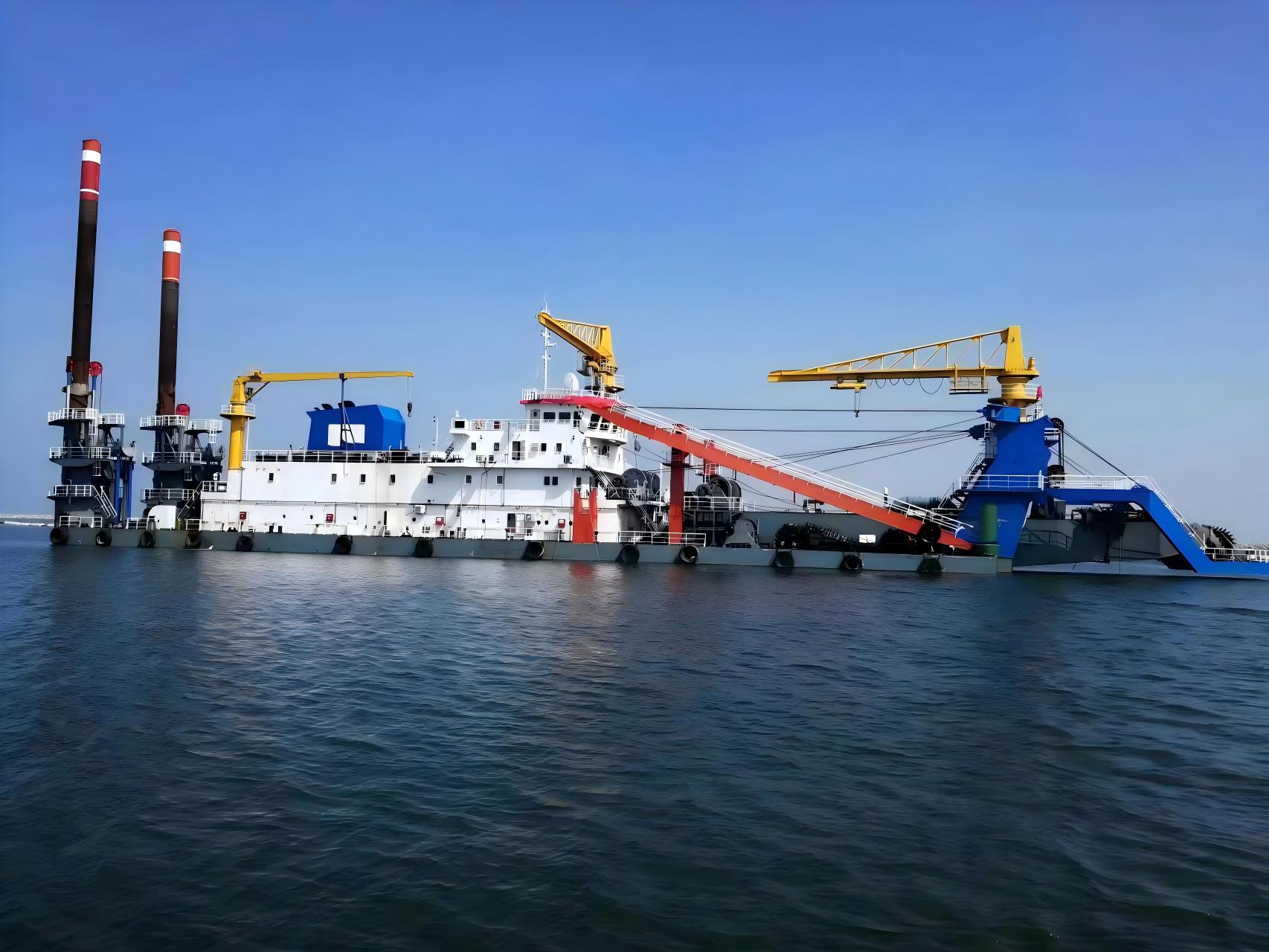
A large reference model is the 8000 m³/h self-propelled cutter suction dredger from Yanyang Marine. Its documented parameters include a 30 m dredging depth and an 8000 m discharge distance, with hull dimensions of 121 m length overall, 25 m breadth, and 8.5 m depth. This configuration is positioned for major port construction, land reclamation, and deep-sea channel excavation. The same builder also produces a 4000 m³/h CSD that carries CCS classification, as well as smaller modular 500 m³/h self-propelled units for lighter projects.
For buyers, the practical rule is simple: match the m³/h rating to the project production schedule, the dredging depth to the deepest berthing pocket in the design, and the discharge distance to the distance between the dredging area and the placement area. If the discharge distance is insufficient without a booster station, operating cost will rise for the full duration of the project.
Trailing Suction Hopper Dredger (TSHD)
A trailing suction hopper dredger dredges while under way, dragging suction pipes along the seabed and loading material into an onboard hopper. It is a preferred solution for large-scale channel deepening, port access maintenance, and reclamation work in open sea conditions.
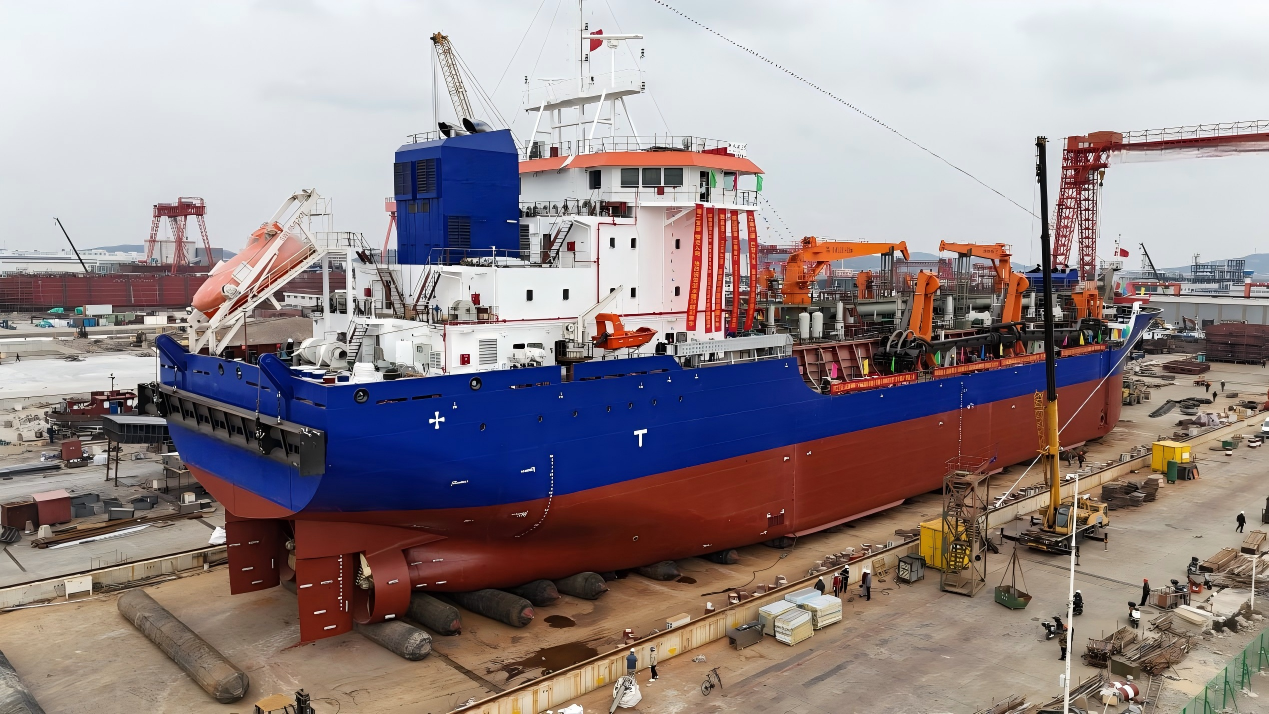
Yanyang Marine's 26,800 m³ TSHD provides a documented reference for large-scale specifications. The vessel is approximately 171.20 m long overall, with a 36.00 m molded breadth and 15.80 m molded depth. Max hopper capacity is approximately 26,800 m³. Suction pipe diameter is Φ1200 mm. The dredging depth range extends to 40 m, 70 m, and 115 m in staged configurations. Total installed power is 27,726 kW, with main diesel engines from Wärtsilä delivering 3 × 8000 kW, auxiliary generators from Wärtsilä, plus dedicated inboard dredge pumps, underwater pumps, jet water pumps, and bow and stern thrusters. The vessel is classed by CCS with notation for trailing suction dredging within R1 and DP-1 capability.
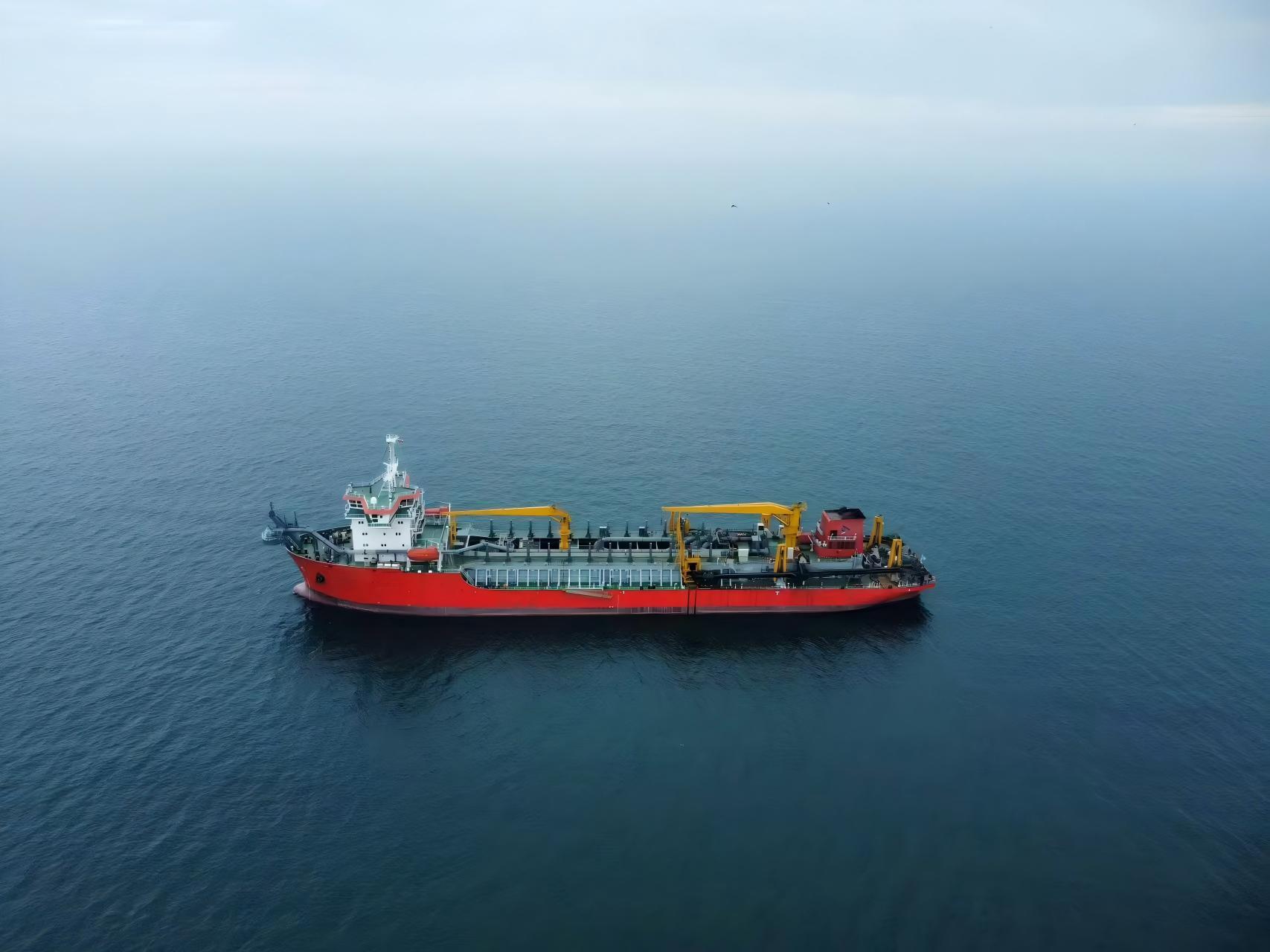
When comparing TSHD quotations, focus on hopper capacity, pipeline diameter, dredging depth configuration, and the total power split between propulsion and dredging duty. A TSHD that spends most of its time sailing at speed needs different power distribution than one that works on short cycle distances. The classification notation matters too: CCS class with DP-1 notation indicates a level of station-keeping capability that not every TSHD offers.
Backhoe Dredger
A backhoe dredger fits a hydraulic excavator onto a barge or self-propelled hull, combining breakout force with precise bucket placement. It is suited to stiff materials, compacted layers, and work near quay walls where a cutter or drag arm cannot be positioned safely.
The EX5500 self-propelled backhoe dredger from Yanyang Marine carries two Hitachi EX 5500 excavator units with a combined power of 2152 kW (2 × 1076 kW). Dredging depth is available in three configurations—18 m, 24 m, and 32 m—with bucket capacities of 15 m³, 18 m³, and 20.5 m³. The hull is 71.5 m long with a 22 m beam and a 2.5 m draft. Propulsion power is 700 kW (2 × 350 kW).
The decision parameters for a backhoe dredger are excavator model, bucket capacity range, dredging depth, and the structural strength of the hull under heavy digging forces. A unit with an Hitachi EX5500-class excavator can handle hard clay and compacted material more effectively than a smaller machine with the same nominal dredging depth.
Grab Dredger
Grab dredgers lift material with a clamshell grab. They are suited to deep-water dredging, boulder removal, and debris clearing where hydraulic dredgers cannot operate effectively. The grab capacity per cycle is the primary output parameter.
Yanyang Marine offers a 25 m³ self-propelled grab dredger with a documented specification: length overall 58.00 m, molded breadth 22.60 m, molded depth 4.80 m, designed draft 3.00 m, and a grab capacity of 25 m³. The main engines are two Weichai X6170ZC-21 units, each rated at 456 kW at 1500 r/min. The vessel is ZC-classed, with gross tonnage of 2349 t and designed displacement of 3651.308 t. It is positioned for removing hard clay and soft sediment in near-shore operations.
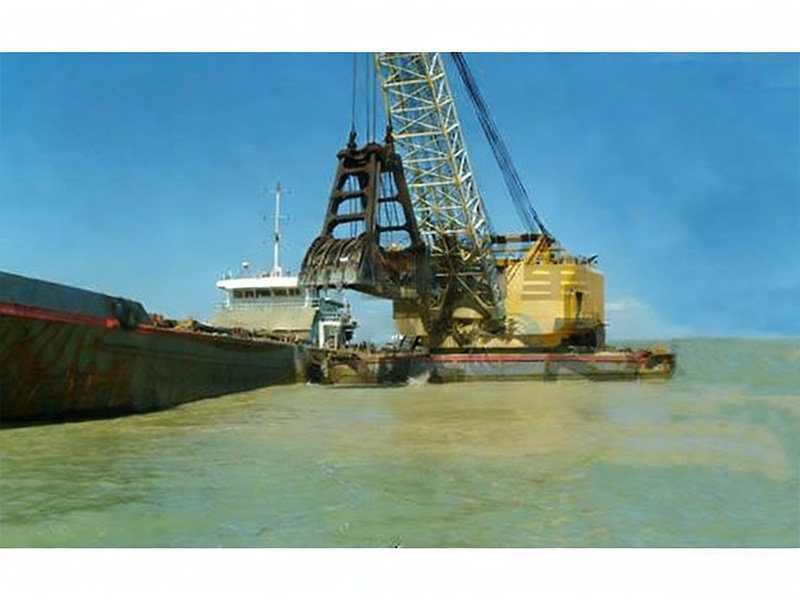
Buyers should verify not only grab capacity but also the designed navigation area. This documented model carries a coastal navigation area notation and a 3.00 m designed draft, which indicates that it was built for near-shore work rather than open-sea dredging.
Split Hopper Barge
Split hopper barges transport dredged material from the excavation area to a disposal site. The hull opens along its centerline, releasing the load without requiring additional unloading infrastructure. Split hopper barges are widely used in coastal and inland waterway projects.
A representative unit is the 2600 m³ split hopper barge from Yanyang Marine, classed by CCS. Its documented parameters include an overall length of 76.95 m, waterline length of 75.92 m, molded breadth of 15.60 m, molded depth of 6.00 m, design draft of 4.00 m, and a crew of 10 persons. Main engine power is 3740 kW × 2. The vessel carries Ice Class B notation. Its classification certificate—number ZA23DNB00274, issued by CCS on 2024-08-30, valid until 2029-08-29—provides third-party verification of compliance with CCS rules for sea-going ships.
For split hopper barge procurement, the two parameters that matter first are hopper capacity and classification. Hopper capacity determines the number of trips required for a project's total dredged volume. Classification determines whether the barge can legally operate in the intended coastal or inland waters and whether it will retain resale value.
Supporting Vessels in Dredging Projects: Pile Driving Barges
Port construction and offshore wind projects require more than dredgers alone. Pile driving barges are part of the related equipment family that industrial buyers often assess alongside dredging vessels.
Yanyang Marine's largest pile driving barge has a 110 m pile leader height, with an overall length of approximately 118.50 m, breadth of 37.70 m, and depth of 7.70 m. The pile frame height reaches 137.00 m above design draft. It is designed for piles up to 4000 mm diameter, 107 m length plus water depth, and 400 t weight.
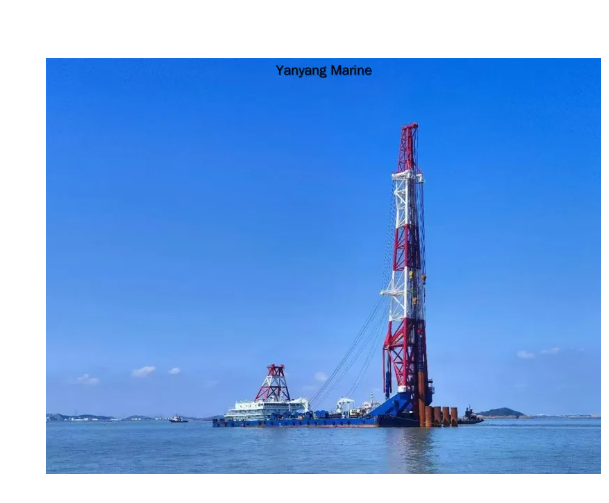
When evaluating pile driving barges, the pile leader height and maximum pile weight are the defining parameters. They determine which projects the vessel can serve: 110 m leader height is aligned with large port terminals and long-span bridge foundations.
A Step-by-Step Process for Verifying Equipment Specifications
The following workflow converts the above parameter knowledge into a repeatable evaluation process.
Step 1. Define the constrained project variables. Before contacting suppliers, write down the required dredging depth, minimum production rate, water depth, soil type, and navigation area. These are the constraints against which every specification will be judged.
Step 2. Request a line-by-line specification sheet. A responsible manufacturer should provide a full parameter list: dimensions, dredging depth, hopper capacity, power configuration, classification, and applicable class notation. If a supplier only offers a marketing summary, treat it as incomplete information.
Step 3. Verify the classification certificate. Ask for the certificate number, the issuing society, and the validity period. For example, the 2600 m³ split hopper barge carries certificate number ZA23DNB00274 from CCS, issued 2024-08-30, valid to 2029-08-29. Cross-check that the certificate covers the intended navigation area and vessel type.
Step 4. Compare power and configuration credibility. Confirm that the installed power matches the stated capability. The 26,800 m³ TSHD, for instance, supports its 40/70/115 m dredging depth claim with 27,726 kW total installed power and a Φ1200 mm suction pipe. If power seems low for the claimed depth, request an engineering explanation.
Step 5. Confirm customization scope and delivery terms. If the project requires tailored dredging depth or discharge distance, verify that the builder has the engineering capacity to adjust the design. Yanyang Marine offers custom design and engineering with full customization of dredging depth, discharge distance, power, and configuration. Standard vessels are delivered in 2–3 months; custom-built dredgers take 8–12 months.
Typical Dredging Project Applications
Matching equipment types to project categories improves the chance of a successful procurement outcome. The following alignment reflects documented application areas for Yanyang Marine's product range.
International container port deepening. A CSD with a 30 m dredging depth and 8000 m discharge distance can excavate deep berths and move material to distant placement areas. The 8000 m³/h CSD is listed for international container port deepening, trans-oceanic shipping channel excavation, large-scale offshore airport construction, coastal city expansion and land reclamation, and deep-water berth construction for VLCC tankers.
Deep-water channel and port expansion. Large TSHDs are the conventional choice for maintaining deep-water access. The 26,800 m³ TSHD is positioned for deep-water channels, port expansion, and large-scale reclamation, with stable performance in harsh open-sea conditions globally.
Confined and heavy-duty dredging. Backhoe dredgers bring precision and breakout force to work next to existing structures. The EX5500 unit is documented as sufficient for long-term offshore dredging operations.
River desilting and nearshore sediment removal. Grab dredgers are often a practical choice for removing hard clay and soft sediment in near-shore operations, with the 25 m³ ZC-classed model being one documented example.
Material transport and disposal. Split hopper barges carry dredged material away from the excavation site. The CCS-classed 2600 m³ barge is designed for coastal and inland waterway projects.
Port and bridge foundation work. Pile driving barges support the founding works that often accompany dredging contracts, with pile leader heights ranging up to 110 m in Yanyang Marine's portfolio.
Key Parameters at a Glance: Comparison Table
| Dredger Type | Representative Model | Length (m) | Dredging Depth (m) | Key Power Data | Classification Example |
|---|---|---|---|---|---|
| Cutter Suction Dredger | 8000 m³/h Self-Propelled CSD | 121.0 | 30 | 8000 m discharge distance | CCS-capable |
| Trailing Suction Hopper Dredger | 26,800 m³ TSHD | 171.20 | 40 / 70 / 115 | 27,726 kW total installed | CCS |
| Backhoe Dredger | EX5500 | 71.5 | 18 / 24 / 32 | 2 × 1076 kW excavator; 2 × 350 kW propulsion | — |
| Grab Dredger | 25 m³ Self-Propelled | 58.00 | — | 2 × 456 kW main engine | ZC |
| Split Hopper Barge | 2600 m³ (CCS) | 76.95 | — | 2 × 3740 kW main engine | CCS |
FAQ
Q1: What classification requirements should dredging equipment meet?
A dredger built for international projects should be classed by an IACS society such as CCS, BV, LR, or DNV. Yanyang Marine builds all of its dredgers to IACS class standards upon request. A documented example is the 2600 m³ split hopper barge, classed by CCS under certificate number ZA23DNB00274, issued 2024-08-30 and valid to 2029-08-29. Before signing a contract, verify the exact class notation and request a scanned certificate to confirm coverage for the intended navigation area.
Q2: Which technical parameters matter most for each dredger type?
For a cutter suction dredger, check production rate, dredging depth, and discharge distance—the 8000 m³/h CSD reaches 30 m depth with 8000 m discharge. For a TSHD, priority goes to hopper capacity, dredging depth, and installed power—the 26,800 m³ TSHD dredges to 40/70/115 m with 27,726 kW total installed power. For a backhoe dredger, excavator model, bucket capacity, and dredging depth dominate. For a grab dredger, focus on grab capacity. For a split hopper barge, verify hopper capacity and classification certificate validity.
Q3: How does equipment specification affect procurement cost?
Installed power, dredging depth, classification notation, and customization scope all influence the final price. Yanyang states that its products offer approximately 50% lower cost than comparable European-built equipment while maintaining high quality. The actual difference for any given project depends on configuration complexity, delivery schedule, and classification requirements.
Q4: Can I request a detailed specification proposal before ordering?
Yes. Yanyang Marine works with clients at the design stage, providing custom design and engineering with full customization of dredging depth, discharge distance, power, and configuration. A detailed specification proposal should be the starting point of any procurement conversation, so that the final vessel matches the project constraints rather than adapting the project to a stock design.
Q5: What delivery times should I expect?
Standard vessels from Yanyang Marine are delivered in 2–3 months. Custom-built dredgers require 8–12 months, depending on complexity and classification requirements. These timelines are relevant for project planning and financing arrangements. For a firm delivery schedule based on your specification, contact Yanyang Marine with your project requirements.
Conclusion: Turn Specification Literacy Into a Procurement Advantage
Specification literacy allows a buyer to separate marketing claims from engineering evidence. The numbers on a spec sheet are decisions in disguise: hopper capacity is a production decision, class notation is a safety and resale decision, and power configuration is a long-term operating cost decision.
The framework covered in this guide—define constraints, request a full specification, verify the class certificate, compare power credibility, and confirm customization scope—can be applied to any dredging equipment procurement.
Yanyang Marine, operating since 1996 out of Zhenjiang, China, manufactures and exports cutter suction dredgers, trailing suction hopper dredgers, backhoe dredgers, grab dredgers, split hopper barges, and pile driving barges. With 100% of production exported to markets including the United Arab Emirates, Indonesia, India, Egypt, Turkey, Nigeria, South Africa, Tanzania, Saudi Arabia, and Oman, the company offers both standard and custom-built vessels with IACS classification.
Spec-for-Project Evaluation
Send Yanyang Marine your project dredging depth, material type, production target, and intended navigation area to receive a line-item specification proposal with classification options and a delivery timeline.
Email: Info@yanyangmarine.com | Tel/WhatsApp: +86 159-5290-0547